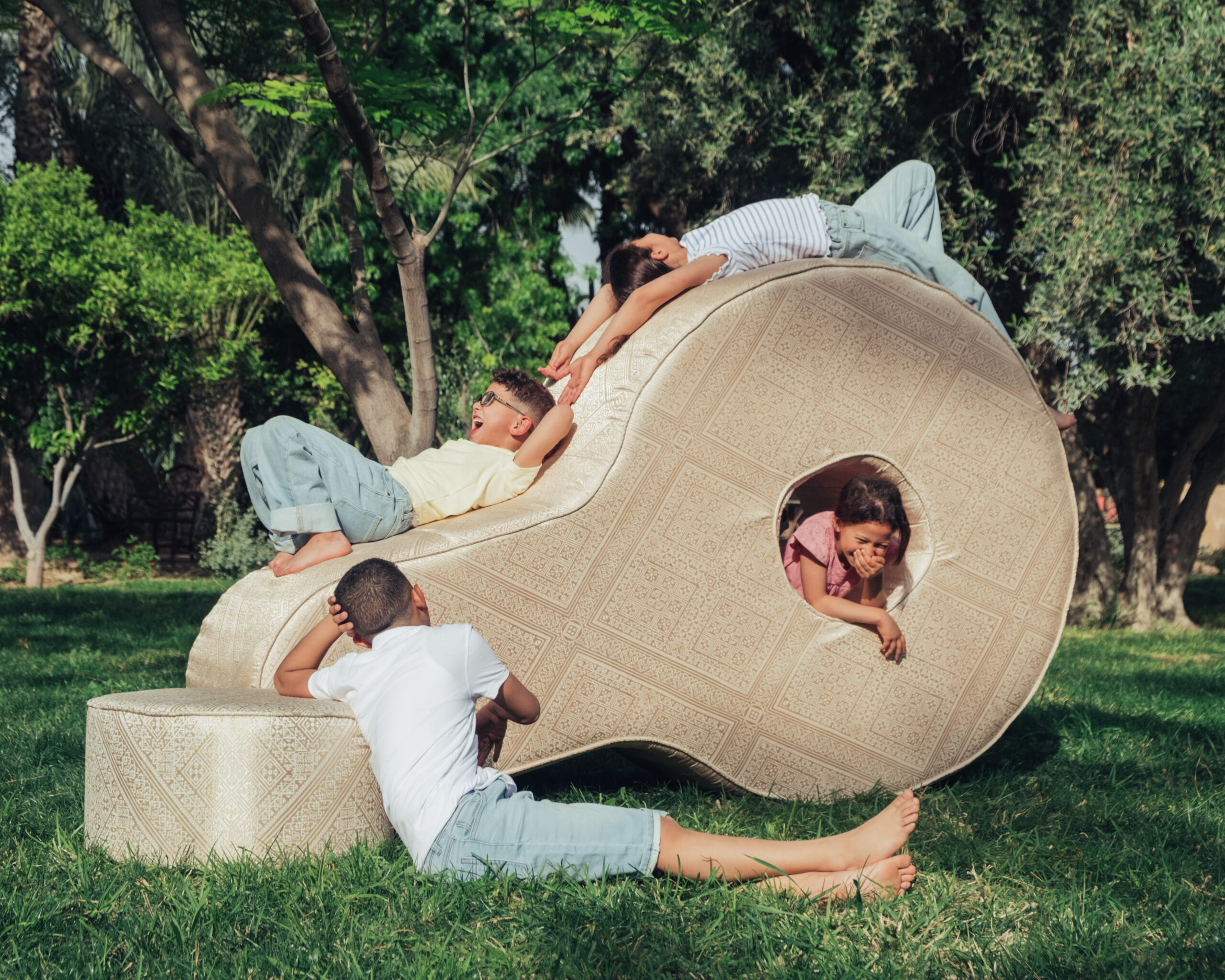
Some objects ask to be admired from a distance. Others quietly insist on being touched.
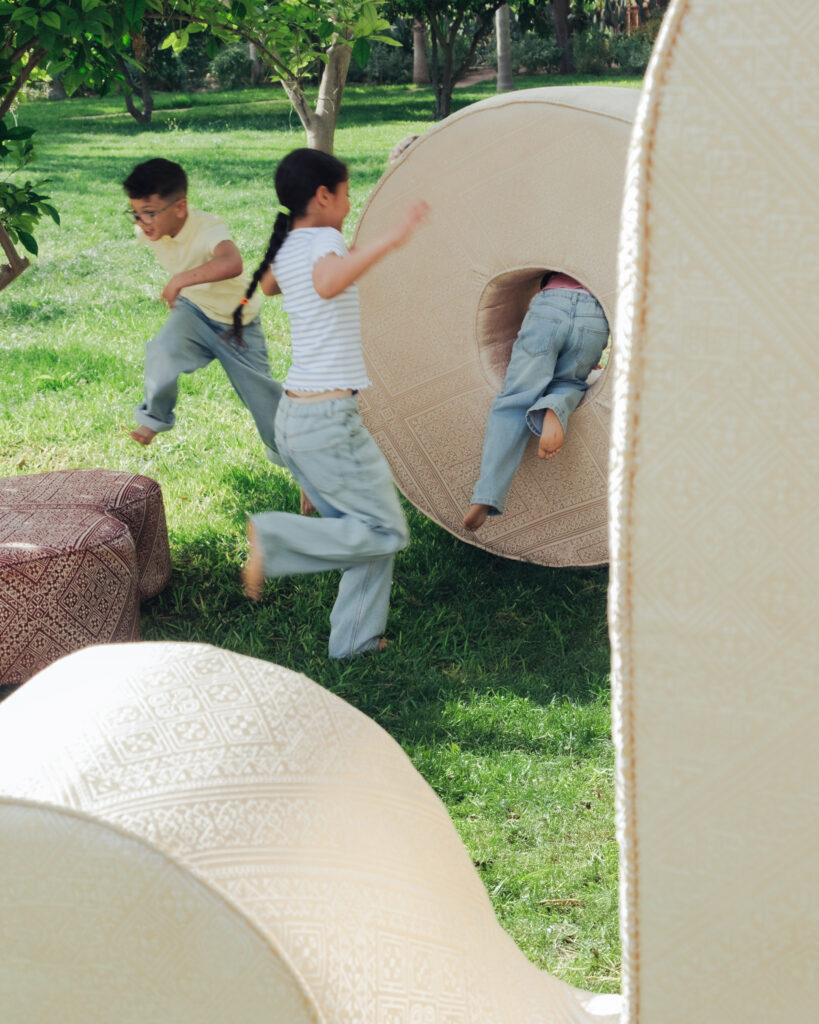
At first glance, the monumental forms of Signs of Life seem to belong to the world of collectible design: sculptural, meticulously upholstered, almost too beautiful to disturb. Then something unexpected happens. A child disappears through one of the openings. Another climbs onto its curved surface as if it were a hill. An adult stretches out with a book, someone else instinctively gathers around it, and suddenly the room changes.
The sculptures are no longer objects. They become places.
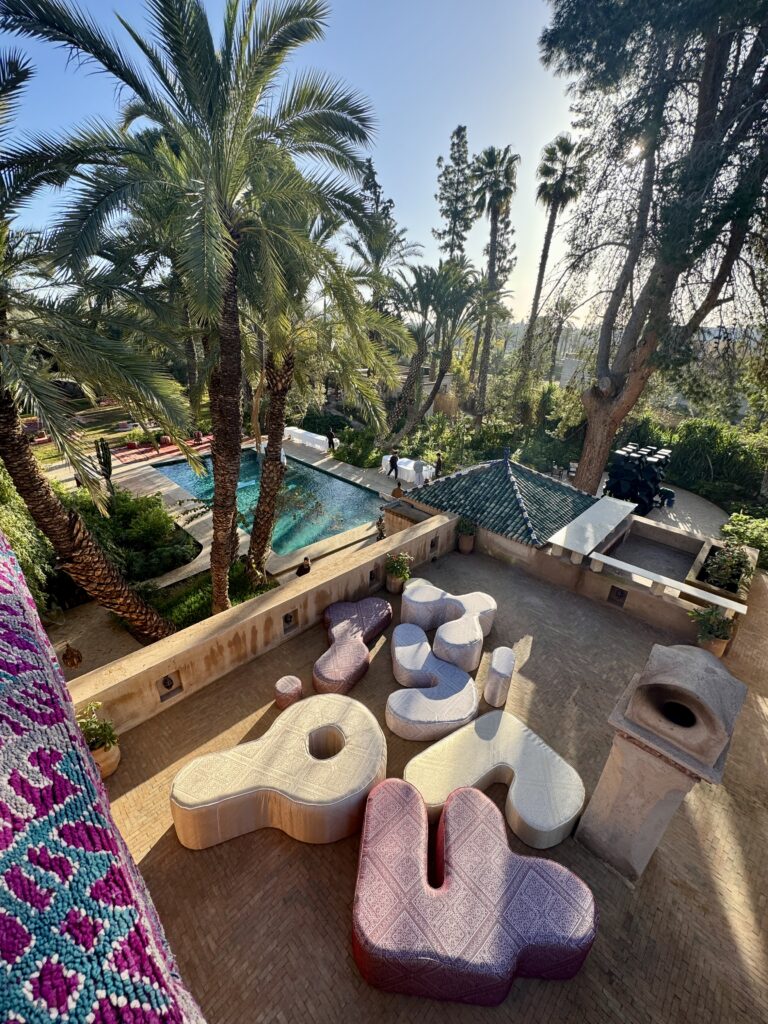
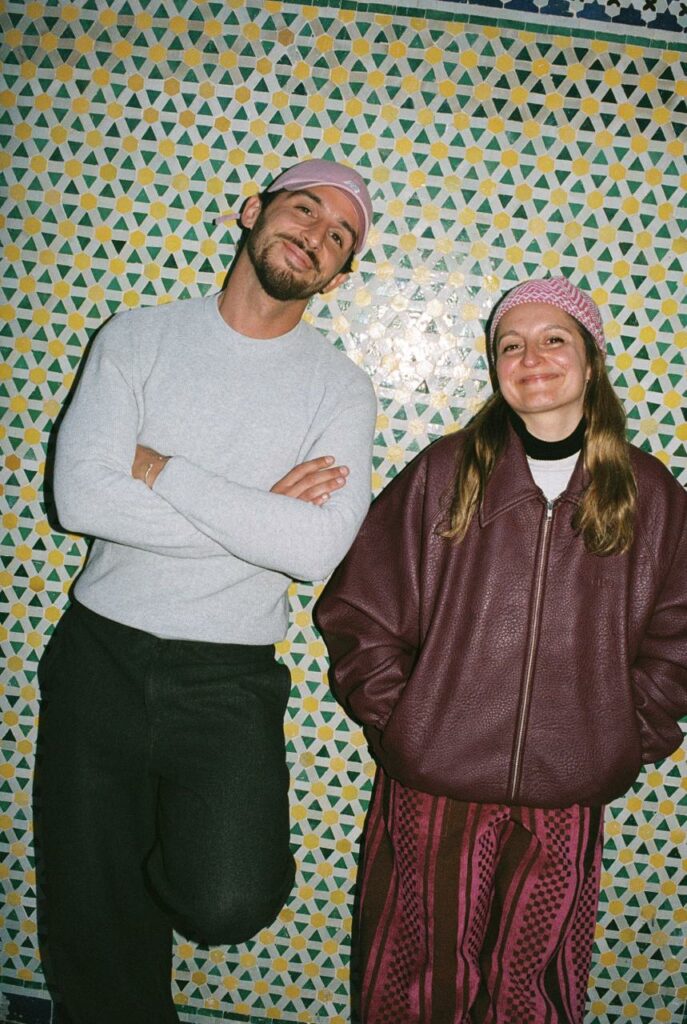
It is a simple gesture, yet it reveals everything French-Moroccan designer Sophia Kacimi, founder of Zoubida, and French-Moroccan artist Samy Snoussi set out to create. Their latest collaboration refuses familiar categories. These are sculptures that function as furniture, furniture that behaves like architecture, and architectural forms that invite the freedom of play.
The project began, as many of the best creative adventures do, almost accidentally. “It started as a joke between two friends,” Sophia recalls. “A successful collaboration starts with one thing: two people who genuinely love each other’s work and want to play. No brief, no compromise, just a shared desire to go somewhere neither could reach alone.”
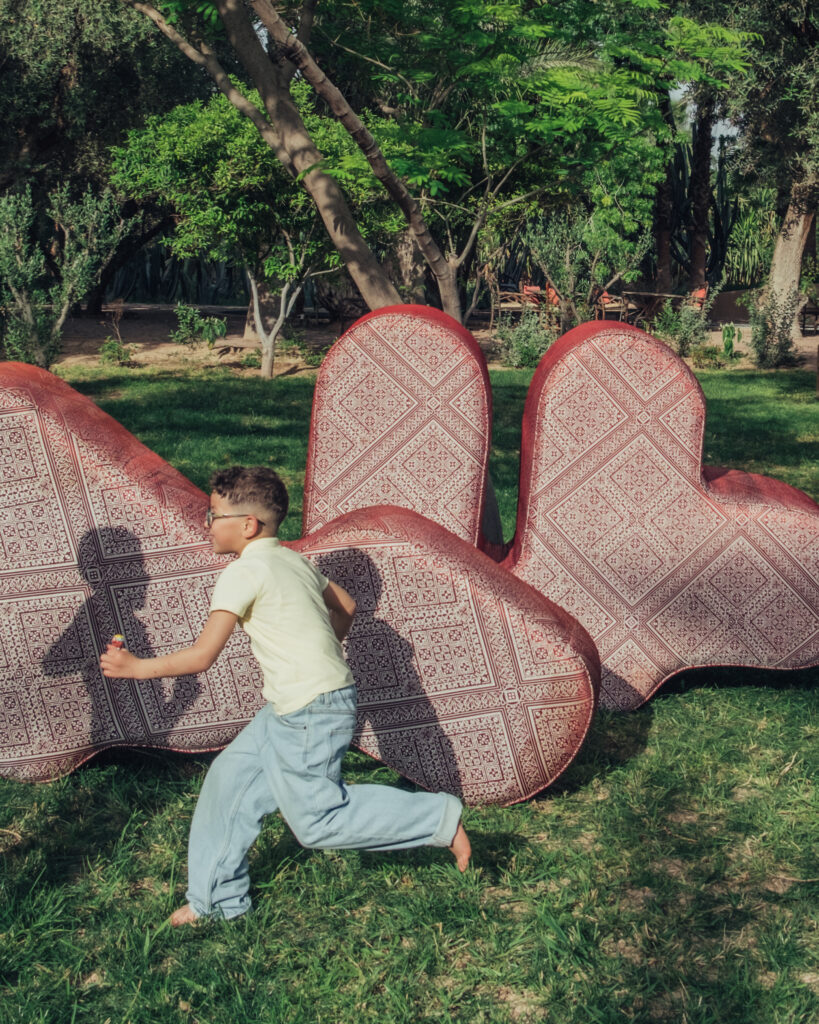
Samy had spent years developing a symbolic alphabet of his own: abstract characters born through drawing and automatic writing, each carrying an emotional meaning rather than a linguistic one. They were never intended to spell words. Instead, they spoke of Generosity, Enjoyment, Satisfaction, Love, Compassion and Flow, a quiet emotional vocabulary translated into shape rather than language.
Together, the two decided to pull these symbols off the page.Scaled to human proportions, the letters became inhabitable landscapes, inviting people to sit, recline, climb or simply gather around them. “The alphabet opens up,” Sophia says, “and you can enter it.”
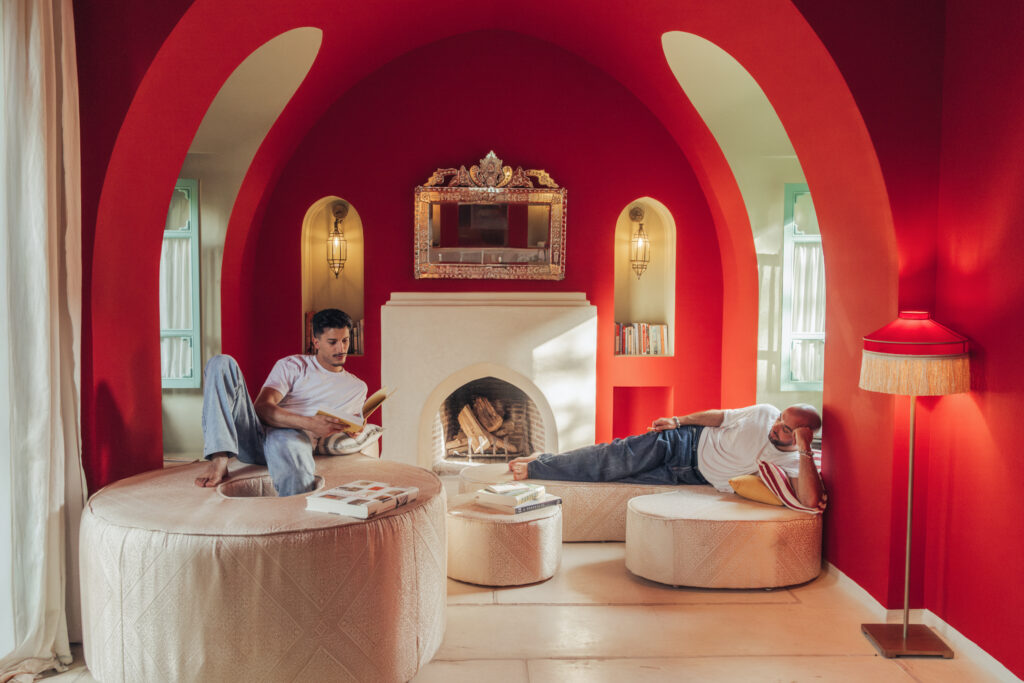
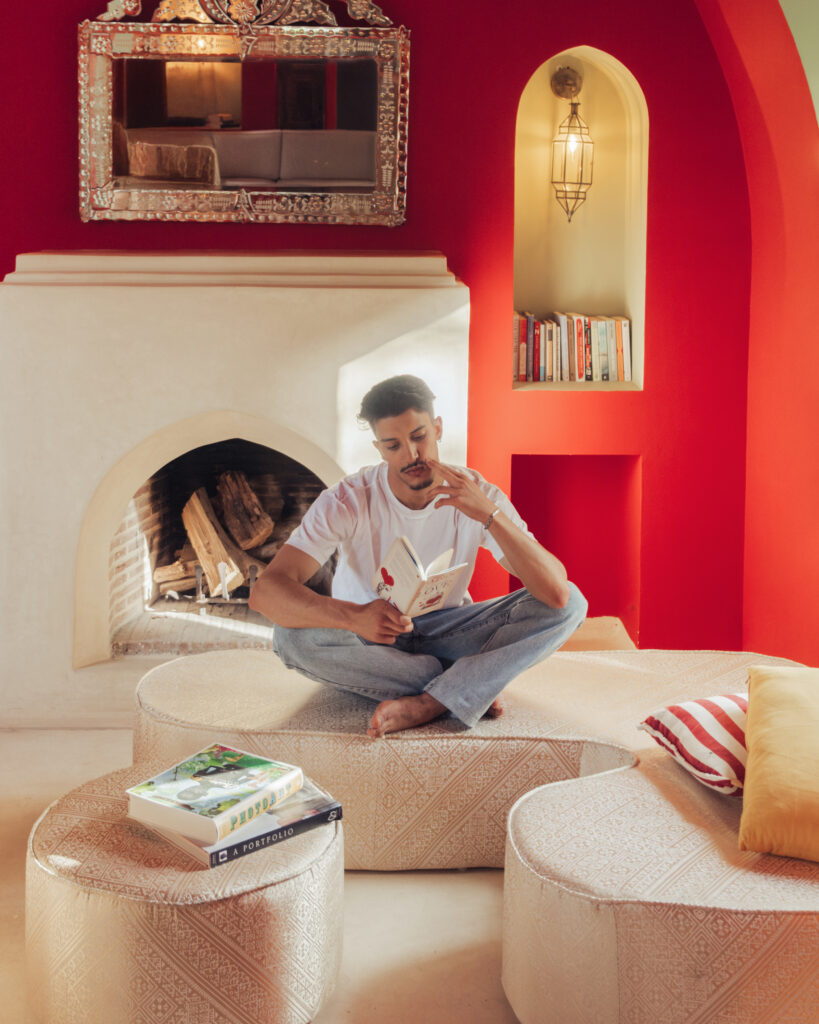
The transformation, however, could only happen in one place.For years, Sophia has worked in Fès, where she collaborates with artisans specialising in Tarz el Fassi, a counted-thread embroidery and jacquard weaving tradition whose origins stretch back more than twelve centuries. Born from the encounter between ancient Moroccan craftsmanship and the geometric sophistication brought by the Andalusian Moors after the fall of Granada, Tarz el Fassi occupies a deeply familiar place within Moroccan homes, a fabric that carries memory as much as decoration. “I often describe it as a madeleine de Proust,” she says. “For me, bringing it outside that intimate domestic setting isn’t a rupture. It’s a form of resistance. Keeping something alive by refusing to let it become a relic.”
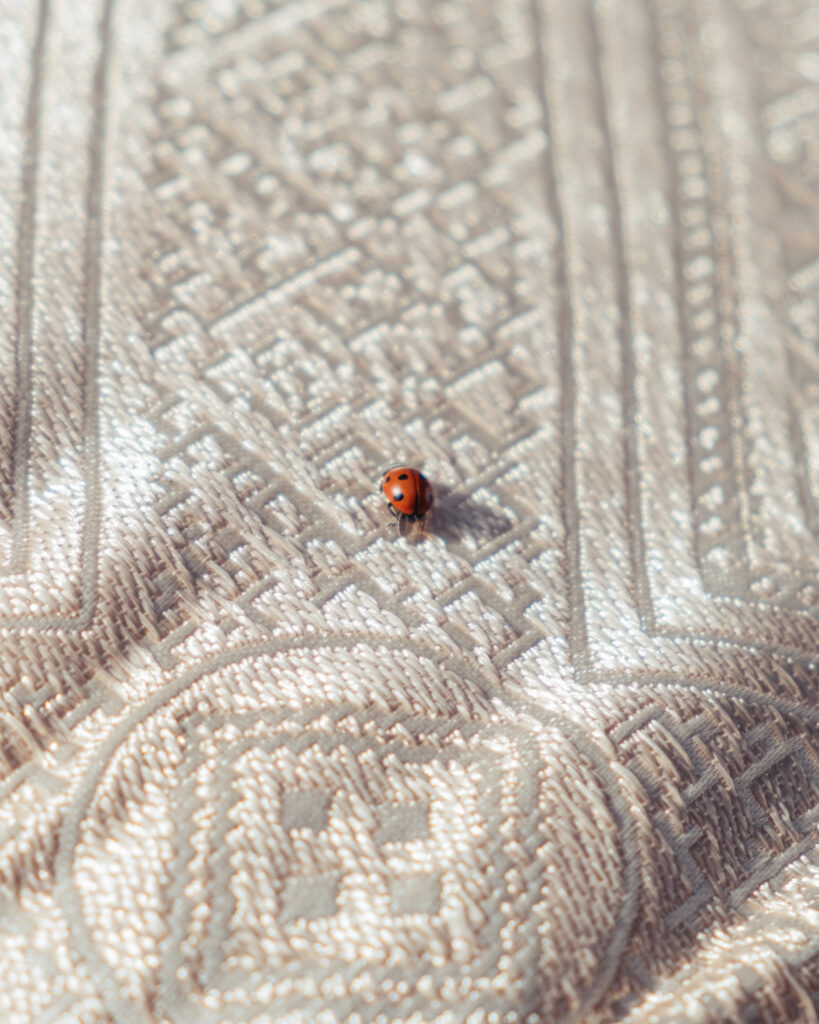
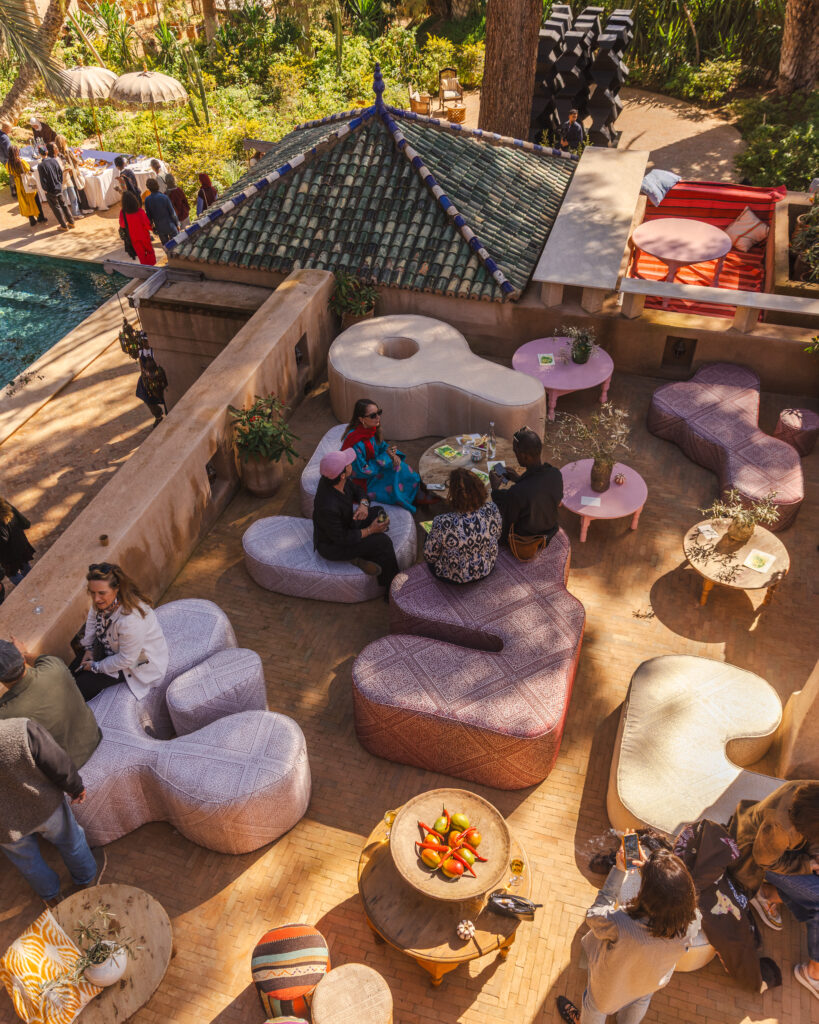
Wrapped around Samy’s imagined alphabet, the fabric begins an entirely new conversation. Rather than preserving tradition inside museums or limiting it to nostalgic reproductions, Signs of Life proposes something far more optimistic: that heritage survives by evolving. The weaving itself remains untouched; it is the context that changes. Suddenly, a textile once associated with the Moroccan salon envelops monumental sculptural forms destined for galleries, hotels, gardens and public spaces. The ancient and the unfamiliar coexist without either losing its identity.
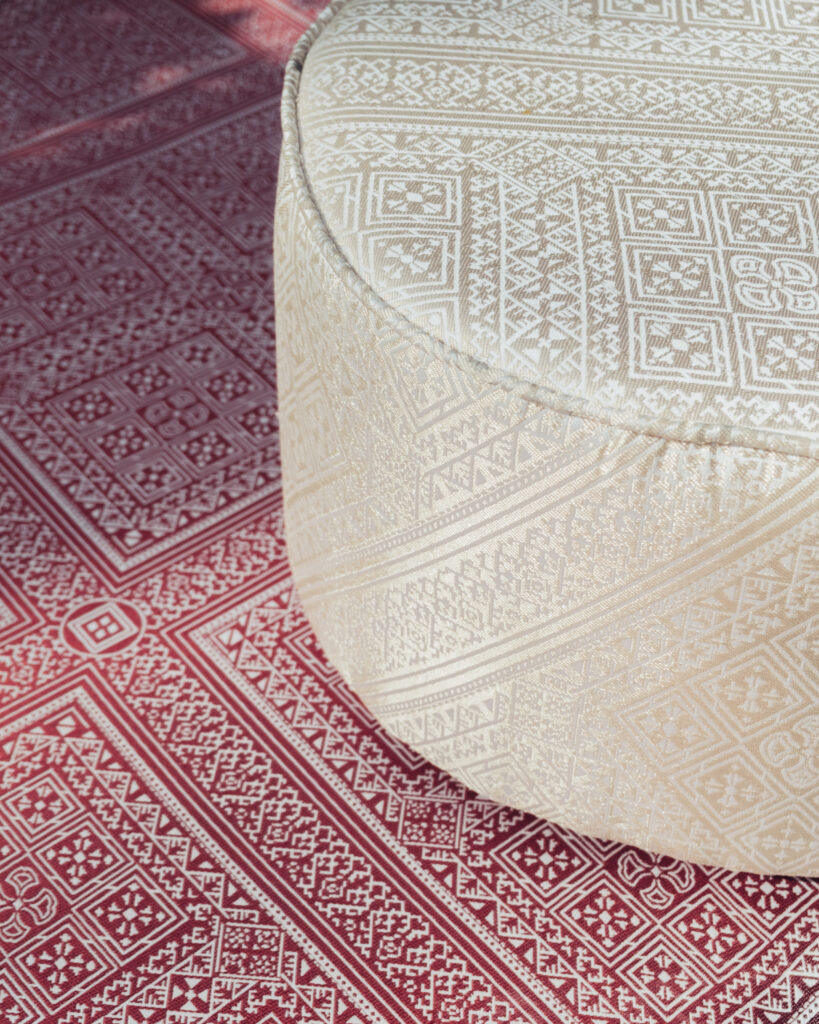
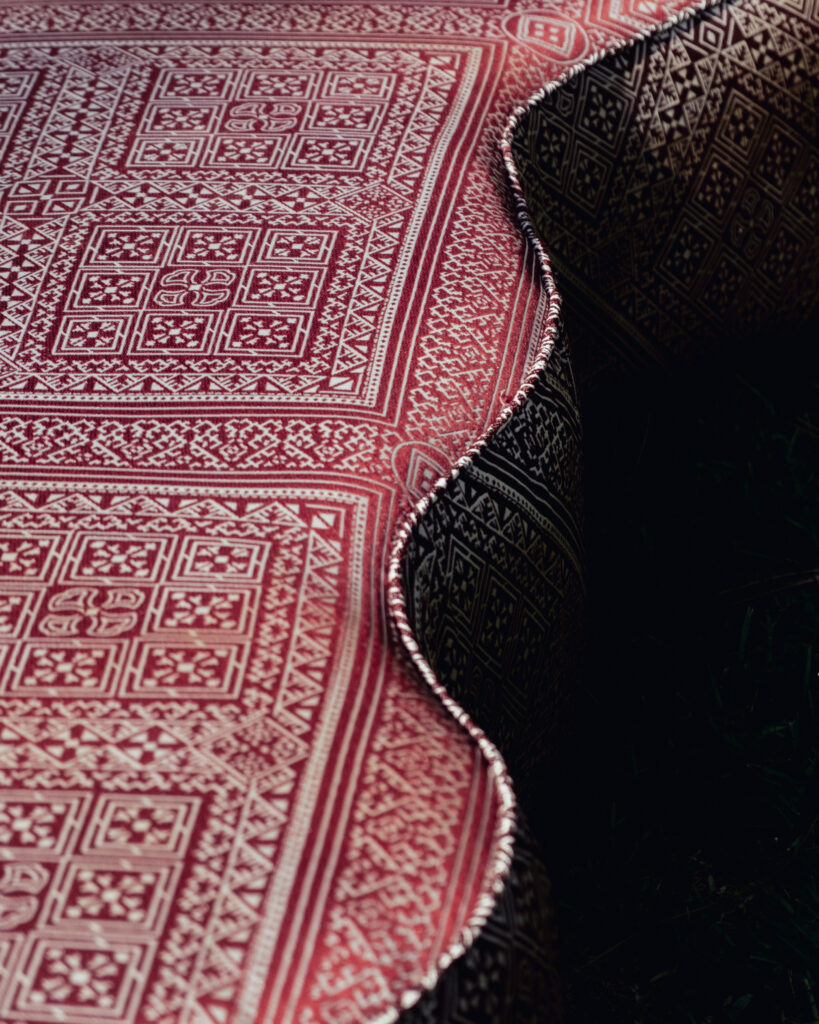
This philosophy extends to the making of the pieces themselves. Nothing about the process was straightforward. The artisans who have spent decades mastering upholstery, embroidery and textile construction had never carved giant foam sculptures before. There were no manuals to follow, no established techniques to imitate. “We were all in unknown territory together,” Sophia remembers. “Nobody had done anything like this before, not me, not Samy, not the artisans. We had to invent everything together.”
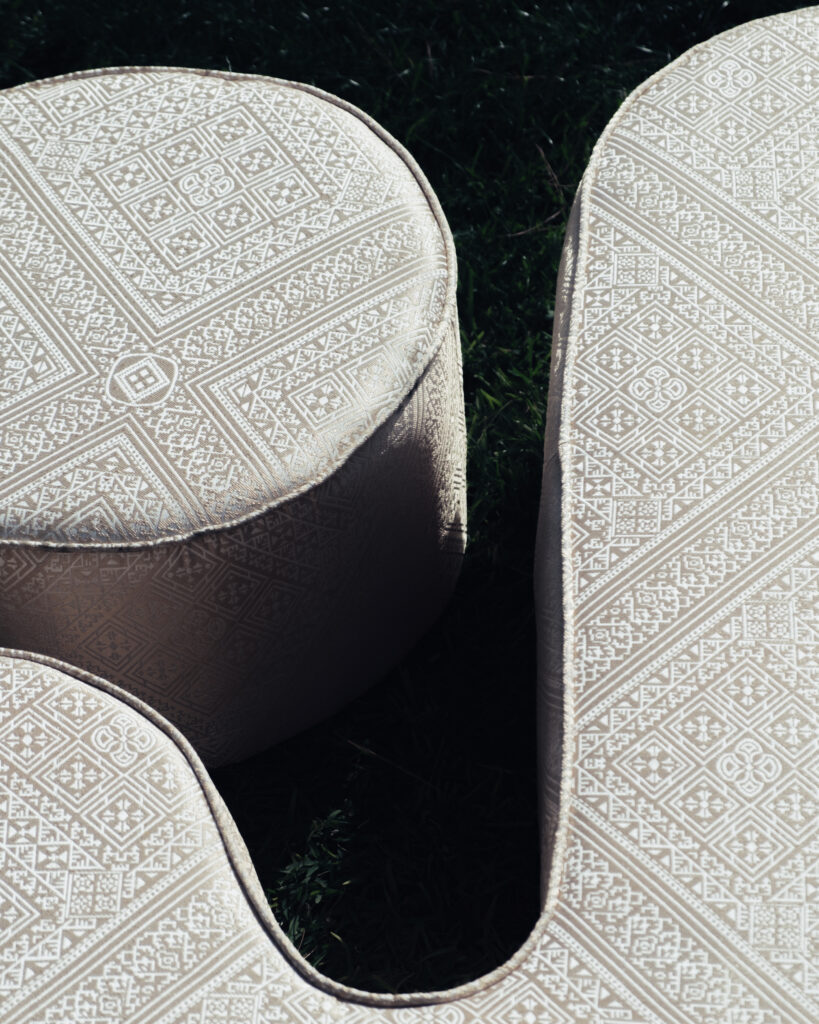
There is an honesty to that admission that feels increasingly rare in contemporary design. Instead of celebrating effortless perfection, the project embraces experimentation, uncertainty and collective problem-solving. Foam was carved by hand, seams recalculated, proportions adjusted repeatedly until the forms achieved an unlikely balance between sculpture and comfort.
For Sophia, the most rewarding moment arrived not when the pieces were photographed, but when the artisans encountered the finished installation. “The reaction was always the same,” she says. “‘I’m an artist too, actually.'”
That shift in perception lies at the heart of Zoubida’s practice. After fifteen years working with luxury houses including Chanel, Louis Vuitton, Alexander McQueen and Burberry, Sophia returned to Morocco with a lingering question: why were the very same métiers d’art celebrated by European fashion houses so often overlooked in the communities where they originated? “The real challenge isn’t preservation,” she says. “It’s perception and desirability. If younger generations don’t see a future in these techniques, they disappear.”
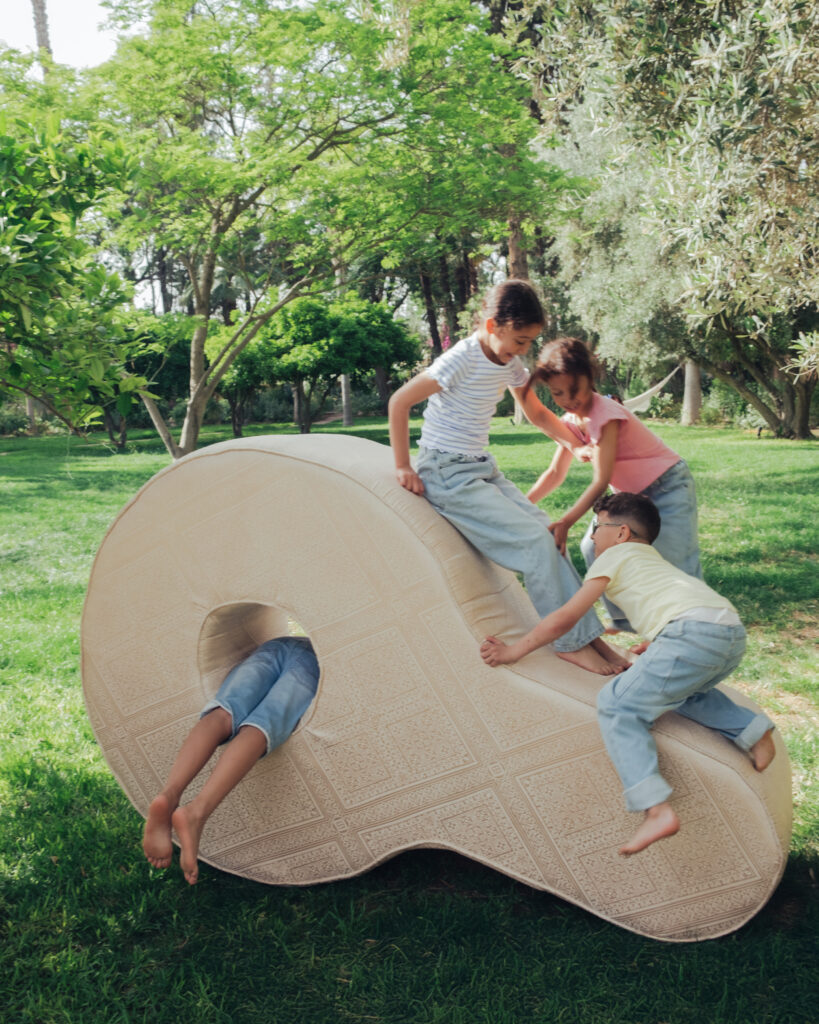
Today, her studio works not only with master artisans but increasingly with students from Fès’ Schools of the Second Chance, introducing young people to skills that risk fading from collective memory. Around the workshop, craftsmanship becomes less of a solemn exercise in heritage and more of a living social ritual, music playing in the background, meals shared between generations, conversations unfolding as hands continue working.
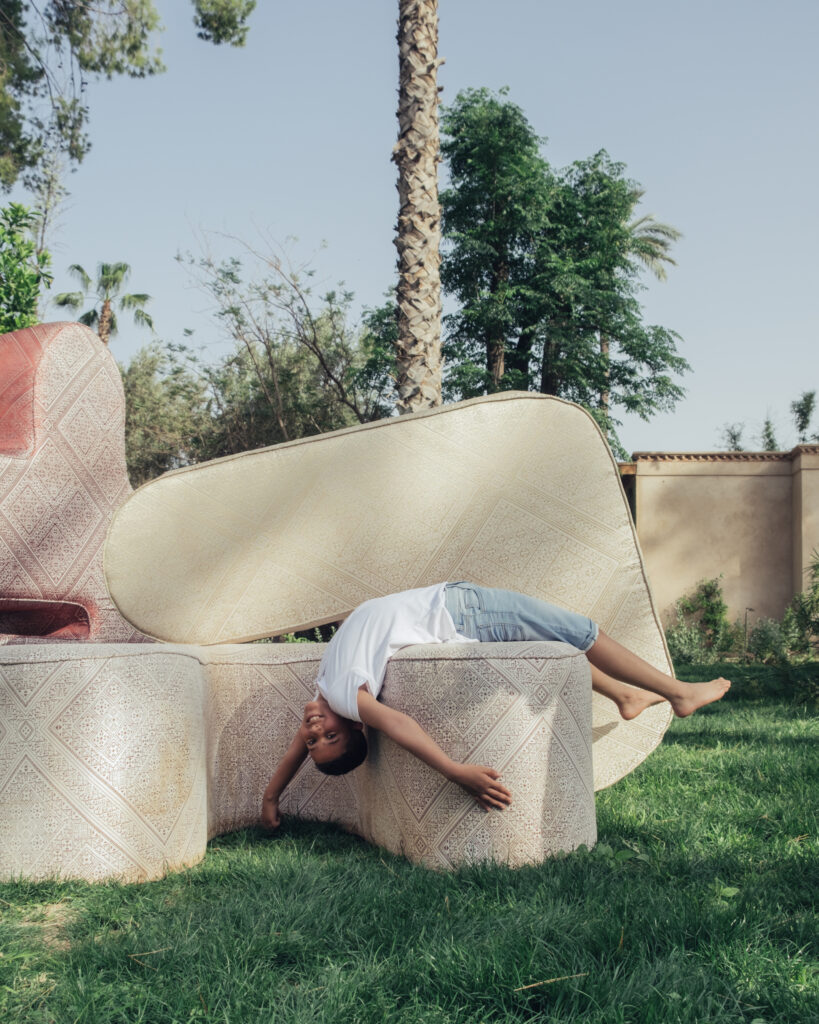
That sense of togetherness perhaps explains why Signs of Life feels so instinctively welcoming. The pieces never dictate how they should be used. Children transform them into playgrounds. Adults discover unexpected places to rest, read or simply pause. During the project’s first presentation in Marrakech, visitors needed no explanation; the objects quietly revealed their own purpose through interaction. Perhaps that is what makes this collection resonate beyond the world of collectible design.
In an age increasingly shaped by automation, algorithms and artificial intelligence, these sculptures remind us that the most meaningful objects still carry visible traces of the people who made them. Every stitch, every irregular curve, every calculated imperfection reflects not efficiency, but human presence.
“In a world reshaped by AI,” Sophia reflects, “I genuinely believe the future belongs to the handmade.” Looking at these monumental letters scattered across a garden, half sculpture, half gathering place, it is difficult to disagree. Some languages are meant to be read. Others, perhaps, are meant to be lived.
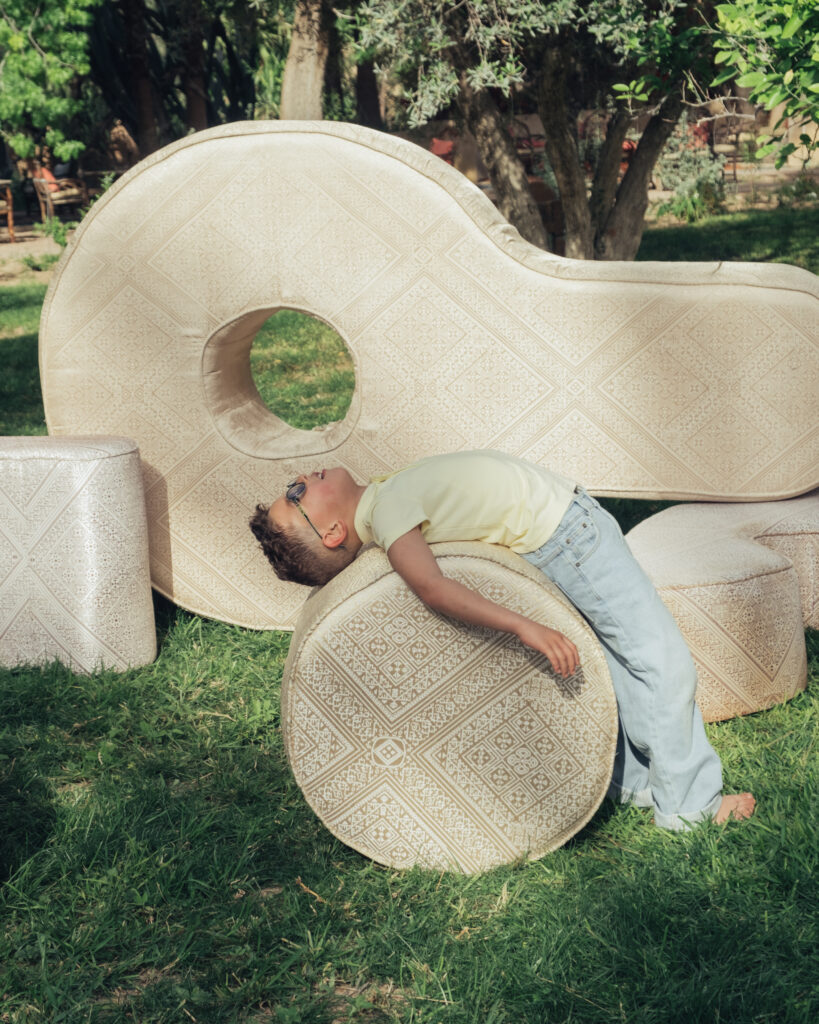
The children in these images are : Islam, Aya, Nizar, Rym, Wiame.