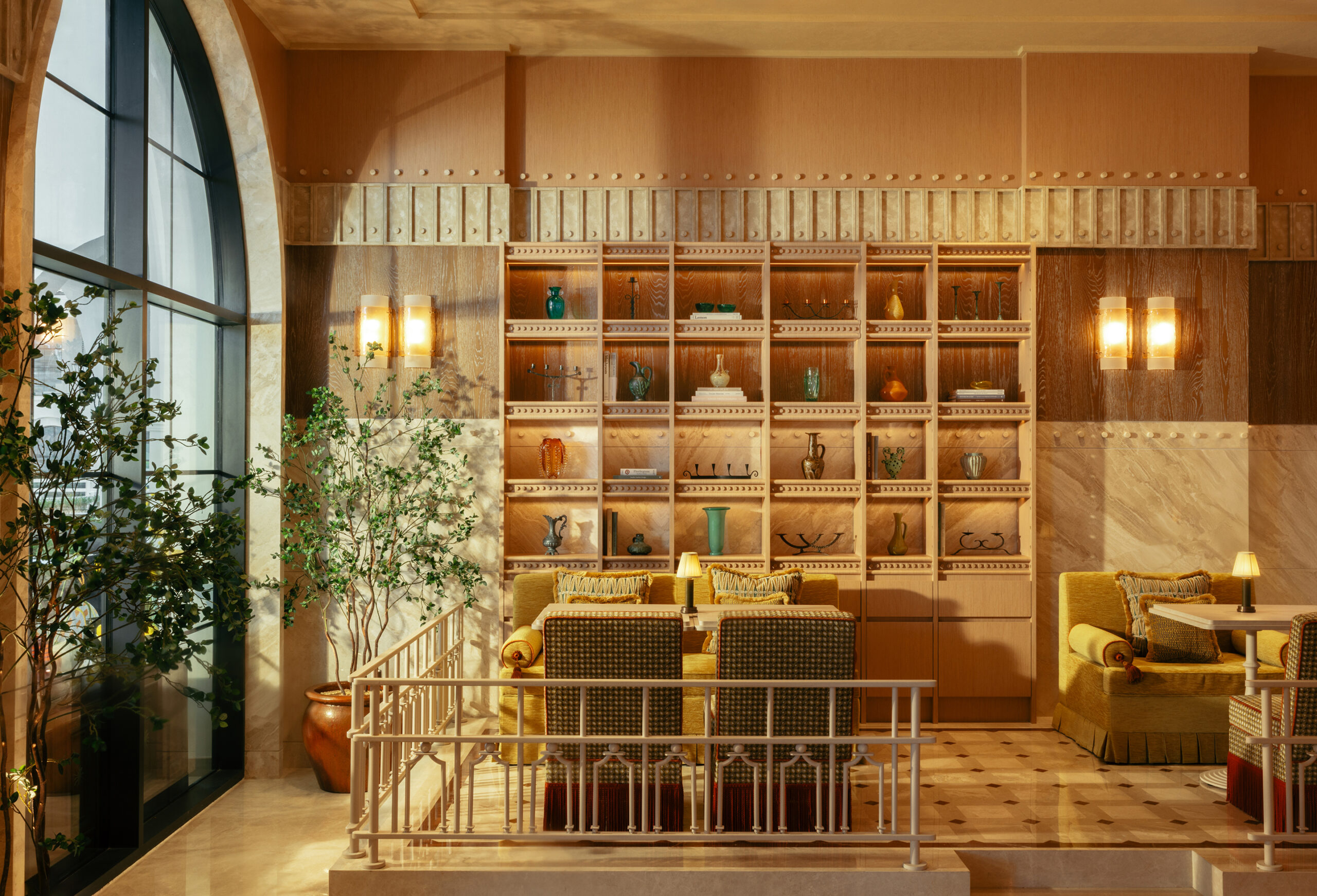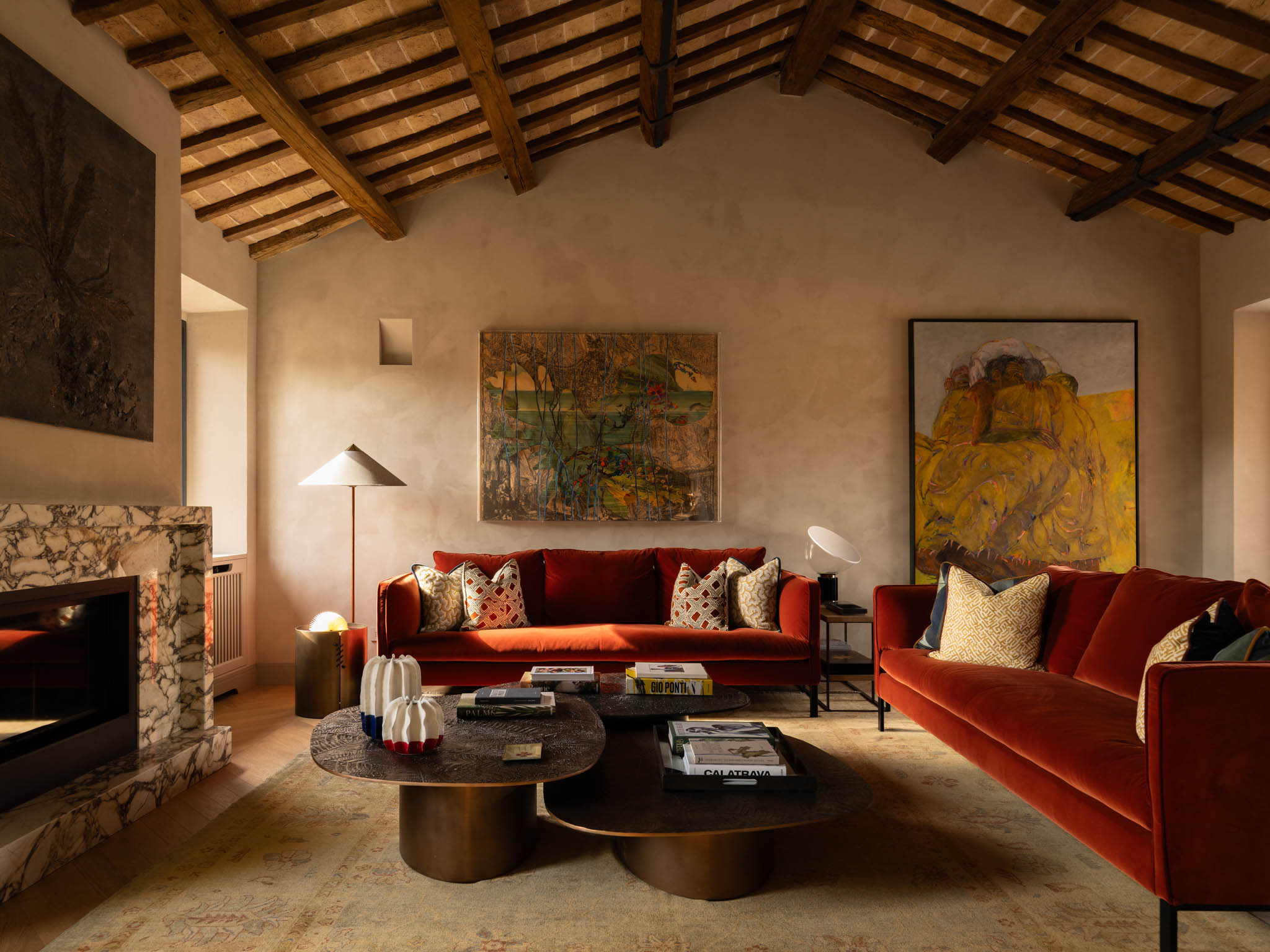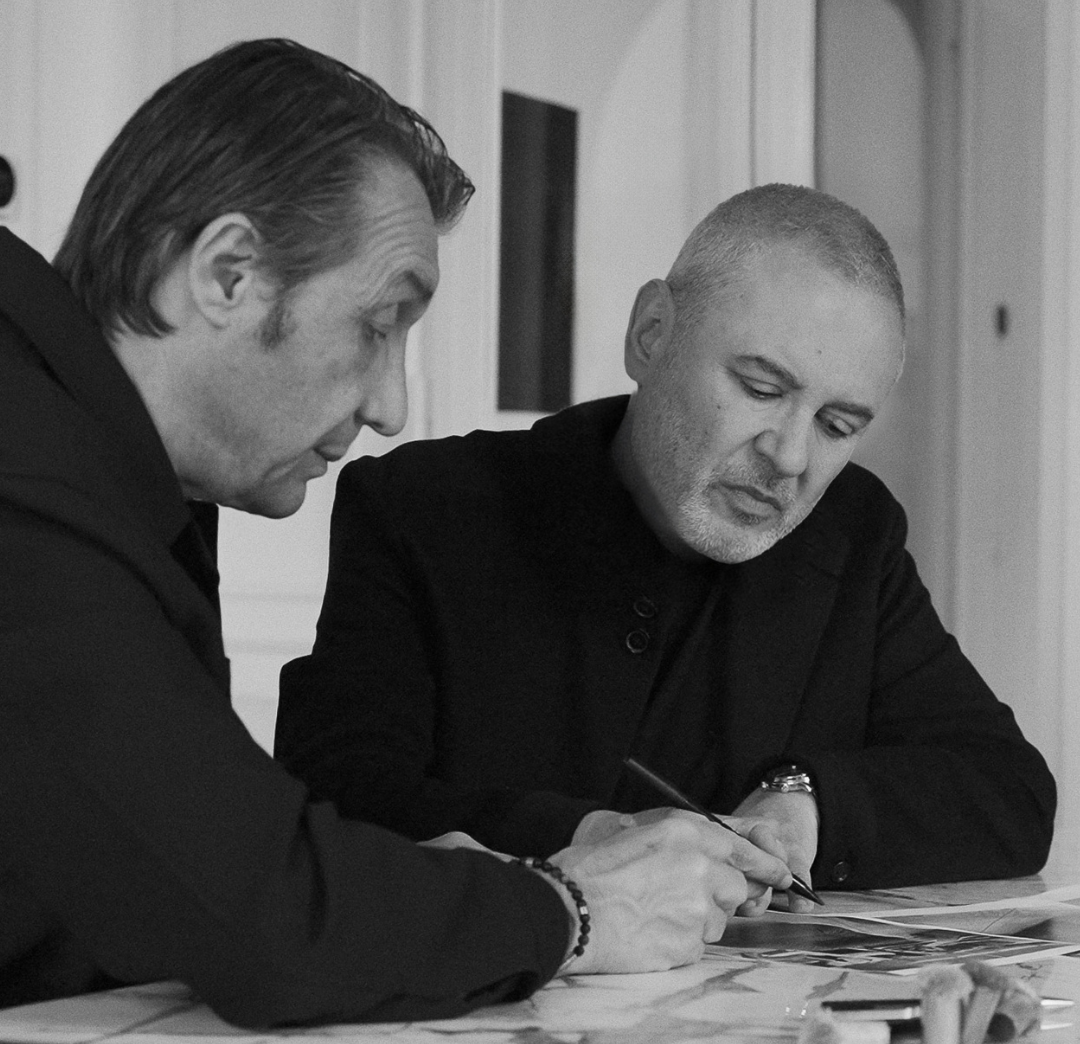
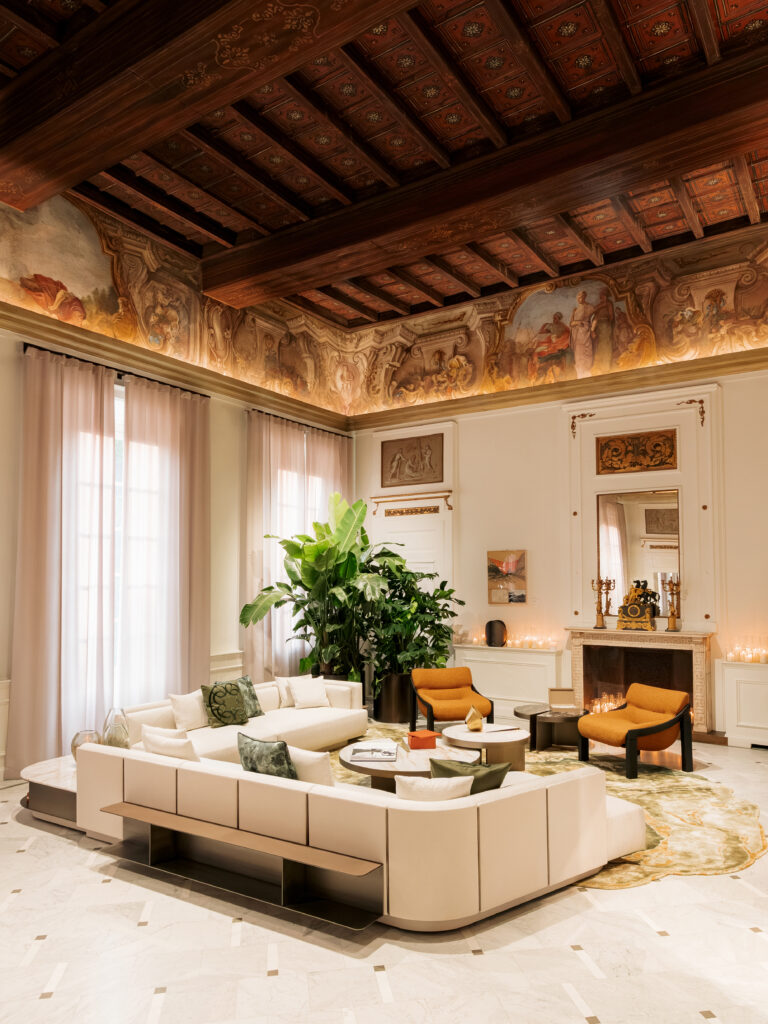
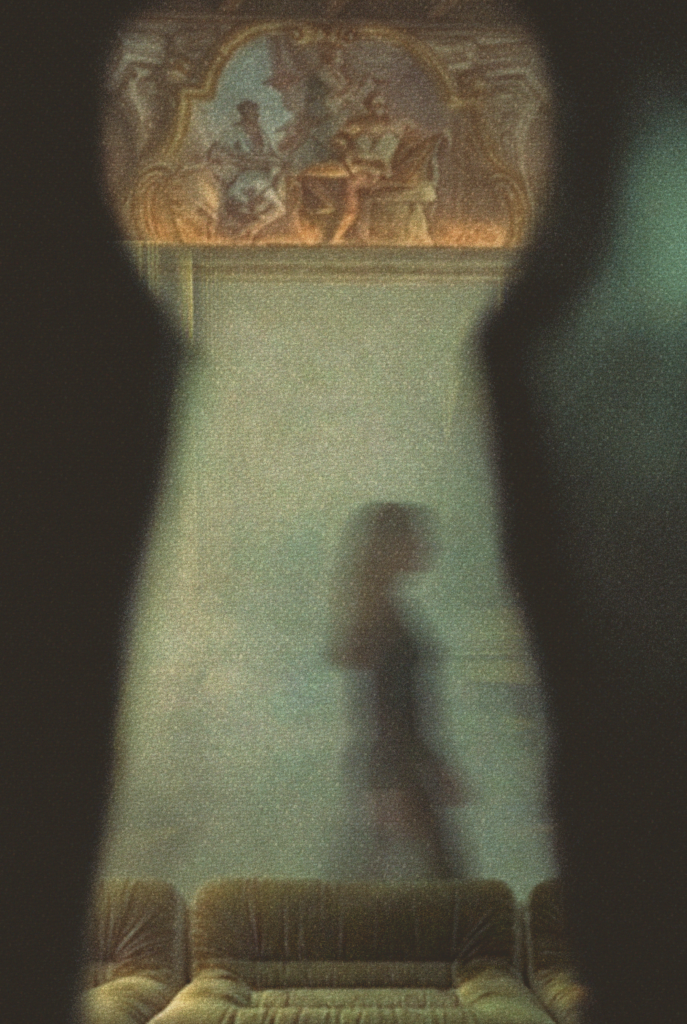
“A Milanese house after dark. Rooms revealed one after another, like fragments of a private story.” With The Milanese House. Una notte a Milano, ELIE SAAB MAISON staged an installation that operated as both scenography and manifesto. Conceived within its Via Pietro Mascagni showroom, the project was imagined “like a home, and not just a showroom,” as Elie Saab Jr. explained, “so people, when they enter, feel that they are at home and can already see the pieces allocated as if it were a house, a home.”
For Saab Jr., the decision to anchor the project in Milan was structural. “For us, Milan is the heart of design, it’s where it all happens when it comes to design,” he said, pointing to an ecosystem where “the craftsmanship, the factories, the sourcing, the fabrics, everything happens here.” The city is not only a stage but a production matrix, one that has allowed the brand to embed itself within Italian know how. “Italy has managed to nurture its talents and develop its crafts, and to be part of the Italian ecosystem is very important for the development of our brand as a whole.”
This proximity has shaped the very identity of the collection. “ELIE SAAB MAISON is an extension of ELIE SAAB, each piece reflects this vision, nothing is left to chance,” he continued, describing a process in which every object carries “a part of ELIE SAAB’s DNA,” yet is calibrated to exist within interiors without literal translation. “It’s less straightforward to do than fashion. We also wanted the pieces to have their own DNA, but they fit into the bigger vision.”
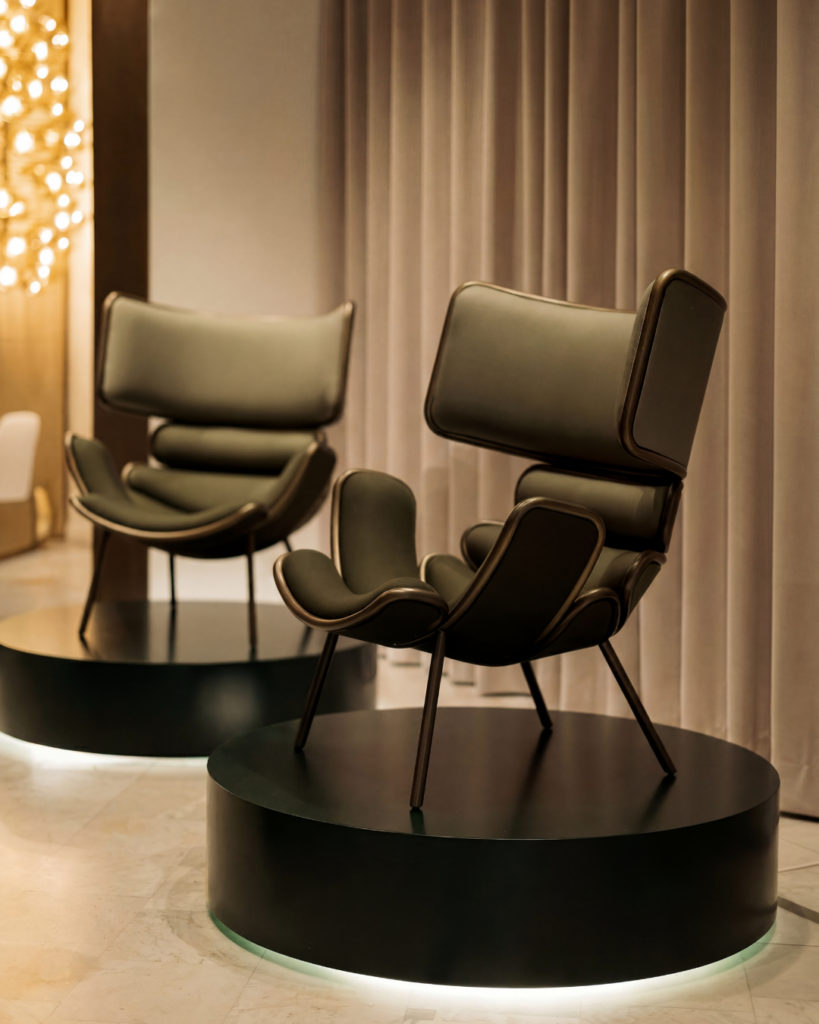
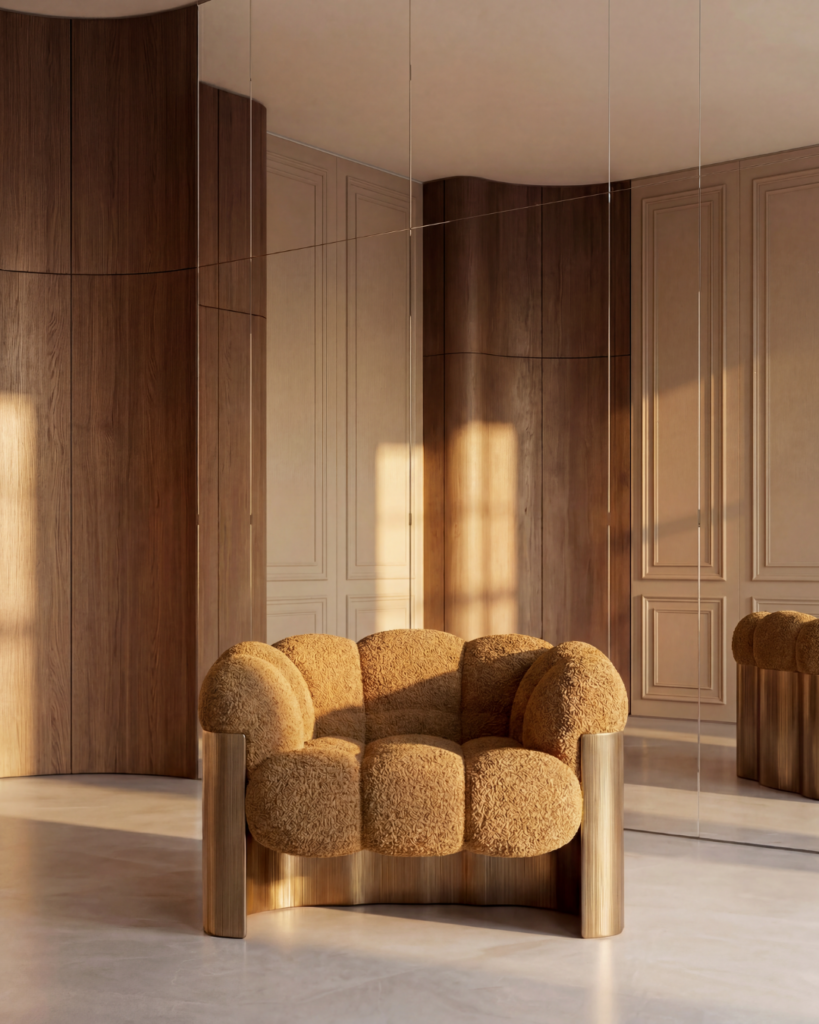
Under the creative direction of Carlo Colombo, this negotiation took form through a precise material and formal language. The Mascagni Sofa, defined by its plissé surface, became a focal point of the collection, developed through a near couture methodology. “Mr. Saab and Carlo were at the factory — almost draping the fabric themselves. Nothing was done by chance,” Saab Jr. noted. Alongside it, the Onda Armchair introduced a more fluid gesture, its enveloping form counterbalanced by a refined metal base.
If Saab Jr. articulated the conceptual framework, Massimiliano Ferrari framed the project as a narrative construction. “We were trying to find something linking Milan, Italy, and the Mediterranean spirit of Lebanon, with something timeless,” he explained. The result was “the lifestyle of an aristocrat family, this time a Milanese family,” staged through a sequence of atmospheres. “Each room has a different music, a different smell, a different fragrance, this is the relaxing moment, the family room, the ballroom, the invitation of parties.”
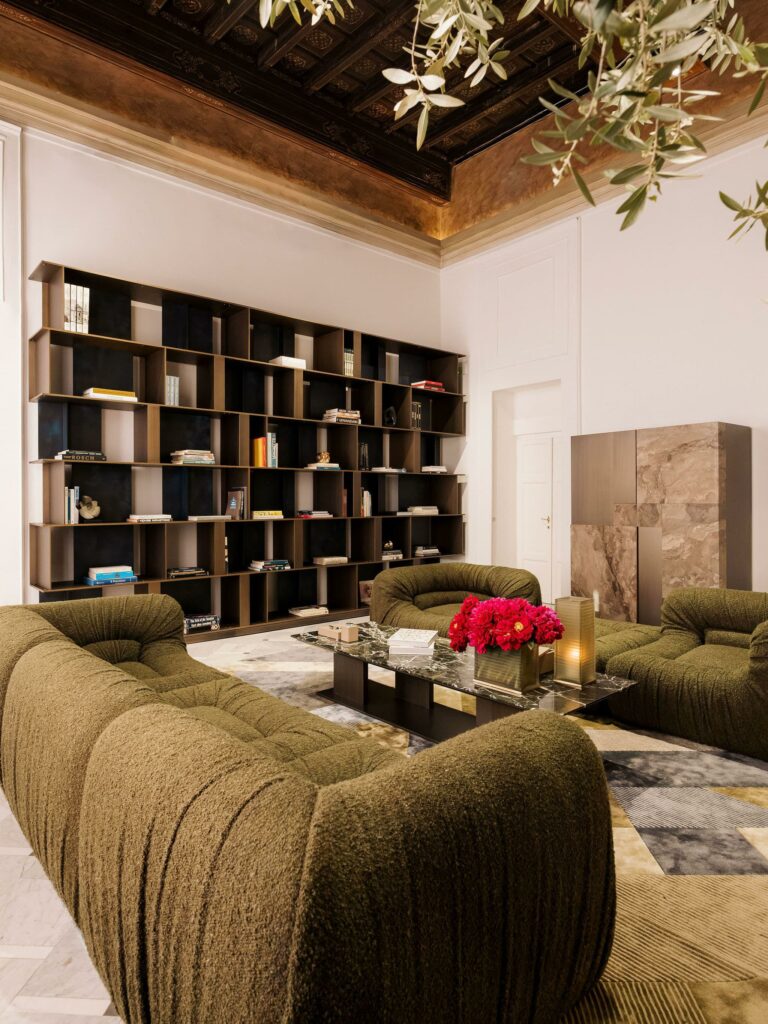
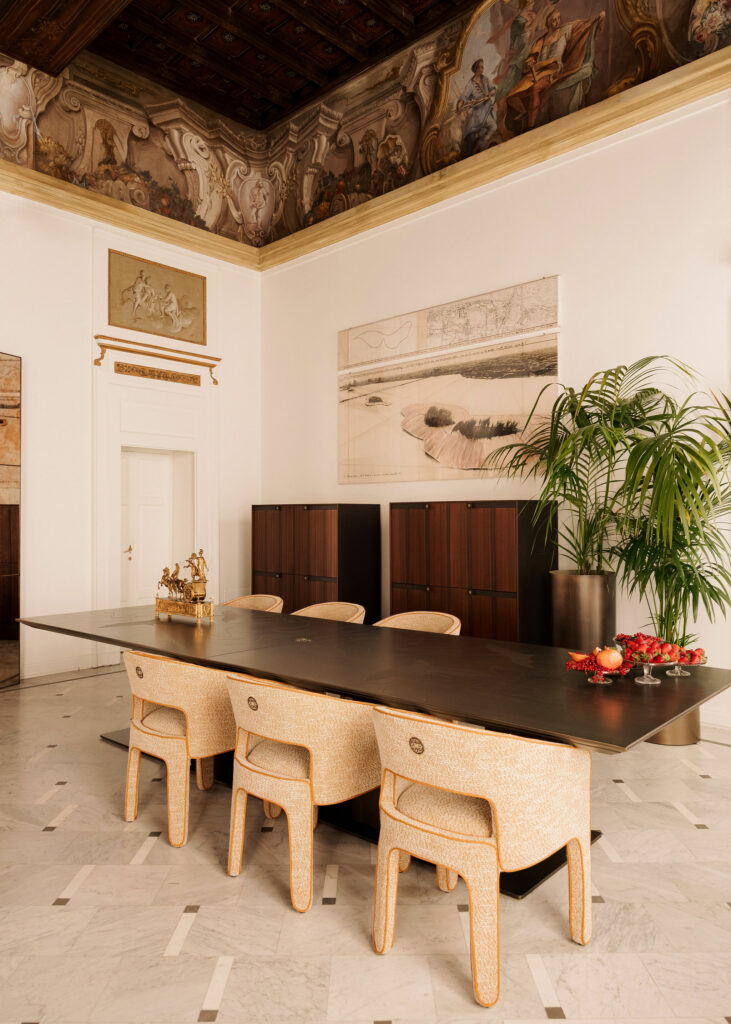
This scenographic layering extended to the smallest details. “All the books, everything, every detail is really studied, because we are painters, we are great artists, great architects,” Ferrari said, describing a space conceived as “very rich in terms of culture.” Even functional elements were absorbed into this vision. A cabinet integrated “the fridge, the wine cellar, everything,” becoming “a complete set to organise a mini bar,” where, as he put it, “you combine functionality without losing at all your luxurious nature.”
Throughout, the dialogue between fashion and interiors remained explicit yet controlled. “We wanted to do it in a perfect and authentic way,” Ferrari noted, acknowledging a broader industry movement while insisting on precision of execution. The installation ultimately operated as what he described as “the art of the installation,” a constructed domesticity in which architecture, sound, art, and design converged into a singular, immersive language.