There is a particular kind of exhaustion that belongs to those who orchestrate the extraordinary for others. Noura knows it well. As a government event planner whose days unfold across logistics, timelines, and the relentless choreography of large-scale ceremony, she exists in a world of perpetual output. What she needed, when she came to D’Ora Tokai Designs, was not a showroom. She needed a shore.
Her apartment in Abu Dhabi looks out over the Arabian Gulf, that broad, luminous expanse where light and water negotiate endlessly with one another. It was this view, and everything it implied about pace and possibility, that became the project’s true brief. “The brief was clear: create a space of calm,” says D’Ora Tokai, Creative Director of the eponymous studio. “But the real challenge was to craft an atmosphere that felt deeply personal — one that softened the pace of life without sacrificing identity.”
The conceptual origins of Noura’s Oasis reach back to an earlier project, Sarah’s Downtown Views, a Dubai residence that had drawn Noura in with its sculptural wall reliefs, soft greens, and warm wood tones. She was moved by its tactility. But her world was different. Where Sarah’s apartment exhaled into an urban landscape, Noura’s looked outward to turquoise water and an open sky. The palette had to travel with that shift, from dusty greens to sandy creams, from the city’s contained energy to the coast’s expansive quiet.
From there, the process unfolded as it always does at D’Ora Tokai Designs: slowly, intuitively, conversationally. “Our process always begins in conversation, long, layered, and intuitive,” Tokai explains. “We ask about needs and wishes, but we listen for pace, emotion, and memory.” The mood board that emerged was not a collage of aspirations but, as Tokai describes it, “a map of intention”, governing tone, material, metal finishes, shapes, and the emotional register of each room.
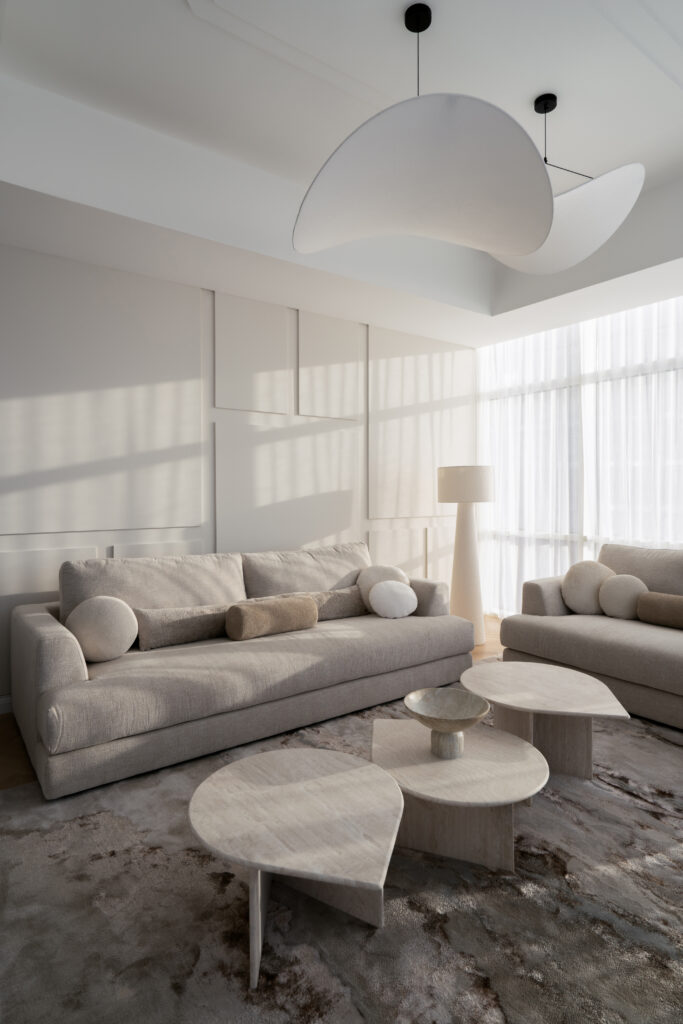
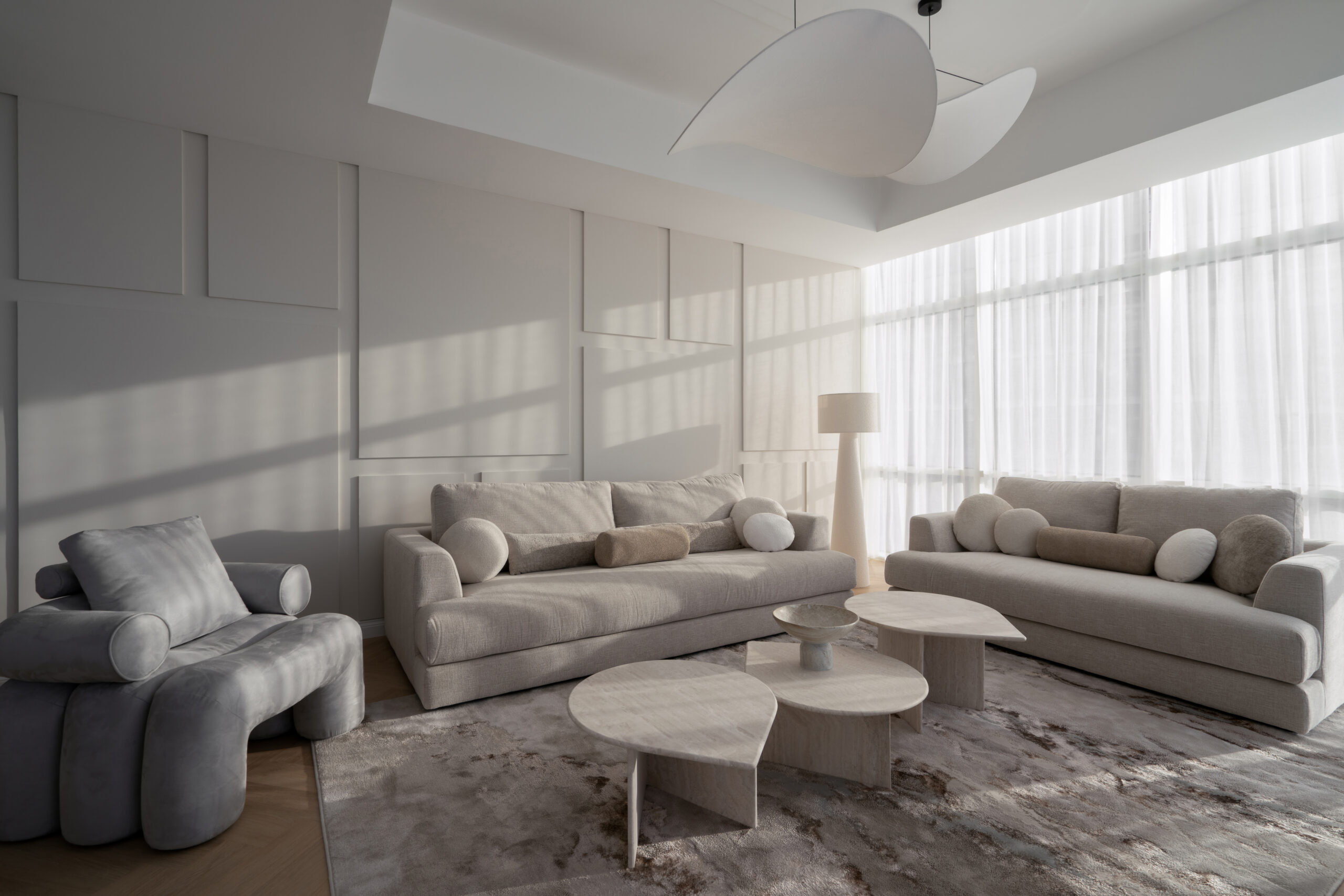
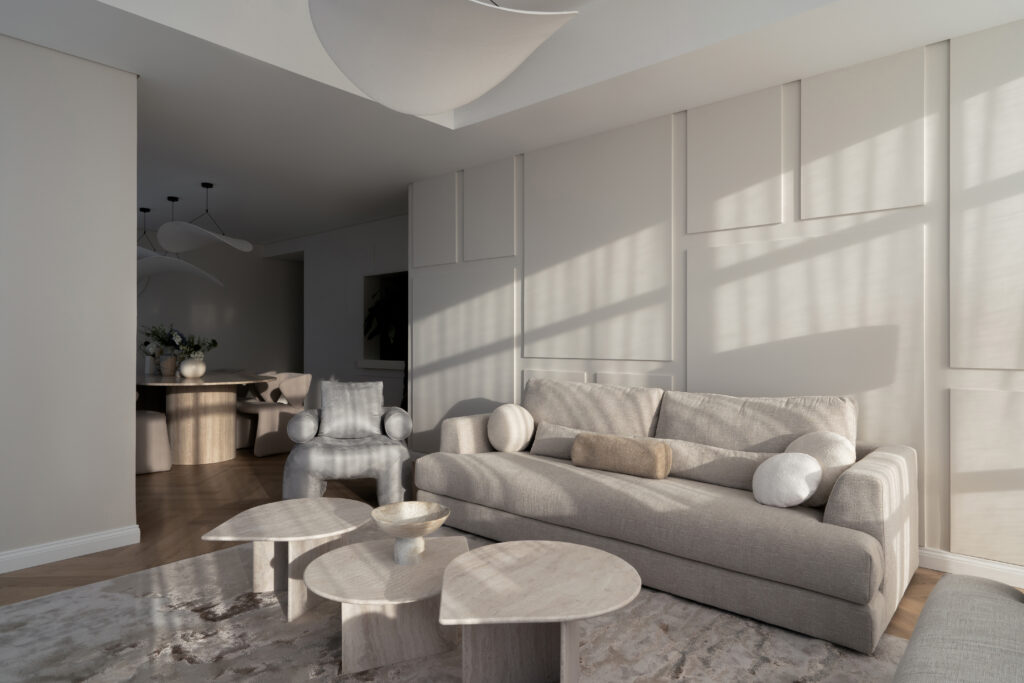
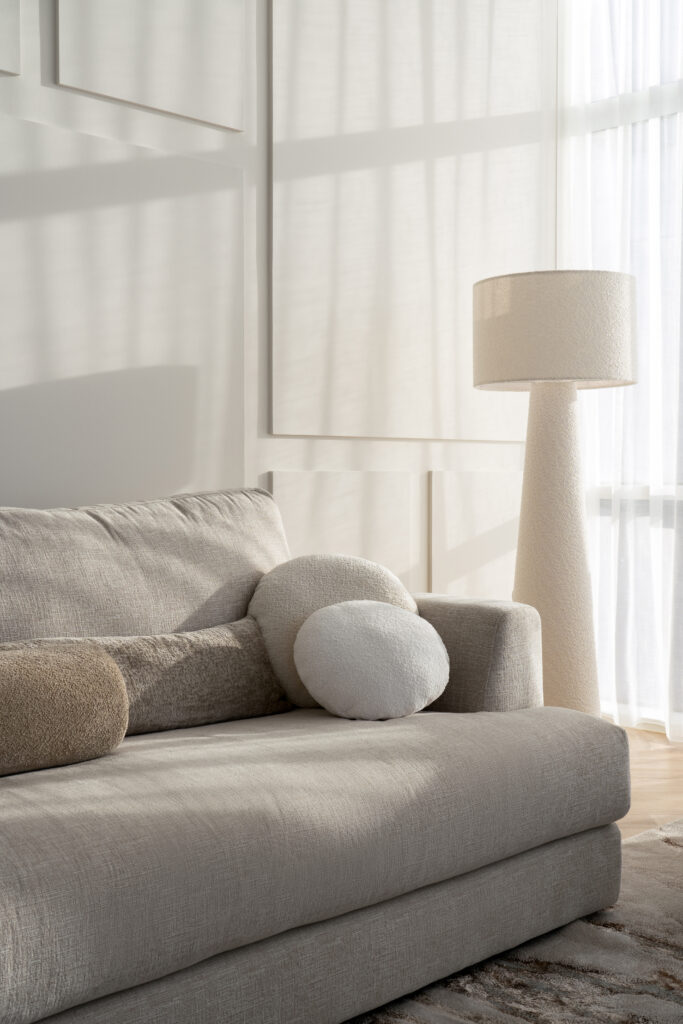
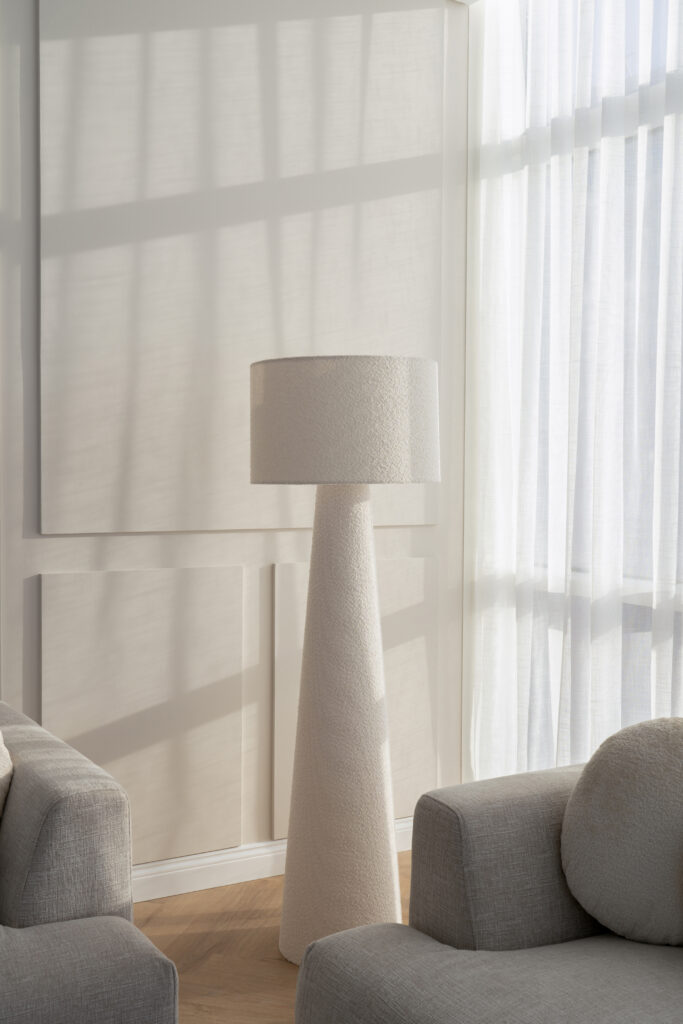
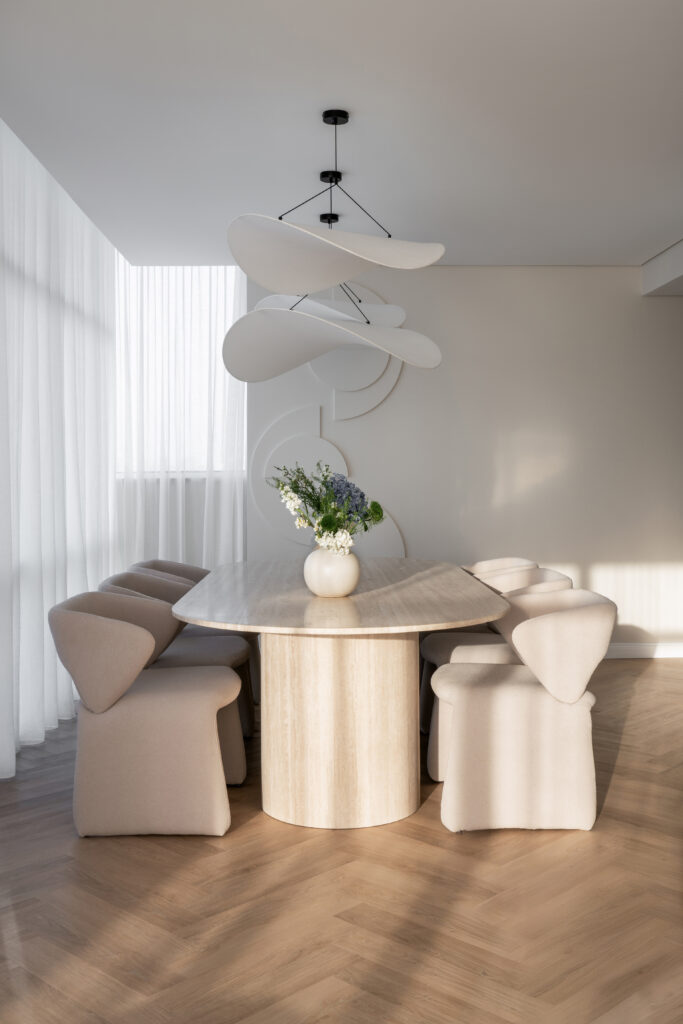
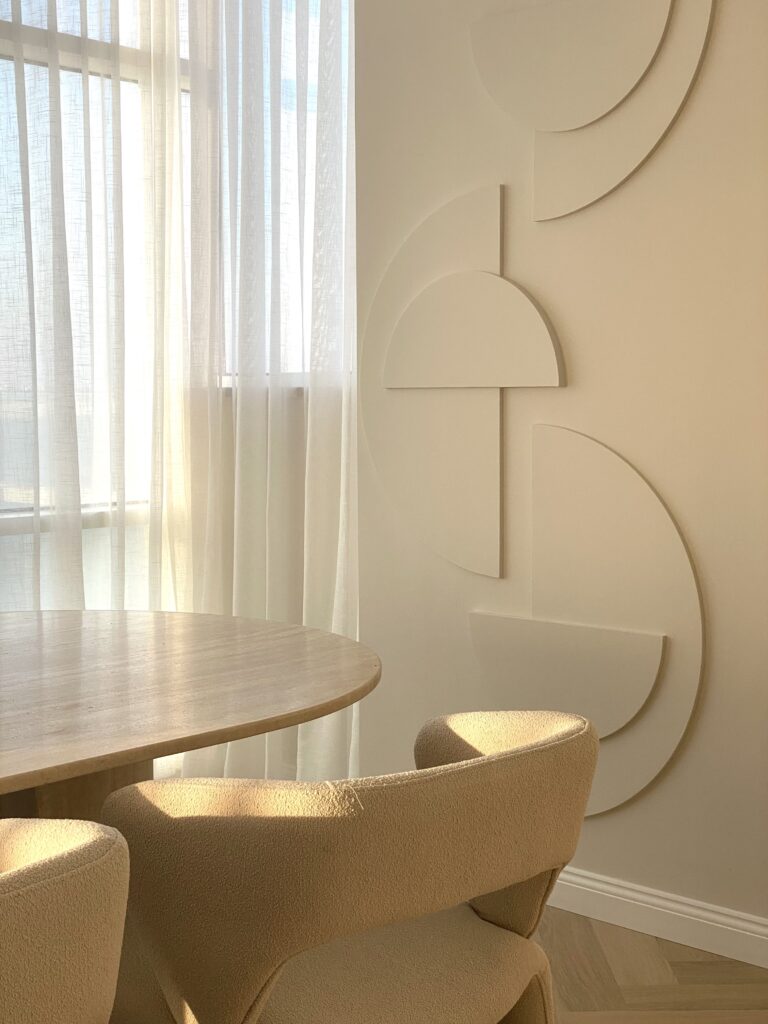
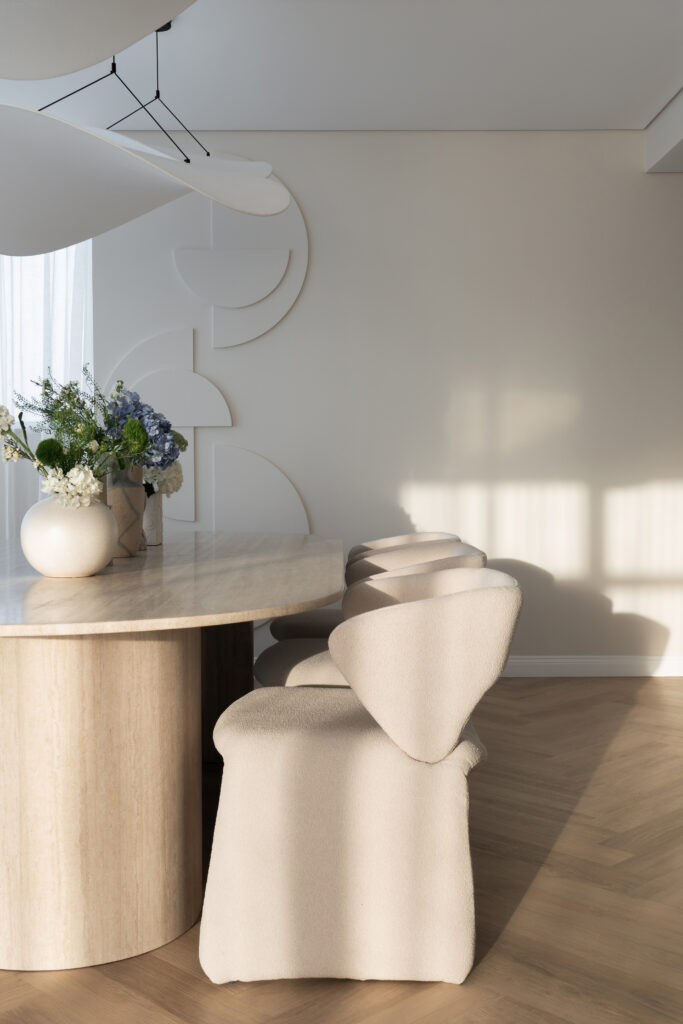
What the studio discovered, midway through their study of the apartment, was a gift hidden in plain sight. During the day, as the Gulf sun moved across the sky, it cast long, slanting shadows across the walls, lines that appeared and dissolved with the hours. Rather than neutralising these transient geometries, Tokai chose to honour them. Custom gypsum wall reliefs were designed to amplify the play of light, their shallow sculptural forms echoing the ripple of wind across still water.
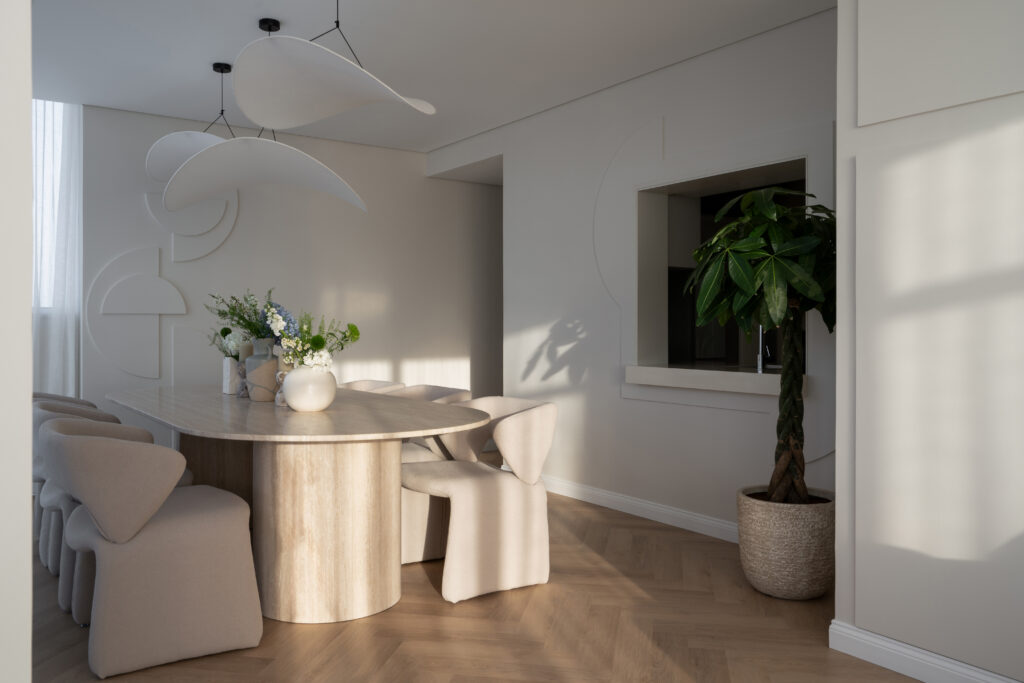
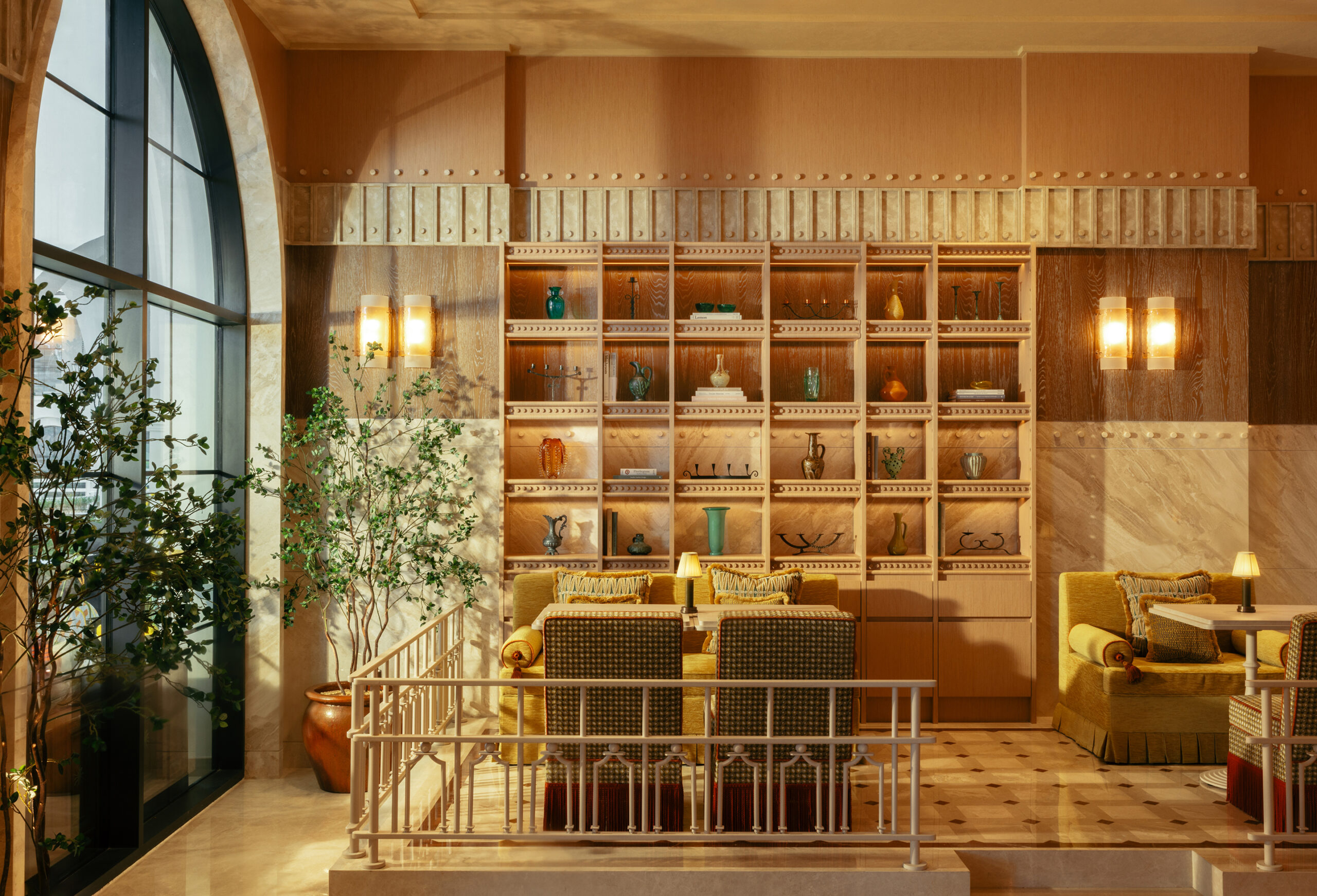
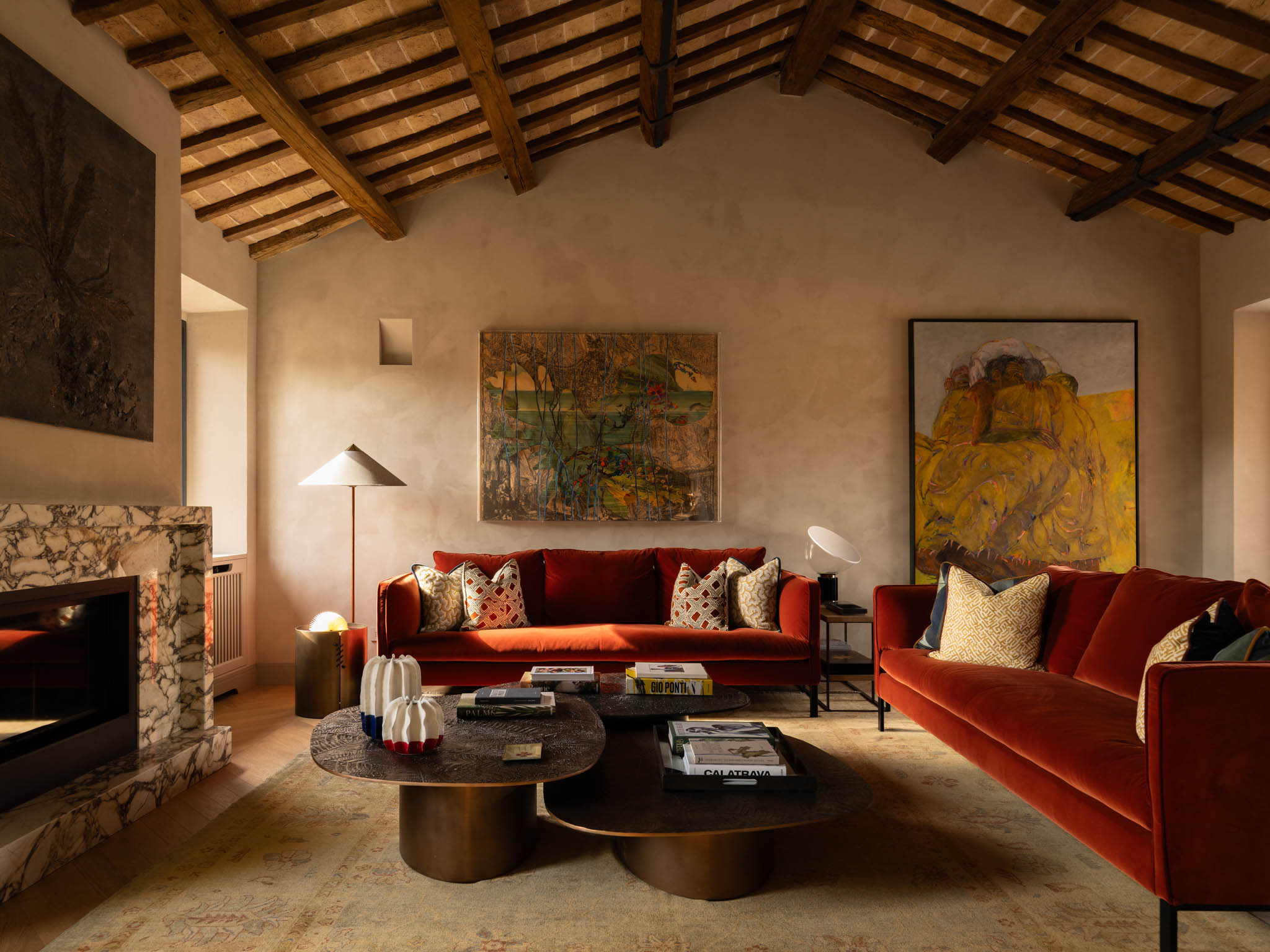
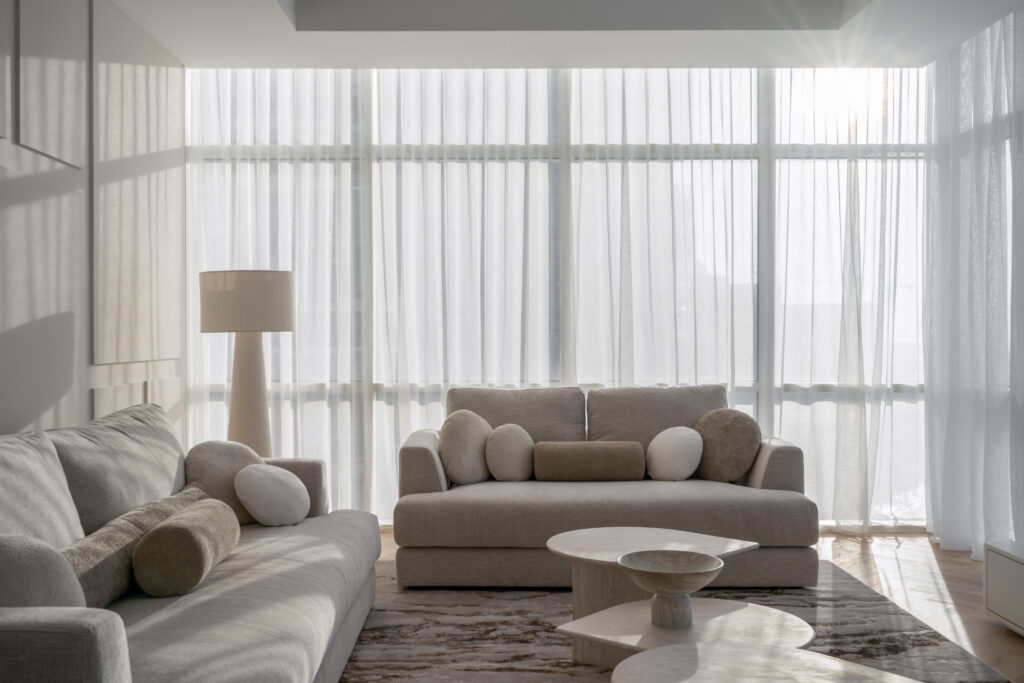
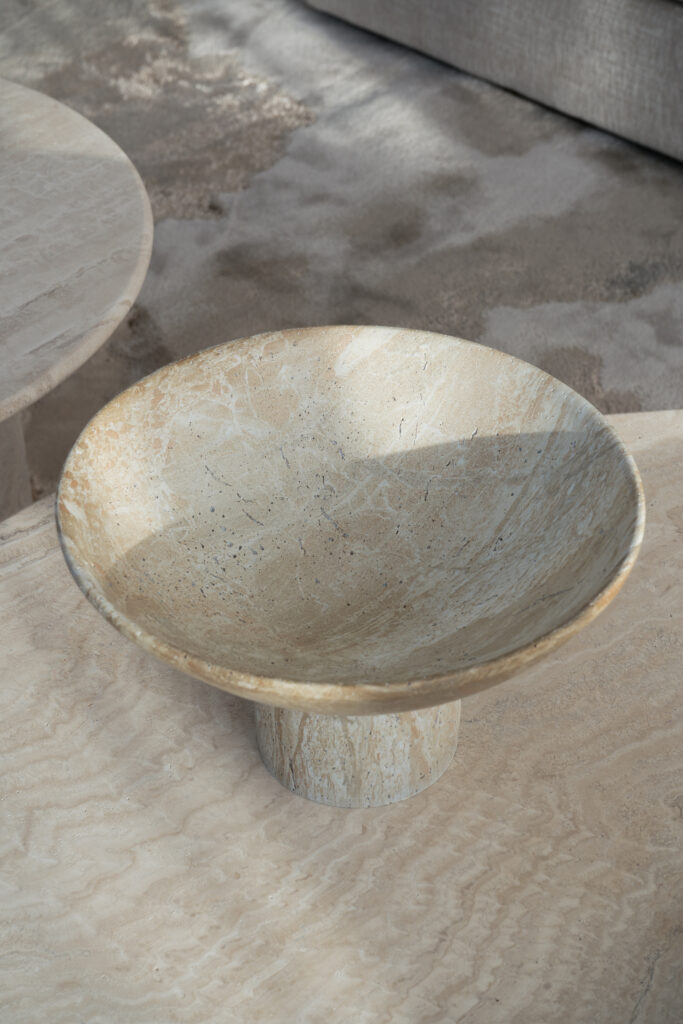
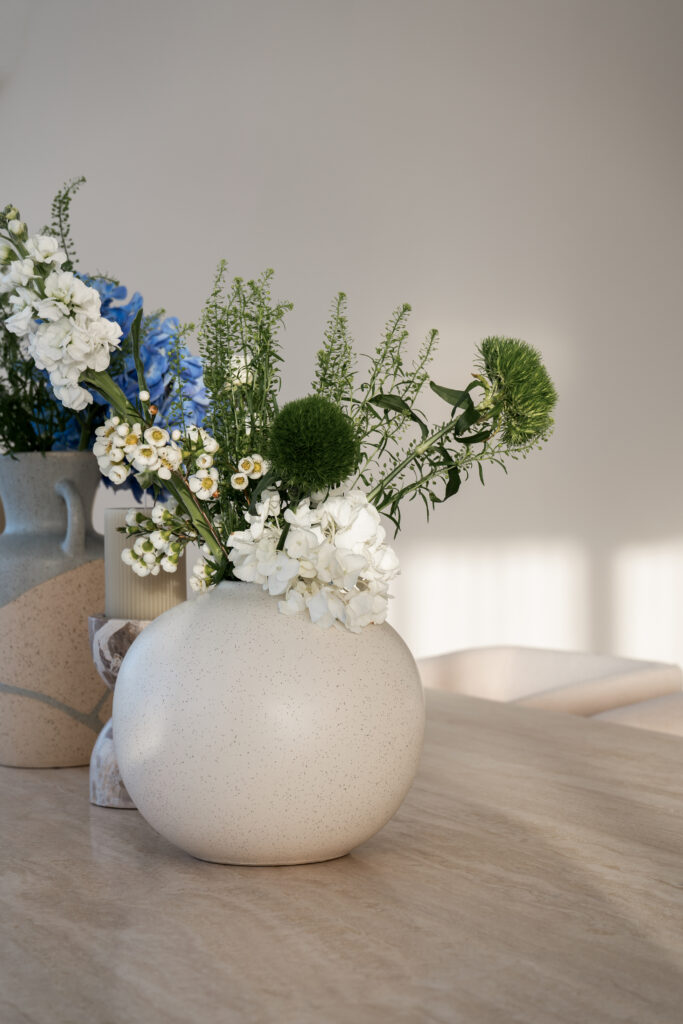
This quality, the art of being noticed only gradually, defines the material world Tokai assembled throughout the apartment. Light oak flooring lays a warm, grounding base underfoot. Linen upholstery asks to be touched rather than admired. Travertine tables carry the weight of something ancient, something coastal. Canvas light fixtures hang overhead like unfurled sails. “Materials that ask to be touched, and forms that invite you to exhale,” as Tokai puts it, a philosophy made tactile.
Though the living and dining areas occupy a continuous space, they speak in distinctly different registers. The dining room is generous, even sensuous: a curving travertine table, rounded chairs, oversized canvas pendants adrift in the air above. There is a maritime openness here, a mood built for gathering and warmth. The living room, immediately adjacent, retreats into something more inward. Squared forms anchor the arrangement, softened by rounded accents, a space for solitude, for the particular silence that follows a long journey home.
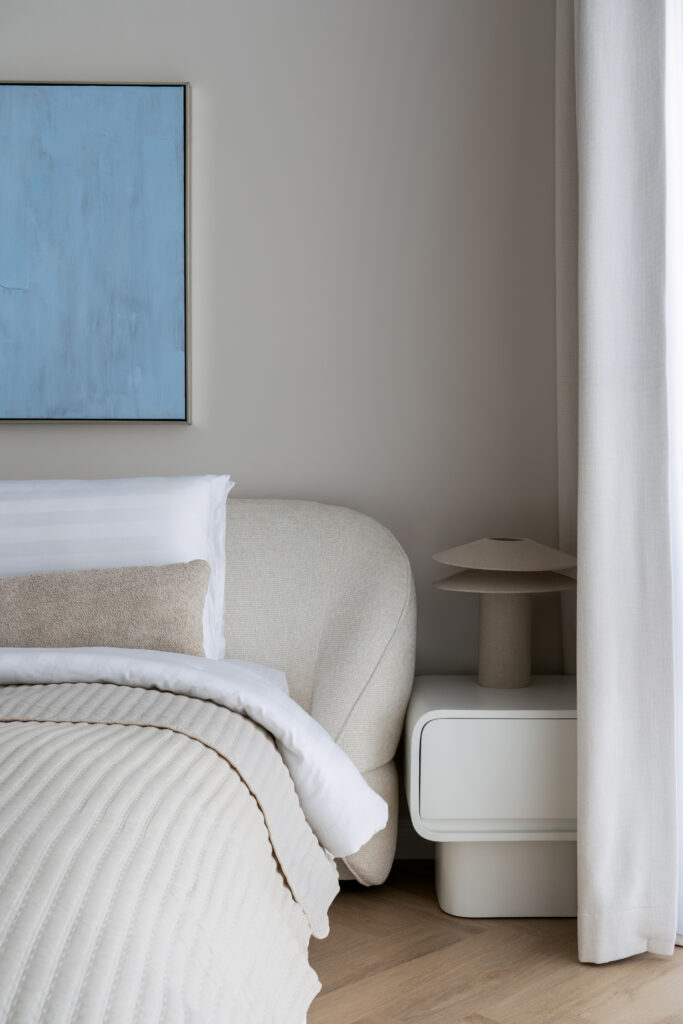
The bedroom synthesises both energies into something entirely its own. Vertical and horizontal lines suggest composure and order, while a large curved headboard introduces the gentlest note of surrender. Above the bed, a blue canvas opens like a window into sky. The palette, sand, cream, deep blu, is quiet but emotionally charged, evoking the kind of seaside memory that lives in the body rather than the mind.
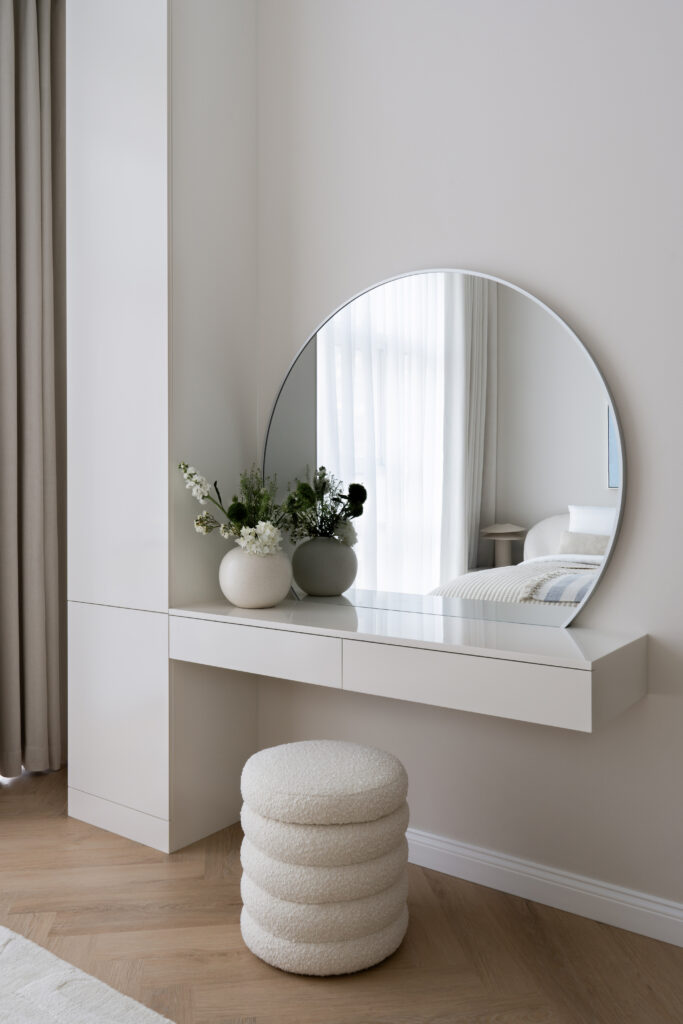
Throughout the apartment, repetition operates as a form of visual grammar. The geometry of the wall reliefs resurfaces in the lines of furniture. Travertine reappears from dining to coffee table. Linen, canvas, and textured fabric recur with quiet discipline. But it is perhaps the spaces between things that speak most eloquently. The semi-blank expanses of wall, the carefully uncrowded joinery, these absences are not oversights. They are, as Tokai understands them, pauses. Rests in the composition. Room to breathe.
“We live in a time of overexposure and overcommitment,” Tokai reflects. “Decision fatigue, digital noise, and constant output have numbed our senses. What we need are interiors that slow the tempo. That restore our capacity to notice, the light at 4pm, the warmth of oak under bare feet, the joy of nothingness between two things.”
It is a conviction rooted in a life lived across geographies, Hungary, France, Spain, the United Kingdom, Malaysia, Singapore, Monaco, and now the UAE. Each context has sharpened Tokai’s instinct for reading not just a space, but the emotional landscape of a person within it. “I see every project as a conversation,” she says, “with the site, the client, and the moment we’re designing for.”
Noura’s Oasis holds space for rest, for presence, for the particular relief of returning to oneself after a long time away. “This is not a space of excess or display,” Tokai says simply. “It’s one of clarity, serenity, and emotional depth.”
Noura comes home, and the apartment receives her. That, in the end, is the work.