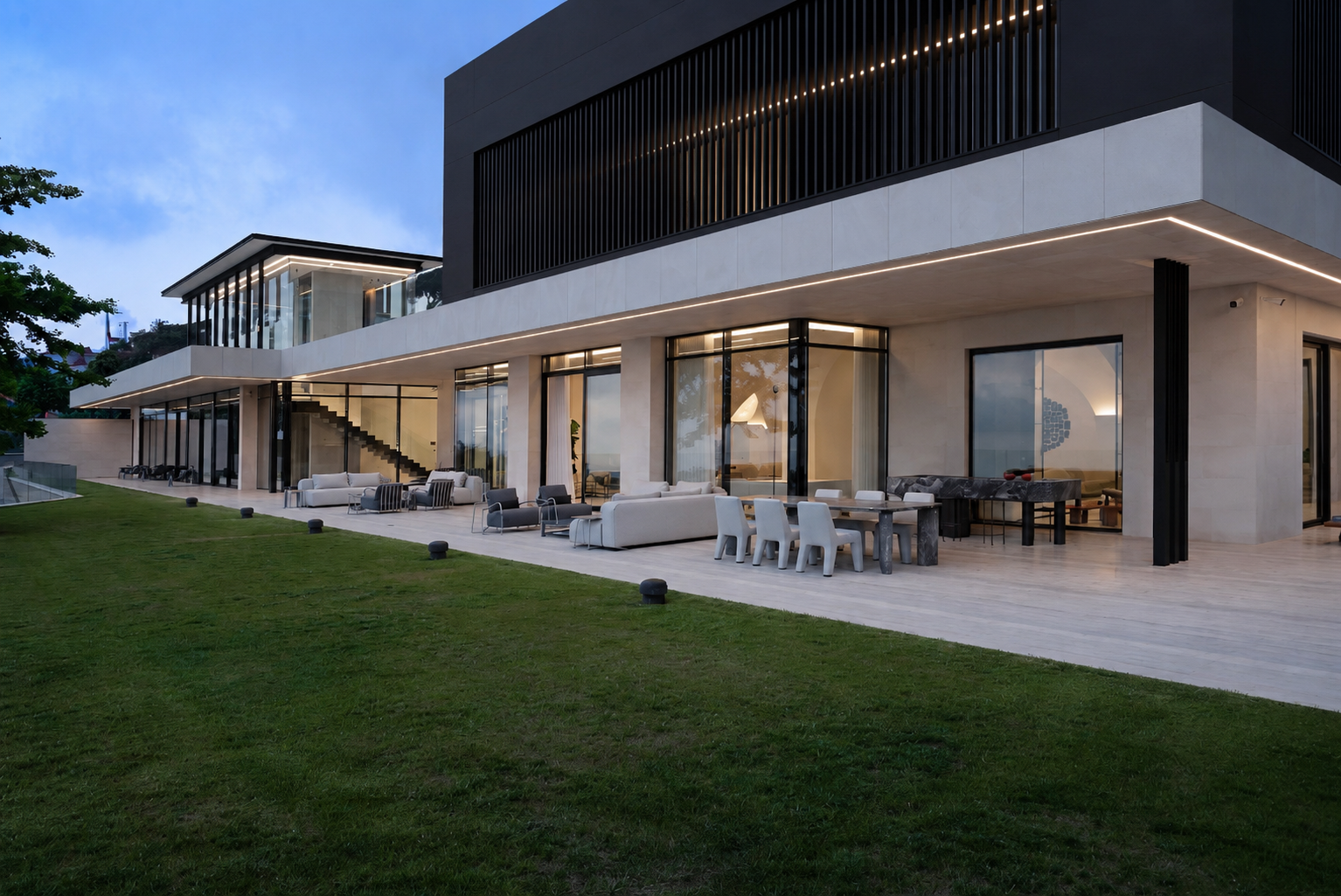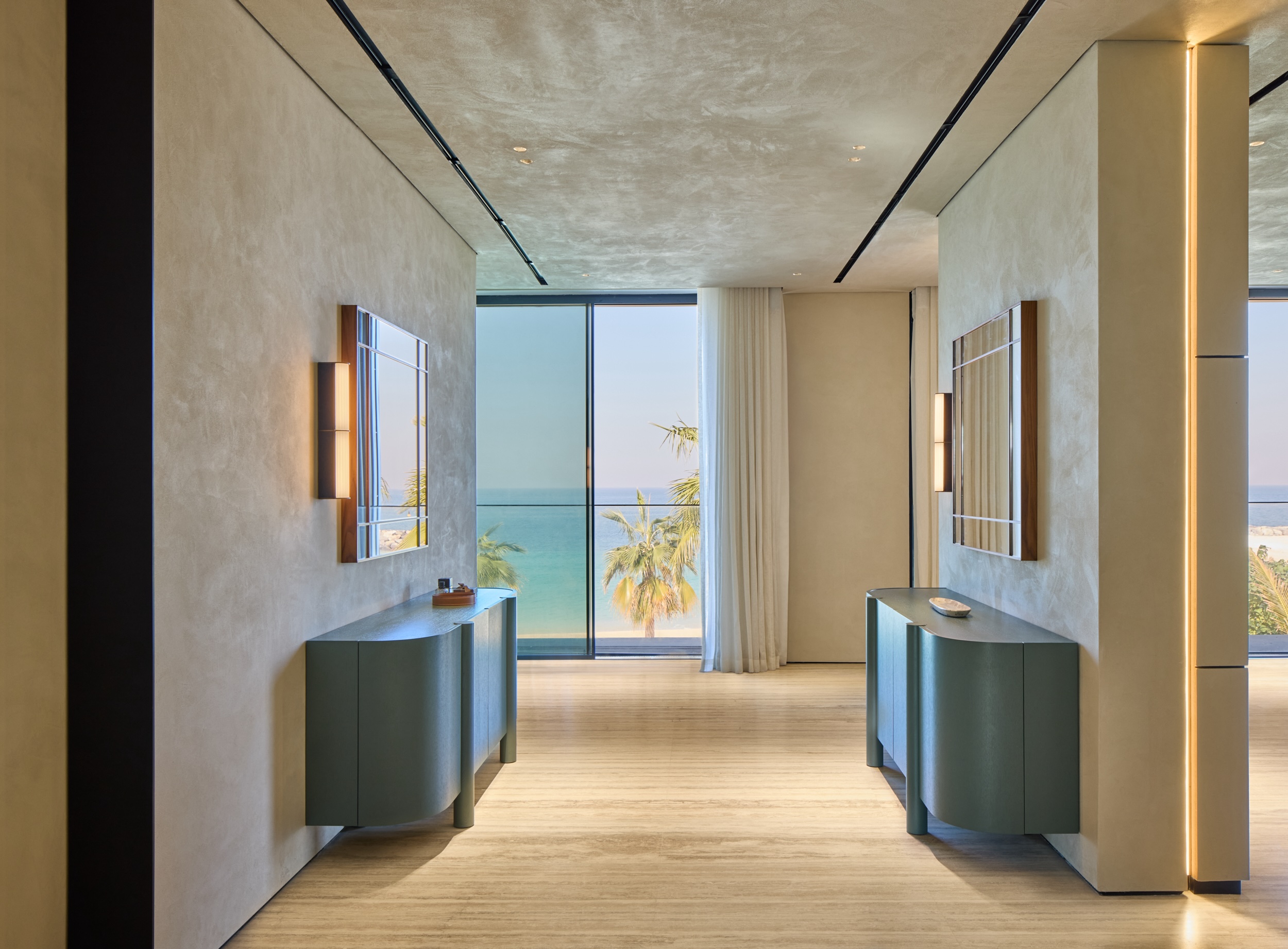
Luxury has traditionally been associated with accumulation: more space, more materials, more objects, more visible expressions of craft and wealth. Yet some of the most compelling contemporary residential projects are moving in the opposite direction, locating value not in what is added but in what is edited. Completed on the shores of Jumeirah Bay, Delfina Design’s latest project belongs to this lineage, using reduction as a design tool and restraint as a form of sophistication.
Designed by Cortese’s Dubai-based studio, Delfina Design, the private villa explores a contemporary understanding of luxury founded not on spectacle, but on clarity. Its ambition is not to dominate its surroundings but to establish a measured dialogue with them, allowing architecture, interiors and landscape to exist within a carefully balanced relationship.
The sea becomes central to this conversation. Not as a decorative backdrop, but as the primary spatial organiser of the project. Views, circulation, material choices and the overall interior architectural composition were conceived around an uninterrupted relationship with the horizon.
“What guided the project was the sea,” explains Cortese. “The interior had to embrace the sea and merge within, dissolving the boundary between inside and out, where true luxury lies. The design had simply to follow and highlight the incredible natural surroundings without overcome with an invasive design.”
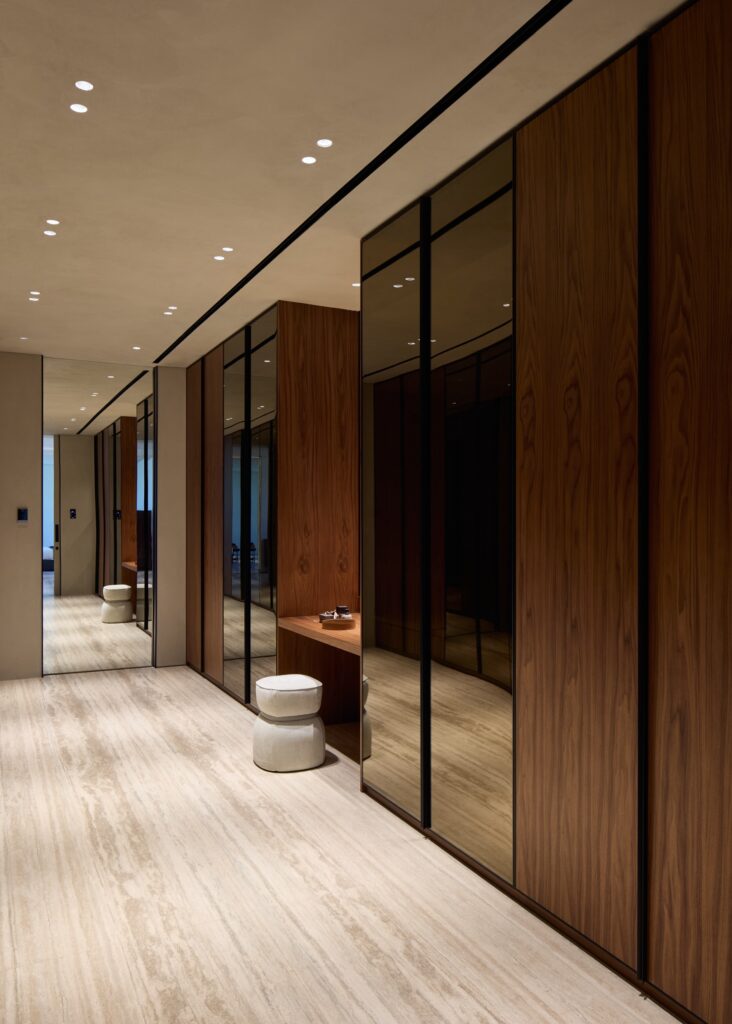
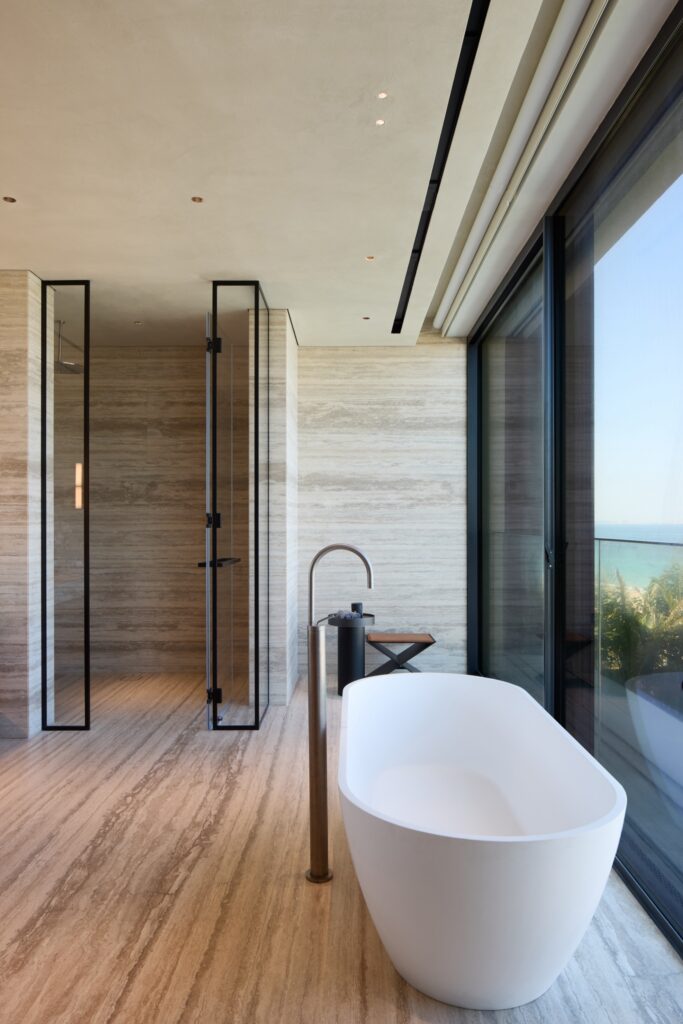
This approach manifests itself through a restrained palette of natural materials. Travertine, wood and stone resin establish a sense of continuity between interior and exterior, creating spaces that feel inherently connected to their coastal setting. Rather than relying on visual contrast or decorative excess, the project draws its richness from texture, proportion and light. Materials are allowed to express themselves honestly, their tactile qualities becoming an integral part of the spatial experience.
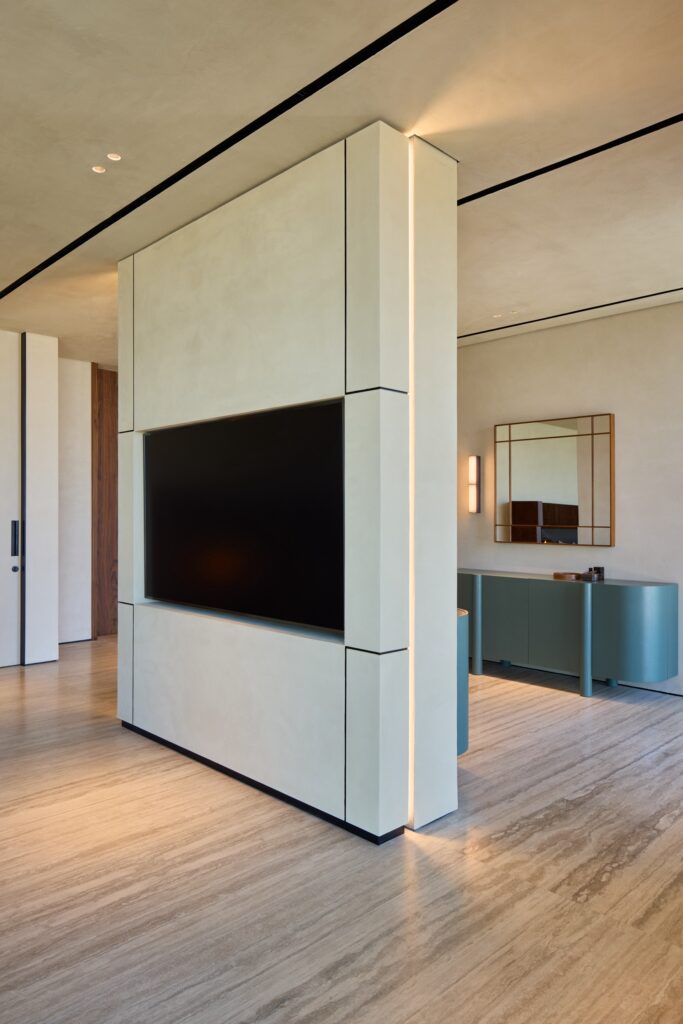
Throughout the residence, interior architecture unfolds as a sequence of generous yet controlled spaces. Open-plan living areas create a fluid sense of movement, while preserving moments of intimacy and retreat. Natural light becomes an active design element, animating surfaces throughout the day and reinforcing the connection between the home and its surroundings.
At the centre of the main living space, a sculptural kitchen island occupies a privileged position overlooking the sea. More than a functional element, it acts as a social anchor within the house, transforming everyday rituals into moments of engagement with the landscape. Bespoke furnishings and custom-crafted millwork further contribute to the villa’s understated elegance, while deliberately restrained detailing ensures that attention remains focused on space, light and view.
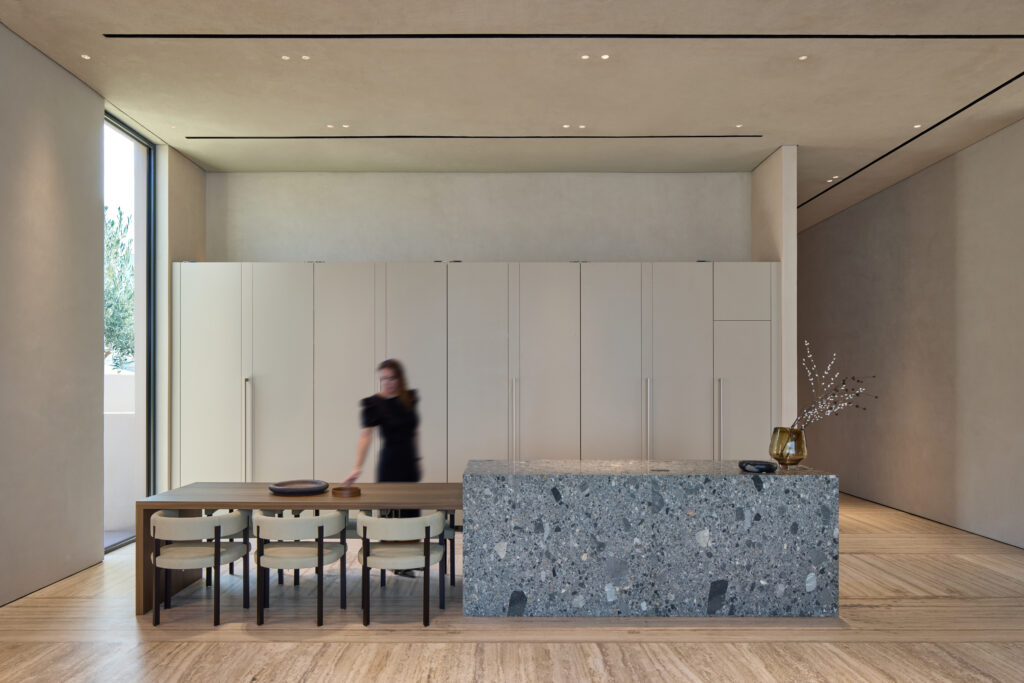
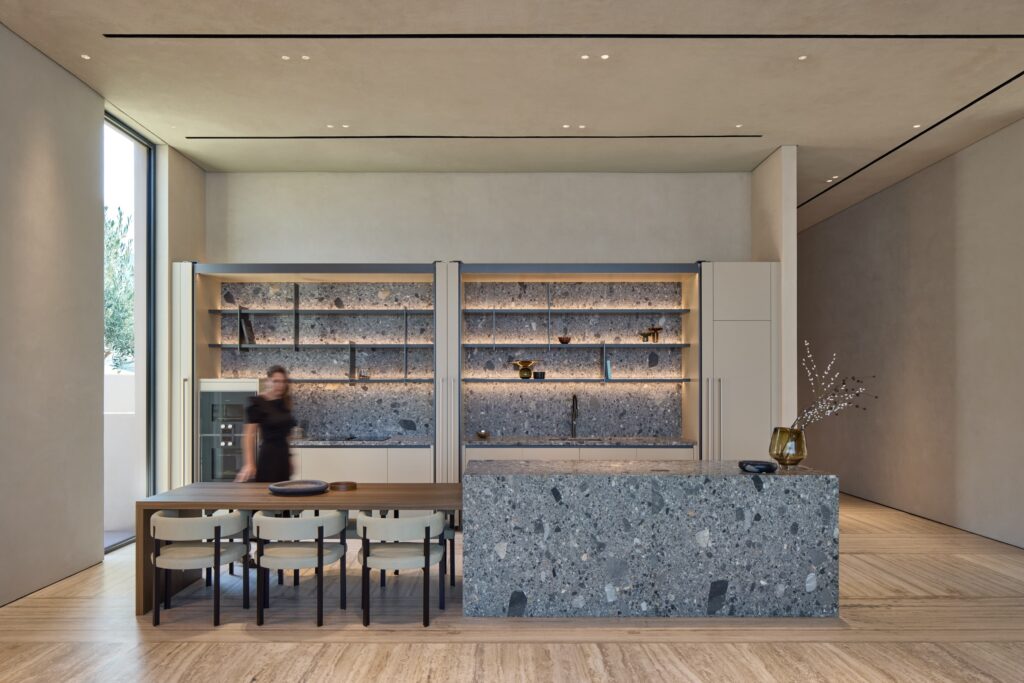
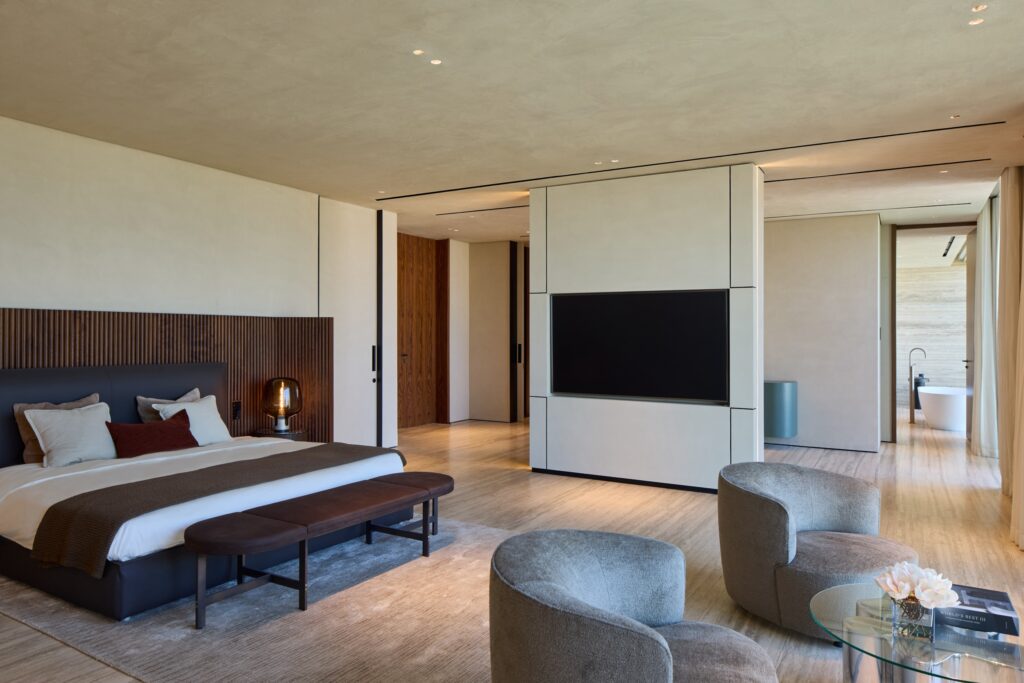
The project’s spatial narrative reaches its most compelling expression on the first floor. Conceived as a private sanctuary, the master suite is oriented entirely towards the horizon, establishing a direct relationship between the resident and the surrounding landscape. The adjoining bathroom extends this dialogue. Large glazed openings frame sea and sky with almost cinematic precision, dissolving conventional boundaries between interior and exterior. Here, the interior becomes less an object than an instrument through which landscape is experienced.
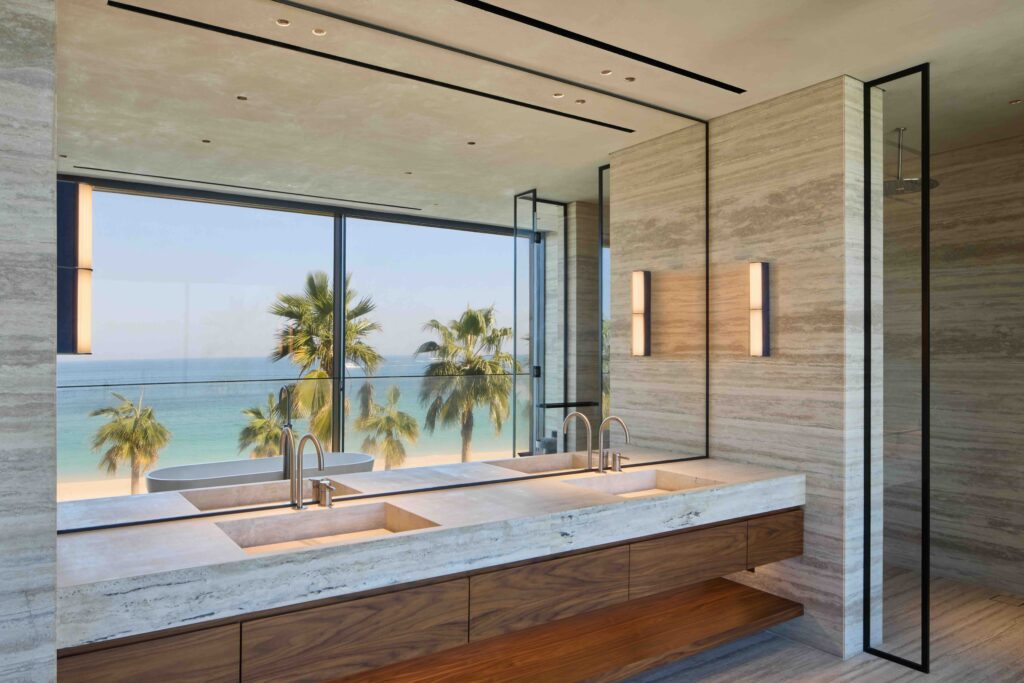
Achieving such simplicity, however, required considerable precision. One of the principal challenges of the renovation was maximising the connection to the sea while preserving privacy and intimacy within the constraints of the existing structure. Rather than concealing these limitations, Delfina Design incorporated them into the logic of the project itself. Spaces were reconfigured to optimise natural light, framed views and spatial fluidity, allowing the architecture to evolve naturally from its original framework.
Developed by Alta Real Estate Development, the residence ultimately reflects a broader position on the future of design. At a moment when visual culture is increasingly shaped by algorithms, replication and rapidly changing trends, Cortese advocates for a more enduring approach.
“Elegance is something not to be taken for granted and is more and more rare in this world. At Delfina Design we do not follow and adapt to changing trends, instead we focus on timeless long-lasting work,” she says, referencing Giorgio Armani’s famous observation that “Elegance doesn’t mean being noticed, it means being remembered.”
Her reflection feels particularly relevant today. “In a design world increasingly driven by artificial intelligence, uniformity, and fleeting social media trends, maintaining a personal, human-centred approach will be essential to preserving true originality. Prioritising human intuition over algorithmic predictions and individuality over mass appeal will be necessary for authenticity, depth and lasting impact in the future.”
The villa on Jumeirah Bay embodies precisely that philosophy. Its luxury does not reside in visual excess or performative gestures, but in a carefully considered act of editing, an interior architecture that understands that sometimes the most powerful design decision is knowing what to leave out.