When architect Tarek Shamma first walked into the London’s Marylebone apartment he had been commissioned to transform, he was met with nothing. No walls dividing space with intention, no hierarchy guiding the eye, no sense of where one moment ended and another began. An empty shell, and yet, for Shamma, that blankness was precisely the invitation.
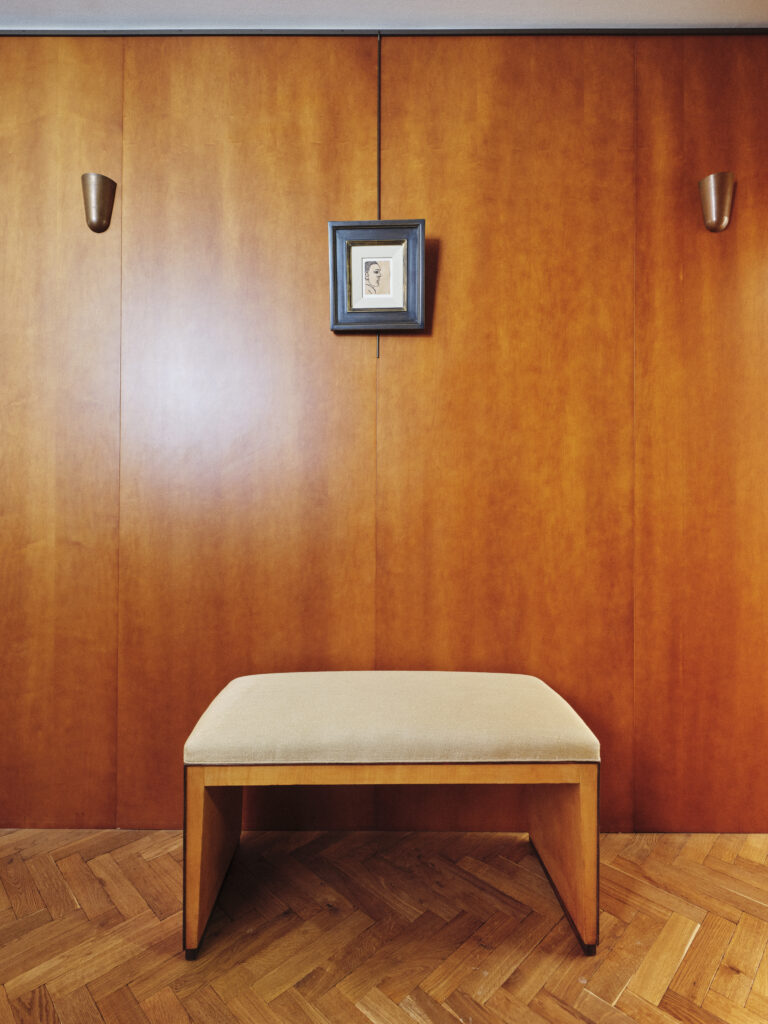
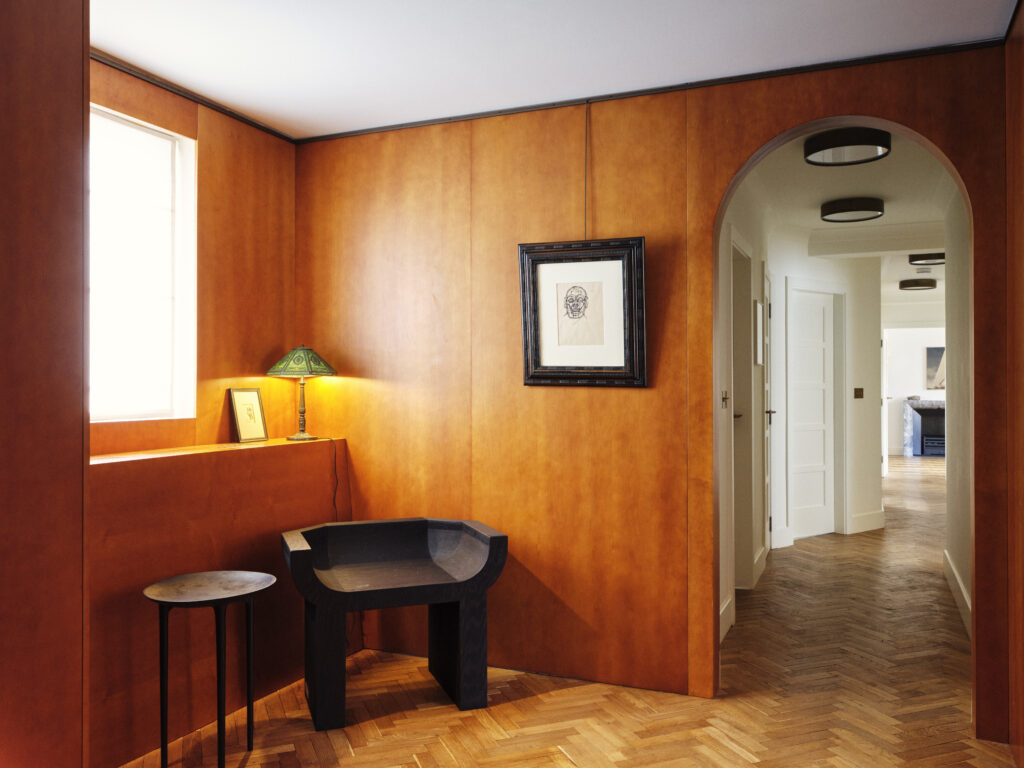
“The first job was to give it a spine,” he says. “I wasn’t interested in decorating a void. The plan had to be disciplined first: axes, thresholds, hierarchy, then material.” What emerged from that discipline is an apartment that feels, above all, inevitable, as though each decision had always been waiting to be made.
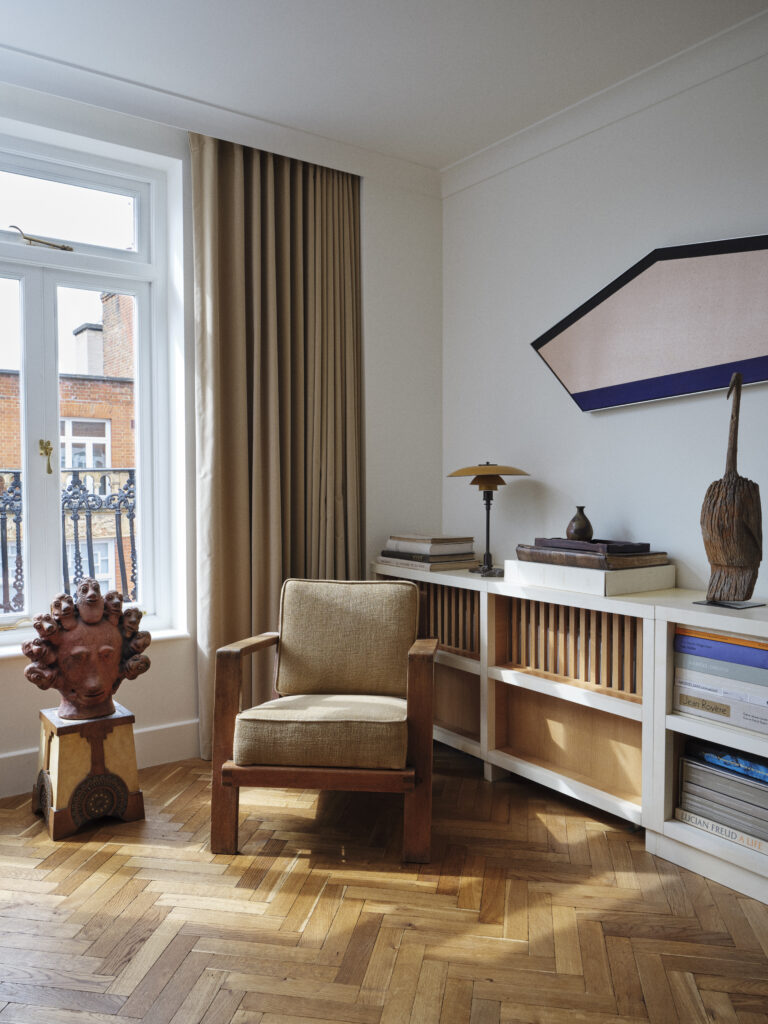
The project belongs to Mathieu Paris, a gallerist whose career has been shaped by years at White Cube and a finely tuned proximity to the art market. His collection is alive, constantly rotating, objects moving in and out of the space as his curatorial thinking evolves. This made the architect’s task both precise and elastic: design a home rigorous enough to hold serious work, yet open enough to absorb change. “The apartment is not a museum,” Shamma is clear. “It is a domestic landscape that can be rehung, rebalanced and lived in.”
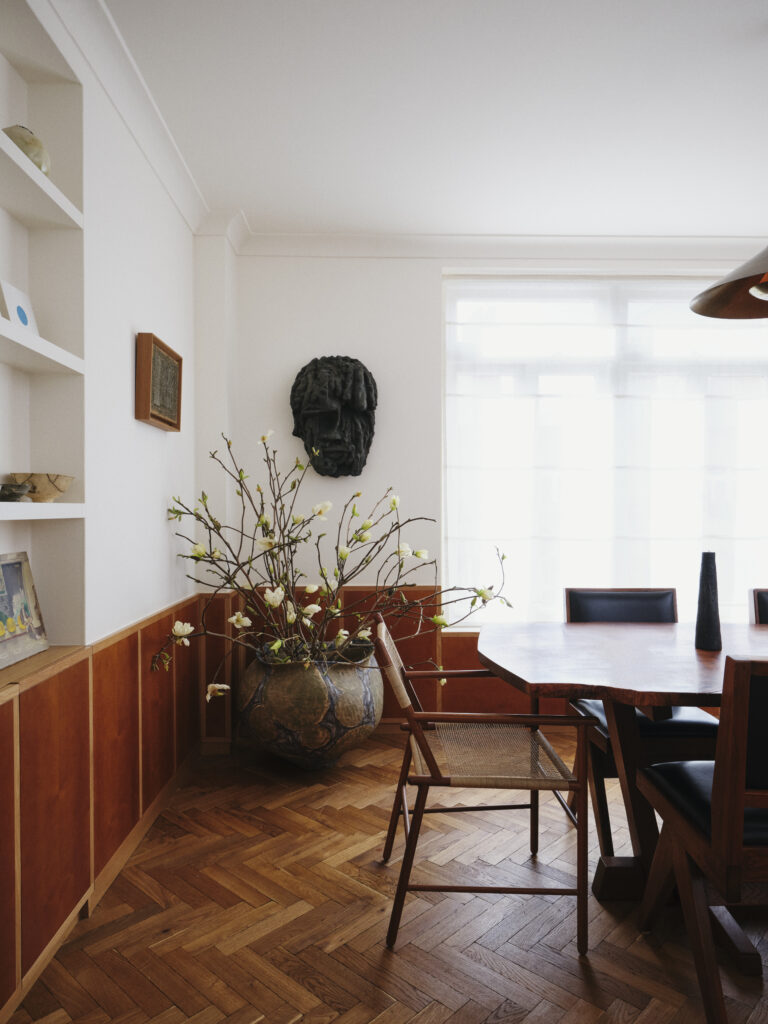
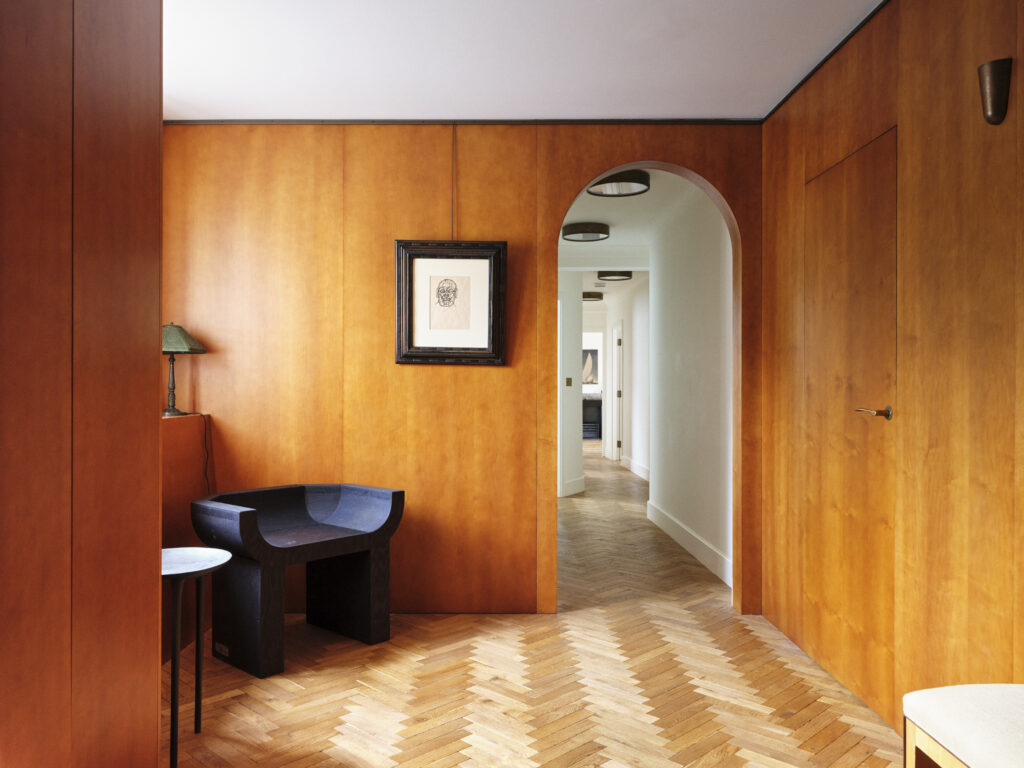
At the heart of the spatial logic is a fifty-foot corridor, a gesture that in lesser hands might have read as a flaw of the floor plan. Here, it becomes the apartment’s governing device. Shamma treated it not as mere circulation but as a considered pause between moments, a breath drawn before the next room reveals itself. “You do not see everything at once,” he explains. “Rooms reveal themselves gradually, which gives the apartment rhythm and avoids that showroom feeling.” It is an architecture of anticipation, where restraint does more work than gesture.
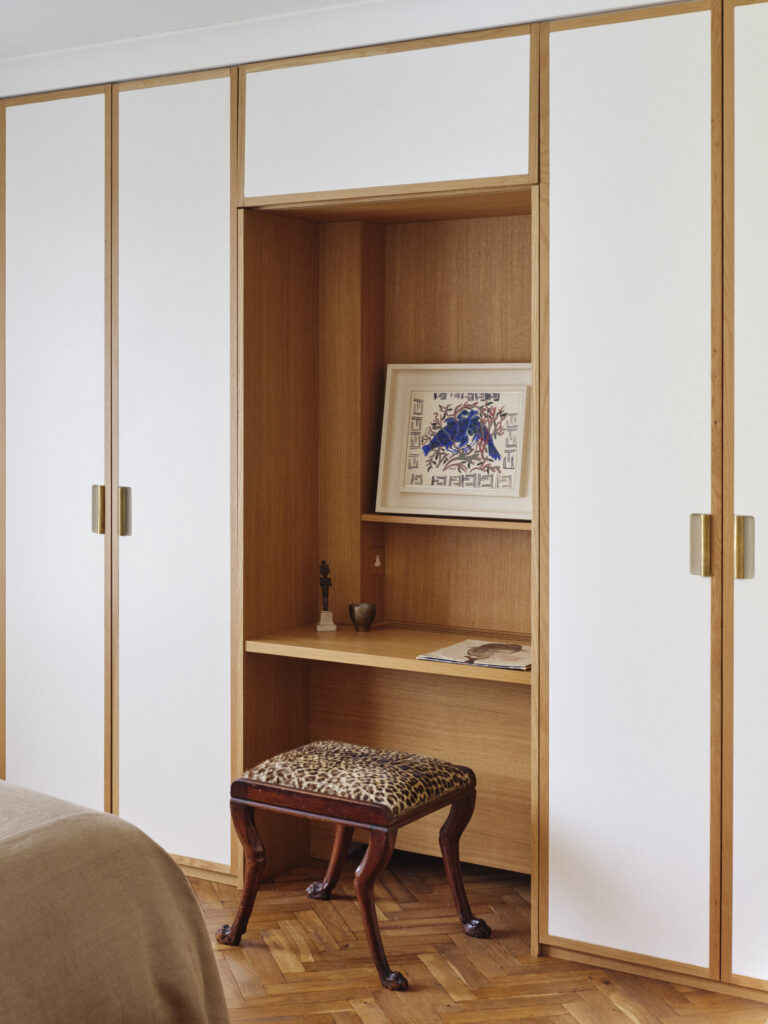
That restraint extends into the material palette, where varnished plywood sits alongside Ceppo di Gré and marble in a conversation that is quietly radical. The language owes something to Arte Povera, a movement Paris himself has curated around, though Shamma is careful not to overstate the reference. “Arte Povera was certainly in the air, but not as a manifesto,” he says. “The plywood, Ceppo di Gré and marble came from that same instinct: simple materials with strong presence, allowed to speak plainly.” The result is a richness that never announces itself, an opulence of texture rather than of display.
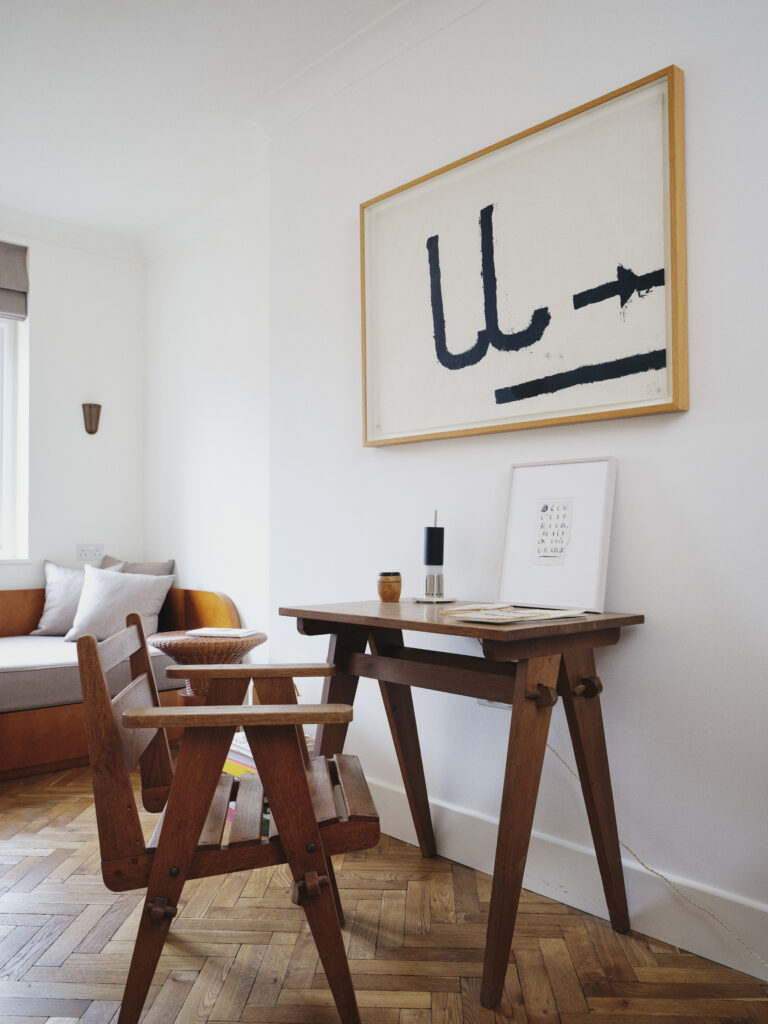
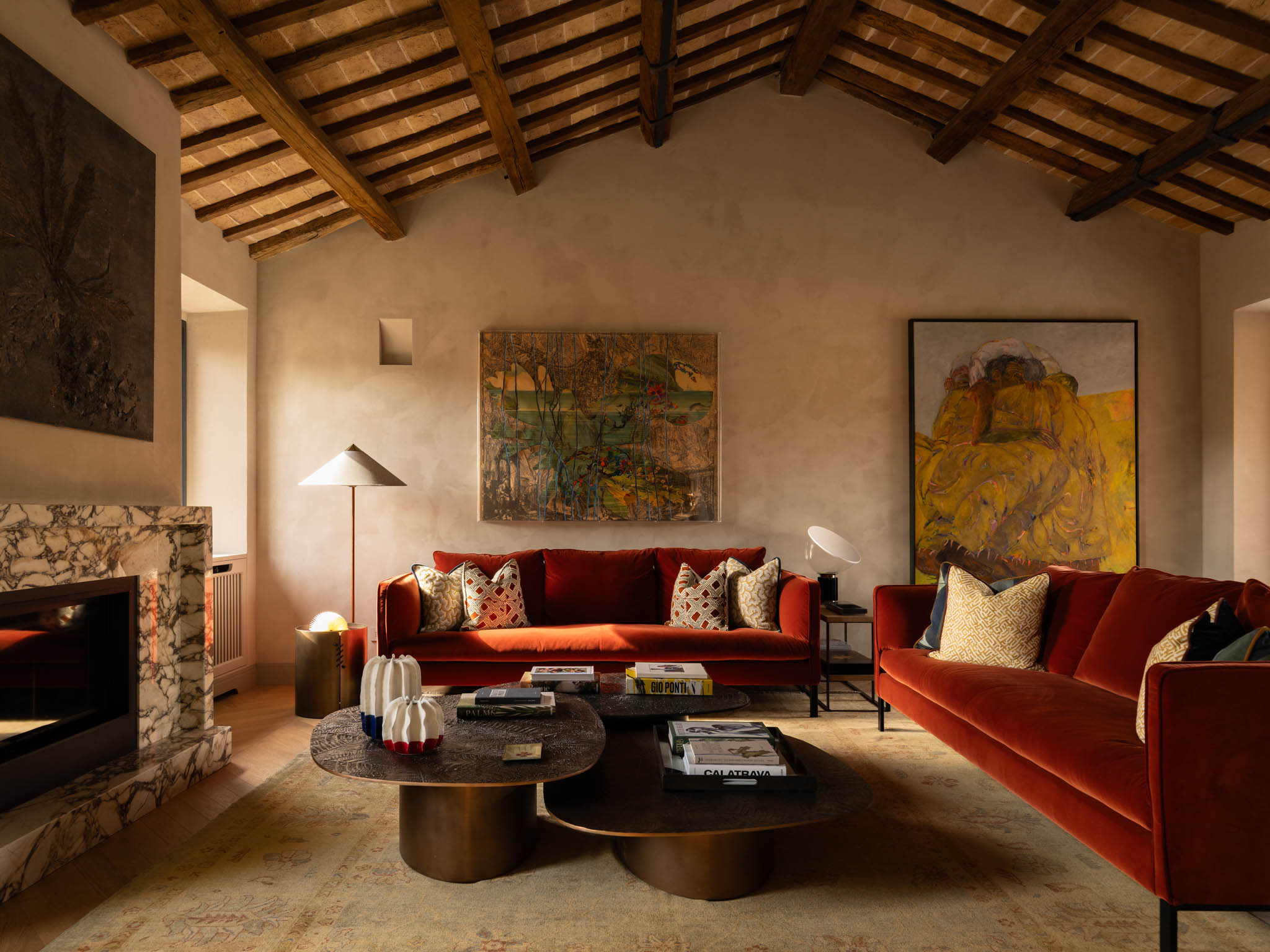
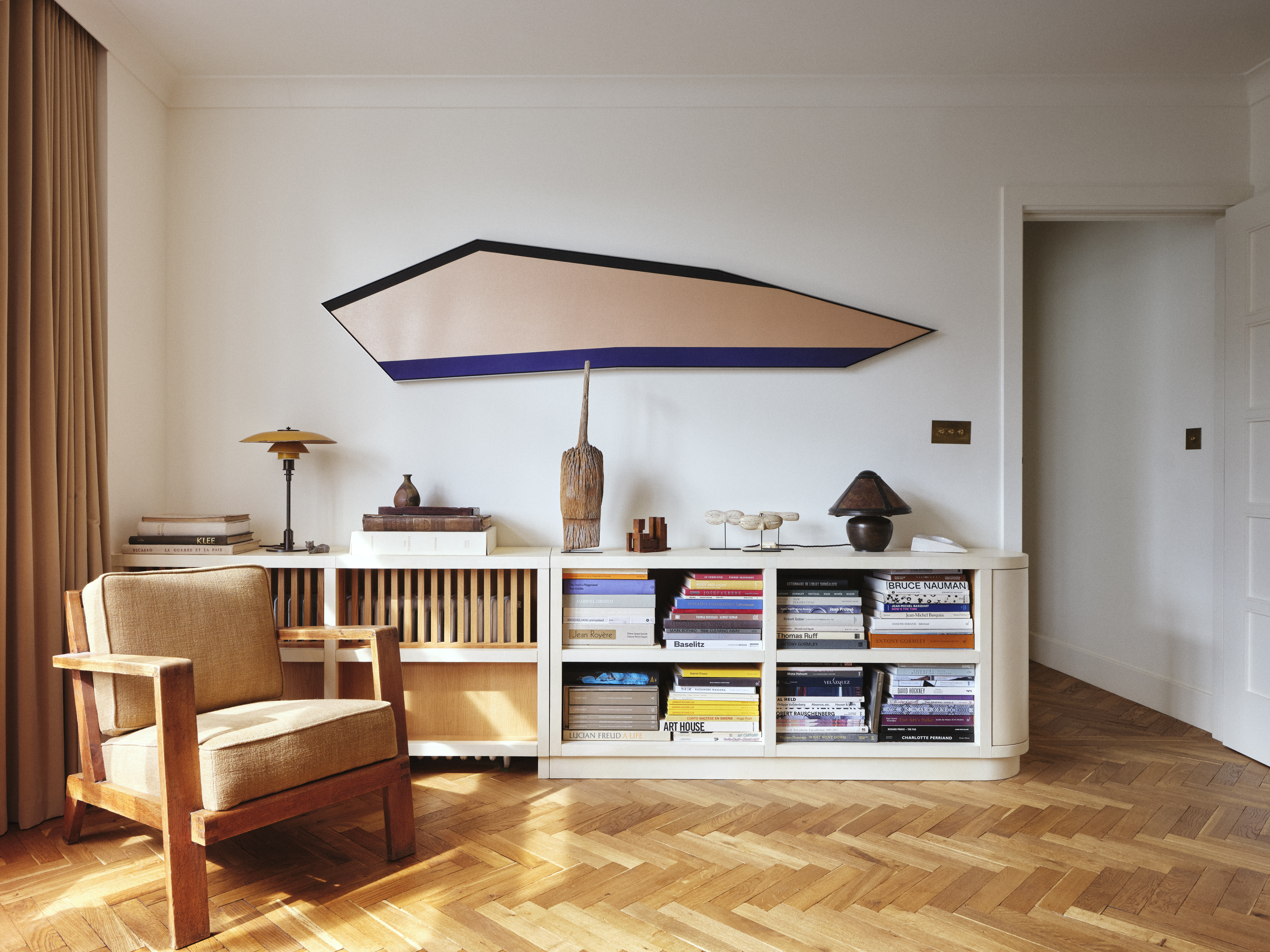
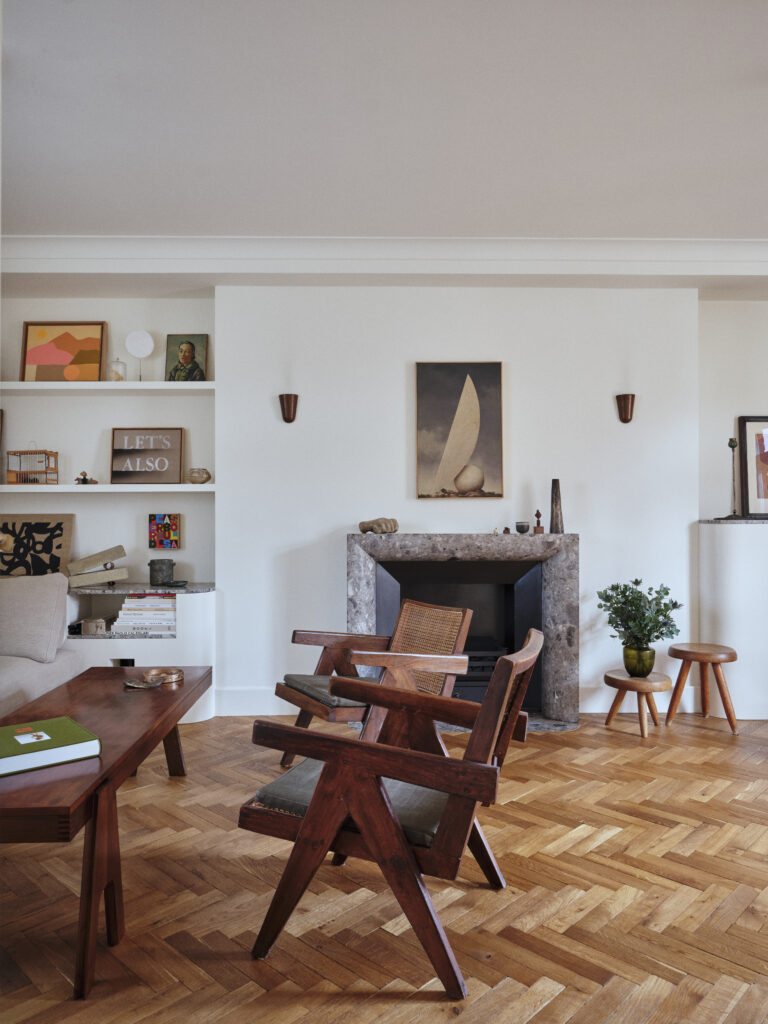
In the living room, a fireplace wall clad entirely in Ceppo di Gré anchors the space with quiet authority. Shamma describes it as “a gravitational focal point”, not theatrical, but magnetic, giving the works arranged around it something to push against. Nearby, a parchment-clad oak bookcase and a custom sofa read less as furnishings than as extensions of the architecture itself. For Shamma, that distinction is essential. “Furniture becomes architectural when it stops being an object and starts organising space,” he says. “The bookcase, sofa, millwork and storage are not placed in the apartment. They are part of how the apartment works.”
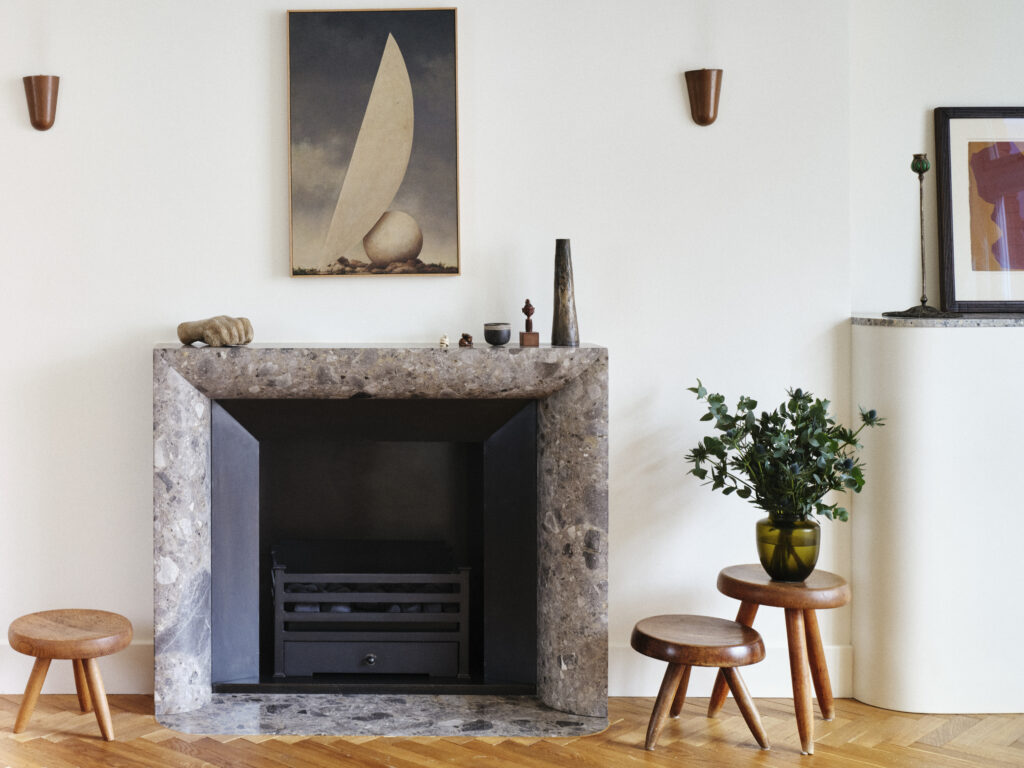
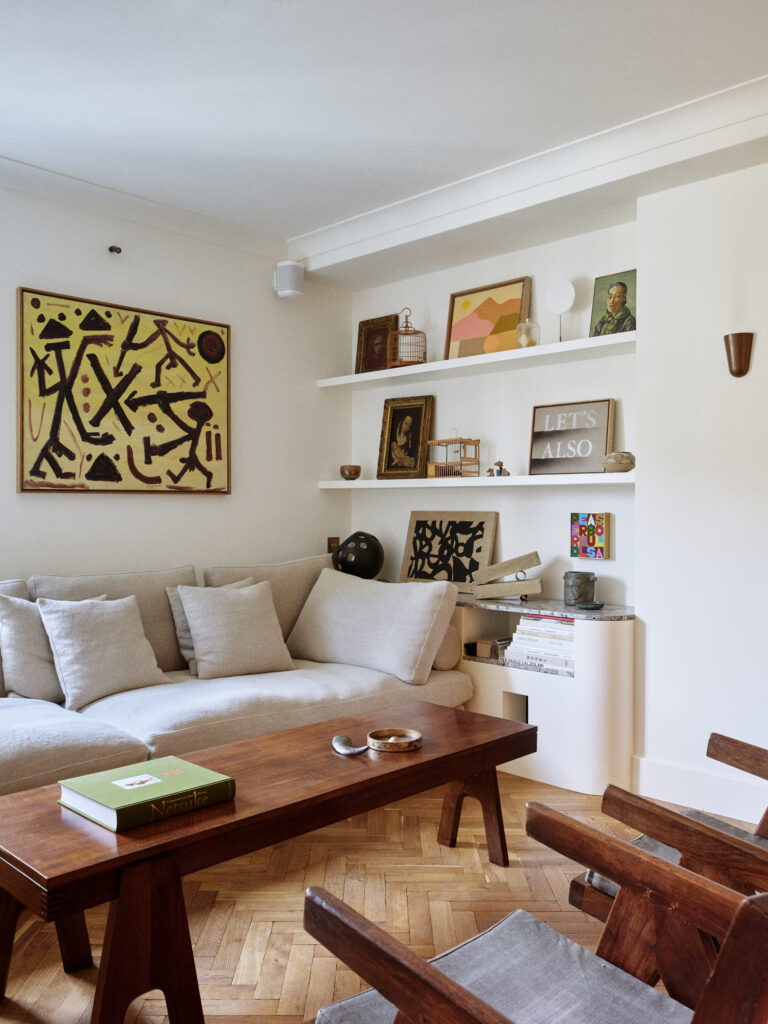
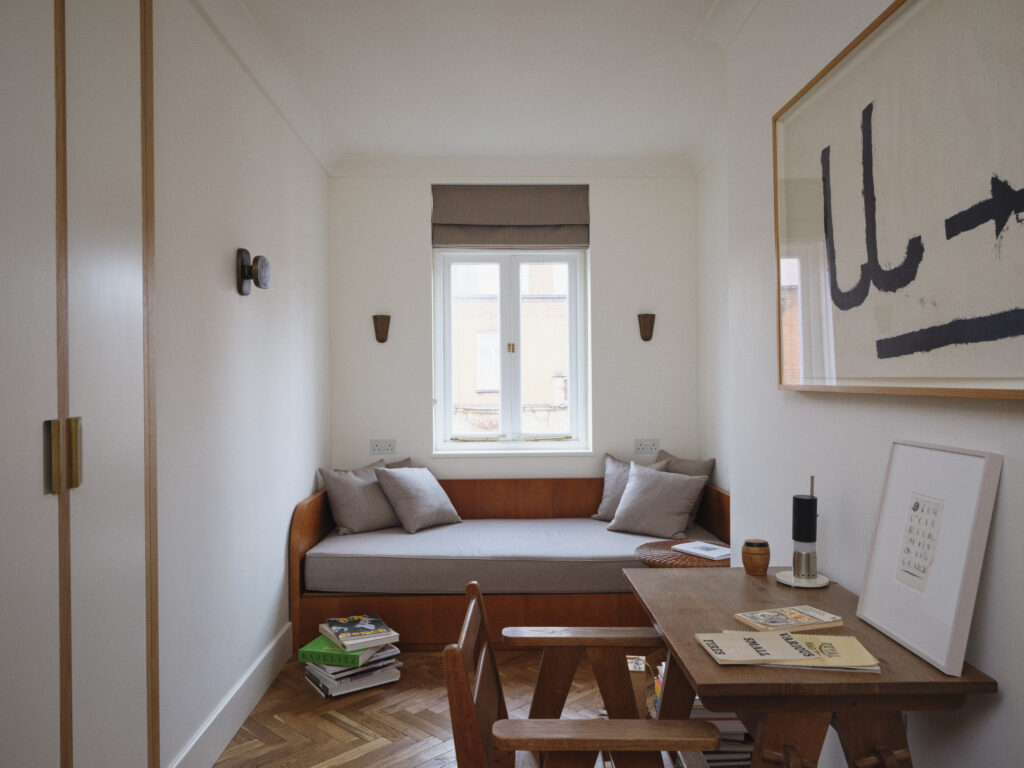
Beneath it all, a floor of reclaimed herringbone oak parquet introduces a different kind of depth, a temporal one. The building is Victorian, and Shamma felt the intervention needed to acknowledge that history rather than erase it. “Without that layer,” he reflects, “the project could have become too controlled, too sealed.” It is one of the warmer decisions in an otherwise rigorously composed scheme, a reminder that the best architecture always leaves room for time.
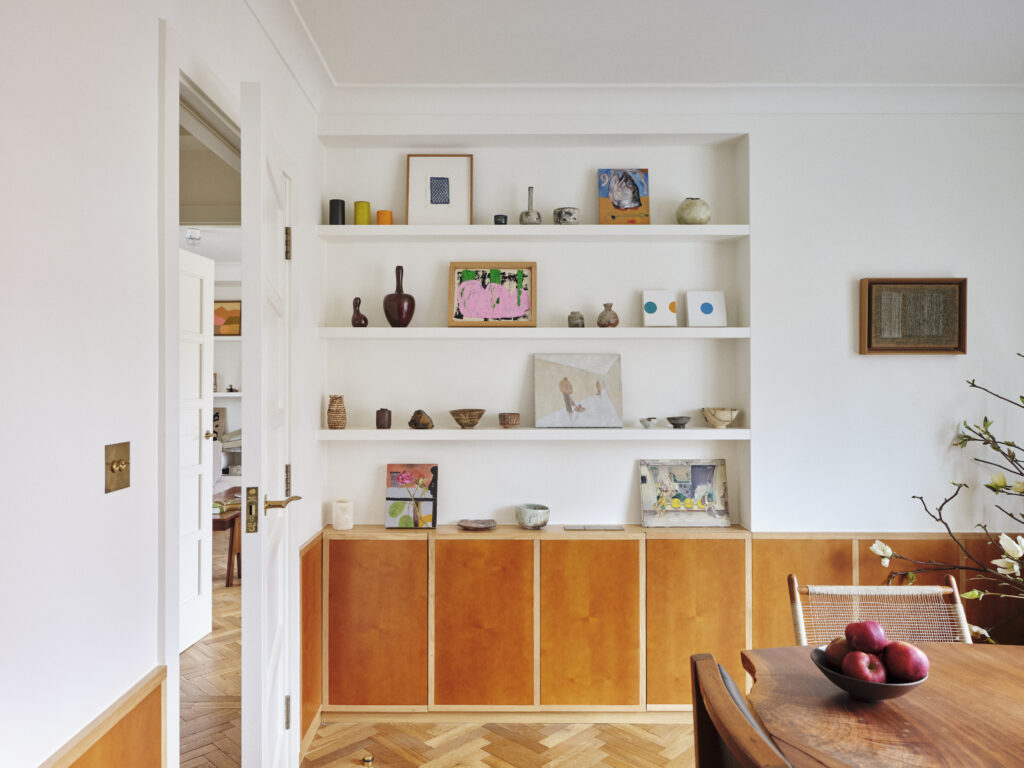
And then there is the child, Paris’s young son, whose presence Shamma credits with keeping the project honest. “The child was important because it prevented the project from becoming precious,” he says. “Materials had to have depth and durability. The space needed to hold serious art and real life at the same time, which is far more interesting.” It is, perhaps, the most telling thing he says about the apartment: that its greatest achievement is not the art it holds, but the life it makes room for.