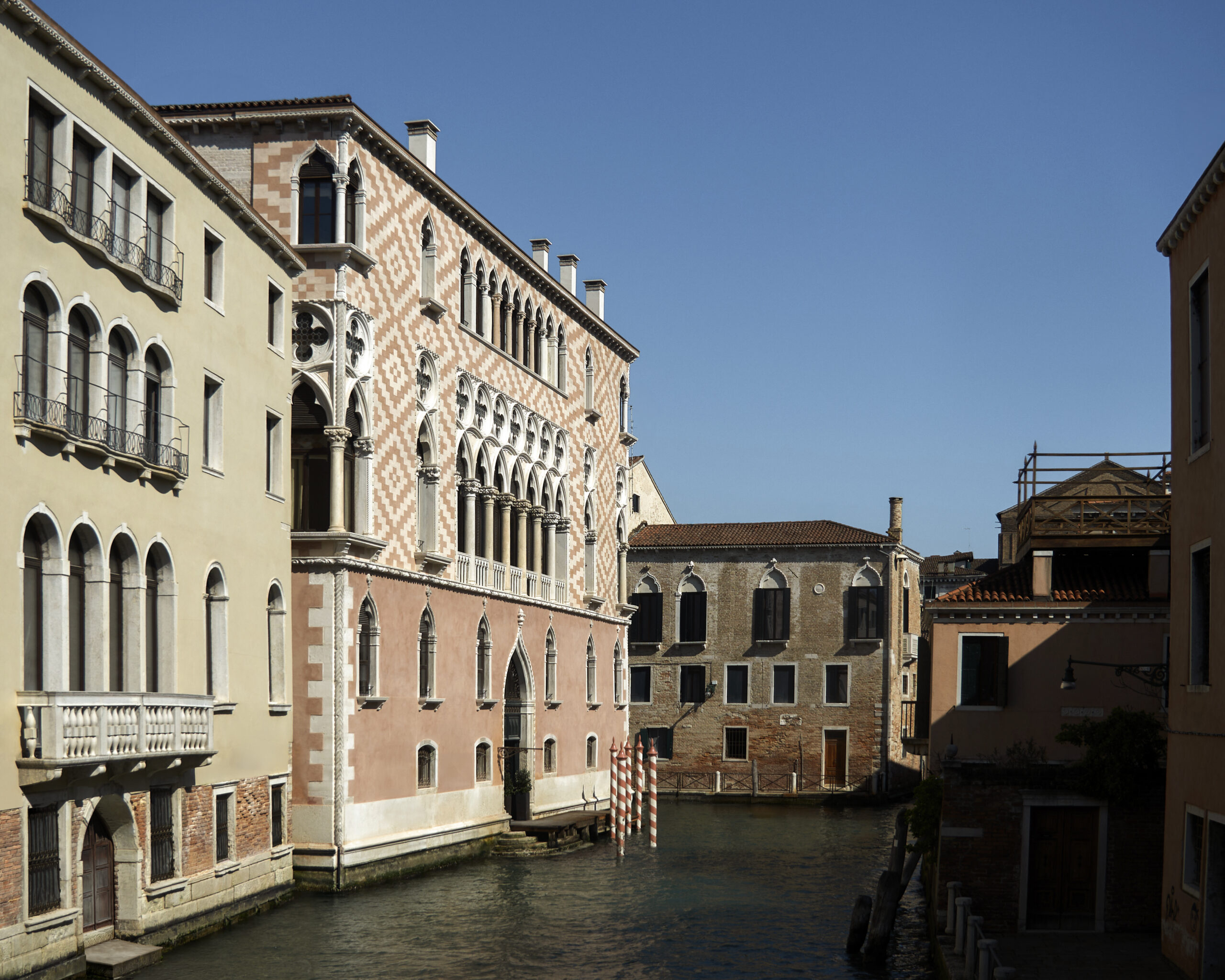
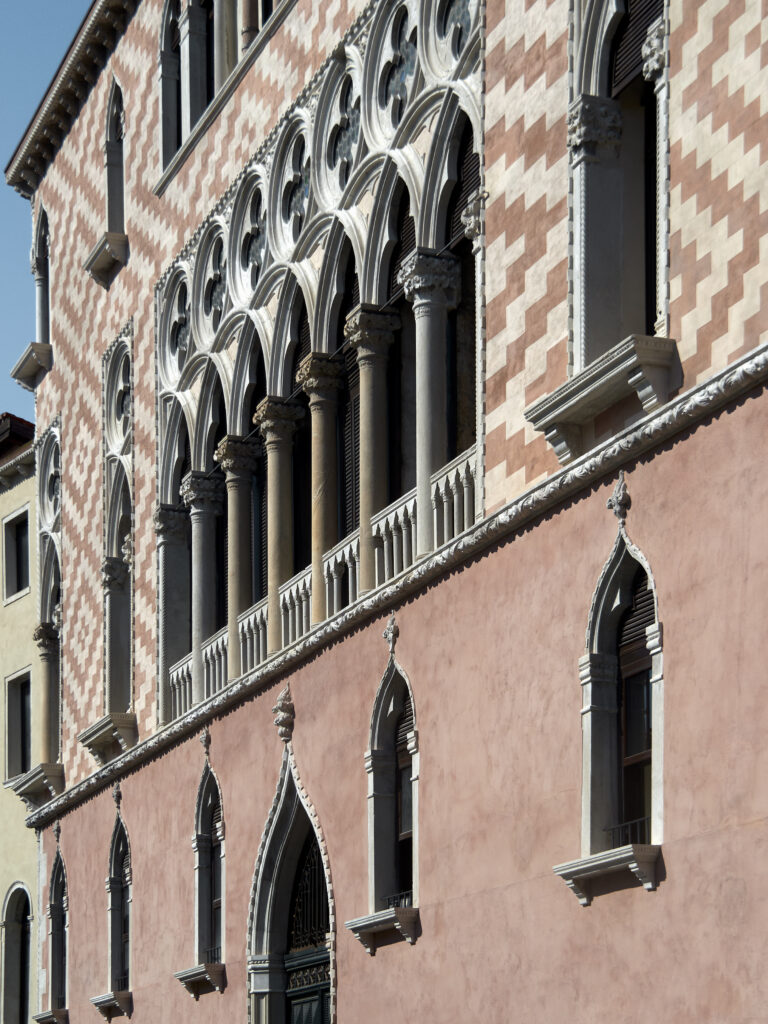
There are cities that ask architects to build. Venice asks them to listen. For eight years, architect and interior designer Aline Asmar d’Amman immersed herself in the restoration of Palazzo Donà Giovannelli, the 15th-century Venetian residence that today houses Orient Express Venezia. The result is not simply a hotel, nor a restoration in the conventional sense. It is an exploration of memory, materiality and time, where architecture becomes a conversation between permanence and movement.
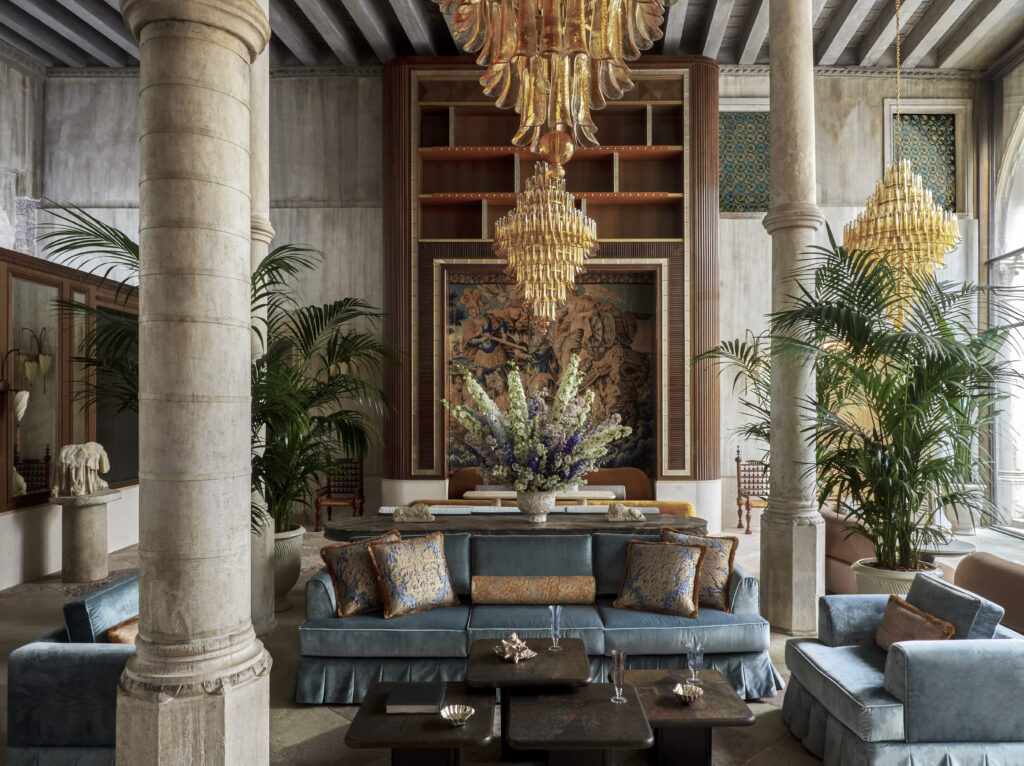
“The restoration became a true labor of love,” Asmar d’Amman reflects. “It required patience, precision, and at times deep emotion.”
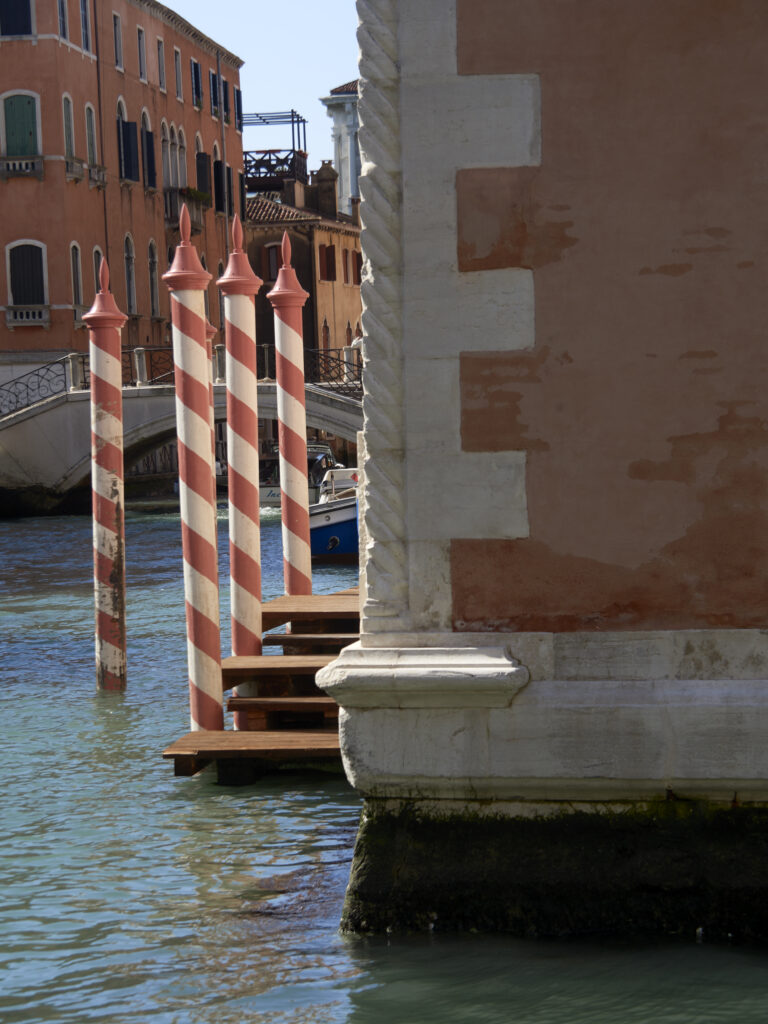
The challenge began long before furniture, fabrics or decorative schemes entered the conversation. The palazzo’s foundations had to be dried. A dam surrounded the façade for three years. Stones were removed, treated and painstakingly reinstalled. Yet it was precisely these conditions that revealed the essence of Venice itself. “Humidity changes the behavior of stone, salt rises through surfaces, and light reflected from the canals transforms color and texture throughout the day,” she explains. “Rather than erase these traces, I fell in love with them.”
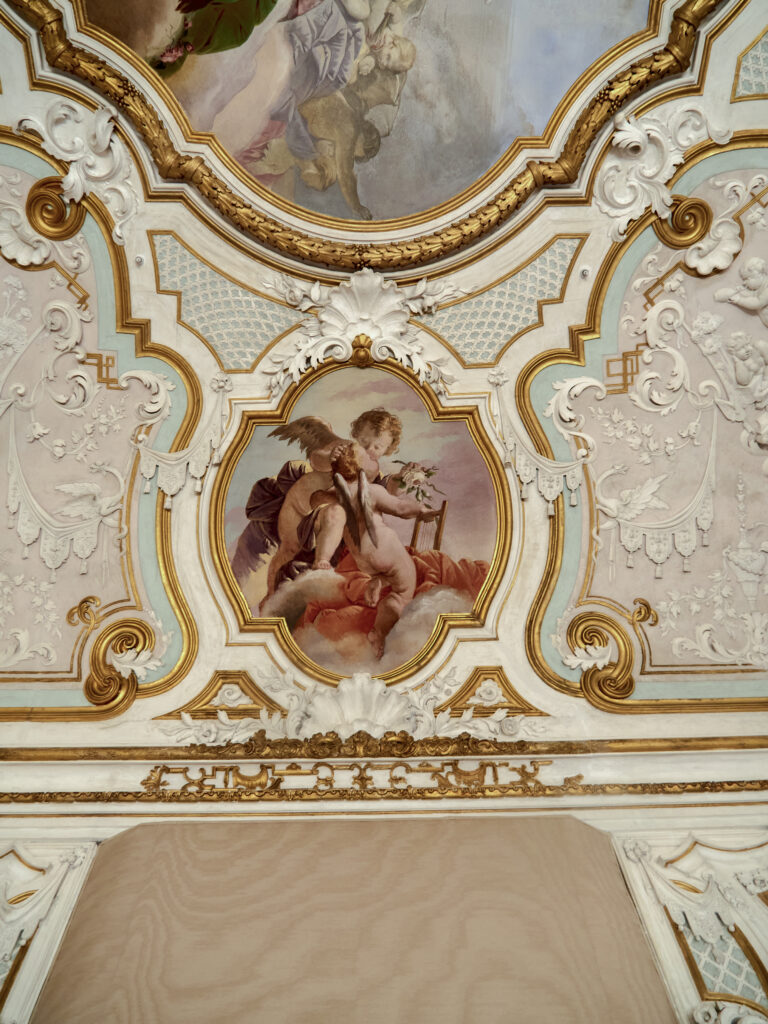
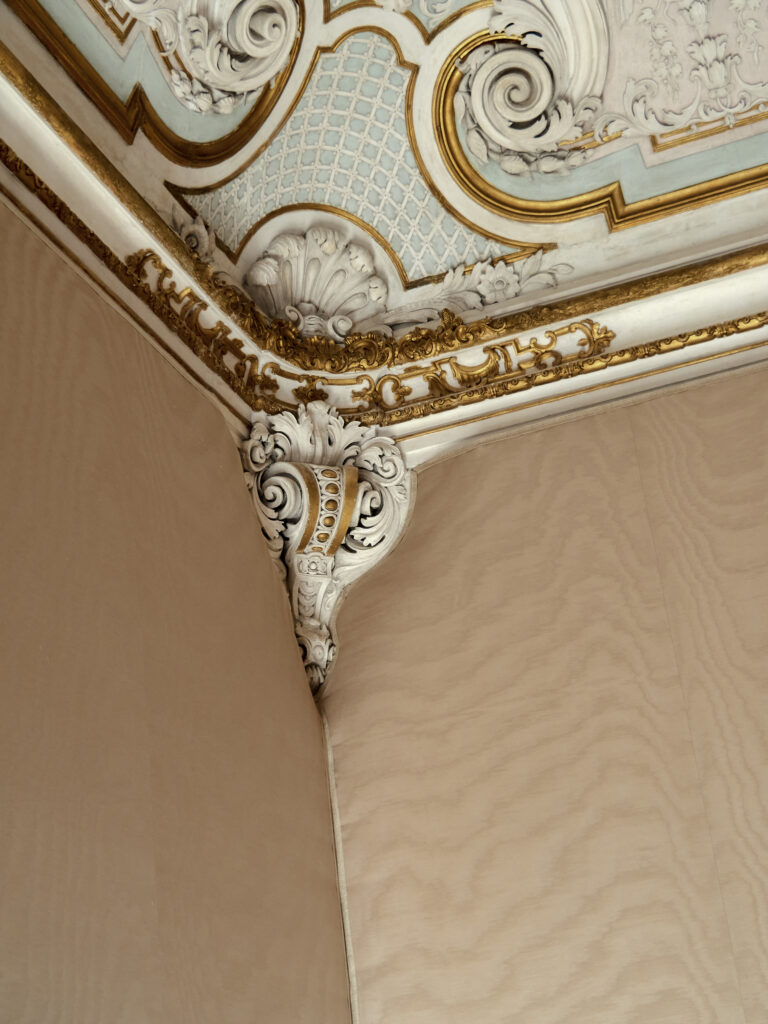
This fascination became the conceptual foundation of the project. Inspired by what she calls the “Lost Colors of Venice”, Asmar d’Amman developed an entire material language around faded pigments, softened surfaces and patinas shaped by centuries of water and light. These were not colours to be recreated, but rediscovered. “The first time I walked into Palazzo Donà Giovannelli, I felt an immediate encounter with pure beauty,” she says. “These patinas and living colours washed by time became my guide.”
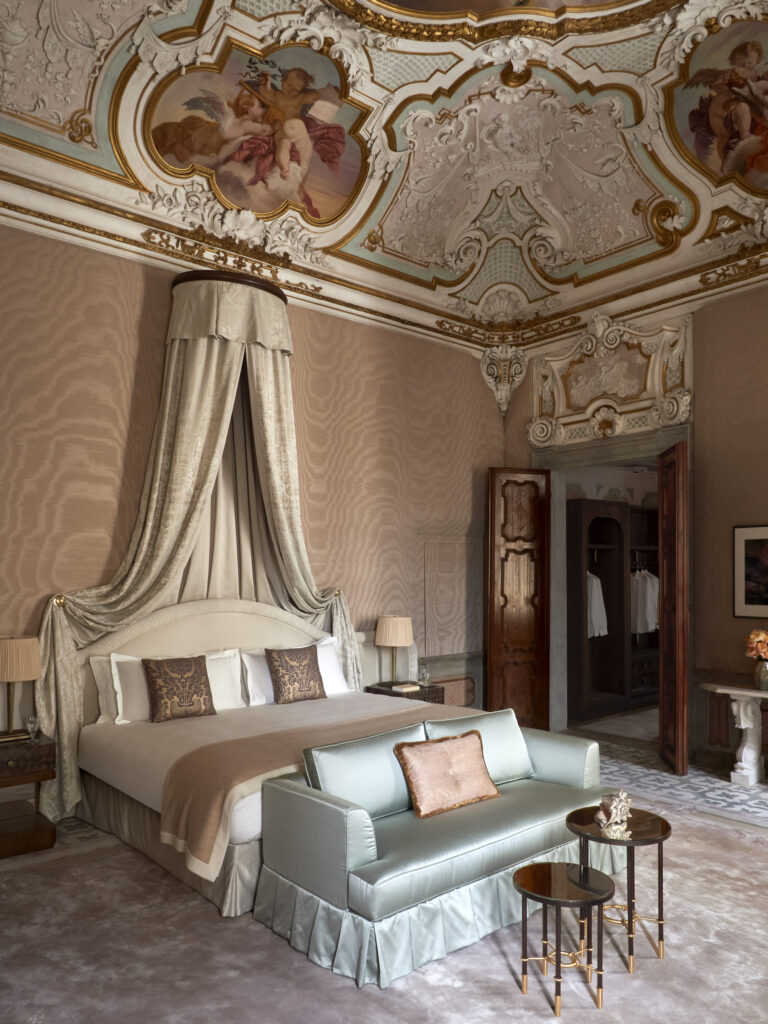
Throughout the interiors, moiré silks evoke the movement of lagoon waters. Velvet absorbs light like fading frescoes. Marbles were selected not only for their beauty but for their place within Venice’s collective memory. Even the carved wood surfaces of the Wagon Bar reference the submerged timber piles upon which the city itself stands.
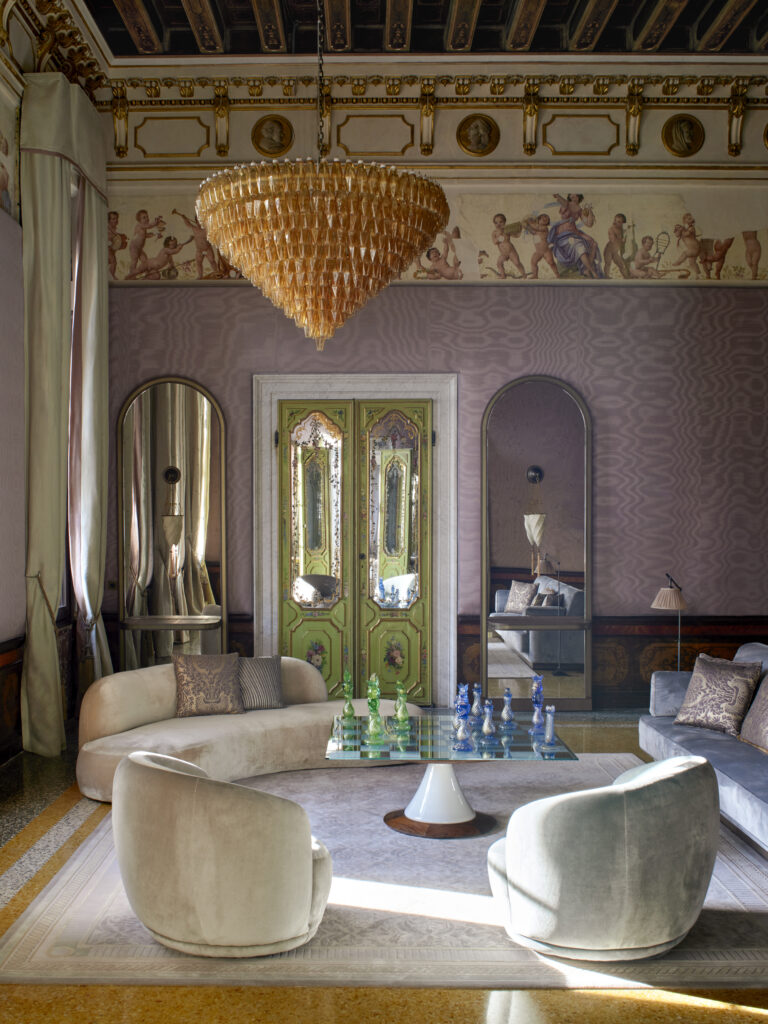
What emerges is a portrait of Venice that avoids cliché entirely. “Embracing the past means understanding it and responding to it with respect, without imitation,” Asmar d’Amman says. “I seek poetic truth without nostalgia.” It is a delicate distinction. Venice is perhaps one of the world’s most romanticized cities, endlessly reproduced through decorative shorthand. Yet at Palazzo Donà Giovannelli, references never feel literal. Murano glass, Venetian marbles, brass detailing and local craft traditions are present everywhere, but they operate as a language rather than an image.
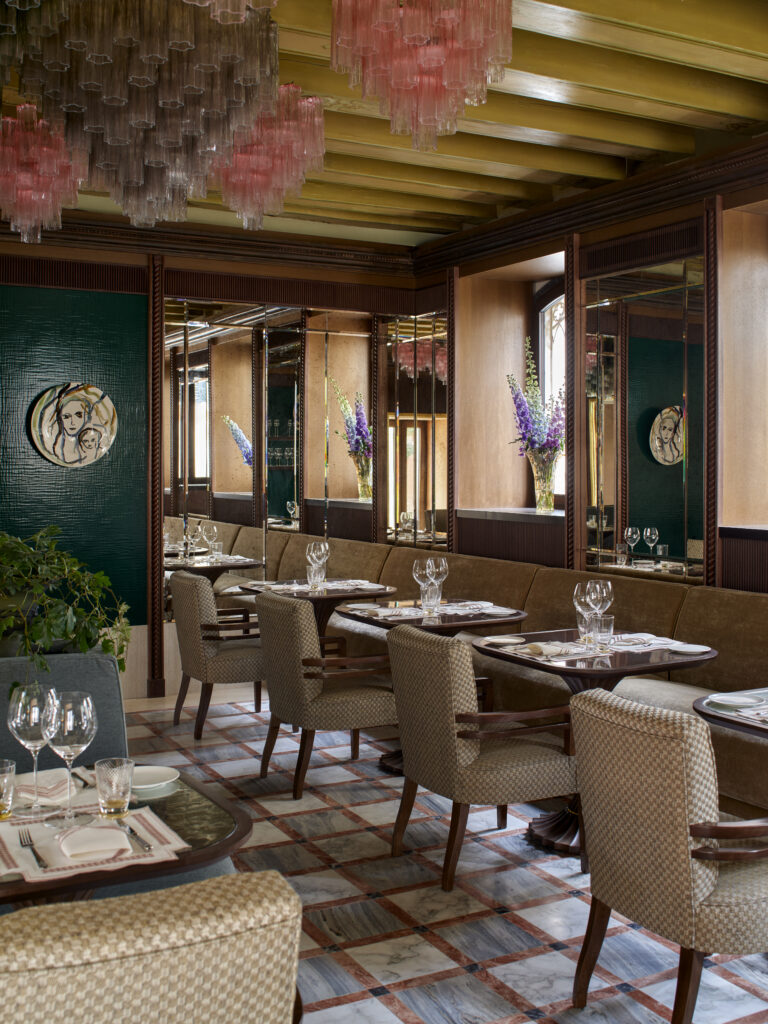
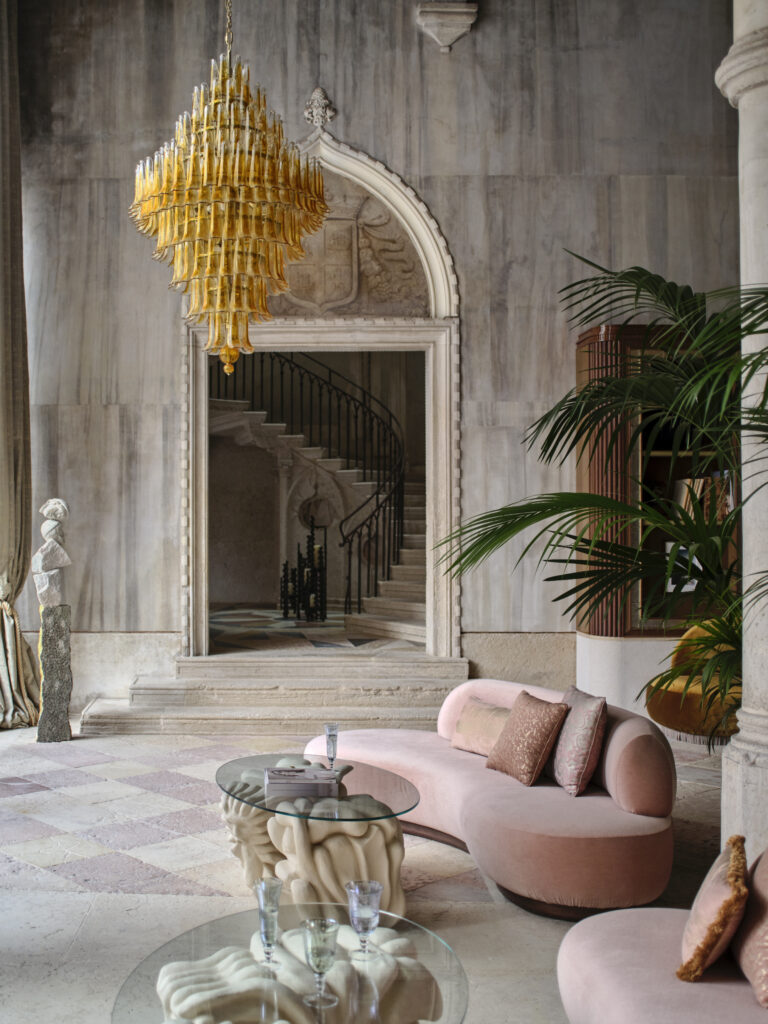
“These elements are not applied,” she explains. “They form a language that reflects Venice not as image, but as material that is crafted, layered and continual.”
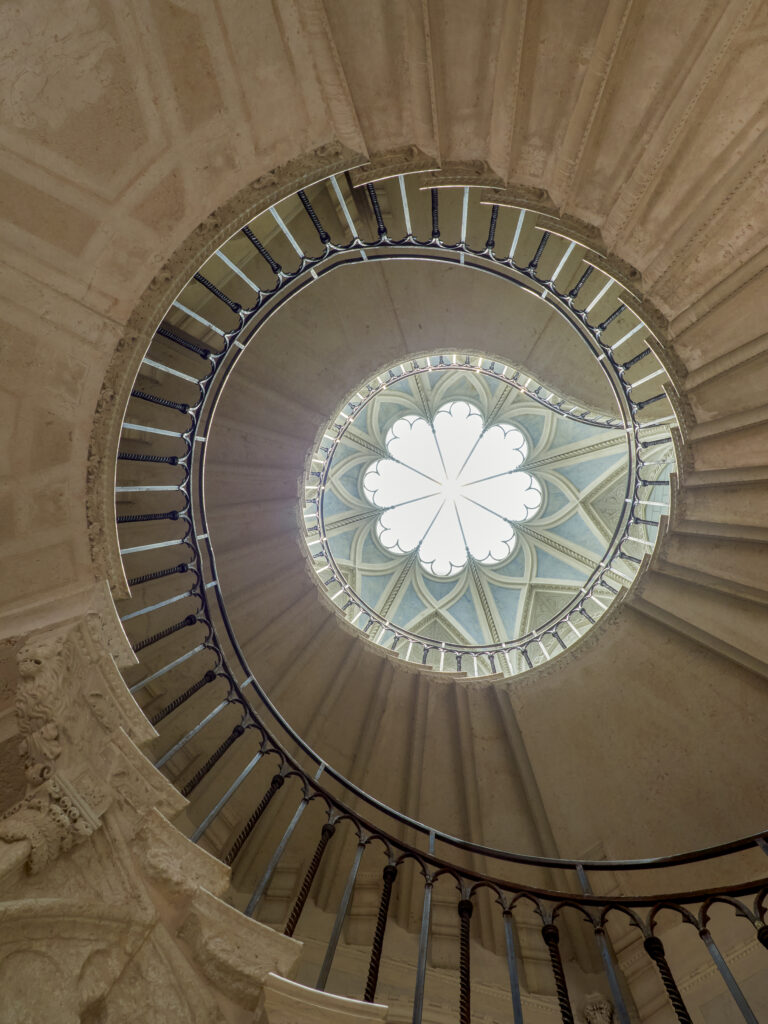
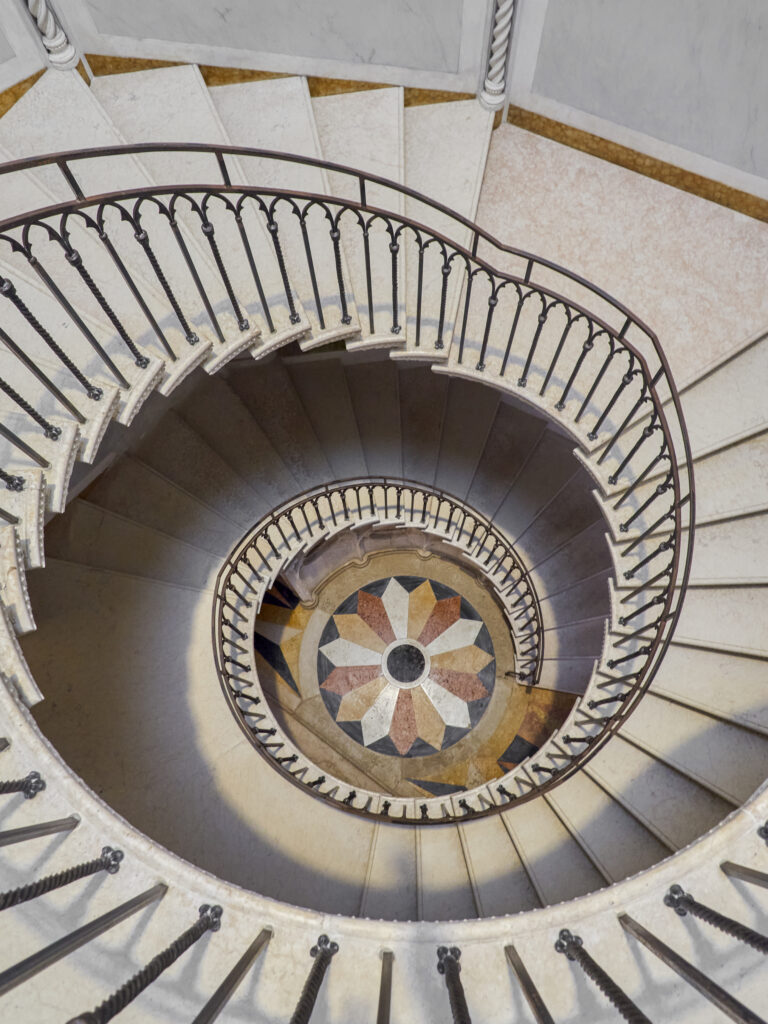
That same philosophy guided her approach to the building’s remarkable architectural inheritance. Over centuries, the palazzo accumulated Gothic, Renaissance, Baroque and nineteenth-century interventions. Rather than privilege one historical period over another, Asmar d’Amman treated the building as a continuous narrative.
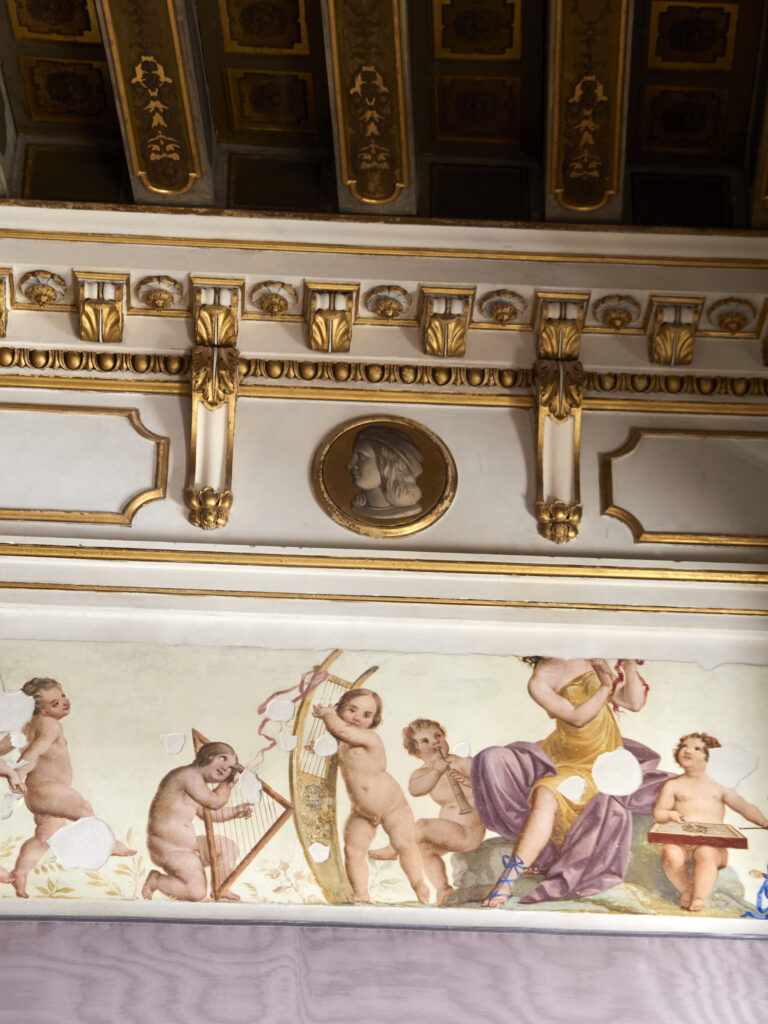
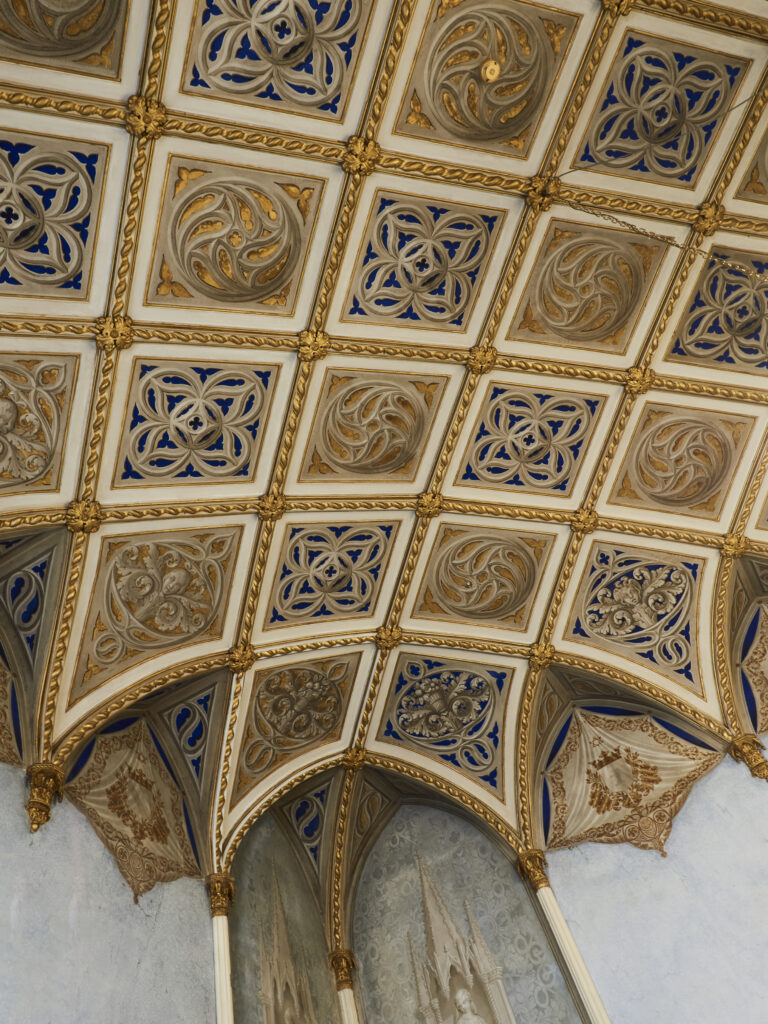
“The palazzo already held extraordinary architectural and emotional depth,” she says. “Rather than choosing one epoch over another, my approach was to read it as a continuous story.” Historical fragments that had disappeared beneath later interventions were carefully revealed. Original elements were repaired and reintroduced. Contemporary insertions were designed not as contrast, but as continuation.
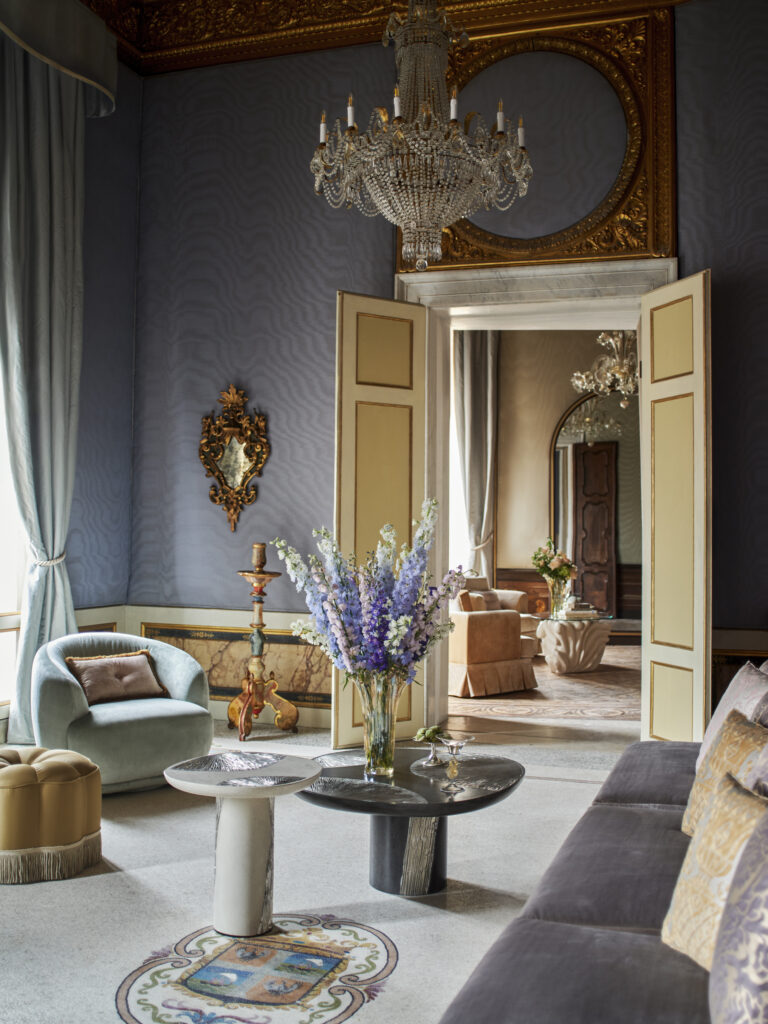
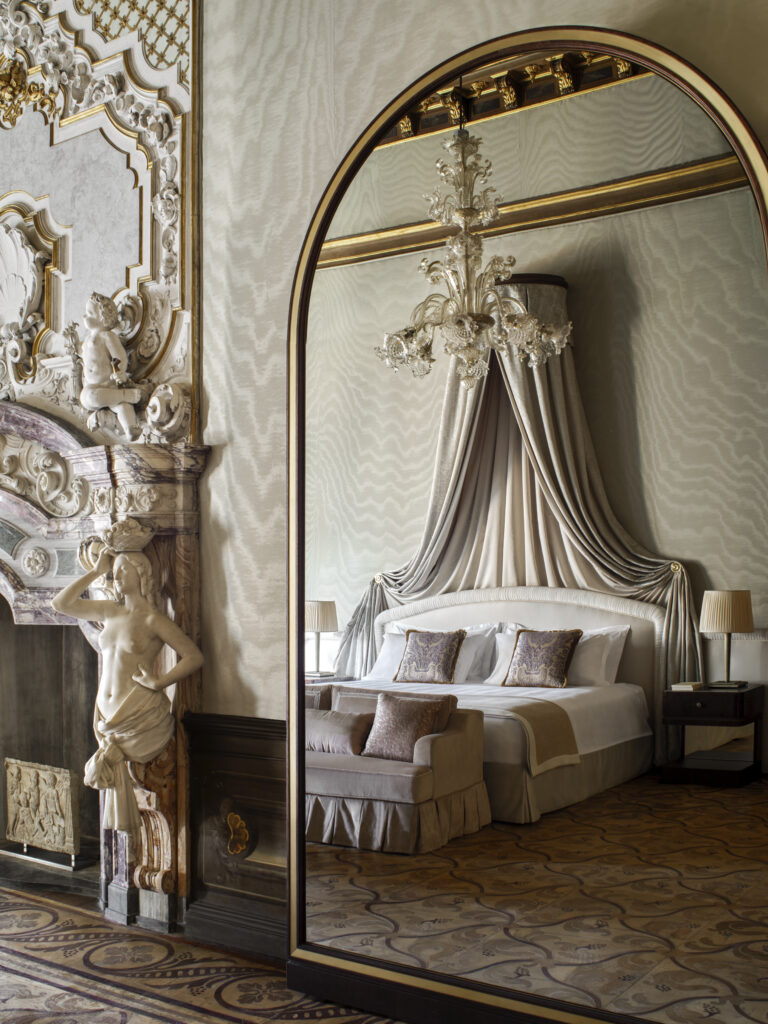
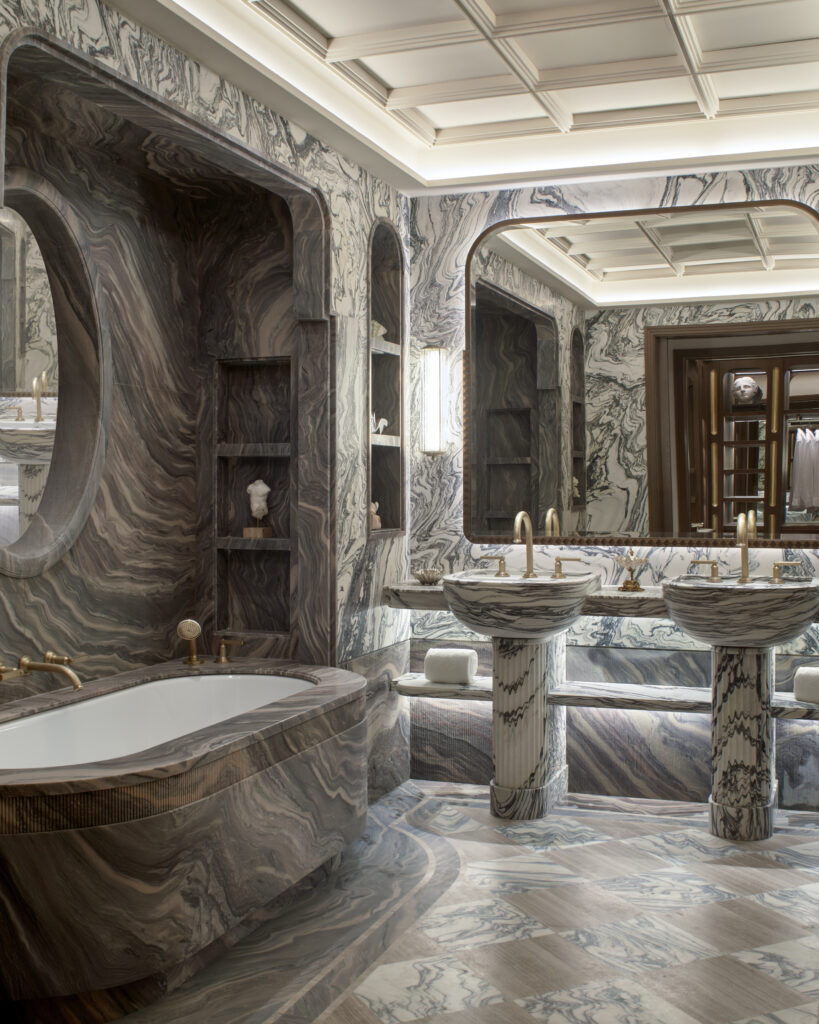
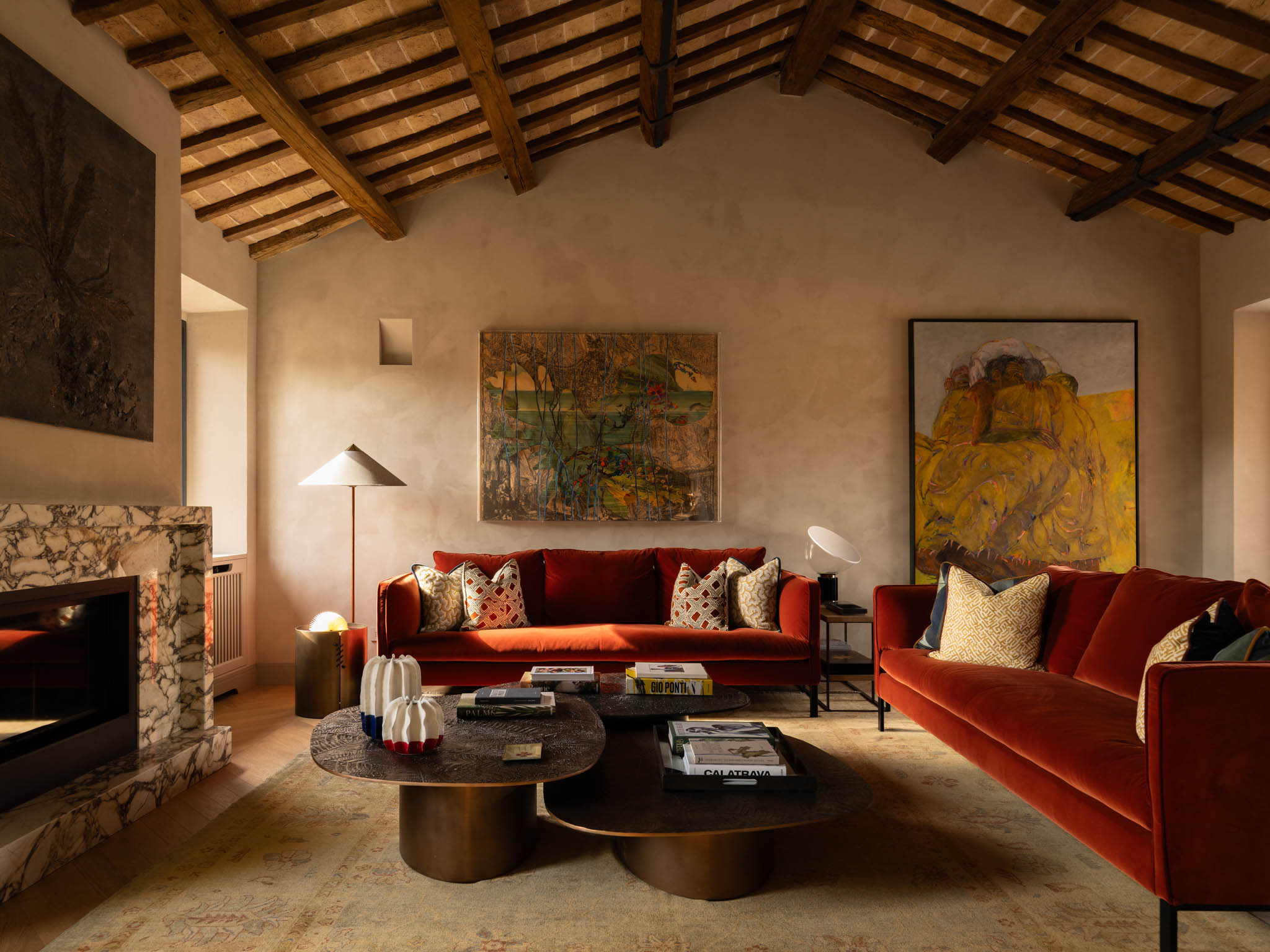
The result is most evident in the suites, where frescoed ceilings, Murano chandeliers and sculptural fireplaces coexist with concealed technology, bespoke furnishings and references to the golden age of Orient Express travel. “I love the act of re-using what once belonged to a glorious past,” she says, “with an infinite interplay of dialogue between old soul and contemporary interior architecture.”
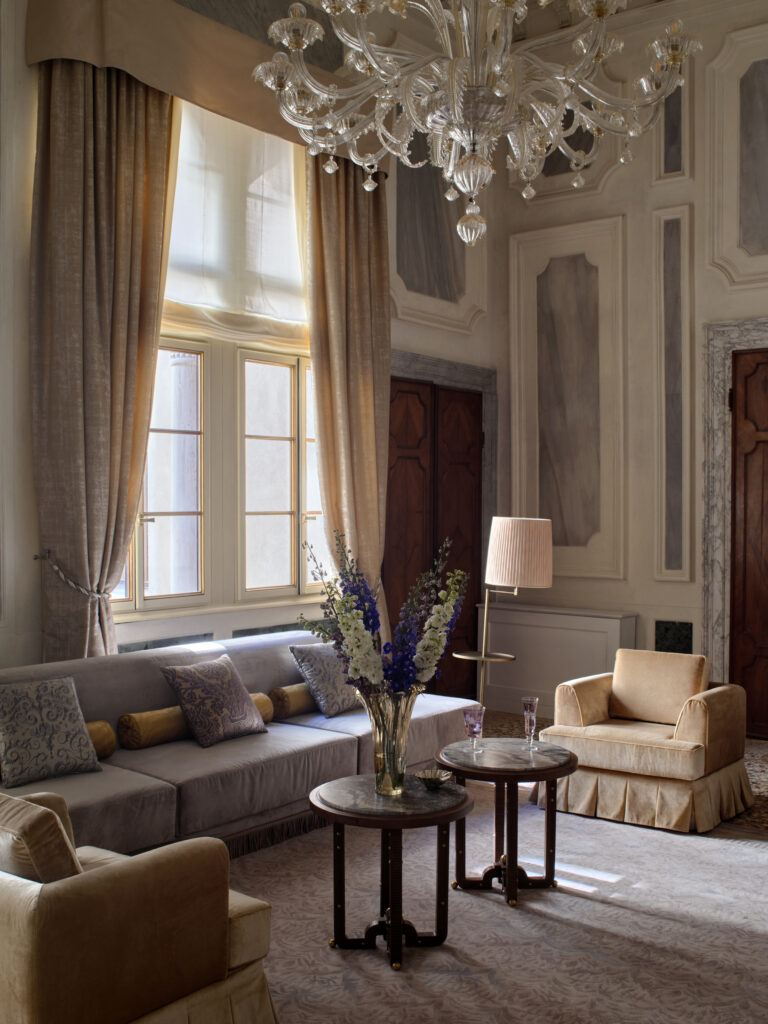
Perhaps nowhere is this dialogue more apparent than in the way technology disappears. Hospitality design often demands visible operational systems. Here, Asmar d’Amman fought for the opposite approach. “Technical and functional elements remain seamlessly hidden rather than visually present,” she explains.
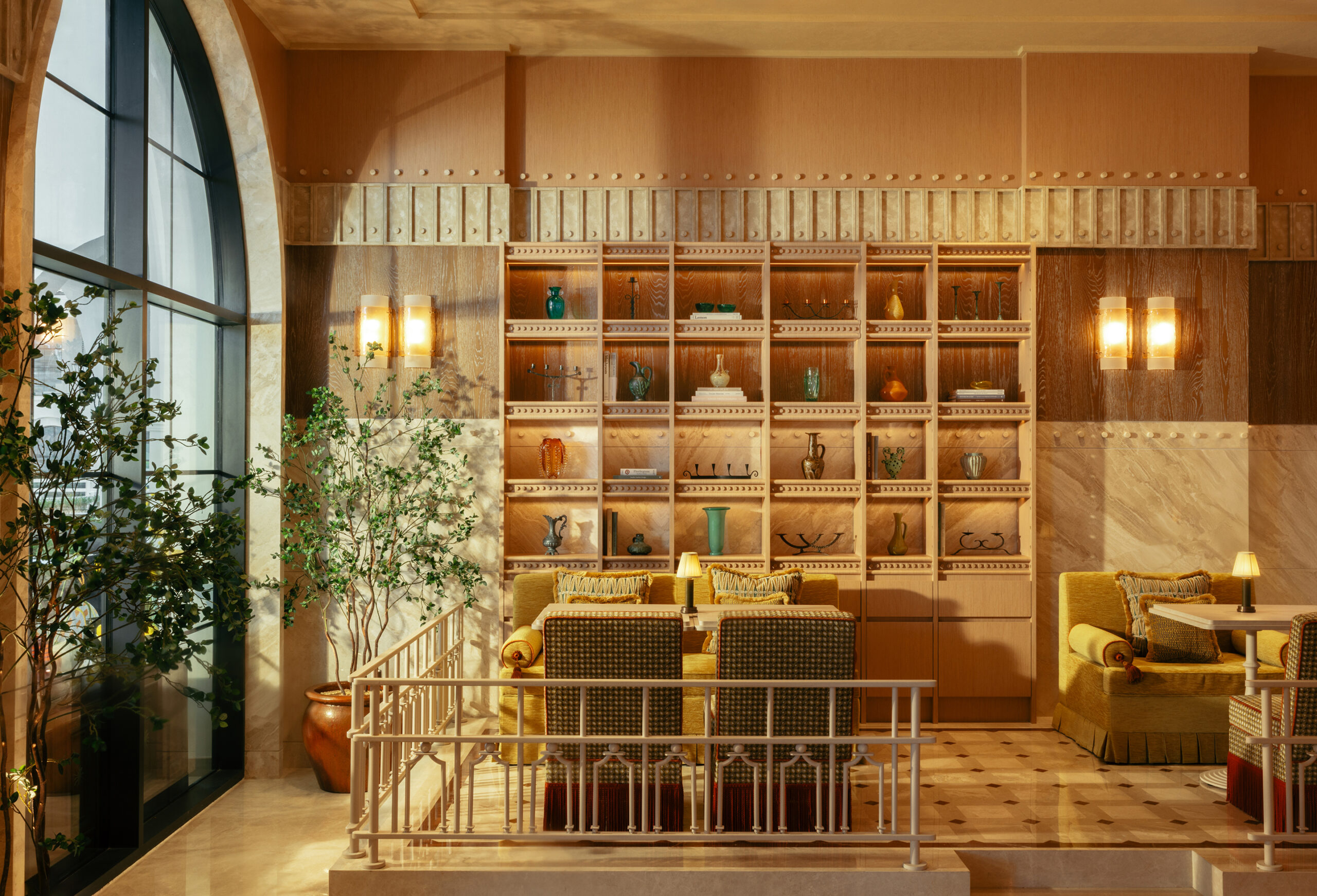
Televisions disappear behind mirrored libraries. Climate systems are concealed within architectural volumes. In the former courtyard, now transformed into the hotel’s lobby, a monumental wood-clad library quietly absorbs the infrastructure required by contemporary hospitality. “The idea was to remove any sensation of responding to a technical constraint,” she says, “and instead invoke timeless elegance.” Yet beyond materials, craftsmanship and architectural interventions, the project ultimately revolves around movement.
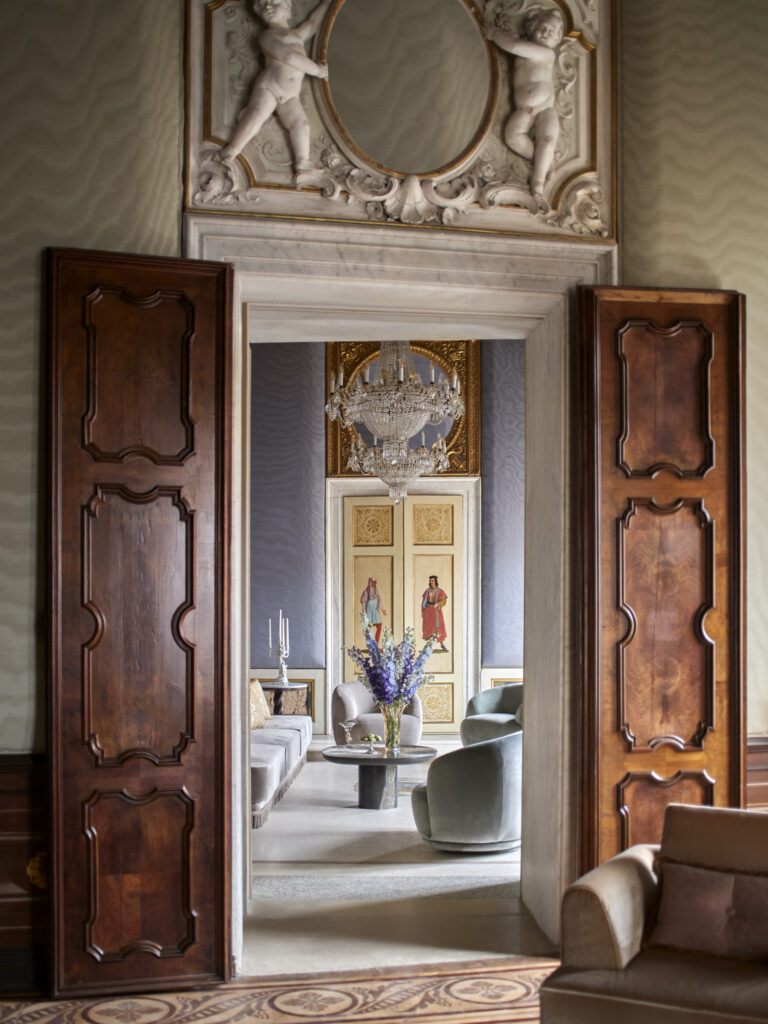
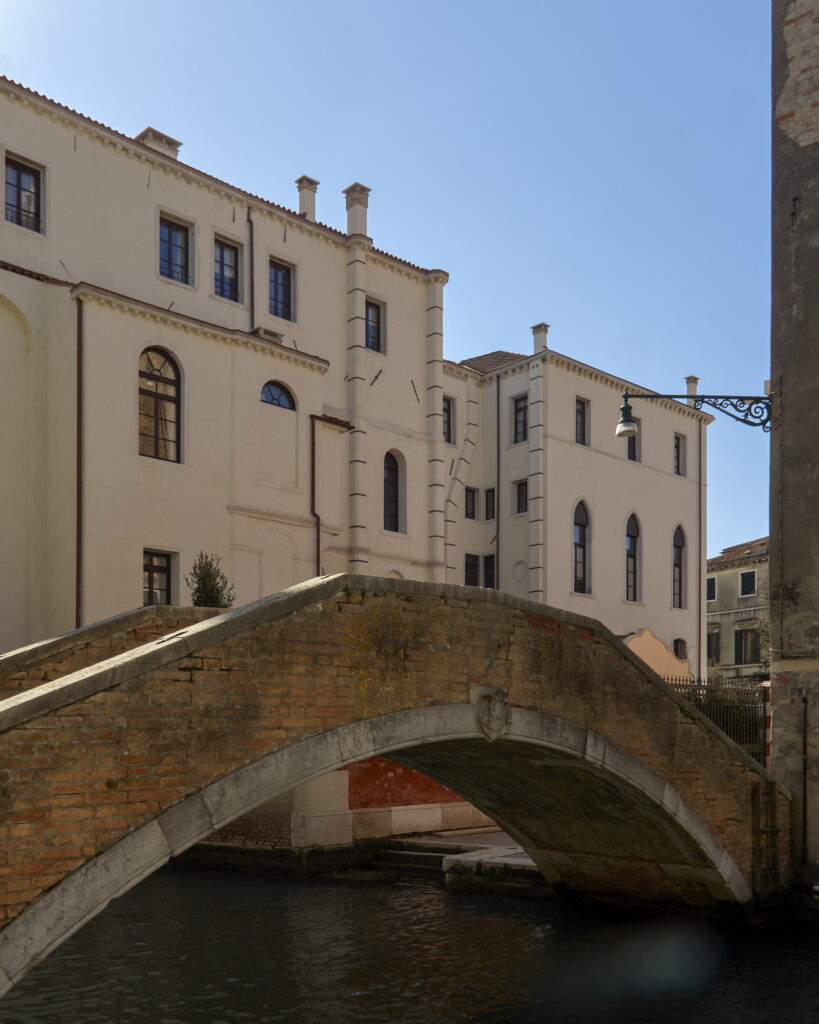
Venice is a city experienced through sequences. Arrival happens by boat, through narrow passages, hidden courtyards and unexpected thresholds. Asmar d’Amman embraced this as a design principle. “The journey begins with the entrance you choose to take,” she says. Guests may arrive from the canal, through a garden, across a historic courtyard or via a hidden passageway. Each route reveals a different chapter of the building.
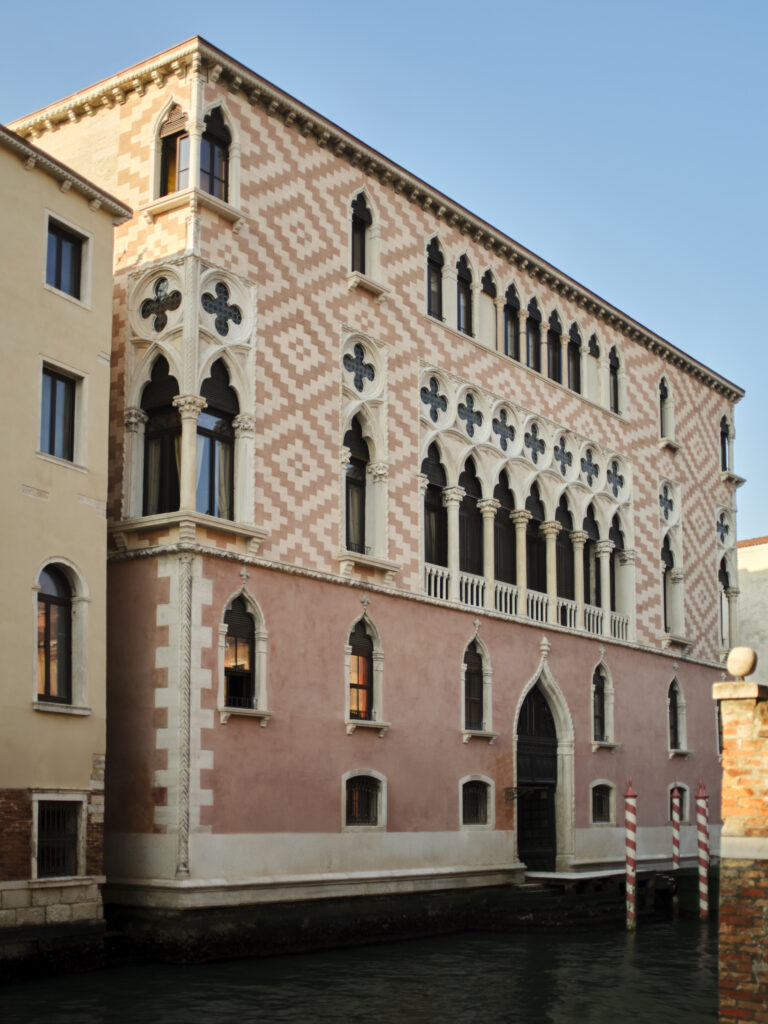
“The multiple entries seemed important to reveal and recreate,” she explains, “allowing guests to discover the Palazzo as a sequence of narratives rather than through a single entrance.”
The idea feels particularly resonant for Orient Express, a brand historically associated with travel, glamour and anticipation. Within the project, the permanence of a Venetian palazzo meets the romance of movement. “On one side, the palazzo embodies permanence, intimacy and memory. On the other, Orient Express introduces movement, glamour and the romance of travel.” The tension between those two worlds never fully resolves. Instead, it becomes the project’s defining quality.
After eight years inside the building, Asmar d’Amman still finds herself moved by its details. Not necessarily the grand gestures, but the moments where history and contemporary intervention become inseparable. “My favourite details are those where the historical is not simply restored but reinterpreted in high craft within a contemporary narrative.”
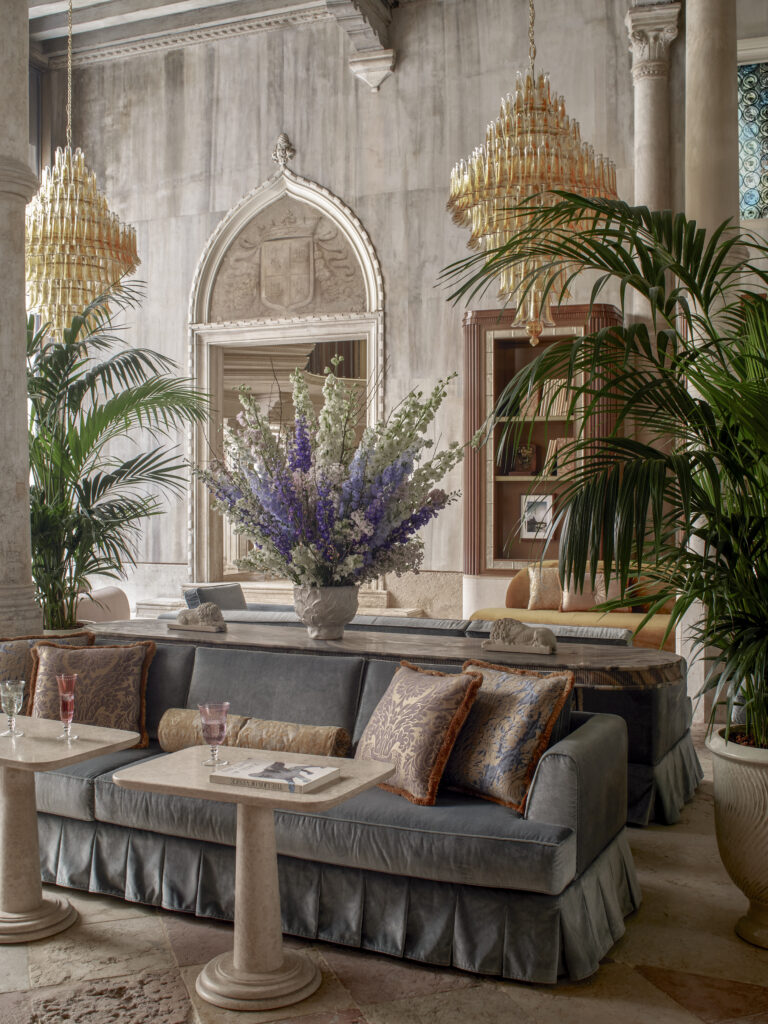
And perhaps that is the true achievement of Orient Express Venezia. The project does not attempt to freeze Venice in time. Nor does it impose a contemporary identity upon it. Instead, it accepts the city for what it has always been: a place shaped by accumulation, exchange, transformation and reinvention. If guests leave with one lasting impression, Asmar d’Amman hopes it is a sense of wonder.“I love to hear guests say they feel like they’re walking into a painting.”
A fitting description for a place where every surface carries memory, every room unfolds like a story, and where Venice itself remains the greatest work of art in the room.