In the desert landscape of Al Madam, Sharjah, where ghaf trees punctuate the horizon with their twisted silhouettes, a family retreat slowly grew into something more meaningful. What began as four concrete columns on a farm would eventually become Ghafarm, a place shaped as much by gathering and memory as by architecture itself.
Named by its owner after the native ghaf tree that grows across the surrounding desert, the project embodies many of the same qualities: resilience, generosity and a profound connection to its environment. When designer Maia Aoun Sayad was first invited to reimagine the site, her ambition was not to create a statement house, but an alternative rhythm of living.
“My goal was to create a completely different atmosphere from the client’s life in Dubai,” she explains. “A weekend retreat should feel slower, more connected to nature, and centred around outdoor living and family time.”
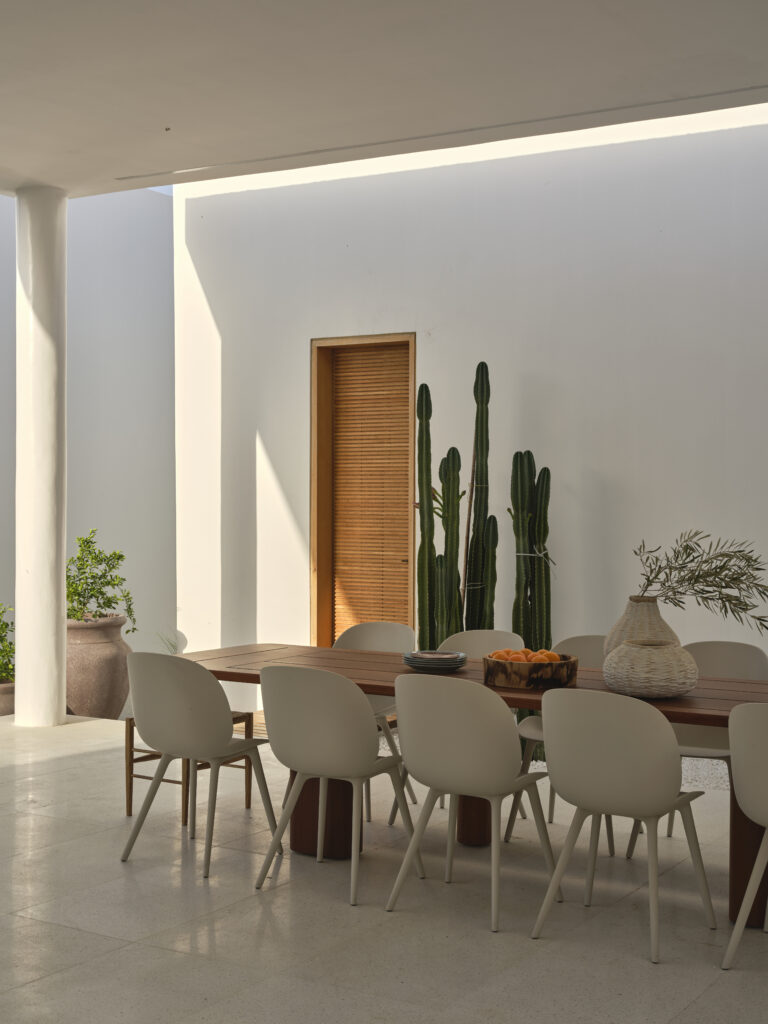
At first, the brief was relatively modest. The existing structure provided little more than a starting point. Yet as the family spent more time at the farm, weekends gradually turned into longer stays, and the project evolved alongside their growing attachment to the place. What had once been conceived as a simple escape became a destination in its own right, a setting for family gatherings, celebrations and shared rituals.
The architecture responded accordingly.
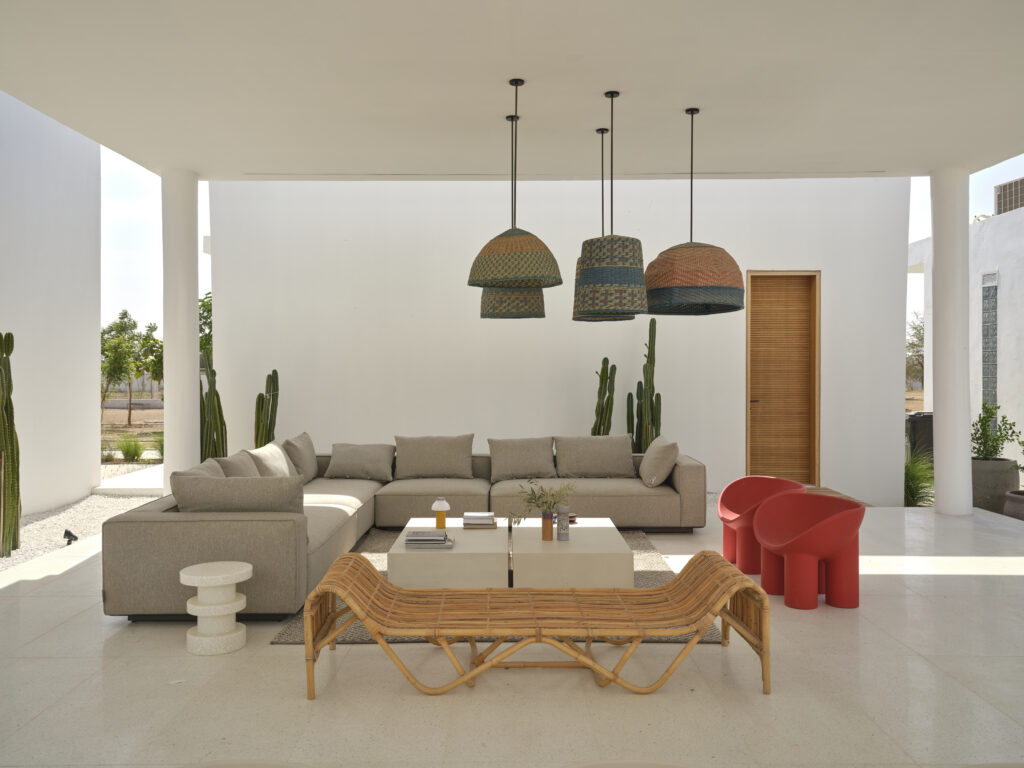
One of the most significant decisions was also the simplest. Rather than expanding the indoor programme, Aoun chose to place communal life outdoors.
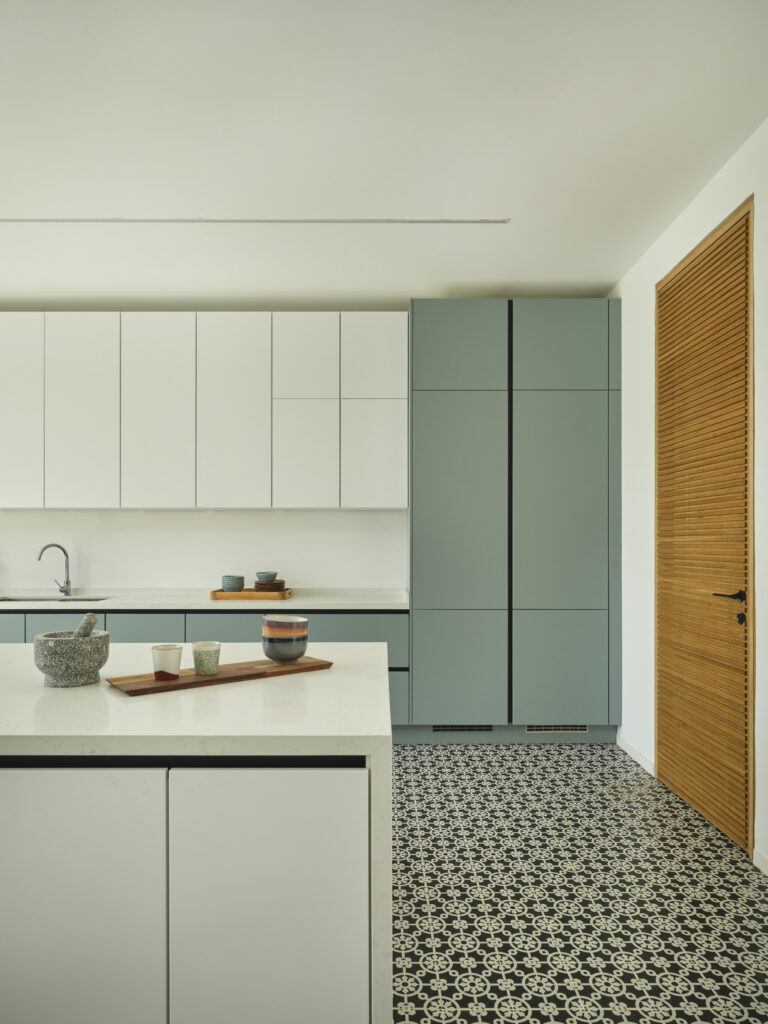
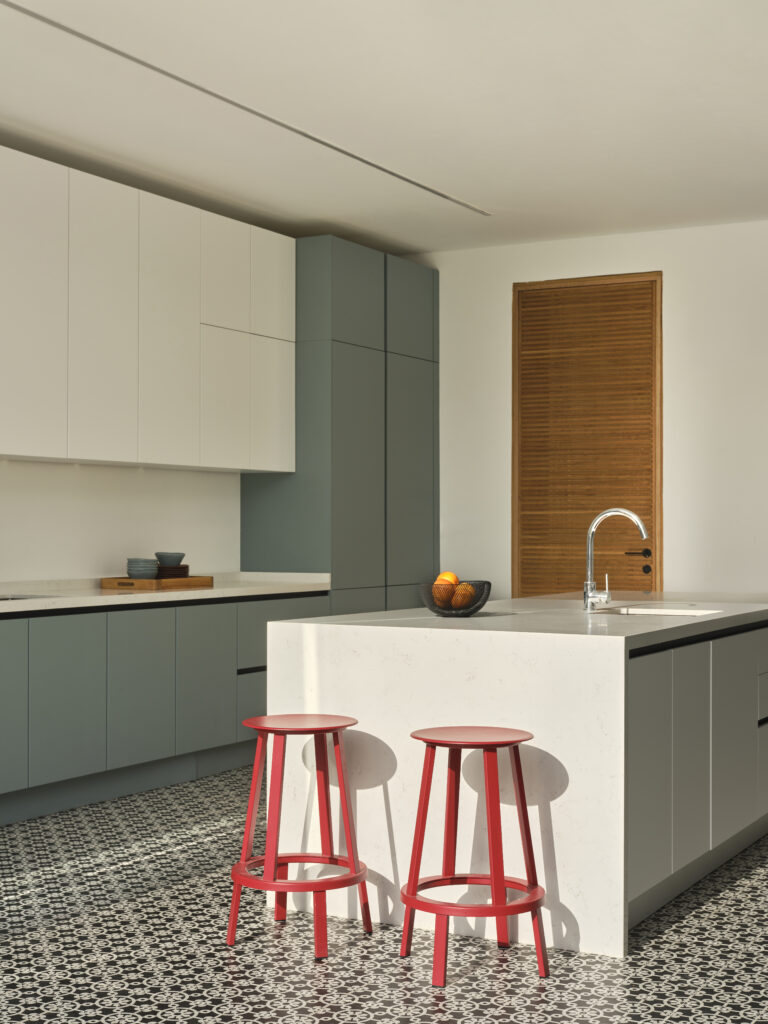
“The first phase already had an indoor living room, so I didn’t see the value in creating another one,” she says. “I wanted to offer a different experience.”
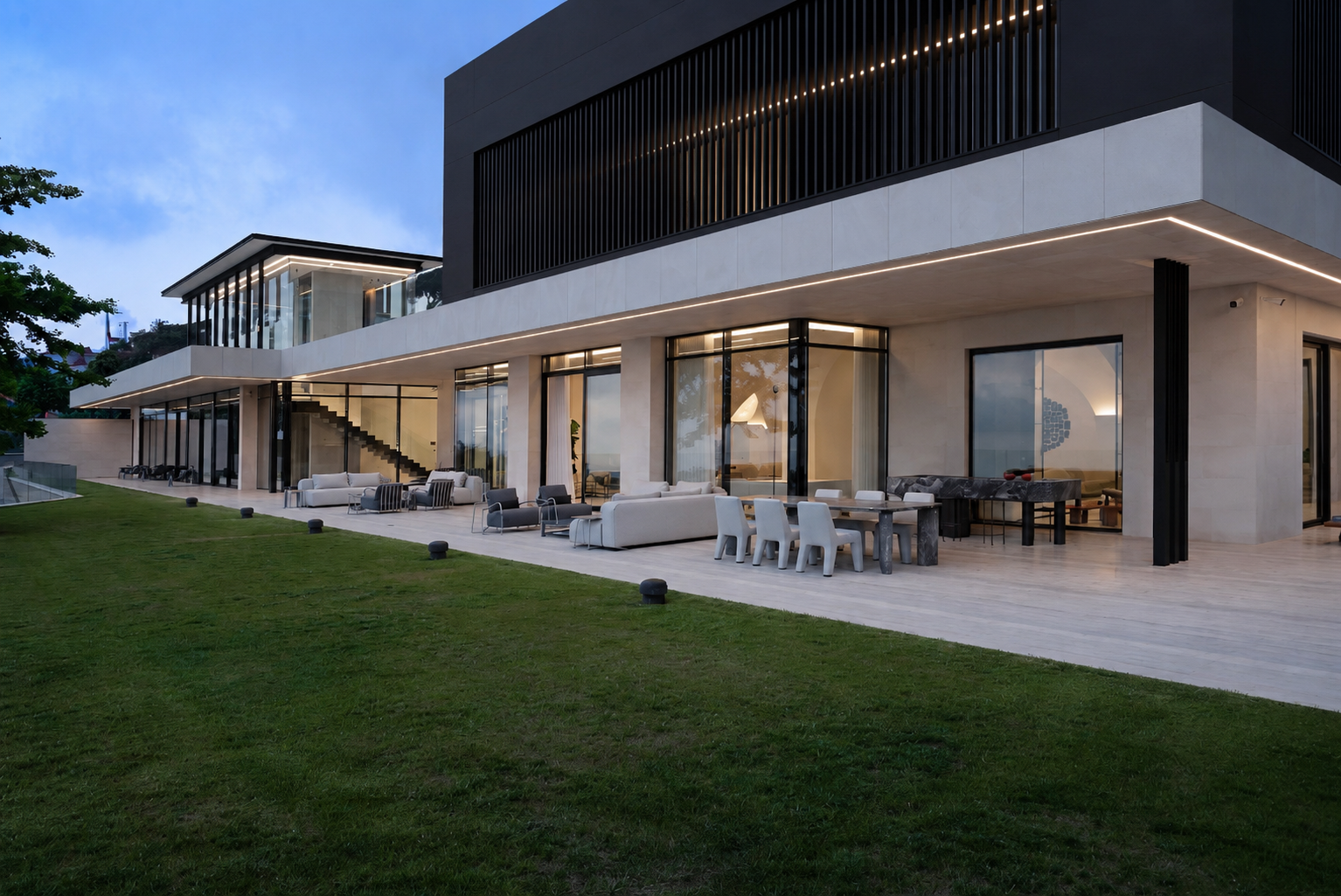
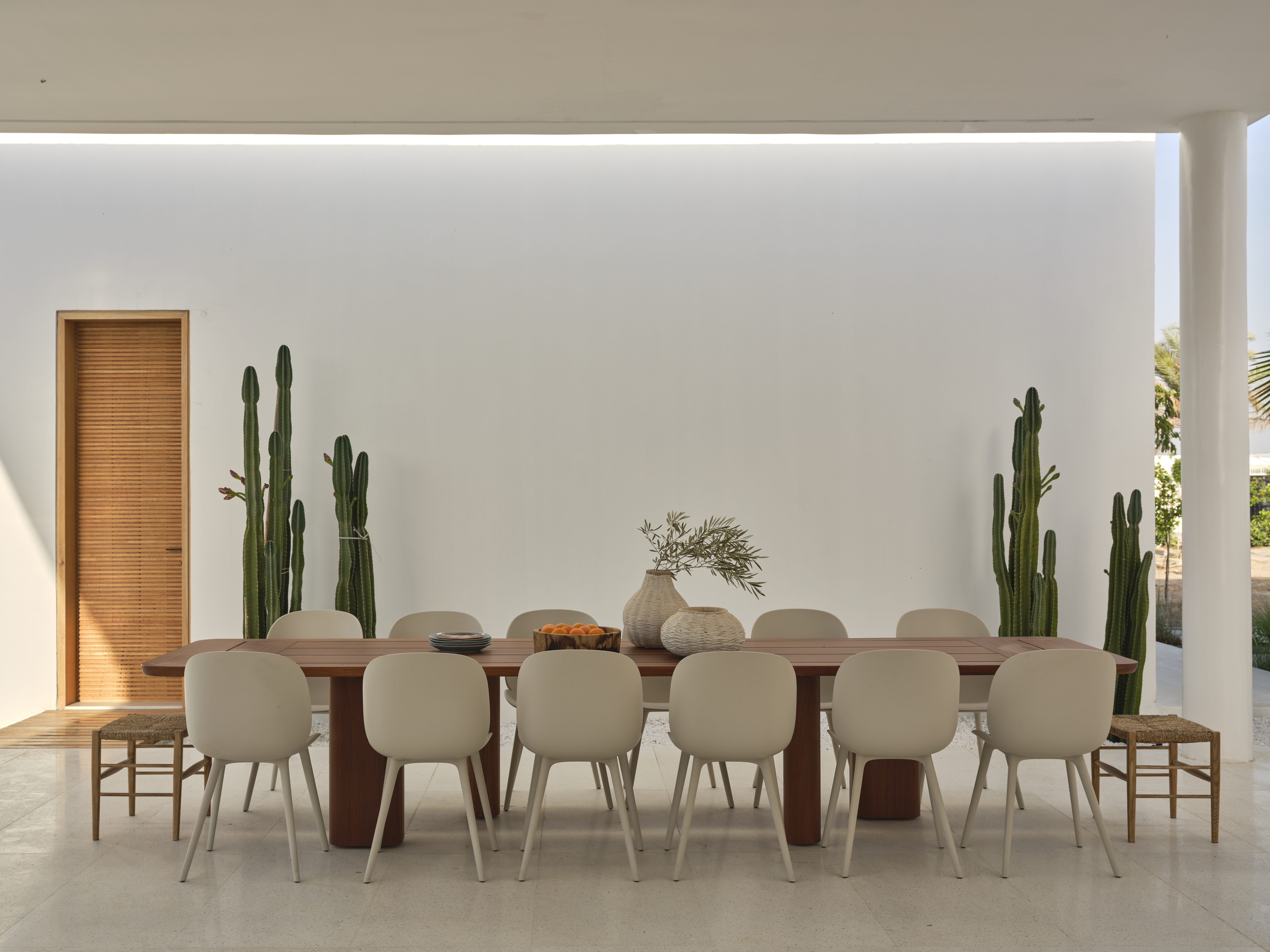
Instead, an expansive outdoor living space became the heart of the project. Open to the landscape and naturally ventilated during the cooler months, it functions less as a room than as a shaded clearing within the desert. Here, the boundaries between architecture and nature begin to dissolve. Meals stretch into conversations, children move freely between spaces, and the changing light becomes part of everyday life.
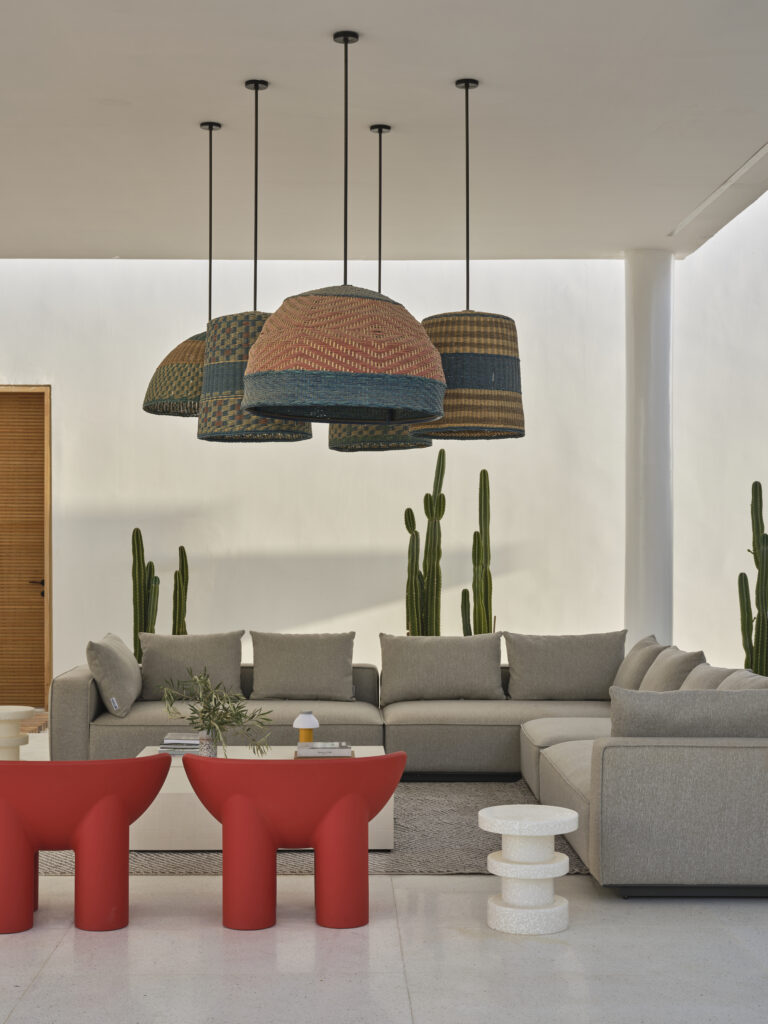
The decision feels particularly suited to the landscape of Al Madam, where the beauty of the desert lies not only in its vastness but in its subtlety. The movement of air, the shifting shadows and the quiet presence of vegetation become as important as walls and roofs.
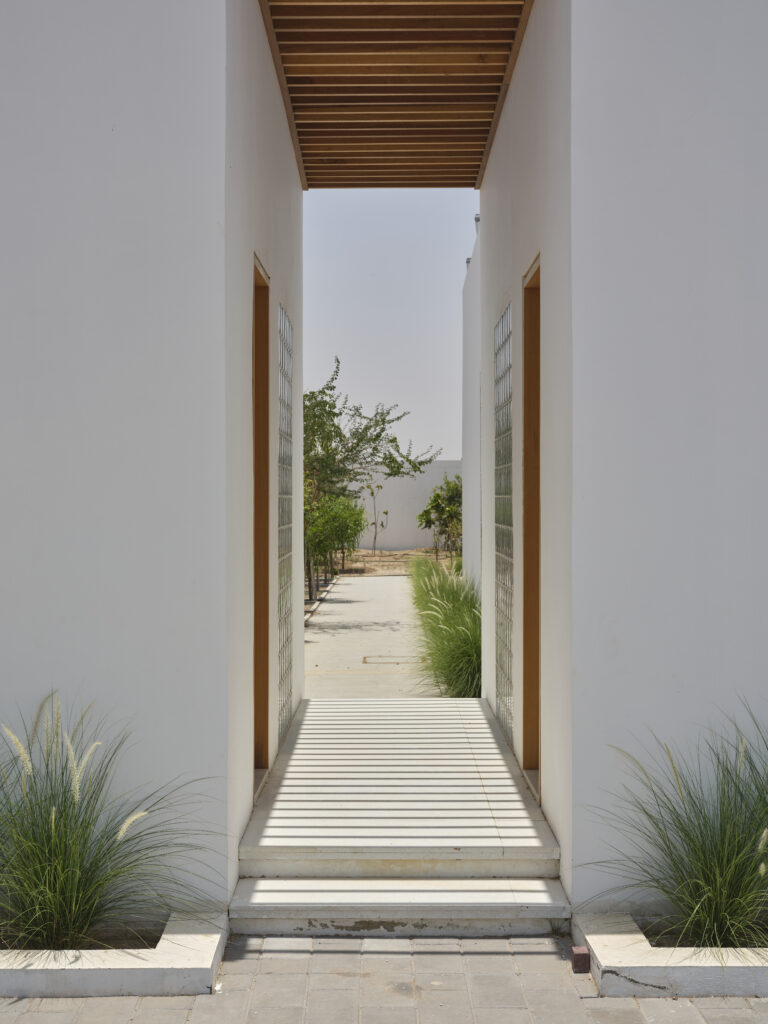
Around this communal space, three guest suites are organised in a U-shaped composition. The arrangement defines the central gathering area while maintaining a sense of openness towards the surrounding landscape.
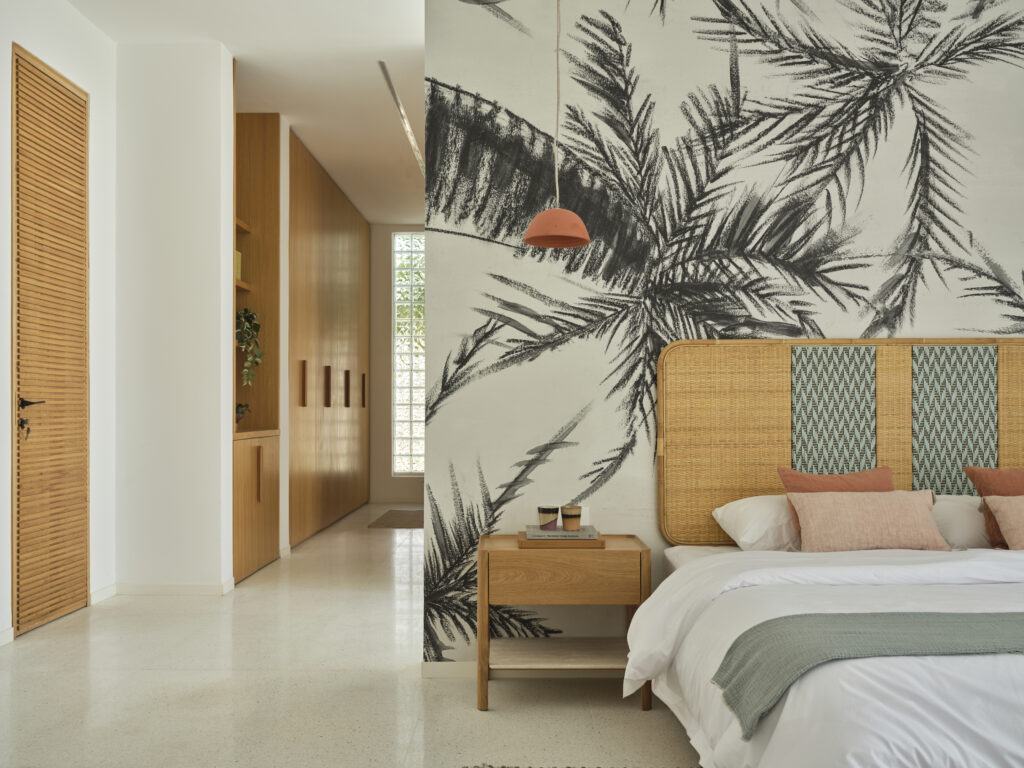
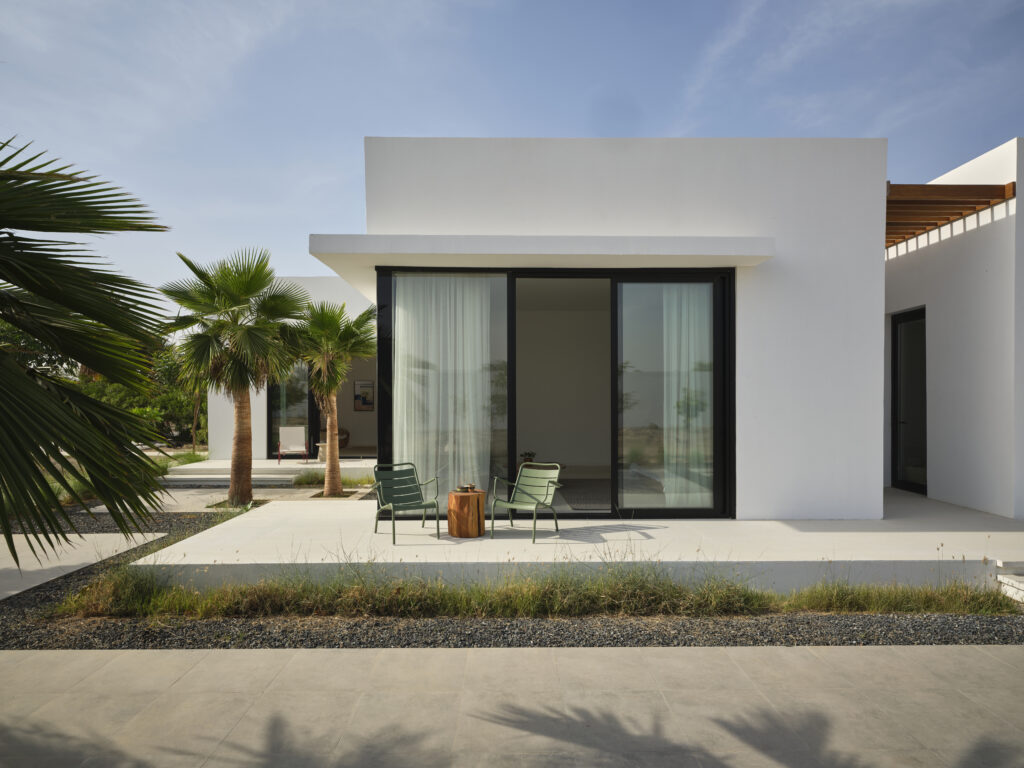
“The site offered enough space to create both communal and private areas,” says Aoun. “By positioning the guest suites carefully, each room benefits from its own terrace and outdoor space, while remaining connected to the central living area.”
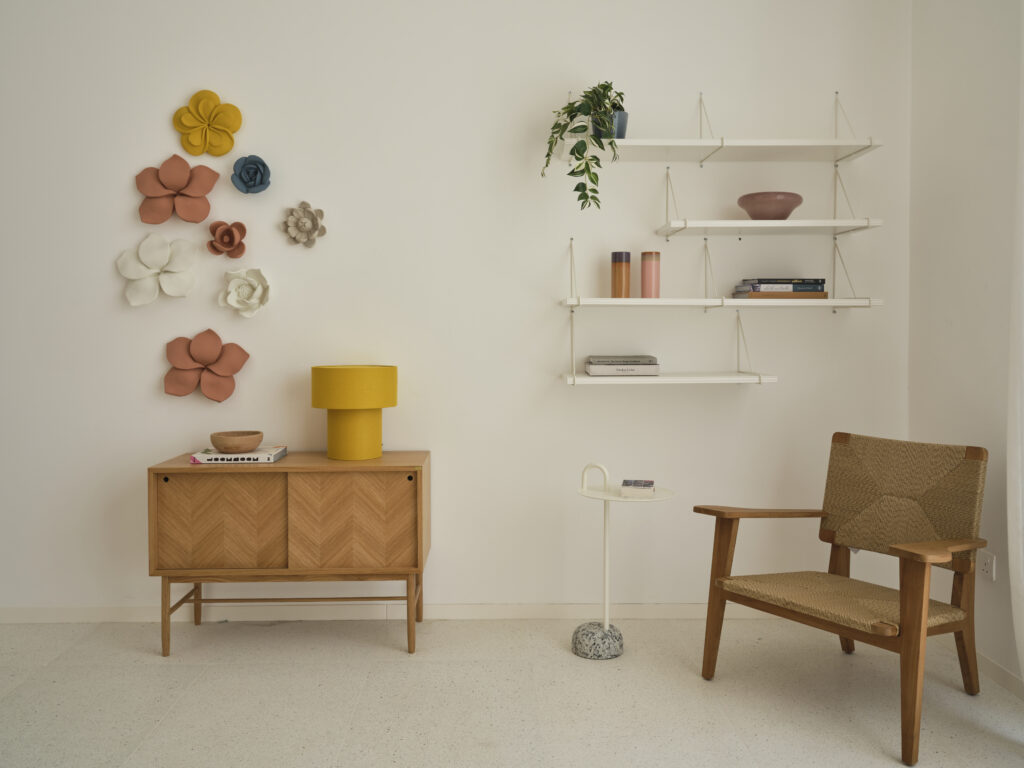
It is a delicate balance that runs throughout the project. The architecture encourages togetherness without imposing it. Family members can come together around a meal or an evening gathering, yet each suite remains a self-contained retreat, complete with private outdoor areas, coffee stations and beautifully designed bathrooms.
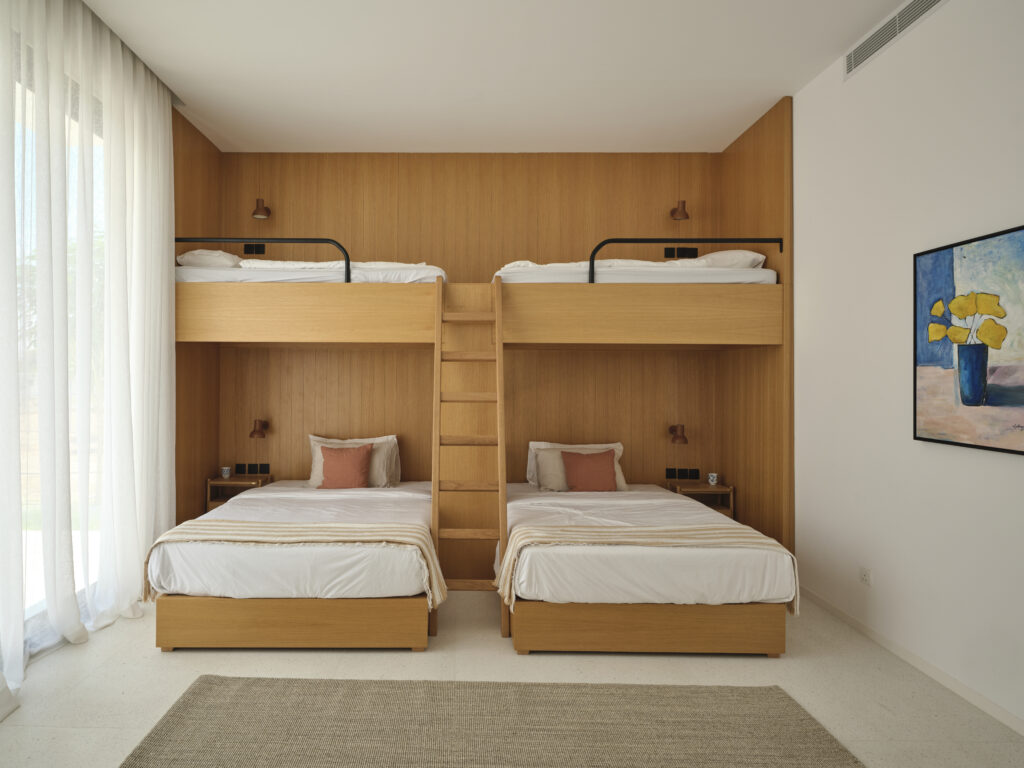
This interplay between collective and individual experience extends into the landscape itself. Rather than treating planting as decoration, Aoun uses it as an architectural device.
Between the guest suites and the communal living area, a cactus garden creates a soft transition between private and shared spaces. Its sculptural forms introduce texture and rhythm, while casting ever-changing shadows across the architecture.
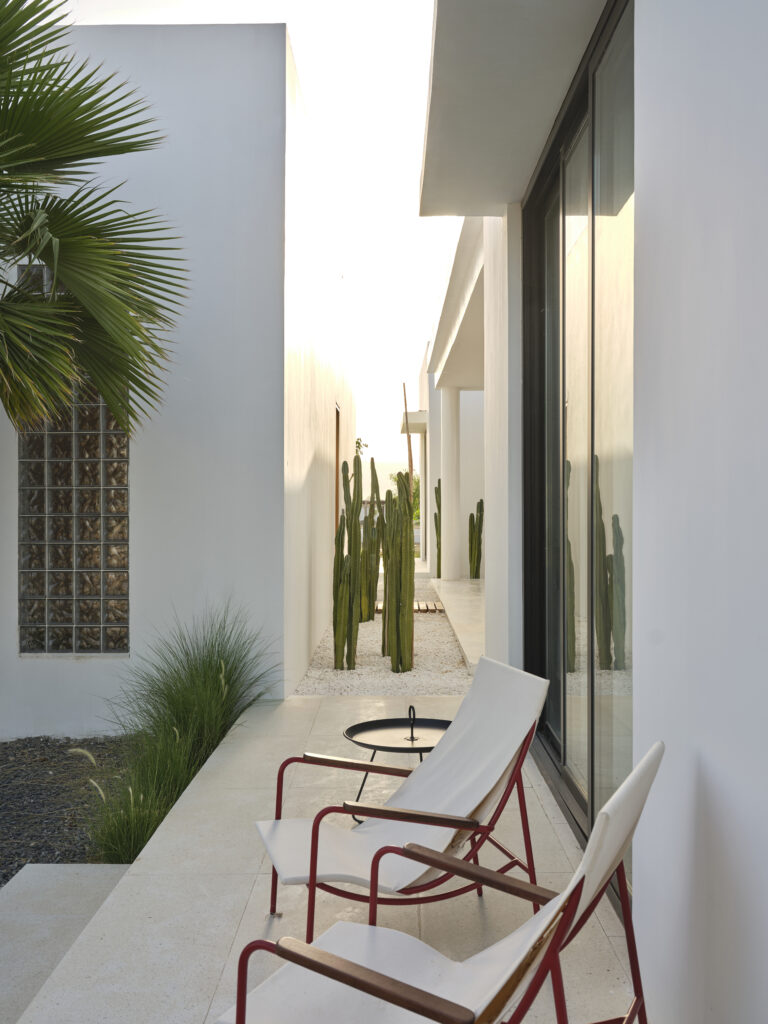
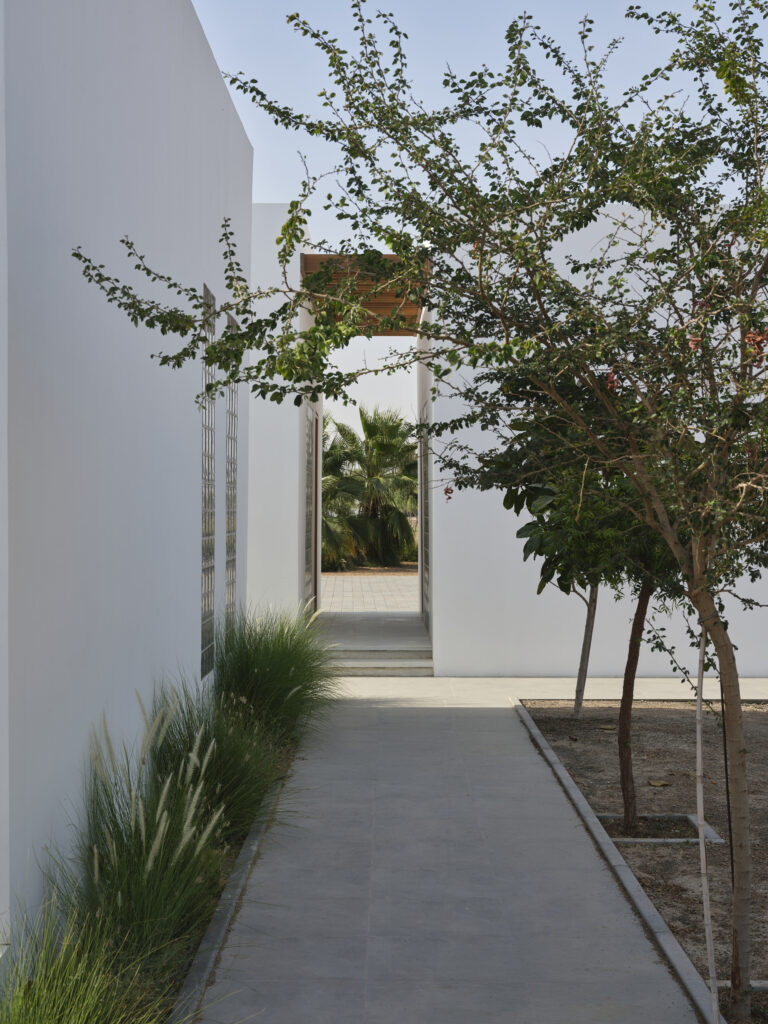
“Rather than adding artwork or decorative elements to the walls, I used a cactus garden to create texture, shadows and visual interest,” she explains. “Together with the lighting, the cacti bring life to the space and become an architectural feature in their own.”
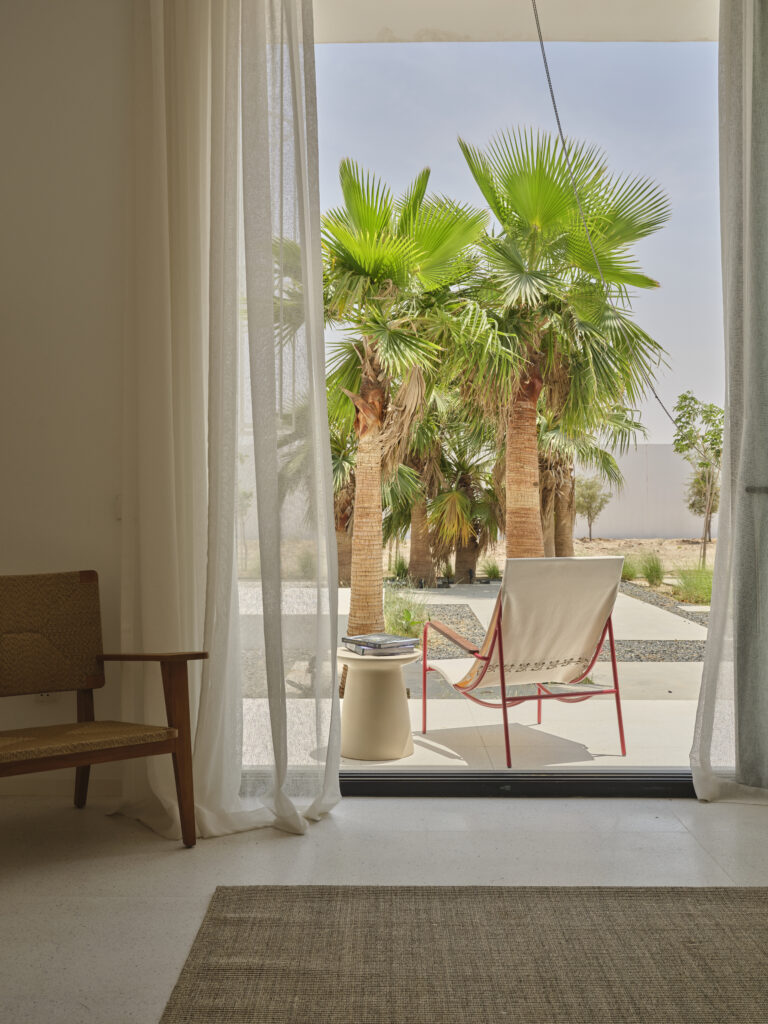
The gesture feels particularly appropriate in a project where nature is not something viewed from a distance but actively woven into daily life. Throughout Ghafarm, the relationship between indoors and outdoors is deliberately fluid. Folding glass doors allow the kitchen to open completely to the landscape, terraces extend naturally from the guest rooms, and circulation flows seamlessly between built and unbuilt spaces.
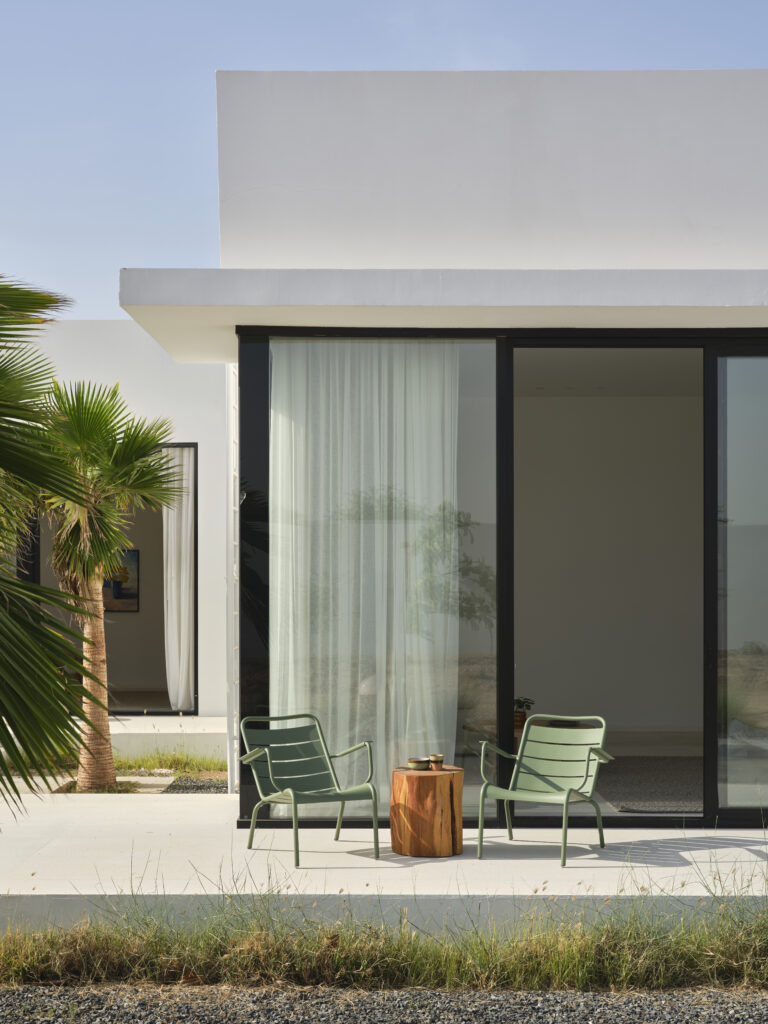
“Rather than following a specific architectural precedent, I responded to the site and climate,” says Aoun. “The goal was to create a seamless connection between architecture and landscape, allowing indoor and outdoor spaces to function as one continuous living experience.”
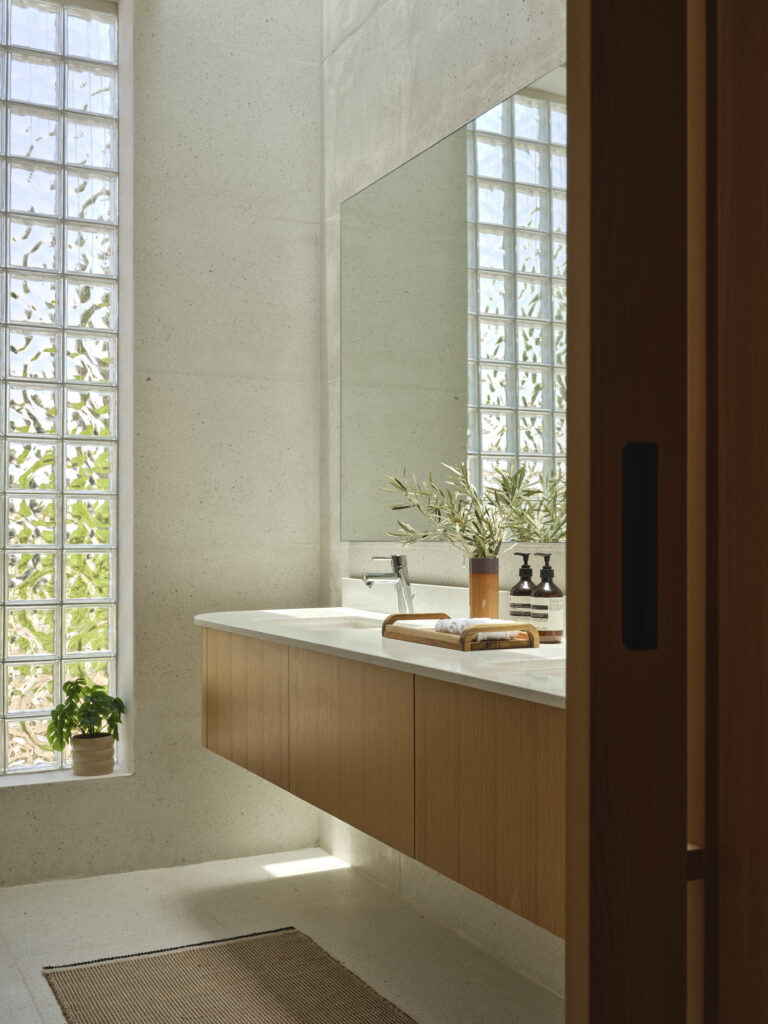
Perhaps nowhere is this philosophy more evident than in the bathrooms. Often treated as secondary spaces, here they become moments of quiet contemplation and connection to the natural world.
“My favourite design gesture is the way the bathrooms connect to nature,” Aoun says. “Whenever possible, I opened them to the landscape through large windows while preserving privacy. Where that wasn’t possible, I opened them to the sky through skylights.”
It is a small detail, yet one that captures the essence of the project. Whether through a framed view of the desert, a glimpse of a cactus silhouette, or a shaft of sunlight falling through an overhead opening, the landscape remains present.
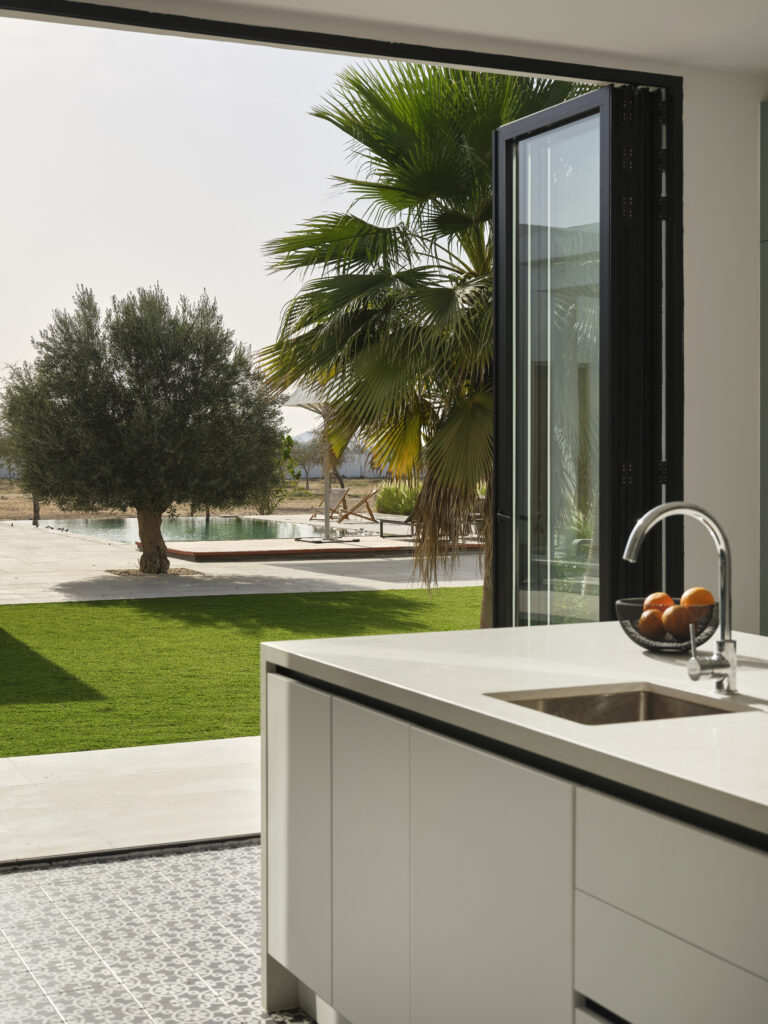
That sense of continuity ultimately defines Ghafarm. The project is not driven by spectacle or grand architectural gestures. Instead, it succeeds through a series of thoughtful decisions that place nature, family and everyday rituals at the centre of the experience.
Like the ghaf trees that inspired its name, the retreat offers shelter without isolation, creating a place where people can gather while remaining deeply connected to the landscape around them. In a region where luxury is often associated with excess, Ghafarm proposes something quieter: the luxury of time, space and belonging.