A chair is rarely the first object people think about when designing a home. Sofas dominate attention, lighting defines atmosphere, and tables often become statements of taste. Yet for Lebanese entrepreneur Sarah Rhame, Founder and Owner of Sarah Rahme Gallery, the chair became the starting point of an entire practice rooted in craftsmanship, customization, and the quiet psychology of how people gather, sit, and live together.
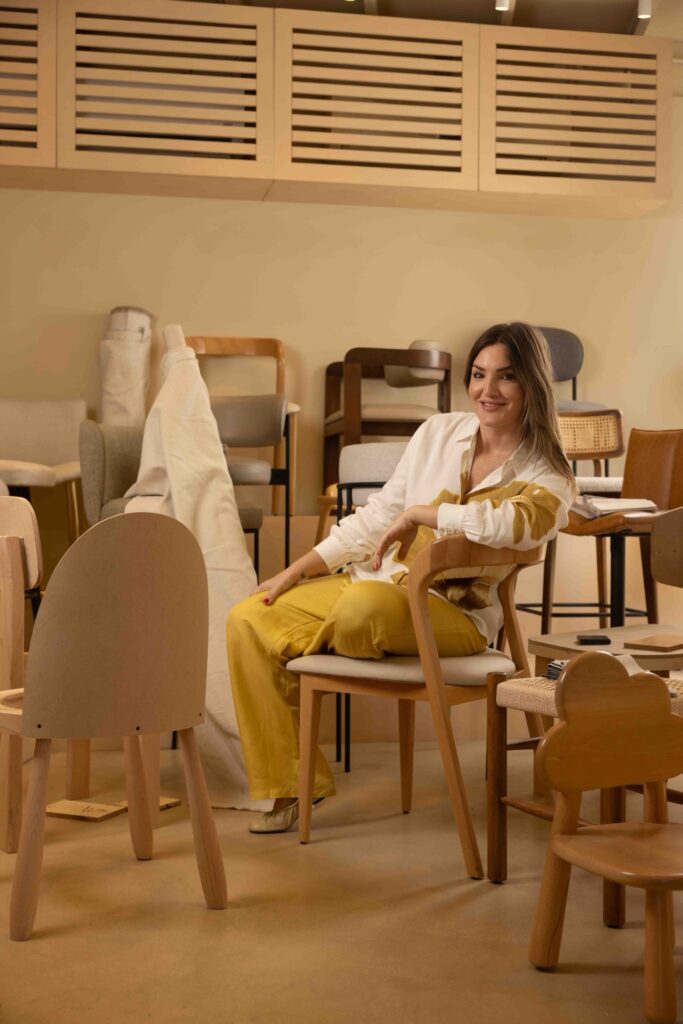
After studying interior design in Lebanon and art history in Paris, she returned with a sharper understanding of how furniture shapes atmosphere and identity across cultures. “It was more the curiosity I had in Paris, going to exhibitions in Europe to stay tuned to the latest trends,” Sarah says. An internship at a Parisian interior design firm working on projects in Saudi Arabia deepened her interest in fabrics and materials through collaborations with Italian and French textile houses furnishing hotels and residential spaces across the Kingdom.
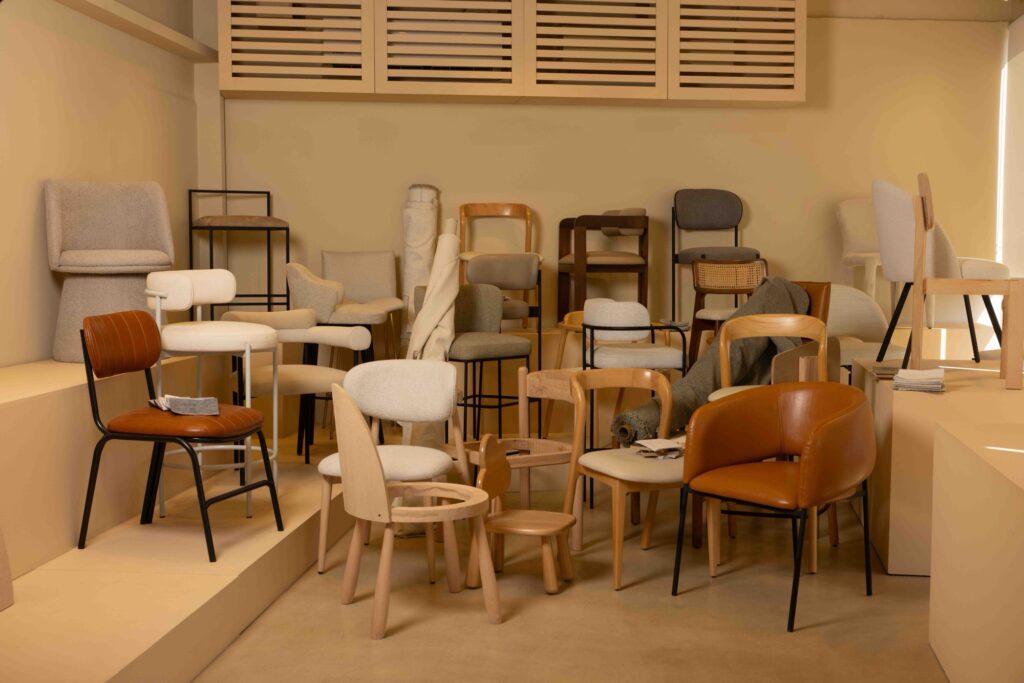
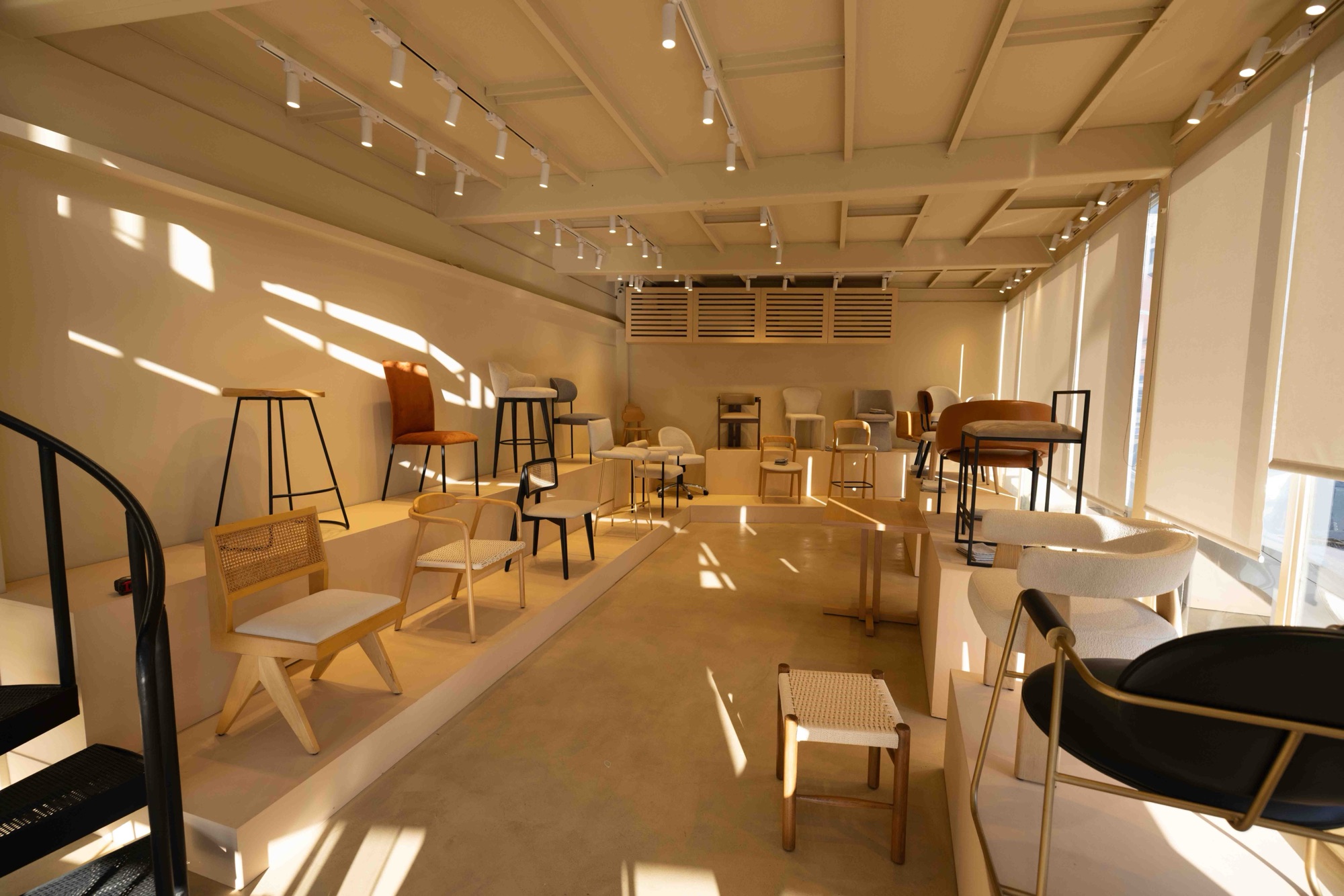
Today, from her Beirut gallery and atelier Sarah Rahme Gallery, she produces handmade chairs and benches furnishing hotel and residential spaces in Lebanon. Her work revisits familiar European silhouettes while adapting them through Lebanese craftsmanship and customization. Dimensions shift according to each project. Fabrics, sponge thickness, textures, and finishes are adjusted depending on the atmosphere architects and clients want to create.
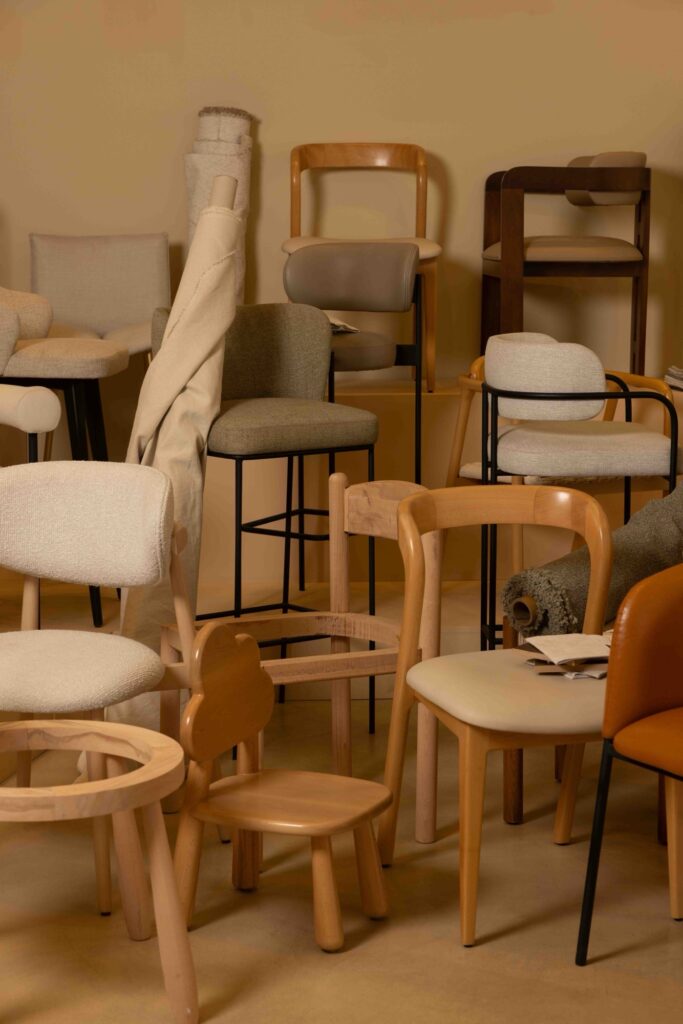
“The last piece of furniture you think of changing in a home is your dining chair,” Sarah explains. “In Lebanon, we don’t tend to think about the details of this piece of furniture, esthetically but also ergonomically.”
The project is also deeply tied to the realities of building a design business in Lebanon today. After years of importing from China, she made the decision to move toward local production. “I wanted to push my career to a higher level, introducing the Lebanese craftsmanship and letting the client customize his own chair,” Sarah says.
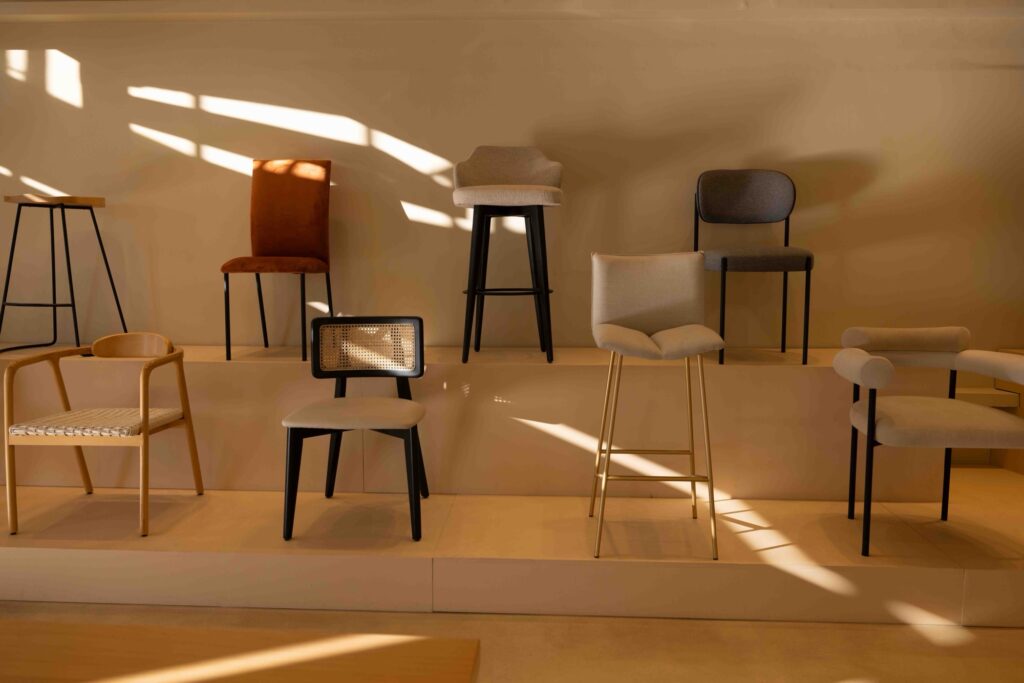
That balance between accessibility and quality became central to her approach. “Learning to stay reachable as price range while still offering the best quality and finishing requests my personal involvement and inspection on each project.”
For Sarah Rahme, the story extends beyond furniture. “Building a family does not have to influence a woman’s will to have a career,” she says. “Everything starts with a small step, not necessarily a big plan.”