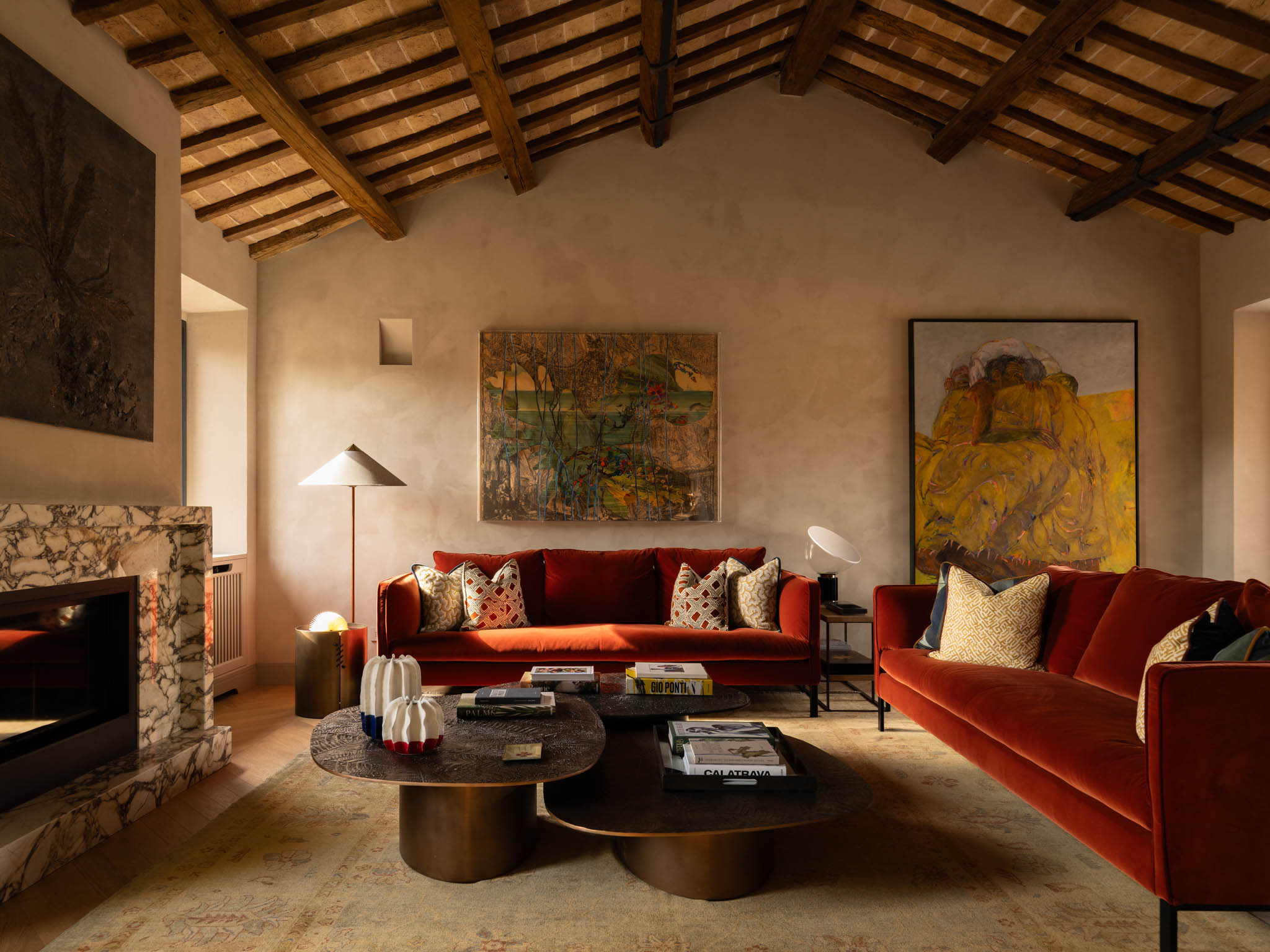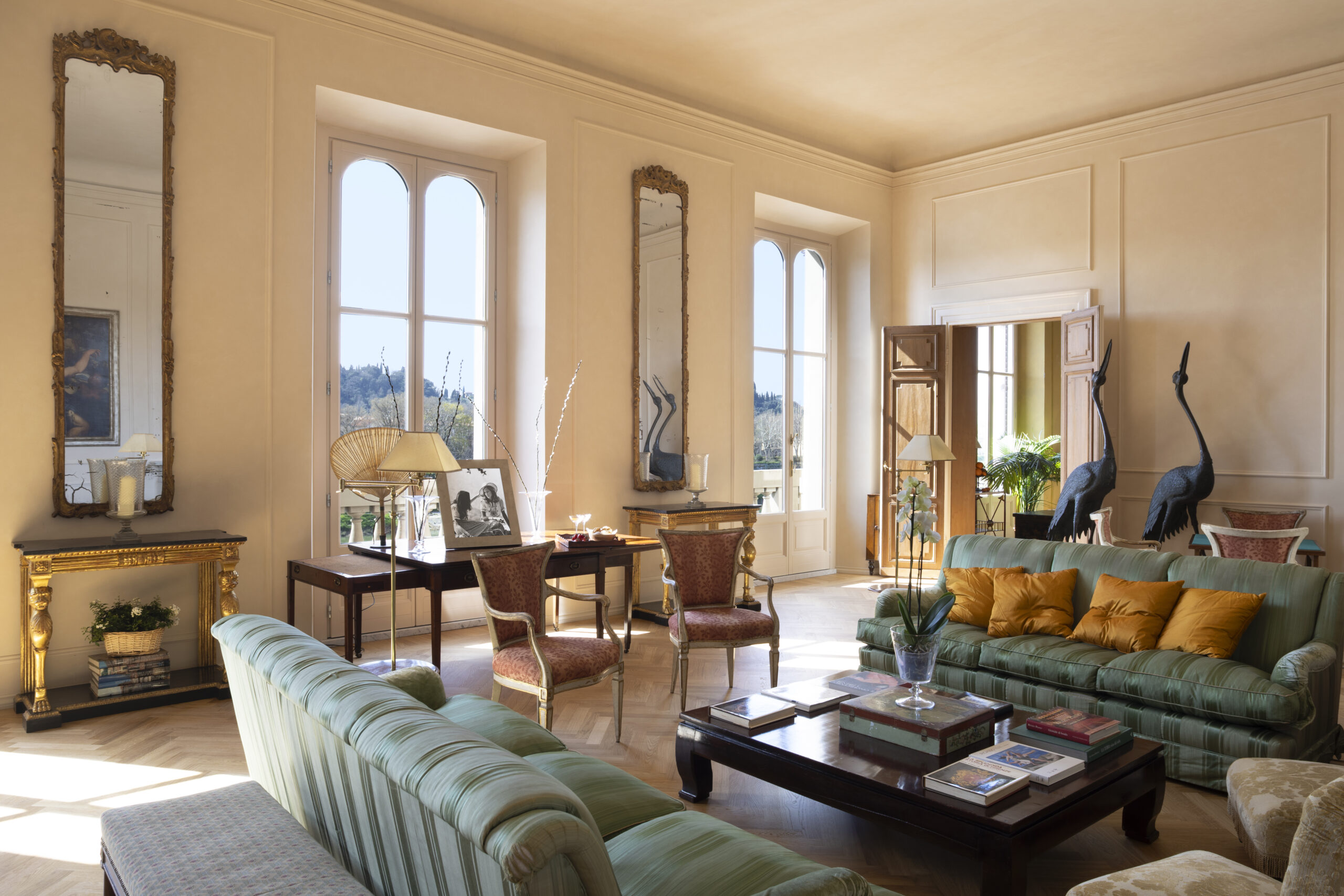
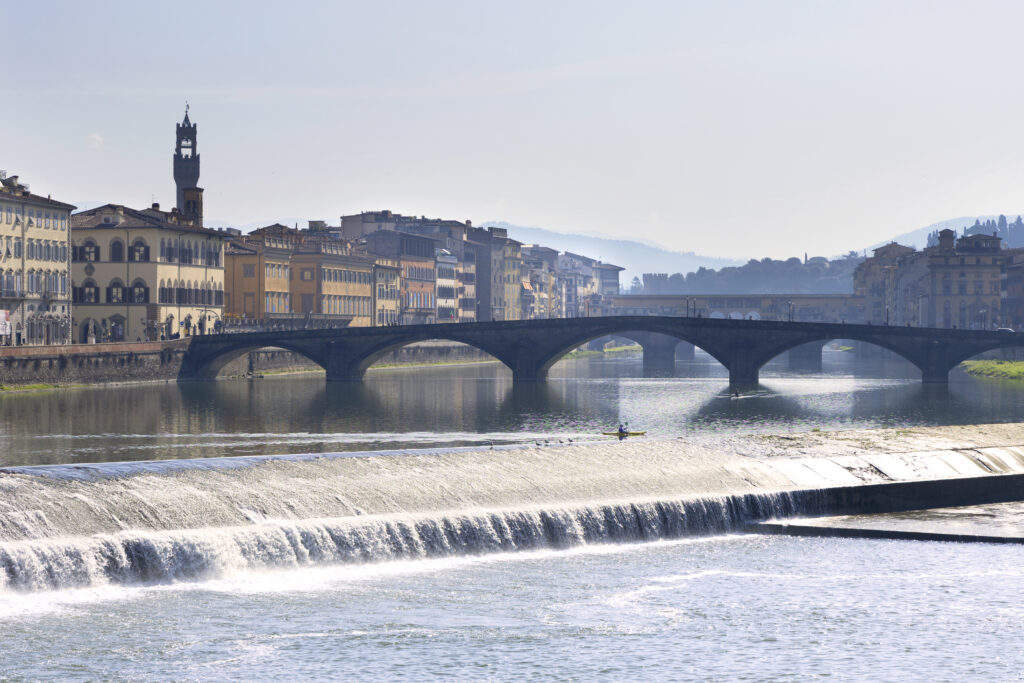
Florence has always revealed itself differently from the river. Away from the compressed density of its medieval streets, the Lungarni introduced another idea of the city: broader facades, longer perspectives, rooms conceived around light rather than defence. Along Lungarno Vespucci, opposite the American Consulate, Palazzo Sarzana Fici still belongs to this quieter and more aristocratic Florence, where domestic life unfolds against the slow movement of the Arno.
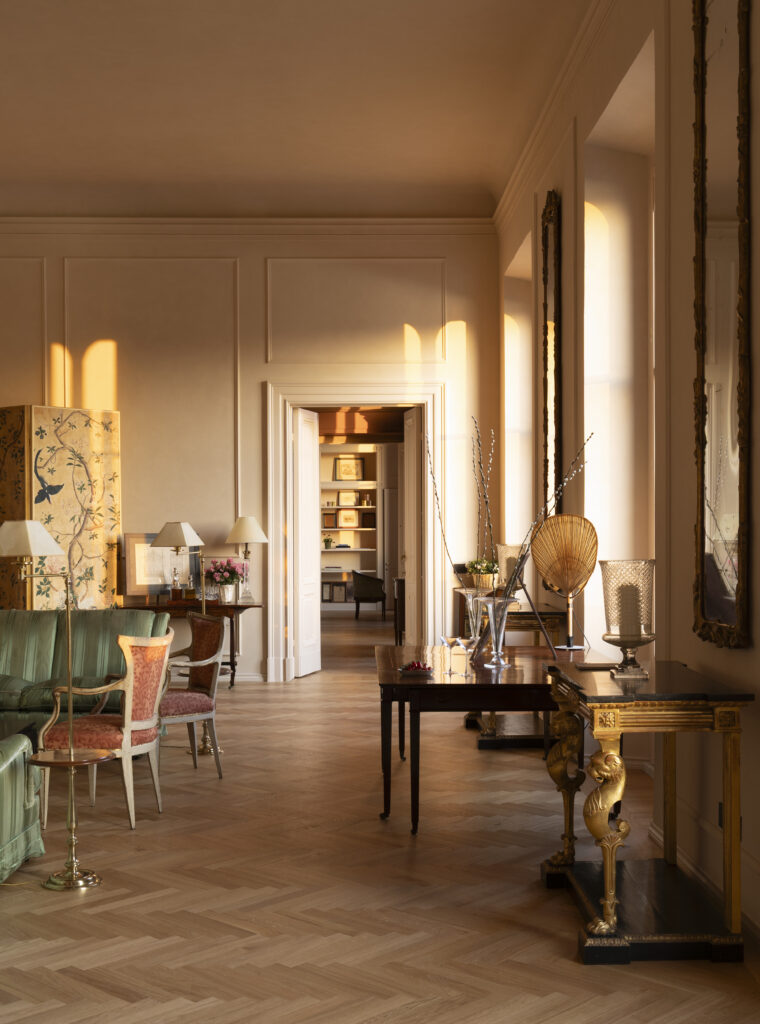
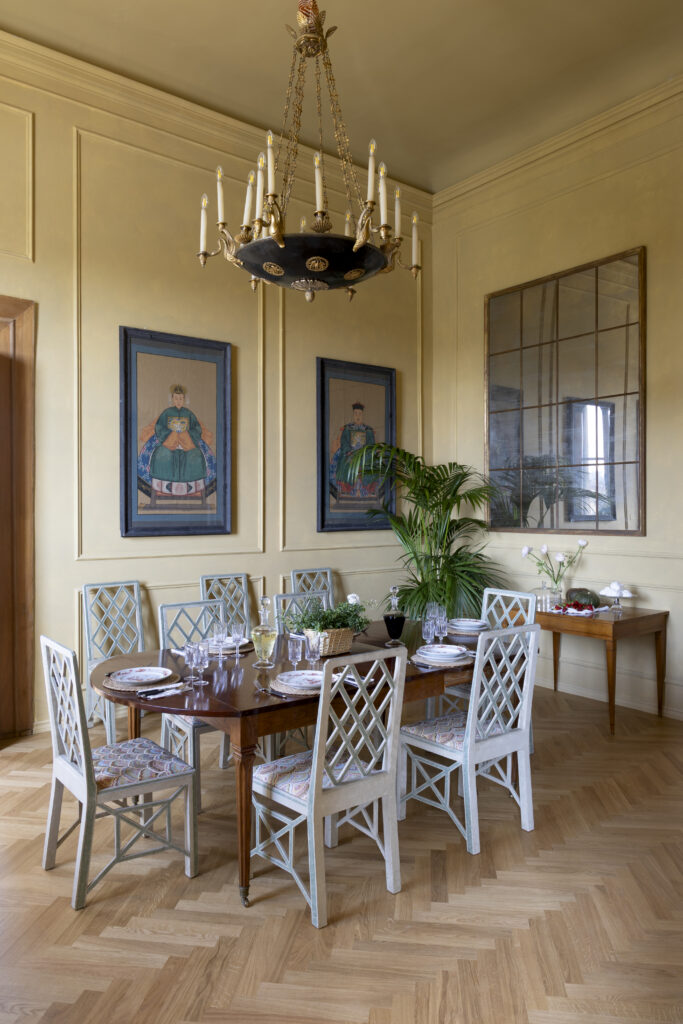
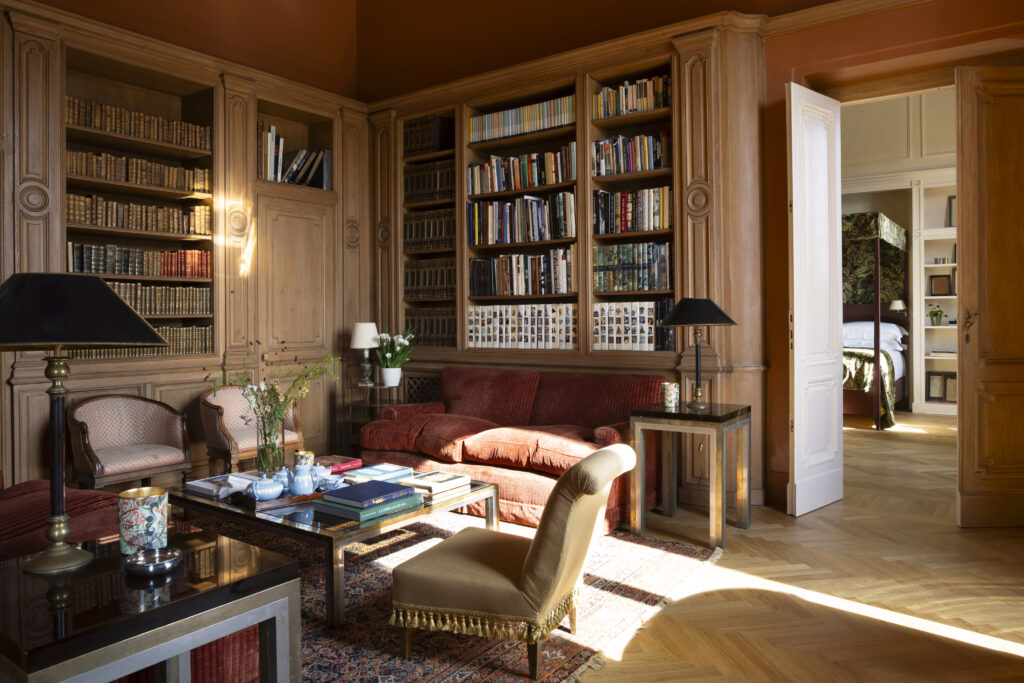
Occupying the piano nobile of the historic palazzo, the apartment preserves the ceremonial logic of Florentine architecture without allowing it to harden into nostalgia. A long entrance corridor orchestrates the transition between public and private space, opening gradually onto a sequence of reception rooms facing the river. The main salon, lined with three tall windows and extending onto a terrace suspended above the Arno, carries the kind of spatial generosity rarely found in contemporary urban living. Nearby, a library overlooking the water offers a more intimate counterpoint, where the city feels distant despite remaining entirely visible.
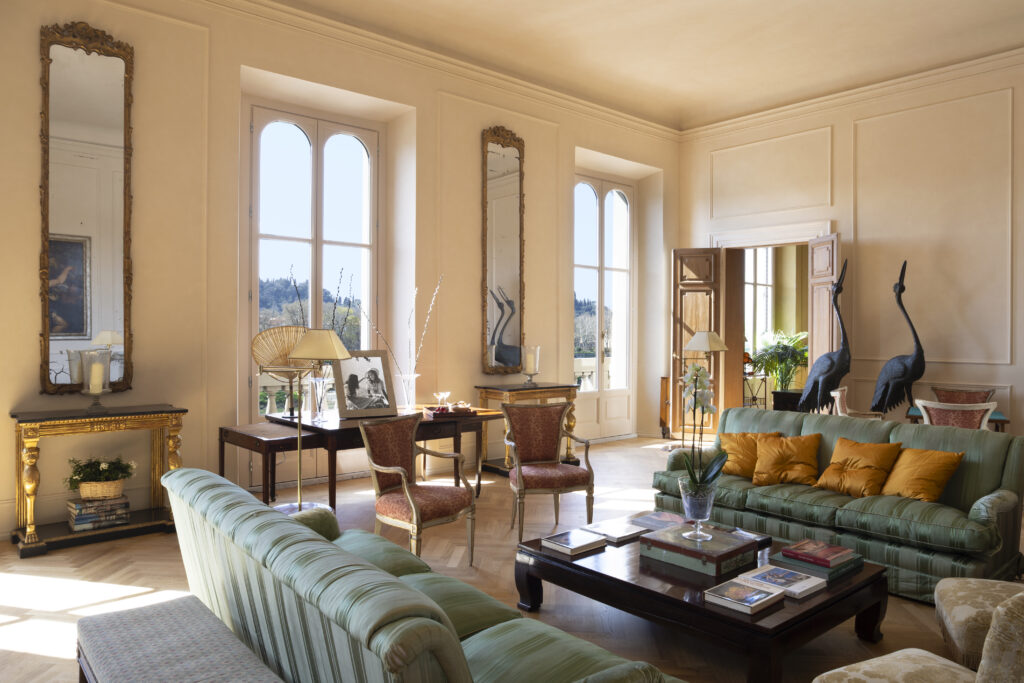
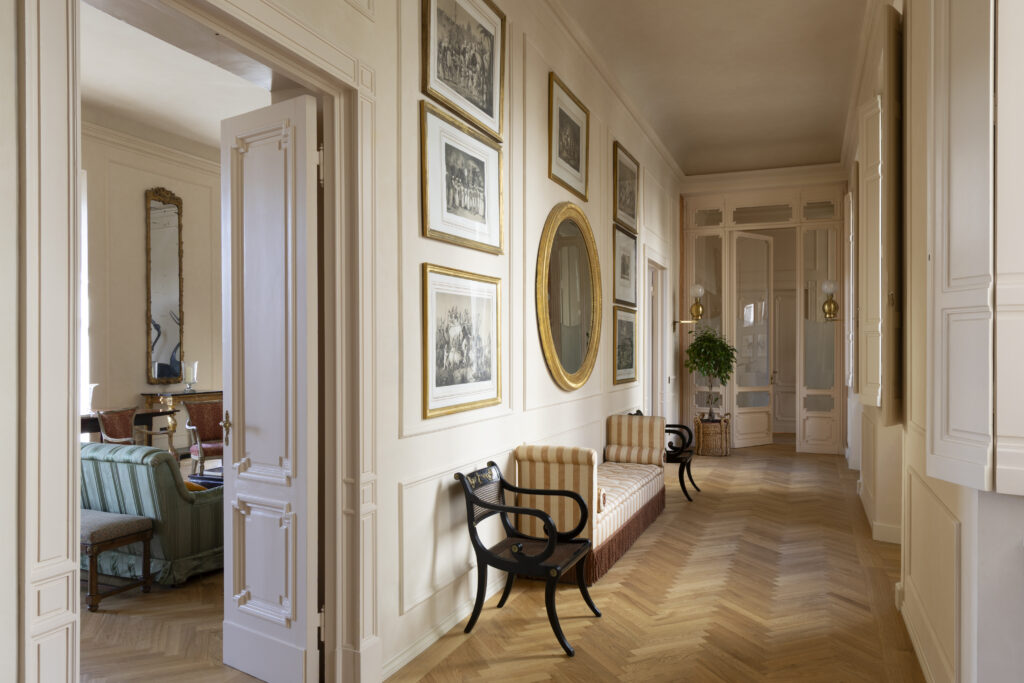
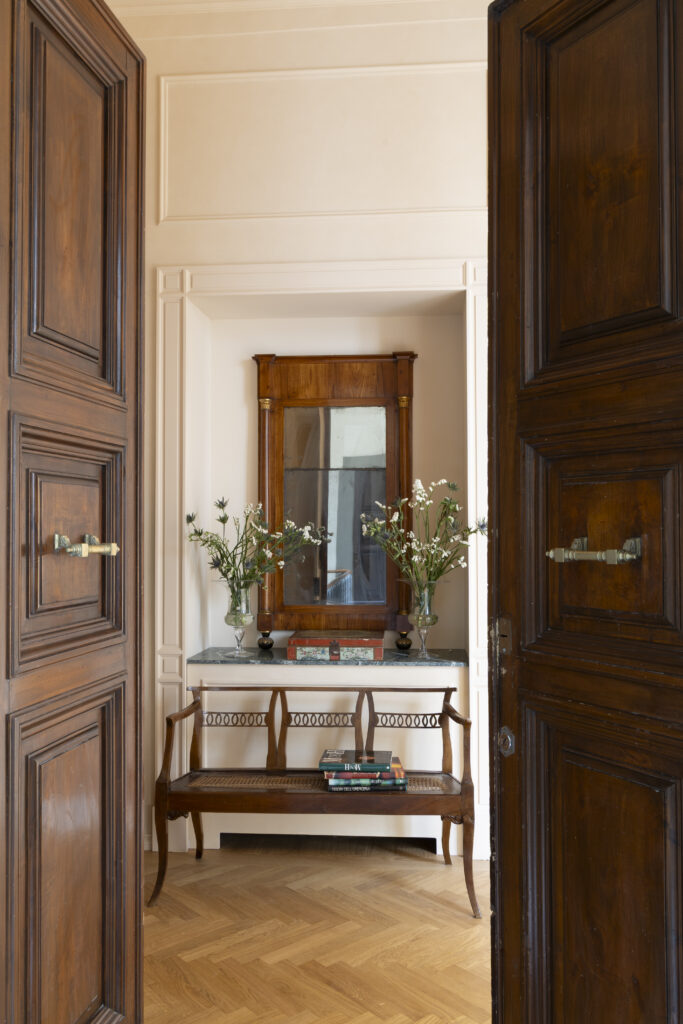
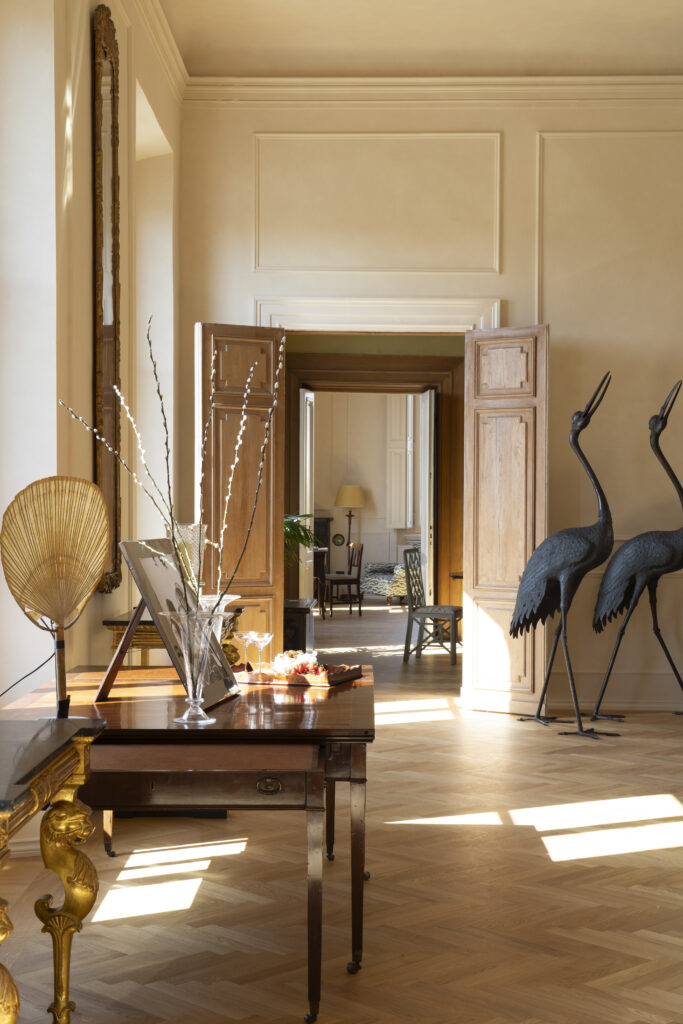
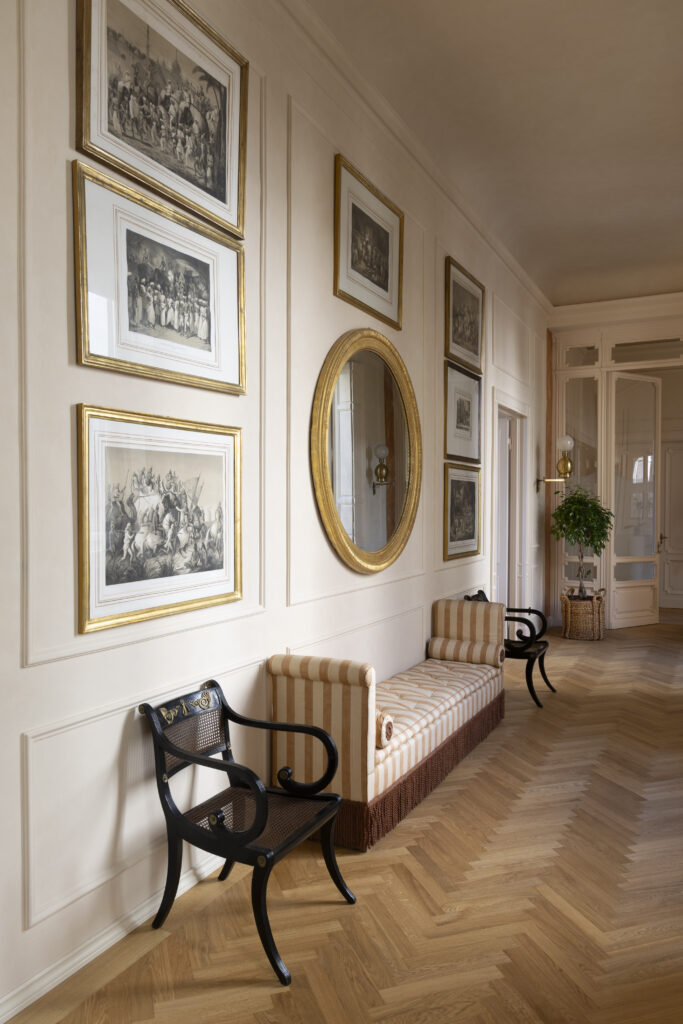
What defines the apartment most powerfully is not decoration, but proportion. The ceilings are high without becoming imposing. Light enters continuously throughout the day, reflected upward from the river and softened by the muted tones of the interiors. From the windows, Florence unfolds almost cinematically: Ponte Vecchio to one side, the Abbey of San Miniato al Monte rising in the distance, and beyond it the greenery of the Cascine Park. The apartment engages the city not as backdrop, but as part of its interior atmosphere.
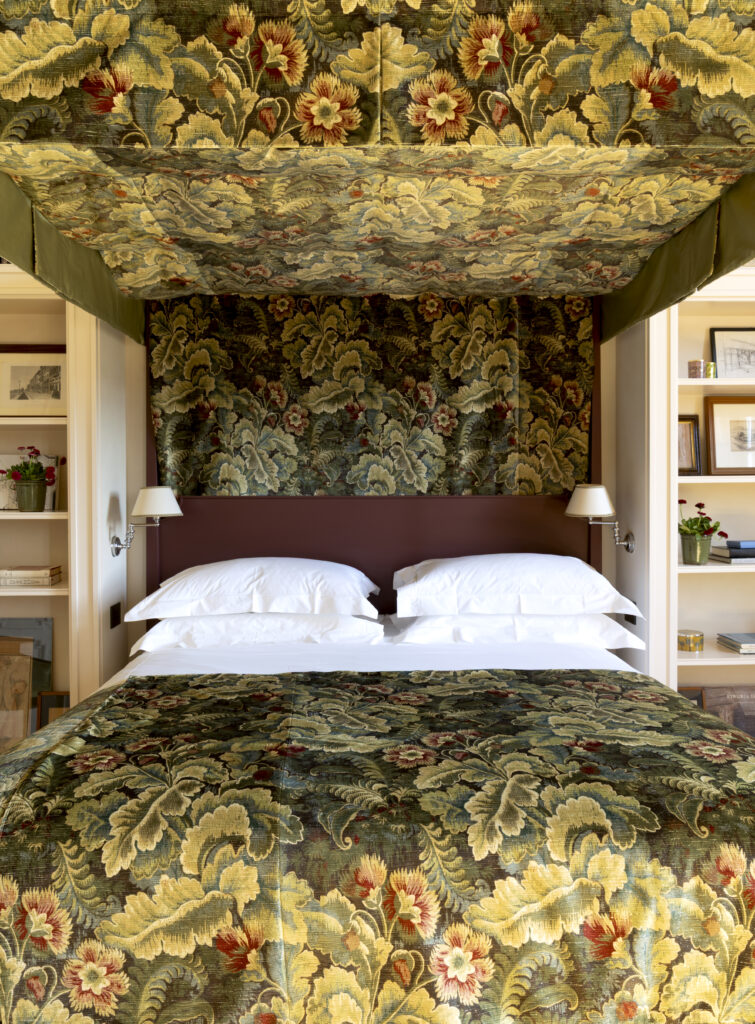
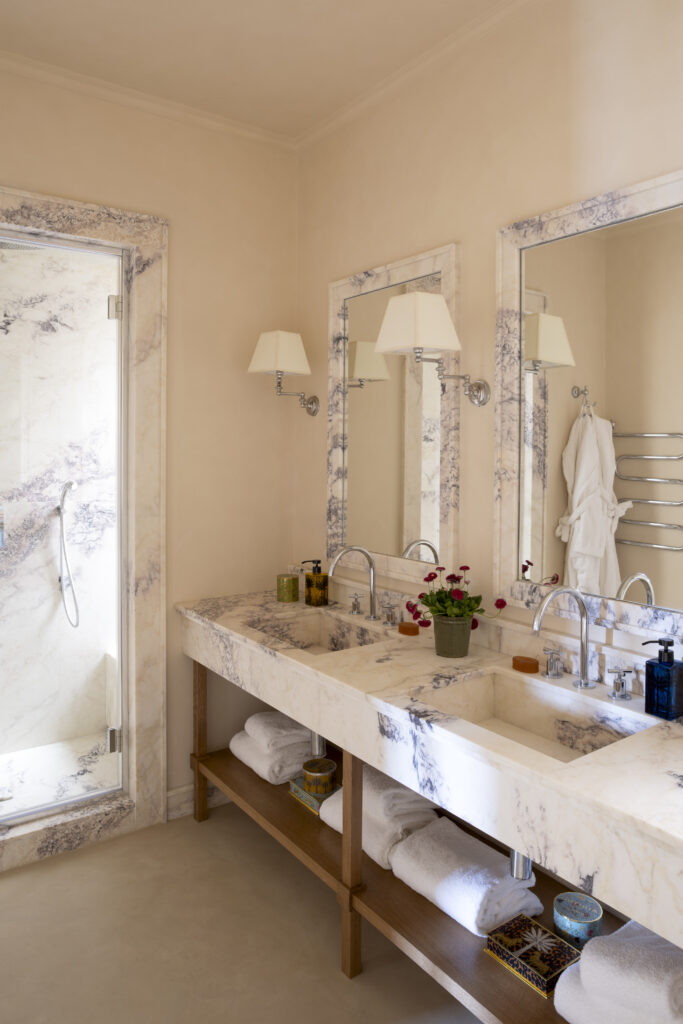
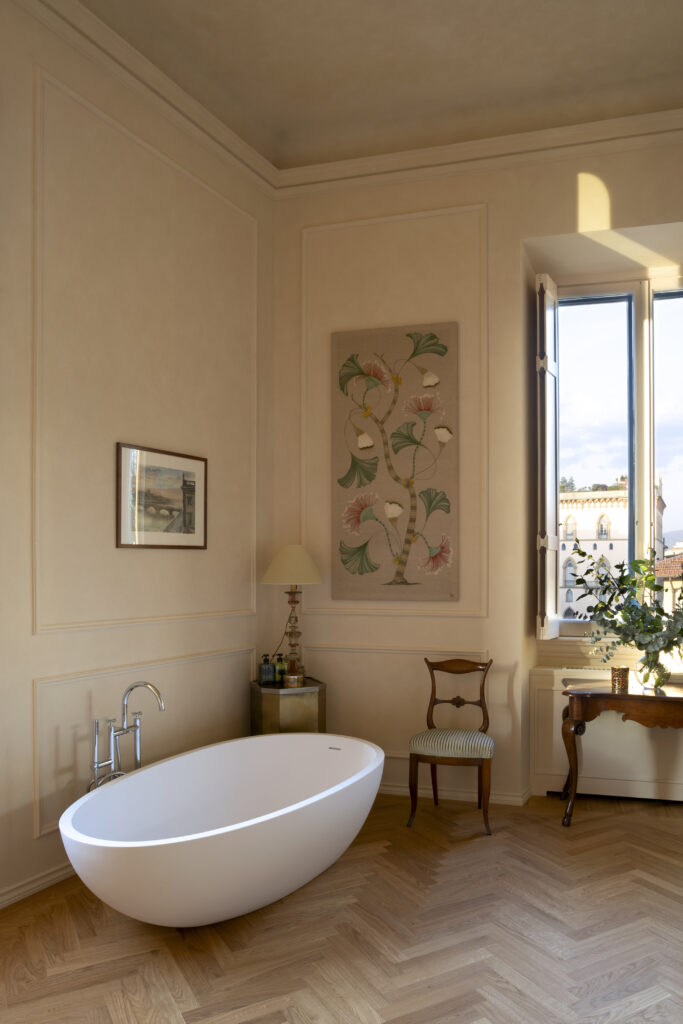
The recently renovated marble bathrooms introduce a quieter contemporary layer into the historic shell. Rather than reproducing Florentine grandeur through excess, they rely on restraint: pale stone, softened surfaces, carefully controlled material continuity. In the principal suite, the inclusion of a Turkish bath feels less like a gesture of luxury than an extension of the apartment’s slower rhythm. Elsewhere, walk in wardrobes, discreet terraces, and well preserved spatial volumes allow the residence to remain fully inhabitable rather than museum-like.
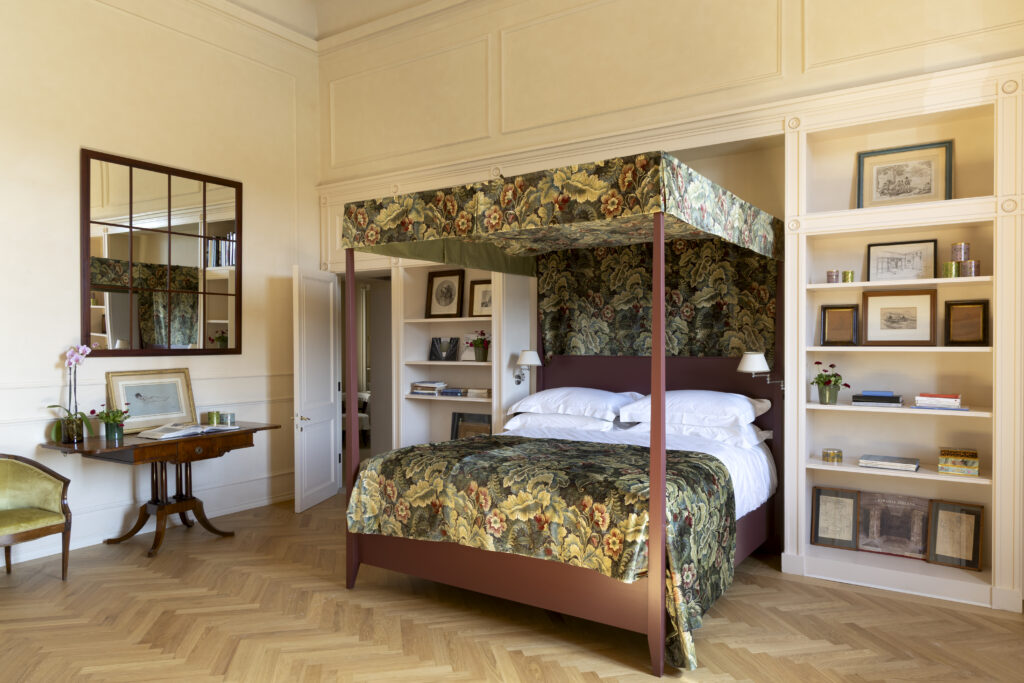
Its location, steps from Via Tornabuoni and Palazzo Vecchio, places the palazzo within one of Florence’s oldest intersections between culture, commerce, and craftsmanship. Yet inside, the city recedes into something quieter. What Palazzo Sarzana Fici preserves is increasingly rare in contemporary urban life: the experience of inhabiting Florence through duration, scale, and stillness rather than movement. Not from within the crowd, but slightly above it, where river light continues to dictate the pace of the day.