Villa Kovera began with a familiar request. The Emirati family behind the Dubai home wanted interiors that felt clean, seamless, and restrained. For Noura Alsorougi, founder of Noon Design Studio, the challenge was not how to disrupt that clarity, but how to soften it without losing precision.
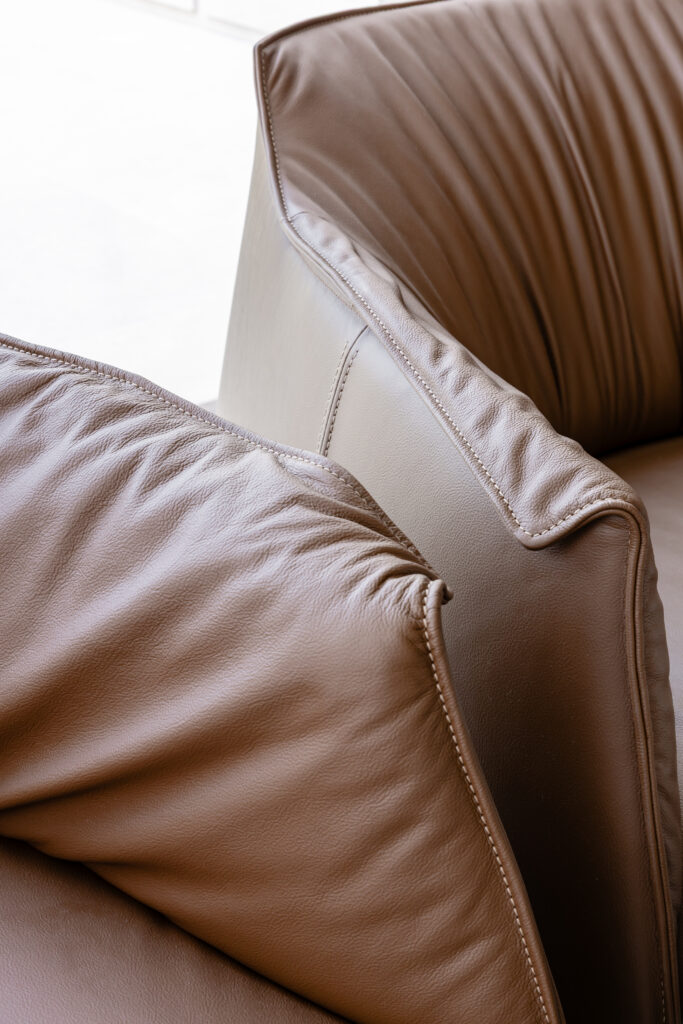
“We approached whimsy not as a contrast to elegance, but as a softer layer within it,” she says. “The base of the villa is intentionally restrained with clean architectural lines, controlled proportions, and a muted palette. Within that framework, moments of playfulness are introduced through curved forms, subtle colour shifts, and tactile materials.”
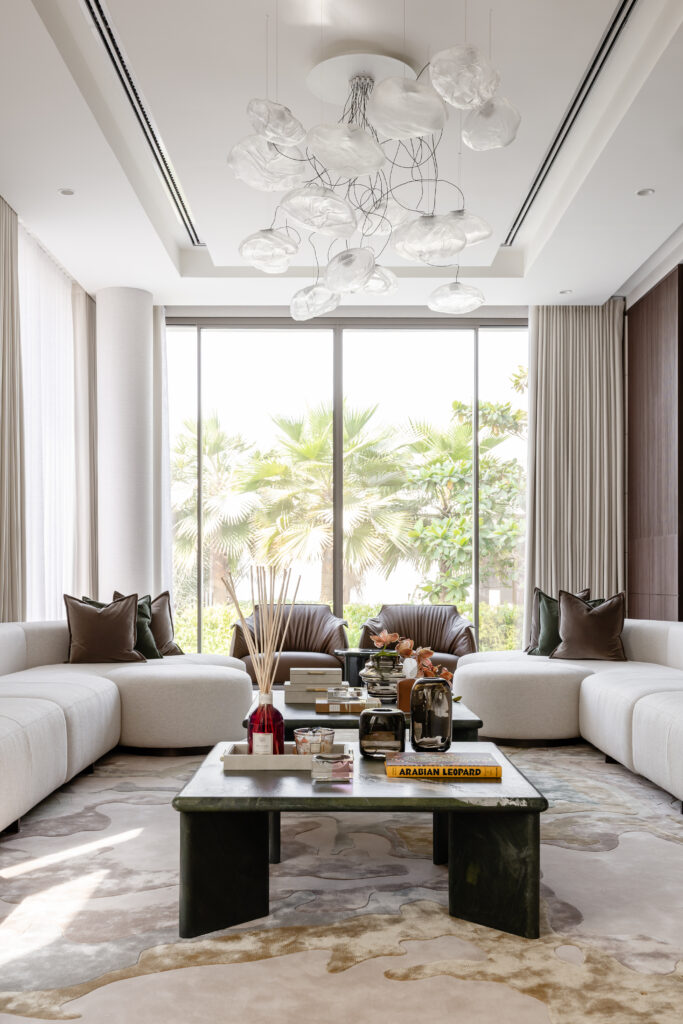
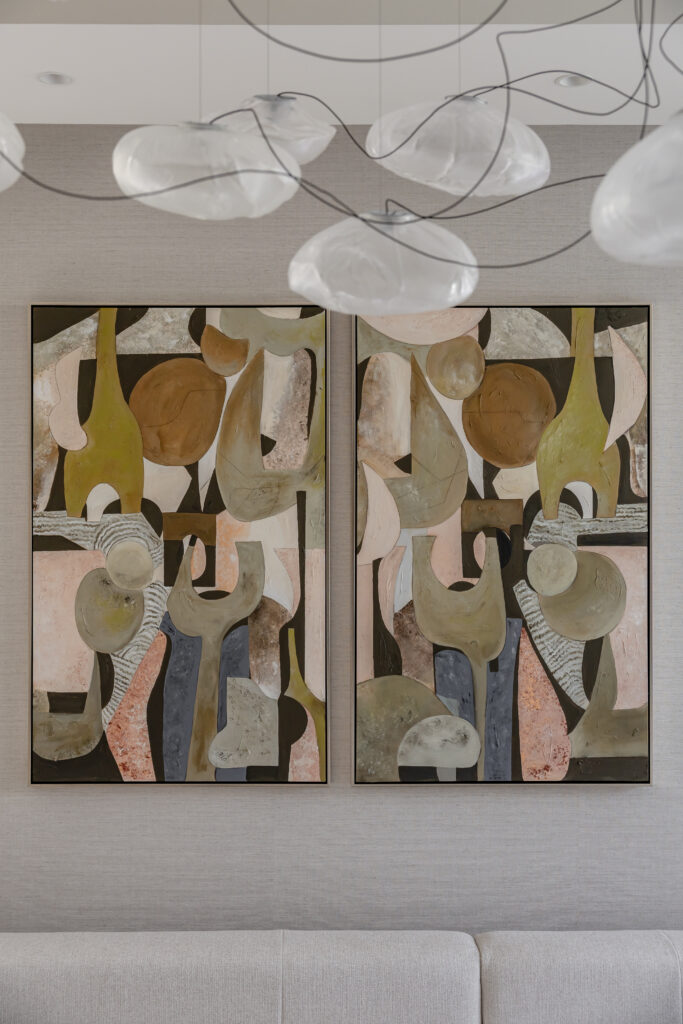
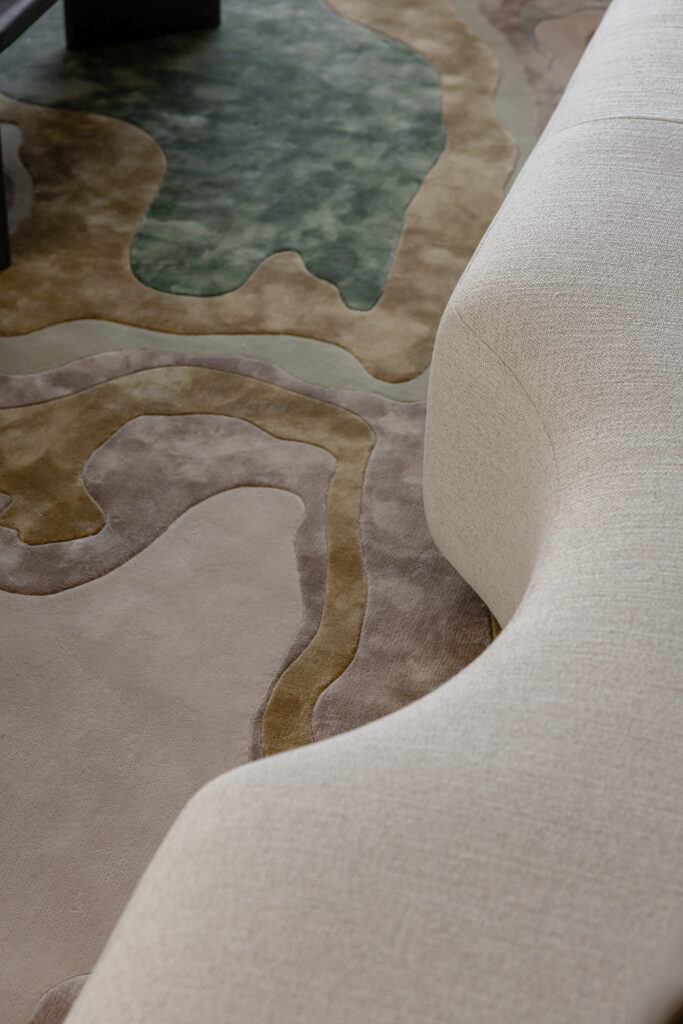
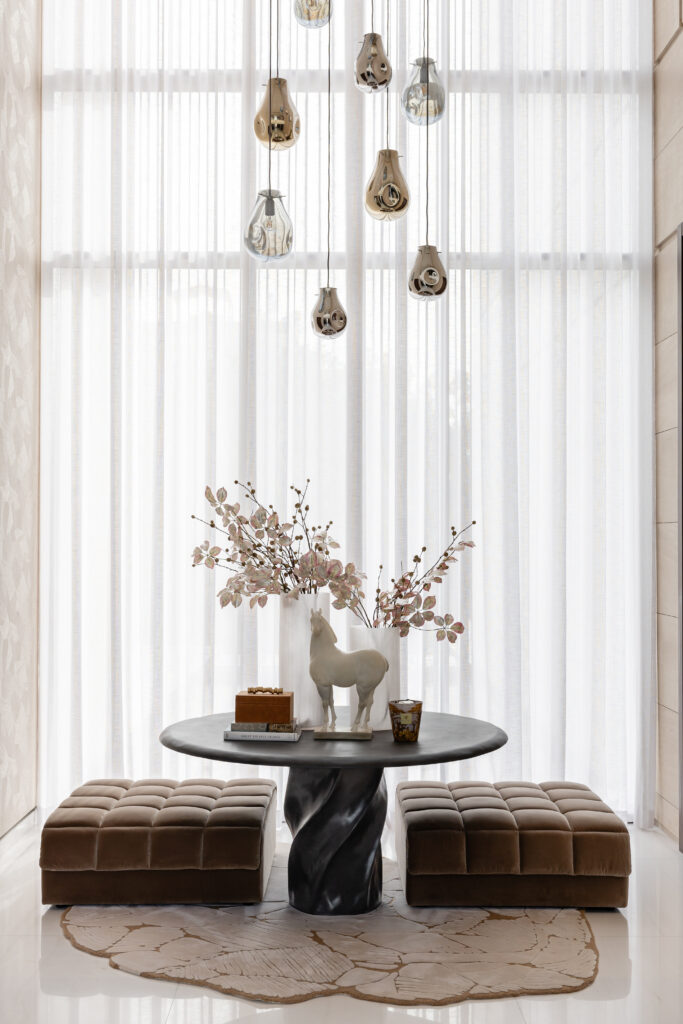
That balance appears immediately at the entrance, where a smoked blue chandelier by Bomma diffuses the sharpness of the architectural envelope. Patterned rugs and textured surfaces quietly interrupt the villa’s clean lines without overwhelming them. Throughout the project, expressive gestures are carefully isolated. “If everything speaks loudly, nothing is heard,” says Alsorougi. “So we edit carefully.”
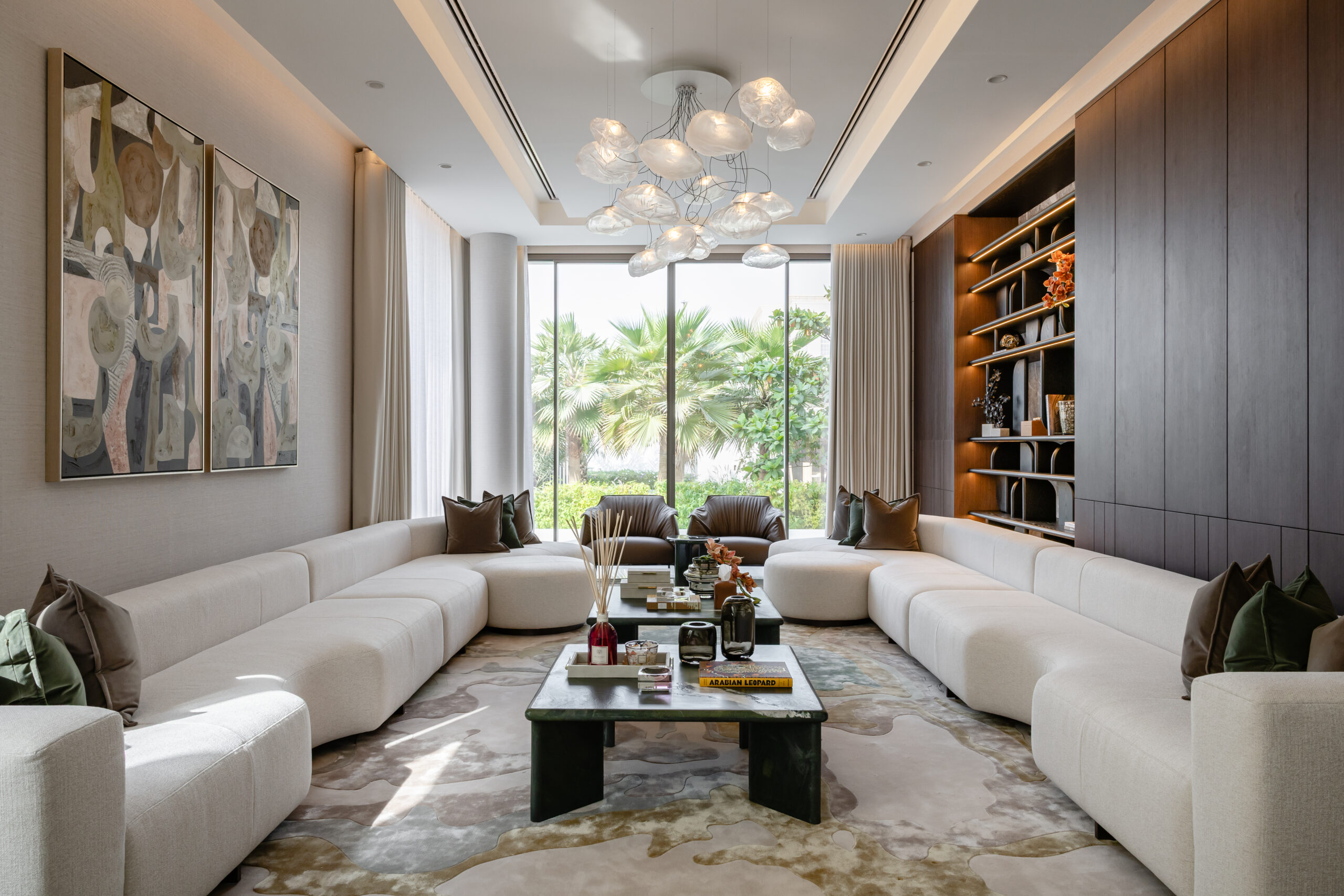
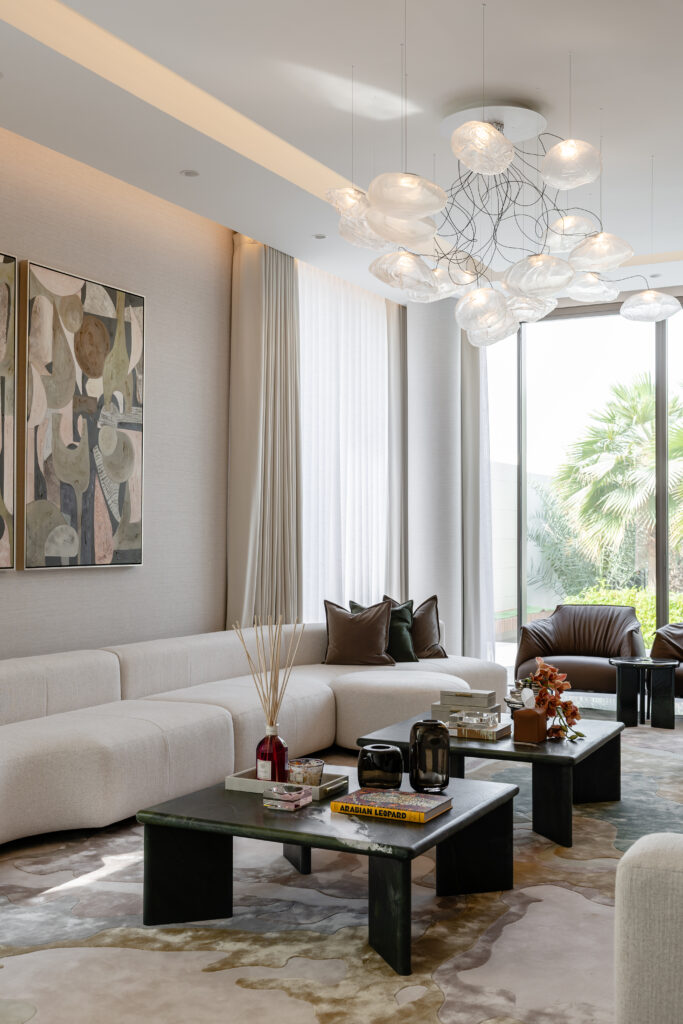
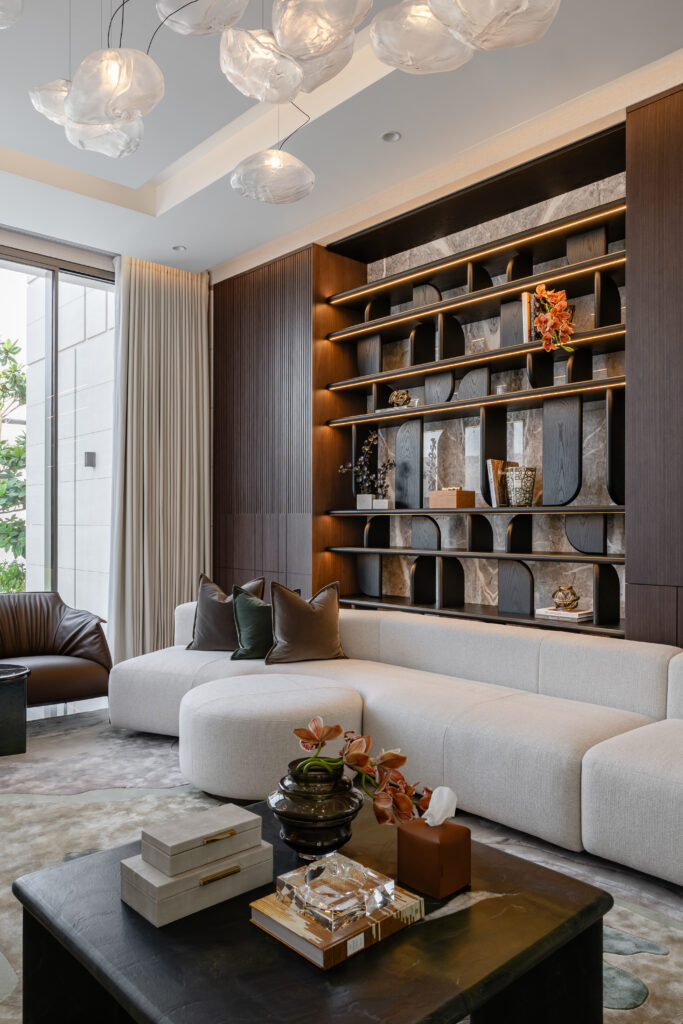
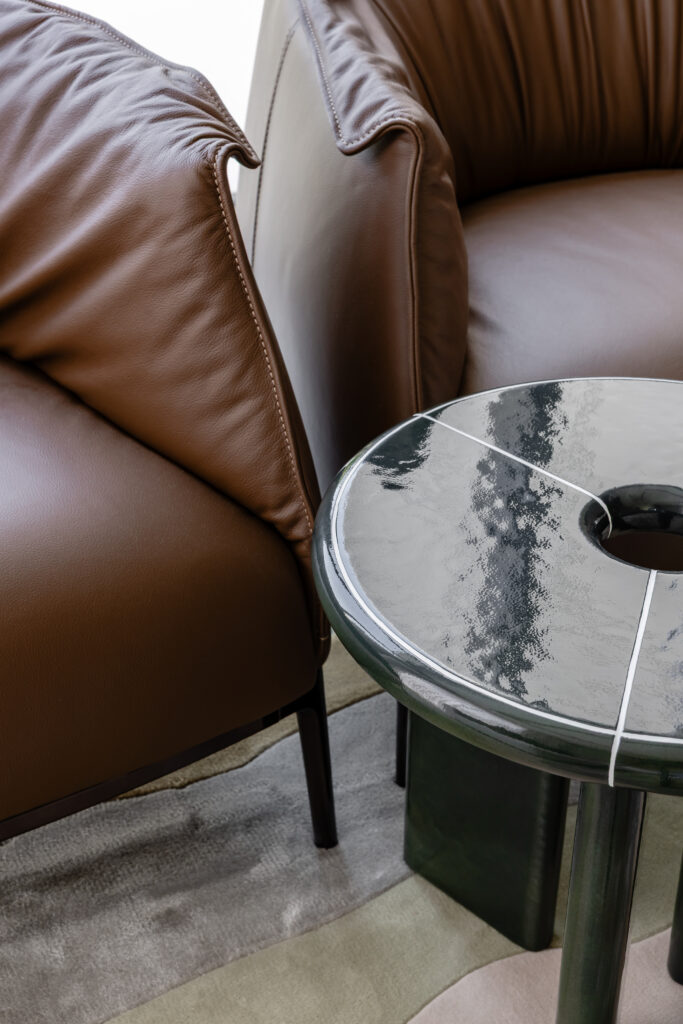
The majilis carries the project’s strongest material and chromatic tension. Conceived with two seating areas that can shift between formal and informal gatherings, the room remains structurally composed even as textures and tones accumulate across the space. Forest green moves through lacquer, leather, marble, wallpaper, and textiles without collapsing into repetition. A lacquered chair by Ferm Living sits beside a sage toned leather piece by Poltrona Frau, while an avocado green marble coffee table introduces density into the room.
“Green was treated as a spectrum rather than a single colour,” explains Alsorougi. “We worked across finishes to create variation in tone and texture instead of relying on contrast.” The palette emerged partly from landscape references. She recalls observing “the various shades of green in the open spaces” during walks through parks, interrupted by earthy browns and “the occasional dull green blue from lakes or from the flowers adding that sense of whimsy.”
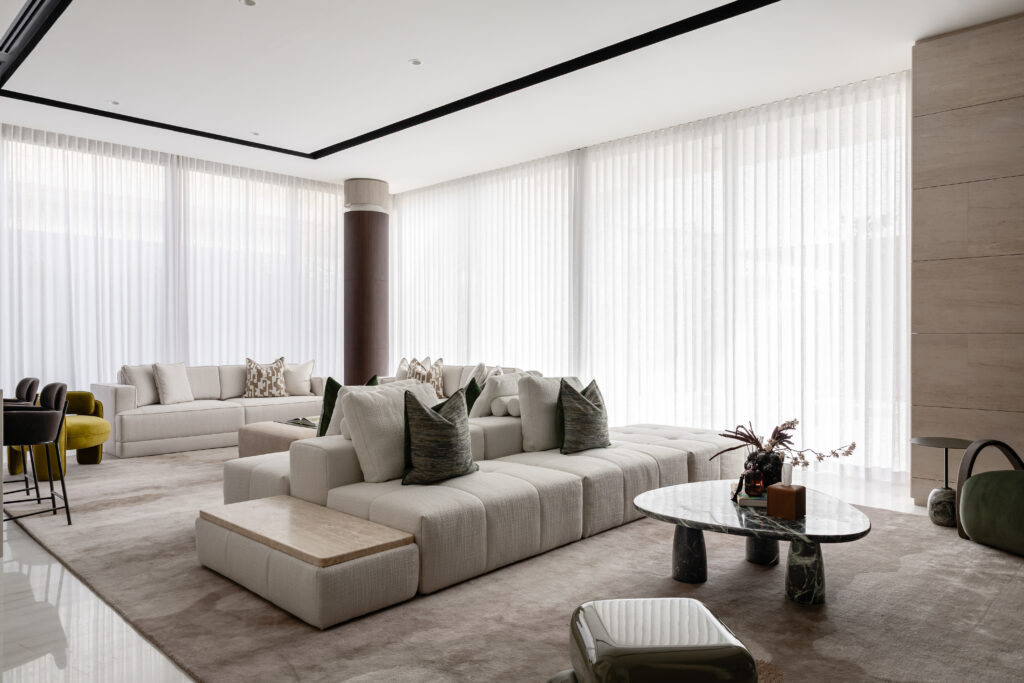
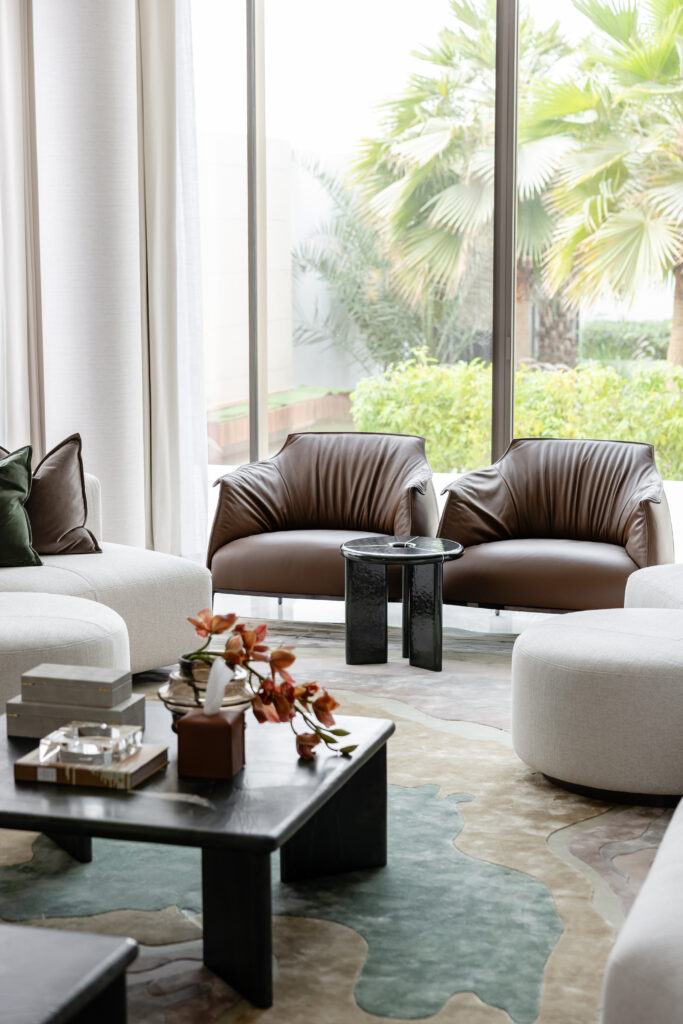
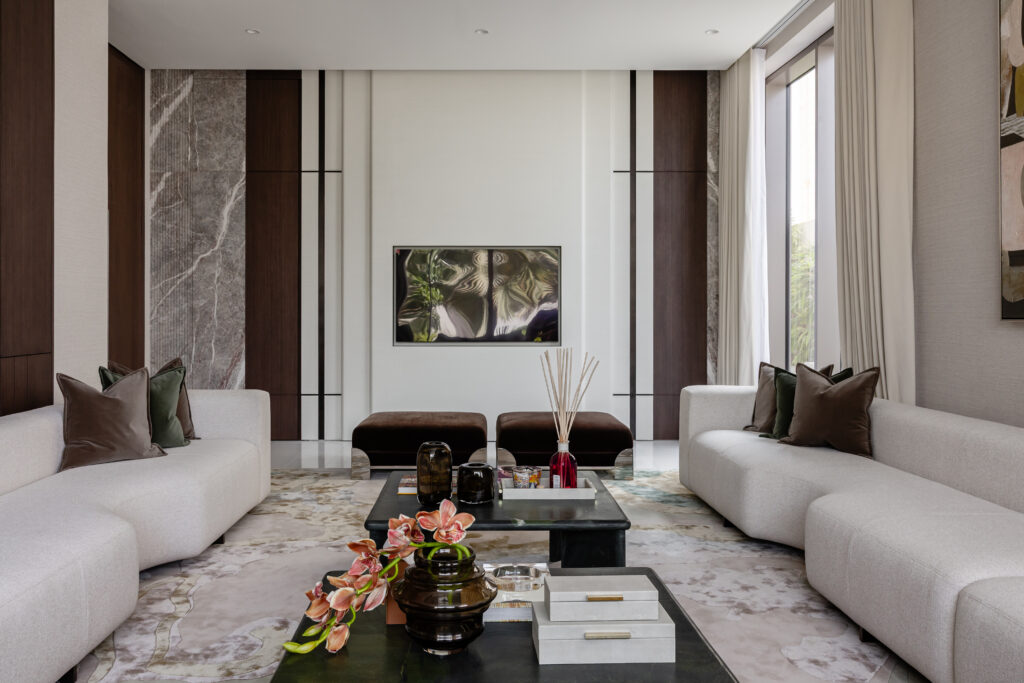
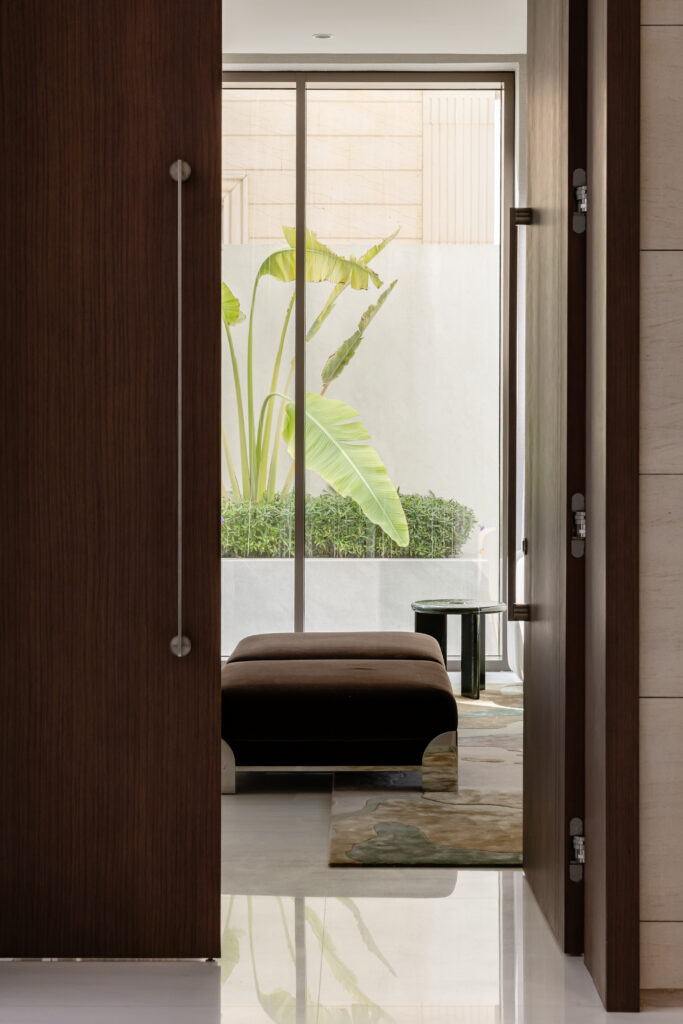
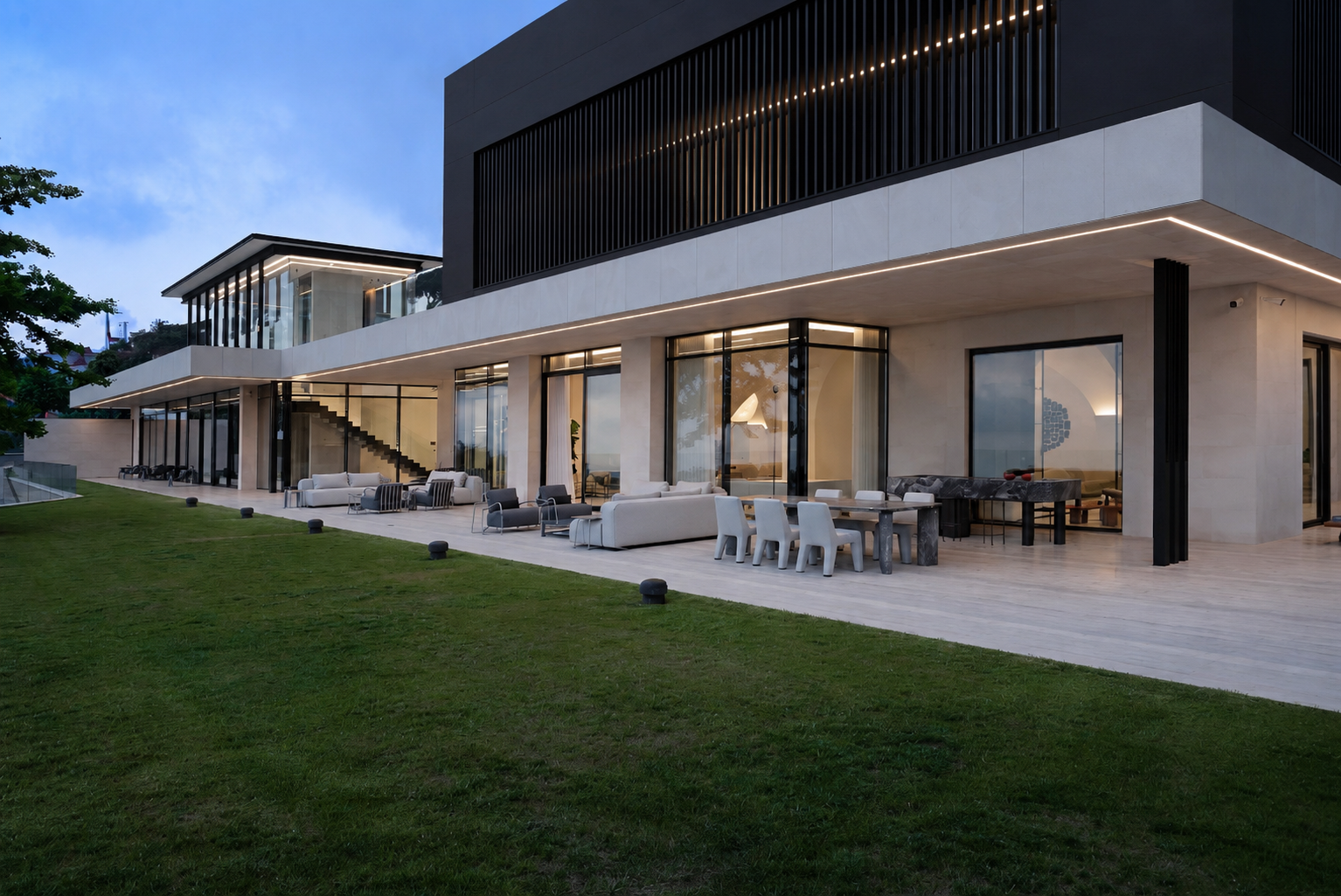
Elsewhere, the villa’s atmosphere is constructed through quieter spatial dialogues. The staircase rising beside the olive tree introduces organic forms against sharper architectural lines, reinforcing the project’s recurring relationship between interior and exterior. “At its core, the design is anchored in a connection between indoors and outdoors,” says Alsorougi. Stone surfaces, earthy fabrics, wood tones, and extended sightlines allow the garden and deck to feel embedded within the spatial experience of the house itself.
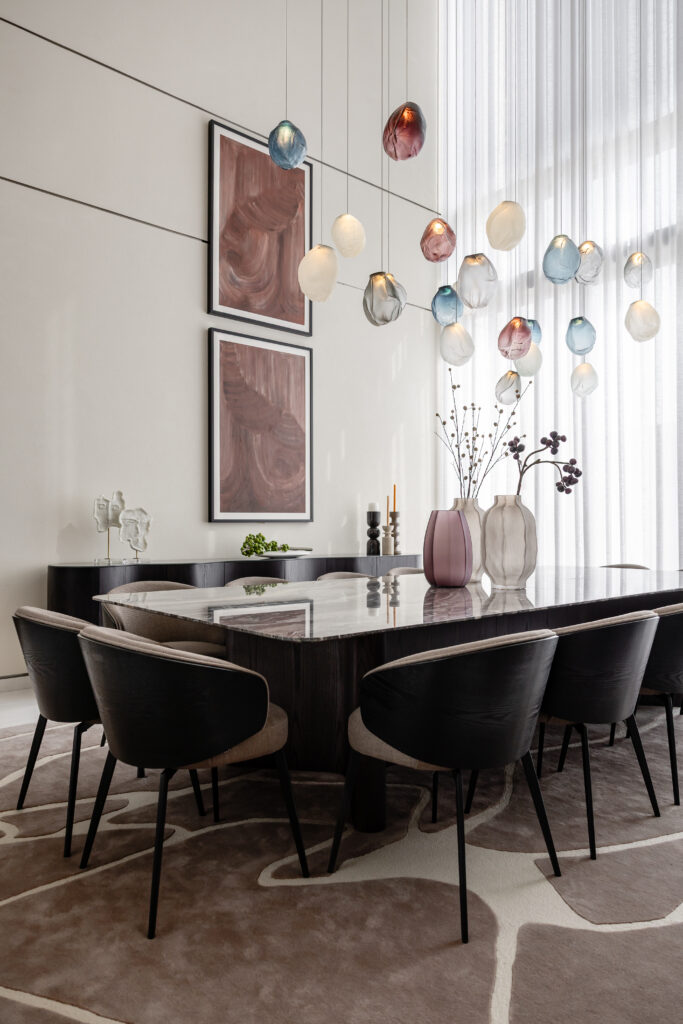
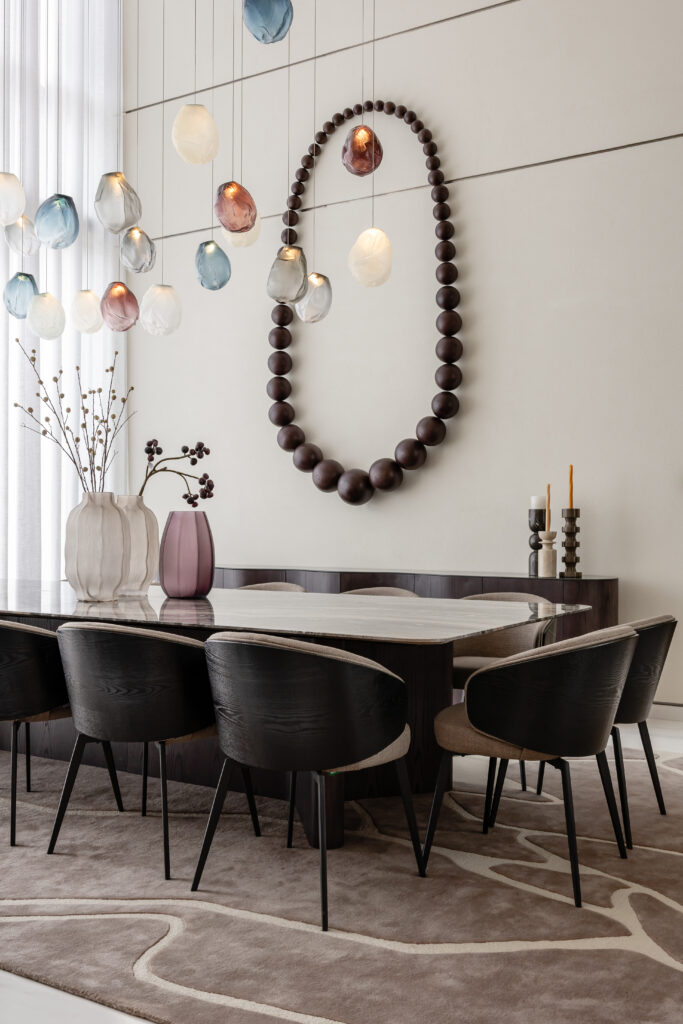
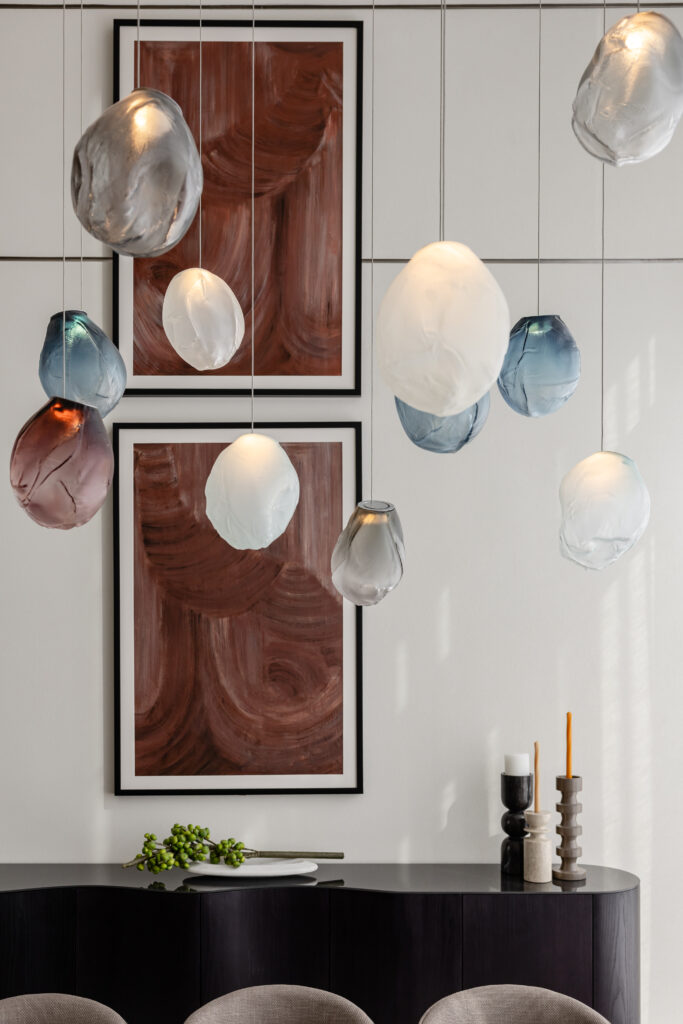
The dining room becomes one of the project’s most controlled compositions. A beaded wall installation, deep red artwork, and the reflective qualities of Orbico marble are organised through lighting into what Alsorougi describes as “a canvas that comes together as scene from the streets of Copenhagen.”
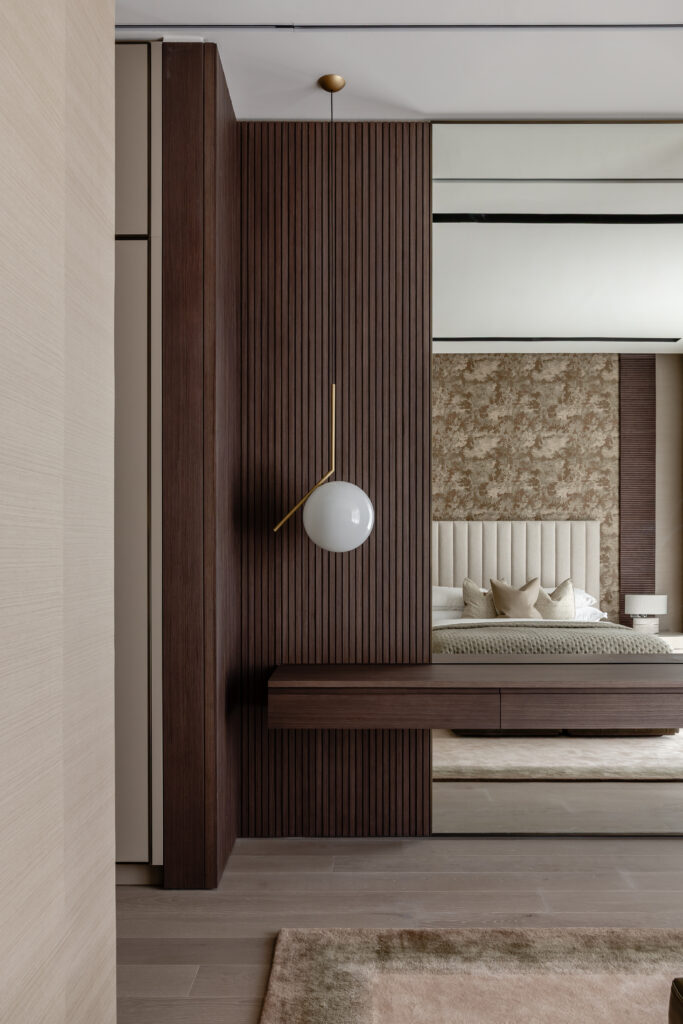
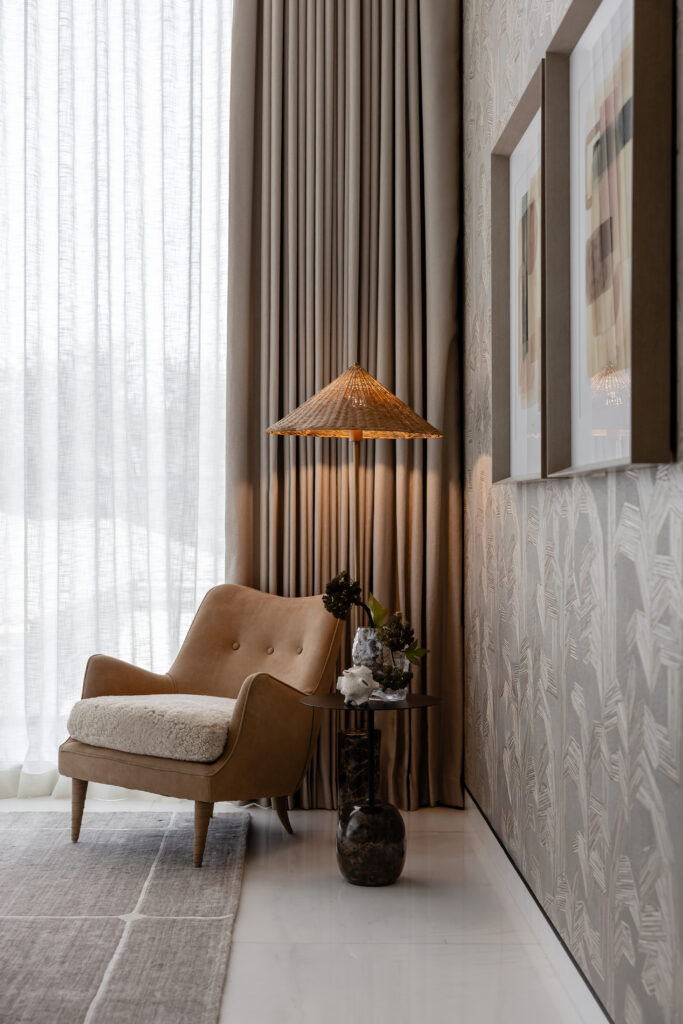
The private rooms retreat from the layered sociability of the living spaces into something more introspective. In the master bedroom, sculptural seating by GUBI, a colour blocked carpet, micro cement surfaces, and backpainted glass elements create what the studio describes as a quieter sensory environment. In the guest room, grasscloth wallpaper by Nobilis introduces tactile depth and a subtle retro atmosphere. “Intimacy comes from subtlety,” says Alsorougi. “Less visual stimulation, more material presence.”