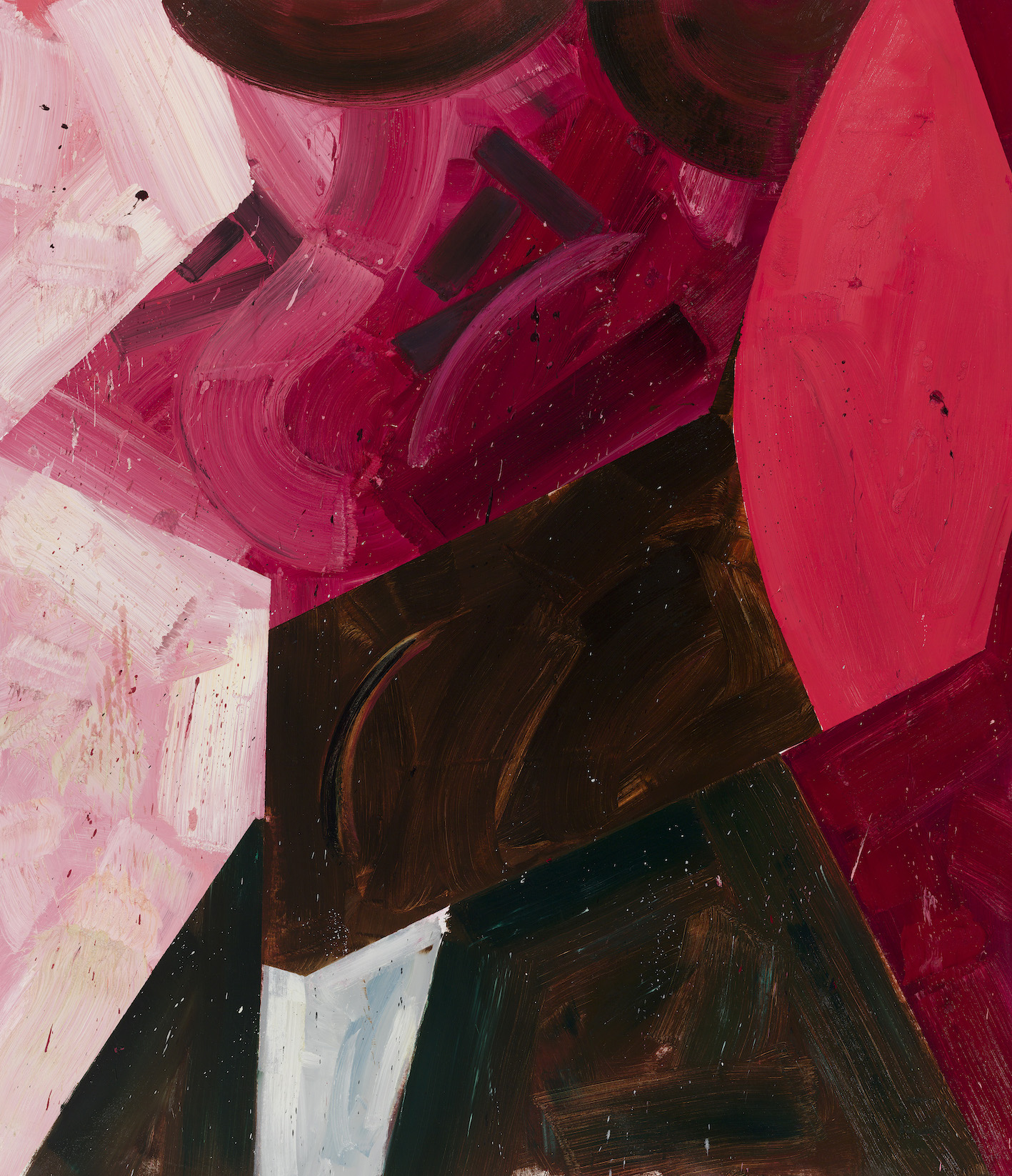
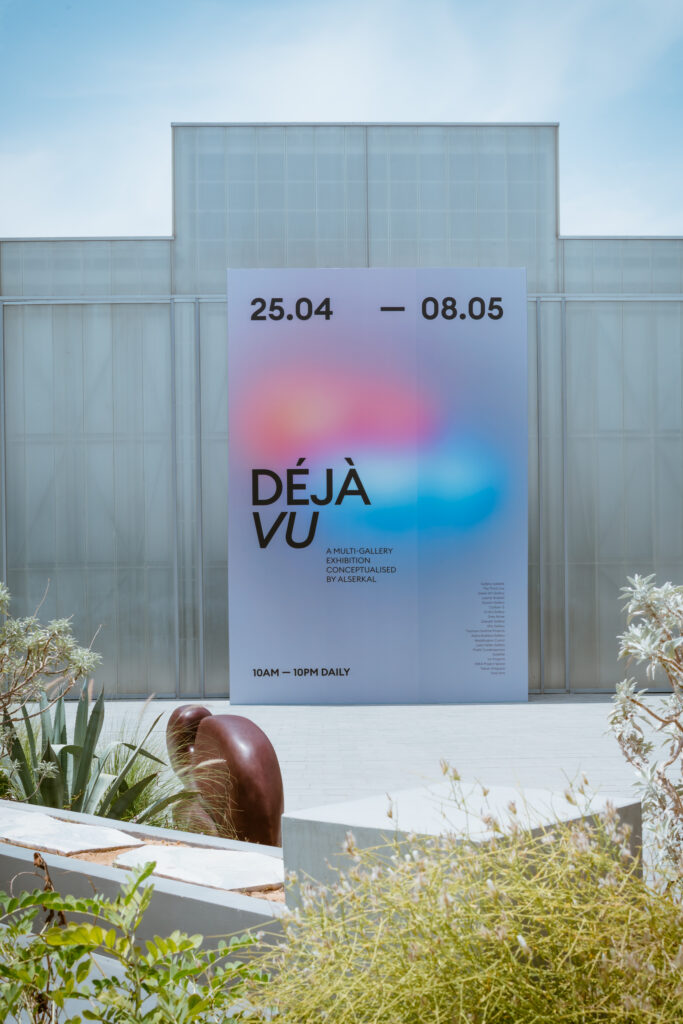
At a moment when the regional art ecosystem continues to negotiate economic uncertainty alongside geopolitical exhaustion, the decision by Alserkal to stage Déjà Vu as the UAE’s first collaborative multi gallery exhibition carried significance beyond institutional novelty.
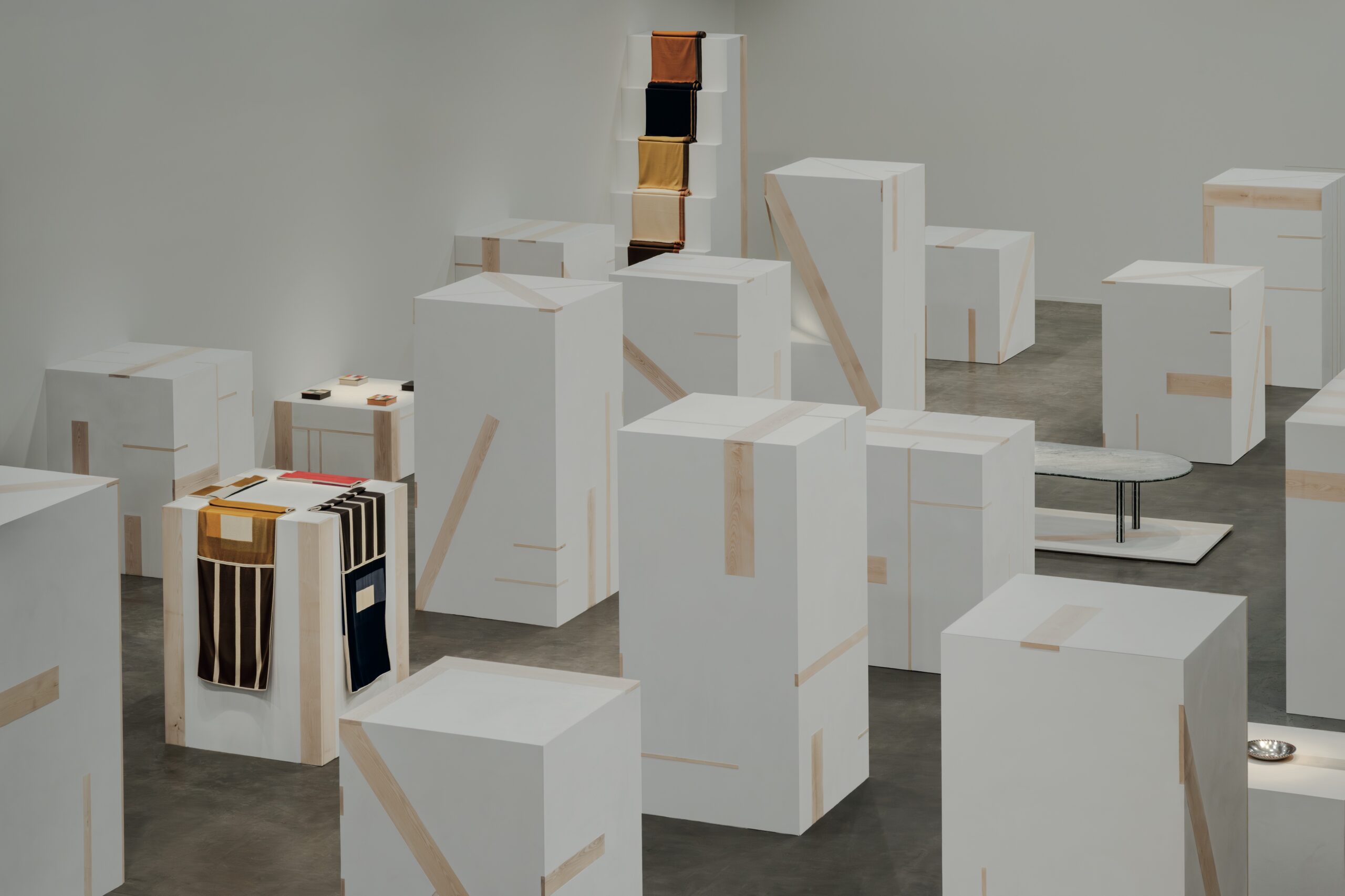
Installed at Concrete inside Alserkal Avenue, the exhibition assembled twenty galleries and more than fifty artists into a single commercial and conceptual framework, collapsing the competitive architecture of the gallery model into a temporary collective structure. The gesture itself mirrored the exhibition’s central concern: how systems repeat, fracture, and reorganise under pressure.
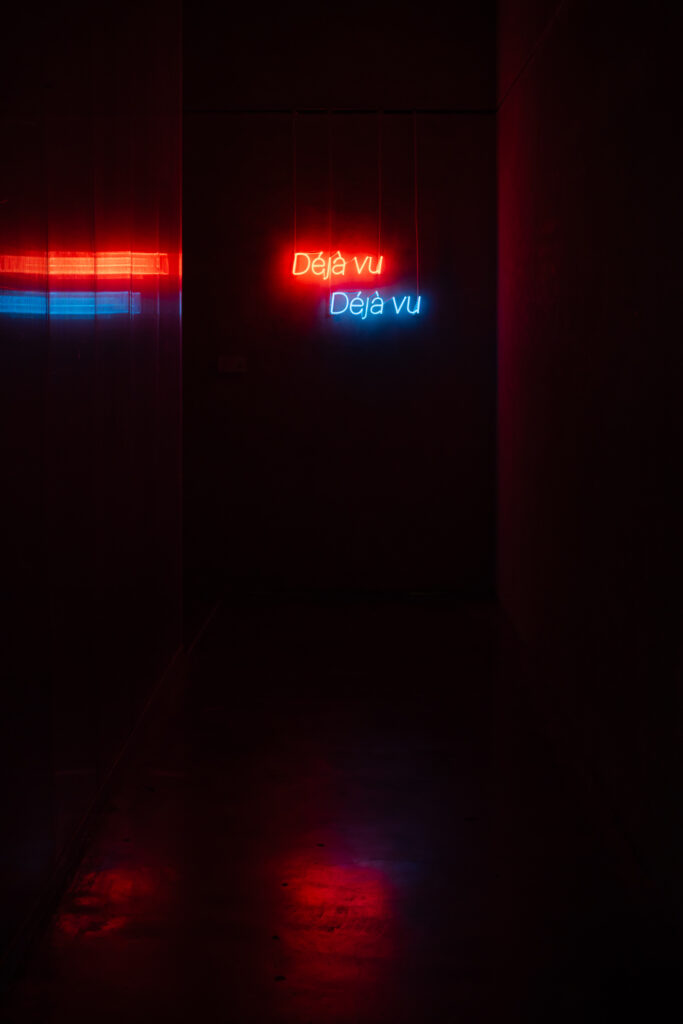
Conceptualised by Alserkal and curated by Kevin Jones, Nada Raza, and Zaina Zaarour, the exhibition took its title and intellectual departure point from Déjà Vu by Raed Yassin. Yet the curatorial premise resisted the theatricality often associated with immersive thematic exhibitions. Instead, Déjà Vu approached repetition as a psychological condition embedded within contemporary life across the region: the recurring spectacle of conflict, the cyclical collapse of political language, and the unsettling familiarity through which historical violence returns disguised as present reality.
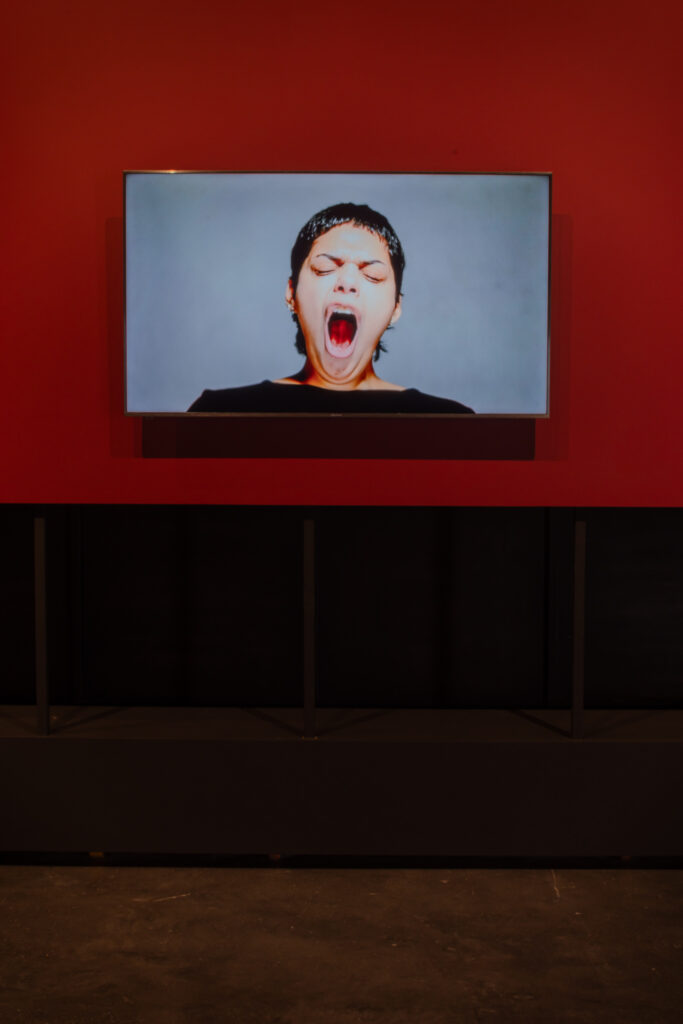
The exhibition unfolded across three curatorial streams: the uncanny, historical absurdity, and linguistic slippage. Together, they formed less a rigid exhibition structure than a diagnostic framework for understanding how memory behaves under conditions of instability. The uncanny emerged not simply as surrealism, but as a form of cognitive dissonance, where lived reality and remembered experience no longer aligned cleanly. Works by artists including Farah Al Qasimi, Nazgol Ansarinia, and Amir Khojasteh operated within this unstable terrain, where domestic imagery, architectural fragments, and distorted narratives carried traces of emotional displacement and interrupted familiarity.
The exhibition’s second axis drew from Karl Marx and his observation in The Eighteenth Brumaire of Louis Bonaparte that history repeats itself “first as tragedy, second as farce.” Within the context of the Middle East, however, the phrase acquired a darker resonance. Déjà Vu suggested that repetition in the region is rarely experienced as historical distance. Instead, it is lived as accumulation: wars layered onto older wars, displacements mapped onto previous displacements, narratives continuously rewritten without ever fully disappearing. Artists such as Larissa Sansour, Sadik Alfraiji, and Nabil Anani have long engaged with precisely this unstable relationship between memory and political continuity, where the archive itself becomes vulnerable to distortion.
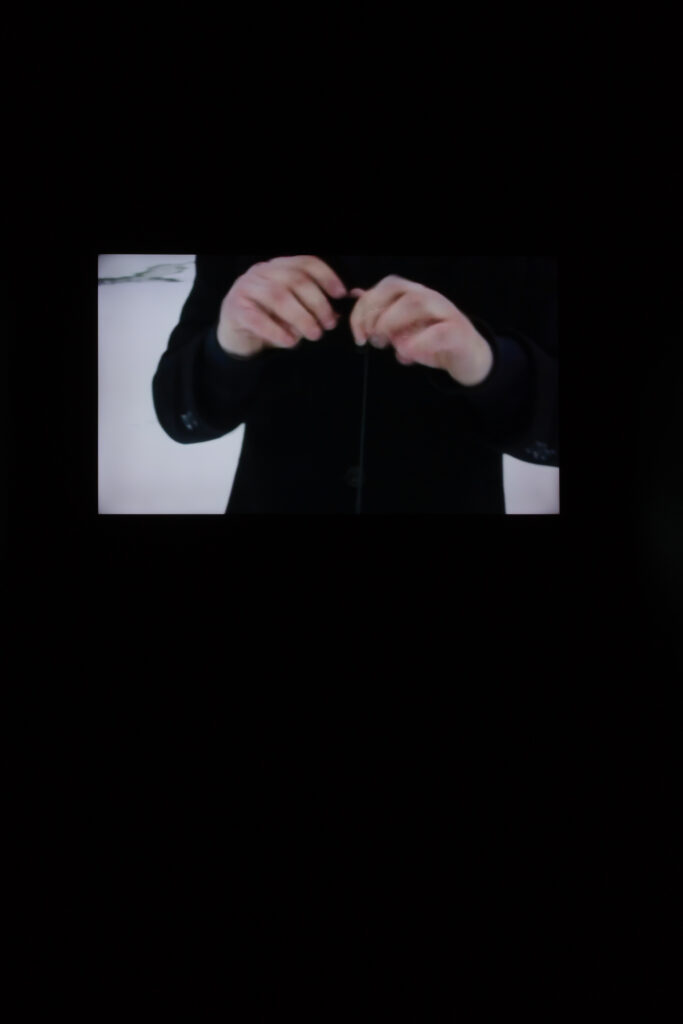
Perhaps the exhibition’s most compelling proposition emerged through its investigation of language. Linguistic slippage examined the erosion of words as stable carriers of meaning, particularly within media saturated political environments where narratives mutate in real time. Here, signs, symbols, and statements ceased to function as reliable forms of communication and instead became sites of mistranslation, manipulation, and ideological fatigue. The inclusion of artists such as Slavs and Tatars and Mithu Sen sharpened this inquiry into language as both a cultural bridge and a mechanism of confusion.
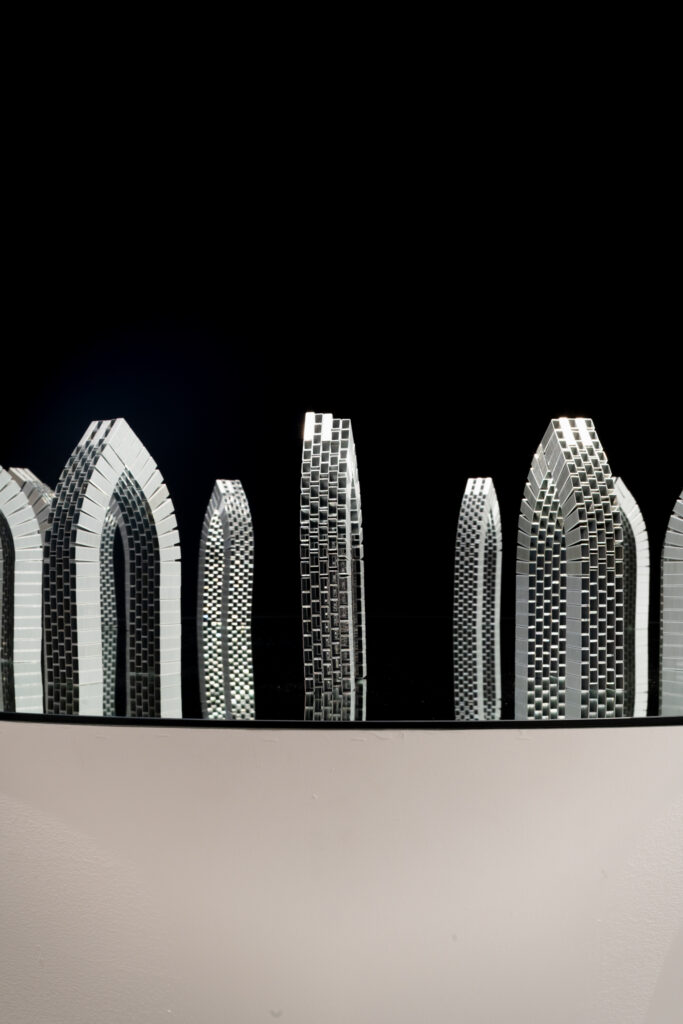
What ultimately distinguished Déjà Vu was not simply its intellectual framing, but the way its structure reflected broader transformations taking place within the UAE’s cultural landscape. The participation of galleries including The Third Line, Green Art Gallery, Gallery Isabelle, Carbon12, and Grey Noise revealed a growing willingness to imagine the regional art ecosystem less as a collection of isolated commercial entities and more as an interconnected cultural infrastructure capable of responding collectively to crisis.
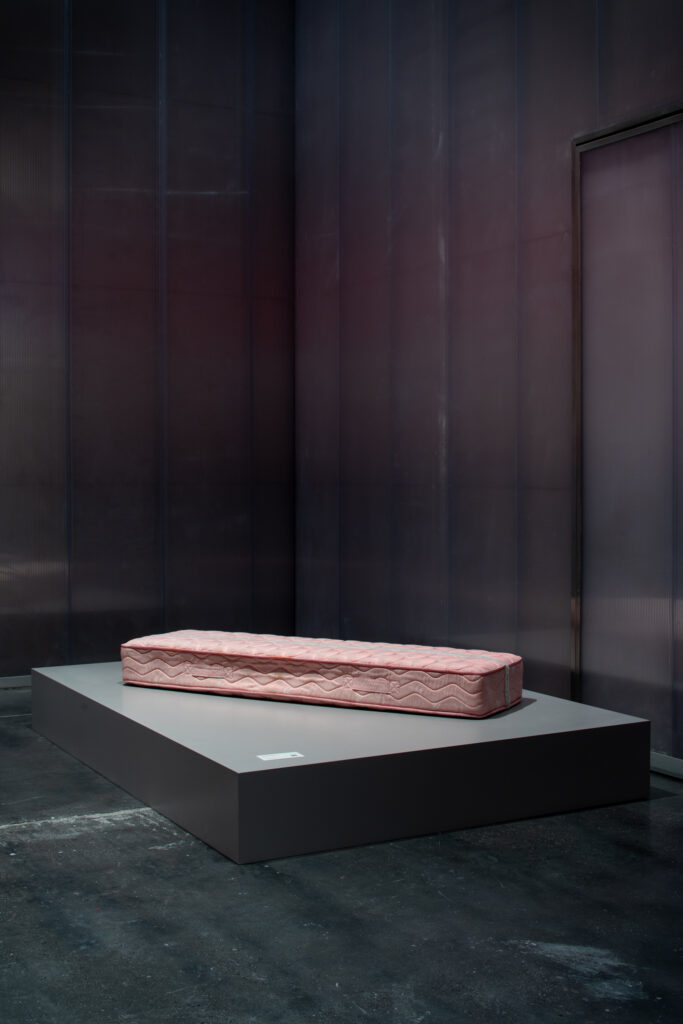
In this sense, Déjà Vu became more than an exhibition about repetition. It became an exhibition about recognition: the unsettling awareness that contemporary life increasingly unfolds through echoes, glitches, and returns, and that art may be one of the few remaining spaces capable of making those repetitions visible before they harden into permanence.