
Designed by Maria Group, YUBI is conceived as a choreography of space, built around the fleeting, almost ceremonial ritual of the handroll. At the centre of this choreography sits the Hinoki wood counter, positioned at the corner of the L-shaped plan where preparation, encounter, and movement converge.
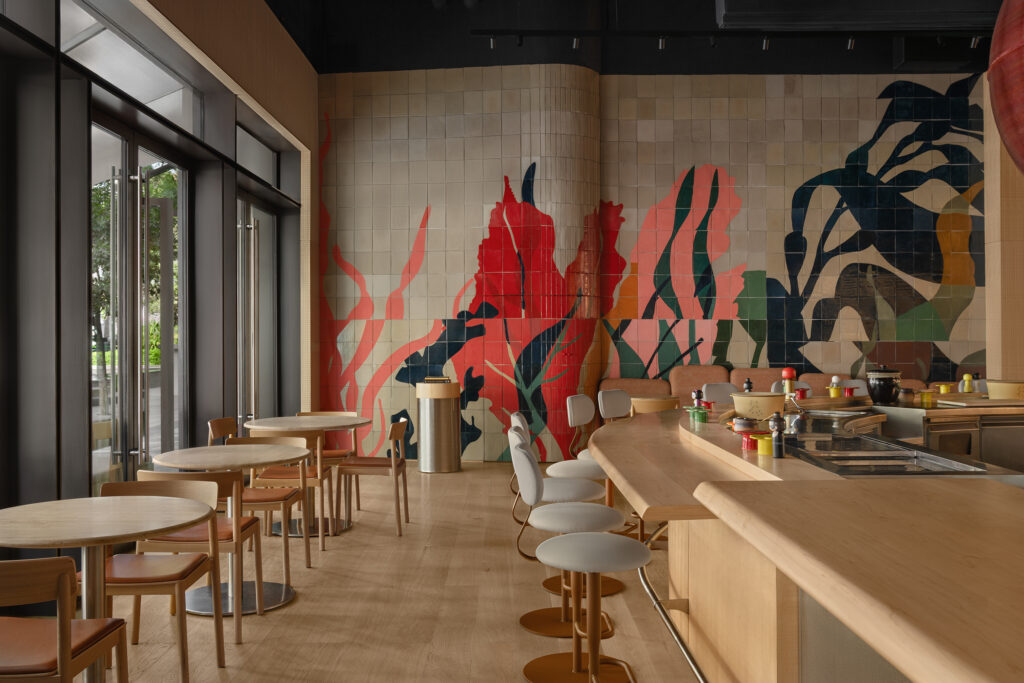
“The counter and preparation area became the defining spatial gesture of YUBI,” the designers explain. More than a service surface, the bar operates as the project’s spatial hinge, “connecting the two arms of the space” and organising the entire experience around the exchange between chef and guest.
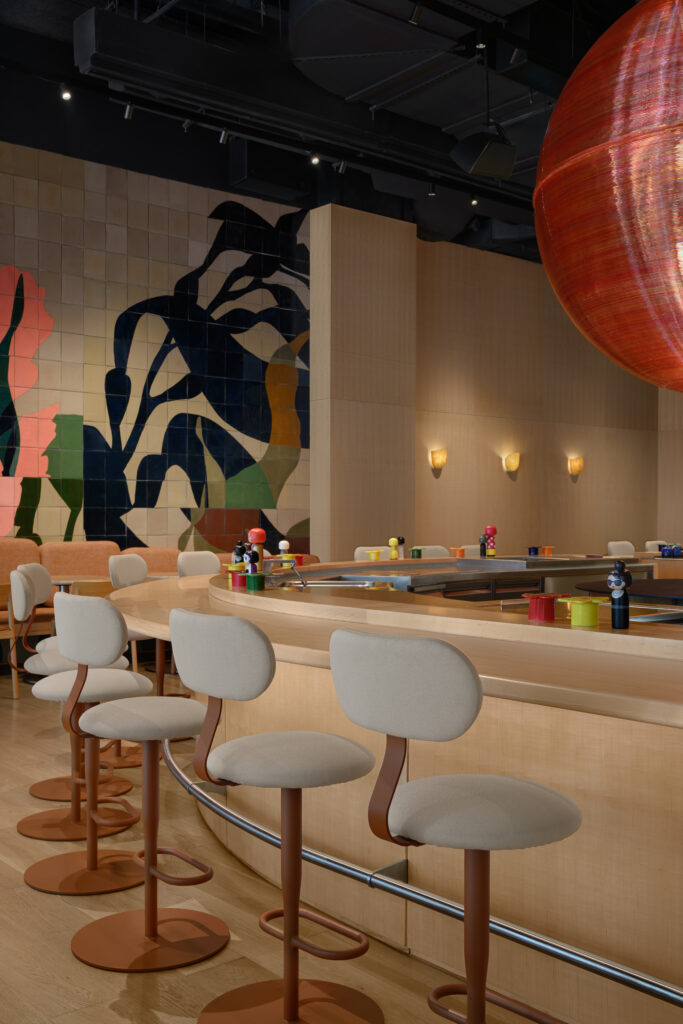
The culinary object at the heart of YUBI is the handroll, an inherently ephemeral creation meant to be eaten seconds after it is assembled. This fleeting quality informs the spatial choreography. “We approached the experience as a live performance rather than a conventional dining setup,” the designers note. Architecture compresses preparation and consumption into a single moment. The Hinoki bar becomes both stage and threshold, while behind it a preparation island and full-height glass windows open onto a secondary kitchen, allowing guests to witness what the team calls “the choreography of making.” The restaurant thus unfolds less as a dining room than as an immersive theatre of craft.
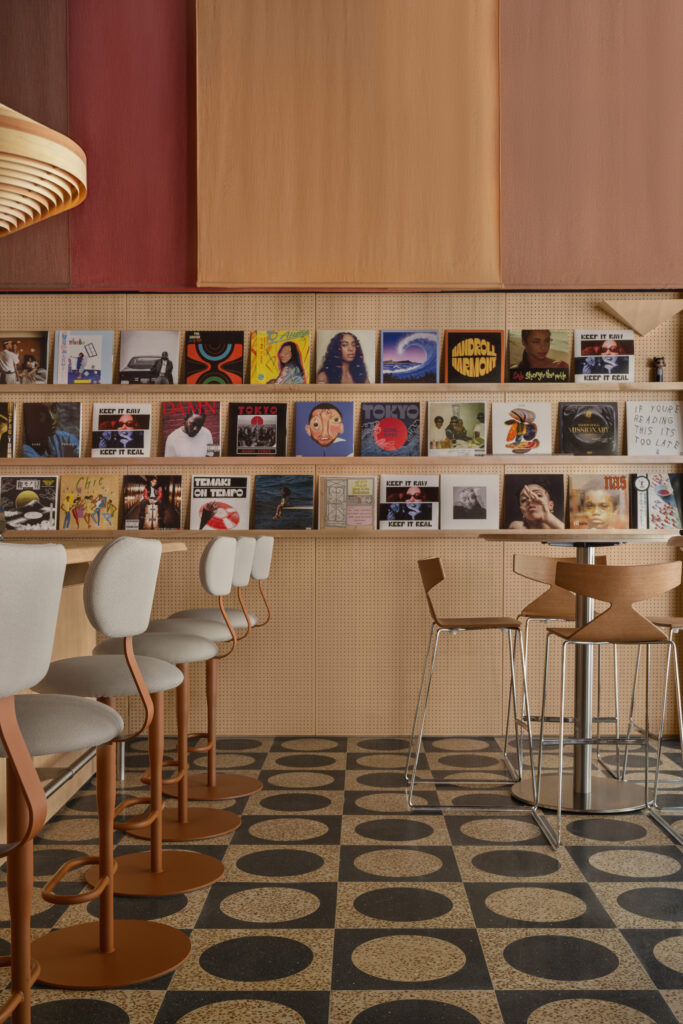
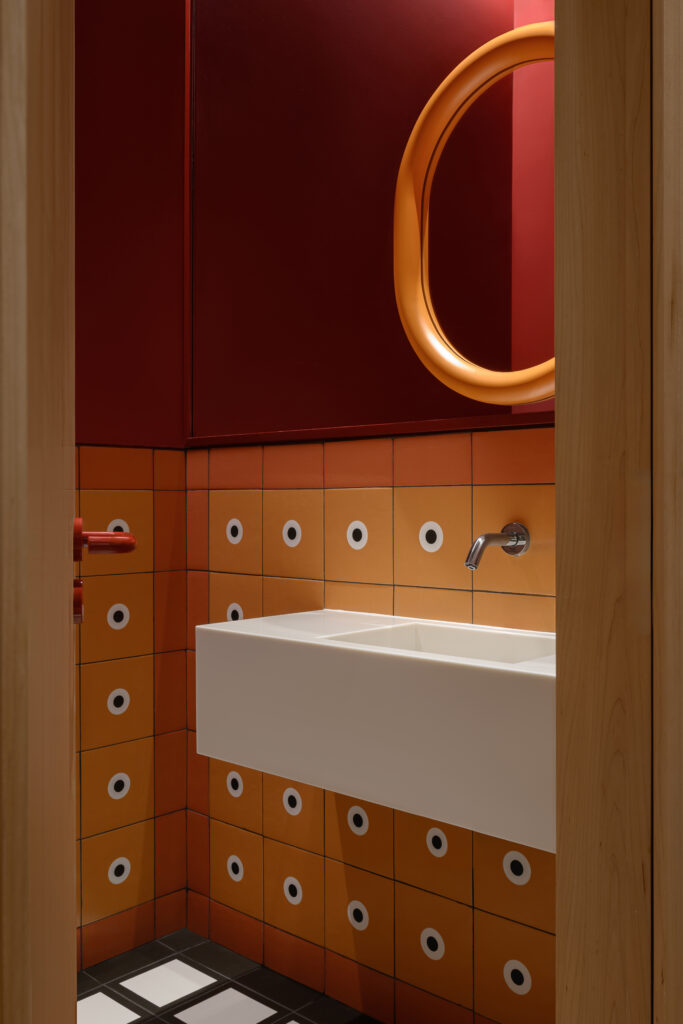
Material language reflects a subtle cultural duality between street vitality and meticulous craftsmanship. A ceramic mural created in collaboration with Paola Sakr and based on an illustration by Raya Khalaf echoes the graphic intensity of Japanese train stations while remaining entirely artisanal, each tile handmade in coloured enamel. Suspended linen panels reinterpret the traditional Japanese Noren curtains found at the entrances of informal street eateries, introducing softness and movement. Glass blocks diffuse light while preserving privacy, referencing postwar Japanese architecture. Above the bar, a 2.5 metre pendant light developed with Post Industrial Crafts in recycled plastic evokes the moon, its warm glow contrasting with the industrial nature of its fabrication. In the listening room, lantern-like pendants by Hans-Agne Jakobsson and custom black and white encaustic tiles complete this layered dialogue.
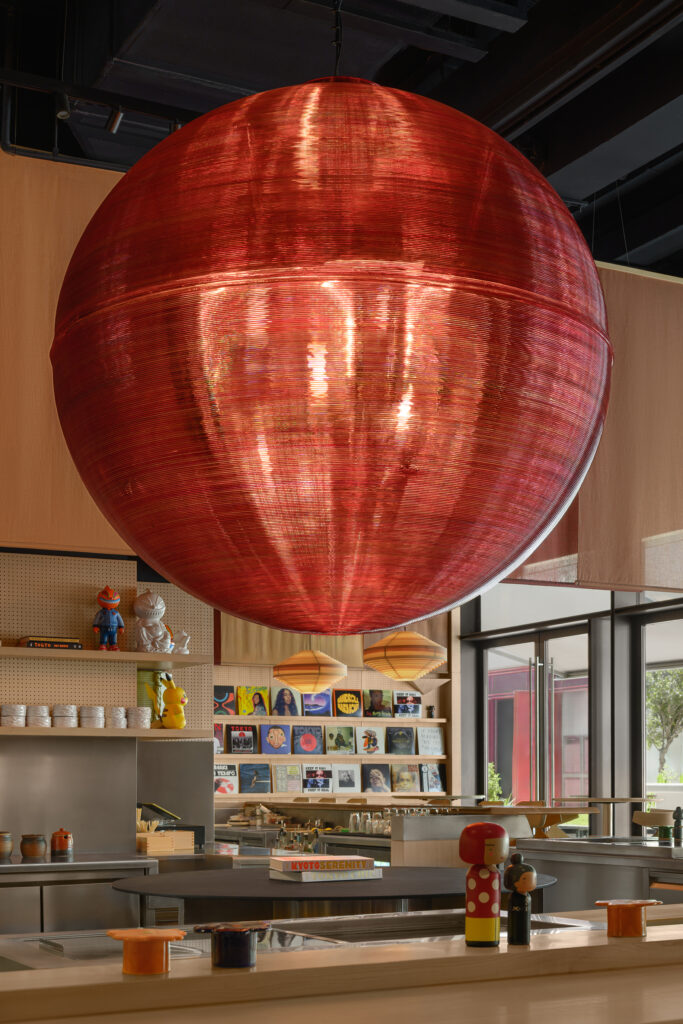
Movement defines the experience. “The design approach intends to resist static dining experiences,” the team says. The L-shaped plan draws guests along its length while the listening bar offers a quieter pause within the sequence. Materials shift subtly across zones, fabric overhead, ceramic surfaces, mirrored bands that expand perception, all creating a space that is “conceived to be felt in motion.”
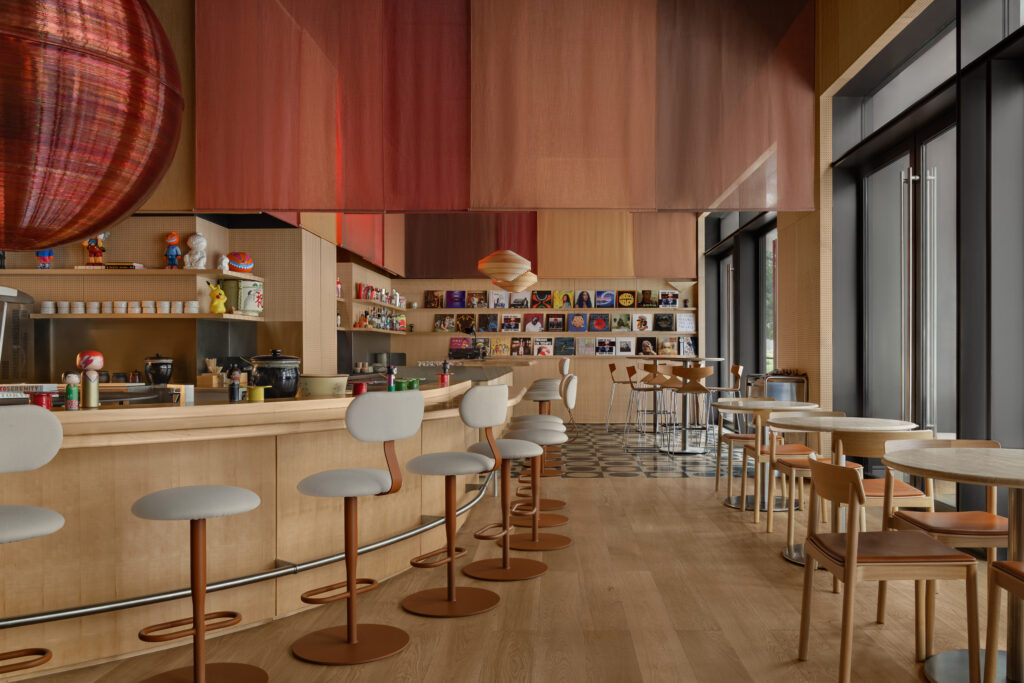
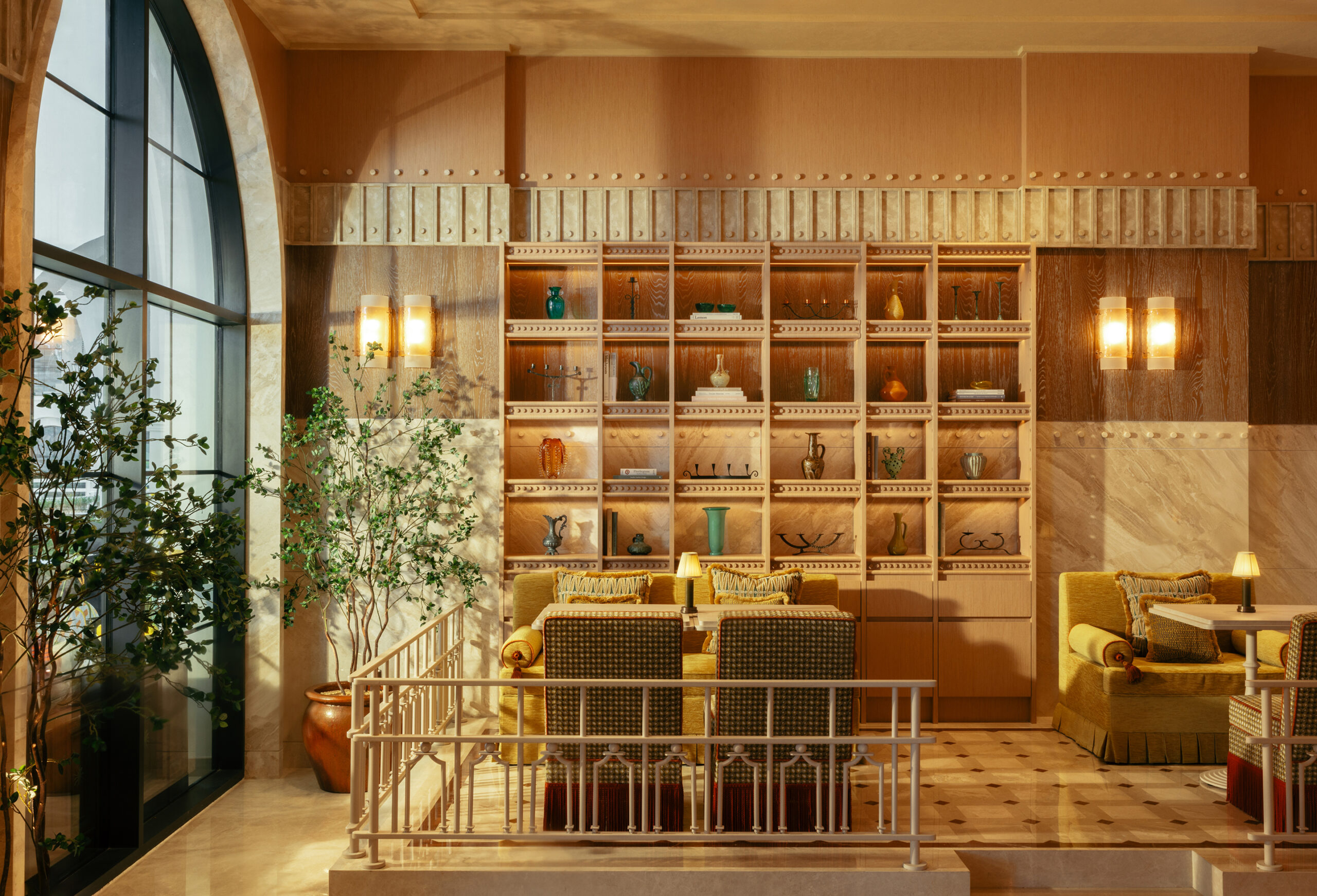
Restraint ultimately defines YUBI’s identity. “We always begin with space, with an architectural standpoint and a process built through material knowledge, craftsmanship and physical experience.” The palette remains controlled: wood, ceramic, fabric, glass, mirrored surfaces and recycled plastic. The result is not minimalism for its own sake but clarity. “For YUBI, restraint was not about minimalism for its own sake, but about clarity… creating a world that feels immersive, functional and poetic.”
If the restaurant had a soundtrack, the answer arrives almost as a whisper: “Shhh / Peaceful by Miles Davis. Give it a listen, it’ll speak for itself.”