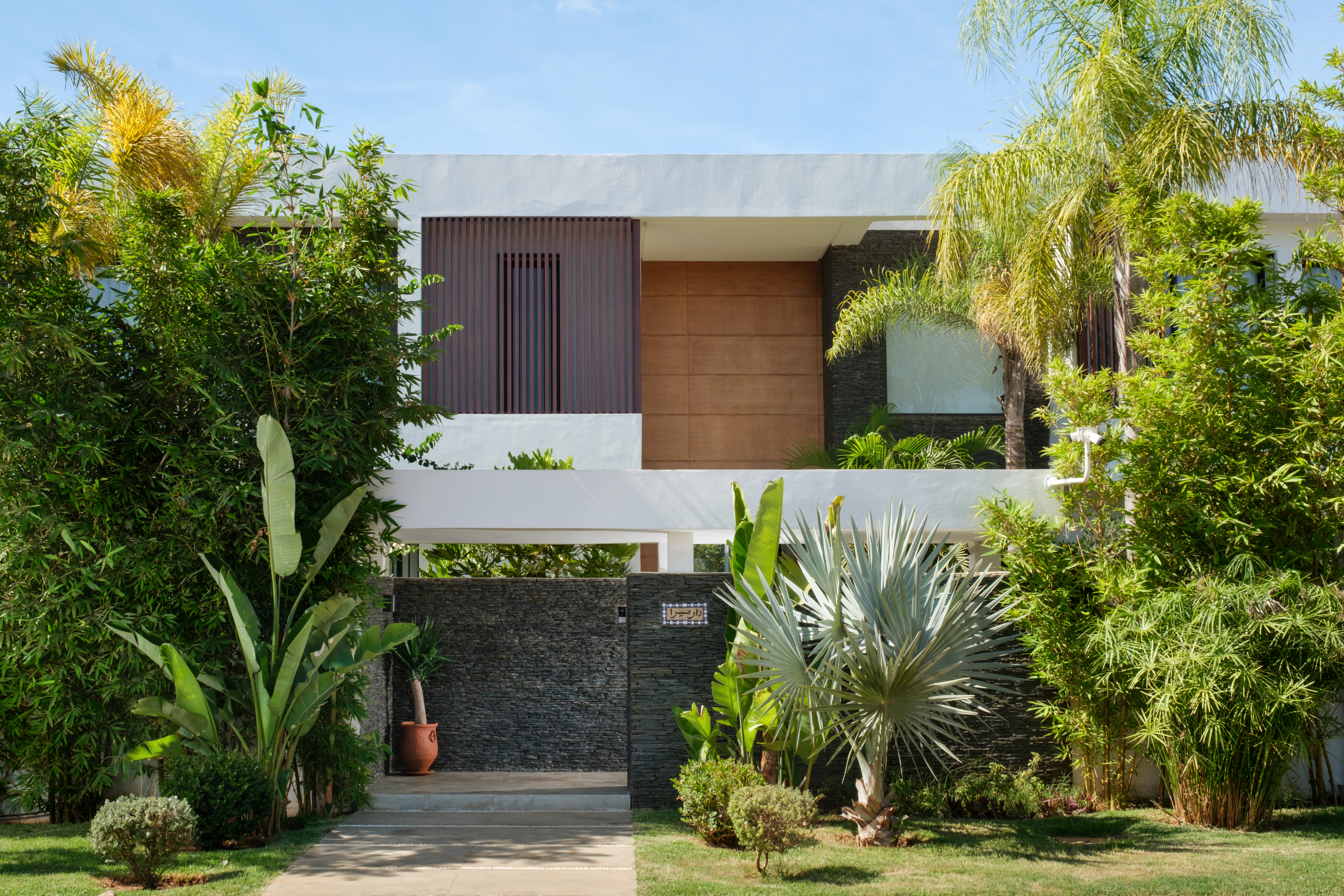
The founder of Kart Group, Mustafa Khamash, has defined his practice through restraint: monumental installations and civic environments that translate societal values, cultural identity, and futuristic ambition into refined three-dimensional form. Rather than commanding attention, his spaces shape atmosphere, a quality nowhere more intentional than in Dar Mira, a private residence in Morocco that distills his design philosophy to its most intimate and considered expression.
Among the Middle East’s most compelling design voices, Mustafa Khamash has spent over twenty years translating heritage, cultural identity, and civic ambition into refined spatial form. Trained at the Istituto Universitario di Architettura di Venezia and shaped by collaborations across regional and international contexts, Mustafa’s practice is built on discipline, cultural fluency, and an instinct for atmosphere. At its core is his philosophy of the “Architecture of Soul” — a method that transforms a client’s vision into spaces that feel rooted, intentional, and emotionally precise. It is a philosophy fully realized in Dar Mira.
Dar Mira, however, speaks in another tone.Nestled in the Moroccan landscape, the private residence unfolds as a meditation on heritage, atmosphere, and proportion. Rather than impose a contemporary aesthetic onto a historic context, Khamash constructs what he describes as “a dialogue between craftsmanship, atmosphere, and intention.” He continues: “Every detail is designed to feel intuitive yet deliberate, creating spaces that invite people to slow down, connect, and experience beauty through material, light, and proportion.”
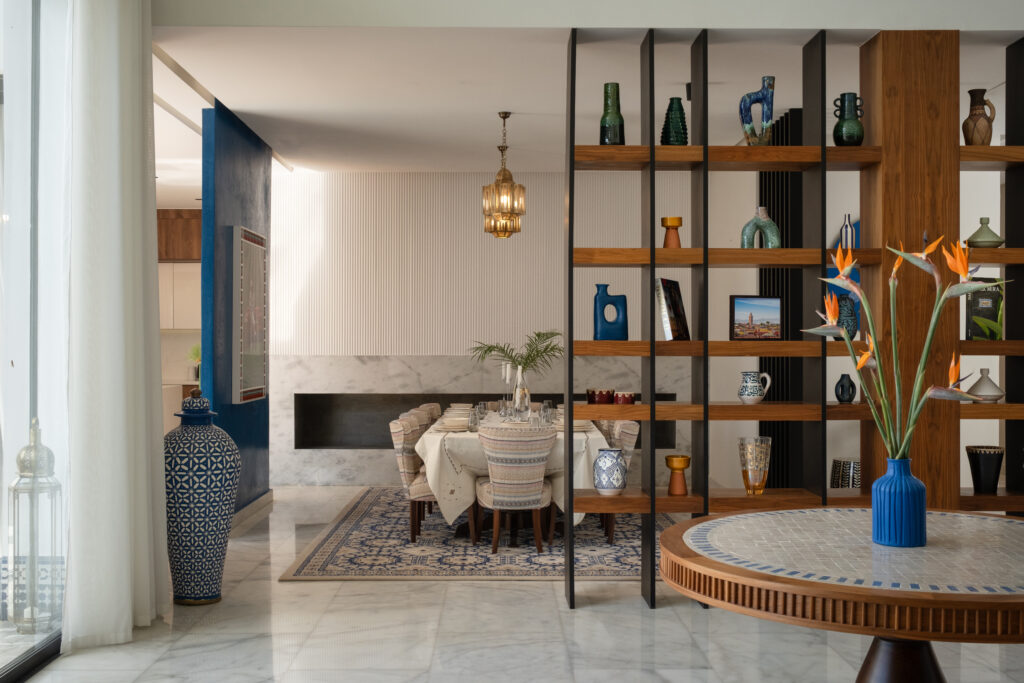
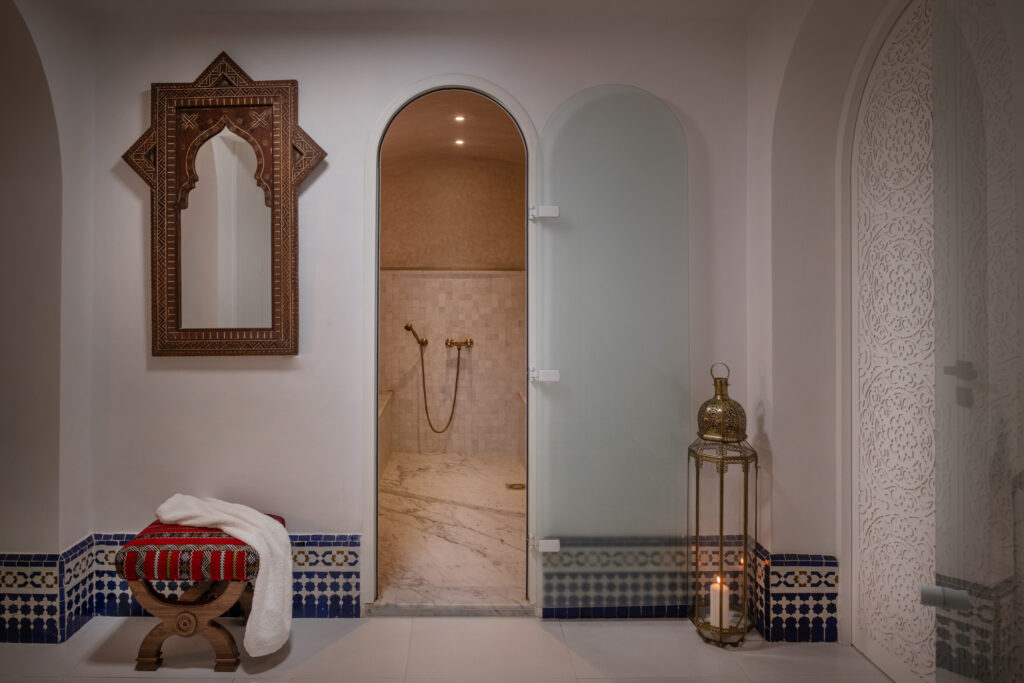
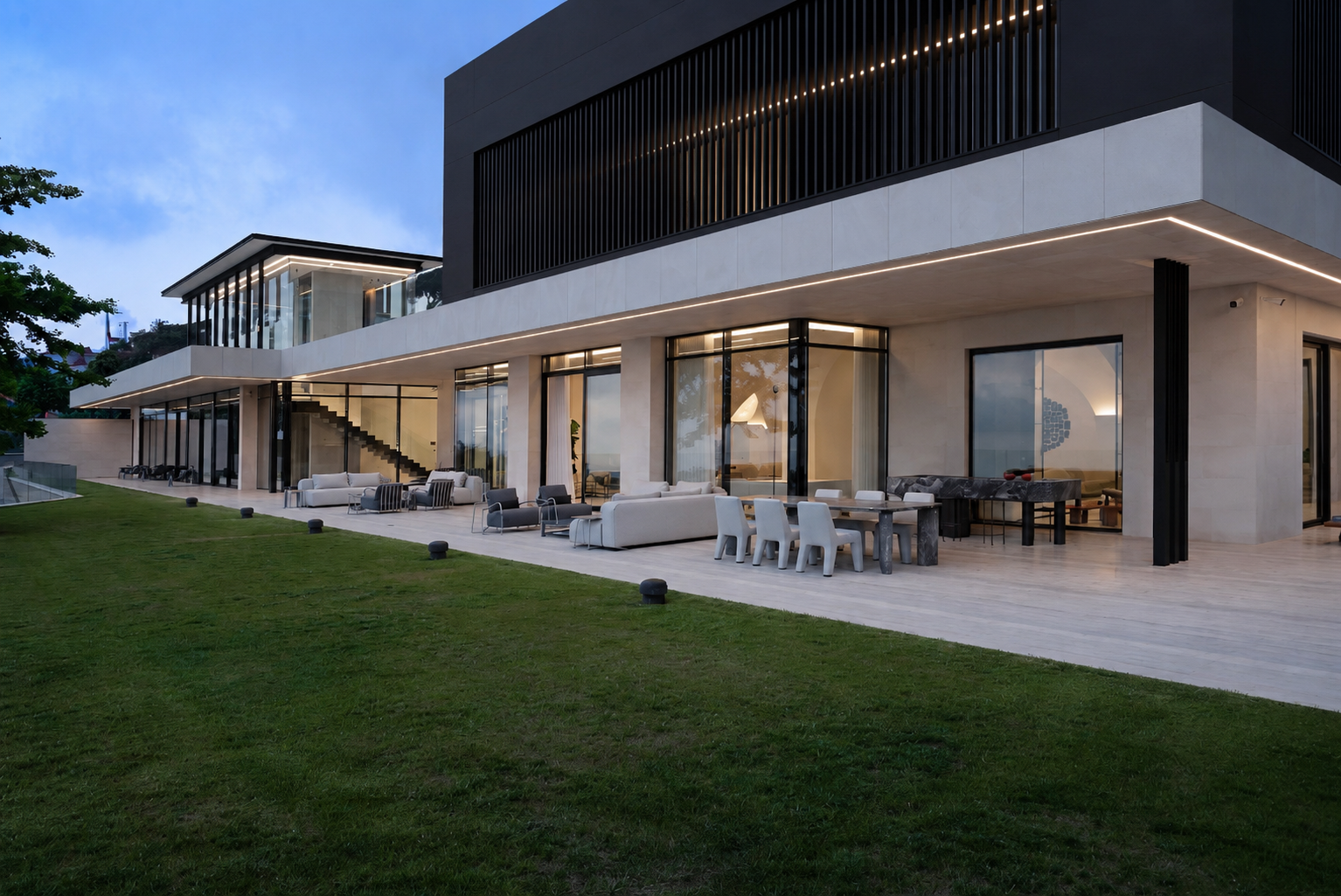
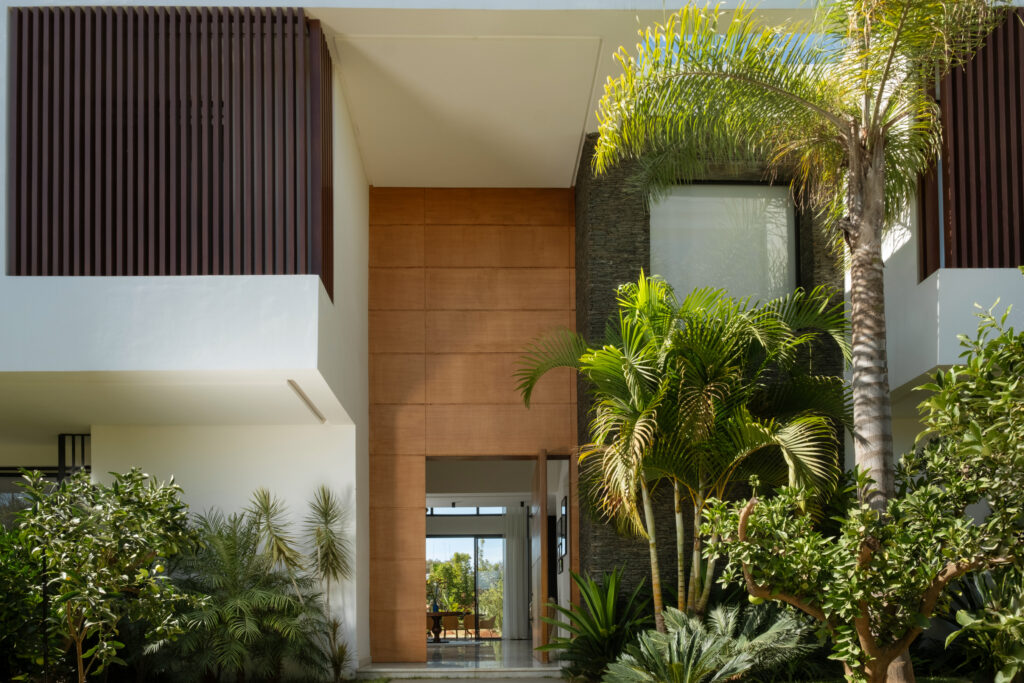
Moroccan domestic architecture has always been about enclosure and revelation — inward-looking courtyards, filtered light, layered thresholds. At Dar Mira, these principles are reinterpreted through contemporary spatial clarity. Double-height volumes and sweeping glass façades open toward gardens, allowing light to perform its daily choreography across terracotta floors and textured plaster walls.
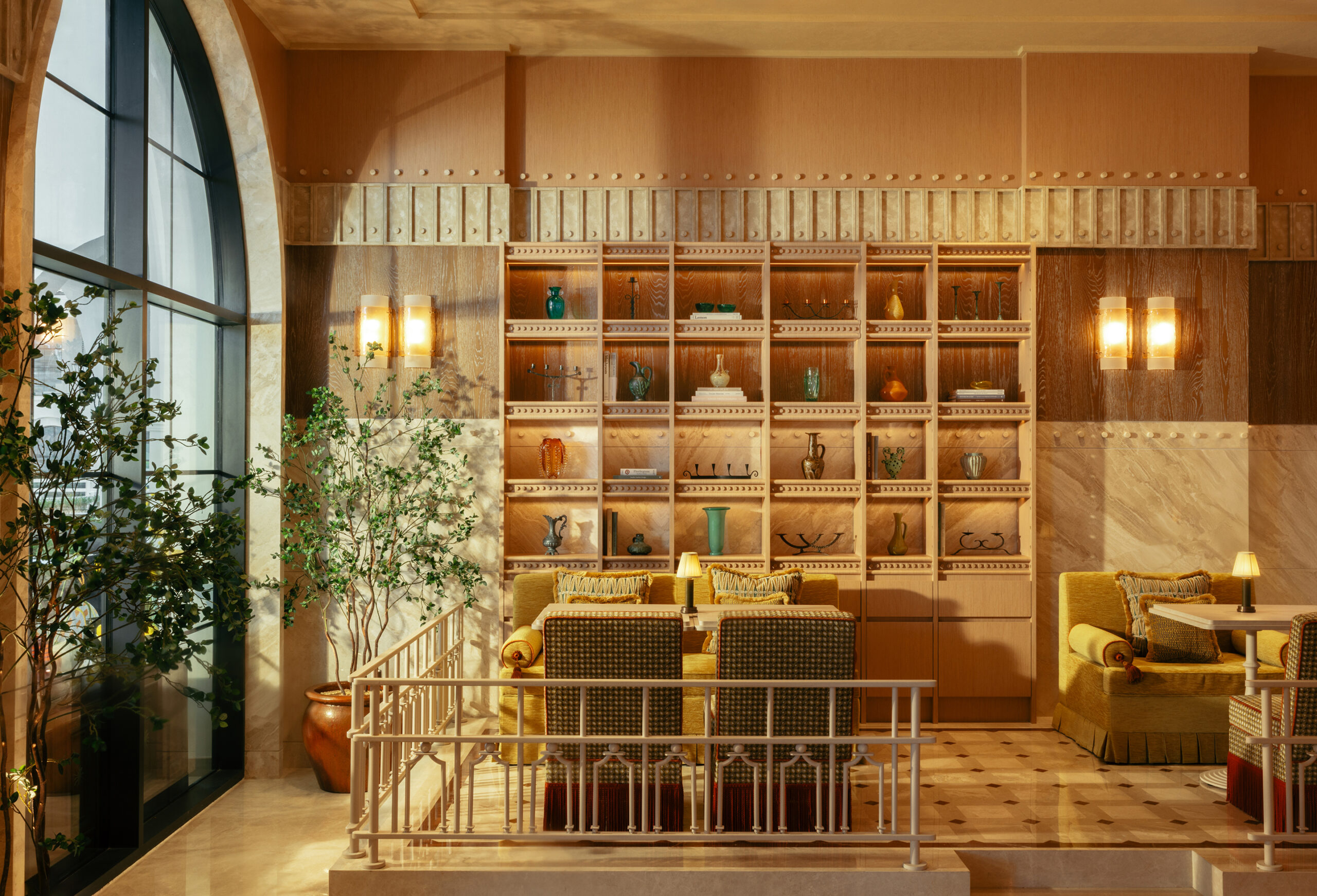
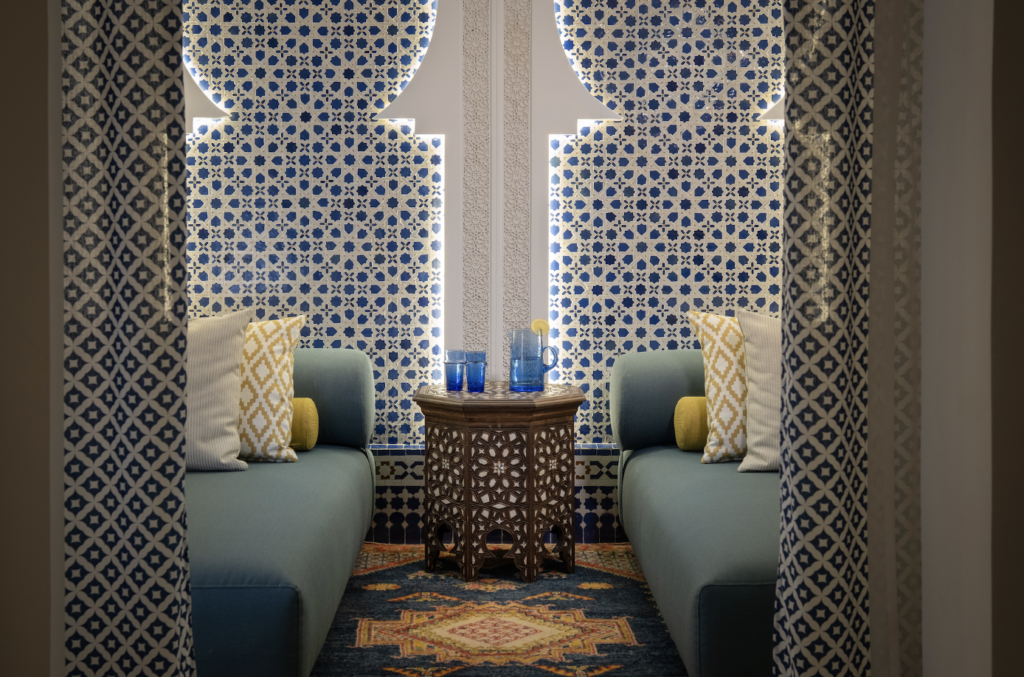
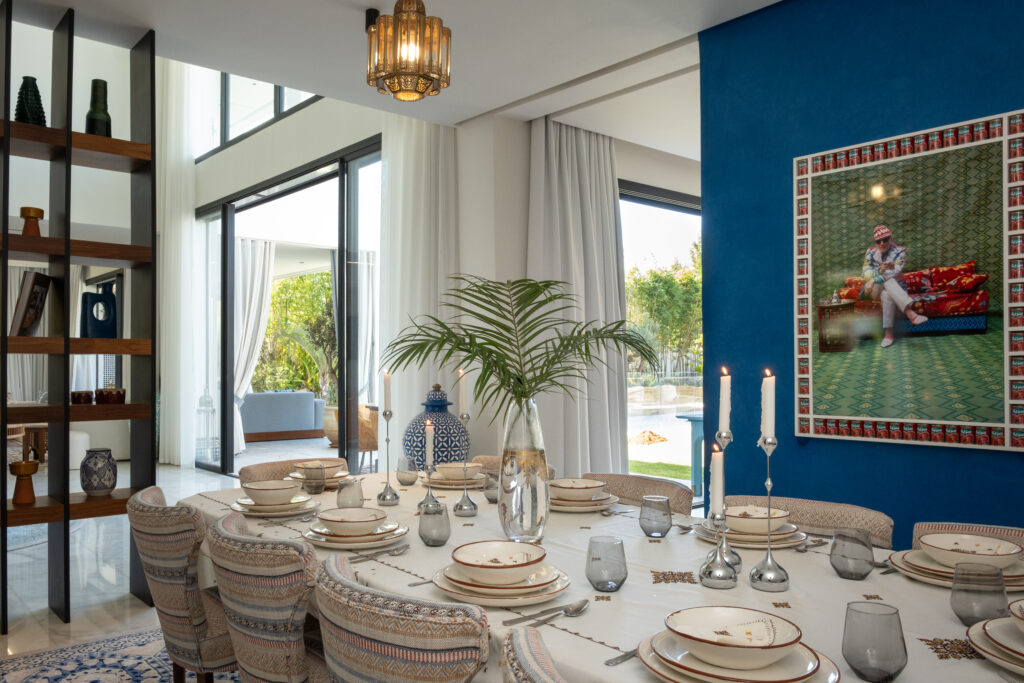
The palette is unapologetically rooted in place: sand, ochre, and clay anchor the interiors, while jewel-toned accents — cobalt, emerald, saffron — recall the chromatic intensity of Moroccan souks and desert horizons. In the dining room, walls immersed in Majorelle Blue evoke the iconic cobalt shade immortalized in Marrakech, transforming the space into a saturated chamber of gathering.
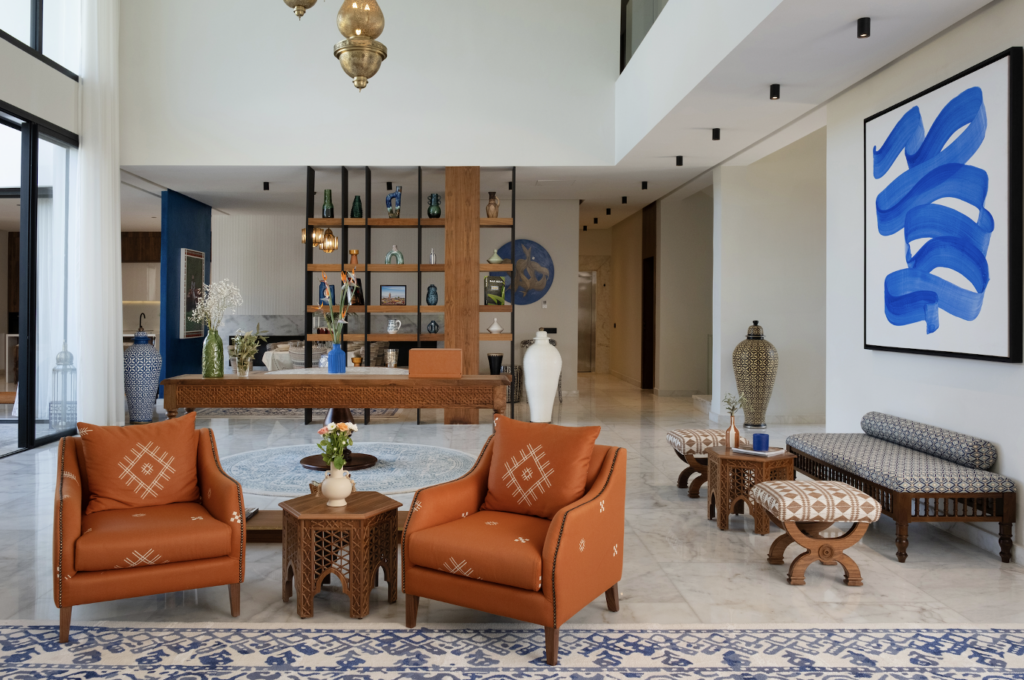
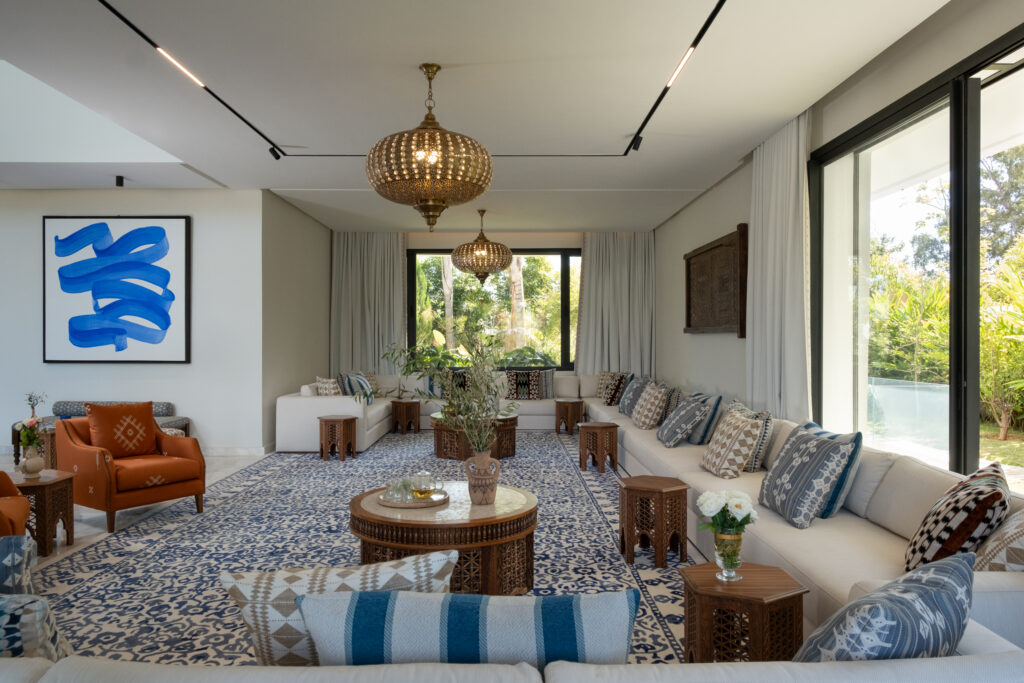
Communal areas prioritize proximity and tactility: low modular seating, handwoven rugs, embroidered cushions, carved wood detailing. The effect is neither nostalgic nor decorative. It is structural. Craft here is not applied ornament; it is architecture’s emotional framework.
If Khamash’s institutional work negotiates formality and protocol, Dar Mira negotiates time. The house encourages pause — through layered textiles in private quarters, canopied beds framed by neutral tones, and bespoke joinery that merges efficiency with softness.
Outdoor spaces extend the narrative. Sunken majlis, tiled courtyards, shaded terraces: the boundary between interior and exterior dissolves, yet never loses compositional discipline. The result is what Kart Group describes as “homes meant to be both lived and deeply felt.”
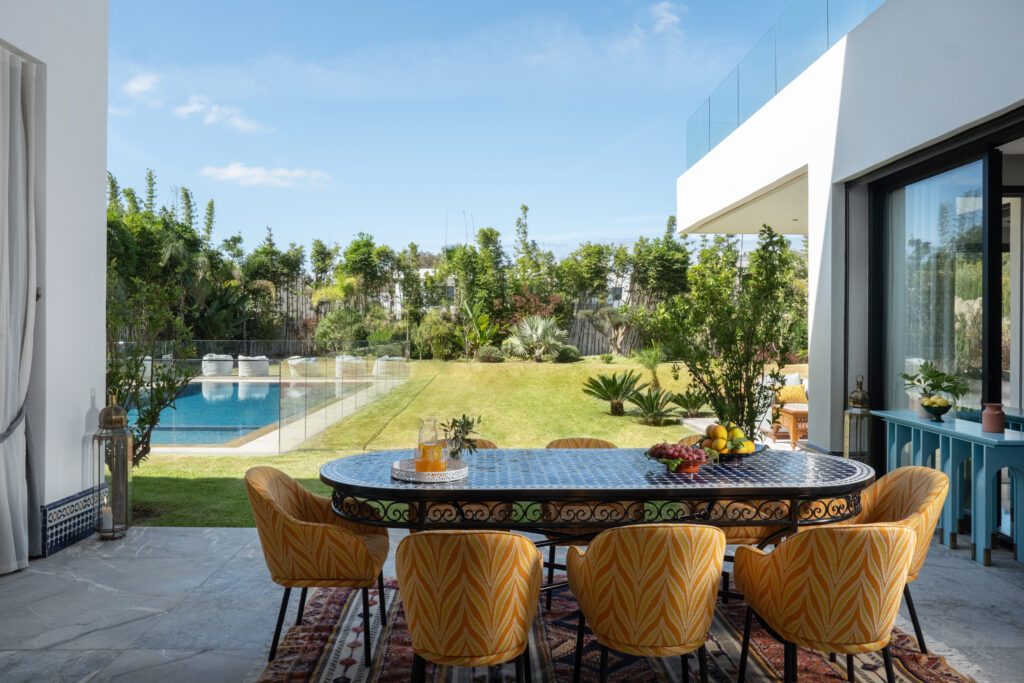
What becomes clear is that Dar Mira is not a departure from Khamash’s philosophy, but a recalibration of scale. The same precision that defines his ministerial environments is present here — only redirected toward intimacy rather than monumentality.
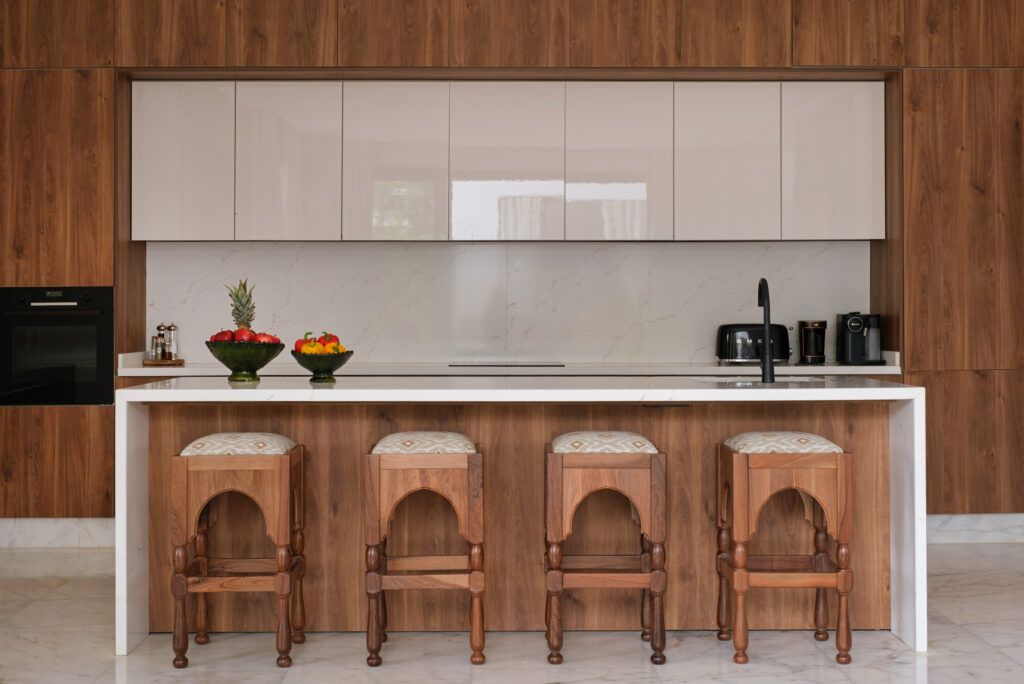
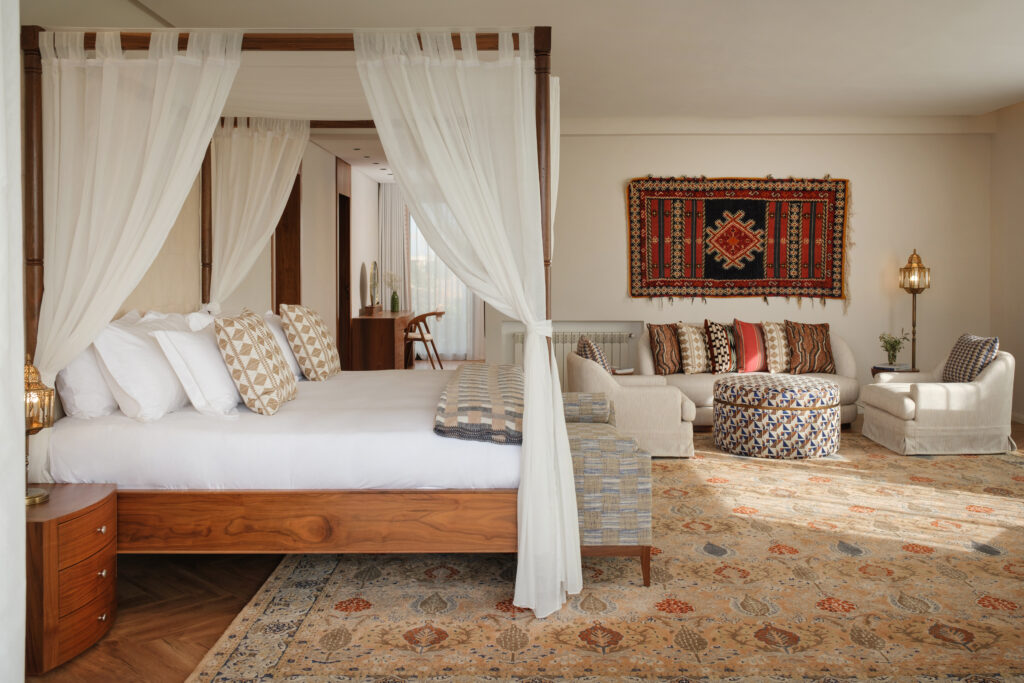
In Morocco, Khamash does not construct a landmark. He constructs atmosphere. And in doing so, he demonstrates that cultural translation — whether for a nation or a single family — begins with the same discipline: listening to place, material, and memory.