There is a fundamental distinction between being represented within an institution and being entrusted with shaping its intellectual direction. In the context of contemporary art, where the authority to construct historical narratives has long rested with a concentration of European and North American institutions, that distinction carries particular significance.
The appointment of Sheikha Hoor Al Qasimi as curator of the 62nd International Art Exhibition of La Biennale di Venezia, scheduled to take place from 8 April to 26 November 2028, brings this question into focus. As the first Arab curator to assume responsibility for the Biennale’s central exhibition, Al Qasimi enters a position from which the relationship between geography, knowledge and artistic production can be reconsidered.Announced following the Biennale’s board meeting on 20 November, the appointment places the Emirati curator at the helm of one of the most consequential institutions in contemporary art. The exhibition will run from 8 April to 26 November 2028.
Her relationship with Venice, however, predates this appointment. In 2015, she curated the UAE National Pavilion, presenting 1980–Today: Exhibitions in the United Arab Emirates, an investigation into the country’s artistic history through its exhibition culture. The project addressed a question that continues to inform her practice: how does a cultural history become legible when its development has taken place outside the dominant narratives of art history?
More than a decade later, the parameters of that inquiry have changed. Where the national pavilion provided a framework through which to examine the artistic production of a particular country, the central exhibition offers a platform from which to interrogate the frameworks themselves.
To understand the intellectual foundations of Al Qasimi’s practice, one must look to Sharjah. Since assuming the direction of the Sharjah Biennial in 2003 and establishing the Sharjah Art Foundation in 2009, she has contributed to the development of an institutional culture in which artistic production is inseparable from historical research, education and the preservation of cultural memory.
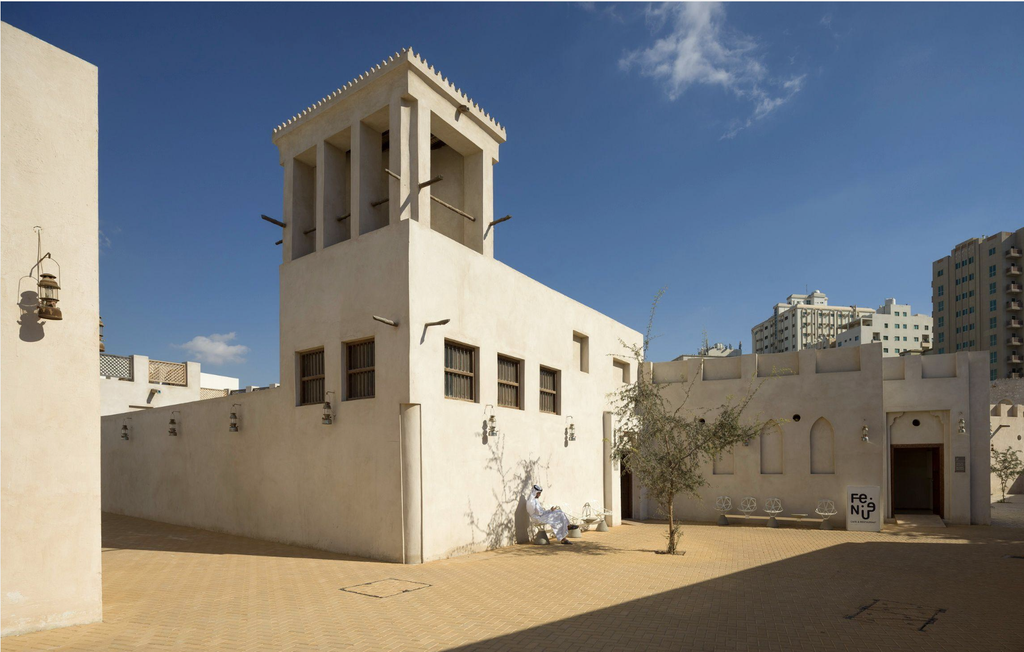
Aga Khan Trust for Culture. Photography by Cemal Emden.
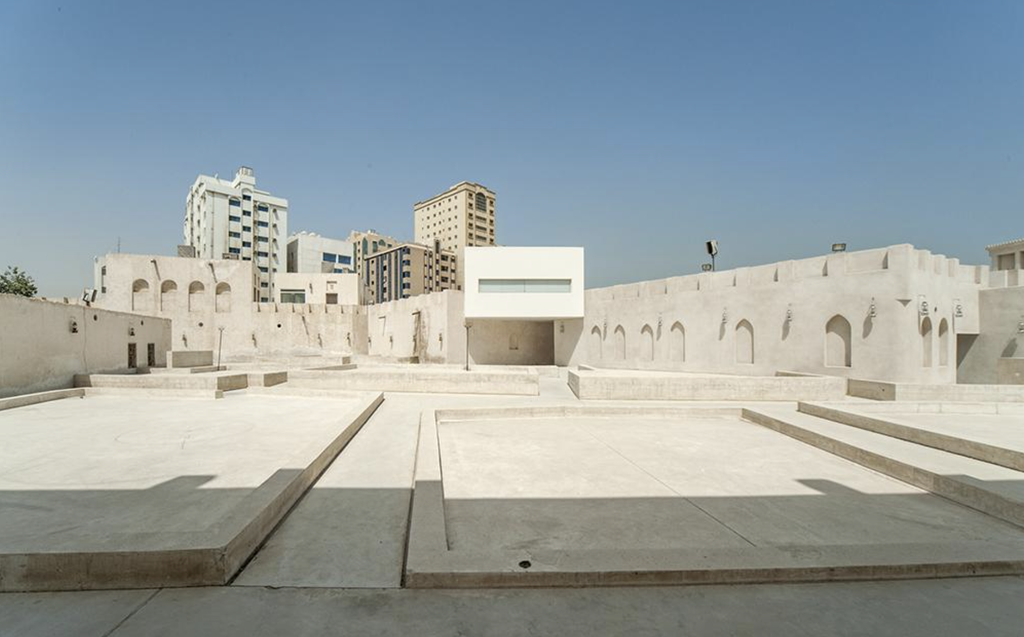
The title of the fifteenth Sharjah Biennial, Thinking Historically in the Present, offers an insight into this position. History becomes a method through which to examine contemporary conditions rather than a closed account of the past. Her exhibitions dedicated to artists such as Hassan Sharif, Rasheed Araeen and Monir Shahroudy Farmanfarmaian reflect an engagement with artistic genealogies that complicate the idea of modernity as a predominantly Western intellectual project.
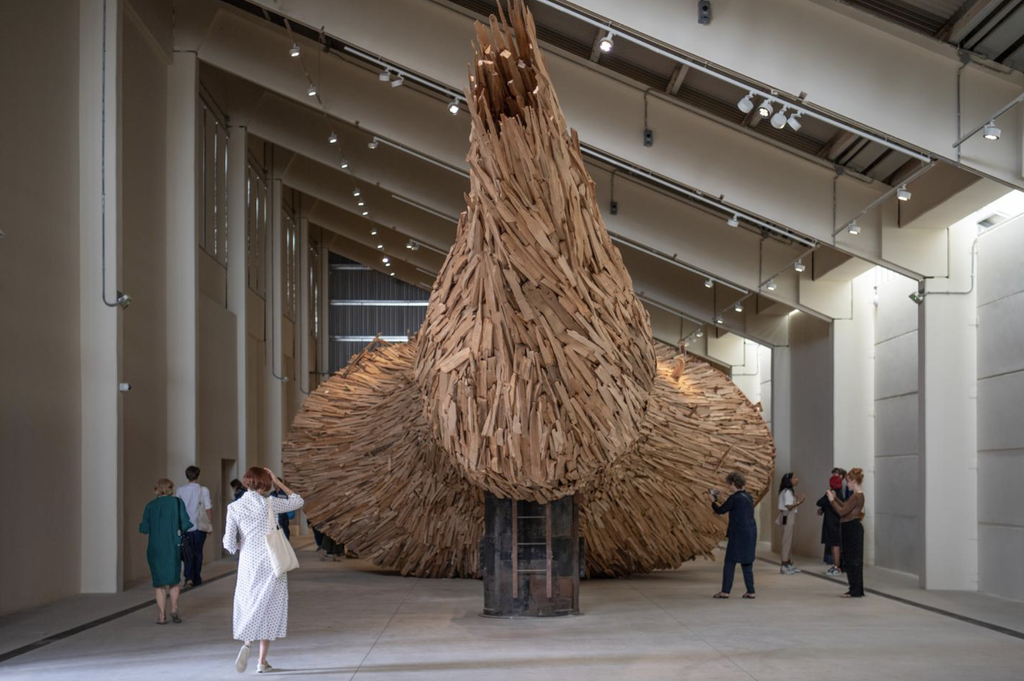
Her curatorial work in Lahore, Aichi and Sydney extends this inquiry across societies with distinct relationships to colonialism, cultural inheritance and historical memory. These geographical encounters suggest an understanding of contemporary art as a field constituted by multiple histories, each with its own intellectual foundations.
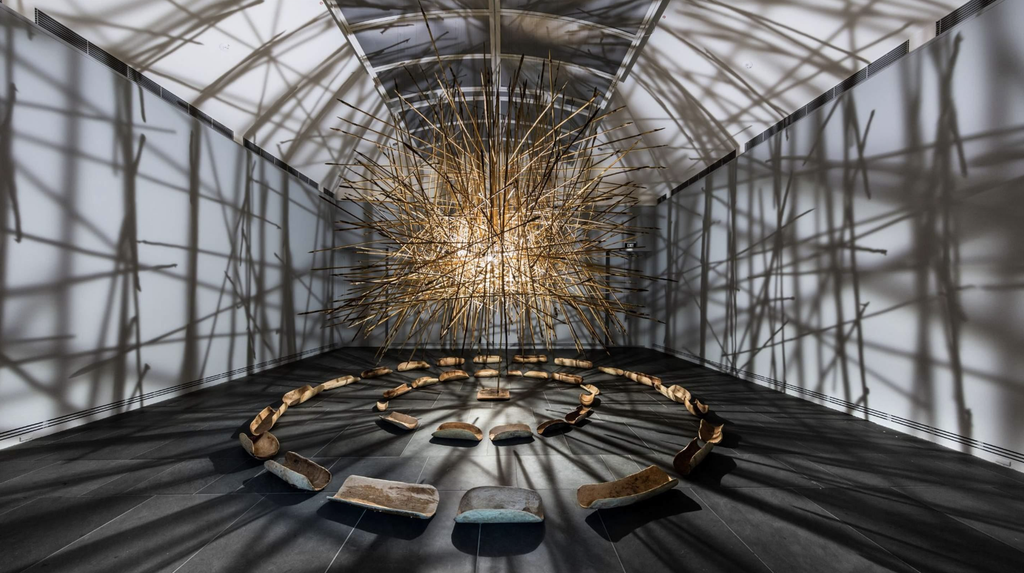
Venice provides a compelling setting for such a practice. Established in 1895, the Biennale retains an institutional structure in which national representation coexists with the international ambitions of contemporary art. The city itself, shaped over centuries by commercial and cultural exchanges with the Arab and Islamic worlds, lends another historical dimension to the appointment.
For the Arab world, the significance of Al Qasimi’s appointment lies beyond the symbolism of a historic first. It concerns the recognition of the region as a site of intellectual production, capable of generating the critical frameworks through which art is interpreted.
The curatorial proposition for 2028 remains unknown. What is already apparent, however, is that the geography from which contemporary art is interpreted matters as much as the geography from which it emerges.
Cover Photo Courtesy of Venice Biennale.