The relationship between contemporary design and traditional craftsmanship is often understood as a dialogue between innovation and preservation, between the creative freedom of the artist and the inherited knowledge of the artisan. Yet what happens when craftsmanship is approached not as a repository of the past, but as a living system of knowledge capable of generating entirely new artistic languages?
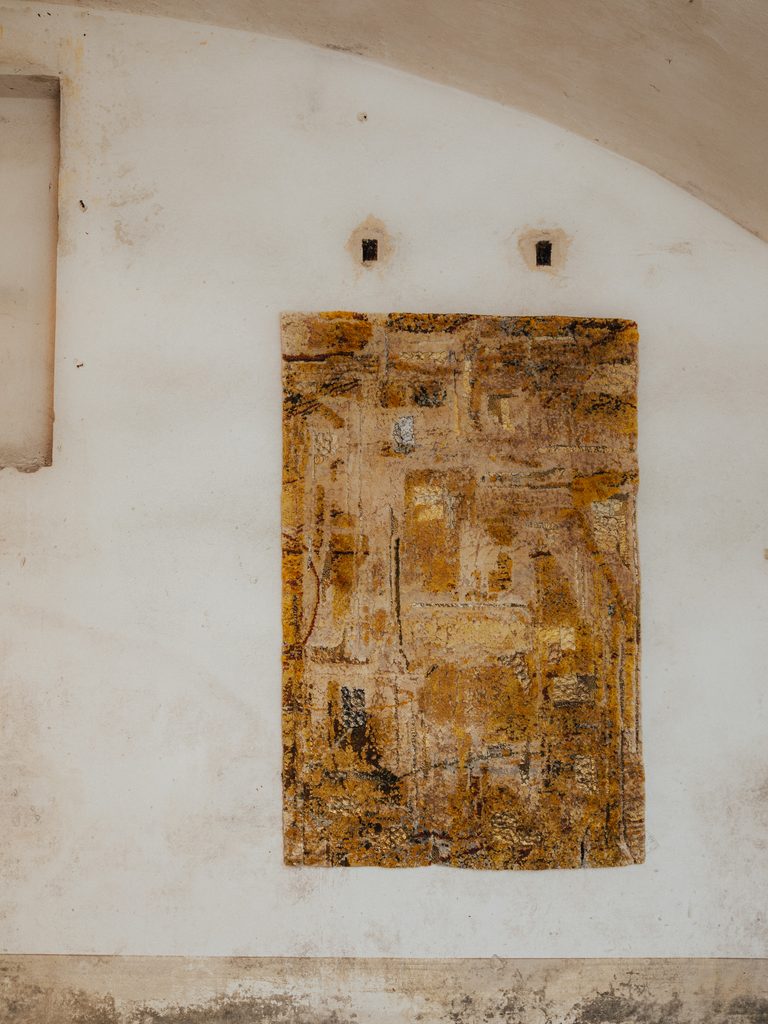
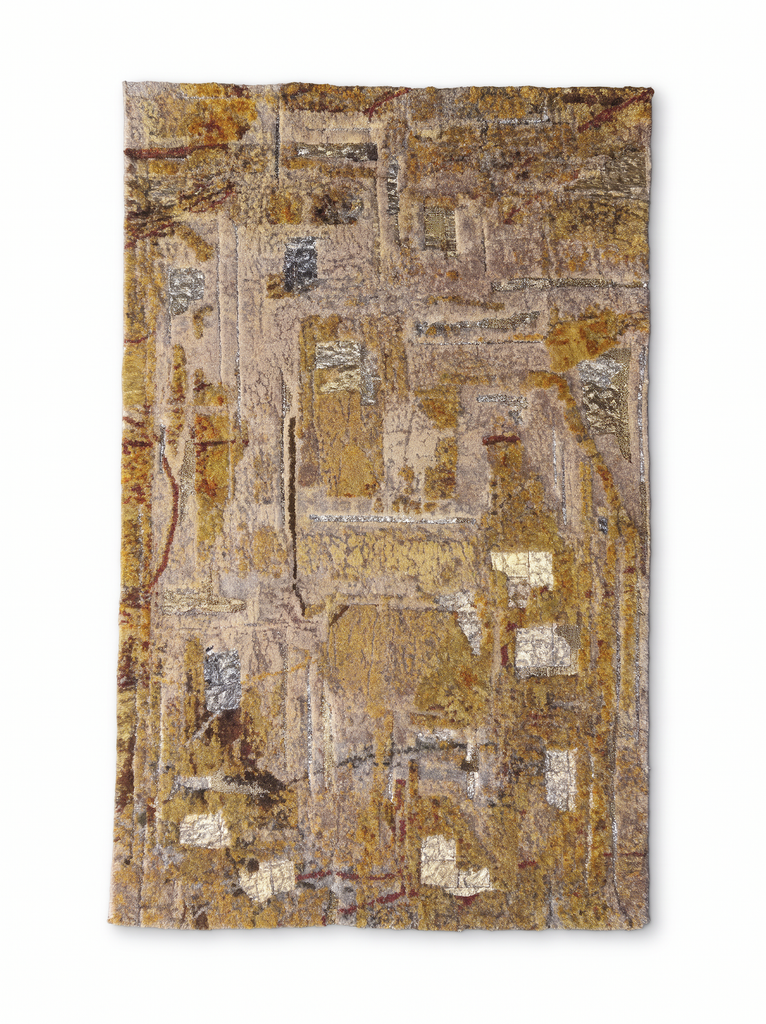
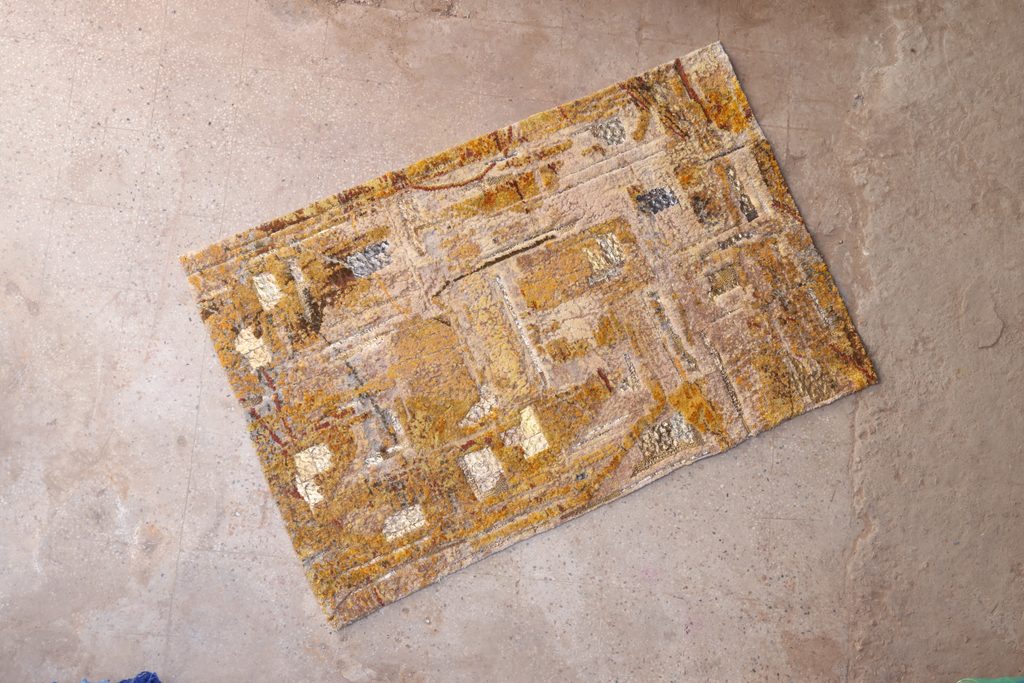
At Shakti Design Residency, an initiative dedicated to fostering exchanges between international designers and Indian master craftspeople, multidisciplinary artist Helena Bajaj Larsen explores precisely this intersection. In collaboration with Jaipur Rugs, she has developed Sahara and Viveka, two hand-knotted textile works that reinterpret the expressive language of her abstract silk paintings through the meticulous discipline of traditional weaving. “I think we sometimes make the mistake of positioning craft in opposition to contemporary design, when in reality the two have so much to offer one another,” Larsen tells Marie Claire Maison Arabia.
Her fascination with craftsmanship predates its current prominence within contemporary design discourse. Raised among objects collected by her mother from around the world, Larsen developed an early curiosity about materials and the people behind them. Her studies in embroidery, print and weaving gradually transformed this curiosity into a deeper investigation of technique as a form of knowledge. “What initially interested me as a means of creating something eventually became the subject of my work itself,” she explains. “I became increasingly fascinated by the technical knowledge behind these processes, the ingenuity of their makers and the extraordinary diversity of approaches to materials across cultures.”
For Shakti Design Residency, the encounter with Jaipur Rugs presented a particularly compelling challenge: translating the unpredictability of painted silk into the mathematical precision of hand-knotting. “What interested me most was the idea of translating something spontaneous into something incredibly methodical,” Larsen explains to Marie Claire Maison Arabia. “My paintings on silk are very gestural. There is a fluidity to the medium, an element of unpredictability in how the pigments move and settle, and a certain freedom in the process.”
Rather than reproducing existing paintings, Larsen sought to preserve their movement and energy through an entirely different material vocabulary. While scans of painted silk informed certain areas of colour, the compositions were conceived independently, allowing the medium itself to participate in the creative process. “Colour was no longer simply absorbed into silk but physically constructed through fibres,” she observes. “I find that translation particularly exciting because the result is neither quite a painting nor simply a rug. It becomes something else entirely, with its own material identity.”
The collaboration also required a fundamental reconsideration of her working methods. Accustomed to intuitive experimentation, Larsen found herself confronting a process in which decisions had to be anticipated long before the physical work began. “Working with Jaipur Rugs pushed me to anticipate how colours, gestures and textures would translate into knots, and to make decisions much earlier than I normally would,” she recalls. “It was an interesting exercise in relinquishing some spontaneity without losing the character of the original work.”
Beyond its material experimentation, the residency raises broader questions concerning the distribution of creative authority between designer and artisan. For Larsen, meaningful collaboration depends upon recognising craftsmanship as an intellectual practice rather than merely a technical one. “I think the balance comes down to respect, which doesn’t necessarily mean an equal division of creative authority but should mean an openness to technical input,” she tells Marie Claire Maison Arabia. “An artisan might suggest an alternative way of achieving something. Try it. They might tell you that a particular material won’t behave well with a certain technique. Listen to them.”
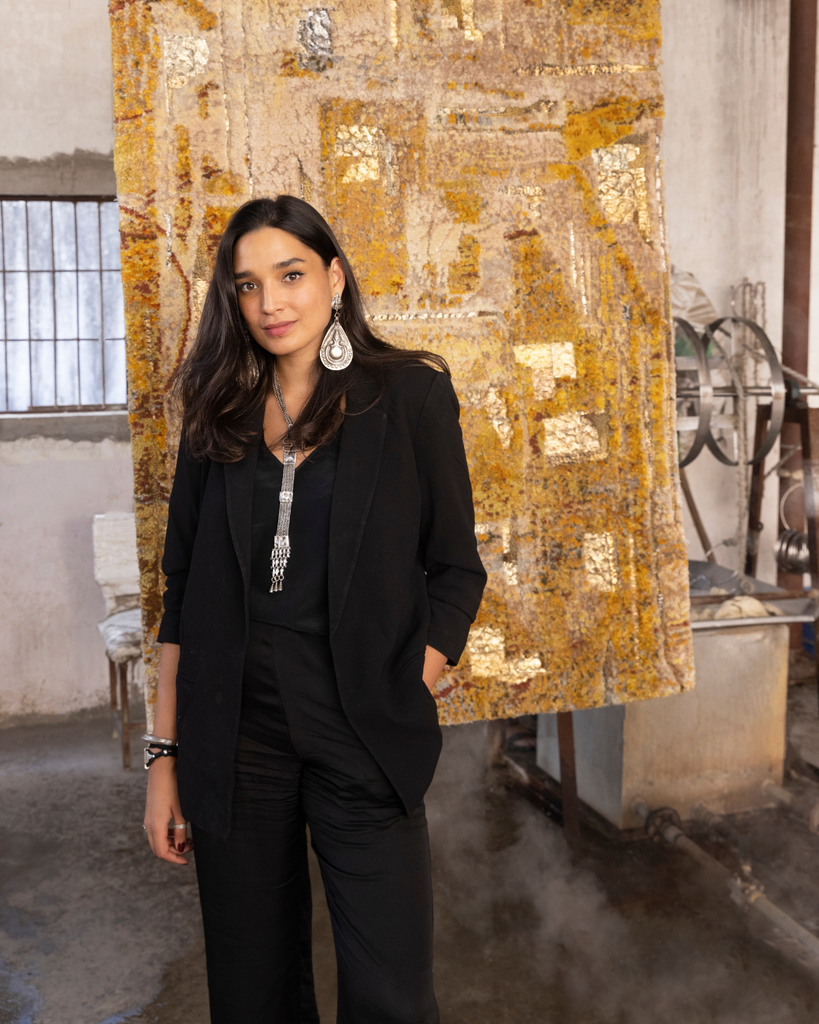
Having worked across different cultural contexts, including India and Saudi Arabia, Larsen also challenges the assumption that preserving traditional craftsmanship necessarily requires preserving its historical aesthetics. “I believe cultural identity is already deeply embedded in the knowledge itself, in the materials, gestures, techniques and ways of making that have developed over generations,” she argues. “A craft doesn’t necessarily need to produce something that looks traditional in order to retain its cultural significance.”
Her perspective suggests that cultural continuity is not dependent upon visual repetition, but upon the capacity of inherited knowledge to remain relevant within contemporary creative practices. Perhaps most significantly, Larsen questions the romanticisation of craftsmanship within the international luxury and design industries, where artisanal techniques are frequently celebrated as symbols of authenticity without necessarily being integrated into sustainable systems of production. “Craft shouldn’t simply be fetishised for marketing purposes or used to enhance a brand’s storytelling,” she insists. “It needs to be recognised as a viable means of production, something designers and companies turn to regularly, not just when they want to create a limited edition or tell a compelling story about heritage.”
For Larsen, the future of craftsmanship depends not only on cultural recognition but on its ability to evolve economically and creatively. “We need to expand both access to these skills and the scope of what they can achieve,” she concludes. “That means creating more opportunities for craftspeople to participate in contemporary production, developing new applications for existing techniques and building economic models that make these professions sustainable.”
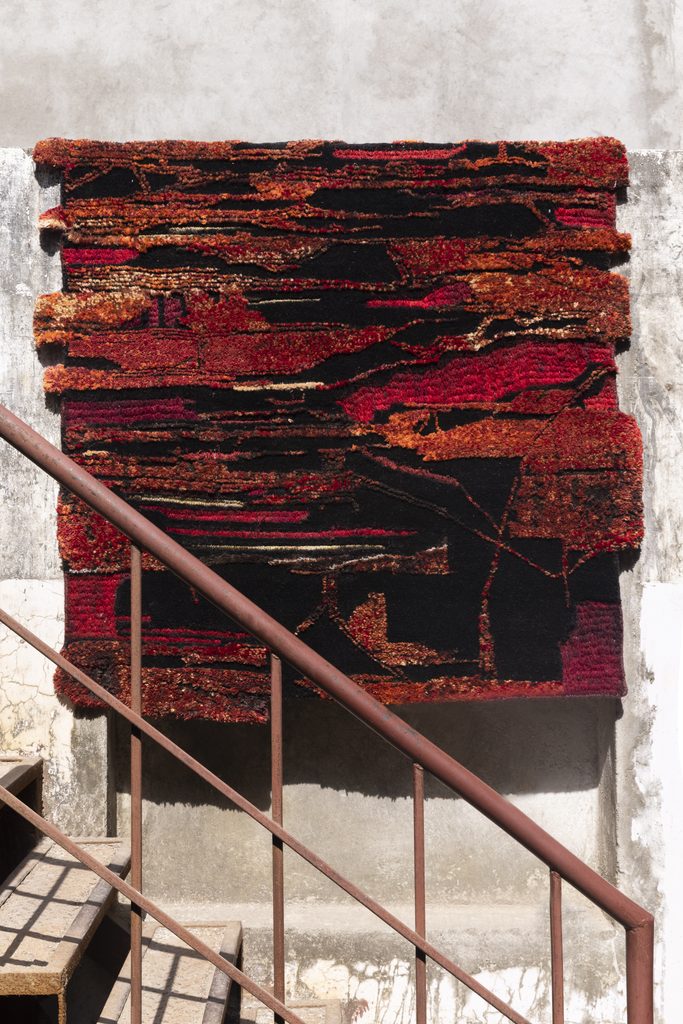
Through Sahara and Viveka, her participation in Shakti Design Residency becomes an exploration of the transformative possibilities of exchange, where artistic intuition encounters ancestral expertise and tradition is liberated from the obligation to reproduce its own past. What emerges is a proposition for its future, one in which preservation and innovation cease to be opposing forces, and inherited knowledge becomes an active instrument of contemporary creation.