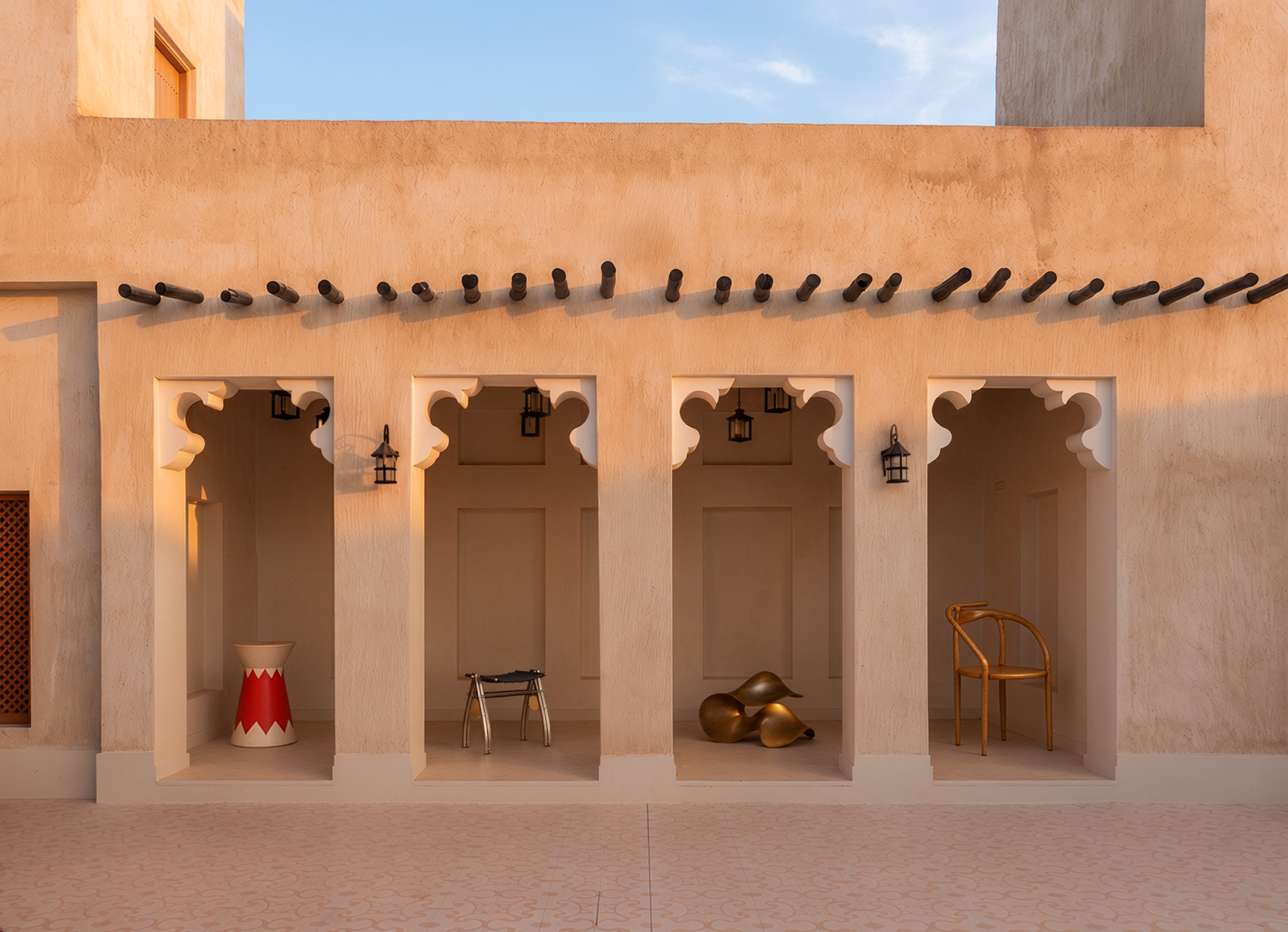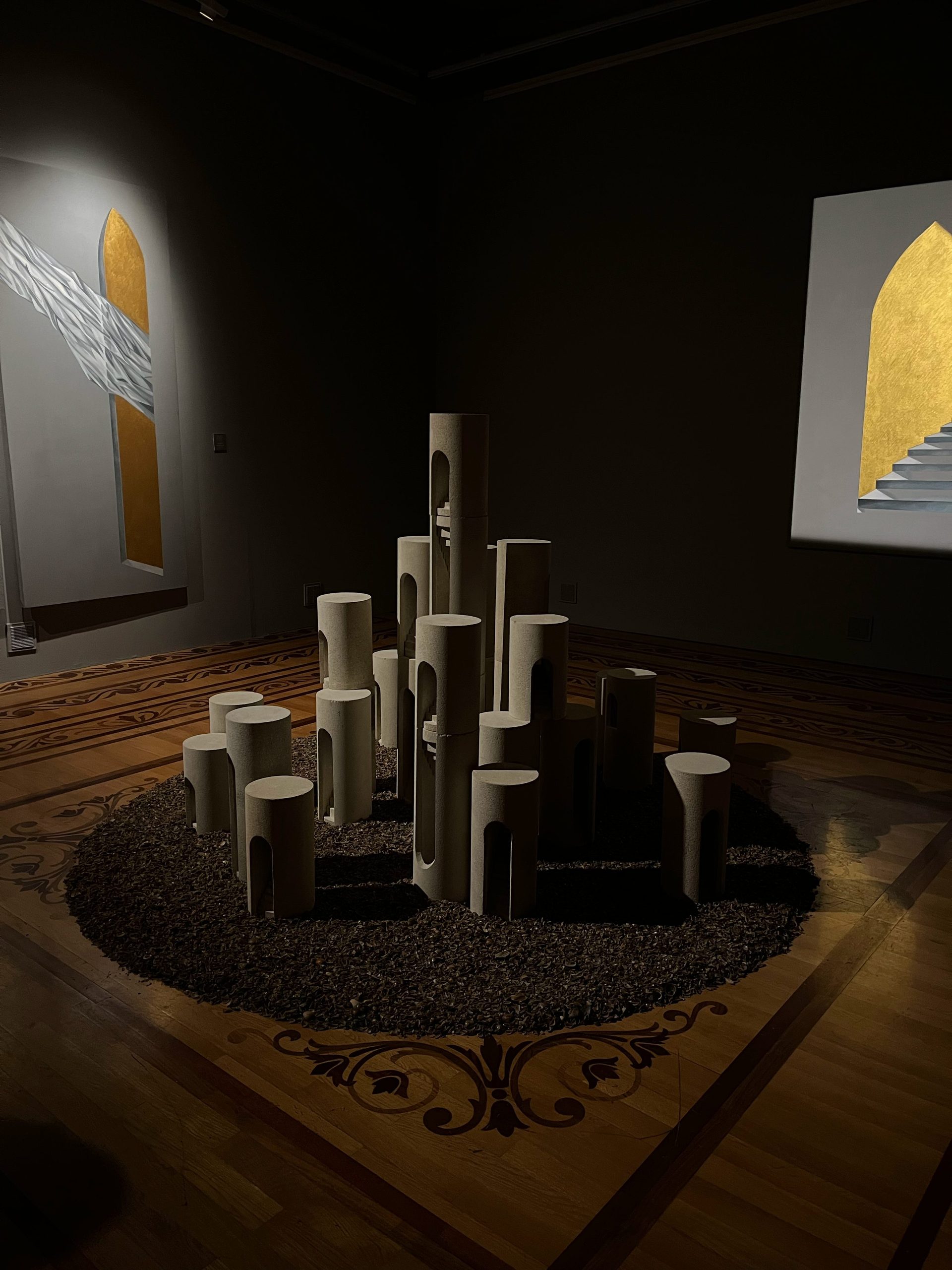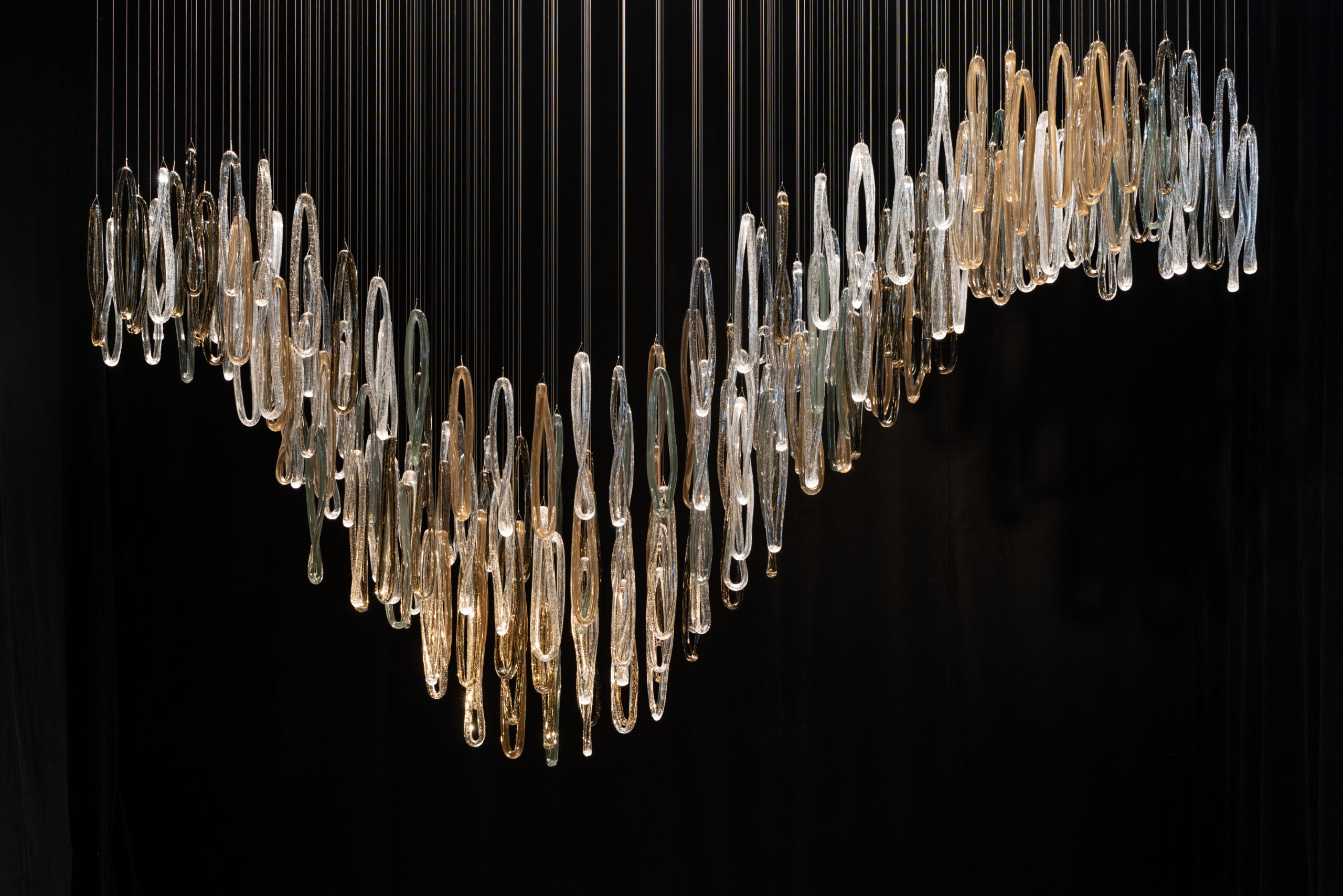
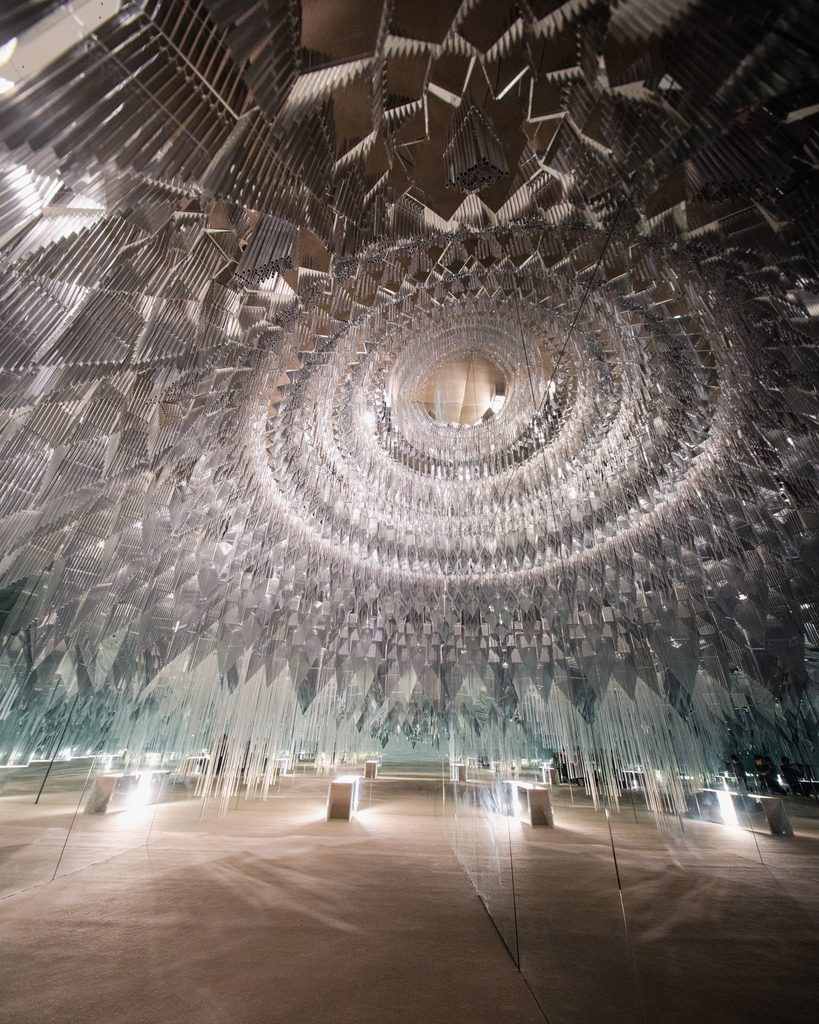
Spread across Msheireb and the historic neighborhood of Fereej Al Asmakh – restored and reactivated as a temporary hub for Design Doha (DD) – the second edition of Design Doha brings together over 300 regional designers, across 20 exhibitions, public installations, talks, activations and more.
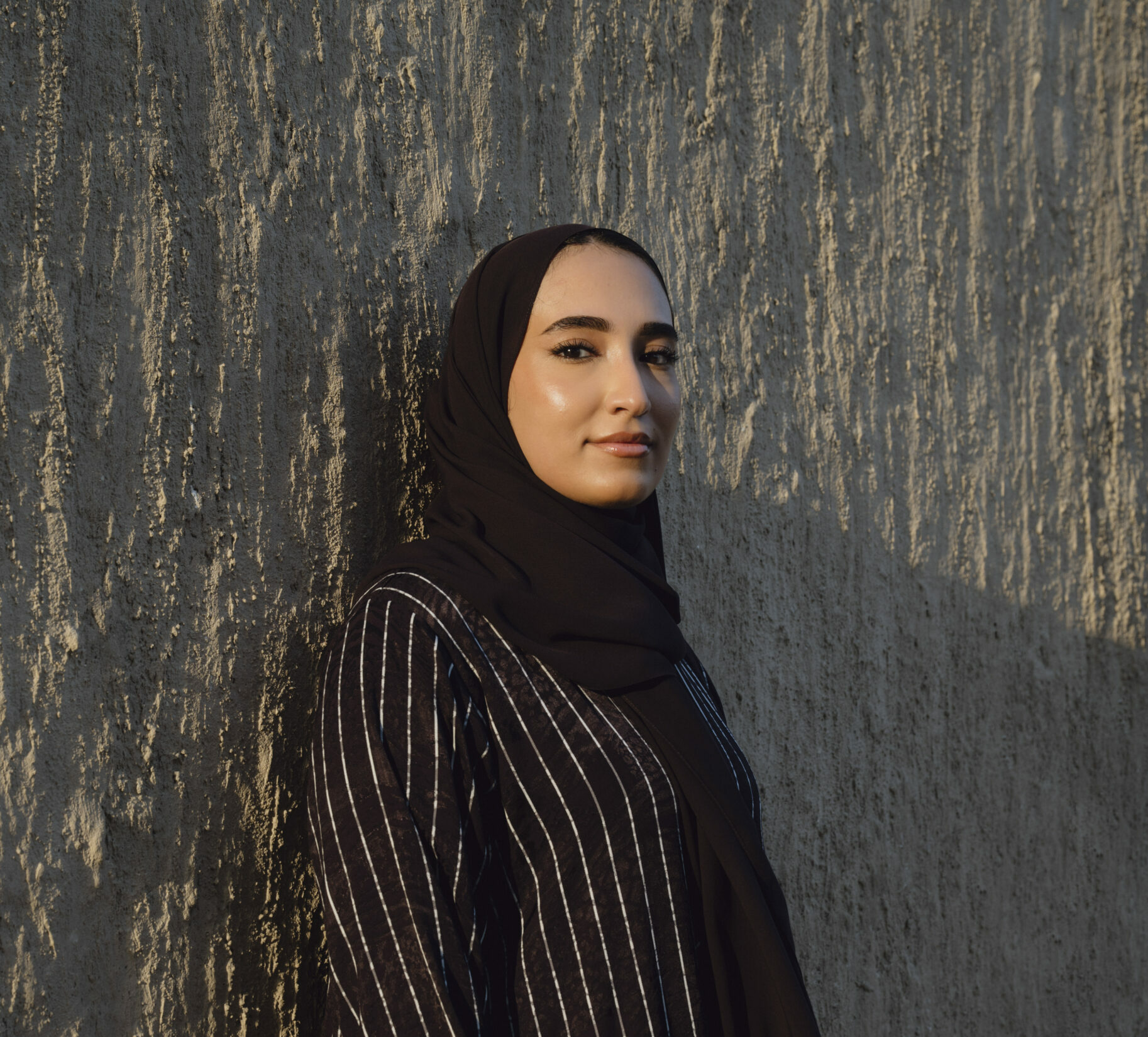
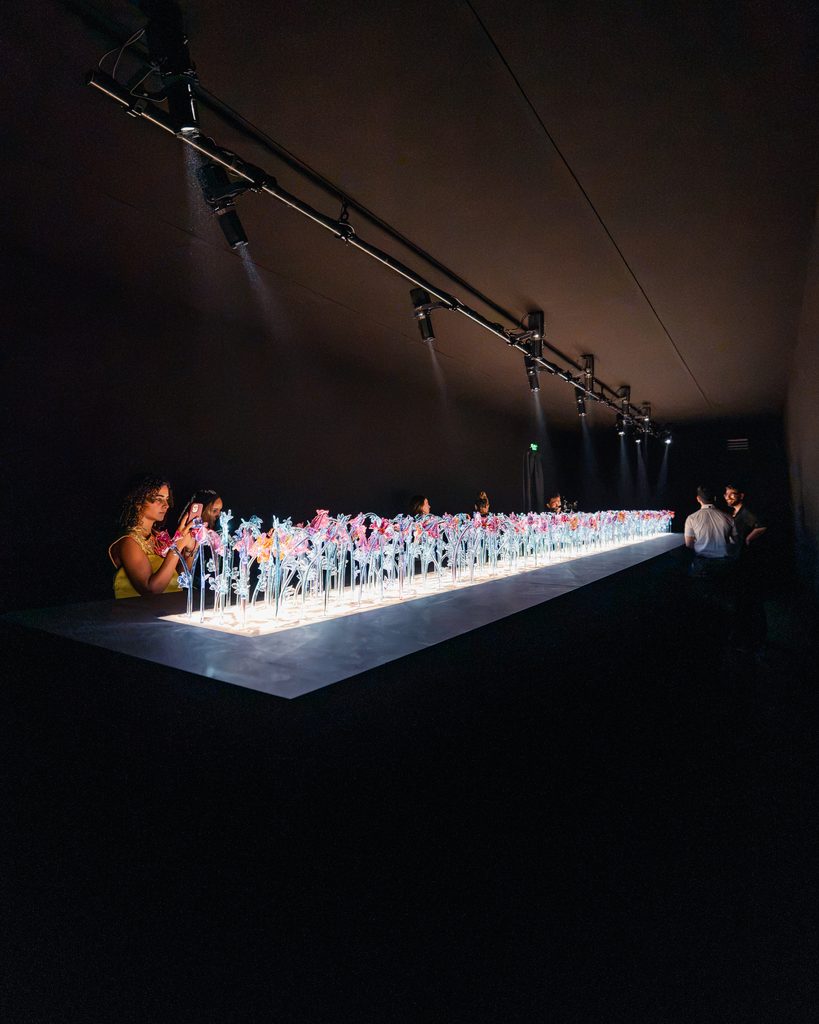
The events headline exhibition, Arab Design Now, is this year curated by Palestinian architect Noura Al Sayeh, offers deep insight into the contexts and thought processes that shape design in the MENASA region, building on history, heritage craft, geography, political changes and social rituals.
Presenting over 250 works by 81 designers – 78 of which were commissioned specifically for DD – Arab Design Now, showcases everything from material experimentation to functional product design inspired by personal histories.
“It attempts to show design not as an isolated object, but as part of a context that is rich, complex, changing, challenging, and that represents exactly where design in the Arab world is today,” Al Sayeh says. “We were extremely lucky to have the time and resources to be able to give most designers the opportunity to produce new work.”
“Many of the designers have also worked with the incredible collections that we find here in Doha, at the Qatar National Library, the Museum of Islamic Art, the National Museum,” she adds, “and have produced works that are in conversations with these collections and with the location we find ourselves in.”
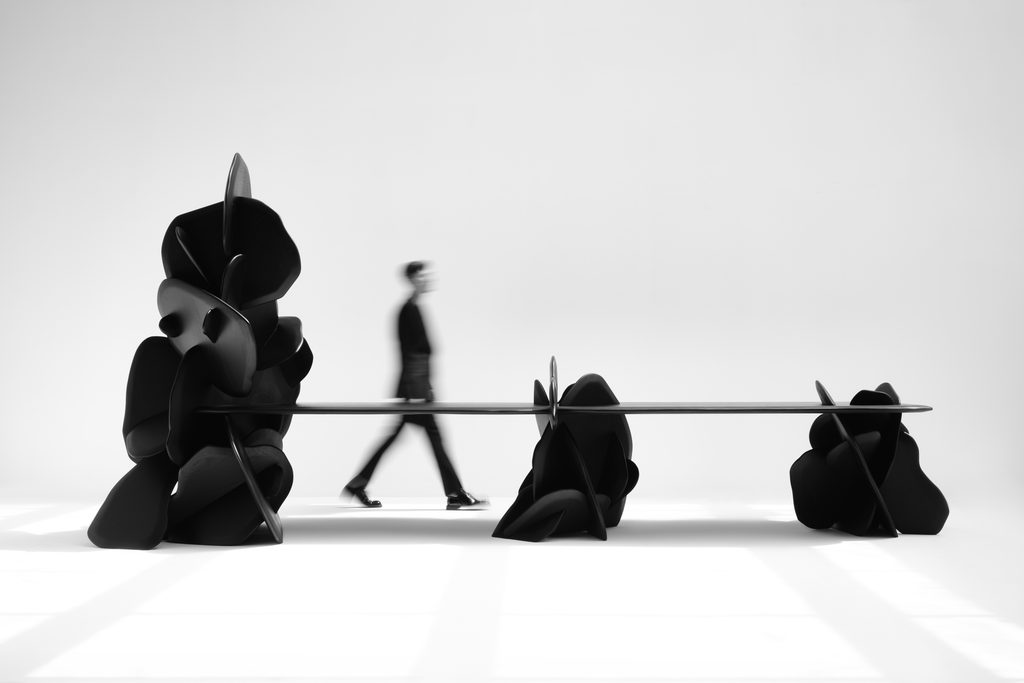
One such project is ‘Desert Rose’ by Kameh, the Dubai-based collectible design studio founded by Nikita Erokhin. The monumental sculptural table measuring 4.5 metres in length is set with angular formations rising more than two metres high, inspired by the natural geometry of the desert rose crystals found in the desert.
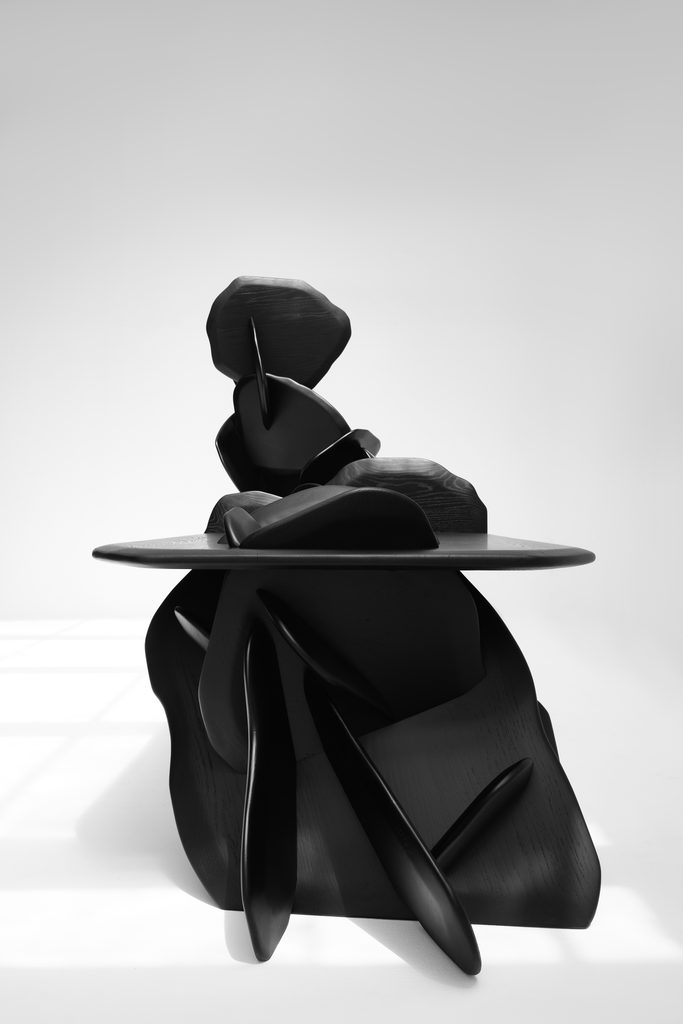
The table is the latest addition to a wider collection drawing on the stunning form of the crystal – jutting, intersecting petals of stone that form intricate clusters. The shapes became a sculptural language that was nostalgic for Erokhin, who grew up in Turkmenistan and found the very same crystals in the Karakum Desert.
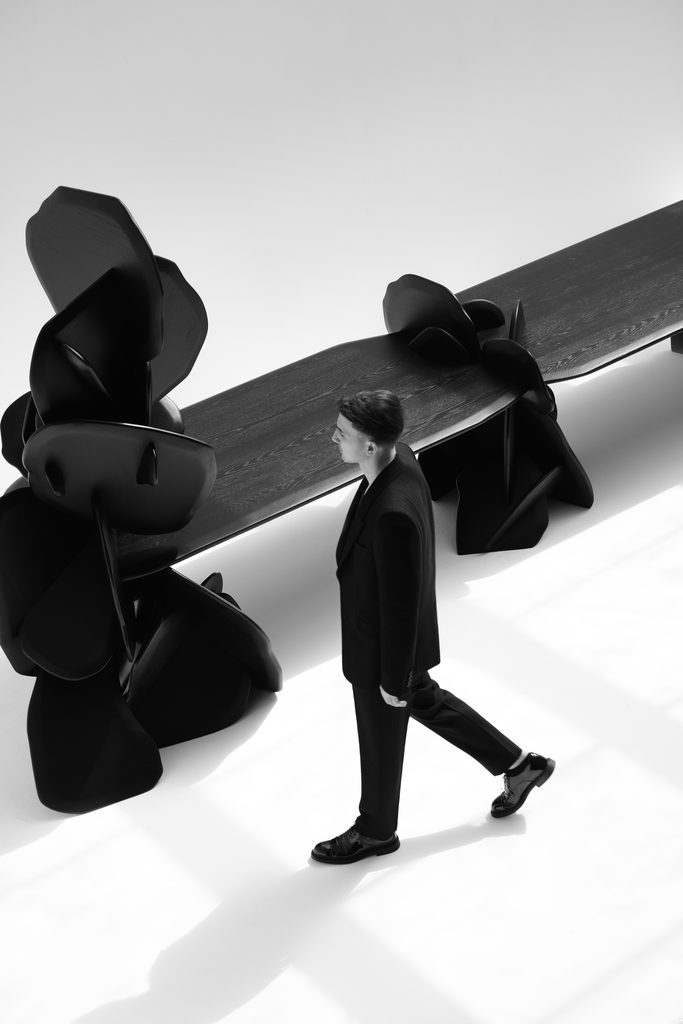
“I remember coming to the National Museum of Qatar and spending two hours walking around, appreciating the architecture. It’s inspired by the desert rose crystal and I was fascinated by the shape. We also have a desert in Turkmenistan, and I was thinking about this connection between both places,” Erokhin tells Marie Claire Maison Arabia. “This is the largest piece I’ve ever created, and it was quite emotional for me while creating it; remembering my childhood with my father when we would go to the desert for his research“.
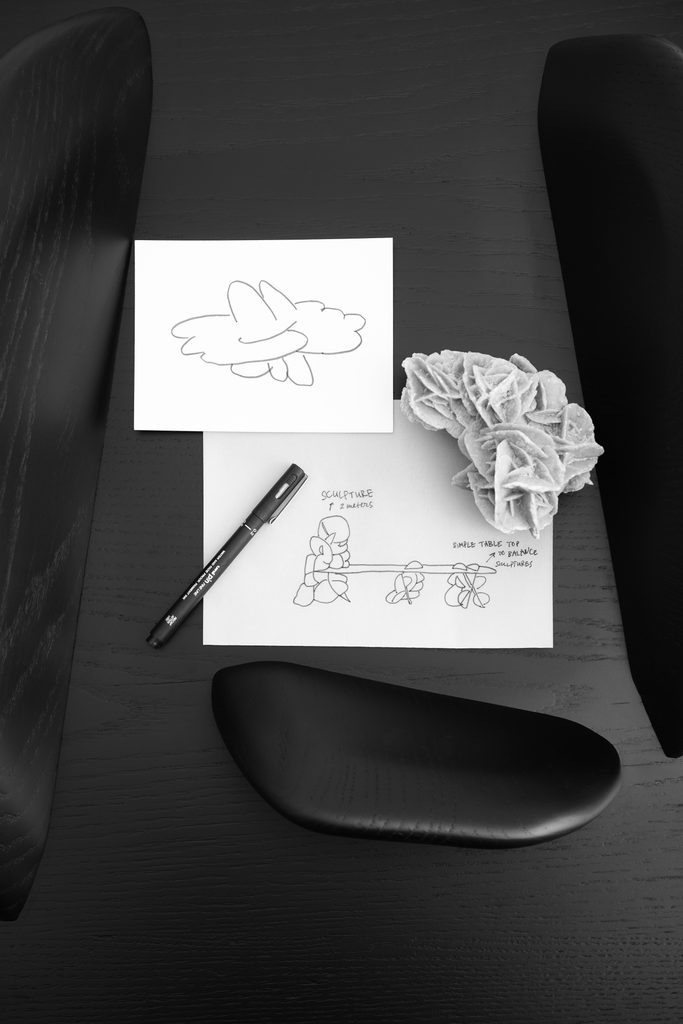
“The table is made of ash wood, which I sealed by burning to really bring out the texture and pattern of the wood,” he adds. “It’s very sculptural and figurative, but also functional. I wanted people sitting to have dinner there to feel like it’s almost a work of art.”
In contrast to Kameh’s minimalist, monochrome piece, French-Moroccan designer Sophia Kacimi – under her brand Zoubida – has created a playful, color-drenched installation that celebrates Moroccan craft and textiles.
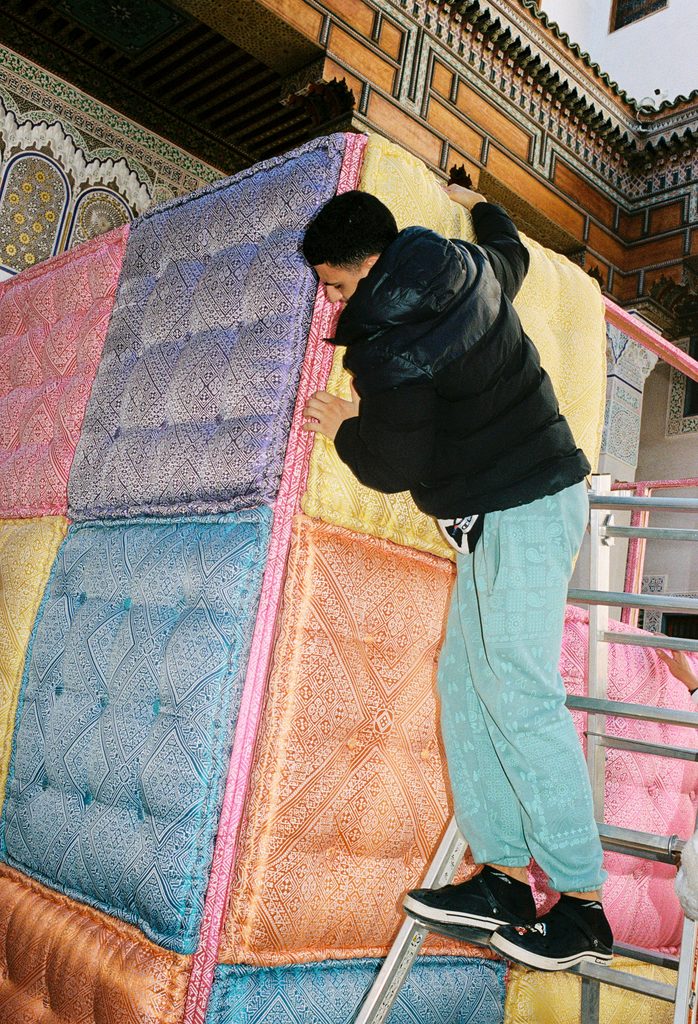
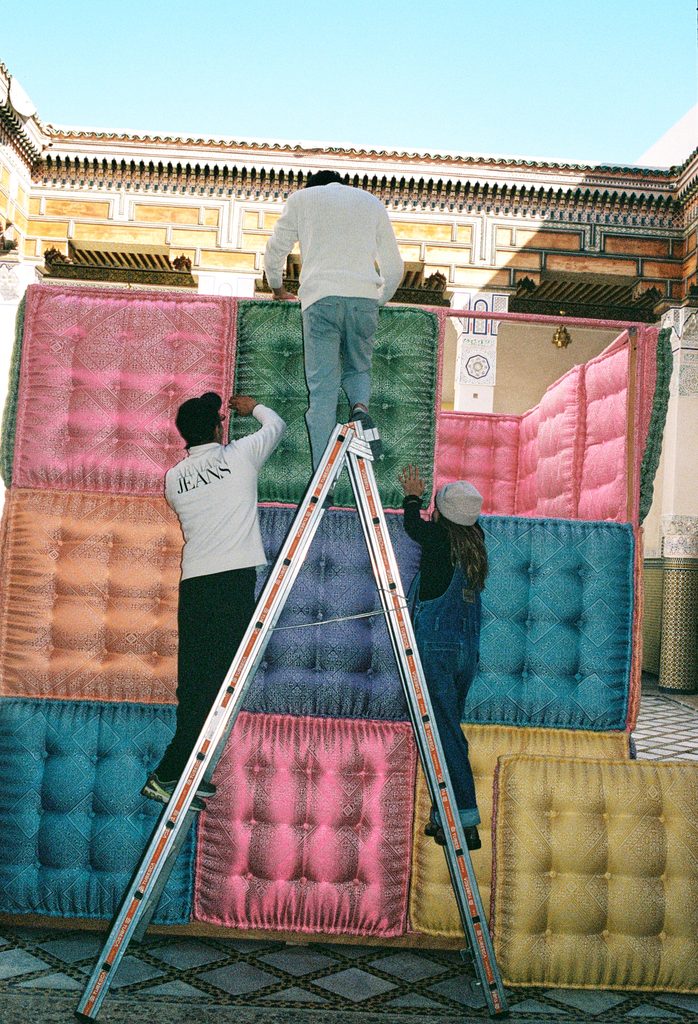
“Sharing the Same Roof 6732 km Apart” acts as a living immersive installation linking Doha and Fes, where two identical cube rooms become bridges of hospitality and exchange. The walls and seating are crafted from enormous, vibrant cushions and poufs, with a hammered metal floor, oversized mirrors and whimsical elements decorating the space.
Live cameras connect both the Doha site to the one placed in a public square in Fes, connecting people in real time across the two countries.
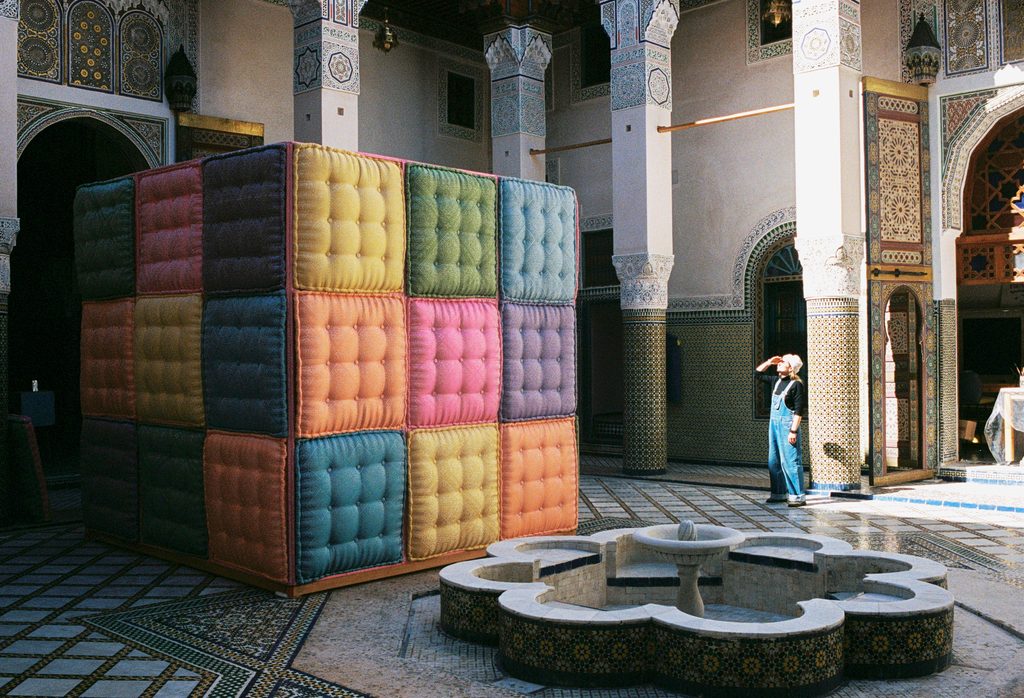
“This work is our most ambitious to date. It’s all been made in Fes in north Morocco, by more than 50 people. I worked with two second chance schools – people who dropped out of the system and wants to get back into it by learning crafts – and master artisans,” Kacimi says. “I work with textile mostly and this is a pattern from Fes called Tarz el Fassi that is a thousand years old, usually created by women for their own homes, and I wanted to use it in a more modern way, so I used jacquard and had some custom colors made“.
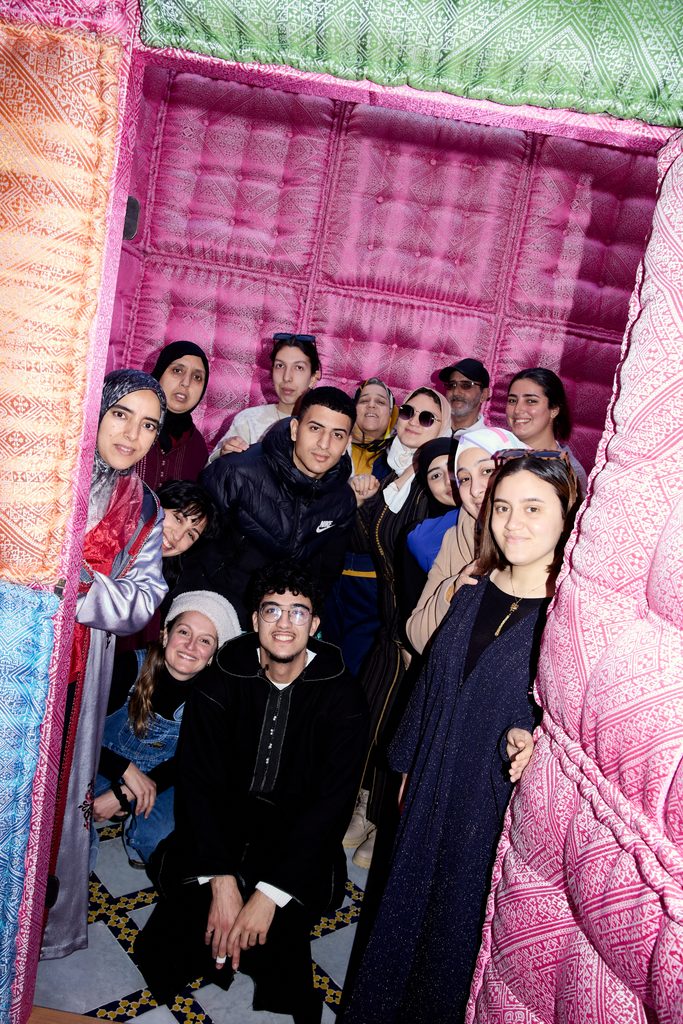
“I played with the idea of a Rubik’s cube, so it looks very futuristic. It took eight months to produce and you can see eight types of craft represented, including tapestry, embroidered, wood working, upholstery and metal hammering,” she adds. “There’s traditional rock sugar cones we made into a little board game too.”
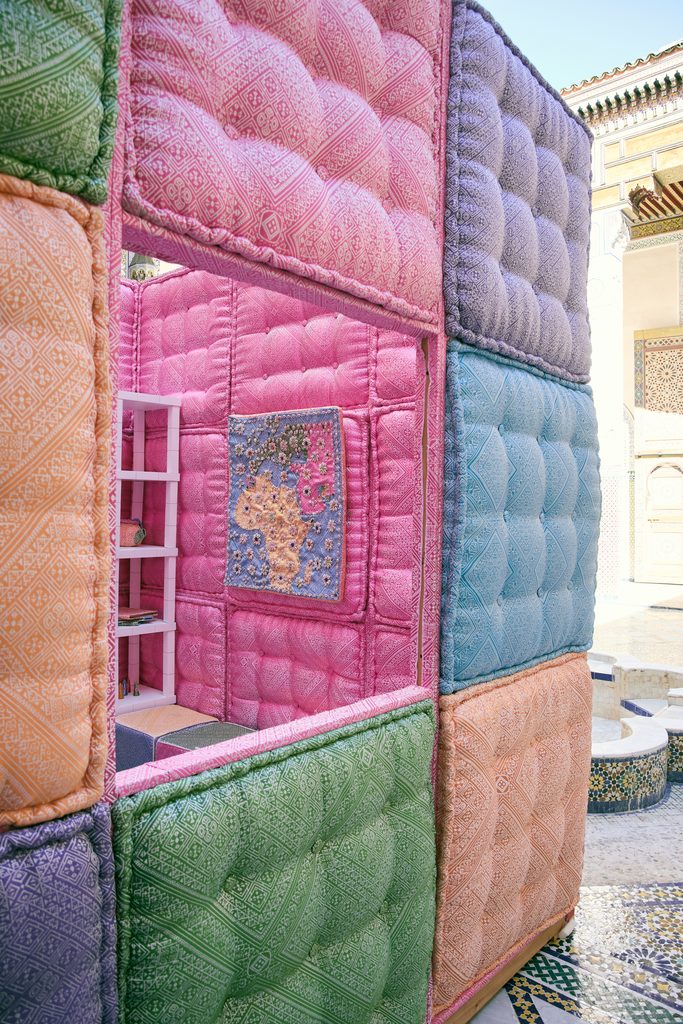
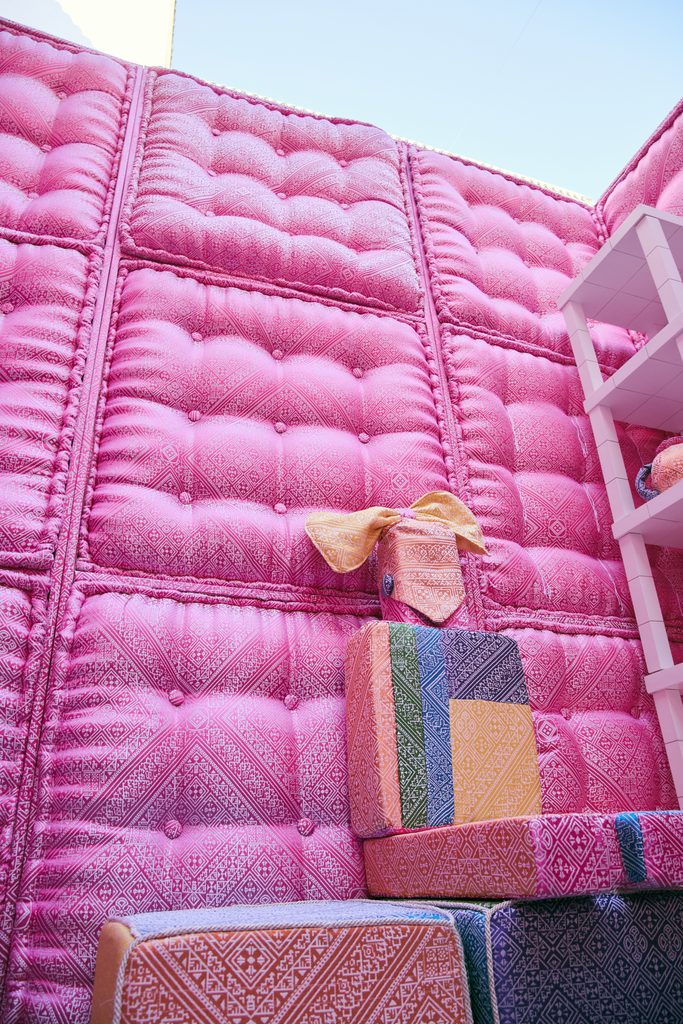
Kacimi’s installation brings the viewer into the intimacy of a Moroccan salon, to be shared across boarders and cultures.
Beyond the bounds of Arab Design Now, installations and small showcases fill the 61 courtyard houses of Fareej Al Asmakh, bringing the district to life once more. From the latest rugs designed by Iwan Maktabi, inspired by the ‘Kalila wa Dimna’ fable, to a showcase of emerging designers at Liwan Design Studios, the area is bursting with things to see.
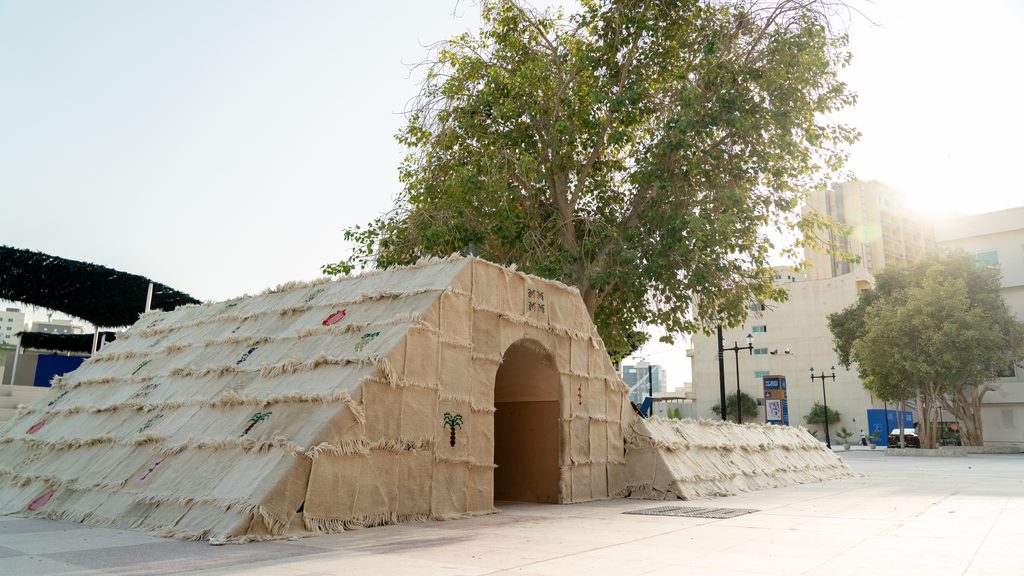
One of the outdoor installations is ‘Rooted in Warmth’ by Saudi designer Raghad Al-Ahmad, inspired by her childhood in the mountainous farmlands of Taif, where communal life unfolded under the trees. The work, featuring wooden seating covered in handwoven Sadu rugs, reimagines those gatherings through a sculptural landscape. Visitors are encouraged to take off their shoes and climb onto the structure.
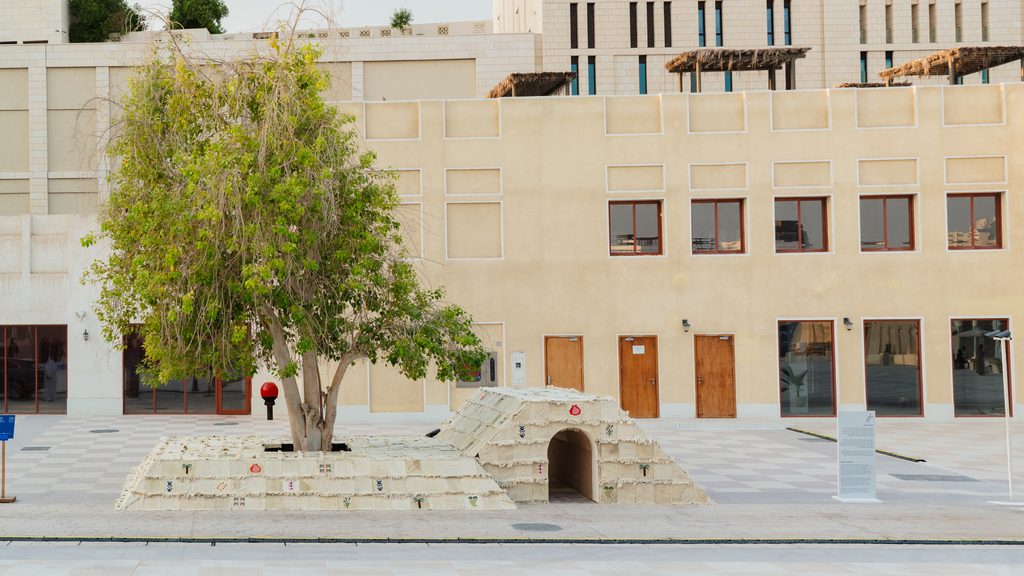
“All my memories were under the trees at the farms. When my grandfather passed away we lost this connection to the land,” Al-Ahmad says. “I added embroidery to the plain Sadu, to add a fun touch to it with all these abstract fruits and plans, and I worked with 40 women artisans from Taif to create this piece.”
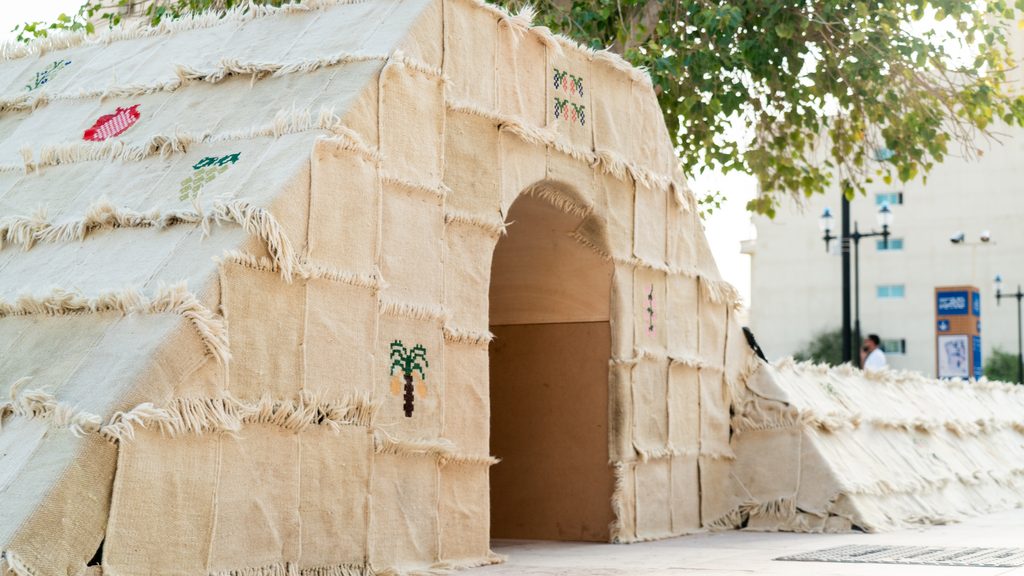
The delicate embroidery itself is infused with colors inspired by historically significant fruits of Saudi Arabia – dates, citrus, grapes, and pomegranates – evoking the rustic look of produce boxes and the spirit of abundance.
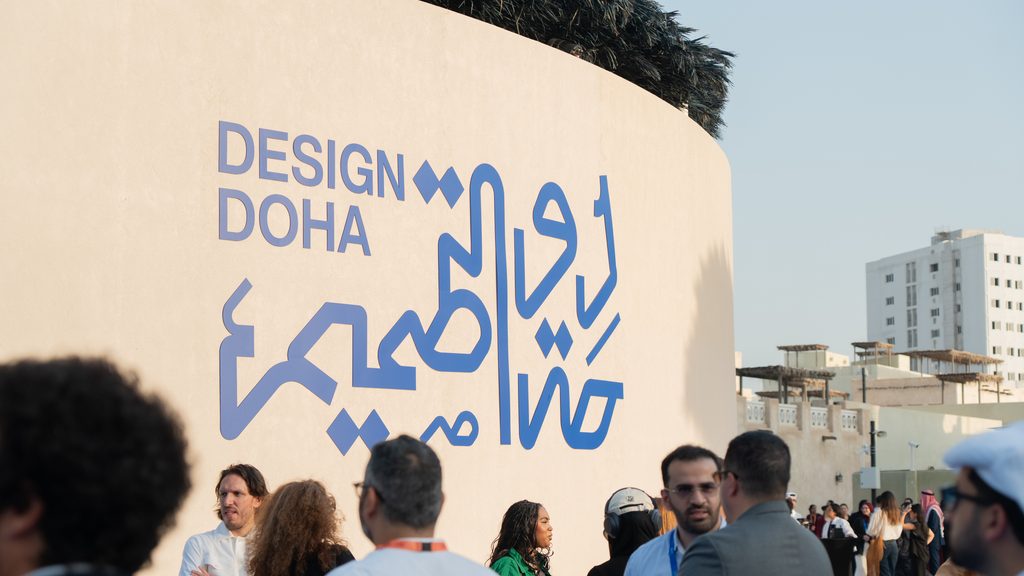
Design Doha acts are a comprehensive gateway to newcomers wanted to understand the regional design scene, or regulars looking for a more research-driven approach to creative output. Whatever their interest, there’s something new to discovered down each alley of the Design Doha hub.
Design Doha runs until January 31, 2027.