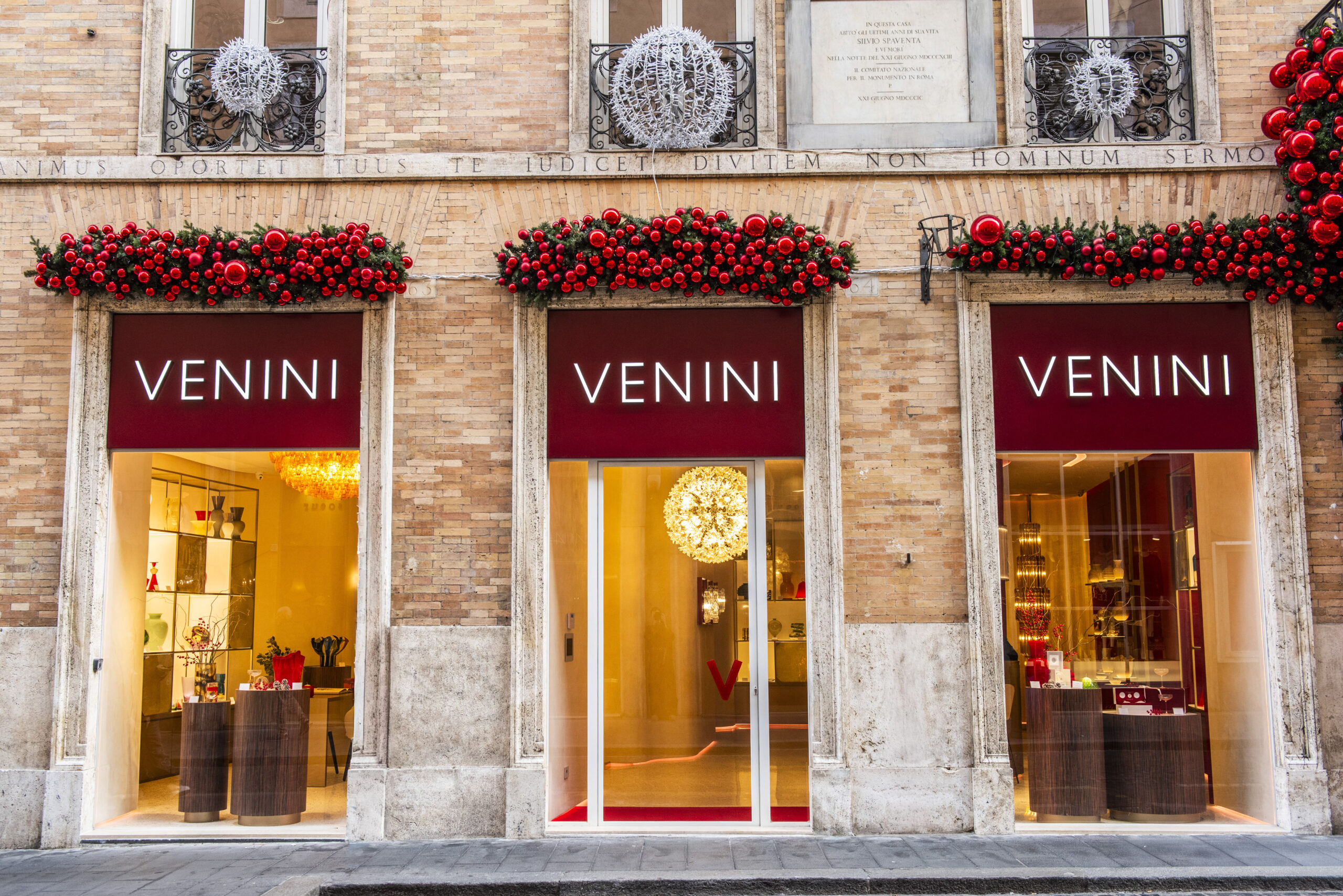
At 64 Via dei Due Macelli, in the heart of Rome’s Tridente district, Venini inaugurates its first flagship in the capital—an address that stages nearly a century of Murano mastery within one of the world’s most symbolic urban theatres. The opening marks the maison’s fifth standalone boutique globally and the second in Italy to adopt its new architectural concept, first introduced in Milan and completed during Milan Design Week 2026.
The Roman space signals a strategic chapter under the stewardship of the Damiani Group, which has accelerated international growth across Dubai and Hong Kong, with further openings planned in the Middle and Far East. Rome becomes both cultural outpost and commercial statement: a city where heritage is never static, and where Venini’s language of glass finds renewed resonance.
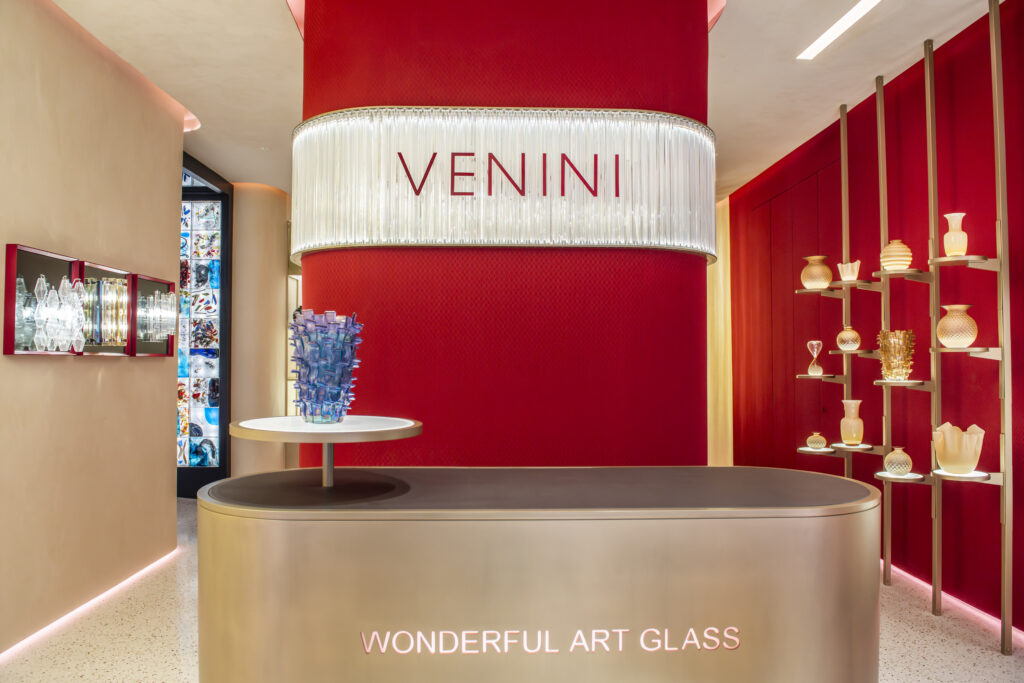
Occupying over 100 square metres, the boutique unfolds behind three street-facing windows that transform the store into a luminous proscenium. The architectural concept distils the maison’s codes—fluidity, chromatic depth, artisanal precision—into a tactile spatial narrative. Venetian terrazzo floors evoke the lagoon’s craft lineage; textured neutral walls allow colour to vibrate. Custom Rubelli wallcoverings reinterpret the iconic Balloton motif in fabric form, while mirrored surfaces multiply light and perspective.
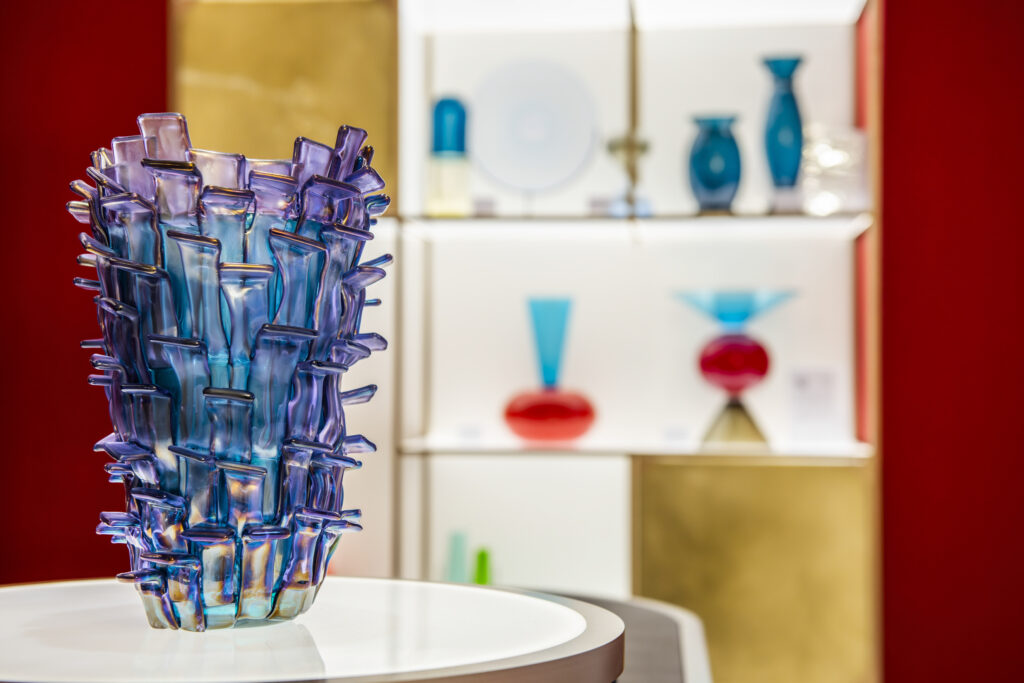
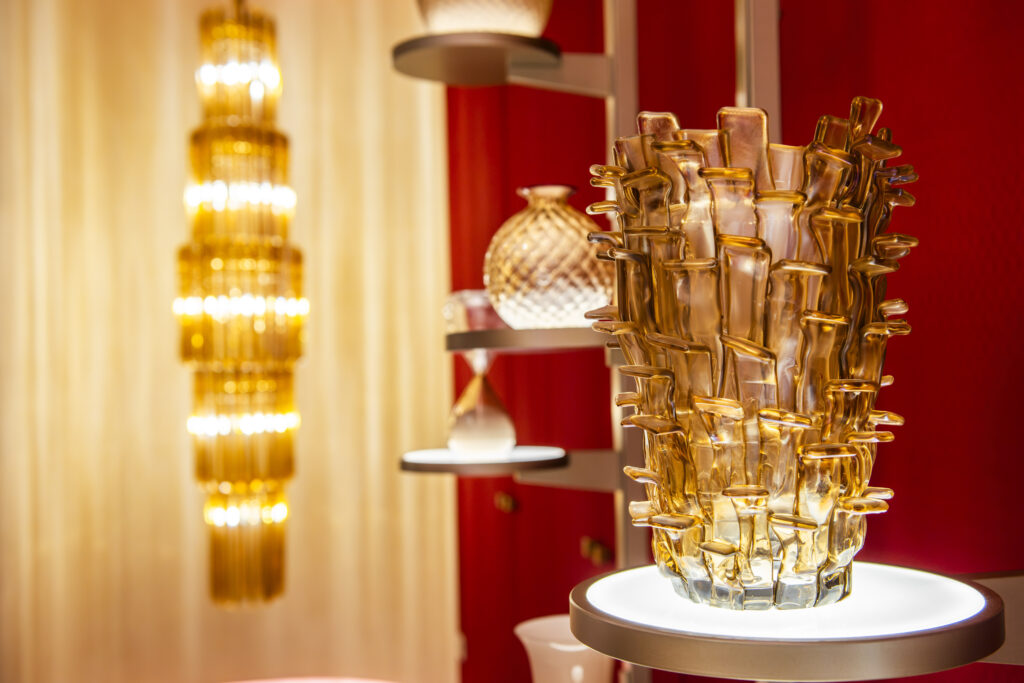
Satin brass and bronze introduce warmth; ebony wood grounds the palette. Yet glass remains sovereign. Hand-blown coloured shelving units frame the collections, and backlit tiles designed by Gio Ponti create a chromatic passage between rooms—an architectural punctuation of modern Italian design history.
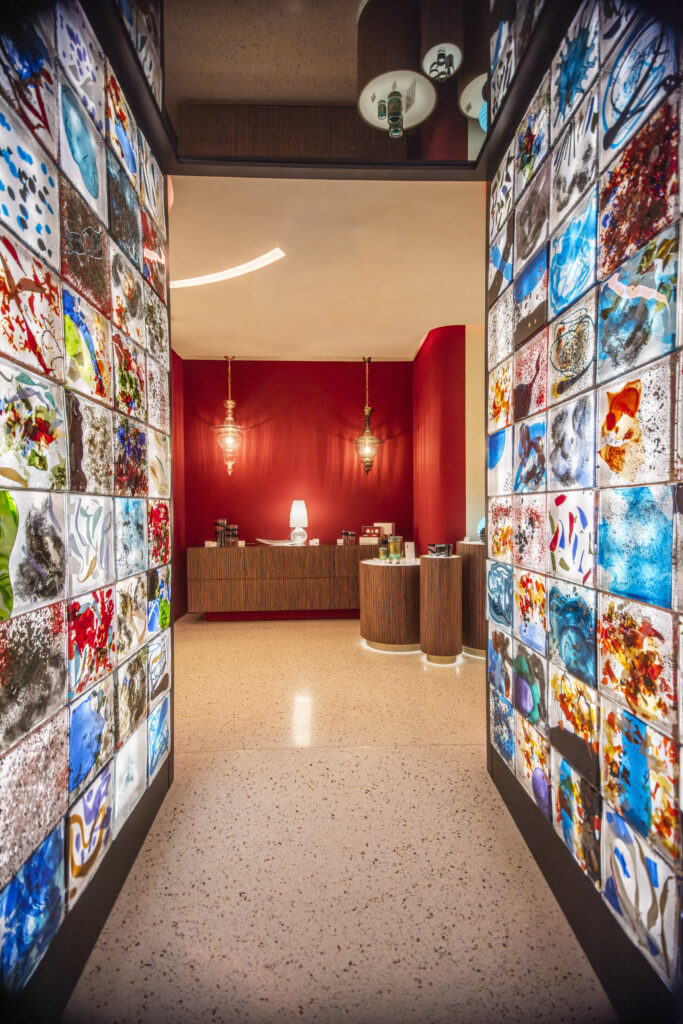
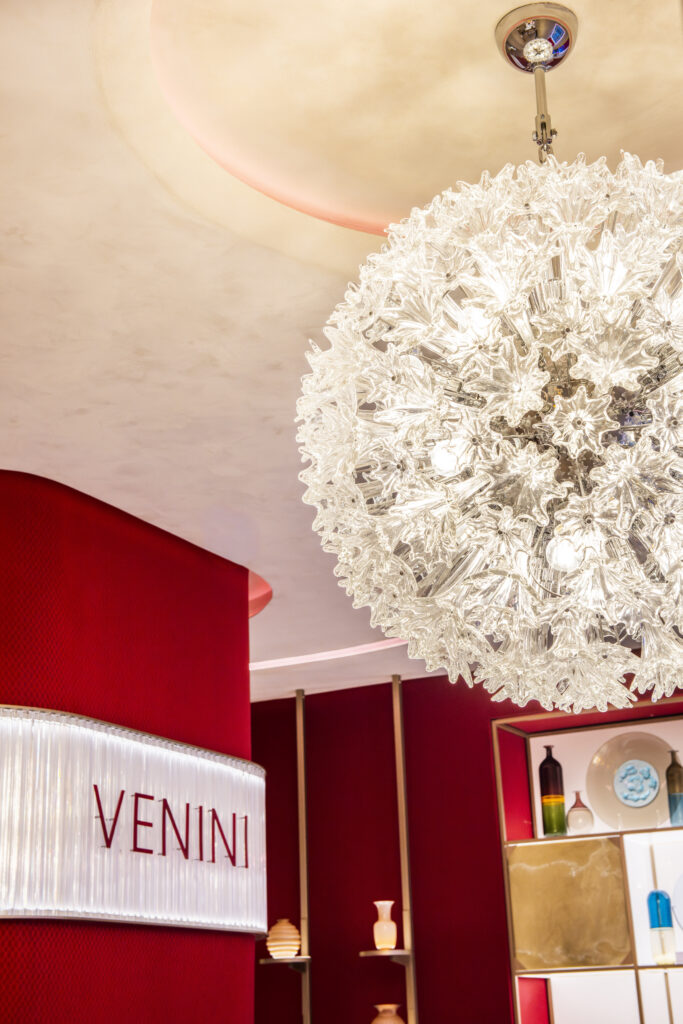
The exhibition path moves between art and light. The new Snow collection explores the poetics of white; the collectible design section foregrounds Stele by Arnaldo Pomodoro—realised in collaboration with the Arnaldo Pomodoro Foundation—translating the sculptor’s incised vocabulary into translucent matter. At the entrance, the Esprit chandelier from the Art Light collection hovers as a suspended sculpture, underscoring Venini’s aptitude for bespoke projects across hospitality and high-end residential contexts.
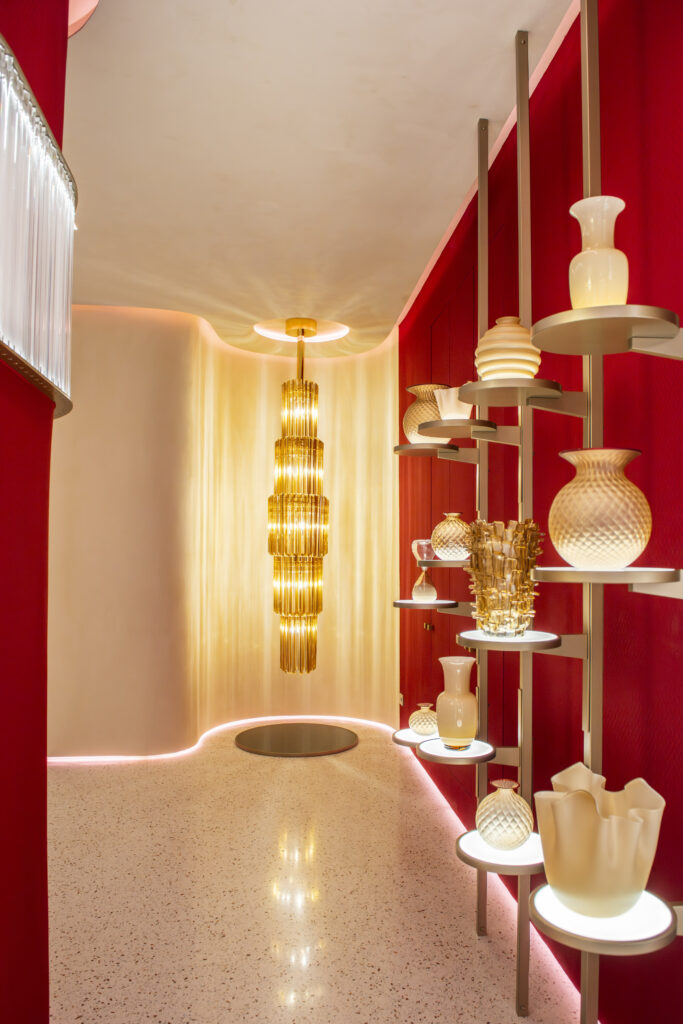
A thread of Rosso Venezia runs through the interiors, binding Venice and Rome in chromatic dialogue. In this encounter between lagoon and eternal city, Venini affirms its role not merely as manufacturer, but as global ambassador of glass culture—where material becomes memory, and craft becomes architecture.