Photographs by Read McKendree
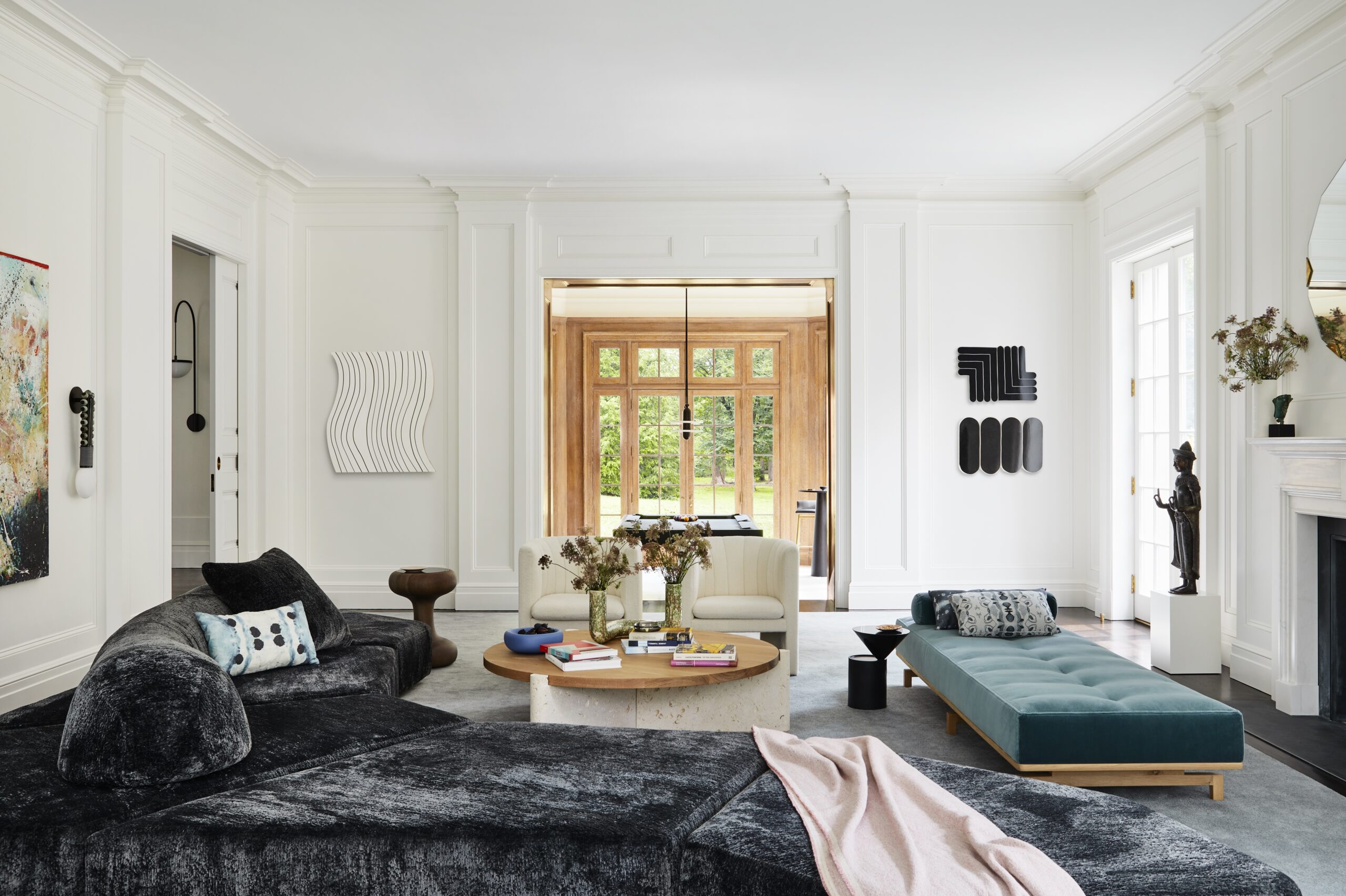
In Scarsdale, architectural language tends to be declarative: symmetry, mouldings, axial views, and rooms scaled for ceremony. When Lucy Harris Studio was invited to design this residence for a family of five, the challenge was not to dilute that grandeur but to recalibrate it. The result—what Lucy Harris terms “romantic minimalism”—is a rigorous yet emotive response to a house whose bones are resolutely traditional.
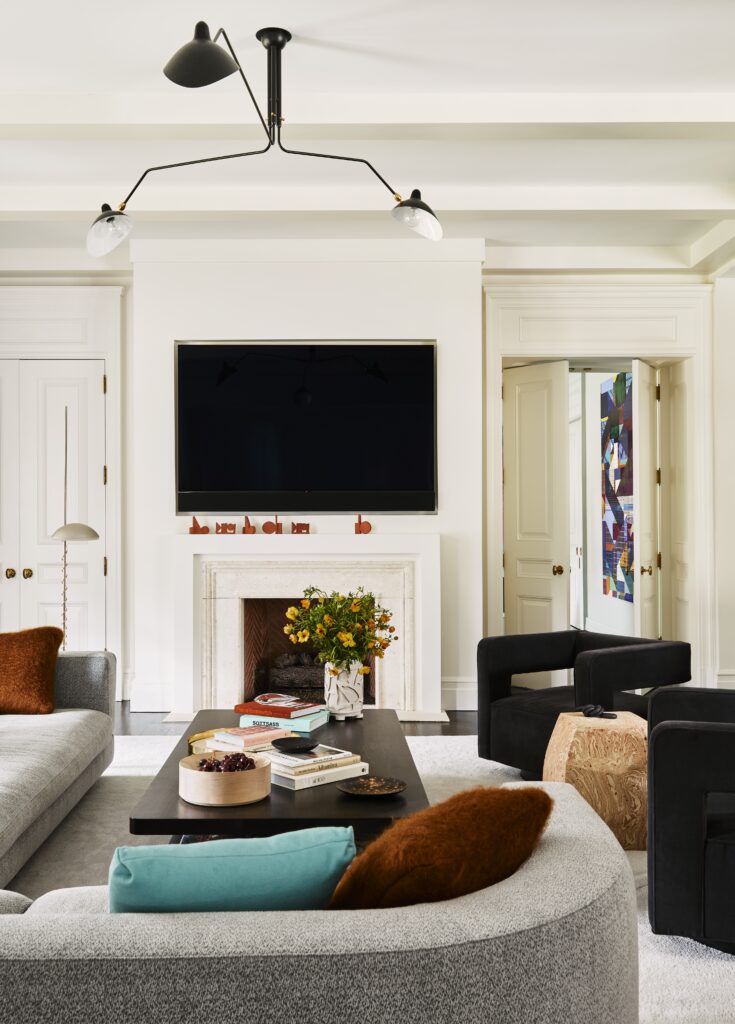
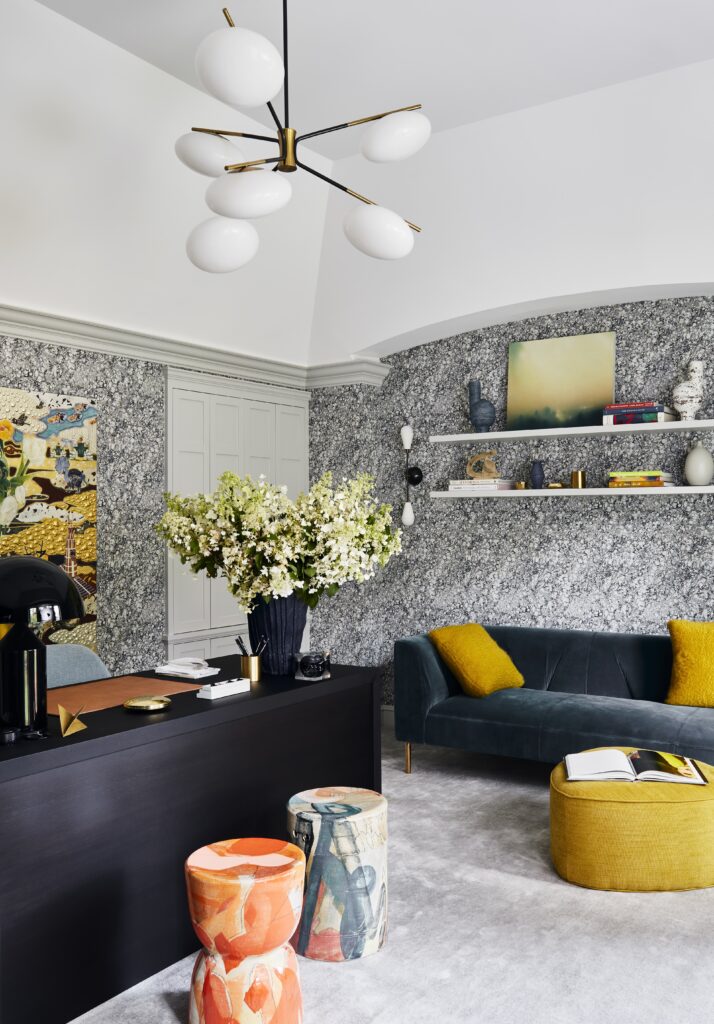
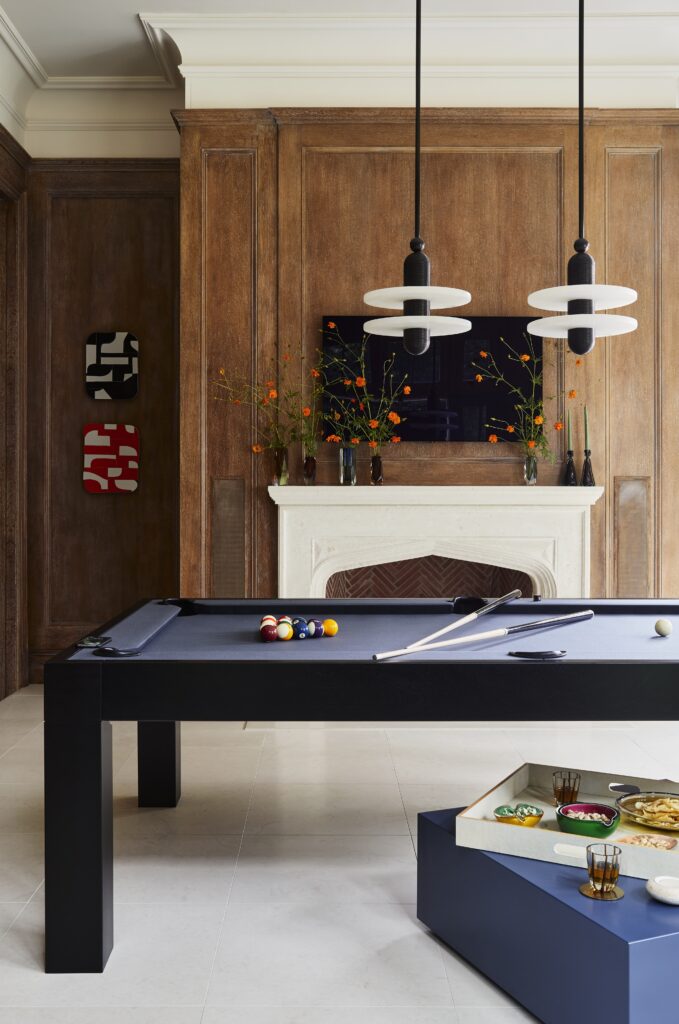
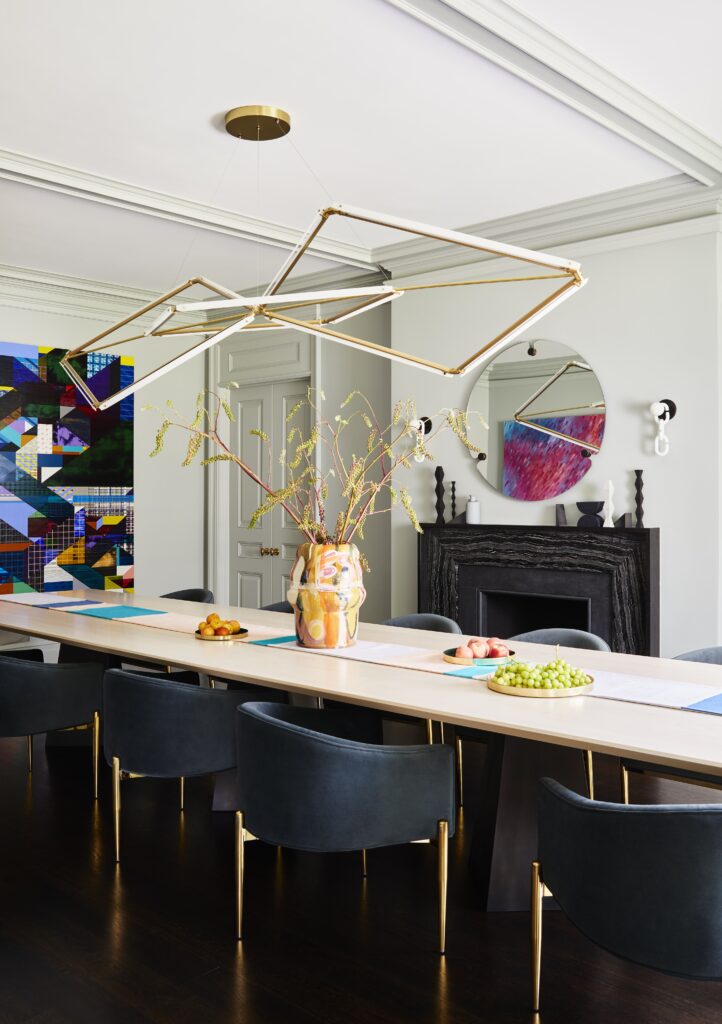
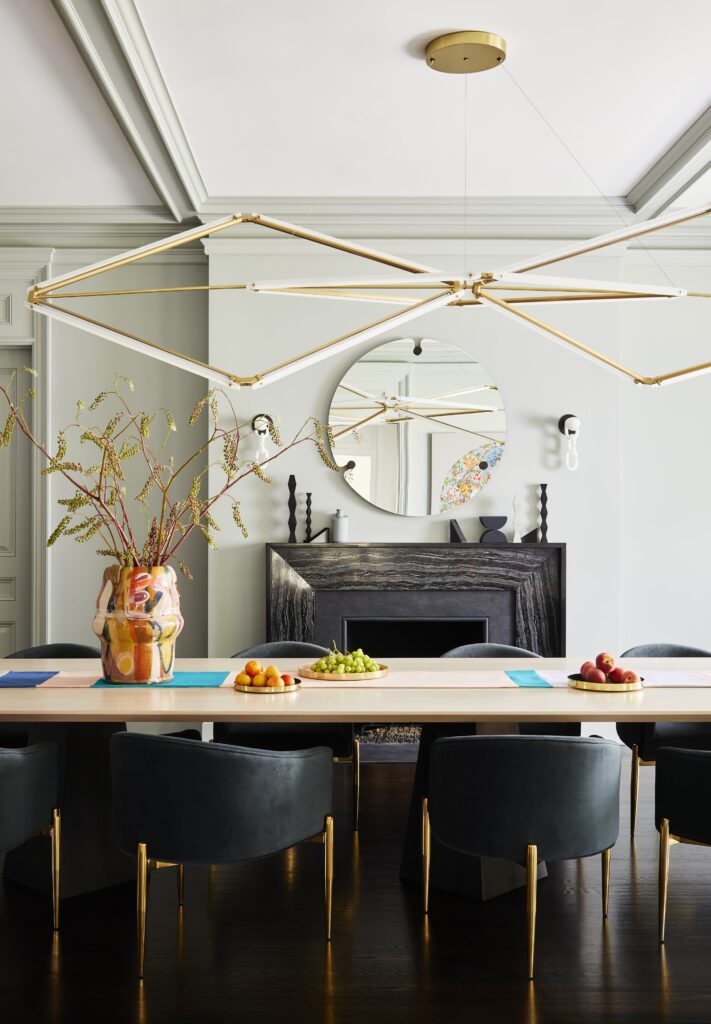
Harris approached the project as an exercise in controlled contrast. “I made drama the undercurrent for the design as the architecture is very grand,” she explains. White walls were paired with dark stained floors, intensifying luminosity while grounding each space. The move is architectural rather than decorative: by clarifying the perimeter, the interior compositions gain precision.
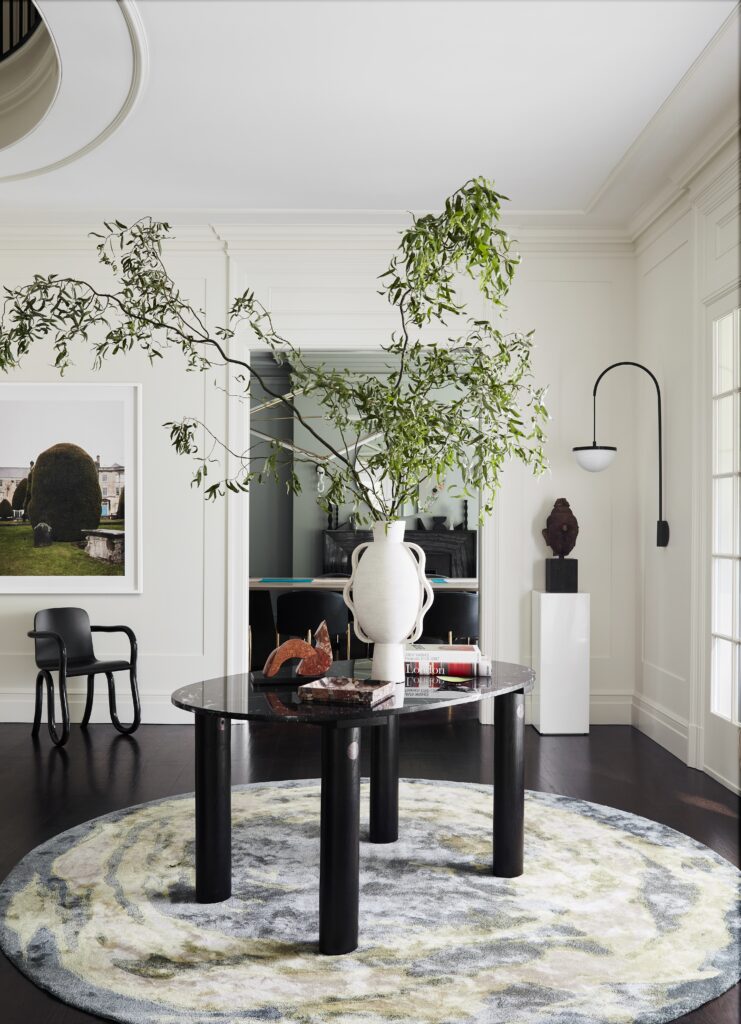
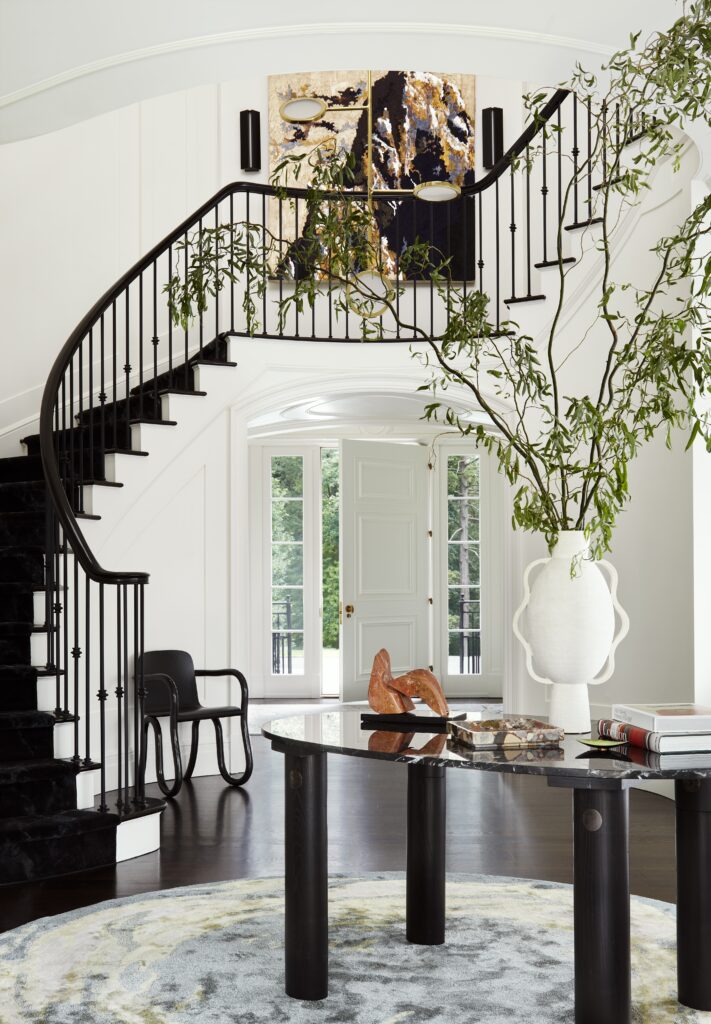
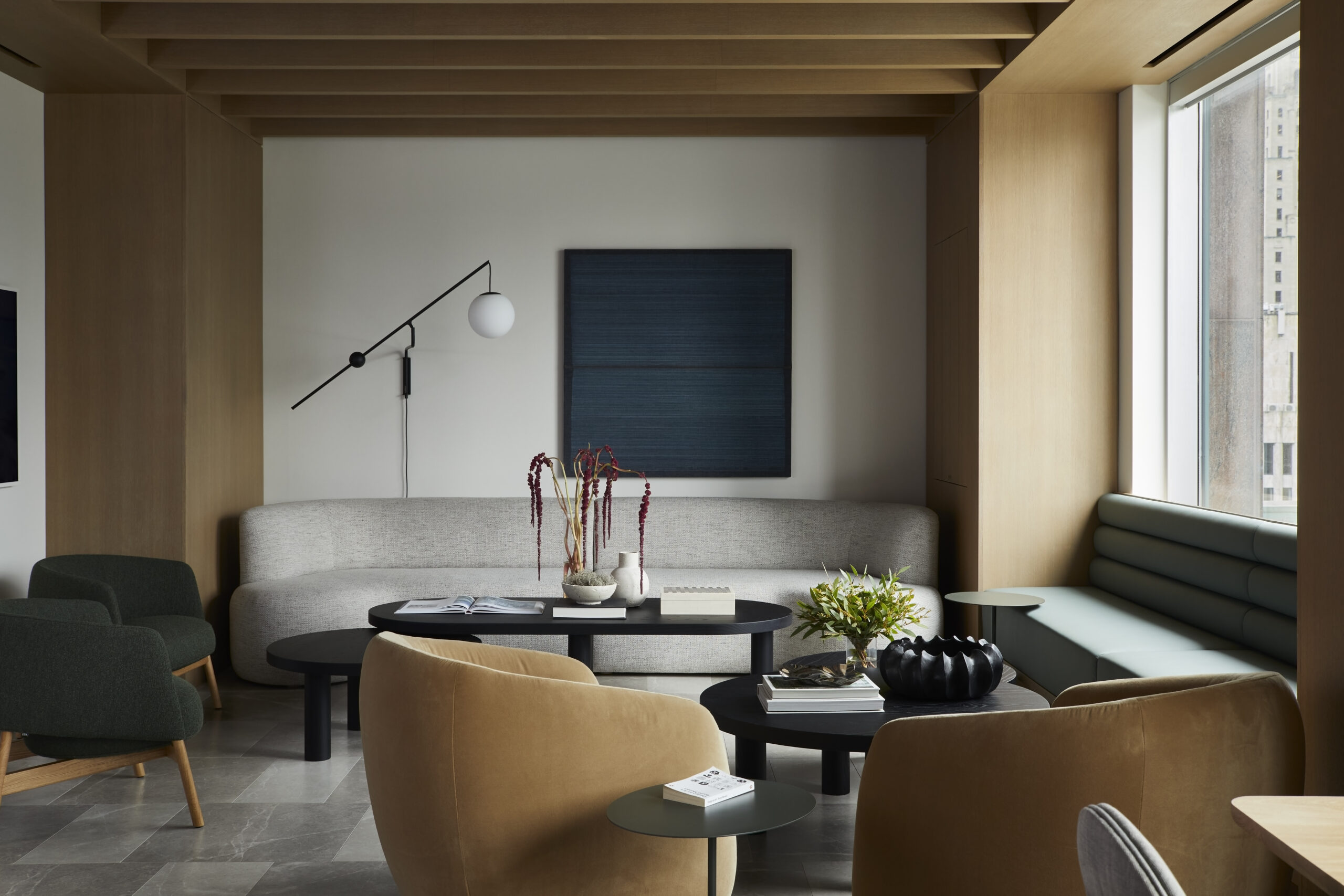
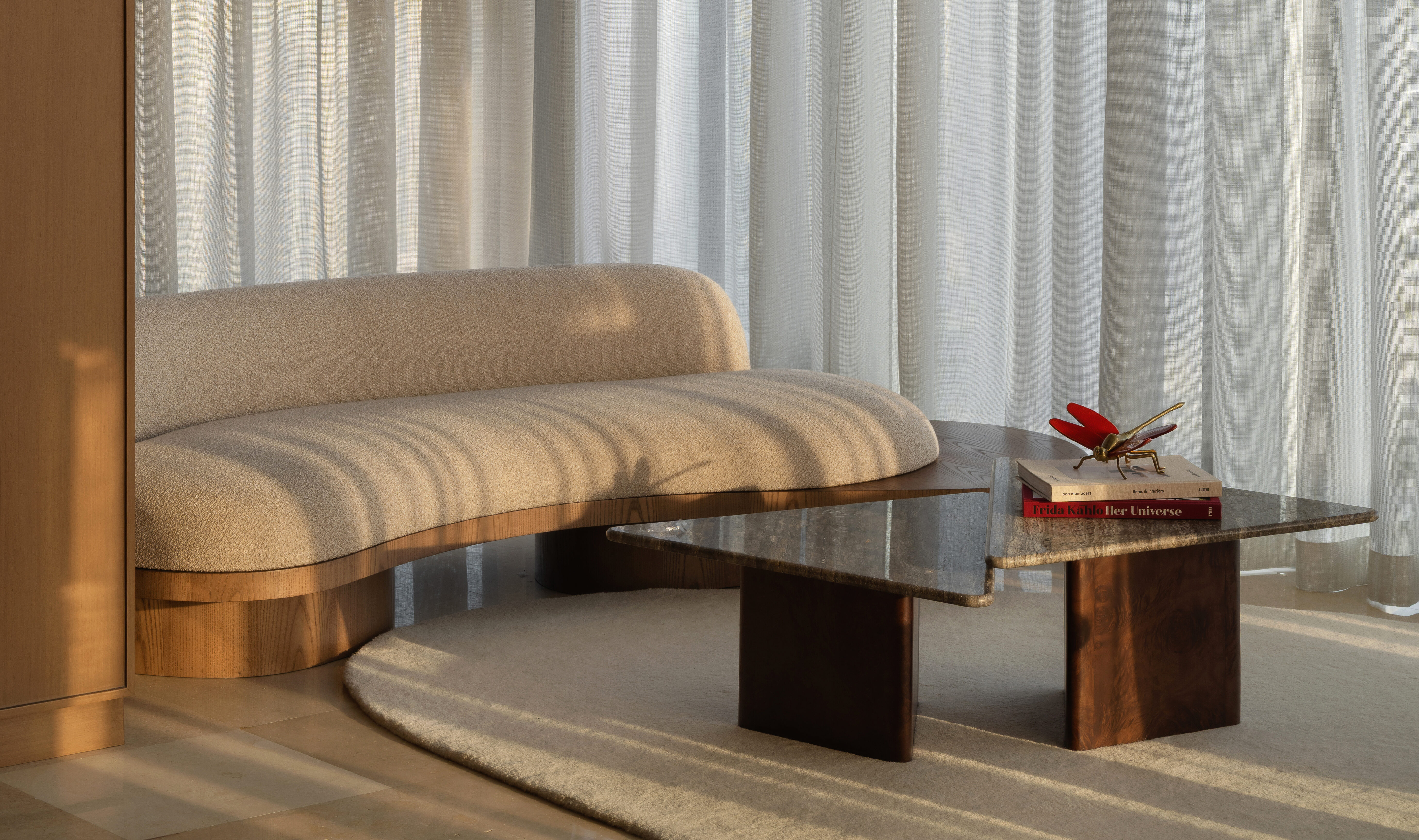
Within this framework, furnishings operate as sculptural interventions. Young contemporary studios such as Bower and Yucca Stuff converse with New York mainstays like Apparatus, while European pieces from Edra and Minotti introduce formal depth. In the living room, the On the Rocks sofa from DDC interrupts the architecture’s rectilinear logic with its sinuous profile. Paintings by Andrew Zimmerman temper the palette with chromatic nuance. The space, though grand, resists stiffness—guests gathering informally around the coffee table, dissolving ceremony into conviviality.
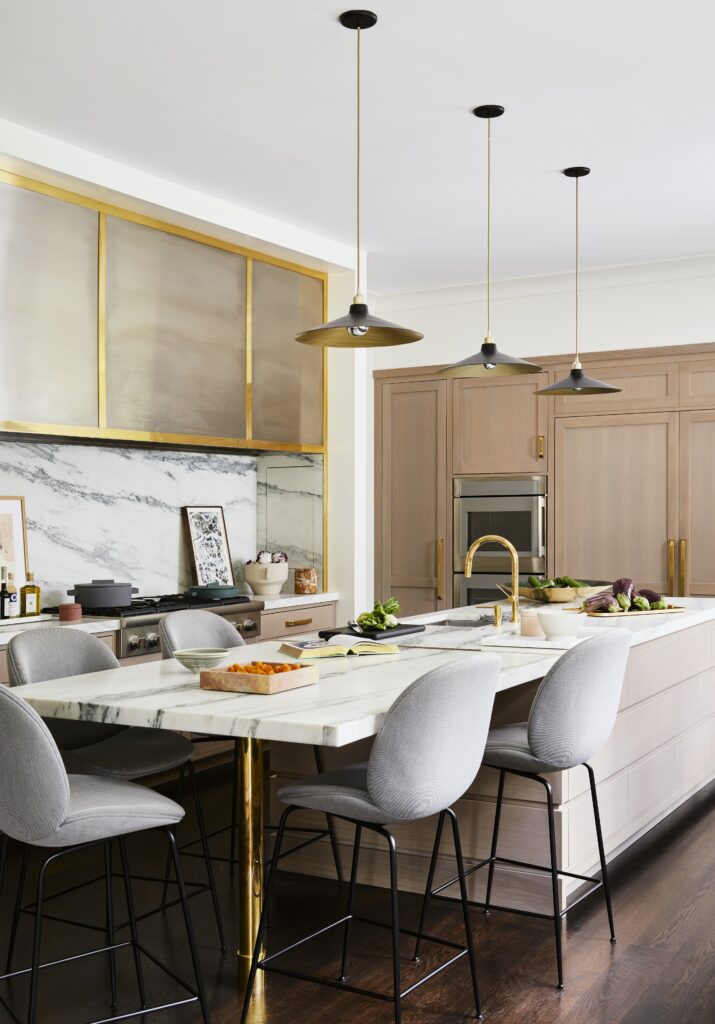
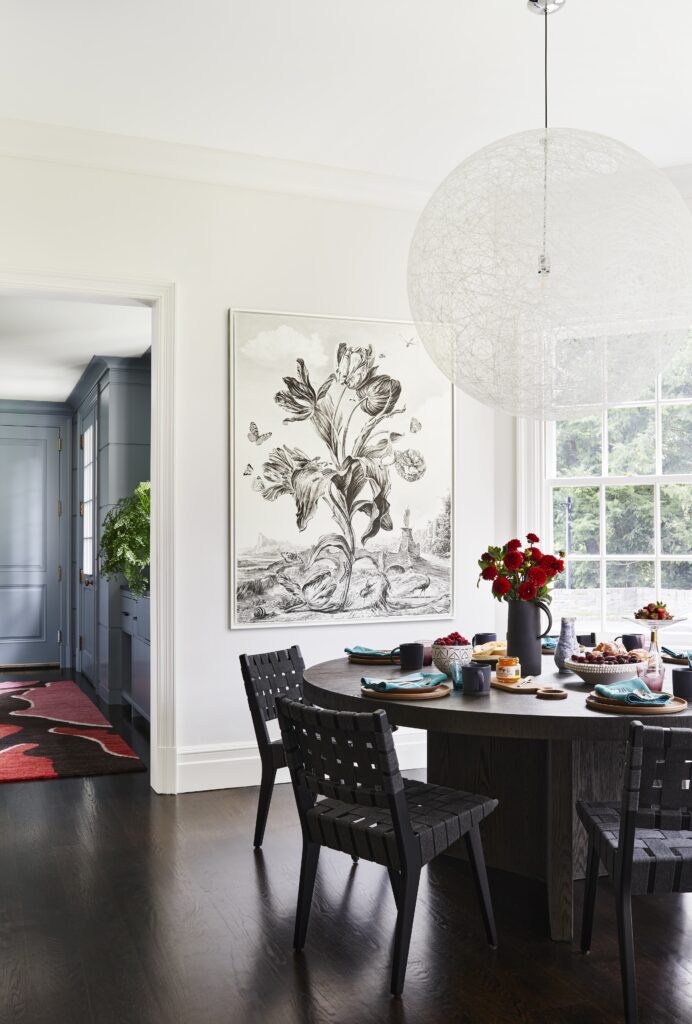
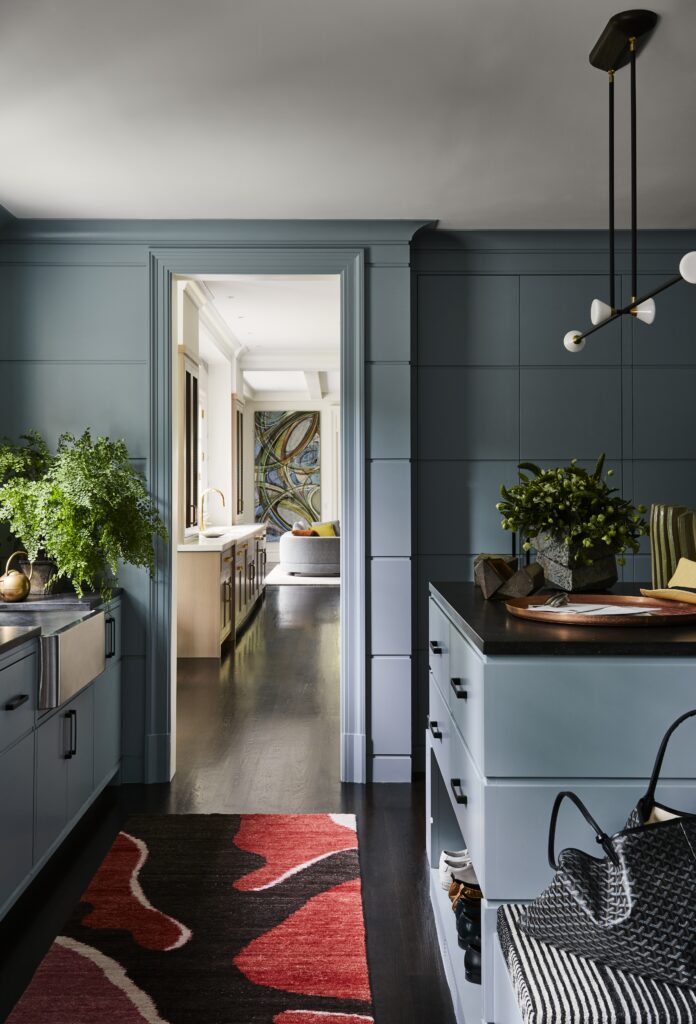
Material shifts articulate program. The mudroom is intentionally moody, creating compression before one enters the expansive kitchen and family room, anchored by a generous Minotti sofa and an oversized custom coffee table designed for games and gathering. In the breakfast room, a charcoal drawing by Rick Schaefer introduces a daily ritual of contemplation.
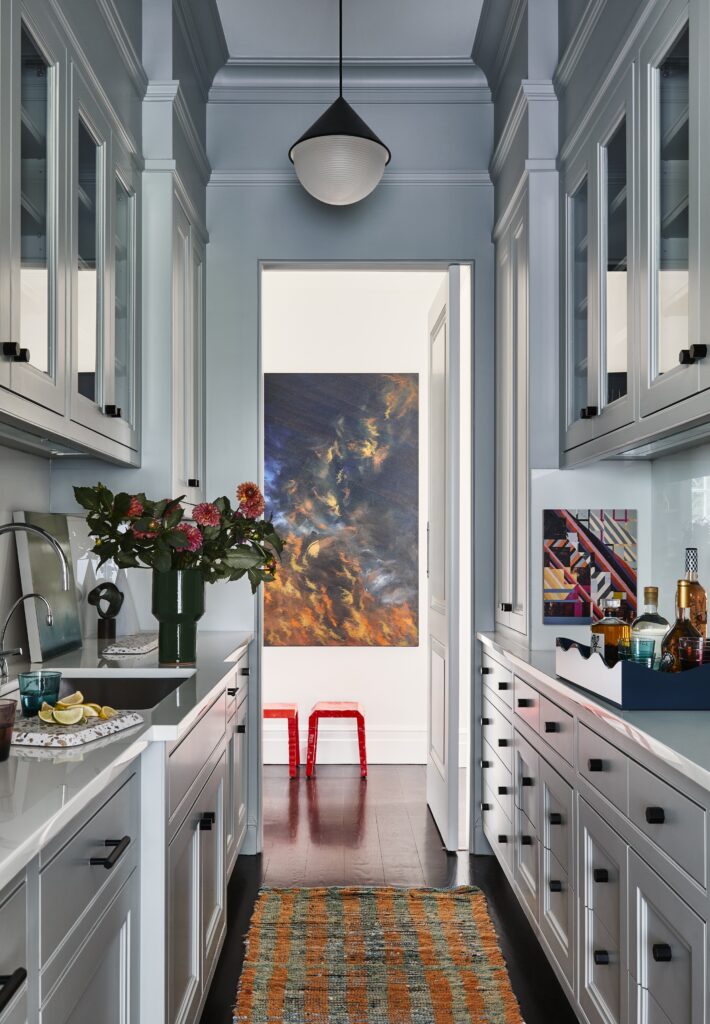
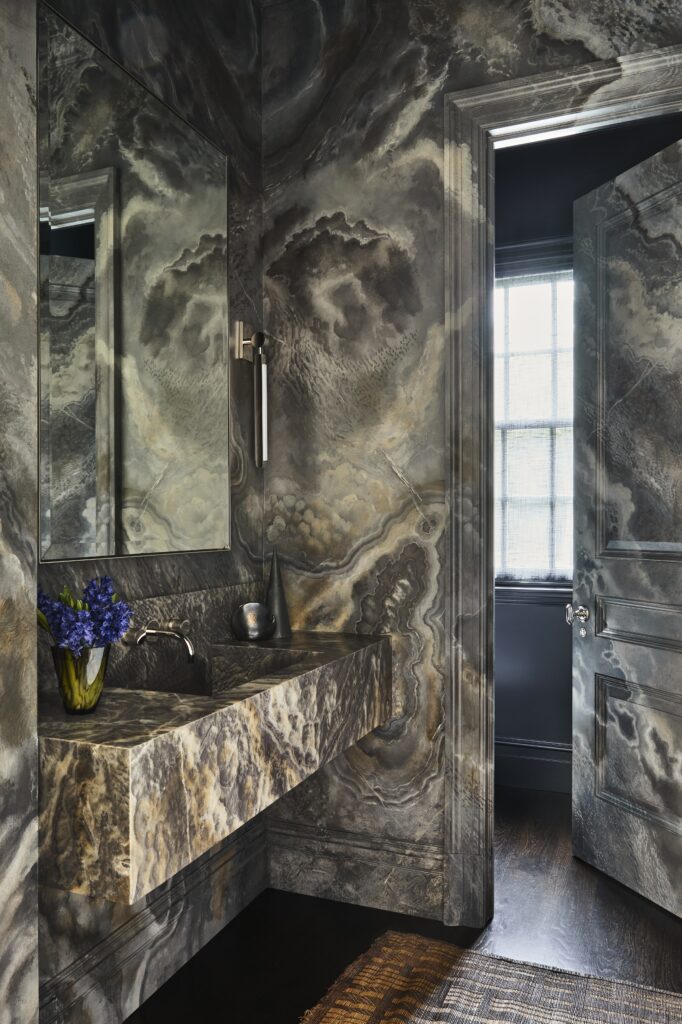
In the butler’s pantry, the entire room is washed in pale blue and punctuated by minimalist pendants from Roll & Hill—a subtle subversion of classical typology. Decorative painter Caroline Lizarraga extends the dialogue through a floor-to-ceiling mural inspired by the veining of an onyx sink, collapsing the boundary between surface and art.
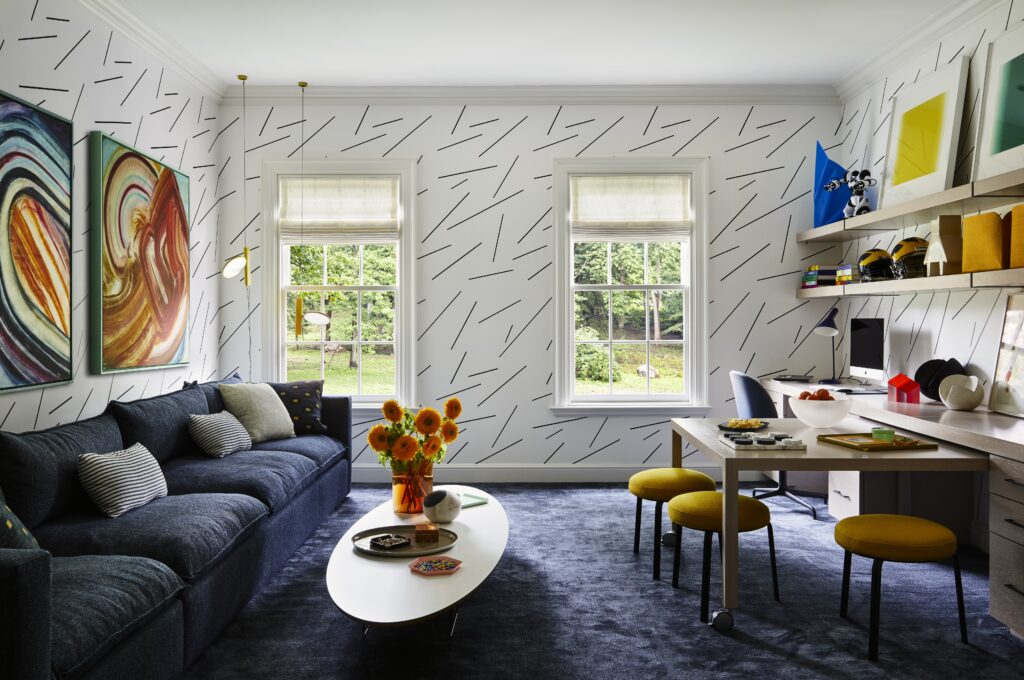
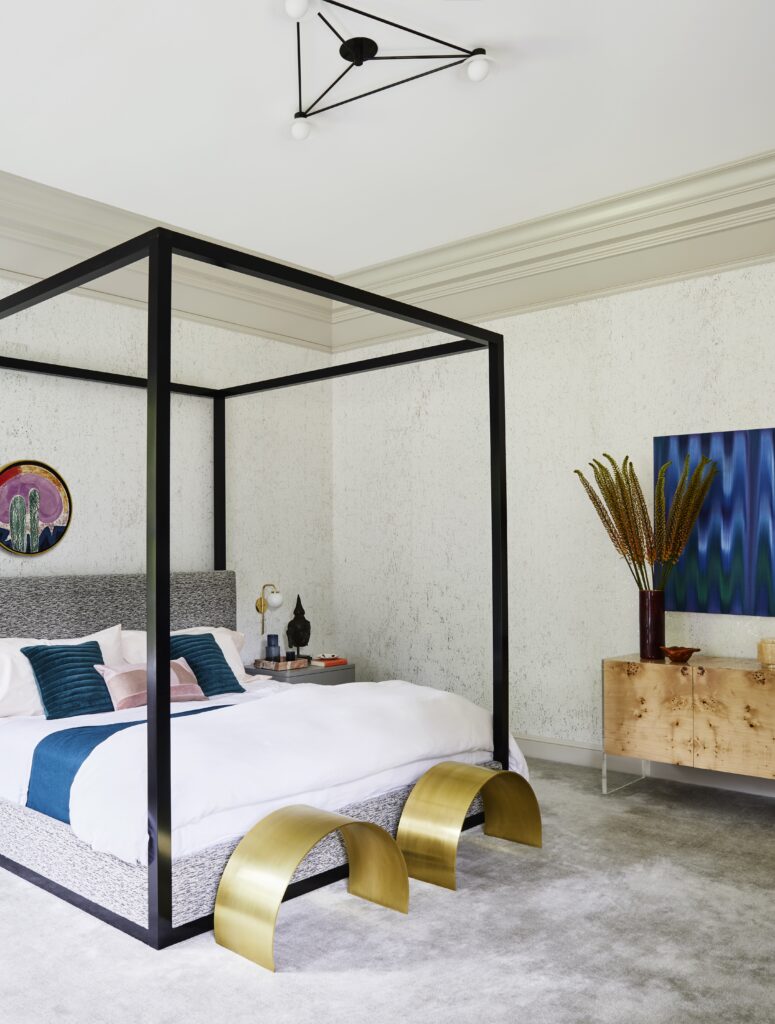
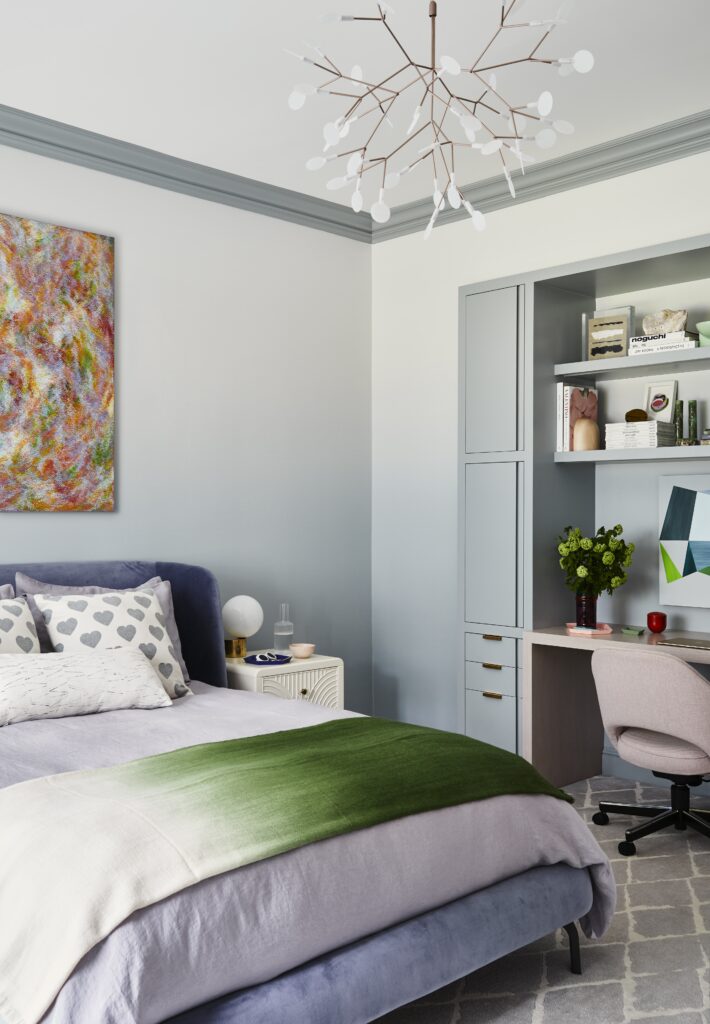
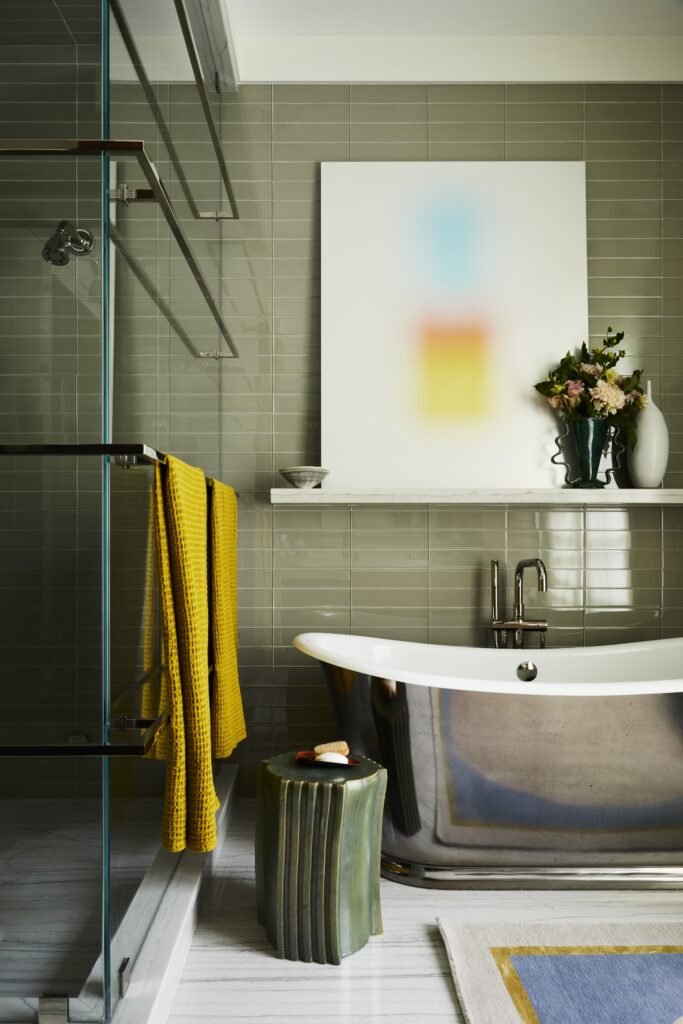
Private rooms reflect the client’s self-professed minimalism. In the primary suite, a canopy bed by Ralph Lauren establishes vertical authority, counterbalanced by sculptural Arc stools from ASH NYC whose material contrast animates the composition. The primary bathroom’s restrained greens and yellows provide warmth without ornament. A study conceived around wallpaper by Schumacher offers a focused retreat, while a shared children’s study deploys whimsical wallpaper from Drop It Modern with calibrated pops of yellow. In the teenage daughter’s bedroom, wallpaper by Calico Wallpaper refines a palette of purple and pale grey into something enduring rather than ephemeral.
Elsewhere, Harris brought the client to the workshop of Bec Brittain, where a sculptural pendant—ultimately specified in a larger scale at the client’s urging—became both focal point and testament to collaborative authorship.
Harris’s design lineage—rooted in Bauhaus principles and Scandinavian clarity—remains evident. Modernism here is not stylistic shorthand but methodology: reduction as precision, eclecticism as structure. The Scarsdale House neither rejects its classical shell nor submits to it. Instead, it establishes equilibrium—where Bower mirrors Edra, where Apparatus converses with Minotti, and where architecture’s inherited gravitas is recalibrated for contemporary life.