Luxury today moves at algorithmic speed. Craft does not.
And that tension—between velocity and resistance—is precisely what gives the Loewe Foundation Craft Prize its quiet authority.
For its ninth edition, the Foundation has shortlisted 30 finalists from more than 5,100 submissions across 133 countries. The works will be exhibited at the National Gallery Singapore this May, but the numbers alone are not the story. What matters is what these objects signal: not nostalgia for tradition, but a redefinition of value itself.
In an era saturated with digital replication and surface-level aesthetics, the shortlist reads like a manifesto for material intelligence. These are not decorative gestures. They are acts of structural commitment.
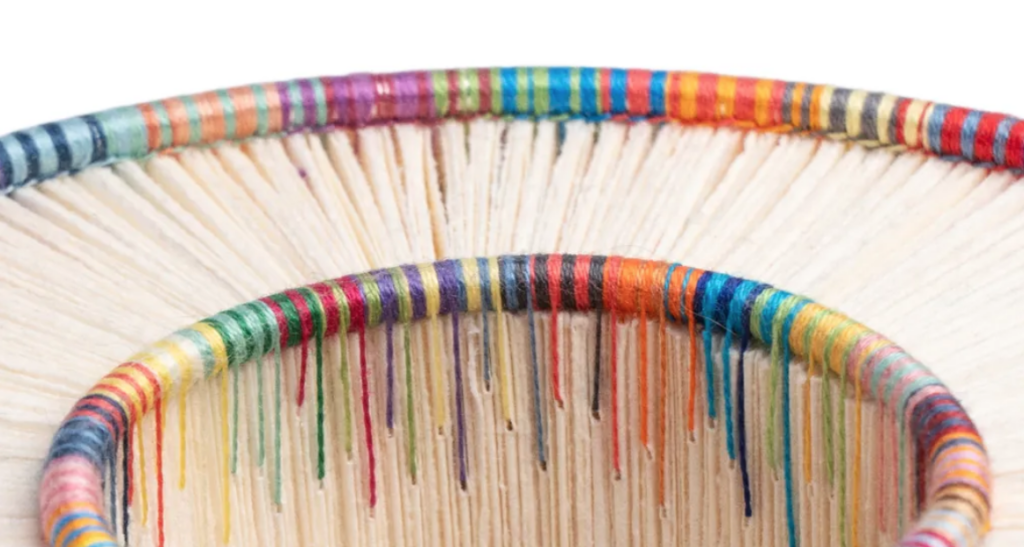
Take Adelene Koh’s Endless. At first glance, it appears delicate—thread, folded paper, a circular form that seems almost weightless. But its conceptual force lies in what it reveals: the hidden endband of a book, traditionally concealed within the spine, is extracted and monumentalised. A structural detail becomes architecture. What was once invisible becomes the protagonist. It is a subtle metaphor for craft itself—often embedded, rarely centred.
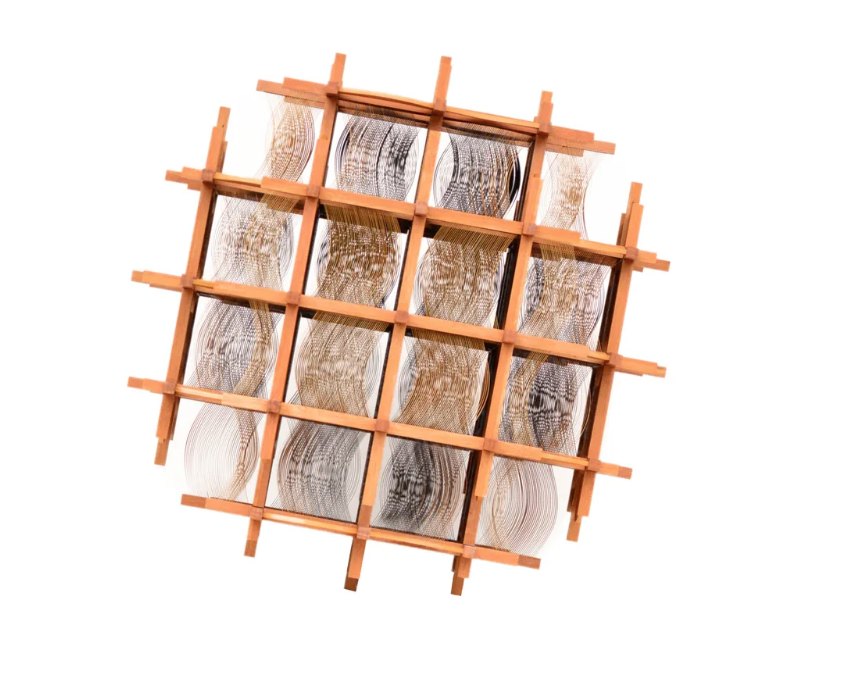
Taiwanese artist Chia-Chen Hsieh approaches structure from the opposite direction. In Rhythm in Grid, thousands of ultra-thin bamboo strips are curved and suspended within a cubic frame, generating a spherical optical vibration. The work reads less as object and more as spatial drawing—an orchestration of tension. Bamboo, historically associated with vernacular craft, becomes a medium of mathematical precision. The hand does not imitate nature here; it engineers it.
Nearby in spirit, Seoul-based Jongjin Park’s Strata of Illusion transforms fragility into architecture. Folded paper is coated in porcelain slip; during firing, the paper burns away, leaving a ceramic seat that records collapse within its very skin. Creases, compressions, imperfections remain visible. The result is a functional object that feels geological, as if formed under pressure rather than designed. The chair does not hide its making—it memorialises it.
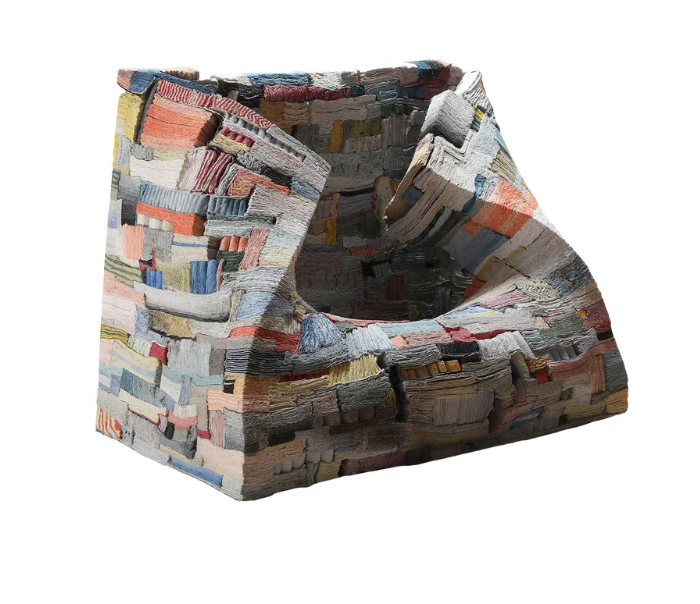
Across disciplines—glass, lacquer, metal, textile—the shortlist resists spectacle in favour of depth. There is monumentality, certainly, but also restraint. Scale fluctuates from intimate to architectural. Surfaces are pierced, warped, stretched. Techniques inherited from centuries past are neither romanticised nor discarded; they are interrogated.
This is where the Prize distinguishes itself. Since its founding in 2016, the Loewe Foundation has positioned craft not as accessory to fashion, but as intellectual backbone. The €50,000 award is significant, but the real currency is cultural capital. By staging the exhibition in Singapore—at a museum embedded within a global crossroads—the Foundation amplifies craft as a transnational language. Not a regional anecdote, but a shared infrastructure of knowledge.
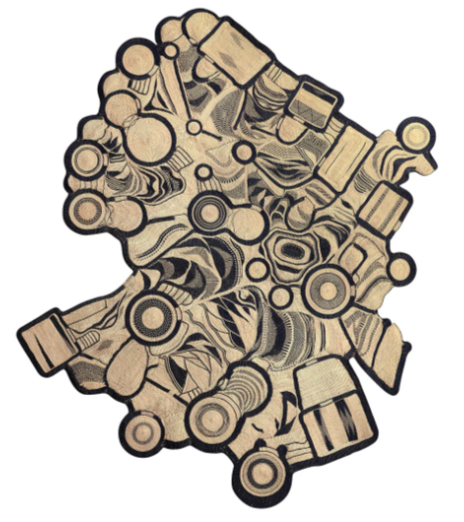
There is also a strategic clarity to the Prize’s evolution.In partnership with Belmond, the Loewe Foundation will introduce three annual residencies at La Residencia in Deià, Mallorca, offering selected artists not simply funding, but time.
Time within a long-established artistic community.
Time within Spain’s cultural climate, where Loewe was founded 180 years ago. This is not incidental. It folds craft back into geography. Back into origin. The residency model suggests that making cannot be rushed into existence through competition alone — it requires immersion, conversation, slowness. By situating artists in Deià, a village historically associated with painters, writers, and expatriate creatives, the Foundation reframes craft as living practice rather than isolated achievement.
The Prize, then, expands beyond exhibition. It becomes infrastructural.
What unites the 2026 finalists is not style. It is authorship. Each work carries a refusal to simplify. Materials are pushed to their thresholds: steel bent into vessels that echo endurance, textiles that operate as cartographies of memory, lacquer that transforms leather into something almost epidermal. The human hand here is not nostalgic; it is analytical.
Perhaps that is why this edition feels different. It arrives at a moment when luxury is being recalibrated—less about accumulation, more about discernment. In that recalibration, craft is no longer the romantic counterpoint to industry. It is the measure of seriousness.
To work slowly today is not regression. It is resistance.
And in the architecture of resistance, matter speaks louder than ever.
The 30 Finalists — Loewe Foundation Craft Prize 2026
Baba Tree Master Weavers × Álvaro Catalán de Ocón
Spain
Fra Fra Tapestry #2
Category: Textiles
Materials: Natural and black-dyed elephant grass
Jobe Burns
United Kingdom
Laying Vessel
Category: Metal
Materials: Steel, paint, lacquer
Soohyun Chou
Republic of Korea
Reconstructed Perspective Vessel 3C1L (comprised of pieces 1–3)
Category: Metal
Materials: Silicon bronze, copper
Morten Løbner Espersen
Denmark
#2572
Category: Ceramics
Materials: Stoneware, glazes
Liam Fleming
Australia
Patterns of Pressure
Category: Glass
Materials: Glass
Oskar Gustafsson
Sweden
Hierarchies of Existence
Category: Wood
Materials: Ash wood, copper thread, hard wax oil
Gjertrud Hals
Norway
Scala (comprised of pieces 3–5)
Category: Textiles
Materials: Cotton and linen thread, resin
Susan Halls
United Kingdom
Edifice
Category: Ceramics
Materials: Glazed ceramic, stoneware
Chia-Chen Hsieh
Taiwan Region
Rhythm in Grid
Category: Other
Materials: Bamboo, urushi, dye
Jong In Lee
Republic of Korea
Baeheullim
Category: Furniture
Materials: Walnut wood
Somyeong Lee
Republic of Korea
Chronicle of Matter (comprised of Chronicle of Matter 001 and Chronicle of Matter 002)
Category: Wood
Materials: Steam-bent oak, ocher, rope, mixed media
Adelene Koh
Singapore
Endless
Category: Bookbinding
Materials: Paper, embroidery threads, aluminium wire
Maria Koshenkova
Denmark
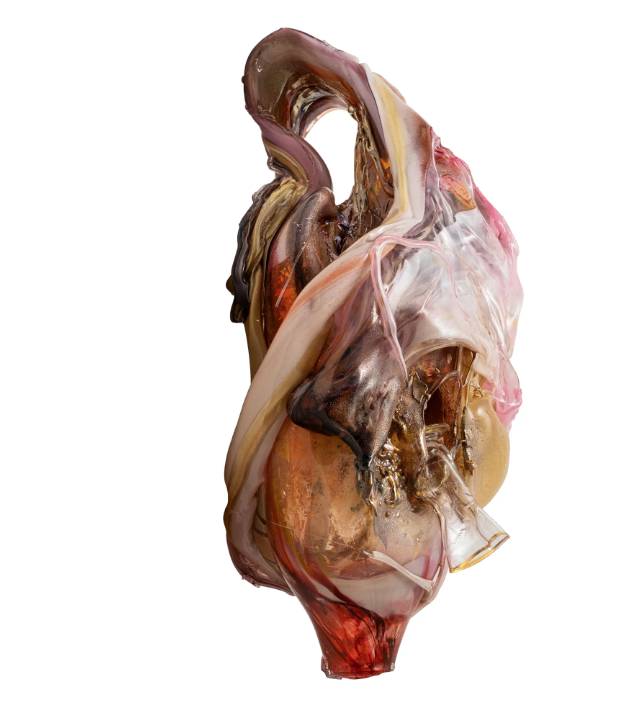
Faun’s Flesh (Arena Rosada)
Category: Glass
Materials: Blown sculpted glass, vintage found glass
Misako Nakahira
Japan
Interaction #YB
Category: Textiles
Materials: Wool, cotton
Fadekemi Ogunsanya
Nigeria
We Are Not Lying, Your Language is Not Enough
Category: Textiles
Materials: Cotton fabric, plastic beads, cotton and polyester padding
Jieun Park
Republic of Korea
Seed of Circulation
Category: Metal
Materials: Oxidised sterling silver, linen thread
Jongjin Park
Republic of Korea
Strata of Illusion
Category: Ceramics
Materials: Porcelain, paper, stain, glaze
Rafael Pérez Fernández
Spain
Time To Time (comprised of pieces 1–3)
Category: Ceramics
Materials: Porcelain, clay
Dorothea Prühl
Germany
Migratory Birds
Category: Jewellery
Materials: Titanium, gold
Kirstie Rea
Australia
Repose 2
Category: Glass
Materials: Glass
Vivi Rosa
Brazil
Resonance
Category: Other
Materials: Cement, recycled glass powder, shredded cotton, wire, adhesive
Hervé Sabin
Haiti
Sèvi-Tè
Category: Wood
Materials: Wood, beeswax, oil paint
Xanthe Somers
Zimbabwe
The Caretaker’s Clotheshorse
Category: Ceramics
Materials: Glazed stoneware
Coco Sung
Republic of Korea
Shadow Kkokdu (comprised of Optak, Liebero, Pupillove, Bongja and Pupsi)
Category: Jewellery
Materials: Clay, lacquer, coloured wire, beads, Swarovski stones
Nobuyuki Tanaka
Japan
Inner side – Outer Side 2021 N
Category: Lacquer
Materials: Lacquer, hemp
Graziano Visintin
Italy
Collier (comprised of pieces 1 and 2)
Category: Jewellery
Materials: Gold, niello
Rayah Wauters
Belgium
A Turn Toward Possibility
Category: Wood
Materials: Belgian poplar wood, black ink
Nan Wei
China
Knot-Loving
Category: Lacquer
Materials: Lacquer, cow leather, linen
Jane Yang-D’Haene
United States
Untitled
Category: Ceramics
Materials: Stoneware, porcelain, glaze
Ayano Yoshizumi
Japan
ICON #2507 Group (comprised of ICON #2507 No. 2 and ICON #2304 No. 3)
Category: Glass
Materials: Glass, acrylic paint, glitter