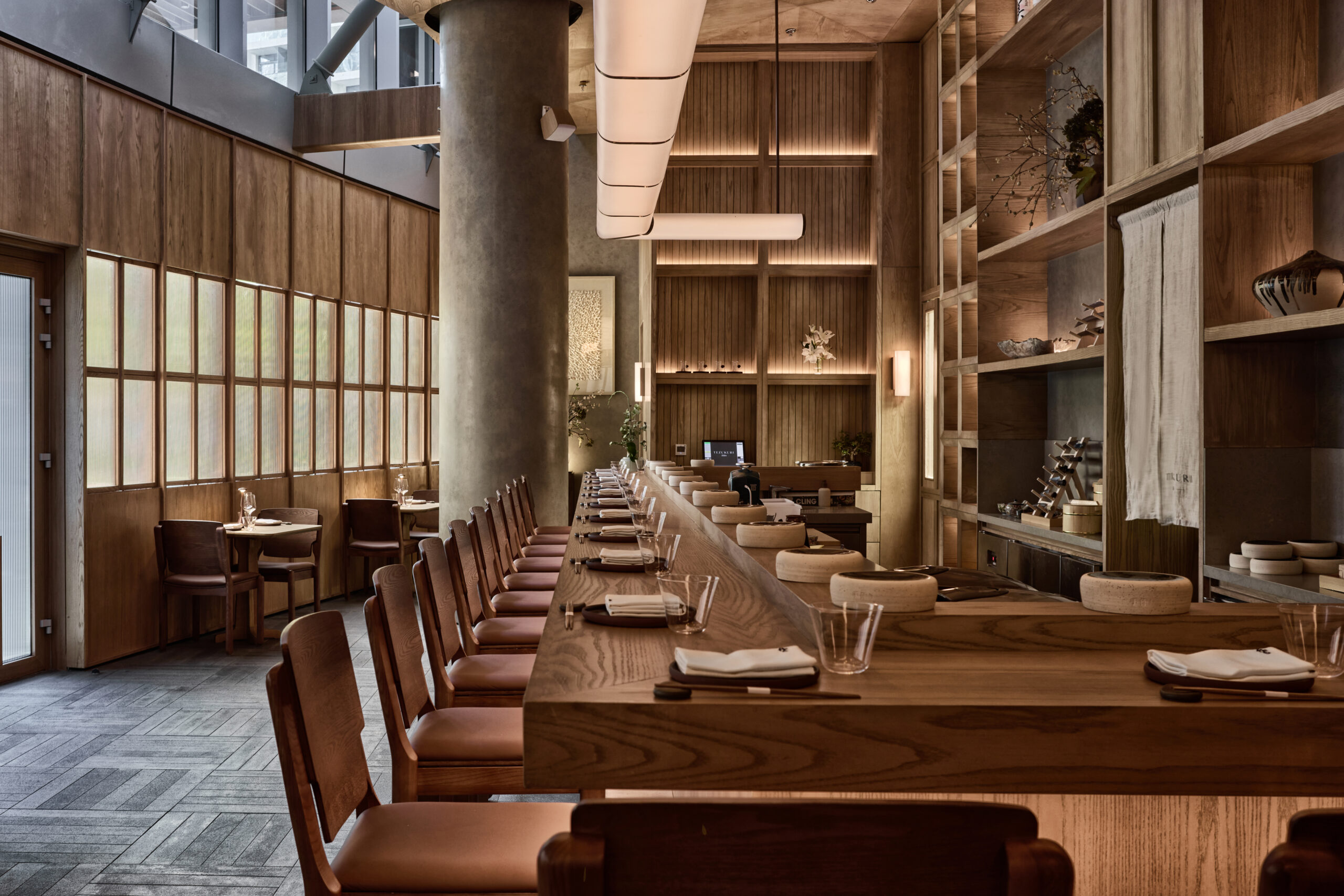
Tezukuri Dubai begins not with décor, but with an idea: symmetry as reverence. Conceived by interior designer Samar Zakhem as a quiet tribute to the great masters of Japanese architecture, the project explores how order, when handled with sensitivity, can generate warmth rather than rigidity.
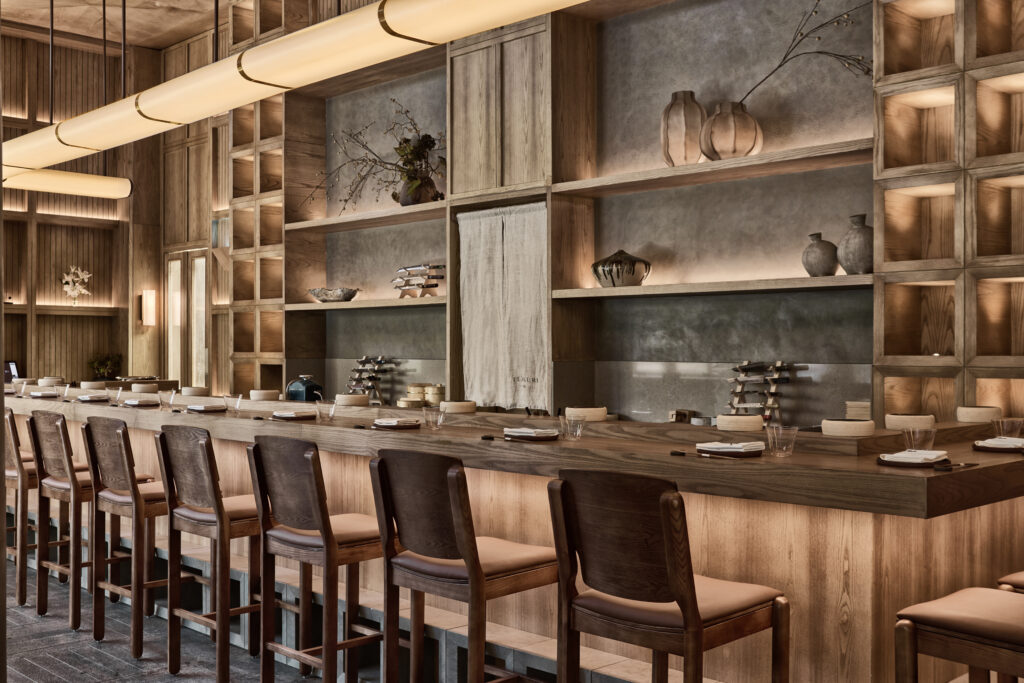
“The conceptual foundation of Tezukuri emerged from a disciplined exploration of symmetry — not as rigidity, but as reverence,” Zakhem explains. The project, she notes, was envisioned as a tribute to the great masters of Japanese architecture, grounded in balance, restraint, and devotion to craftsmanship. From the outset, respect became the governing principle: respect for proportion, for material honesty, for spatial equilibrium. Here, symmetry is not repetition but harmony — a calibrated dialogue between order and emotion.
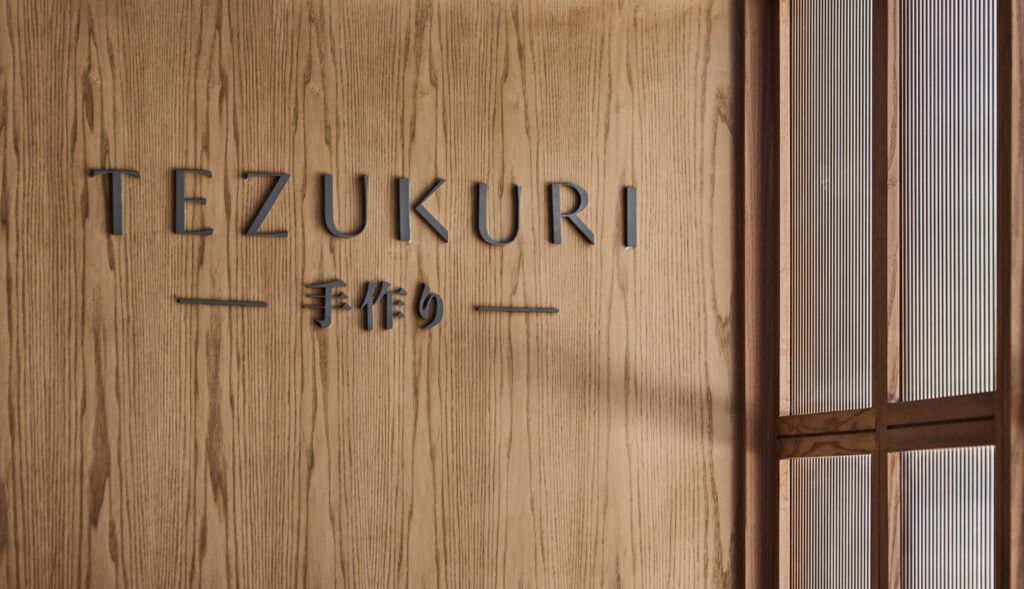
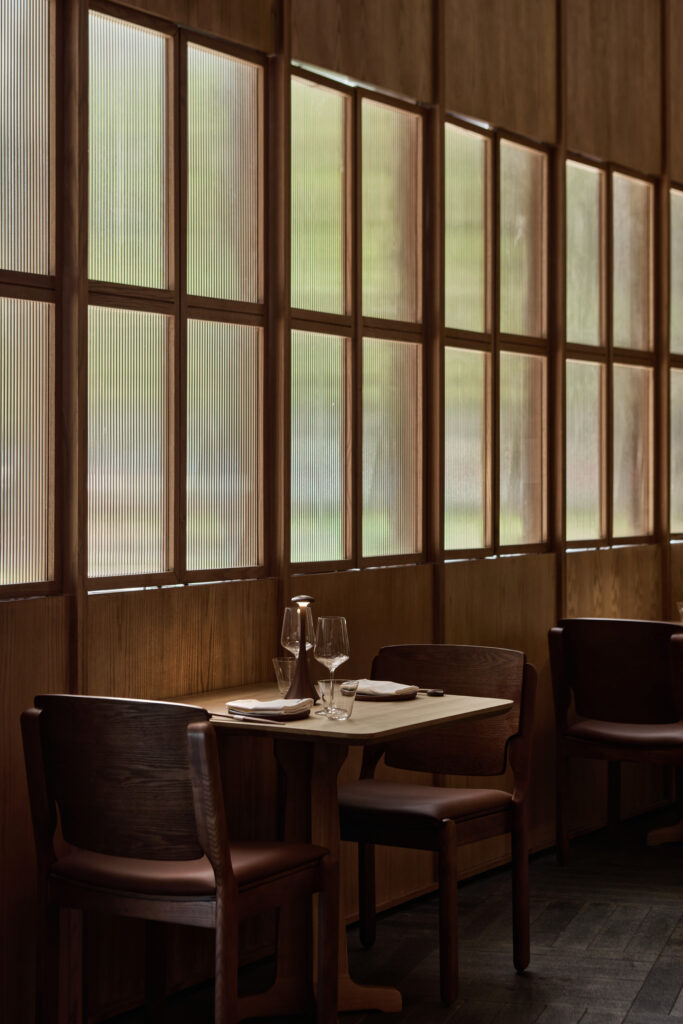
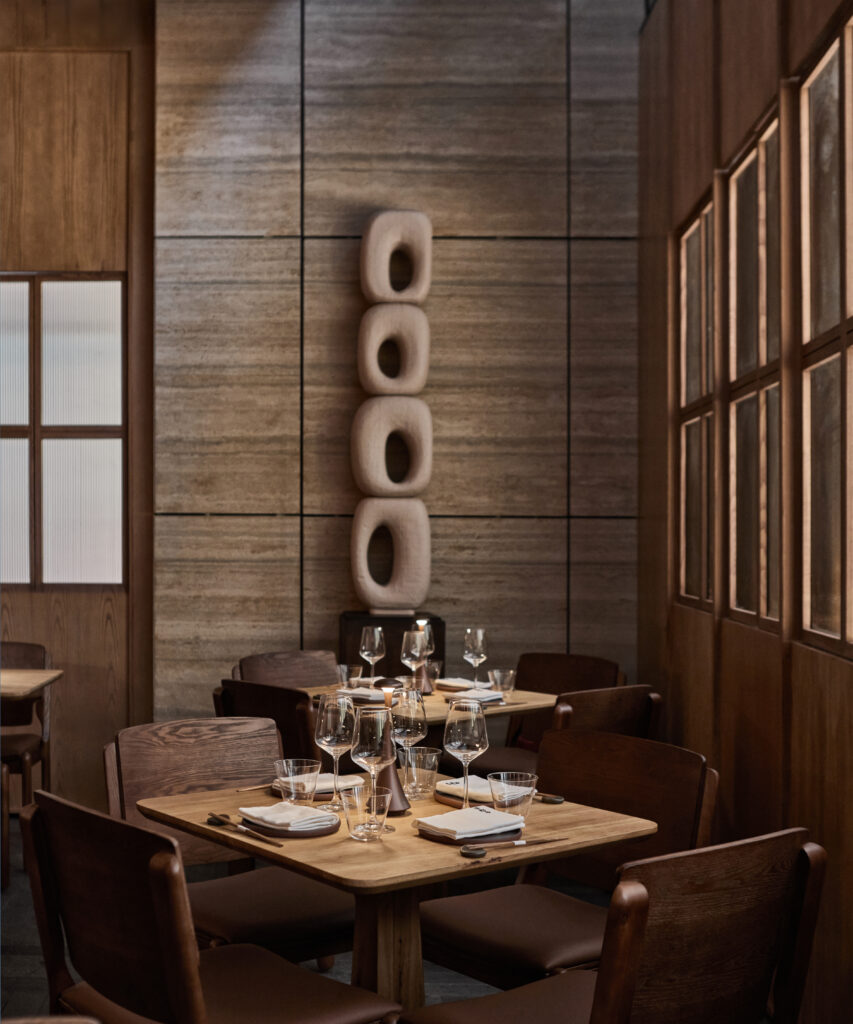
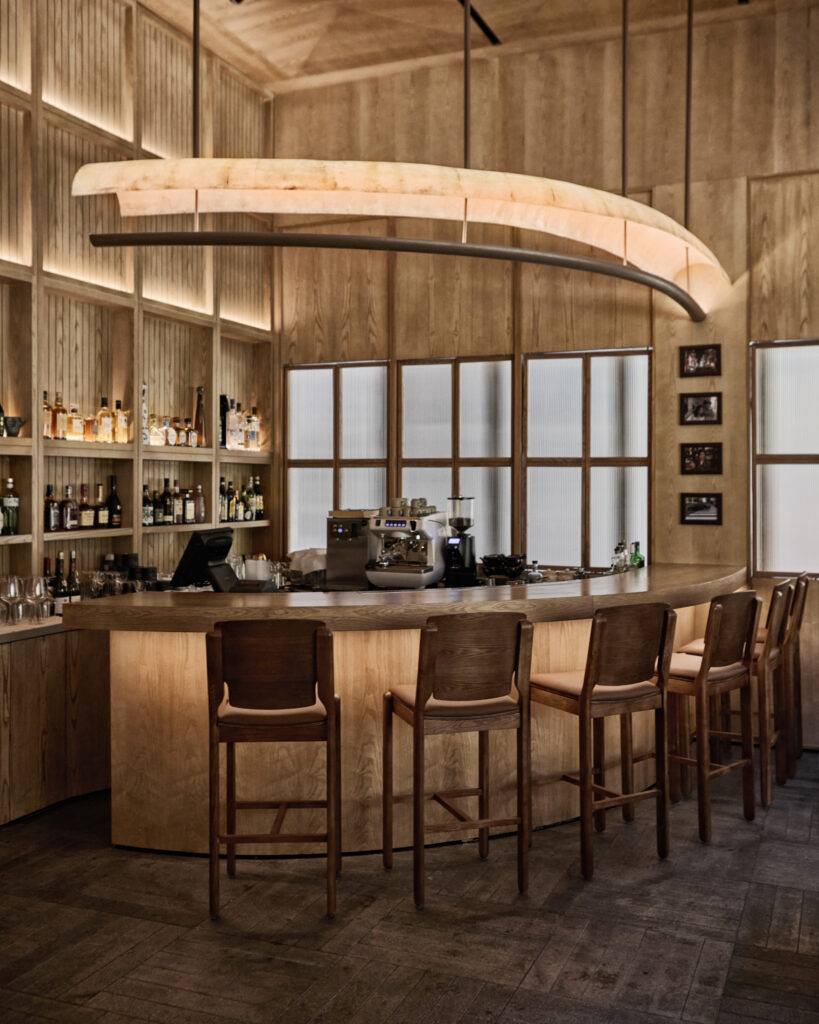
That translation from philosophy to space is achieved through what Zakhem calls “material clarity and geometric discipline.” A restrained palette of wood forms the primary architectural gesture, articulated in linear, symmetrical compositions that quietly structure the room. The ceiling, too, participates in this choreography, introducing rhythm without spectacle. Subtle tonal variations within darker timber deepen the atmosphere without disturbing its serenity. The interior feels effortless — but as Zakhem is quick to imply, effortlessness here is the result of rigorous calibration.
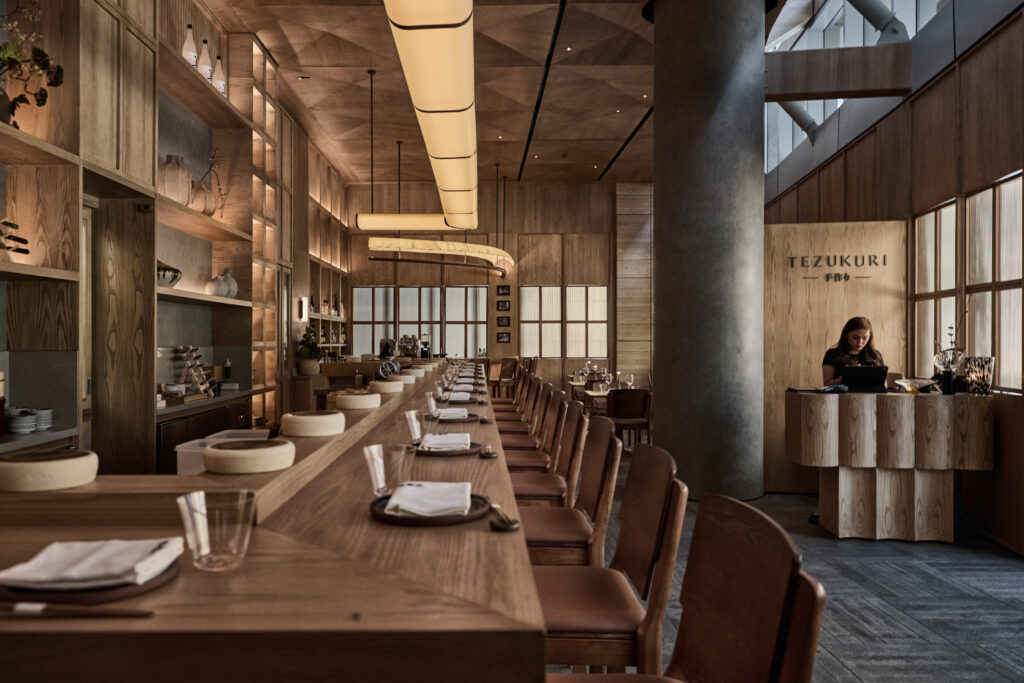
Scale, often treated as a limitation in urban dining, became instead a medium. Tezukuri’s intimacy allowed for heightened spatial control: compressed and released volumes, carefully orchestrated sightlines, and a circulation that feels intentional rather than incidental. “The atmosphere is not dependent on size but on proportion, flow, and sensory coherence,” she reflects. In this compact footprint, every gesture carries weight.
Materiality is both anchor and protagonist. Wood was chosen as the singular narrative thread, selected through a meticulous process of testing tonal nuances under shifting daylight and artificial light. “The final choice was not aesthetic alone; it was emotional,” Zakhem says. The timber had to transmit warmth, authenticity, serenity. Surrounding materials were deliberately restrained — raw, understated, supportive. Nothing competes; everything yields. The resulting calm is not accidental but hierarchical.
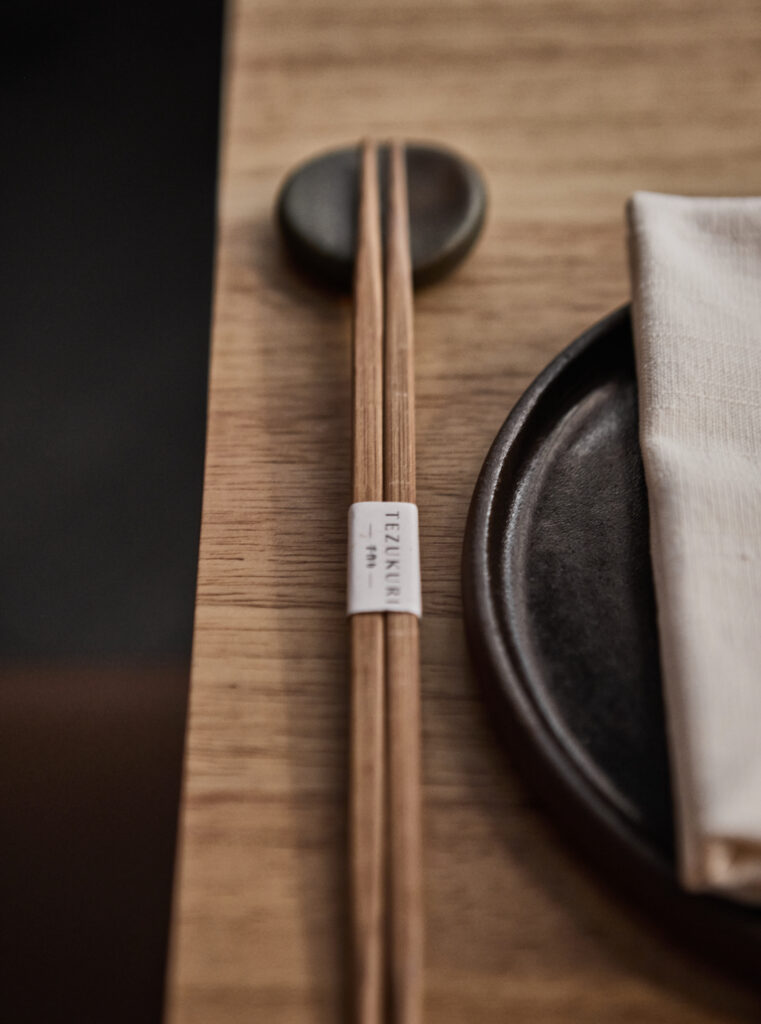
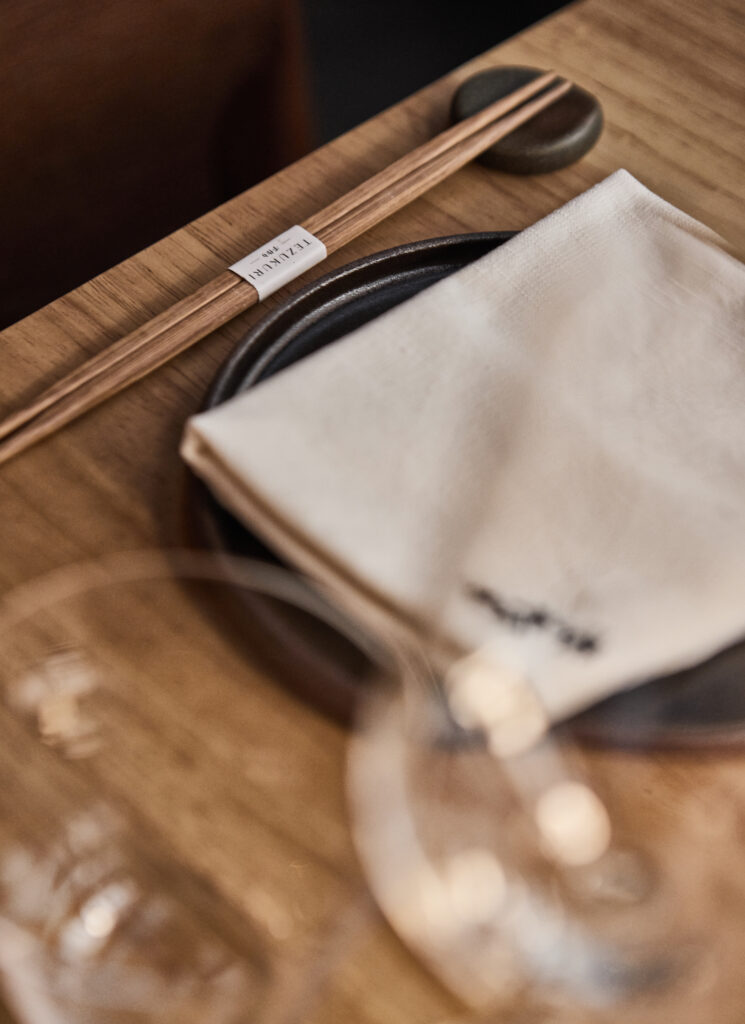
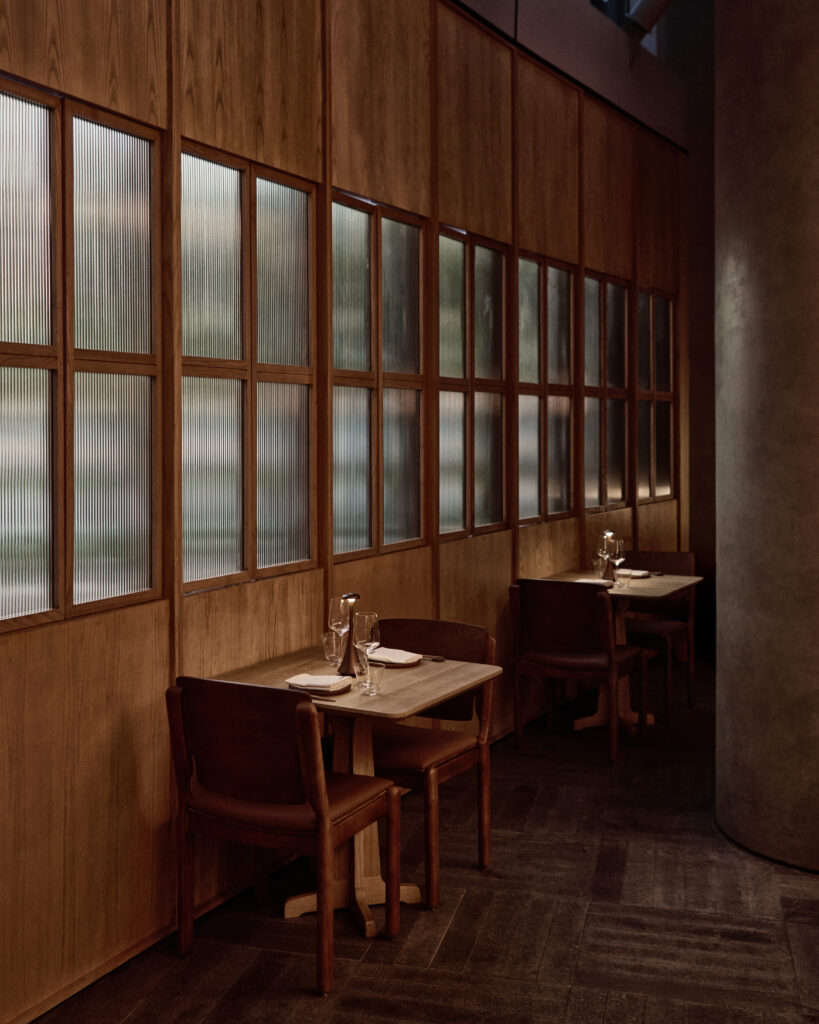
Minimalism, here, resides in precision rather than absence. Nowhere is this more evident than in the architectural wall behind the bar counters — a focal plane aligned with exactitude along the spatial axis. Horizontal wooden panels meet in deliberate continuity; grain patterns are matched; junctions resolved with almost obsessive care. “Every line corresponds to another; every junction is deliberate,” she notes. Much of this calibration remains invisible at first glance — yet it is deeply felt.
The collaboration with the culinary team unfolded in parallel, architecture and gastronomy evolving as twin disciplines. Zakhem believes a hospitality space must embody the narrative of its creators — their past, present, and aspirations. Tezukuri was conceived as a multi-sensory extension of the chefs’ craft: guests do not merely taste the menu; they inhabit its ethos. Material selection, atmosphere, and composition were aligned from the outset, allowing the space to resonate with the same discipline found in the kitchen.
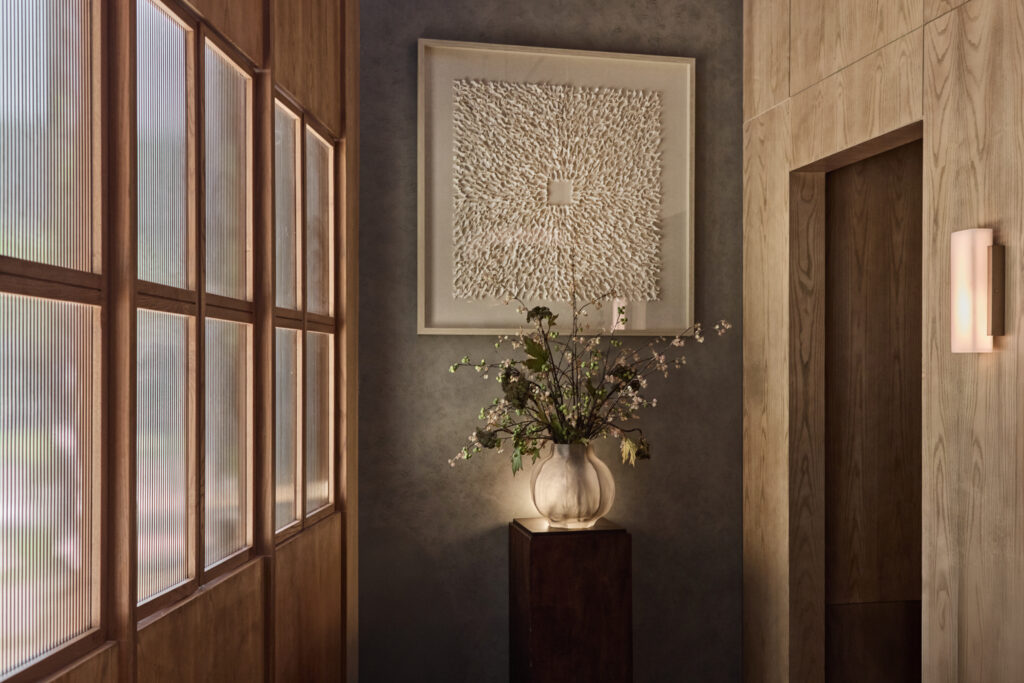
Looking back, Zakhem describes the project as “a return to essence.” Invoking the philosophy often attributed to Leonardo da Vinci — that simplicity is the ultimate sophistication — she frames Tezukuri as an act of reduction. Not minimalism for aesthetic effect, but minimalism as conviction. By stripping away the superfluous, clarity emerges.
And perhaps the most inviting element is the one that cannot be held: light. Vertical generosity — high ceilings balanced by material warmth — prevents sterility, while illumination completes the architecture. By day, natural light reveals the honesty of texture and grain. By night, the atmosphere softens into intimacy. “Light, more than any element, completes the architecture,” Zakhem says.
In Tezukuri, restraint becomes a form of luxury. Not loud, not declarative — but deeply considered. A space where harmony is constructed line by line, and where the quiet discipline of design lingers long after the last course is served.