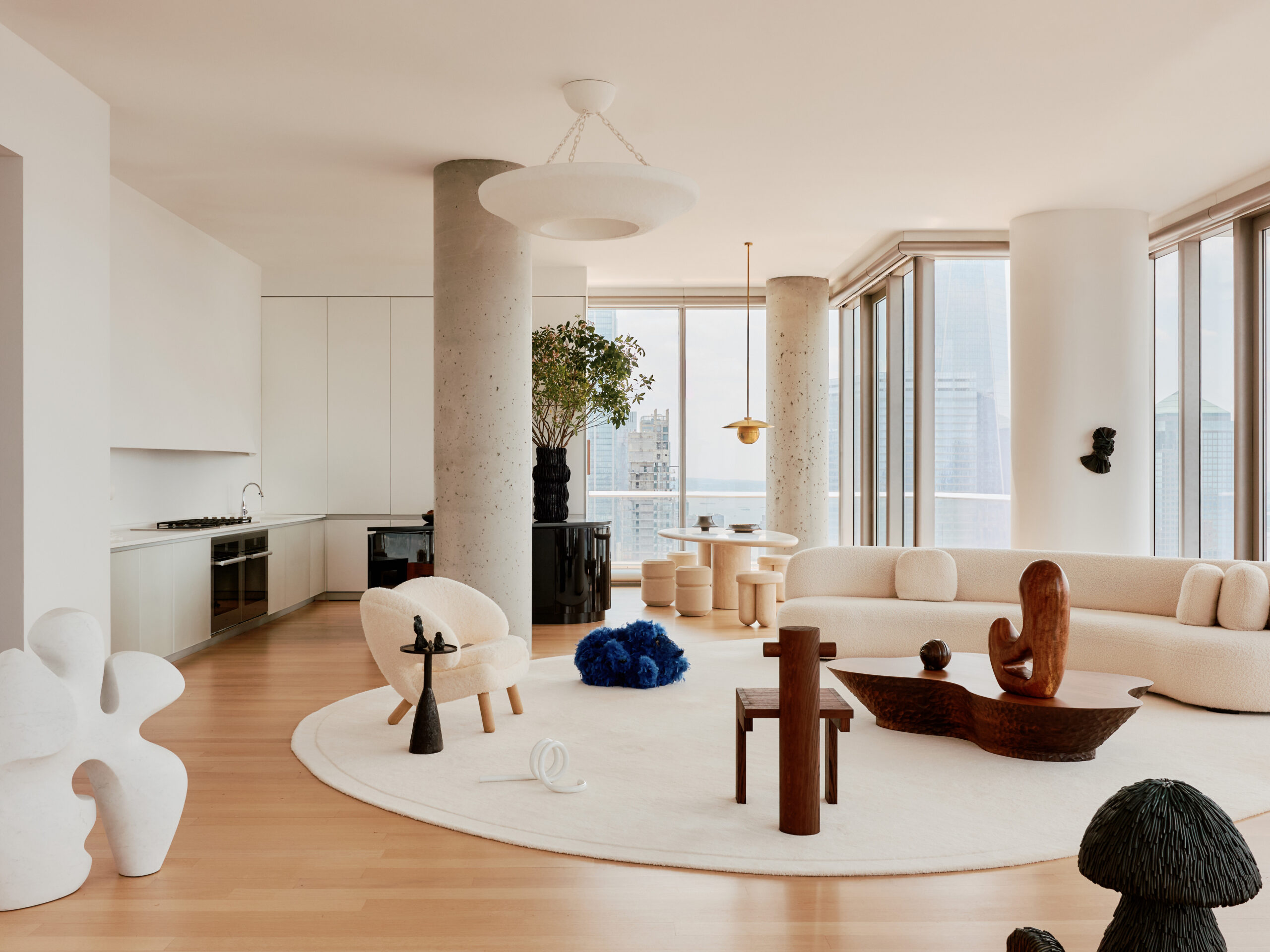
In Tribeca, where the industrial memory of Lower Manhattan now coexists with a new architecture of rarefied domesticity, the residence of Nacho Polo and Robert Onuska, founders of STUDIOTWENTYSEVEN, occupies one of the so called “villas in the sky” conceived by Herzog & de Meuron. Yet to describe it simply as an apartment would be misleading. What unfolds across its 4,000 square feet is closer to a curatorial environment than a private dwelling, a space where architecture, art, and collectible design are deliberately placed in conversation and where the rituals of living and collecting become almost indistinguishable.
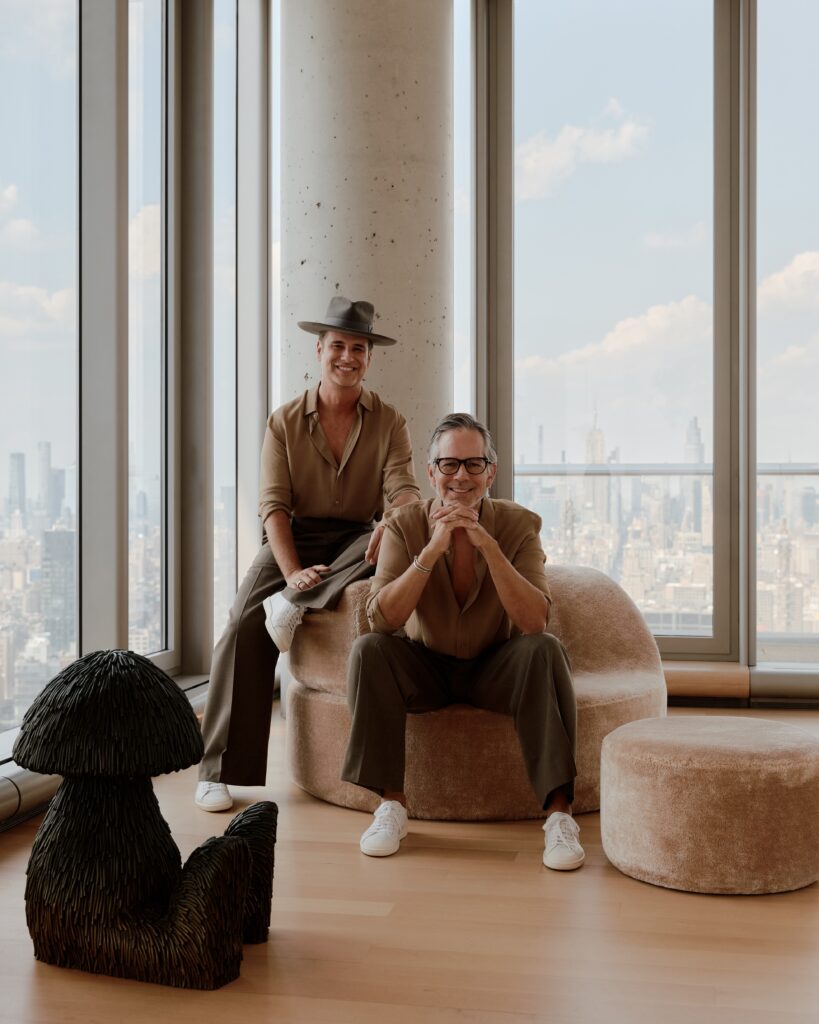
For Nacho Polo and Robert Onuska, the founders of STUDIOTWENTYSEVEN, whose New York gallery sits just across the street, the apartment functions as both refuge and laboratory, a place where the sensibility that defines their gallery program first took shape within the intimate scale of domestic life.
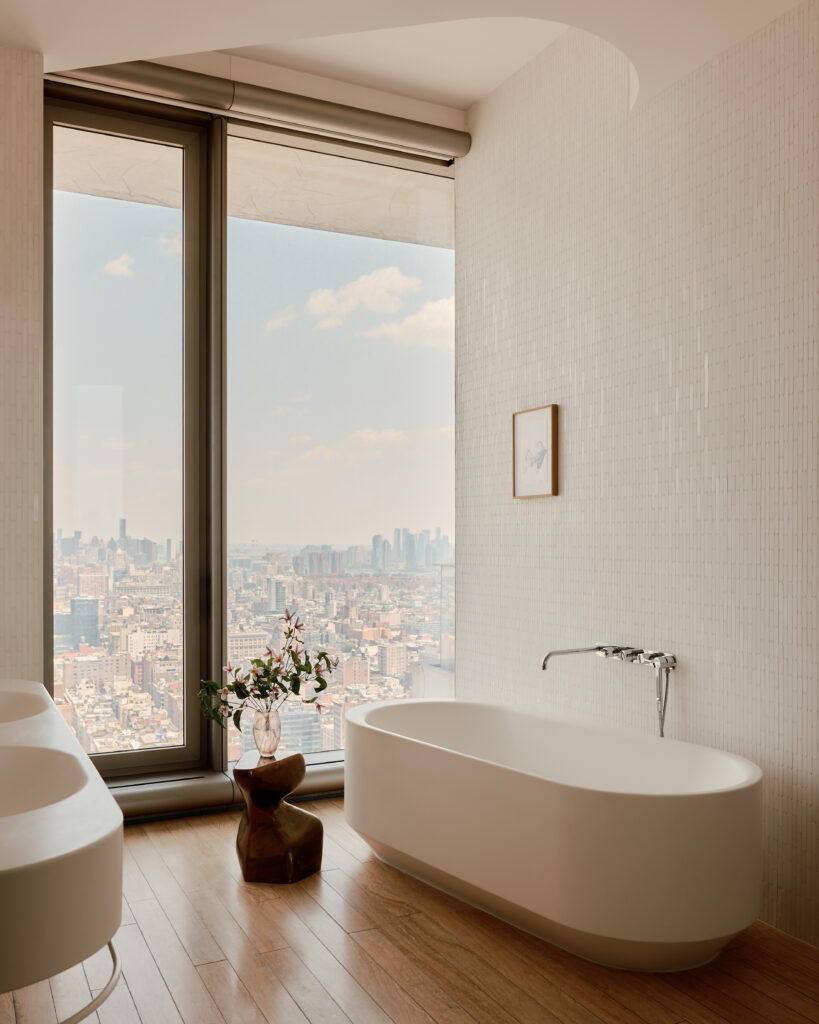
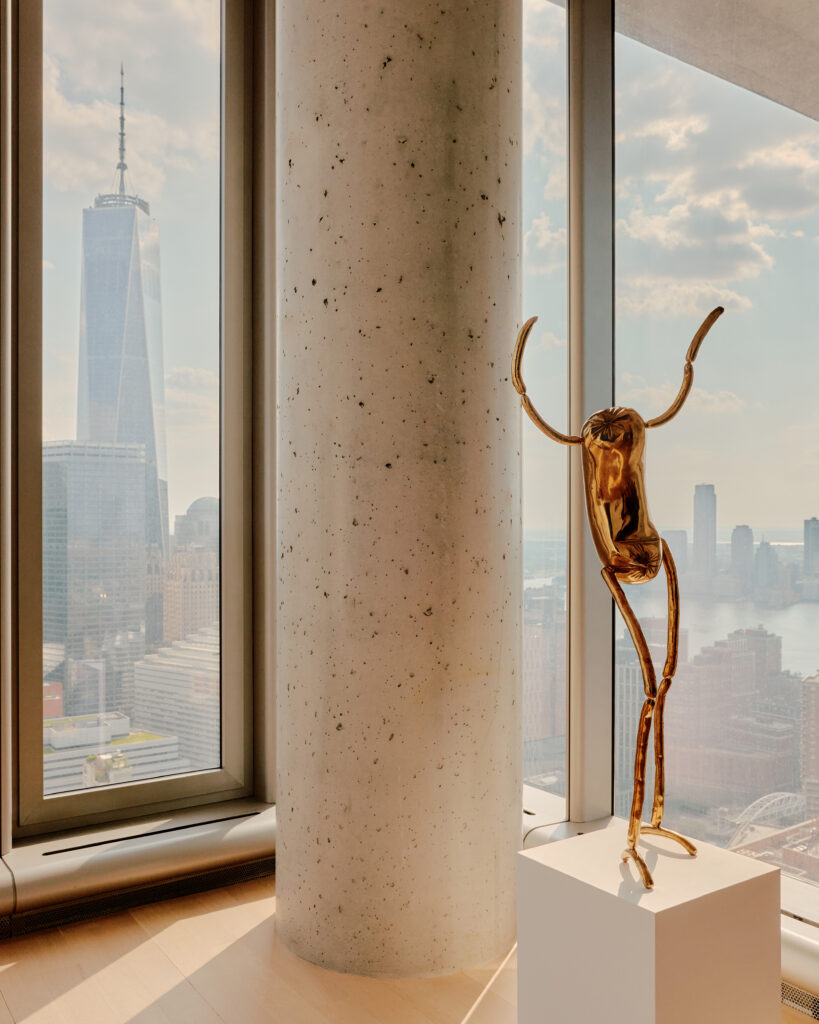
When they first entered the residence in 2019, they encountered a space defined by architectural restraint. Eleven foot, floor to ceiling windows, luminous and uncompromising, framed the city like an immense cinematic backdrop. Rather than competing with that clarity, they allowed it to guide the project, embracing the apartment as a conceptual blank canvas upon which a new narrative could slowly accumulate.
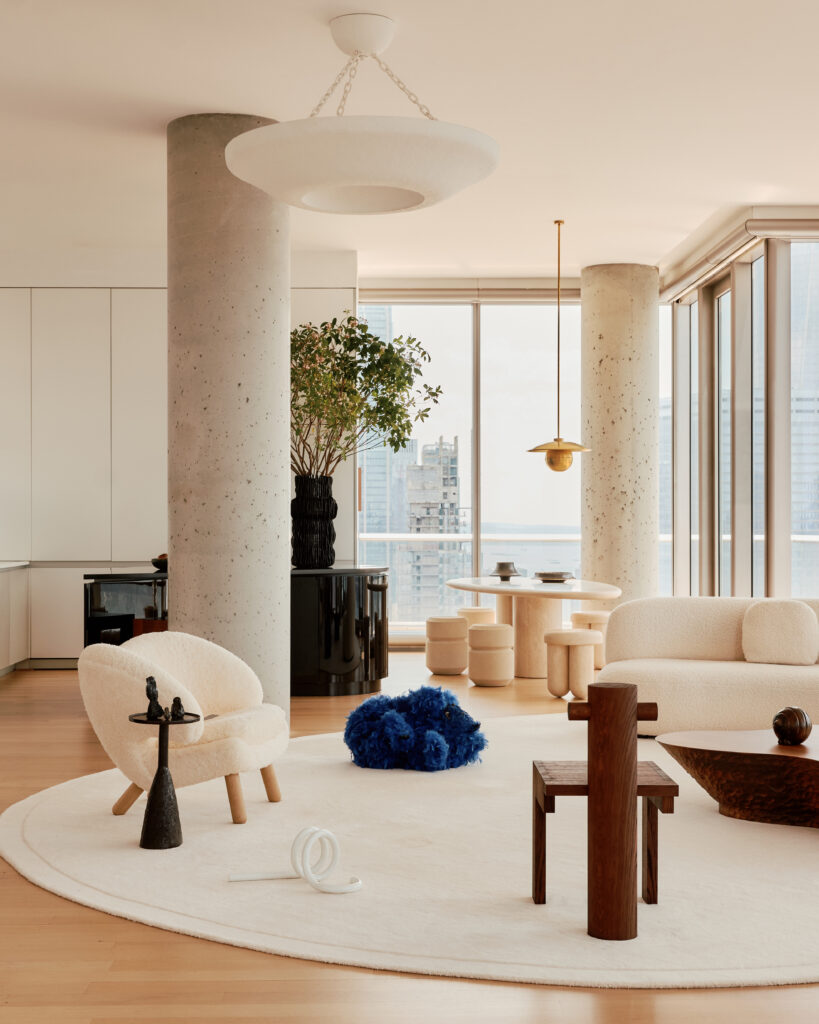
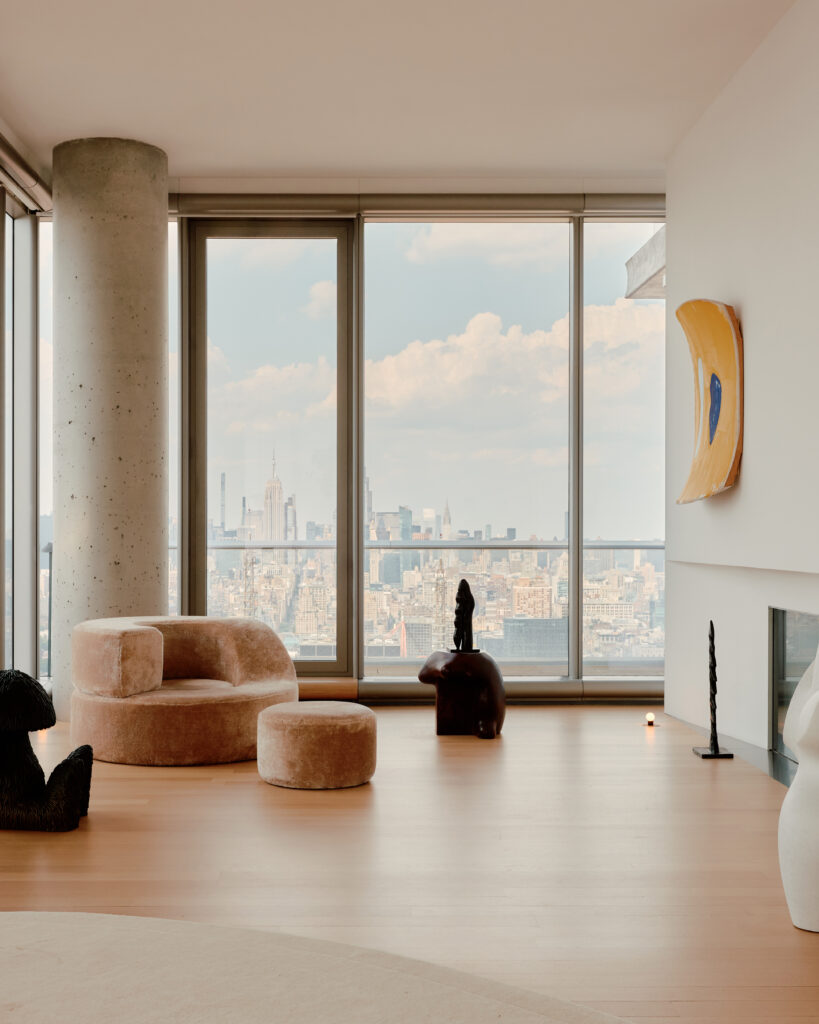
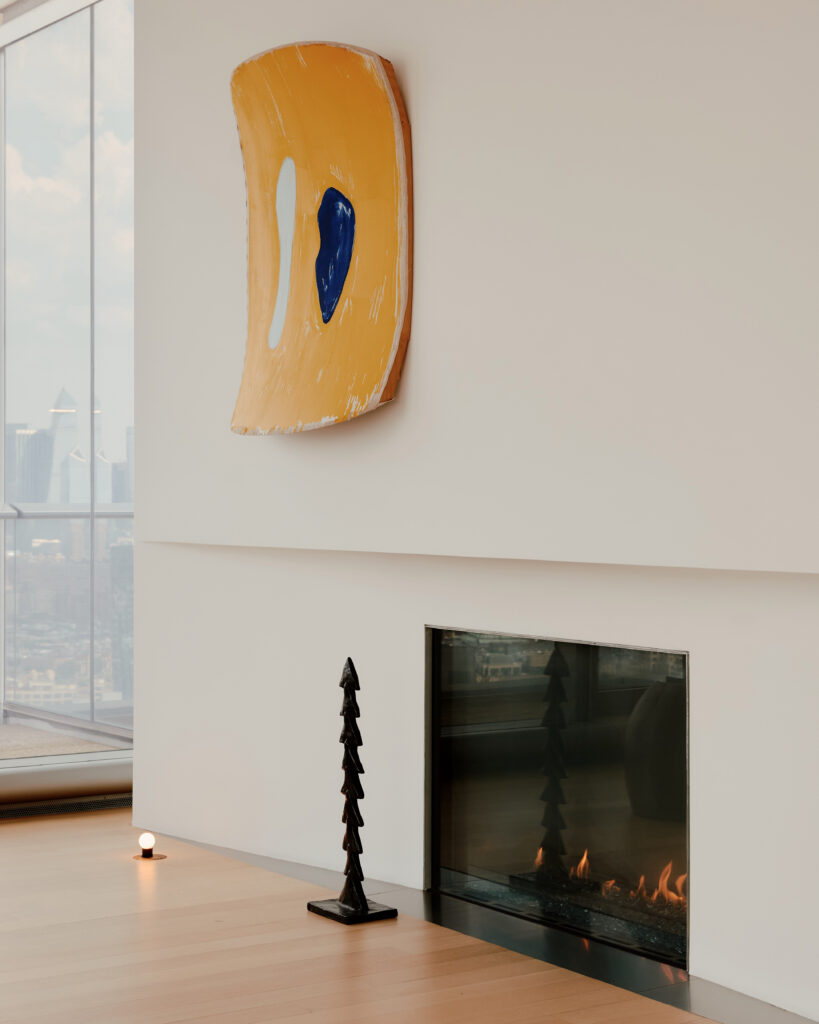
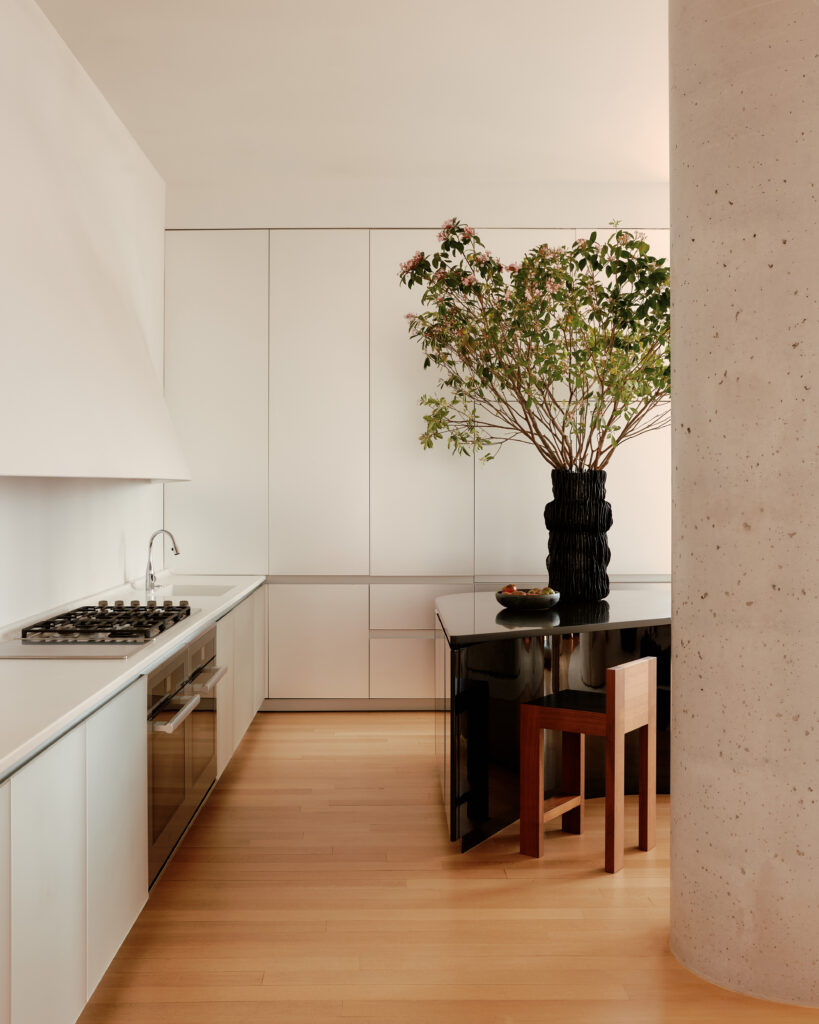
From the outset, architecture and furniture were conceived as inseparable from sculpture. The sweeping nine foot curved kitchen island reads less as a utilitarian element than as a monumental gesture within the spatial choreography. A convex fireplace softens the geometry of the study, while a custom ceiling light above the foyer hovers like a luminous drawing suspended in air. Such interventions blur the distinction between infrastructure and artwork, establishing a rhythm in which curves, shadows, and reflections become the silent language of the home.
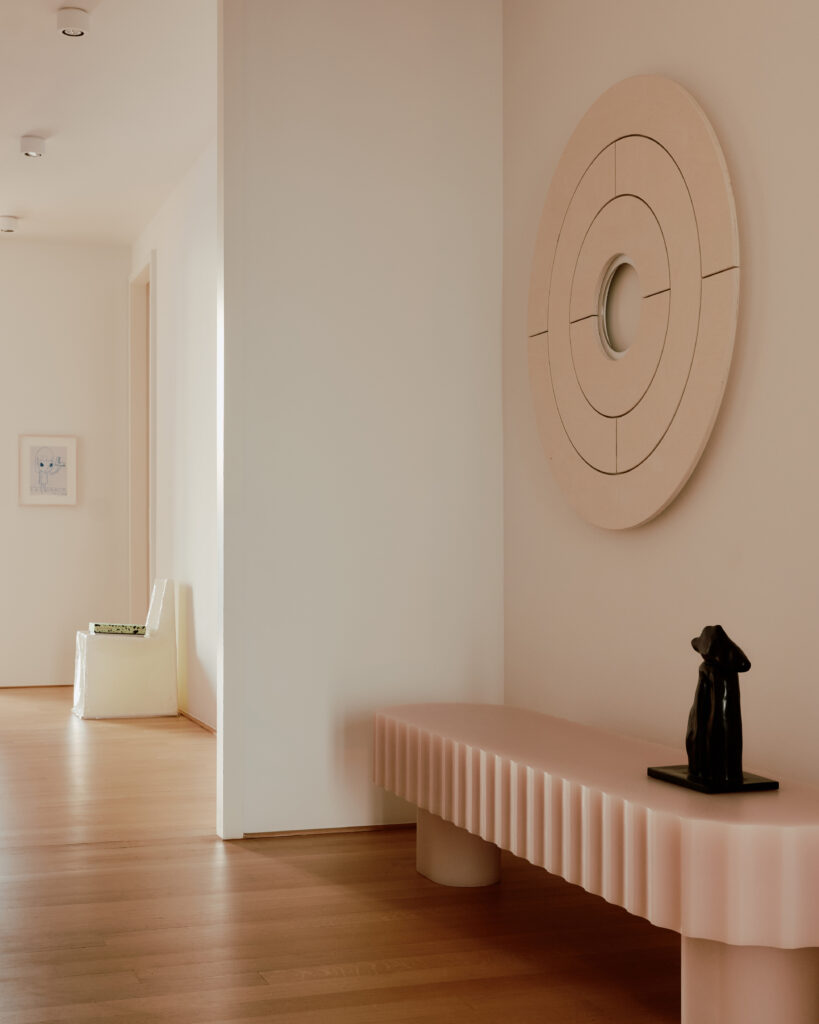
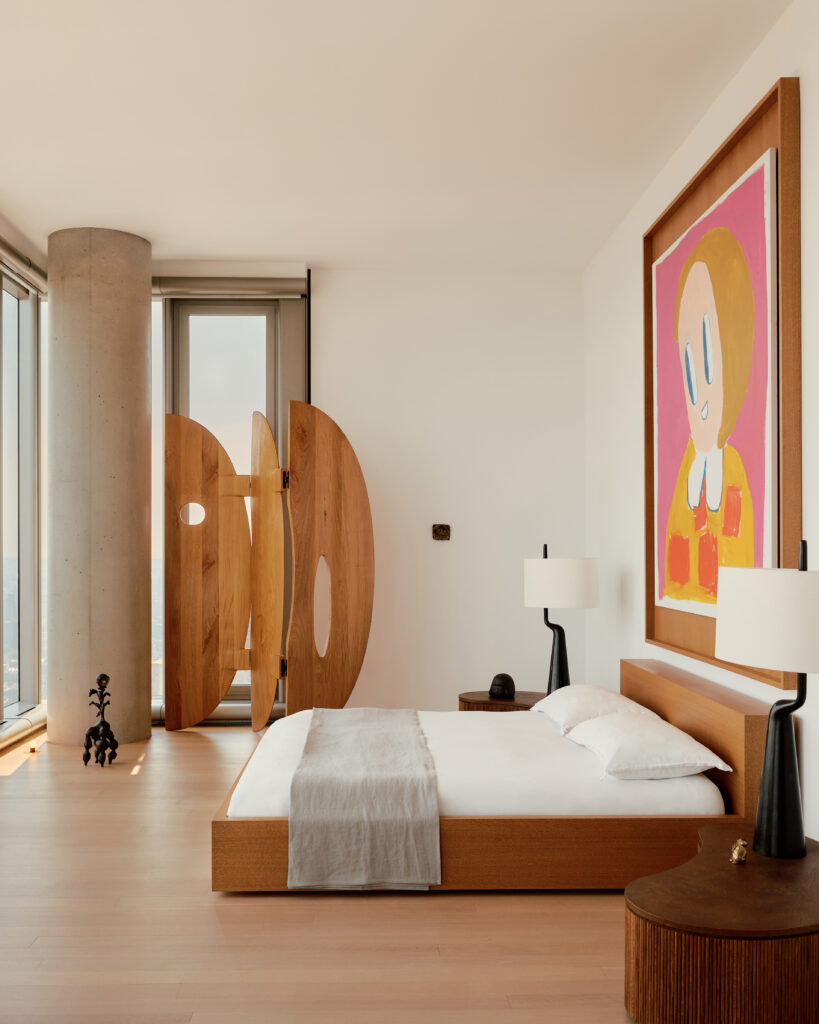
It was within this framework that Polo and Onuska’s art collection began to take shape, catalyzed by the very act of inhabiting the space. A sculptural screen by Luis Arredondo introduces the tactile warmth of carved oak, while the sinuous Lilith lounge chair by Theodore Perdios anchors a moment of quiet repose. Nearby, the expressive canvases of Rashid Johnson and George Condo create a charged dialogue between figuration and abstraction, past and present. For the collectors, each acquisition is less an isolated gesture than a proposition within a broader visual discourse, a way of testing how form, material, and narrative reverberate against one another.
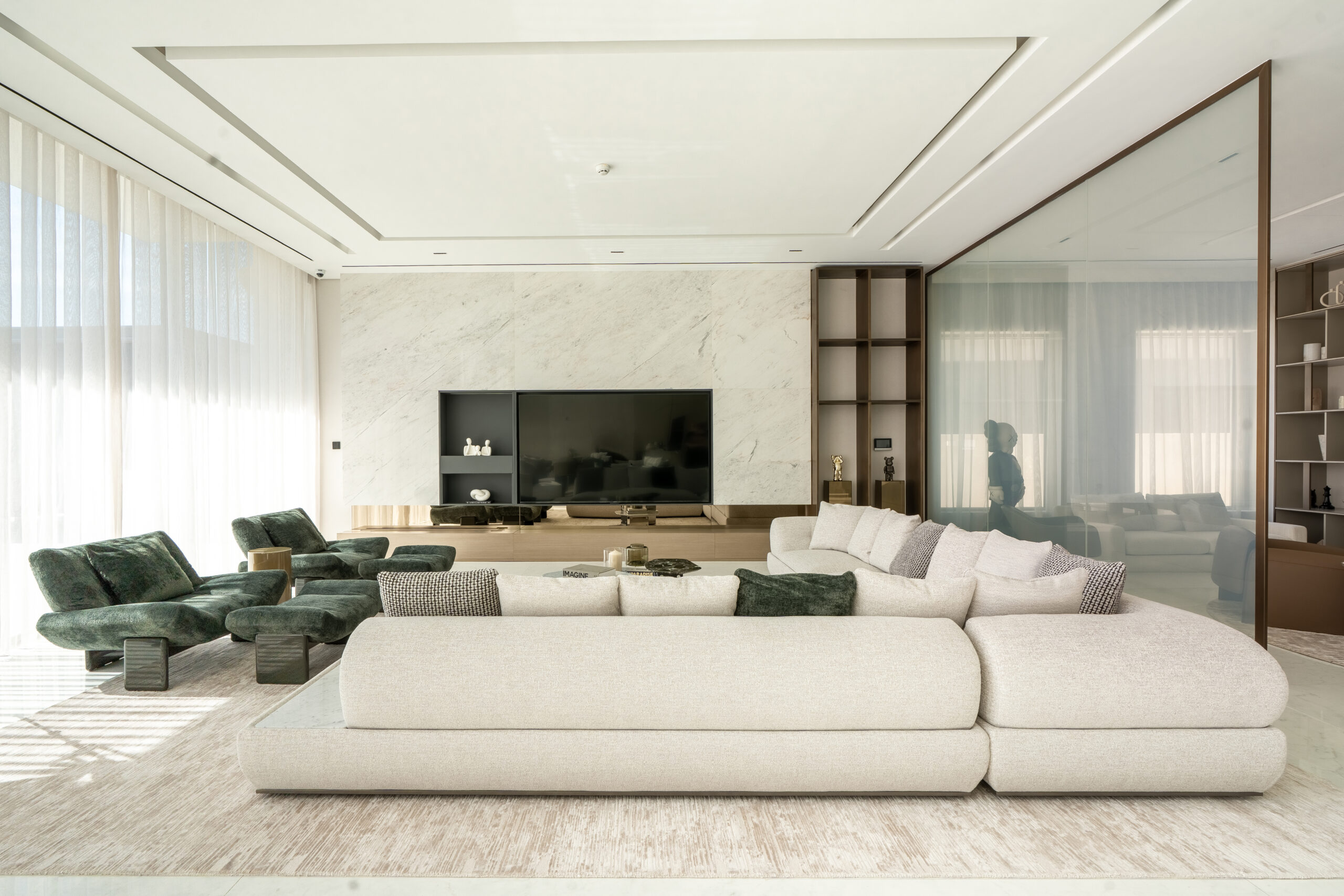
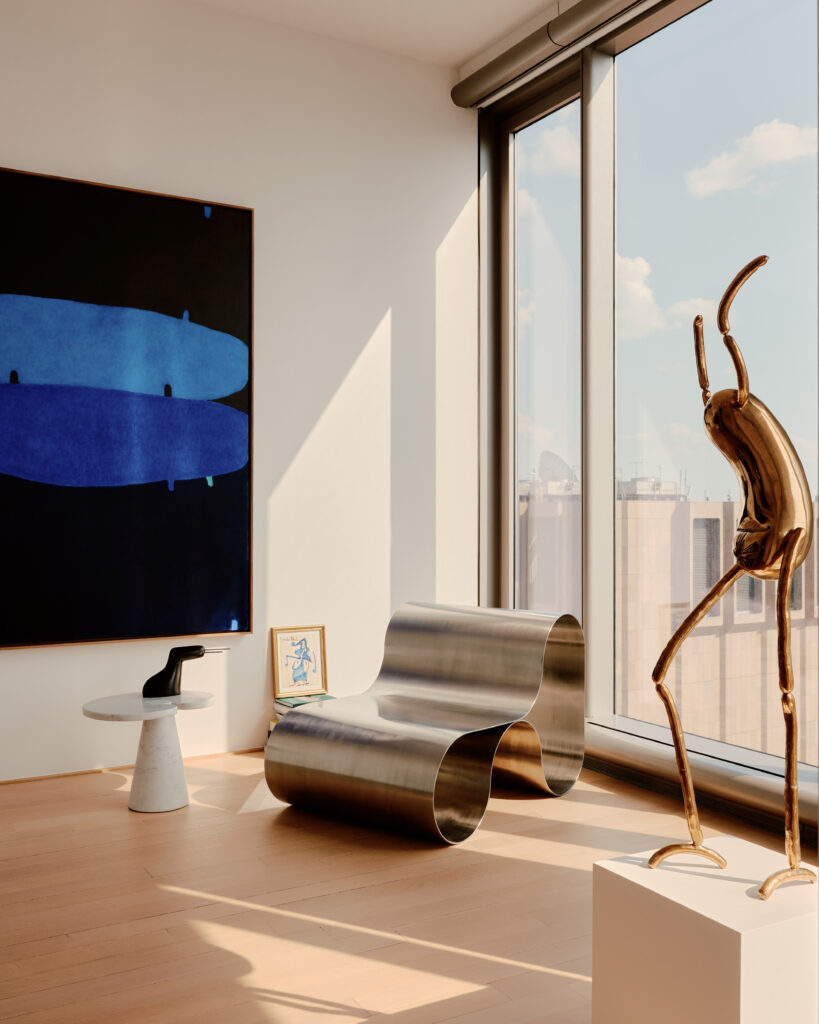
The living room offers perhaps the clearest articulation of this sensibility. Here, a twenty foot curved rug known simply as “The Island” becomes a gravitational center within the pale, restrained palette of the room. Upon it, a vivid electric blue sculpture titled Time for Bed by Paola Pivi interrupts the calm like a sudden flash of chromatic mischief. The juxtaposition is deliberate. As Polo and Onuska often suggest, beauty emerges most vividly where equilibrium is momentarily unsettled.
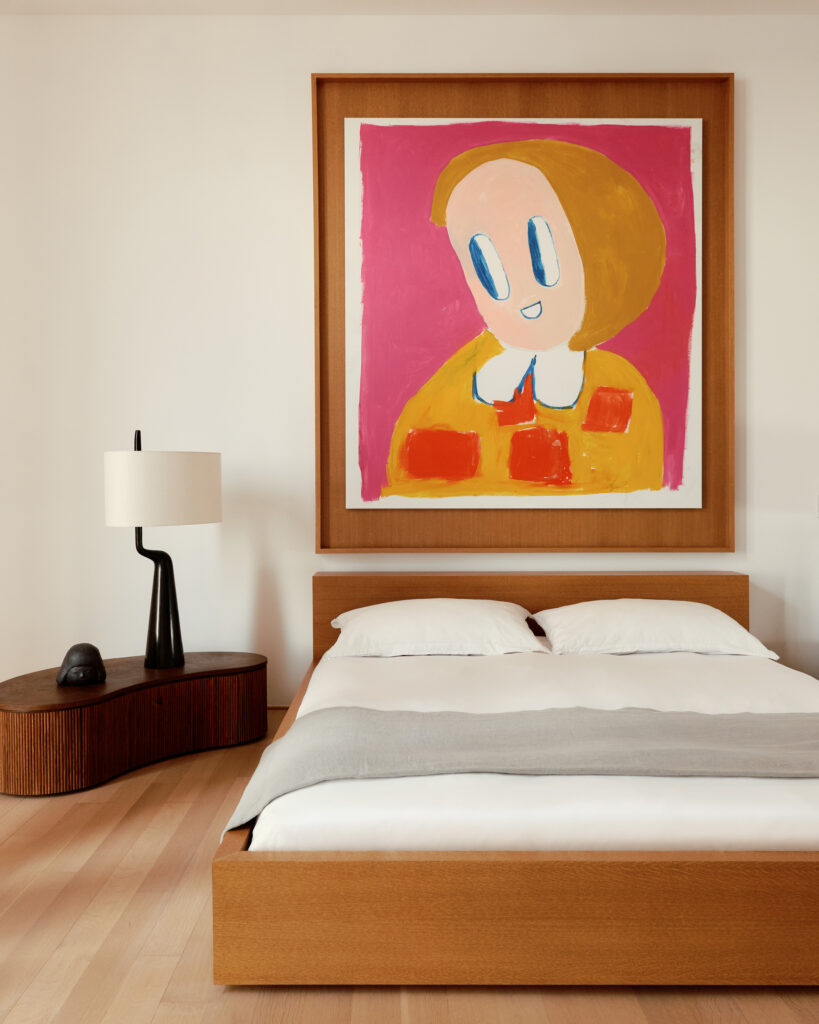
Elsewhere, the atmosphere shifts toward introspection. In the study, the concave canvas Autolykos by Ron Gorchov introduces a moody curvature that echoes the architecture itself. In the primary bedroom, an untitled 2020 work by André Butzer radiates a delicate wash of pink that, against the Manhattan skyline, forms what the collectors describe as “an almost angelic silhouette.”
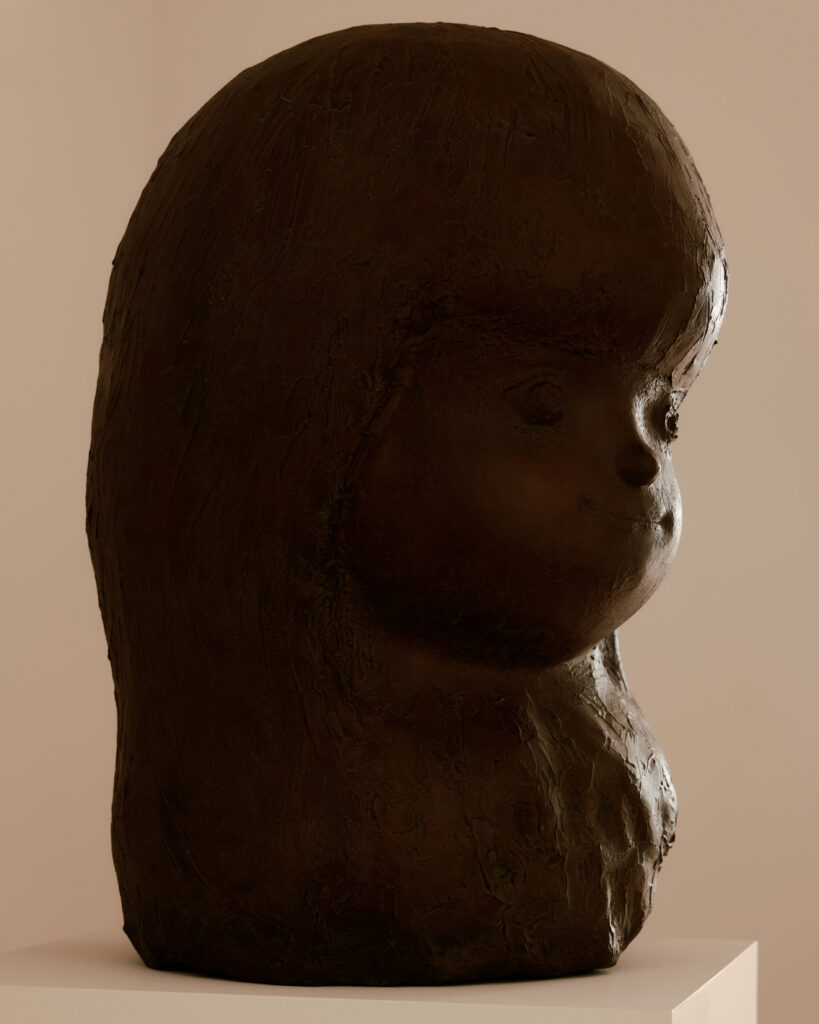
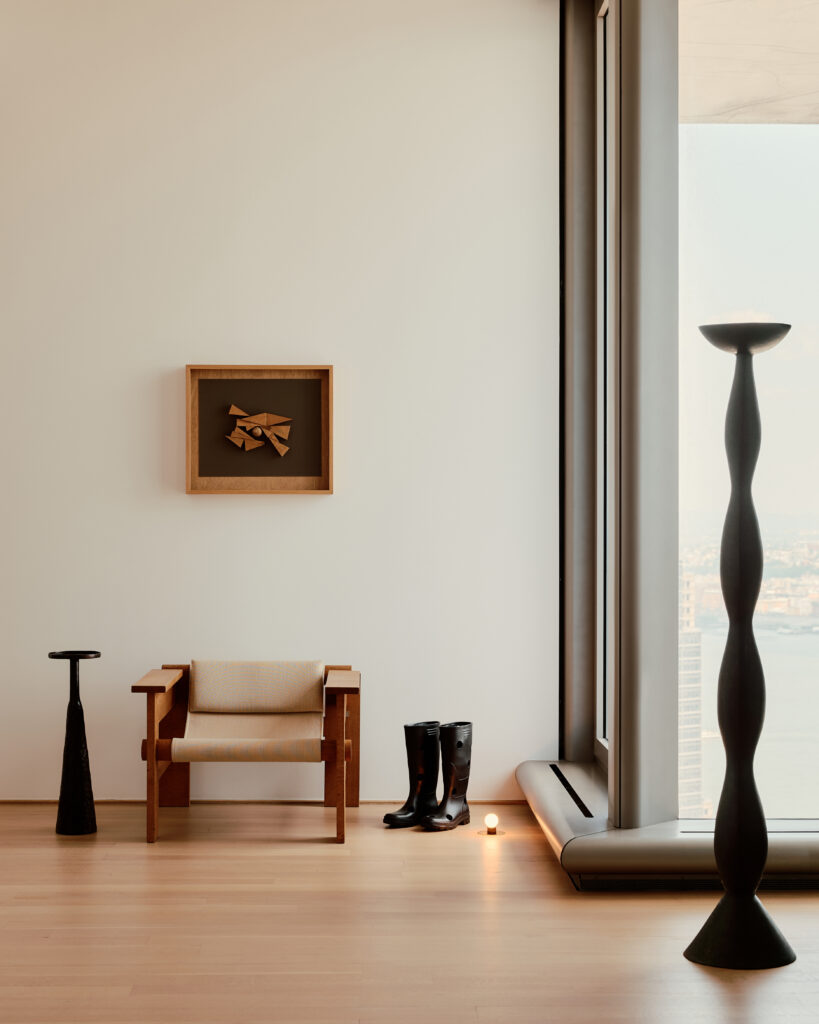
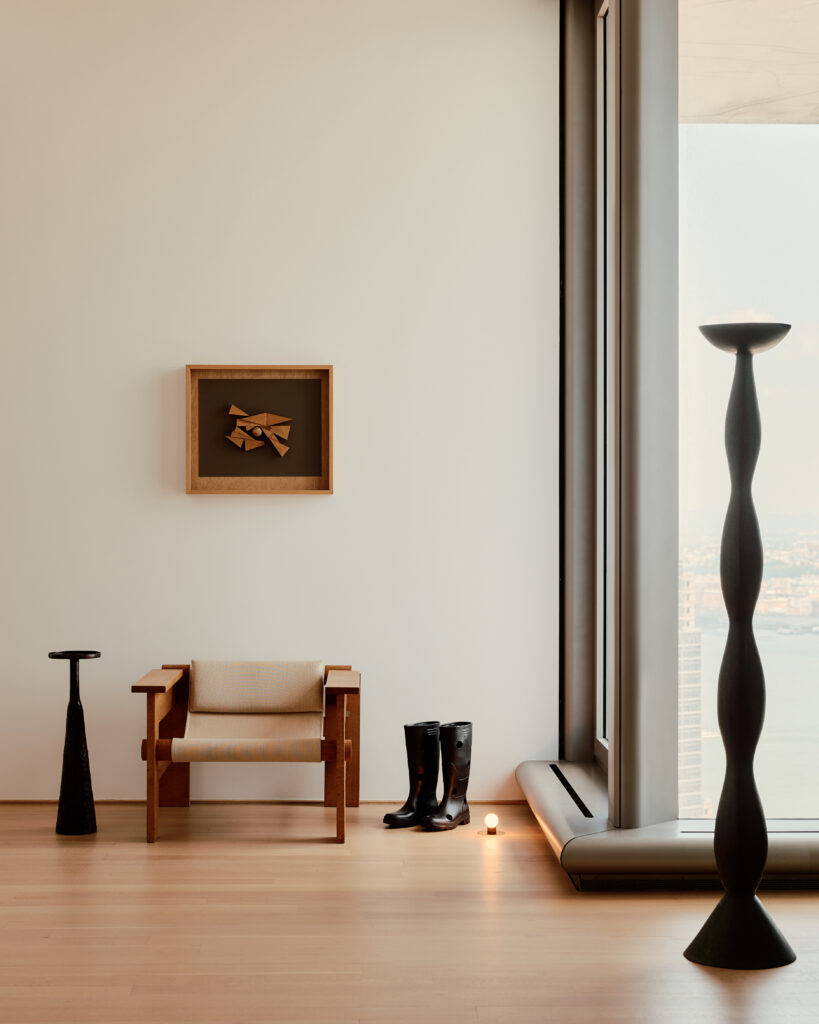
The home’s poetry often lies in unexpected encounters between objects. In the bedroom, patinated bronze rainboots titled A Hard Rain’s A-Gonna Fall by Elmgreen & Dragset stand beside the sculptural French oak armchair created by Sophie Gelinet and Cédric Gepner. The pairing is quietly surreal, balancing irony with refinement.
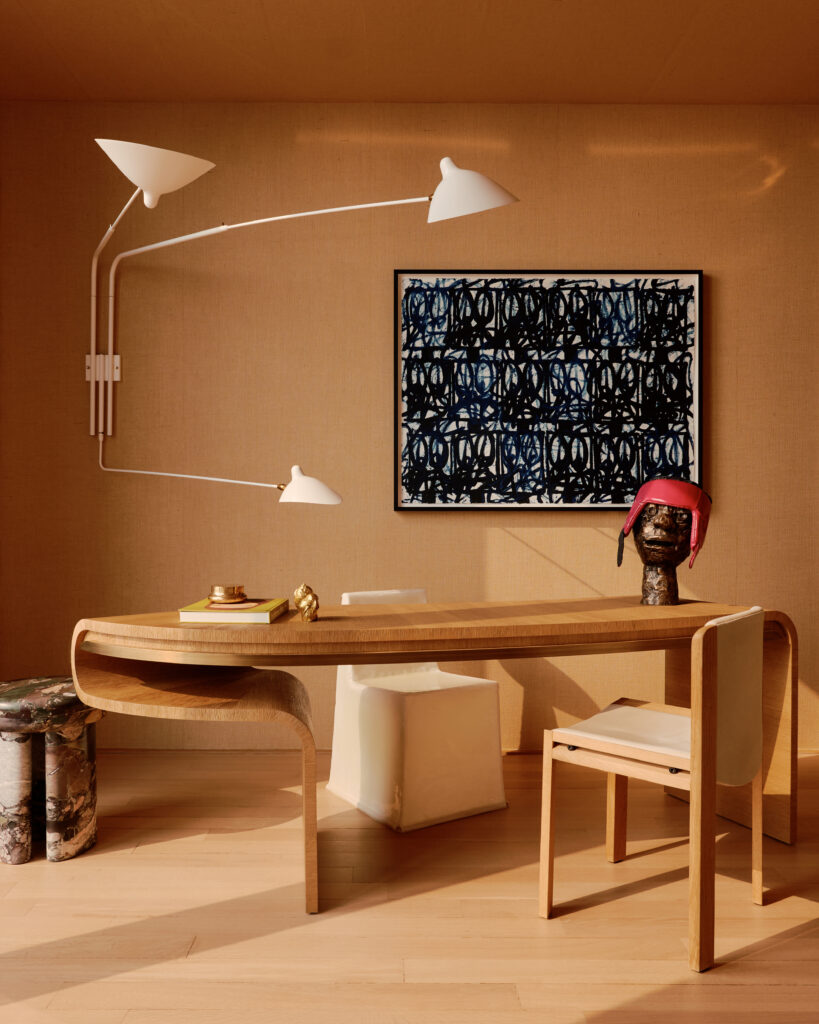
Meanwhile, in the office, a sense of meditative calm emerges from jute clad walls and the precise illumination of a 1954 wall lamp by Serge Mouille, whose articulated arms appear almost calligraphic against the dim background.
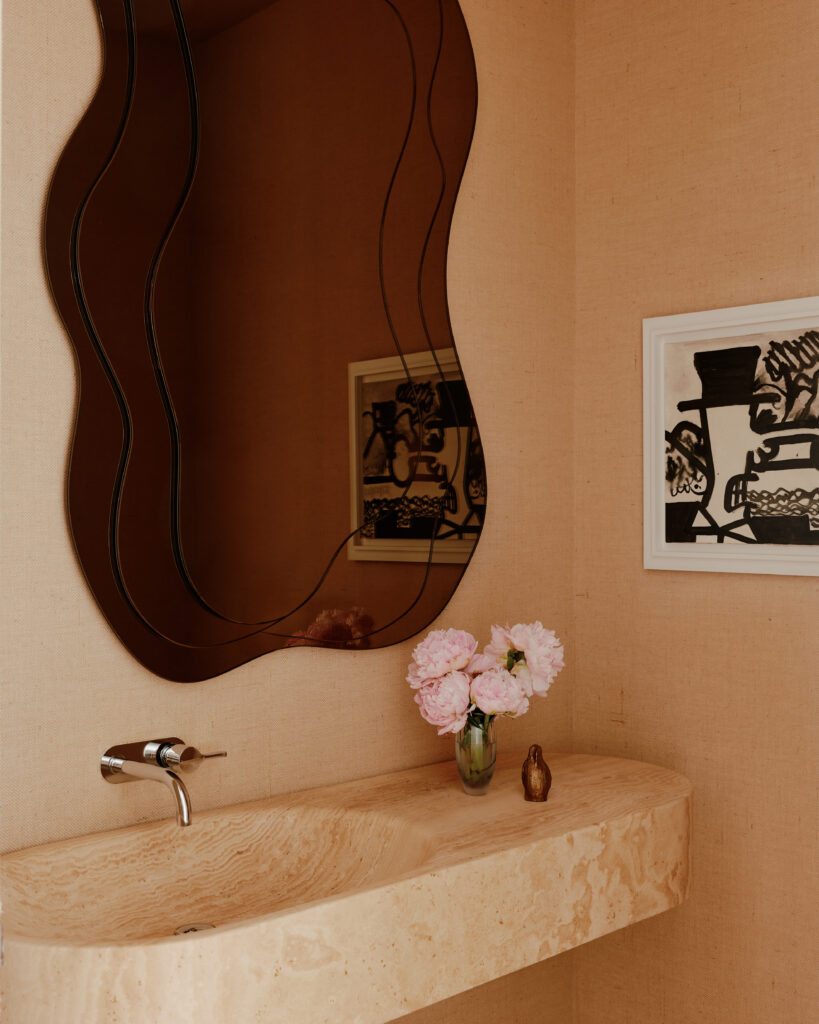
Curves recur throughout the residence like a visual refrain. A rippling bronze mirror by Emma Donnersberg mirrors the soft silhouette of the travertine sink designed by Herzog and de Meuron in the powder room. In the primary bathroom, a white oval soaking tub finds an unlikely companion in the bronze No. 5 side table by Abel Cárcamo, whose sculptural presence echoes the carved ceiling above.
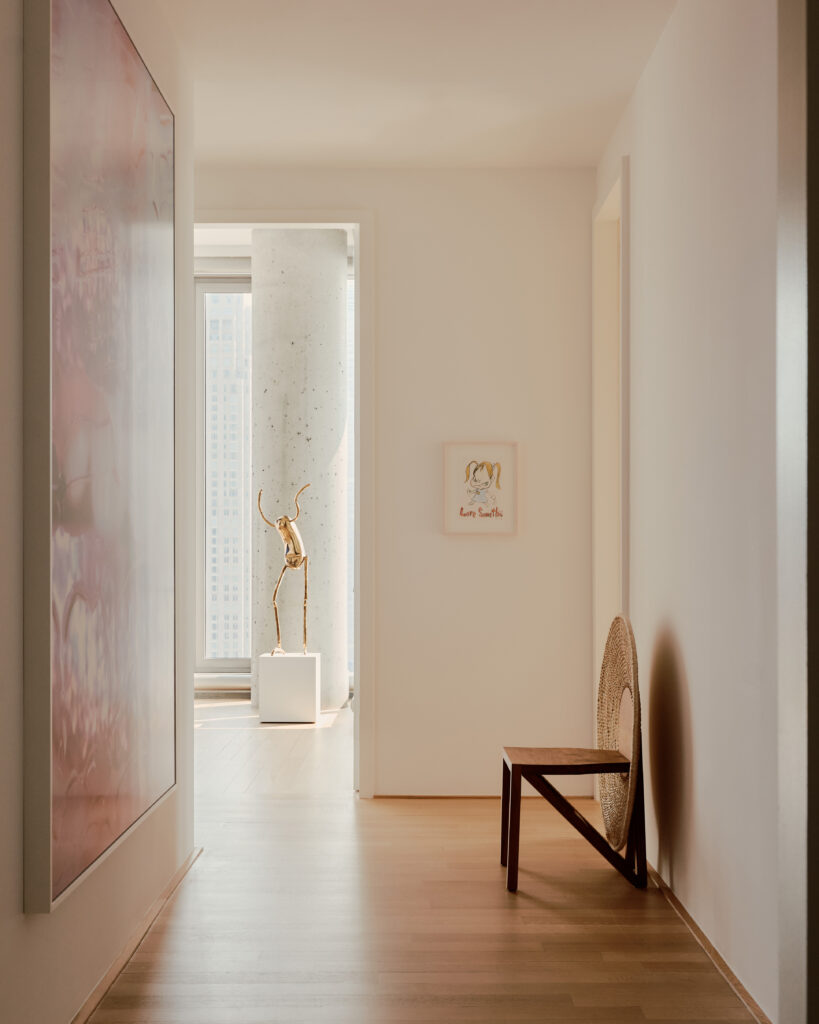
Threaded through these moments is the unmistakable presence of the designers represented by STUDIOTWENTYSEVEN, among them Francesco Balzano, Luna Paiva, Martin Massé, Jan Garncarek, Louise Liljencrantz, Pierre Augustin Rose, Stephen Antonson, Thomas Moisan, Alicja Podgórska Birkne, Charles Hagerman, Emmanuelle Simon, Anthony Guerré, and Arda Yeniay. Their works coexist with icons of twentieth century design such as Joe Colombo and Angelo Mangiarotti, creating a layered chronology that dissolves conventional distinctions between historical and contemporary.
In the end, the Tribeca residence reveals itself not merely as a home but as the intellectual and emotional seed of the gallery that would later emerge across the street. It is here that conversations first unfolded between collectors, designers, and artists, and where the philosophy of STUDIOTWENTYSEVEN quietly took form. Living among these objects, Polo and Onuska demonstrate that collecting is less about possession than about attention. It is a way of thinking through materials, through gestures, through the subtle but persistent question of how beauty might inhabit everyday life