Interview by Marie Claire Maison Arabia
On the occasion of the unveiling of QLOCKTWO’s new flagship boutique in Dubai, Marie Claire Maison Arabia met with Jens Adamik Managing Partner & CEO, QLOCKTWO and Mounir Skhir Managing Director, QLOCKTWO Middle East to discuss their philosophy of time, language, and design.
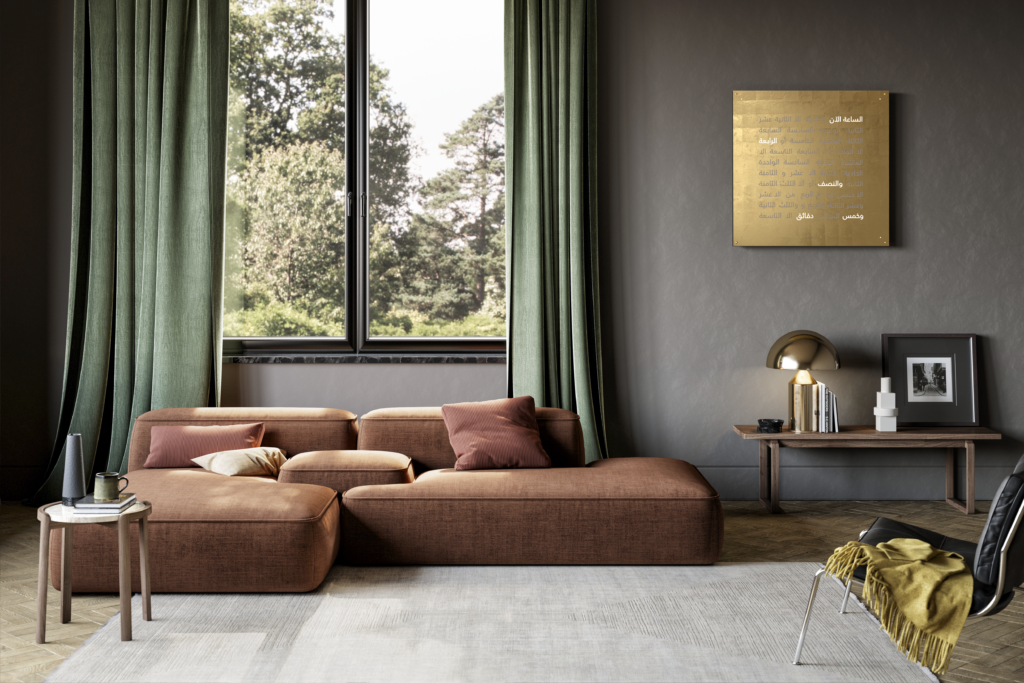
In Dubai, QLOCKTWO quietly redefines our relationship with time.
Here, hours are not read through digits or hands, but spelled out in words — encouraging a slower, more intuitive way of experiencing the day.
It was here that we met Jens Adamik and Mounir Skhir, to understand how a simple yet radical idea evolved into an object that transformed the language of time. The concept is deceptively straightforward: a time display that shows time as it is spoken. Yet it took years of experimentation in their studio before the first QLOCKTWO was released in 2009, fundamentally shifting how time could be perceived, read, and felt.
In this interview, Adamik and Skhir speak about language as a universal connector, cultural perceptions of time, and the role of the sun and the moon in shaping human rhythm — revealing how QLOCKTWO has grown from a singular design object into a broader, poetic universe.
QLOCKTWO turns time from something we measure into something we feel. How would you describe the design philosophy behind it?
Time, for us, begins with the human experience. QLOCKTWO is inspired by how people have always understood time, not through numbers, but through language and observation. Thousands of years ago, time was communicated through words, long before digits or mechanical precision existed.
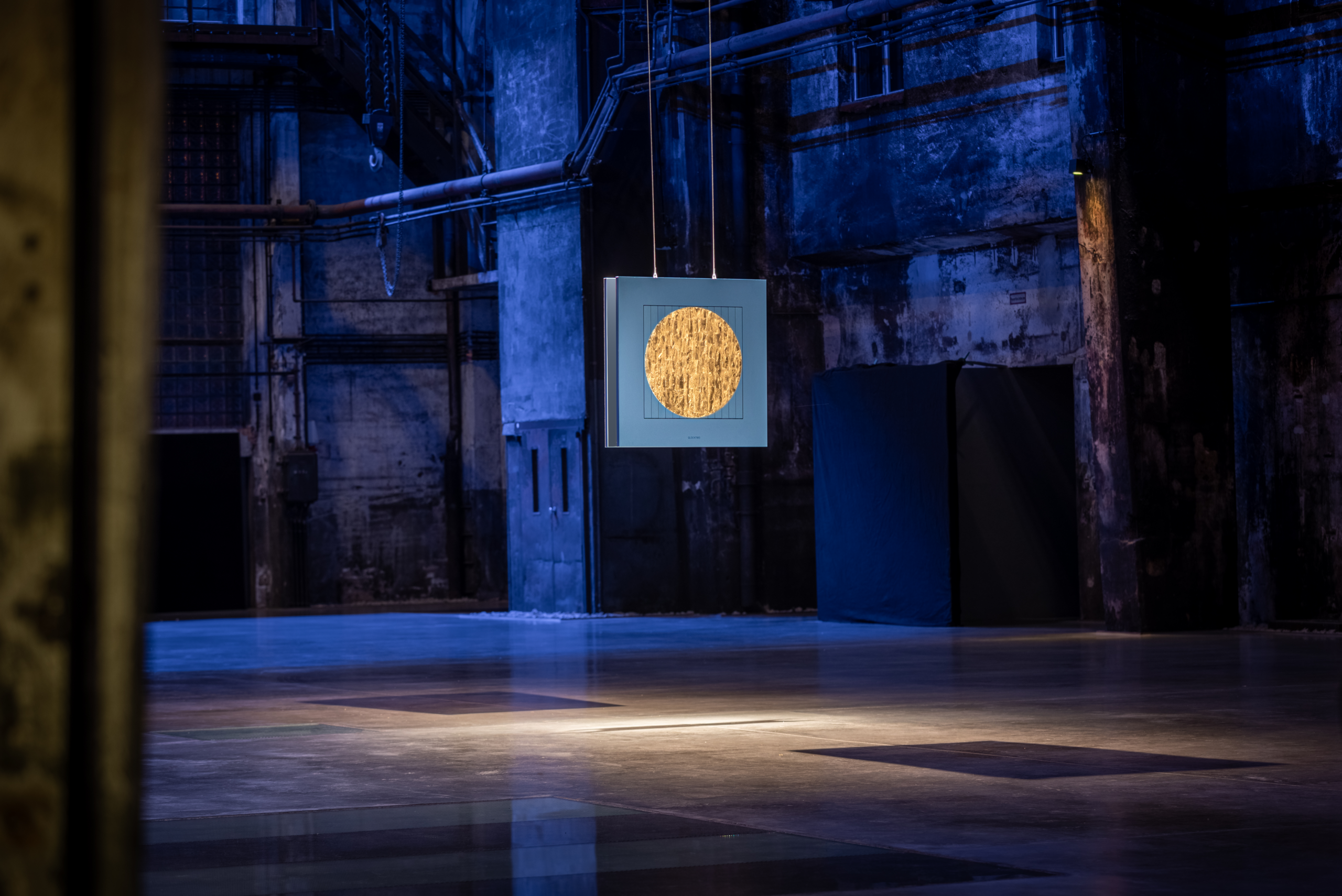
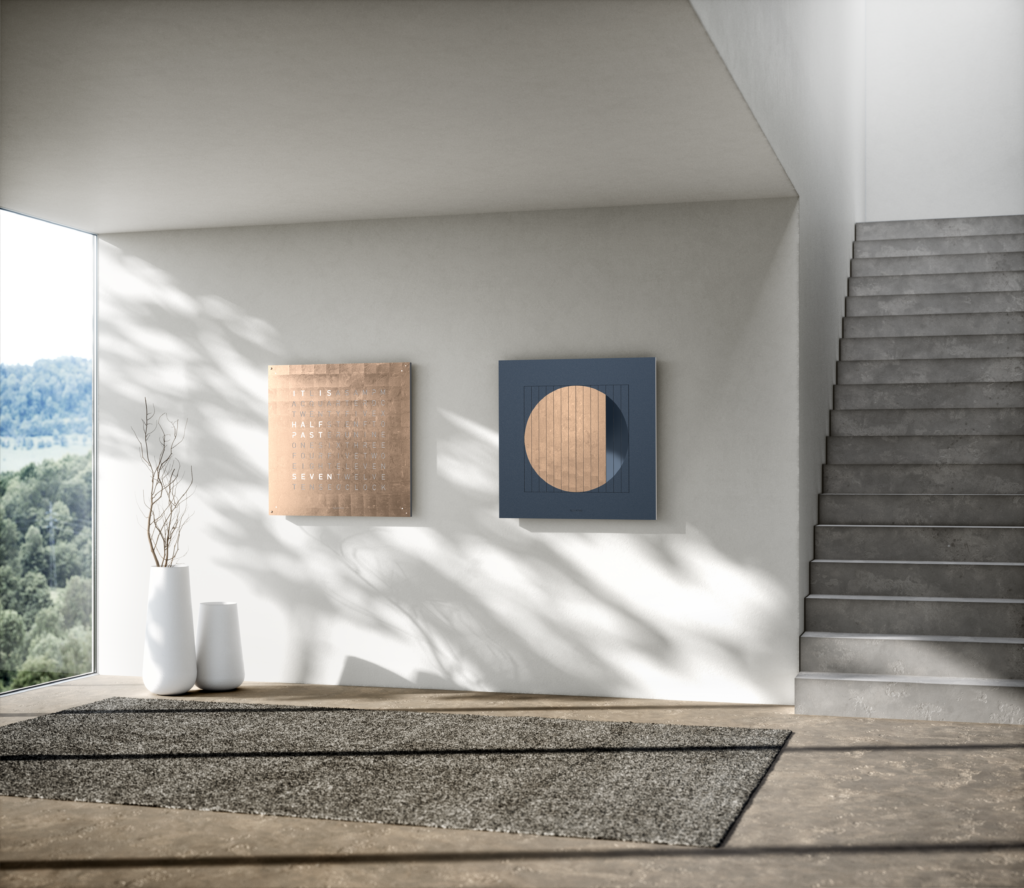
It also comes from observing the two satellites that have always shaped our perception of time: the sun and the moon. These elements define rhythm, cycles, and meaning. From this understanding, we translated time into three extraordinary objects.
The QLOCKTWO Earth displays time in words, in more than 24 languages, because one’s mother tongue creates a deeply personal connection. Three years ago, we introduced QLOCKTWO Moon, which feels particularly meaningful in this region, where the moon is strongly connected to culture, religion, and daily life. Ultimately, our work reflects how time began and how it continues to be felt across the world.
Language seems to sit at the heart of your concept. How does language shape the way we perceive time?
Time has always been communicated through language. Even today, when someone asks you the time, you rarely respond with numbers or gestures, you answer with words. Language shapes understanding, emotion, and connection.
Every country and every region has its own linguistic way of expressing time. For us, language is a bridge between people. When you travel or migrate, you carry three things with you: your culture, your food, and your language. QLOCKTWO embraces this diversity by allowing time to be experienced in the language that feels most personal.
The QLOCKTWO Moon represents a new creative direction. How does it expand the brand’s design language?
QLOCKTWO Moon was developed over several years and emerged from the original vision of the two artists and founders, Biegert & Funk. Unlike traditional clocks, it displays the lunar cycle across 29 days.
Each day, one prism flips, allowing you to visually follow the progression of the moon. You can see exactly how long it takes to reach a full moon, a half moon, or a new moon. It introduces a slower, more contemplative relationship with time, one that is cyclical rather than linear.
In your view, what makes a design truly timeless?
Design becomes timeless when it can exist across cultures and geographies while continuing to hold meaning. The same object can evoke different emotions, interpretations, and impacts depending on where it is placed and who lives with it.
When a design remains relevant in different contexts and continues to connect with people on an emotional level, it transcends trends. That is where timelessness truly begins.