Words by Allegra Salvadori | Images Courtesy of Orient 499, David/Nicolas, Tony Elieh
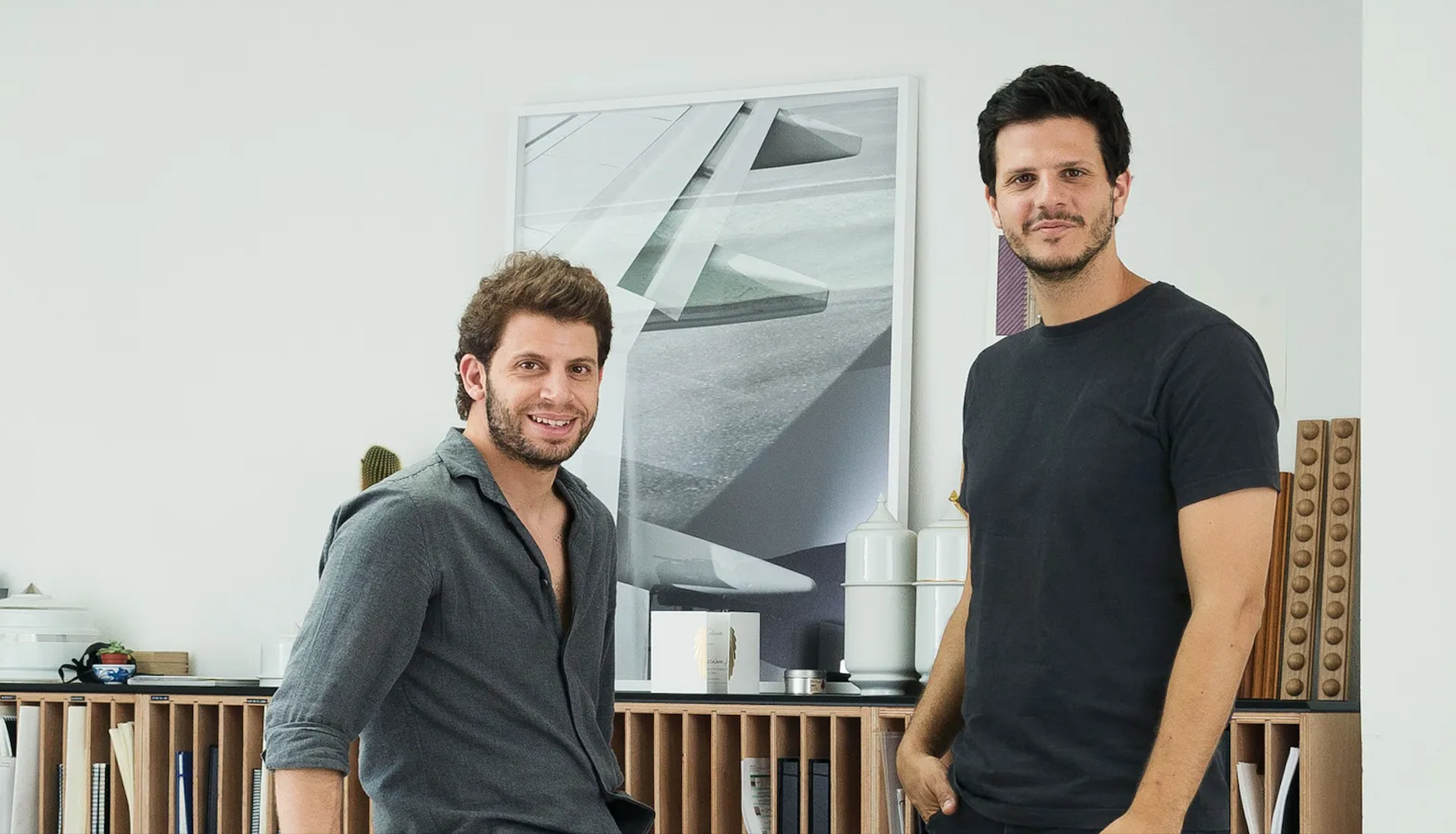
There are collaborations that feel strategic, and others that feel inevitable. Mida, the new collection born from the meeting of Orient 499 and the Lebanese design duo david/nicolas, belongs unmistakably to the latter. It emerges not from trend-conscious alignment, but from a deeper, more organic proximity — a shared belief that craftsmanship is a form of continuity, that heritage is a living organism, and that objects can hold the same emotional intelligence as architecture.
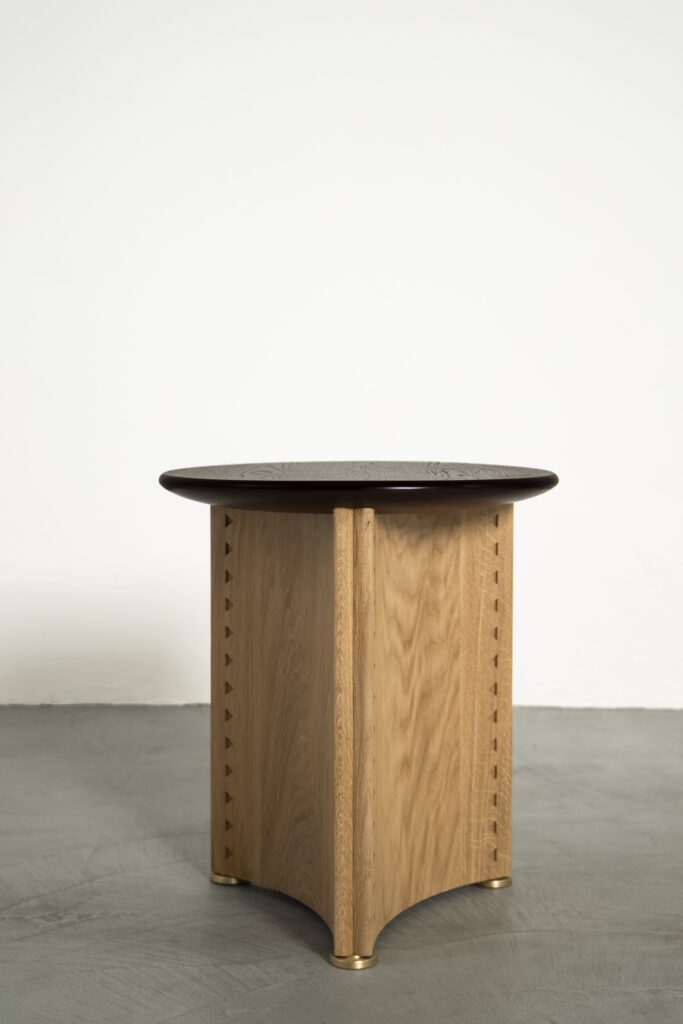
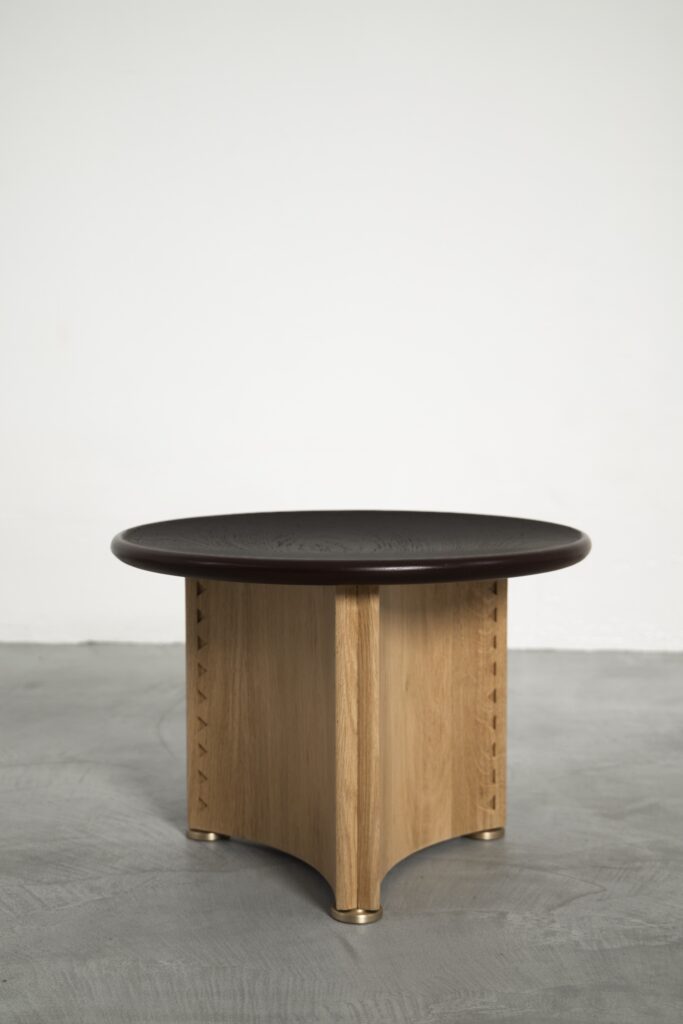
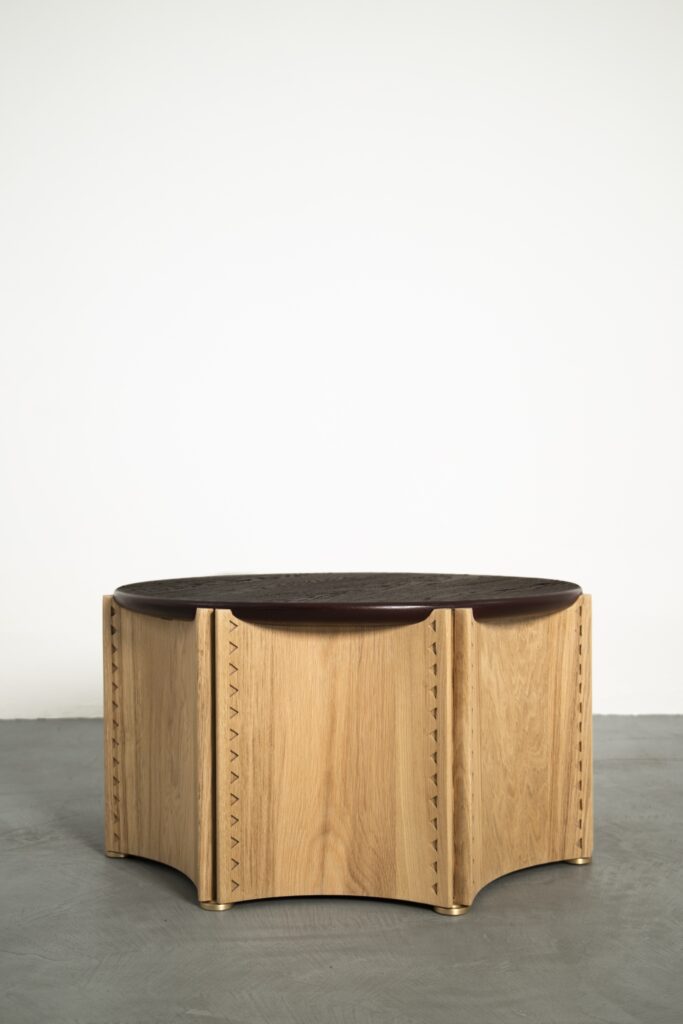
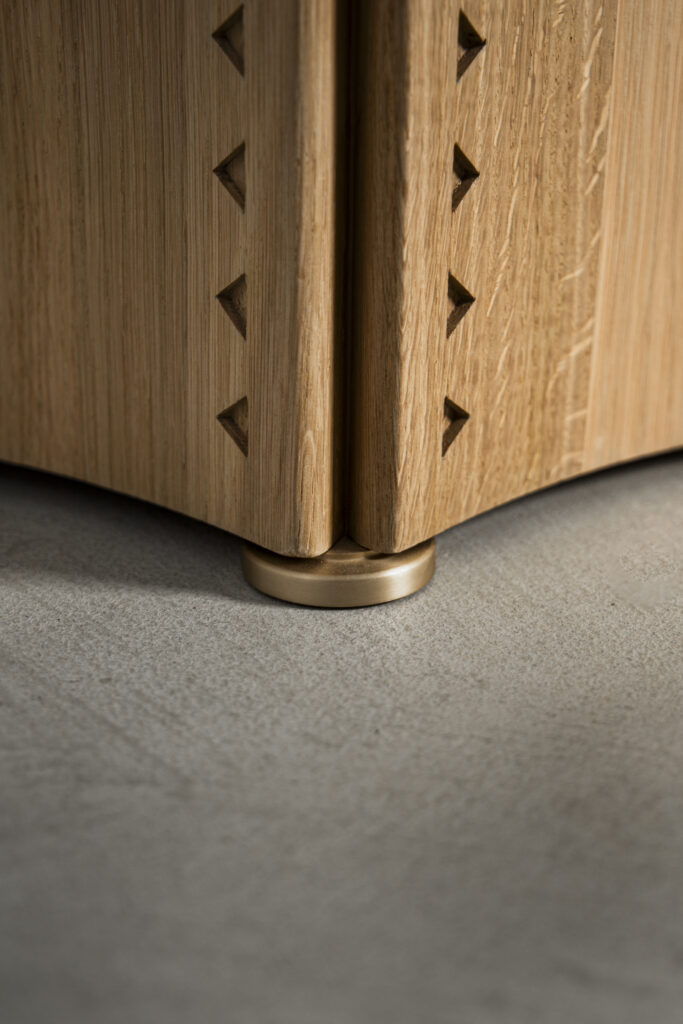
To understand Mida, one must return to the space that inspired it: the majlis, that archetypal Middle Eastern room where families and guests gathered not around spectacle, but around presence. The majlis was never designed to impress; it was designed to receive, to mediate proximity, to choreograph the subtle geometries of conversation. In Mida, the designers translate this cultural memory into a contemporary language: rounded volumes in French oak, tactile engravings, brushed brass legs that elevate without declaring themselves. These are not merely tables and stools; they are compositional anchors that structure the room around them, almost like architectural punctuation marks.
What makes this collaboration particularly resonant is that both Orient 499 and david/nicolas operate through parallel ethics. For nearly two decades, Orient 499 has functioned as far more than a concept store — it is a cultural ecosystem, protecting Levantine savoir-faire through slow-made, artisan-led production. Its universe of coppersmiths, glassblowers, woodworkers, and couturiers is not a nostalgic gesture; it is a form of resistance against the accelerated erosion of craft in the region. Every object they commission is an argument for time, for patience, for hands that carry memory.
david/nicolas, for their part, have built an international practice — from Beirut to Milan and San Francisco — rooted in a similar reverence for material intelligence. Their pieces often hover in a space between imagined pasts and constructed futures, drawing from architecture, music, Italian design, and the idiosyncrasies of Beirut itself. Their work carries a cinematic quality: an object is never just an object, but a fragment of a broader narrative, a scene waiting to unfold. In Mida, this sensibility meets Orient 499’s insistence on craft as preservation, producing forms that feel simultaneously ancient and modern, ceremonial and domestic.
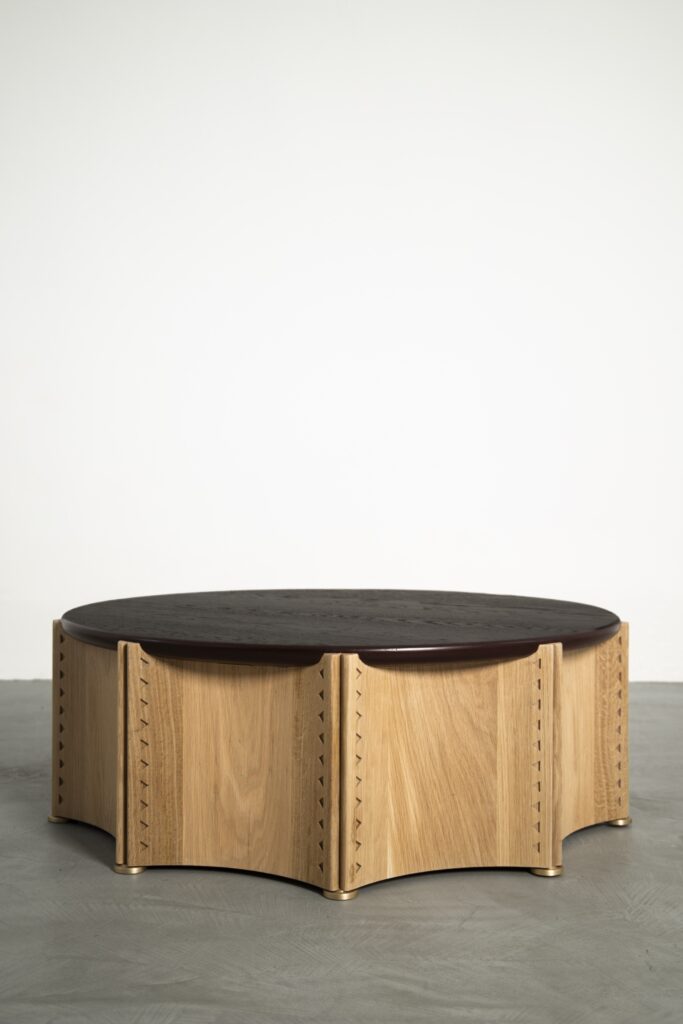
The result is a collection that resists easy categorisation. Each piece — whether the low, generous coffee tables or the compact side table and stool — behaves less like furniture and more like an invitation. The French oak, carved and finished entirely in Lebanon, retains the warmth and irregularity of a natural material shaped by human hands. The brass, brushed to a matte glow, catches light the way traditional metalwork once did in Levantine homes. Together they articulate a quiet, almost ritualistic presence that redefines the spatial DNA of the contemporary living room.
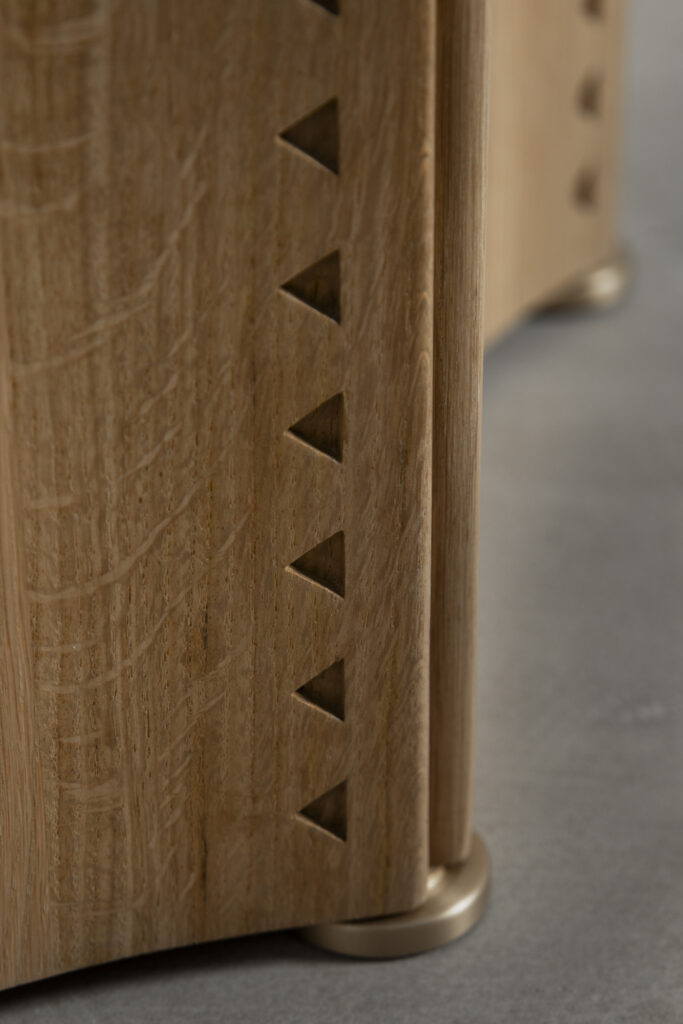
But perhaps the most compelling aspect of Mida lies in what it restores: a sense of intentionality. In a moment where design is increasingly consumed through screens, catalogues, and compressed visual languages, Mida demands physical encounter — the weight of wood, the grain of the surface, the way light settles across its curves. It insists on slowness, on gathering, on noticing. It reimagines the majlis not as a historical reference but as a future-facing typology, one where heritage is not preserved in amber but continually reactivated.
For Orient 499, whose Beirut and Dubai spaces have become destinations for those seeking authentic craftsmanship in an increasingly digitised world, Mida expands their mission into the realm of contemporary collectible design. For david/nicolas, it represents a return to origins — not stylistically, but philosophically — a reminder that the most forward-thinking design remains anchored in the intelligence of hands and the density of cultural memory.