Words by Allegra Salvadori
Terminal 1 of Zayed International Airport is, by definition, a space of transit – a choreography of arrivals and departures, of thresholds more than destinations. It is here, in this architecture of in-between, that Nilufar stages its first major activation in the region at the inaugural NOMAD Abu Dhabi. Across 200 square metres, founder Nina Yashar transforms a fair booth into something closer to a salon: a place where time, materials, and cultures are invited to slow down and speak to one another.
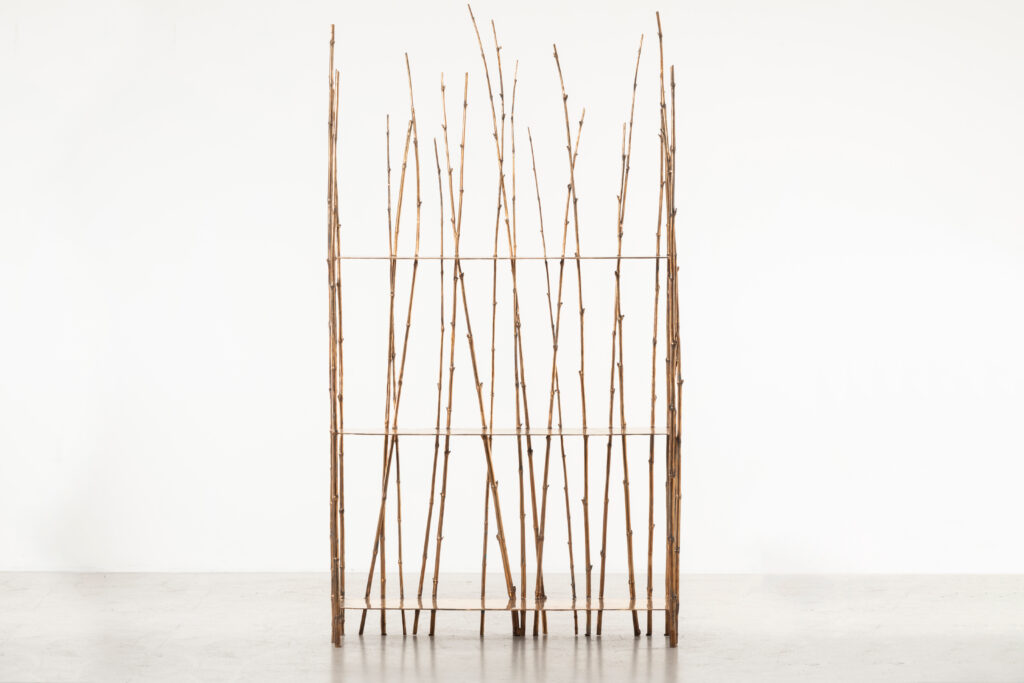
For those who follow collectible design, Nilufar’s presence needs little introduction. Founded in Milan in 1979, the gallery has become a point of reference for how design history can be read, re-edited and projected into the future. Yashar’s personal story is already a kind of cartography: of Persian origin, raised in Italy within a family of textile and carpet merchants, she began by dealing in antique and 19th-century French carpets before gradually shifting her gaze toward mid-century masters and contemporary designers. That early training in pattern, tactility and craftsmanship underpins the curatorial language she has spent more than four decades refining.
Nilufar’s motto – “discovering, crossing, creating” – is not a slogan so much as a method. In Milan, the gallery’s two spaces, the original Via della Spiga venue and the theatrical, La Scala–inspired Nilufar Depot in Viale Lancetti, operate like stages on which eras, movements and authors are continuously recomposed. In Abu Dhabi, this same approach is distilled within NOMAD’s context, where a roving collectible design fair meets the specific cultural and aesthetic fabric of the Gulf.
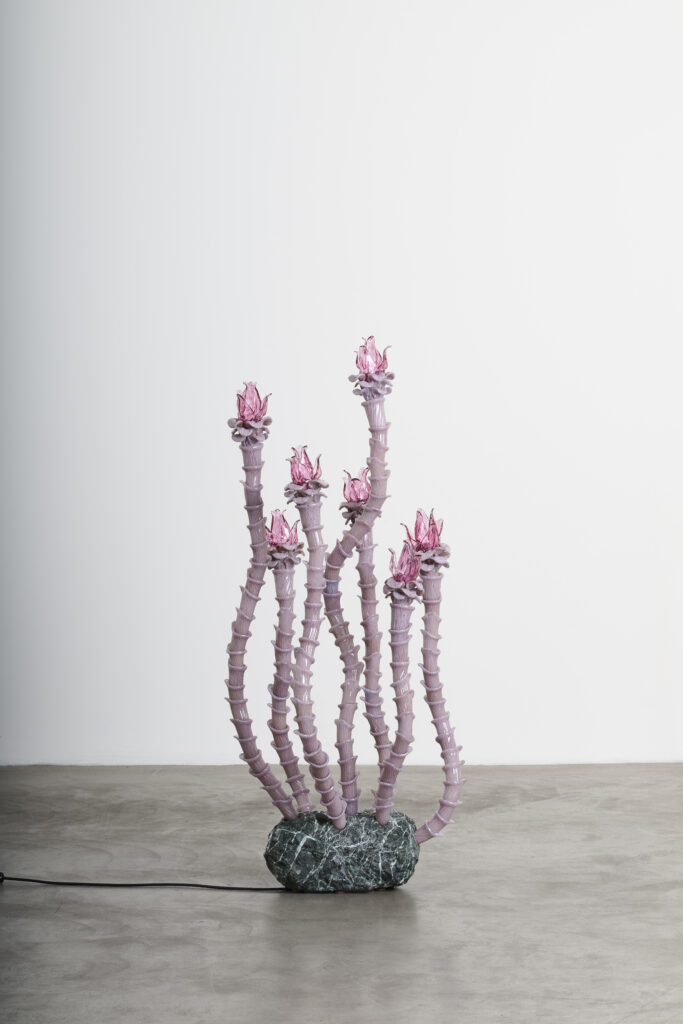
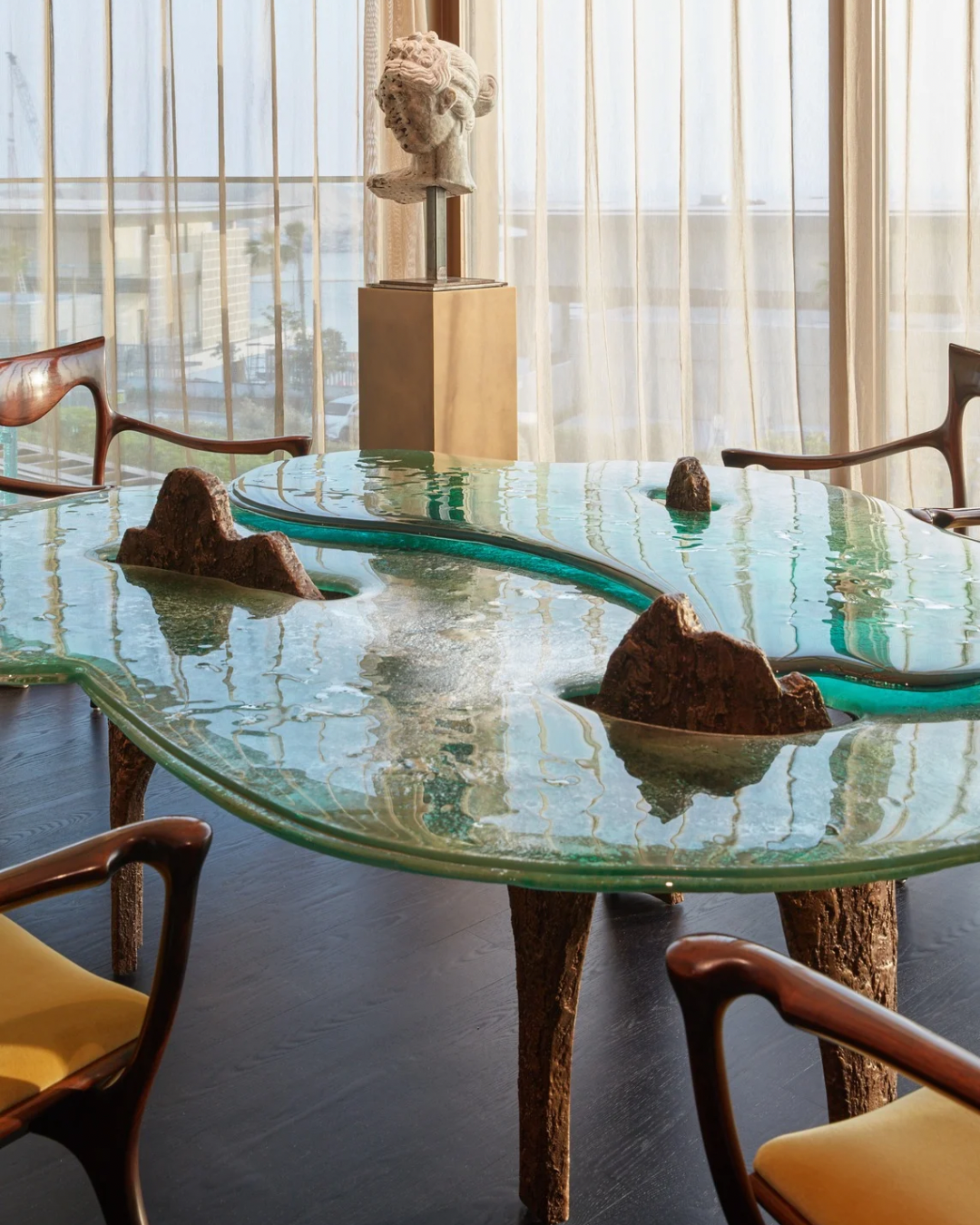
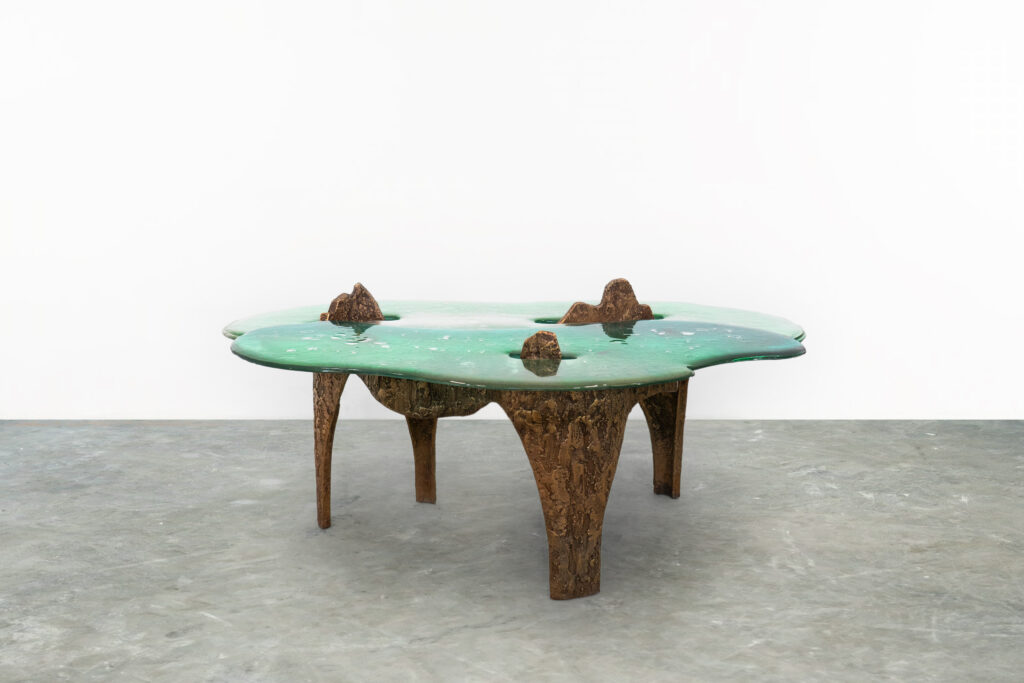
Rather than a linear survey, Yashar proposes a constellation of designers – from vintage icons to contemporary studios – whose works together form a nuanced meditation on material culture. Many appear briefly like characters in a broader narrative: Osanna Visconti’s poetic bronze casting, Christian Pellizzari’s chromatic Murano glass, Allegra Hicks’ sculptural textiles, Maximilian Marchesani’s luminous geometries, Odd Matter’s speculative surfaces, and StudioDanielK’s jewellerly-inspired forms. Each offers its own reading of memory, process, and transformation.
Yet among these voices, one body of work articulates a particularly profound resonance within the regional context: ETEREO.
ETEREO: A Regional Voice with Global Intent
The Dubai-based studio stands at the heart of Nilufar’s Abu Dhabi debut, not only for its formal refinement but for the way its research-driven practice speaks directly to the UAE’s evolving design landscape. Their explorations in carbon and marble reinterpret the notion of solidity, pairing one of design’s most historically charged materials with one of its most technologically advanced.
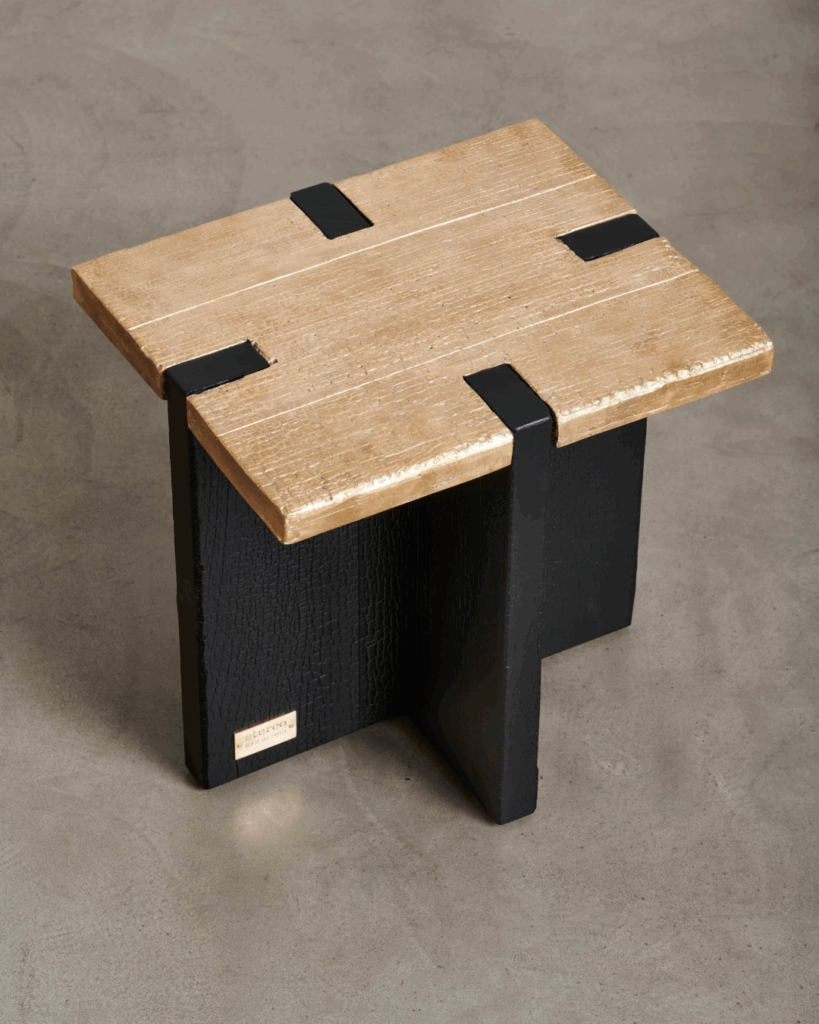
Carbon, often associated with aerospace engineering, becomes for ETEREO a vessel for weightlessness and structural clarity. Marble, rooted in architectural memory, is treated with an unexpected lightness. When the two meet, they generate compositions that feel both elemental and futuristic: geological in presence, yet engineered toward new possibilities. In a region where the dialogue between tradition and innovation shapes so much of the cultural imagination, ETEREO’s work feels uniquely attuned.
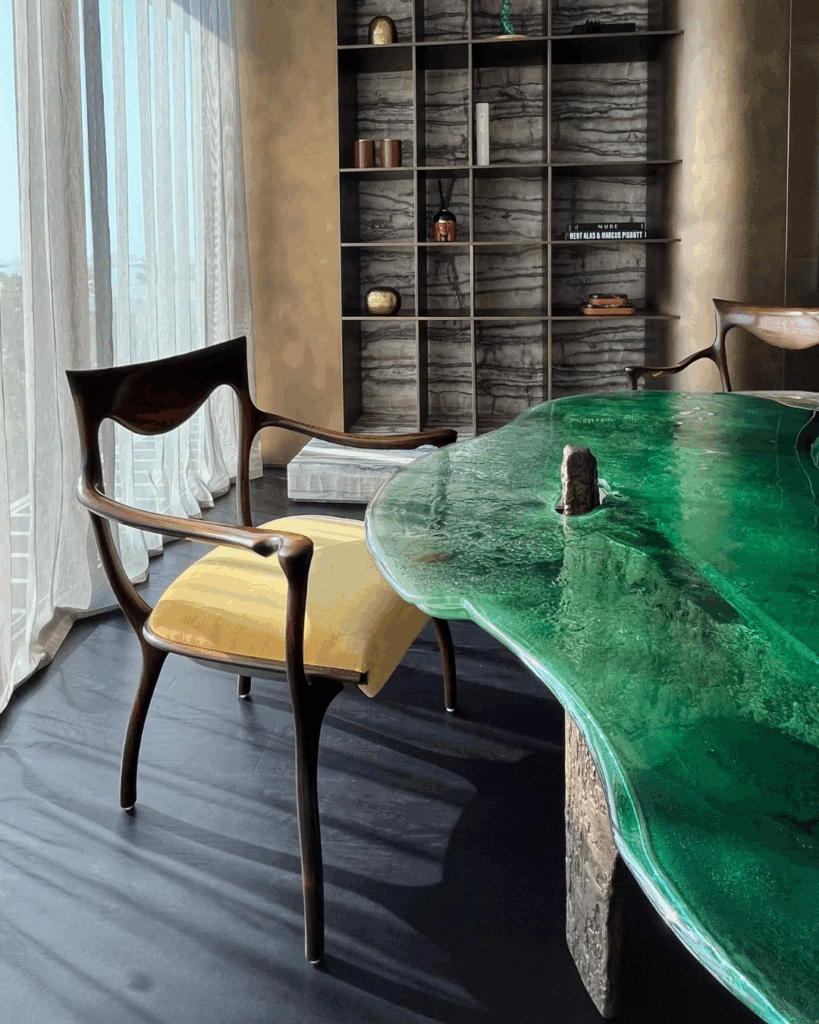
Within Nilufar’s presentation, their pieces act almost like anchors — works that speak to the region from within the region, while engaging seamlessly with Nilufar’s historical and contemporary voices. Their presence underscores NOMAD’s central proposition: that the Middle East is not only a site for collecting but a site for cultural authorship, experimentation, and material research. ETEREO represents a decisive marker of where regional design is heading: bold, conceptual, materially precise, and globally conversant.
Design as Continuum
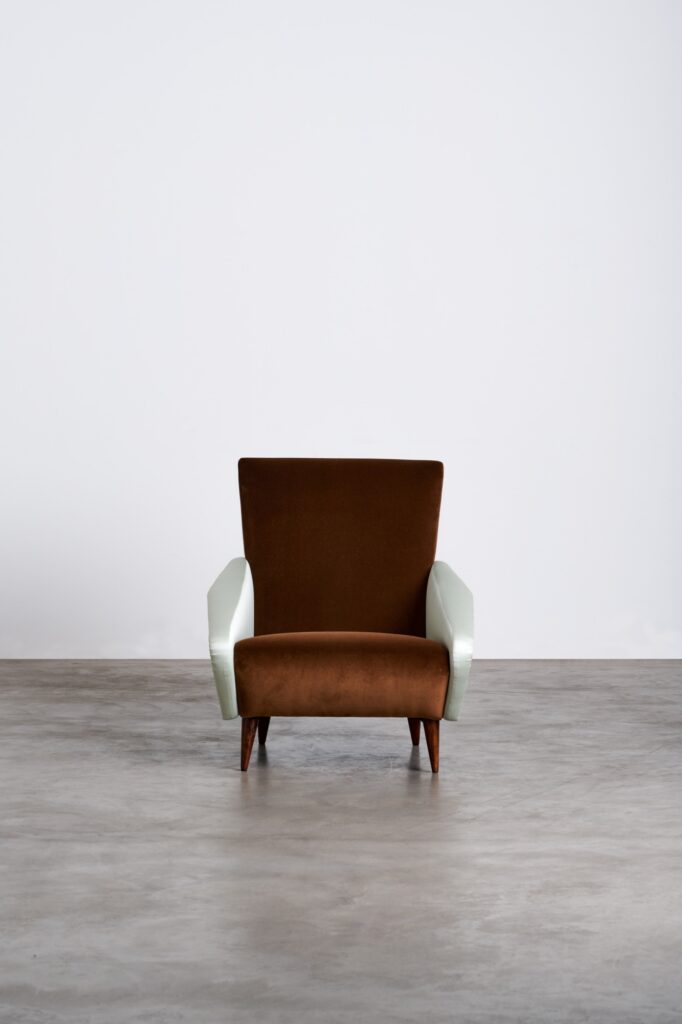
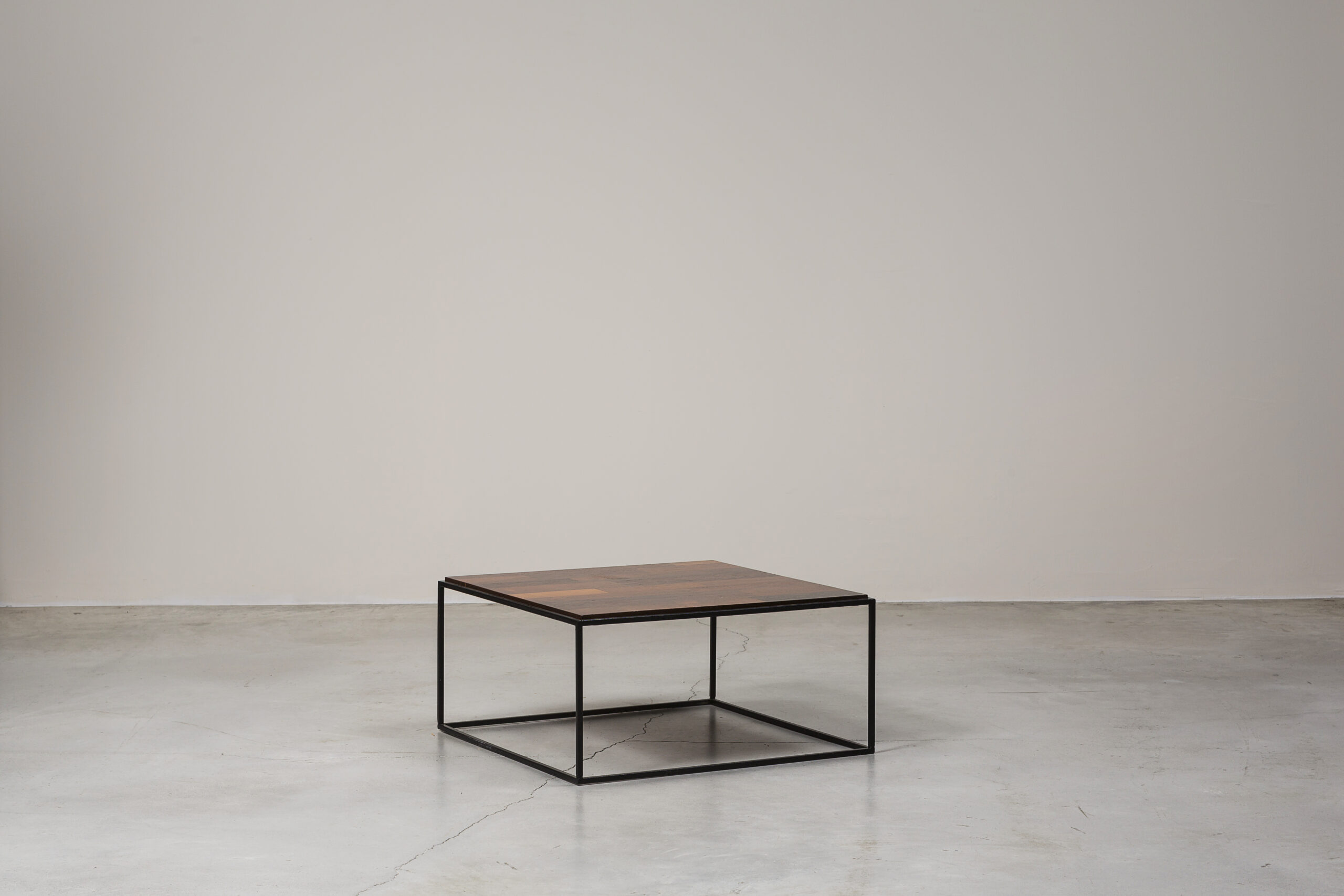
Anchoring this contemporary dialogue, Yashar places historical works by Gio Ponti and Jeorge Zalszupin — pieces that do not appear as relics but as active interlocutors, proving that design history is less a canon than a living continuum. Their presence alongside the regionally rooted voice of ETEREO illustrates Nilufar’s long-standing belief: that meaningful conversations in design occur through crossings, juxtapositions, and new proximities.
This is perhaps the core of Yashar’s project at NOMAD Abu Dhabi: to show that collectible design is not simply about rarity or market value, but about how objects become carriers of stories, of embodied knowledge, of shared imaginaries. In the Gulf, where questions of heritage, futurity and cultural diplomacy are particularly acute, Nilufar’s debut reads almost as a proposal. It suggests that the most meaningful way to engage with global design is neither through passive consumption nor through rigid protection of tradition, but through curated encounters – crossings – that allow new configurations to emerge.
In the end, Nilufar’s booth in Terminal 1 functions like a temporary geography within a geography of transit: a place where bronze remembers branches, glass remembers sand, carbon remembers structure, and marble remembers geological time. History, craftsmanship and innovation are not opposing forces here, but three coordinates on the same map. And somewhere between departure gate and arrival hall, visitors are invited to step into that map, if only for a moment, and inhabit the world as Nina Yashar sees it – as a dense, moving archive of forms, materials and ideas, endlessly recomposed.