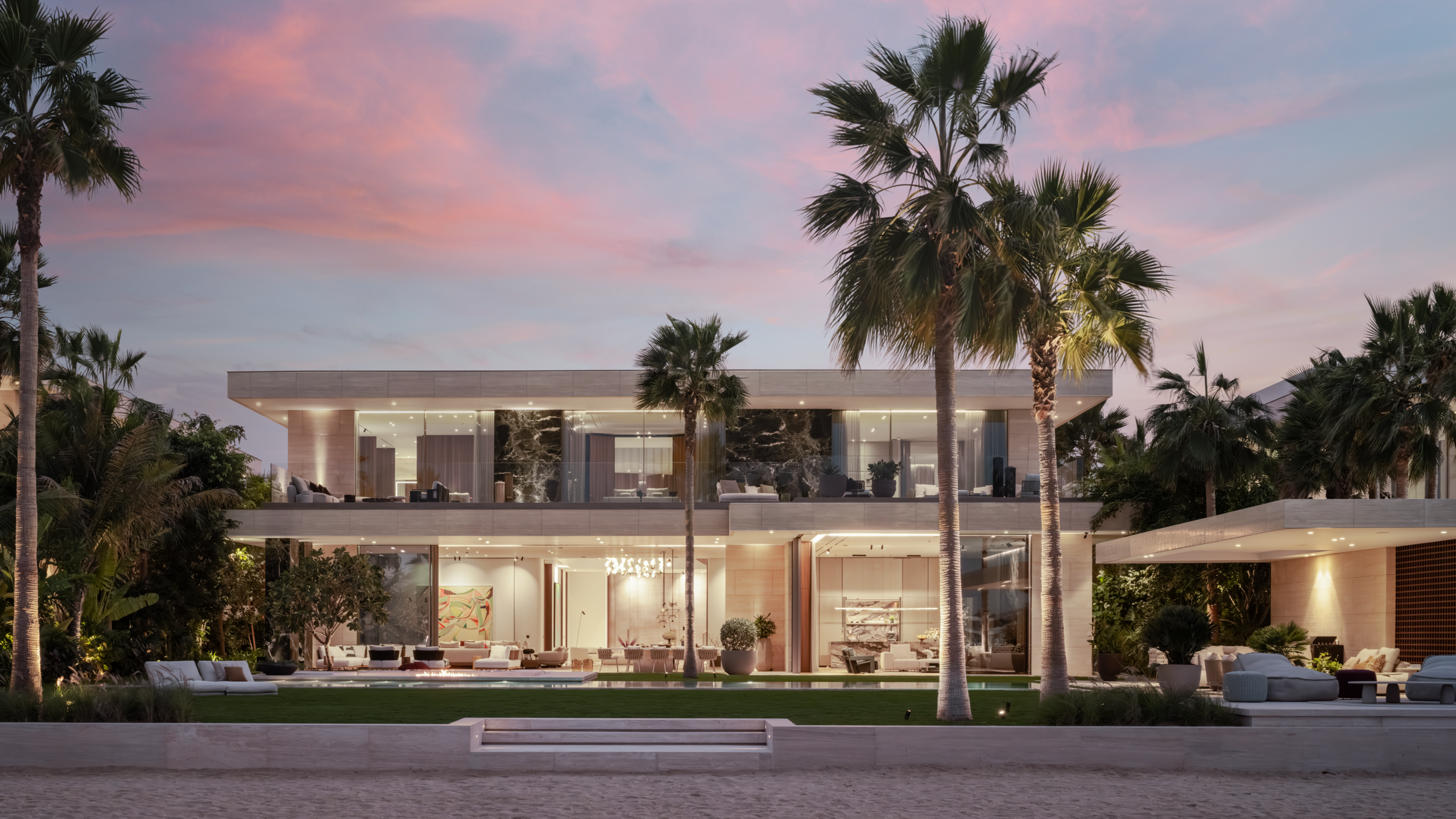
On the still, sun-washed edges of Jubail Island in Abu Dhabi, Marrakech rises not as spectacle but as presence. The five-bedroom villa, conceived as a turnkey commission by Dubai-based C’est ici Design, transforms 450 square metres into a meditation on monumentality and intimacy—proof that scale and softness are not mutually exclusive.
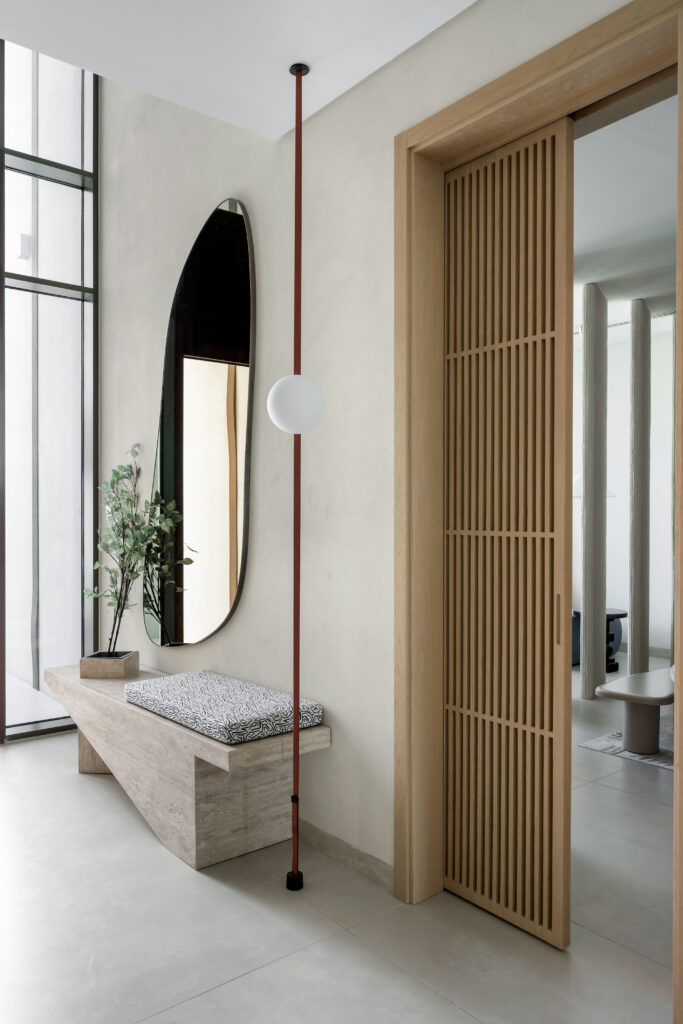
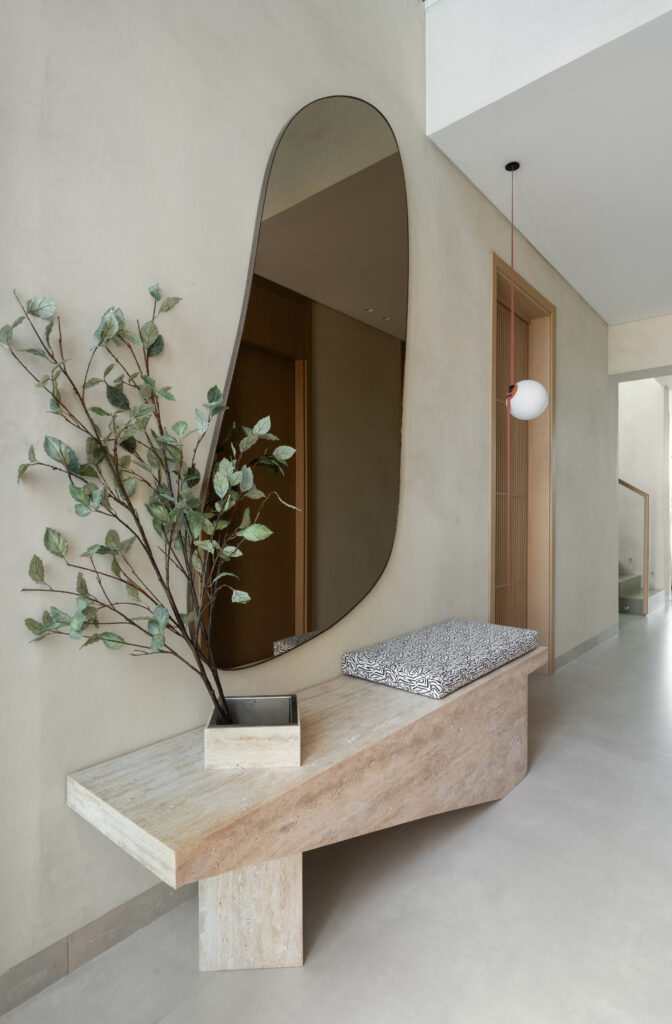
Founded by Monica Arango, the studio approached the brief as an act of translation. What began as a home for four evolved, mid-process, into a home for five. The architecture had to stretch emotionally as much as physically. Neutrality became the ground note—travertine, oak, stone, microcement—materials chosen not for trend but for tactility. Within this restrained envelope, colour appears as punctuation rather than proclamation.
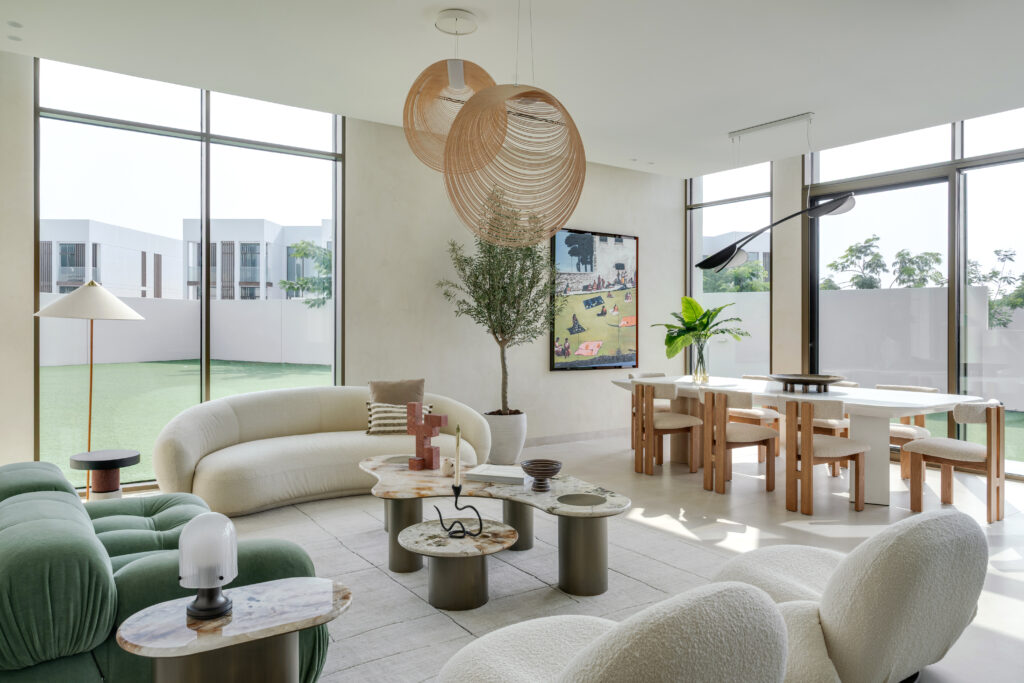
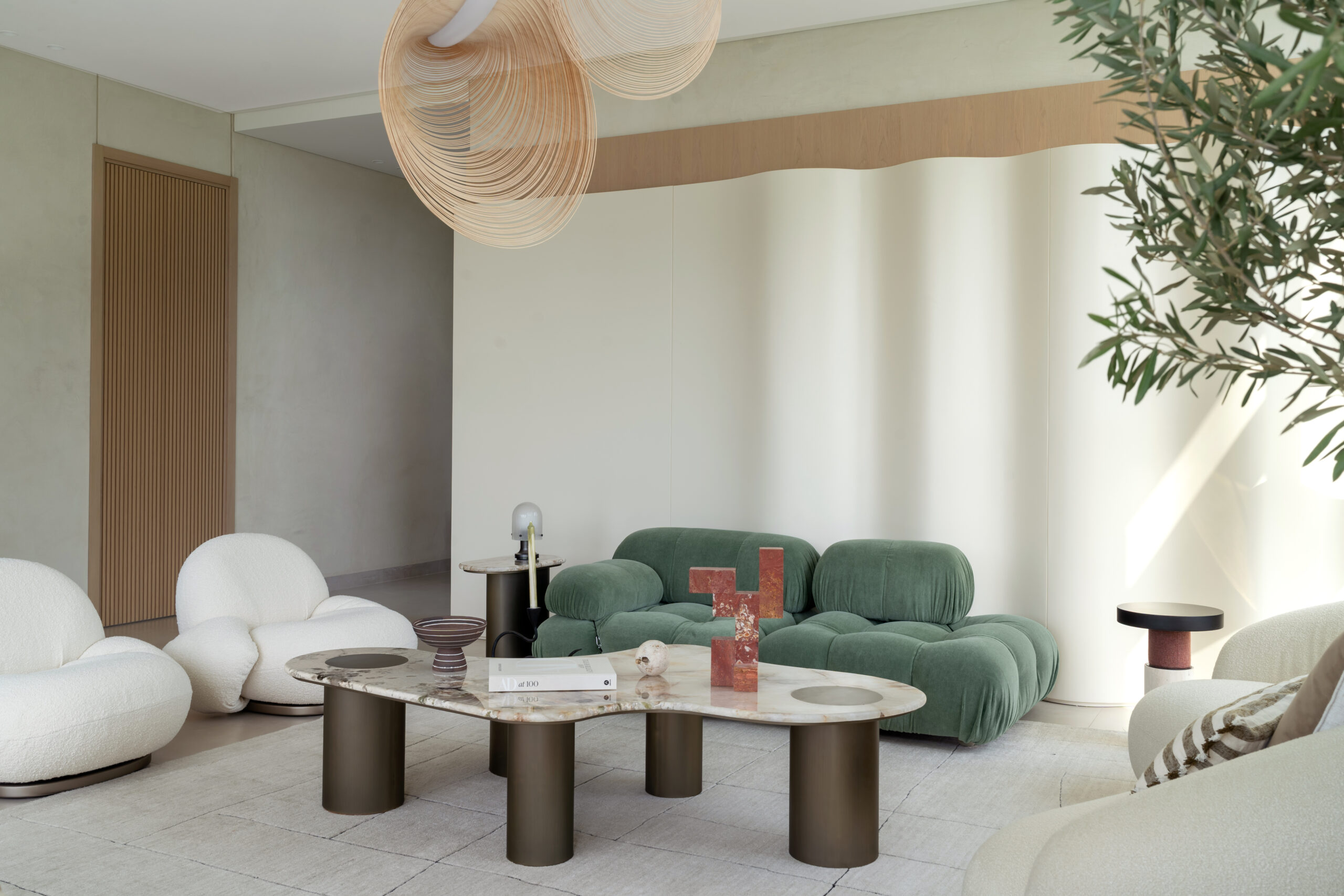
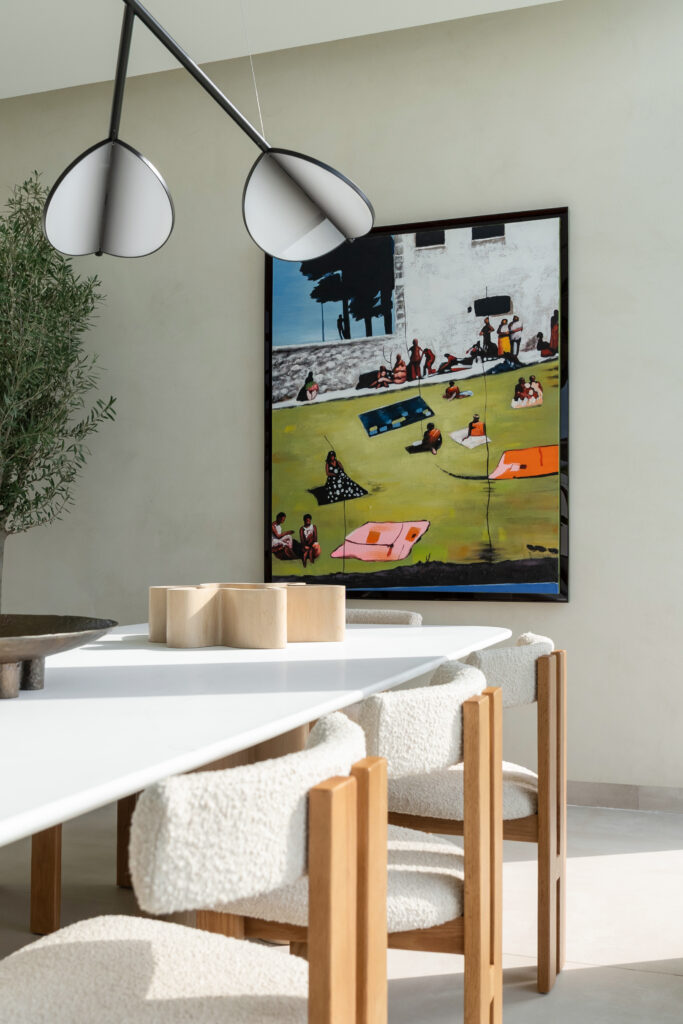
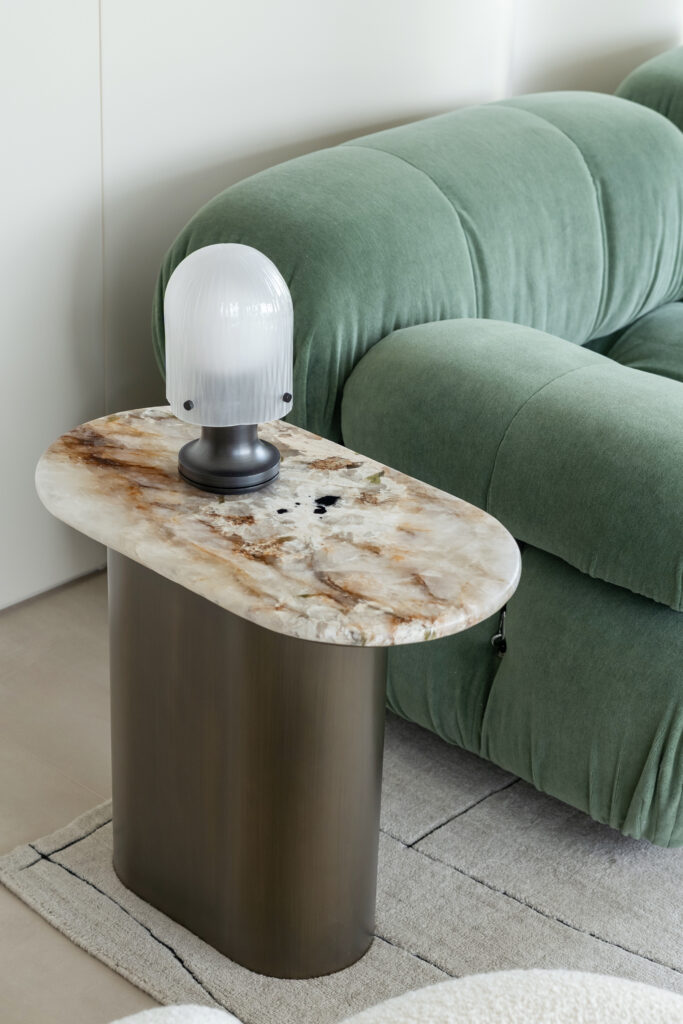
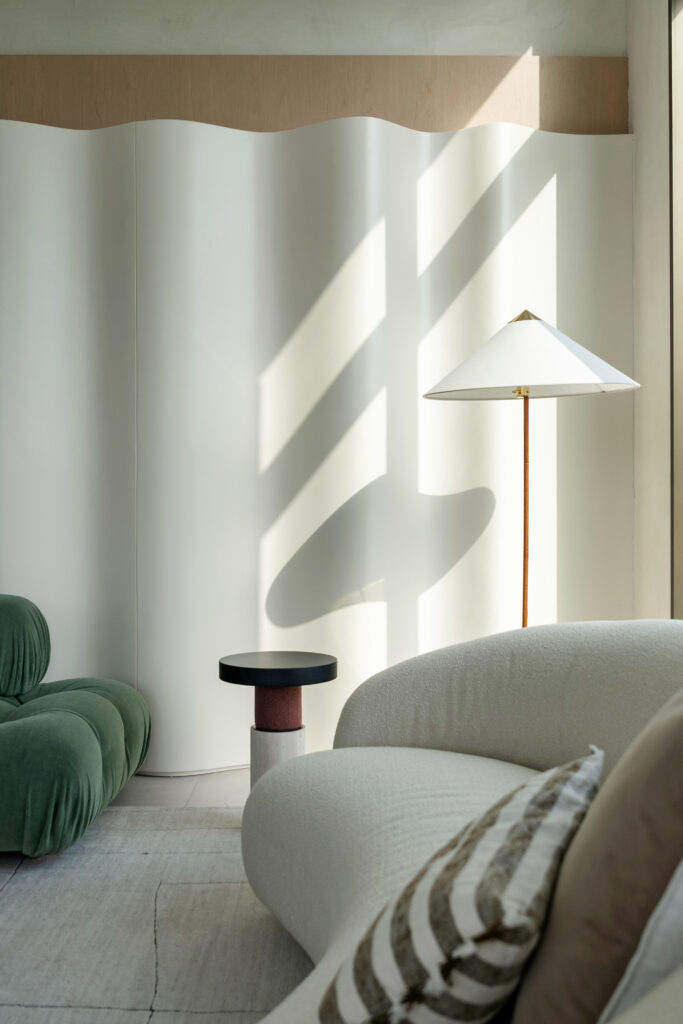
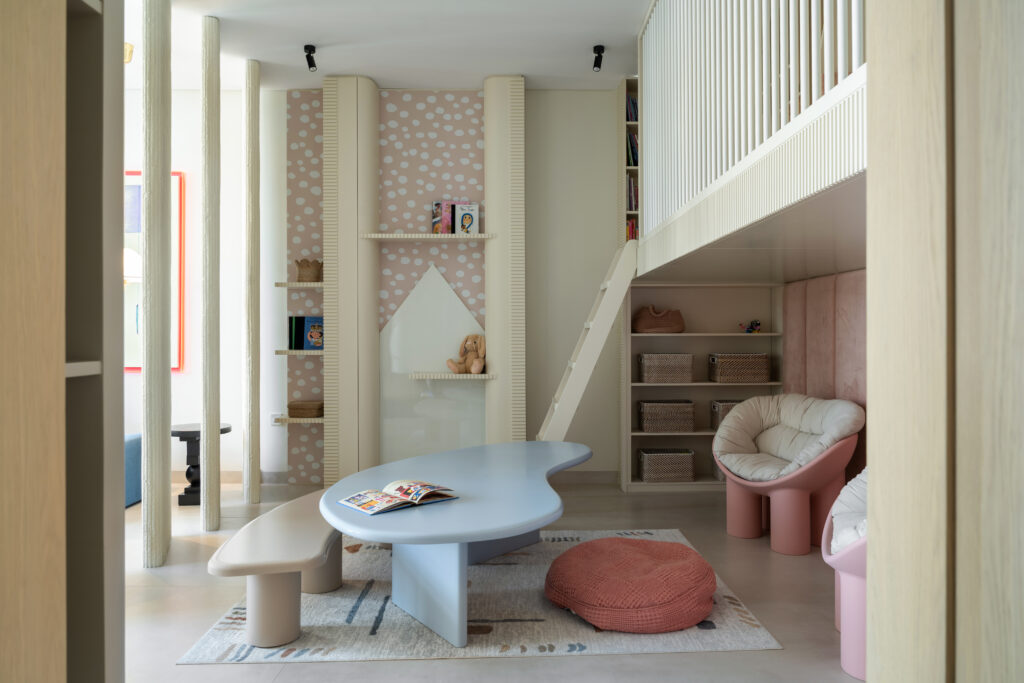
The ground floor unfolds with deliberate generosity. Formal living and dining areas are sculpted through curvature and texture, their quiet elegance offset by a bold green Camaleonda sofa by B&B Italia—a single saturated gesture that anchors the room. Nearby, a double-height play zone folds domestic life into the architectural narrative, dissolving the hierarchy between adult refinement and childhood spontaneity. At the centre, the kitchen—ribbed oak shutters, cool stone surfaces—balances rustic tactility with minimal precision.
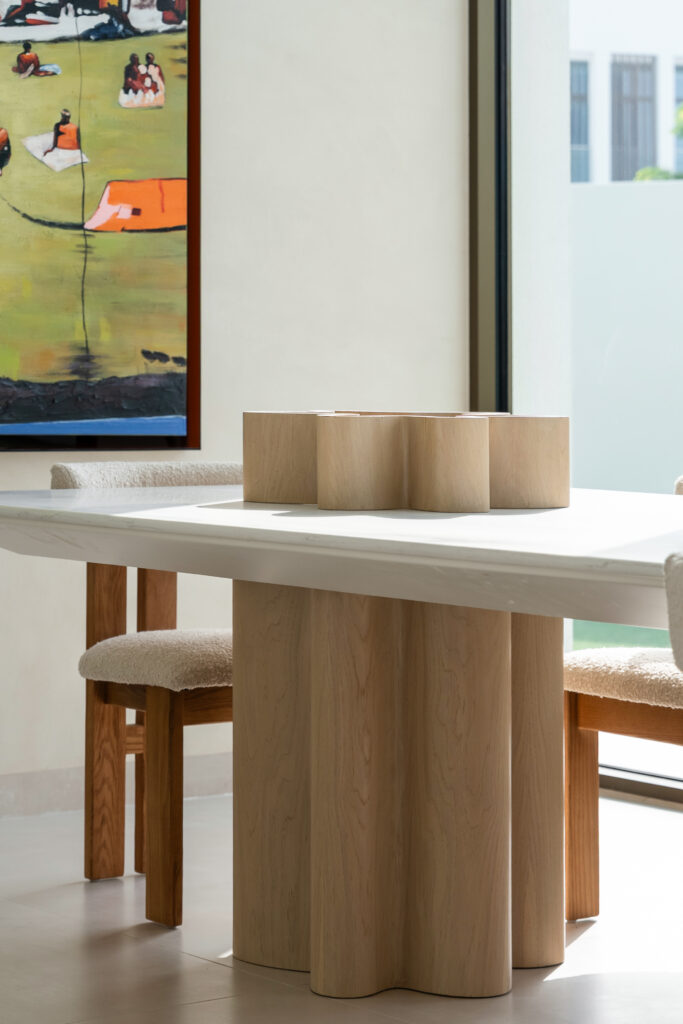
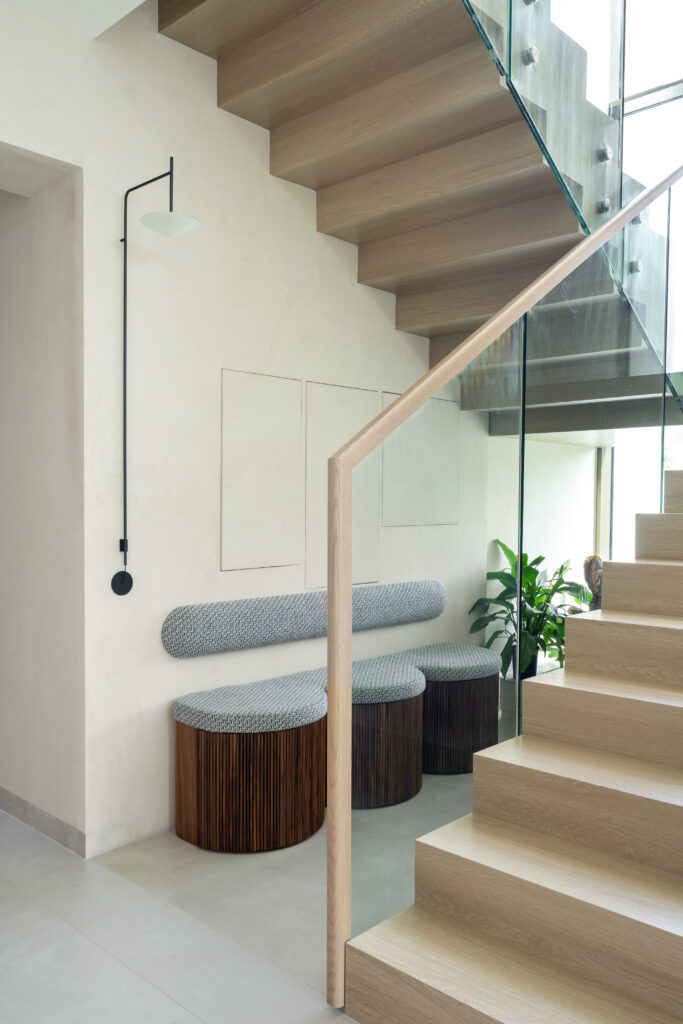
Upstairs, the atmosphere contracts. Bedrooms operate as calibrated sanctuaries, each layered with bespoke textures conceived through C’est ici Bespoke, the studio’s custom atelier launched in 2020. Headboards, rugs, mirrors, bunk beds—over sixty pieces in total—extend a coherent visual lexicon of proportion and material honesty. The staircase, timber-clad and framed by greenery, becomes both spine and pause.
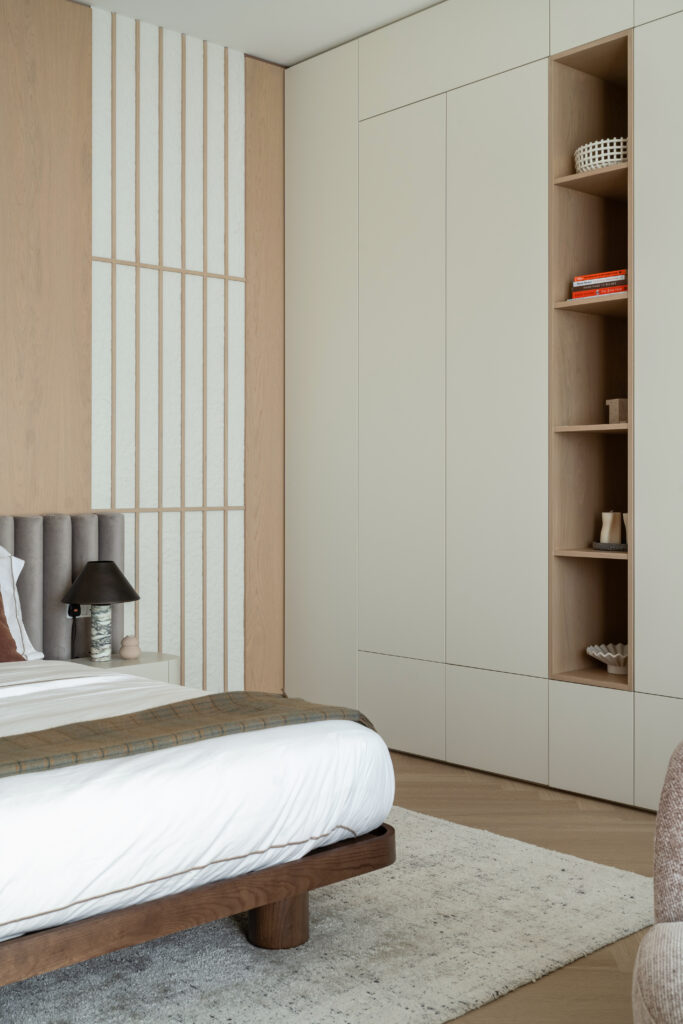
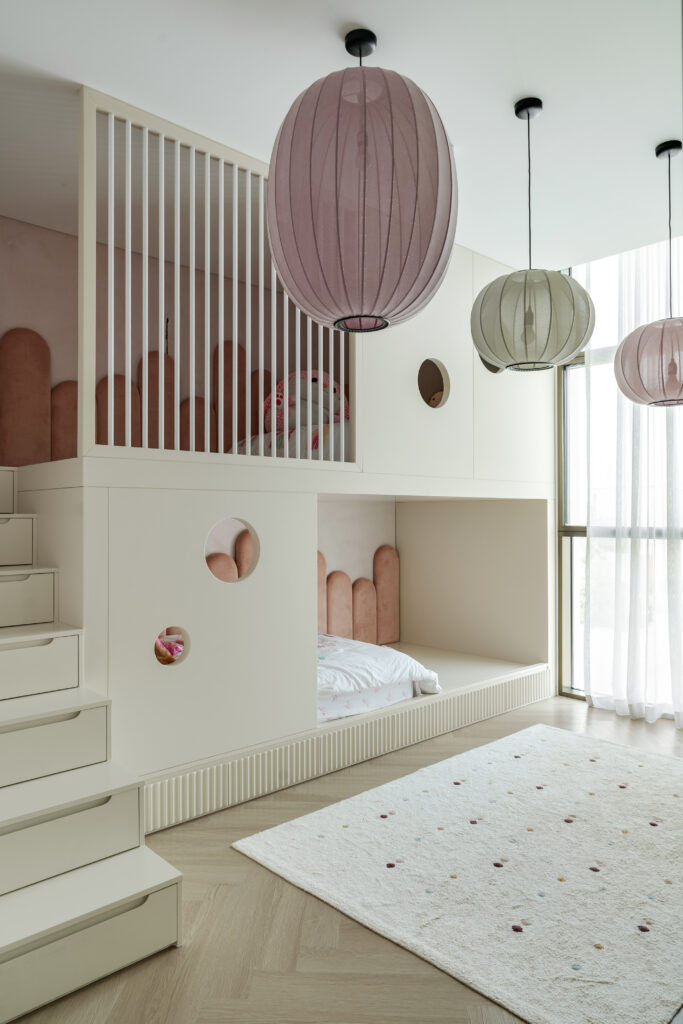
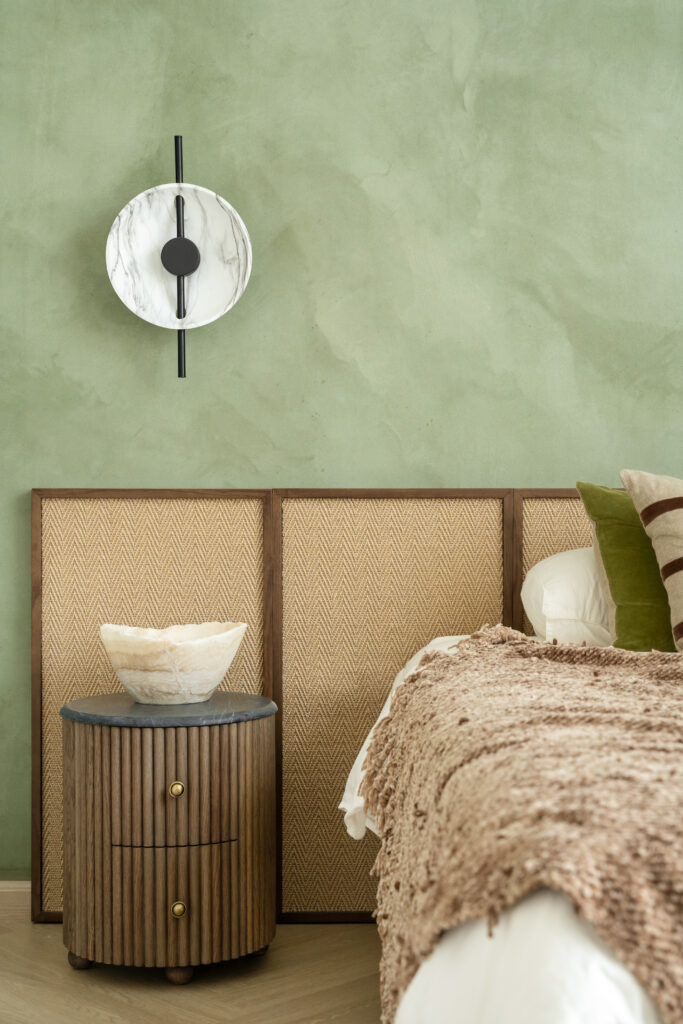
Light choreographs the experience. Expansive glazing draws the landscape inward, blurring thresholds between interior and garden. The result is understated luxury: sculptural yet forgiving, monumental yet humane.
Since its founding in 2016, C’est ici Design has cultivated a philosophy rooted in contrast—minimalism tempered by warmth, cohesion sharpened by the unexpected. In Marrakech, that ethos crystallises. This is not a villa designed to impress at first glance; it is one designed to endure daily life, to absorb memory, and to evolve alongside the family it shelters.