Words by Allegra Salvadori | Images Courtesy of Maison Dada
Beirut has always been a city where architecture absorbs emotion. Facades hold memory, balconies collect stories, and interiors quietly record the rhythms of daily life. Within this continuum stands Maison Dada, a newly opened boutique hotel in Saifi that approaches hospitality not as an industry, but as an act of cultural stewardship.
Rather than merely restoring a 1930s residence, the architects behind the project — brothers Marc and Mario El Dada — treat the building as a narrative landscape. Their design announces no grand statement; instead, it invites guests into an atmosphere shaped by restraint, respect for history, and a belief in contemporary Lebanese craftsmanship.
A Building Revived Through Design, Not Nostalgia
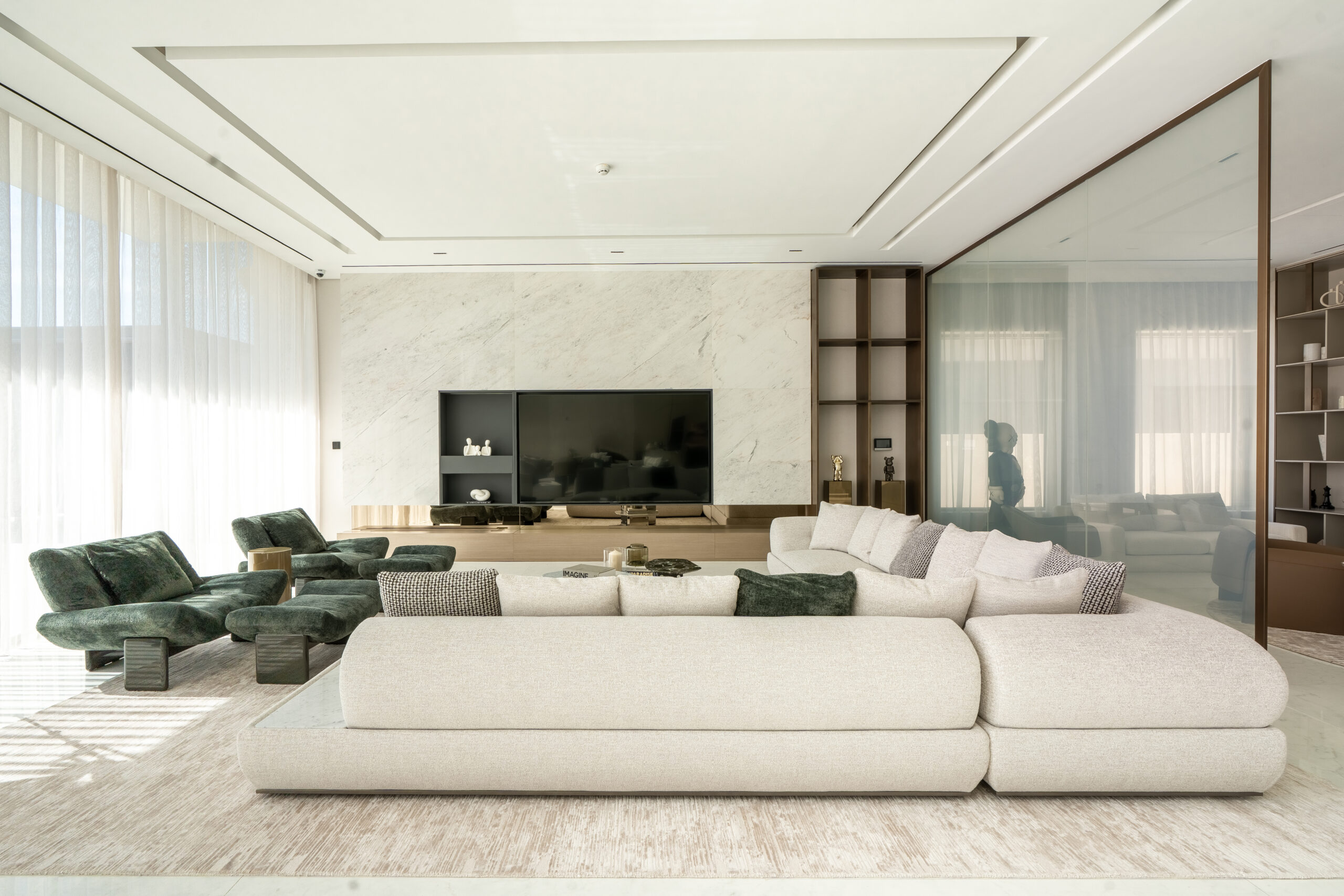
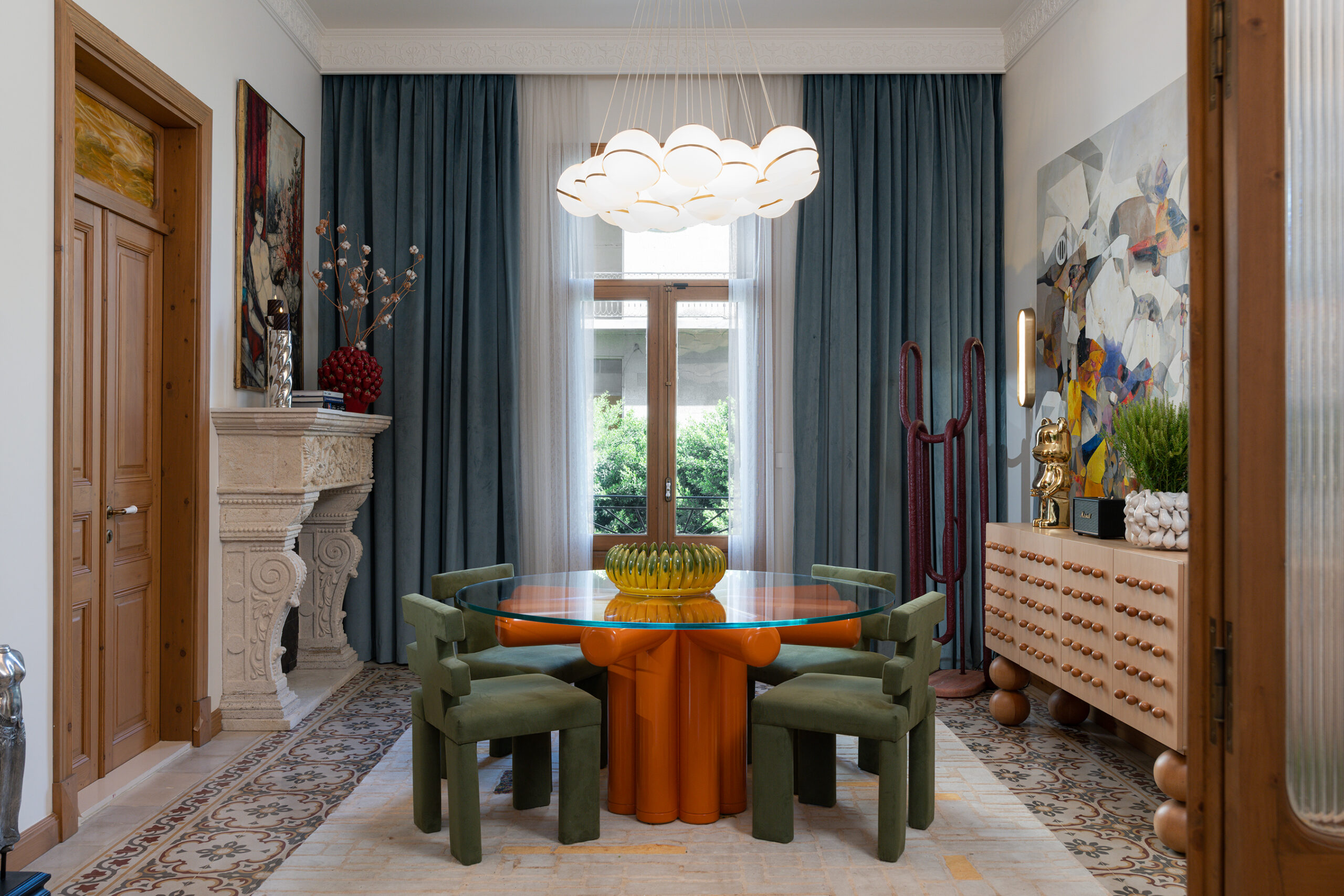
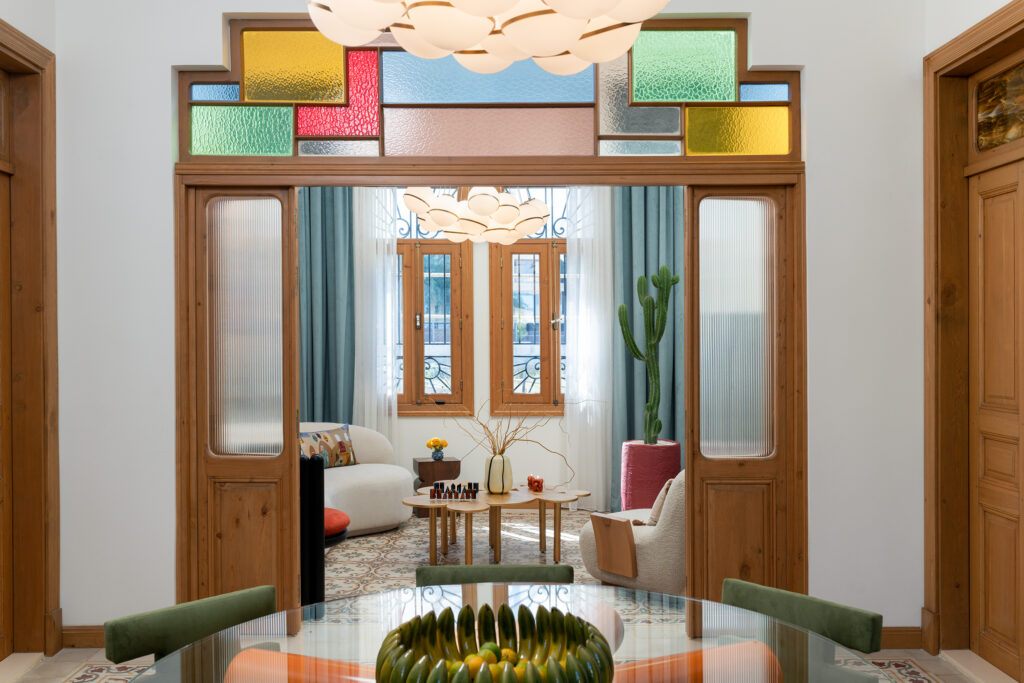
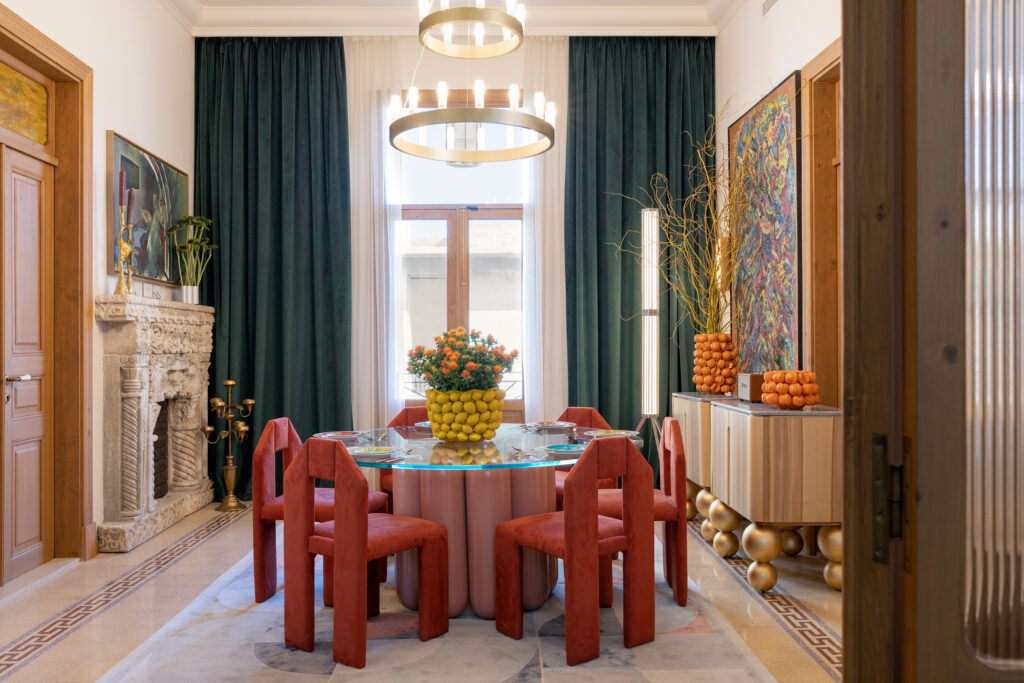
The house carries the proportions of French-Mandate architecture, yet Maison Dada avoids the predictable language of heritage revival. Original elements — patterned cement tiles, carved woodwork, intricate plaster — remain visible, but they no longer function as decorative relics. They frame a new spatial order, one built around openness, soft silhouettes and the calm of minimalism.
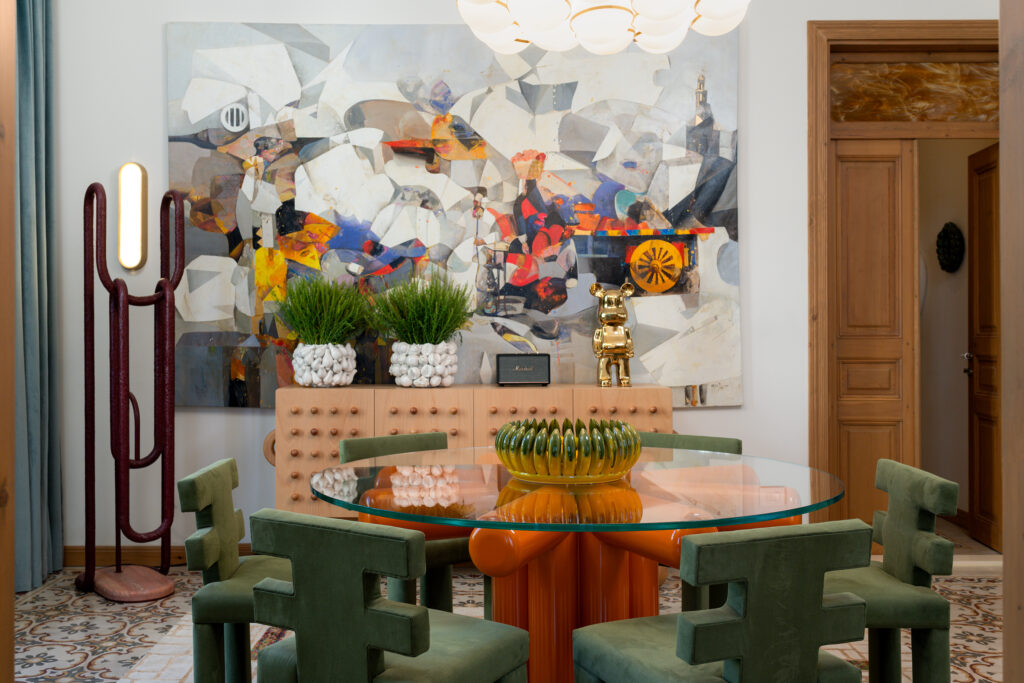
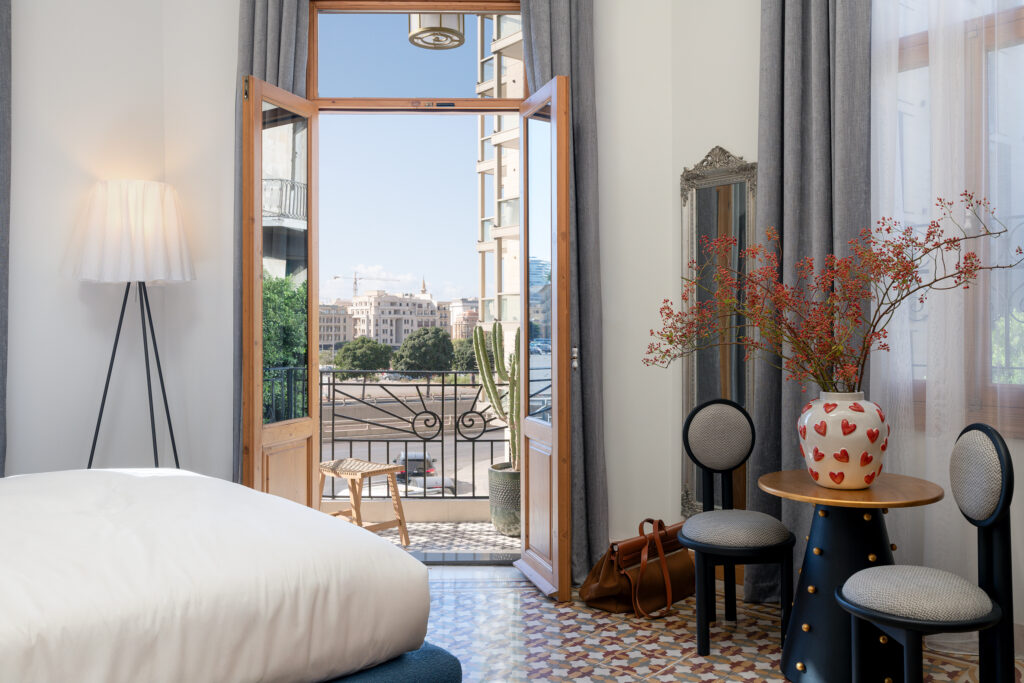
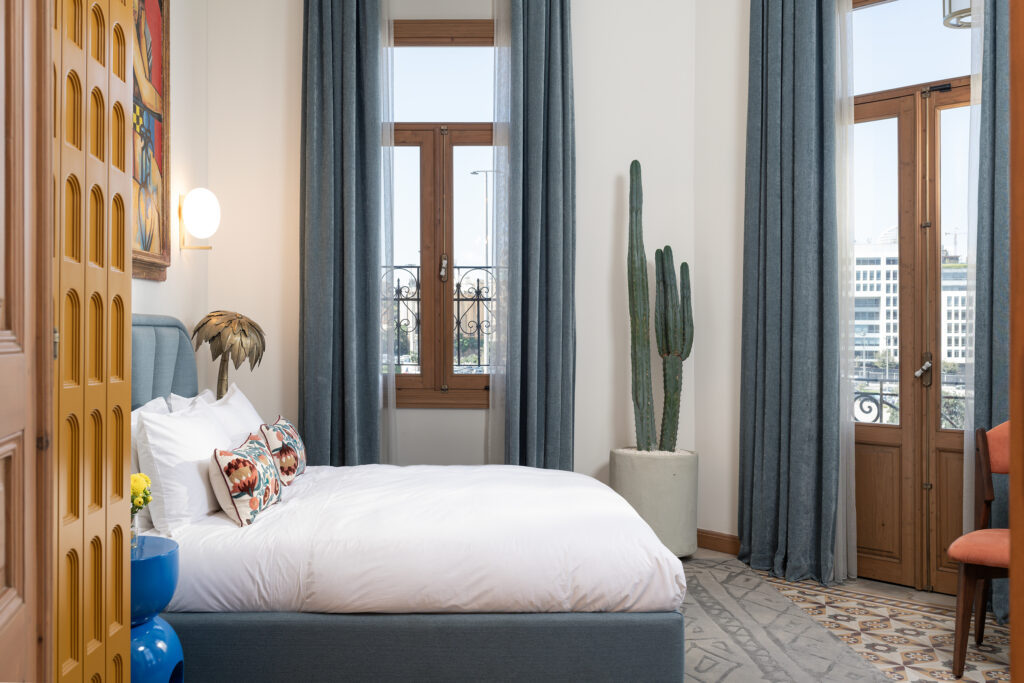
The suites are conceived as generous apartments, each celebrating colour in a way that feels unmistakably Beirut: bold without being loud, intimate without being nostalgic. Hues shift from Mediterranean blues to sun-drenched ochres and deep earth tones, forming interiors where the old and the new negotiate quietly rather than compete.
Craft at the Center of the Story
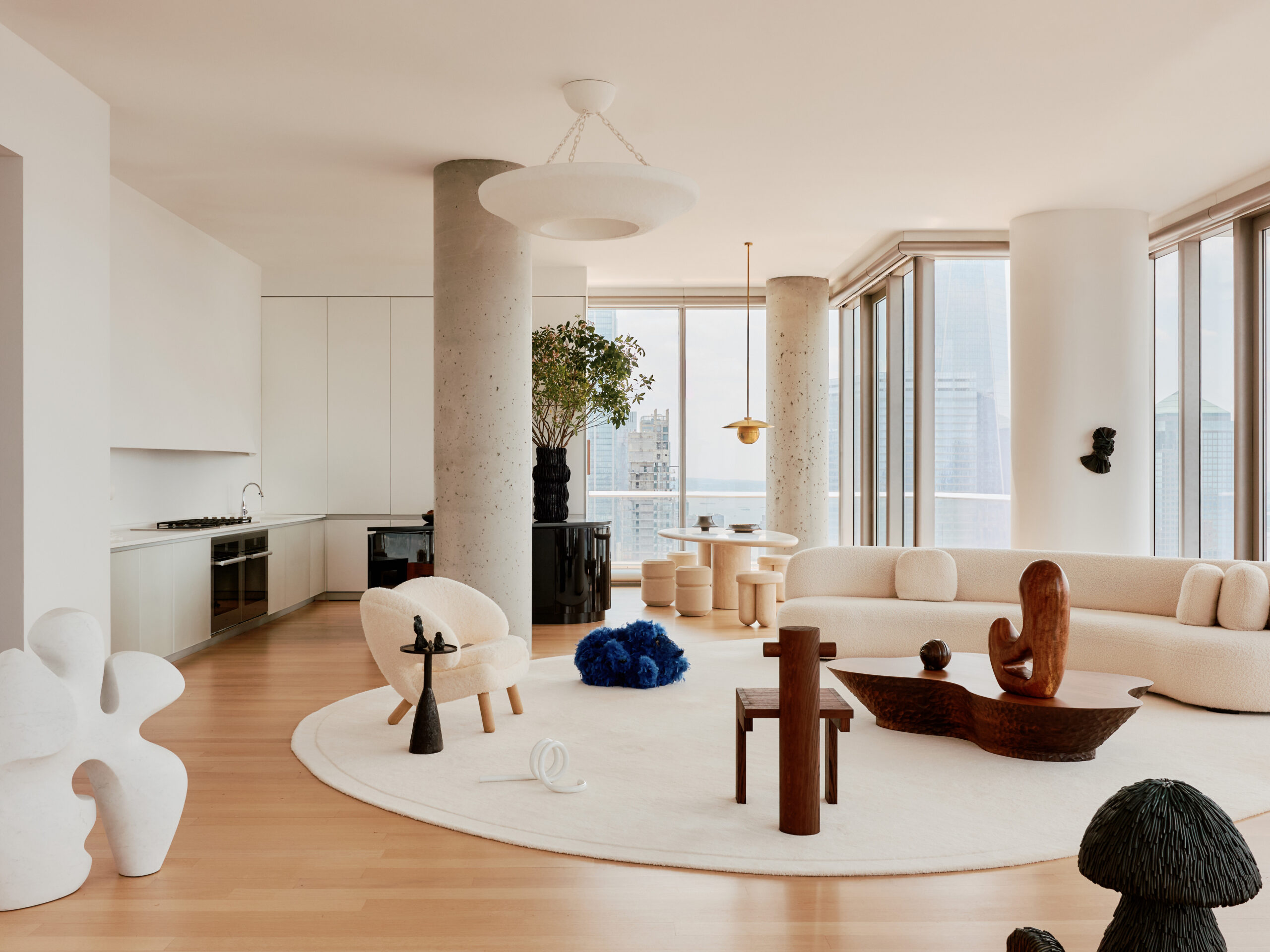
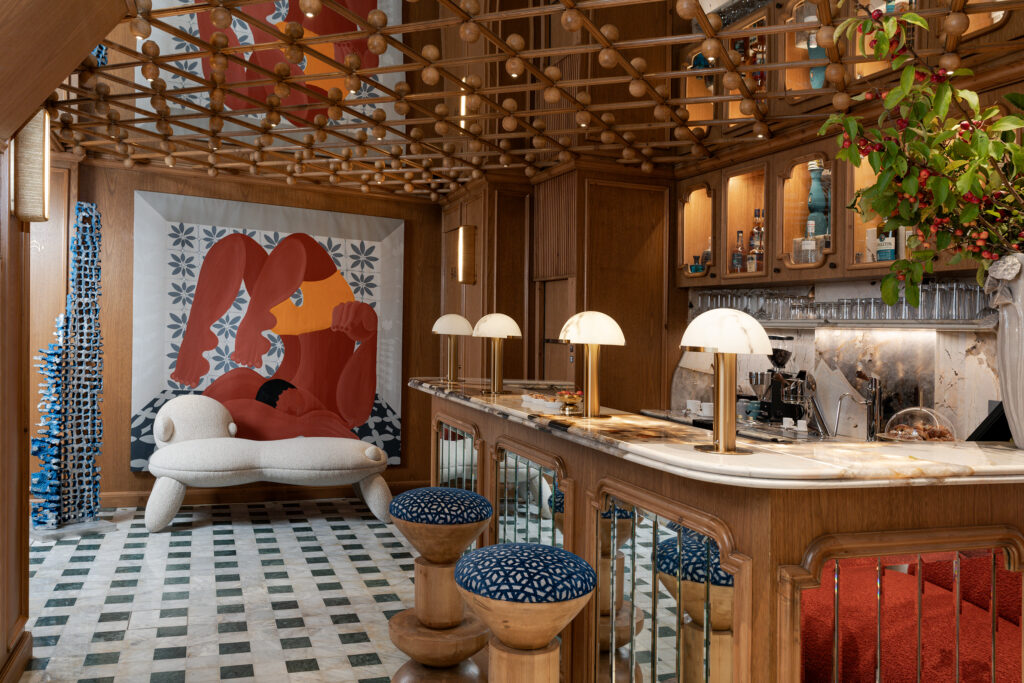
Maison Dada gives an unusually prominent role to locally made furniture and objects. Many pieces were designed specifically for the hotel and produced by artisans across Lebanon — joiners, metalworkers, textile makers — whose techniques anchor the project in place. The result is not a curated aesthetic but a lived one: furnishings that carry the weight of handwork and the warmth of human scale.
Collaborations with contemporary designers and artists extend this sense of locality. Rather than turning the hotel into a gallery, the design integrates their work into the building’s everyday choreography — a lamp encountered on the way to breakfast, a sculptural piece animating a corridor, an artwork glimpsed through the glass of the elevator. These gestures form a visual rhythm that accompanies guests as they move through the spaces.
Art as Architecture, Architecture as Experience
A defining feature of the project is its approach to art placement. Instead of isolating artworks against white walls, Maison Dada weaves them into the architecture itself. Vertical circulation becomes a curatorial experience; stairwells and lift shafts act as immersive, moving galleries that shift with the perspective of the viewer.
One of the hotel’s most striking sculptural interventions appears in the lobby: a composition of slender metal rods that reads like an abstract diagram of resilience. It speaks softly, yet unmistakably, to Beirut’s complex relationship with rupture and renewal.
Spaces That Understand the City
Maison Dada unfolds into a series of public rooms — a café animated by the morning rush, a street-level restaurant that blurs the line between neighbourhood and hotel, and a rooftop bistro overlooking the Mediterranean. These spaces extend the project’s central idea: that hospitality in Beirut must feel permeable, connected, and alive.
Situated among studios, galleries and creative workshops, the hotel positions its guests at the epicenter of the city’s artistic ecosystem. Rather than replicating Beirut’s energy, it acts as a lens through which visitors can read it.
A Contemporary Homage to Beirut’s Past and Future
Maison Dada is not a sentimental project, nor is it an aesthetic exercise. It is a thoughtful proposition about how a city with a layered, turbulent history can imagine its future through design. By grounding itself in craft, memory and contemporary expression, it offers a new model of hospitality for Beirut: intimate, culturally aware, and quietly transformative.