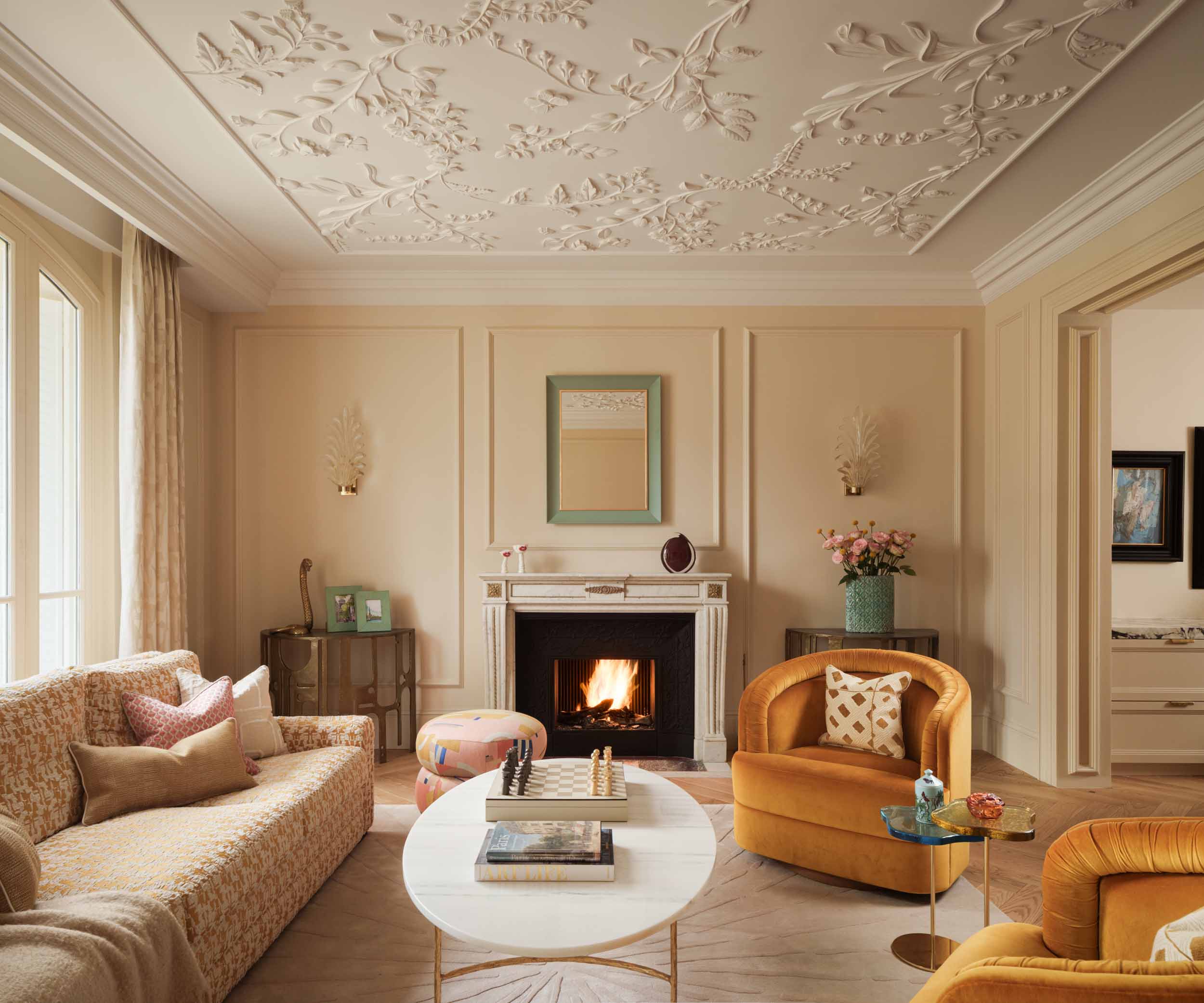
Photography by Vigo Jansons
La Vue Parisienne occupies a Belle Époque apartment in Paris, where architecture, memory, and daily life are treated with equal seriousness. Designed by Mark Howorth and Callender Howorth, the 191 m² residence was conceived for American clients whose connection to France is long-standing and pragmatic, shaped by time spent living in the city rather than by fantasy.
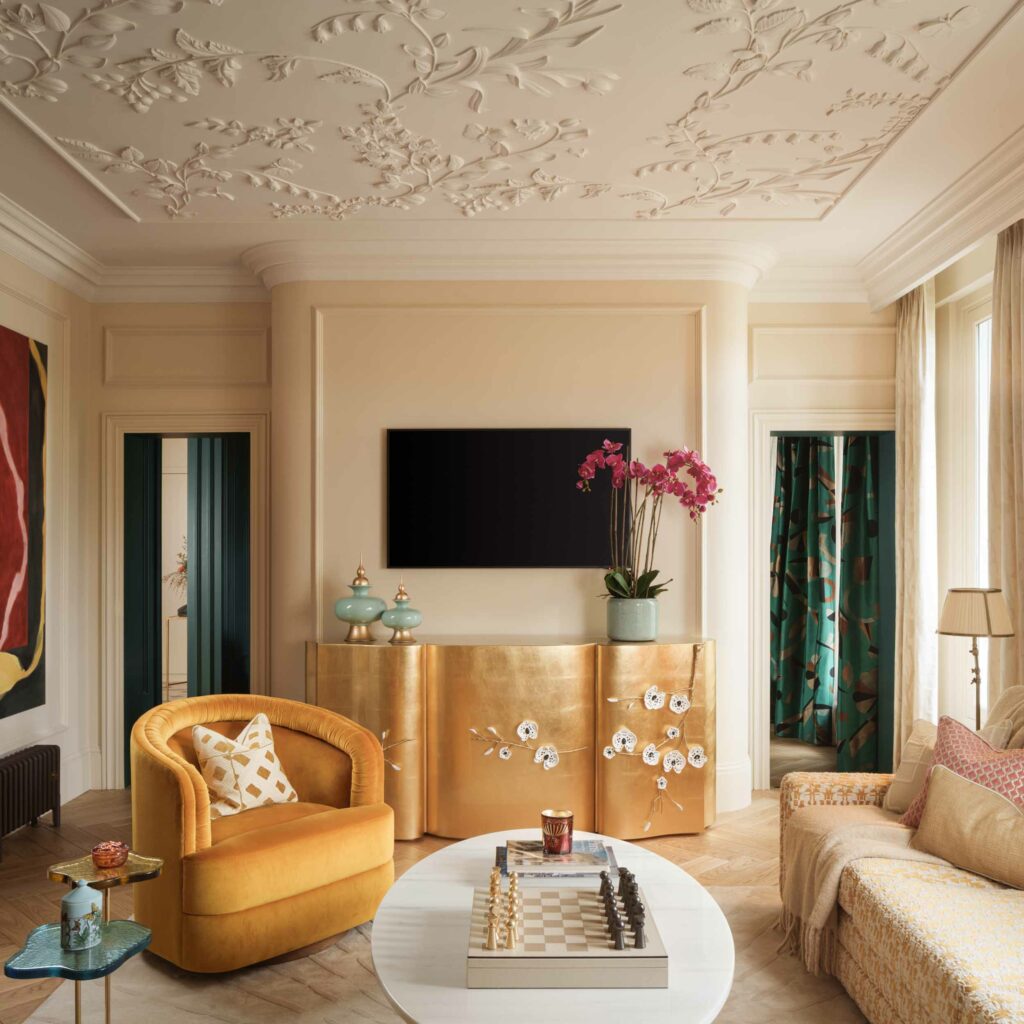
The apartment had lost much of its original character before the intervention. Decorative elements were removed, spatial hierarchy weakened, circulation reduced to a series of compromised rooms. The refurbishment began with a complete reset. The plan was stripped back and recalibrated, allowing for generous bathrooms, a wine room integrated into the domestic rhythm, and a kitchen designed as a functional centre rather than a showpiece. The spatial logic is calm and deliberate, with rooms flowing according to proportion rather than ornament.
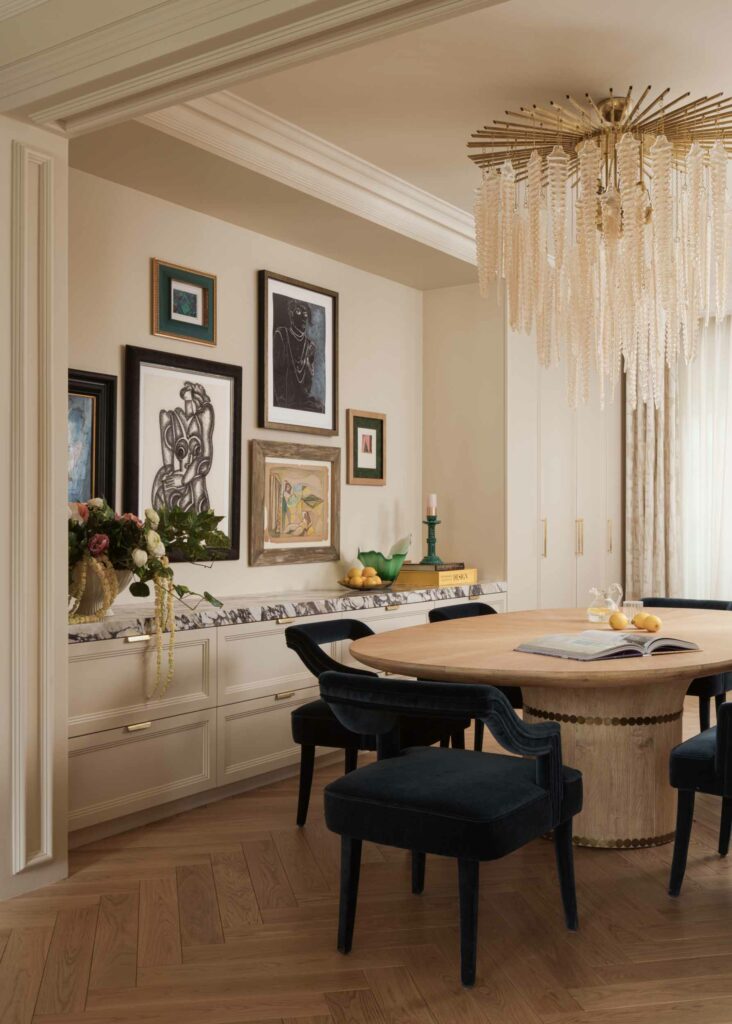
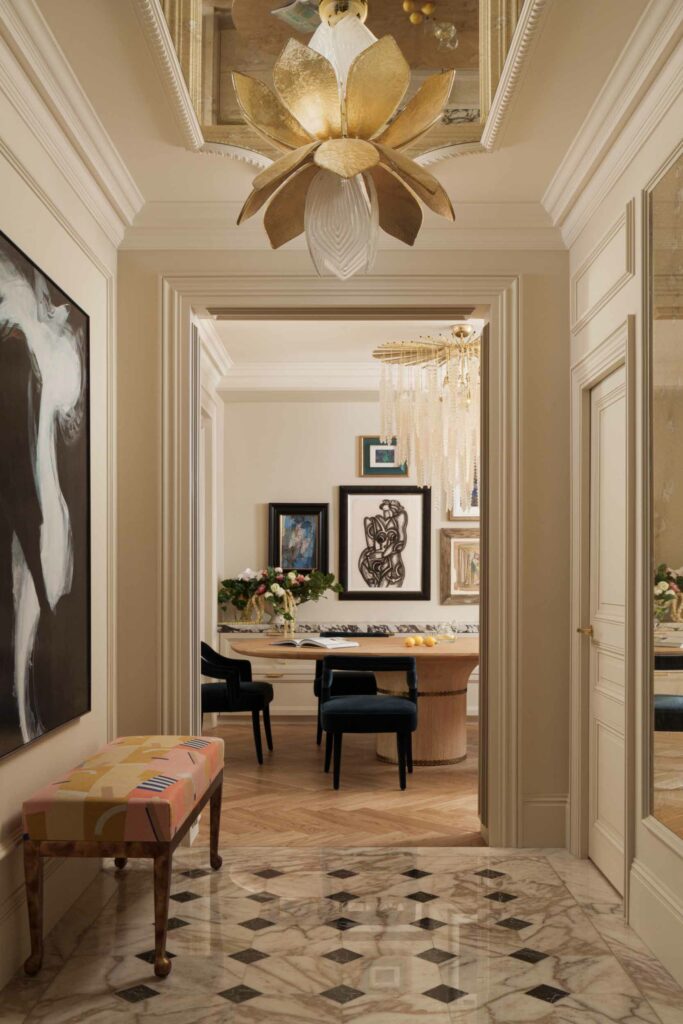
Architectural detail forms the backbone of the project. In collaboration with Stevensons of Norwich, bespoke paneling, doors, and ceilings were developed as a coherent system, restoring gravitas without historical literalism. The drawing room ceiling, detailed with restrained butterfly motifs, introduces a symbolic layer that remains discreet. Ornament is present, but always disciplined.
Textiles and wall finishes extend this architectural discipline. Fabrics by Pierre Frey, Dedar, Elitis, Soane Britain, and Ian Mankin are deployed with restraint, while wallpapers by Dedar and De Gournay introduce pattern as surface depth rather than decoration.
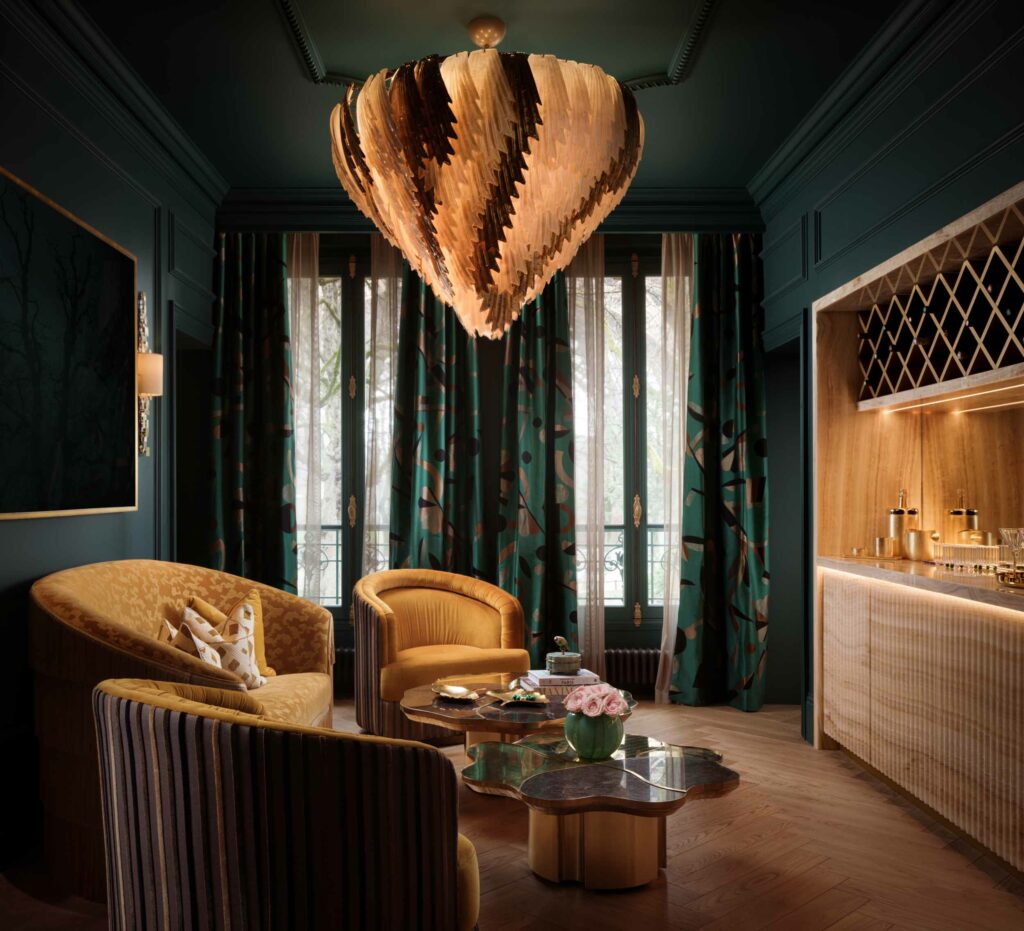
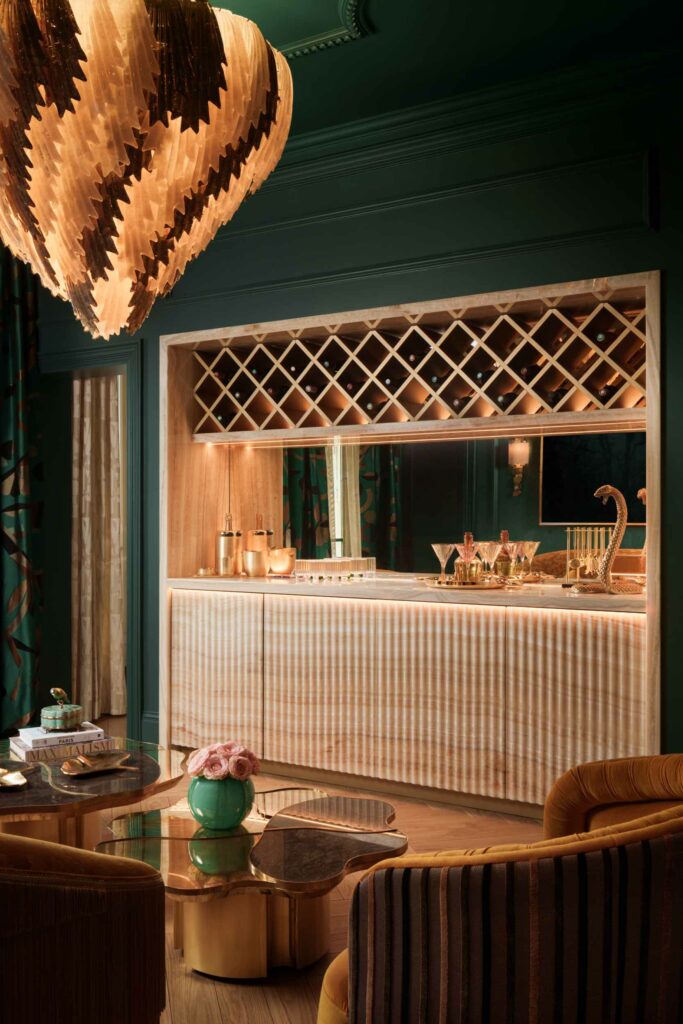
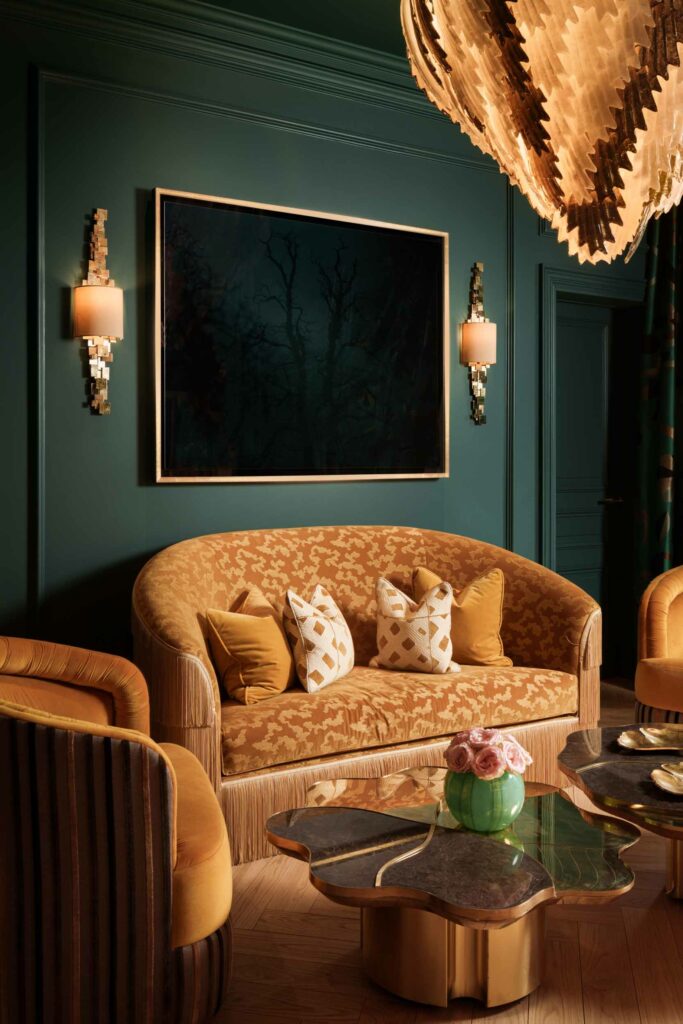
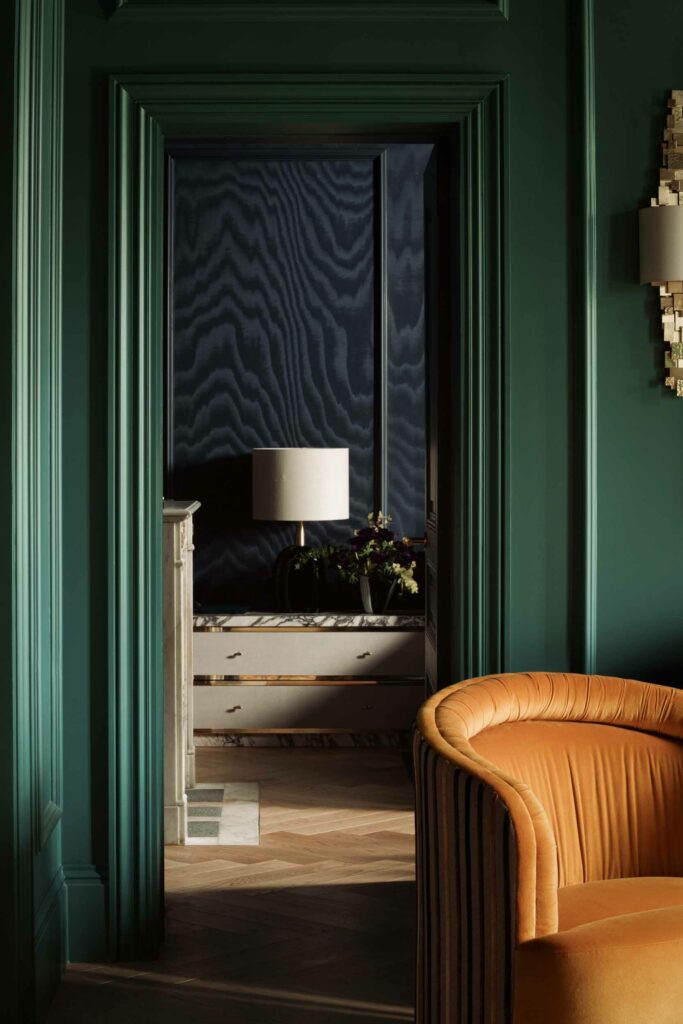
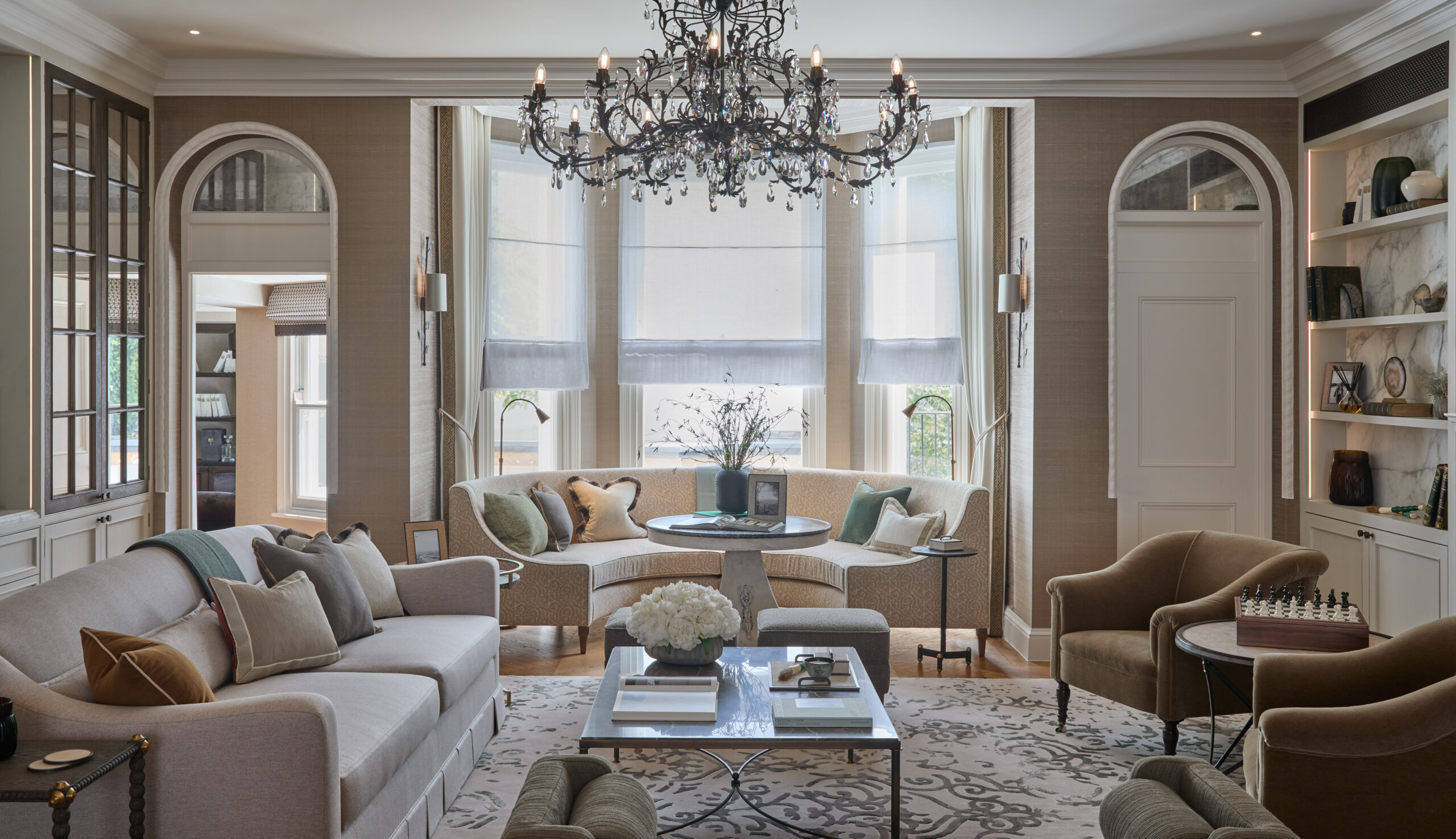
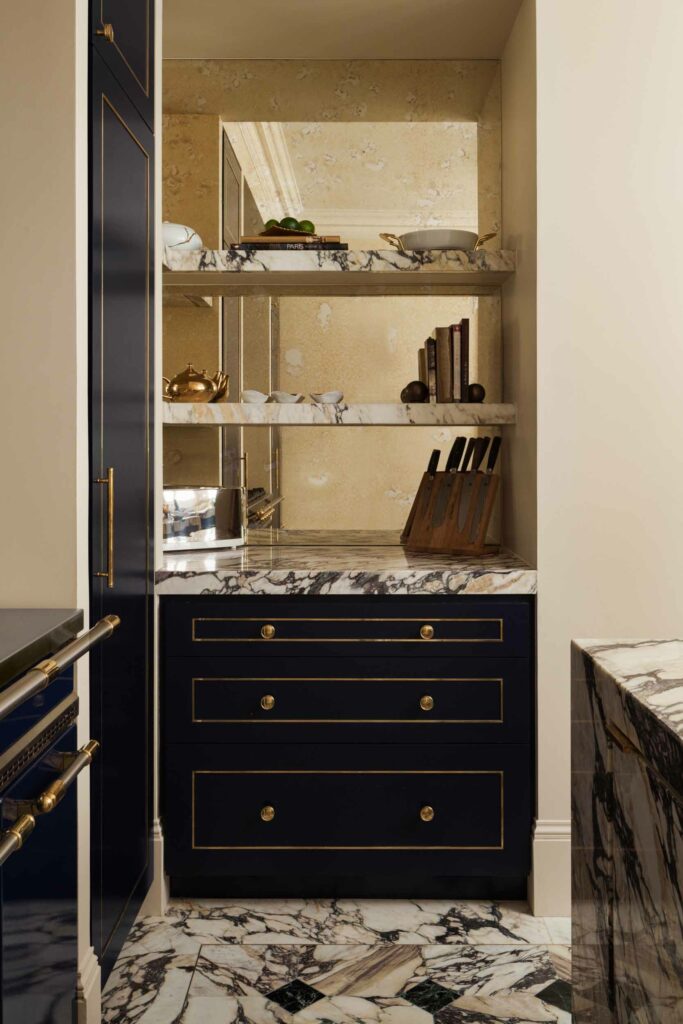
Material choices carry much of the narrative weight. Calacatta Viola, Patagonia marble, Rosa Portogallo, and pink onyx appear throughout the apartment, bringing depth and chromatic intensity. Timber parquet anchors the interiors, while lacquered finishes and bespoke upholstery by Ben Whistler establish continuity across rooms. Upholstery and trimmings draw on Gaston y Daniela, Lelievre, and Samuel & Sons, reinforcing tactility as an architectural tool rather than a stylistic gesture. Colour is saturated and controlled, producing an atmosphere that feels contained and assured.
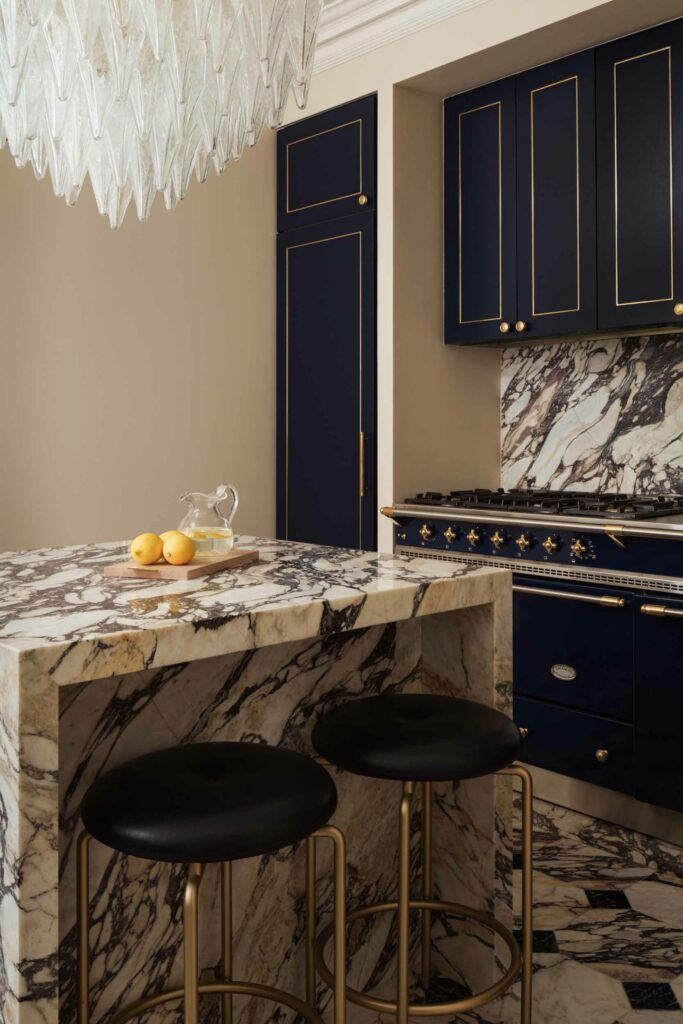
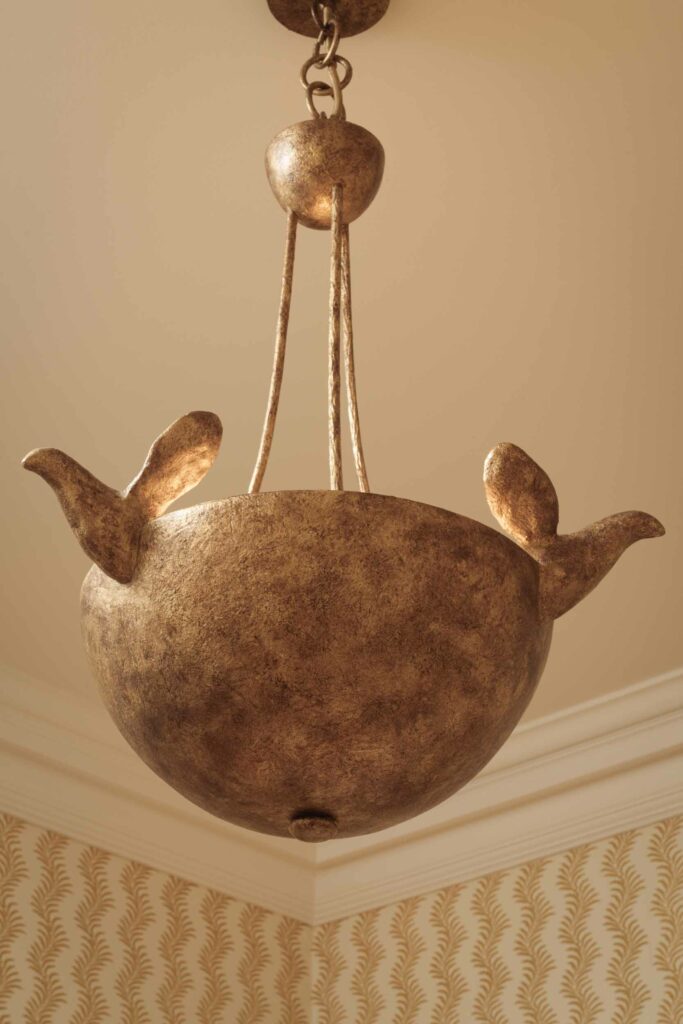
Furniture and lighting are selected for their architectural presence rather than stylistic effect. Murano glass chandeliers, sculptural sconces, and contemporary tables coexist with vintage elements, creating a sense of temporal layering without quotation. In the dining room, art is treated as structure. Working with Lost Art Salon, the designers assembled a wall of mid-century works, many sourced from Ojai, the clients’ hometown. The gesture anchors the apartment emotionally, connecting Paris to a parallel domestic history. Lighting and furniture selections—by Porta Romana, Vaughan, Visual Comfort, Julien Chichester, Tom Faulkner, Eichholtz, Pooky, and Studio Glustin—operate as spatial punctuation, while bespoke elements are complemented by considered vintage pieces sourced via 1stDibs.
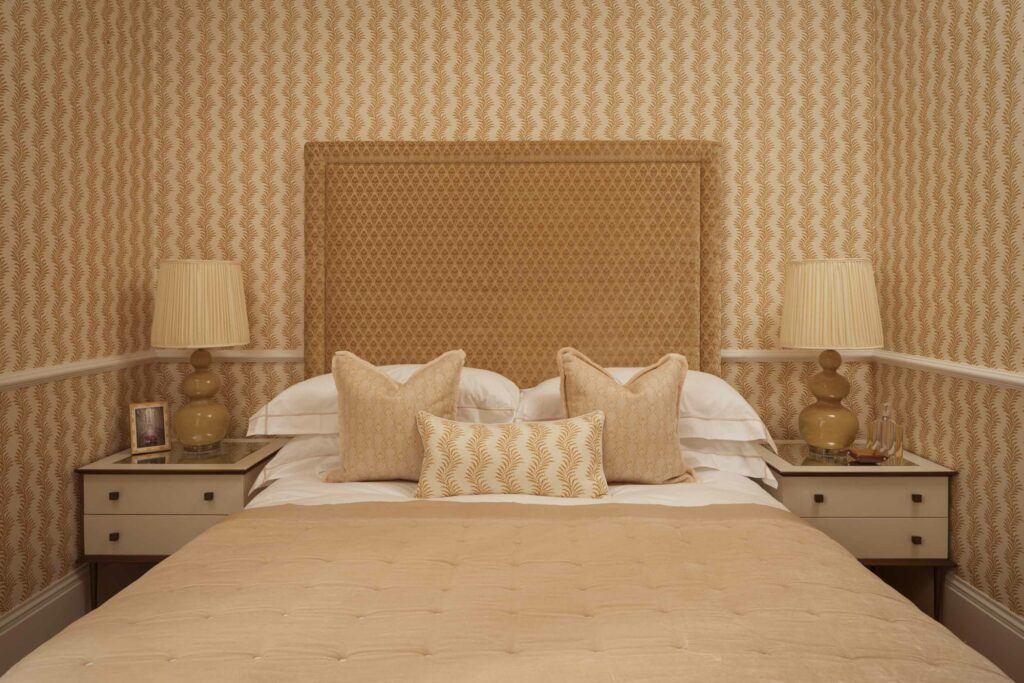
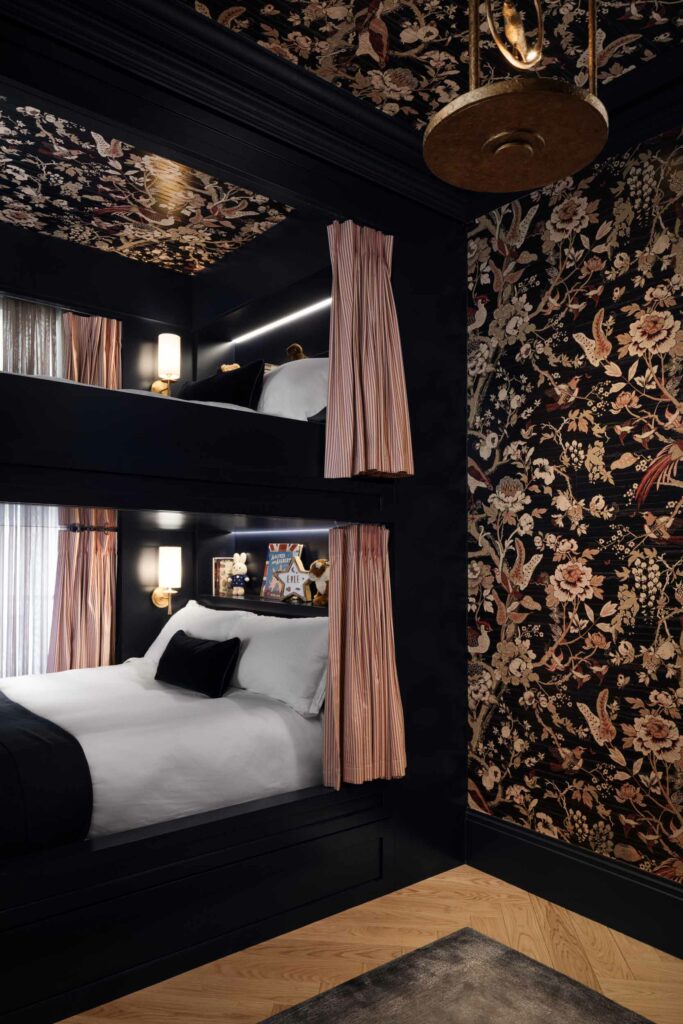
Private spaces are conceived with the same rigour. Bedrooms rely on texture, wallpaper, and carefully modulated light rather than overt decoration. The lounge-bar, finished with onyx joinery by Craft Paris, introduces a darker, more inward atmosphere, functioning as a space of pause within the larger sequence of rooms. Kitchens and bathrooms combine Calacatta Viola and Patagonia marble with fittings by Perrin & Rowe, Joseph Giles hardware, and Lacanche appliances, ensuring technical precision is fully integrated into the domestic language of the apartment.
Photographed by Vigo Jansons, La Vue Parisienne presents an idea of Parisian living grounded in continuity and use. The project avoids nostalgia. Its strength lies in proportion, material intelligence, and restraint—an interior shaped by inhabitation rather than image, and by a precise understanding of how architecture supports daily life.