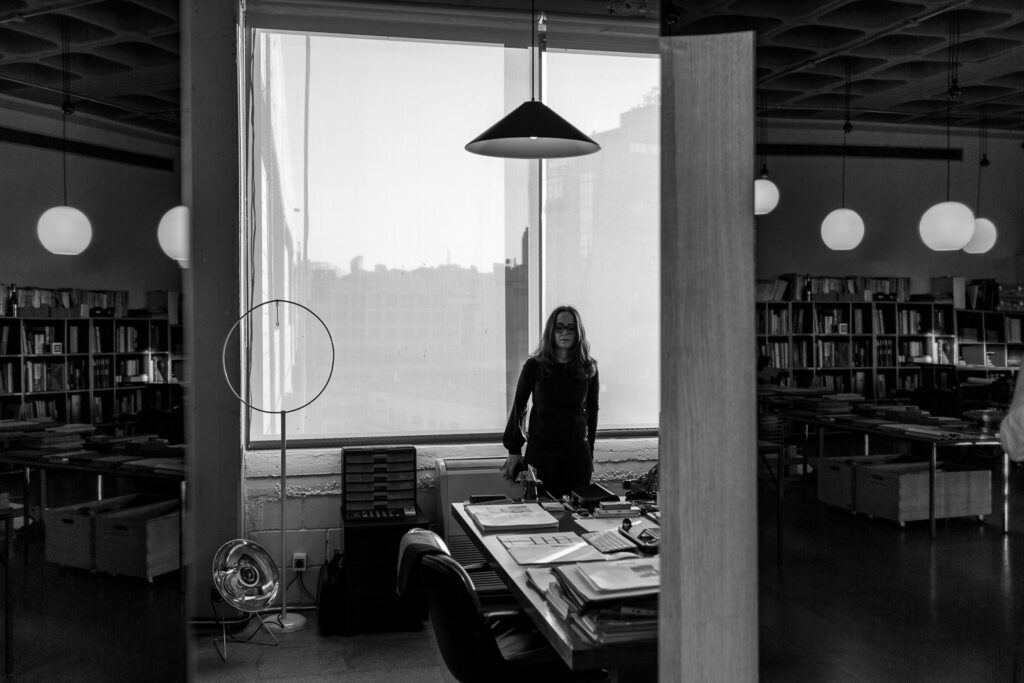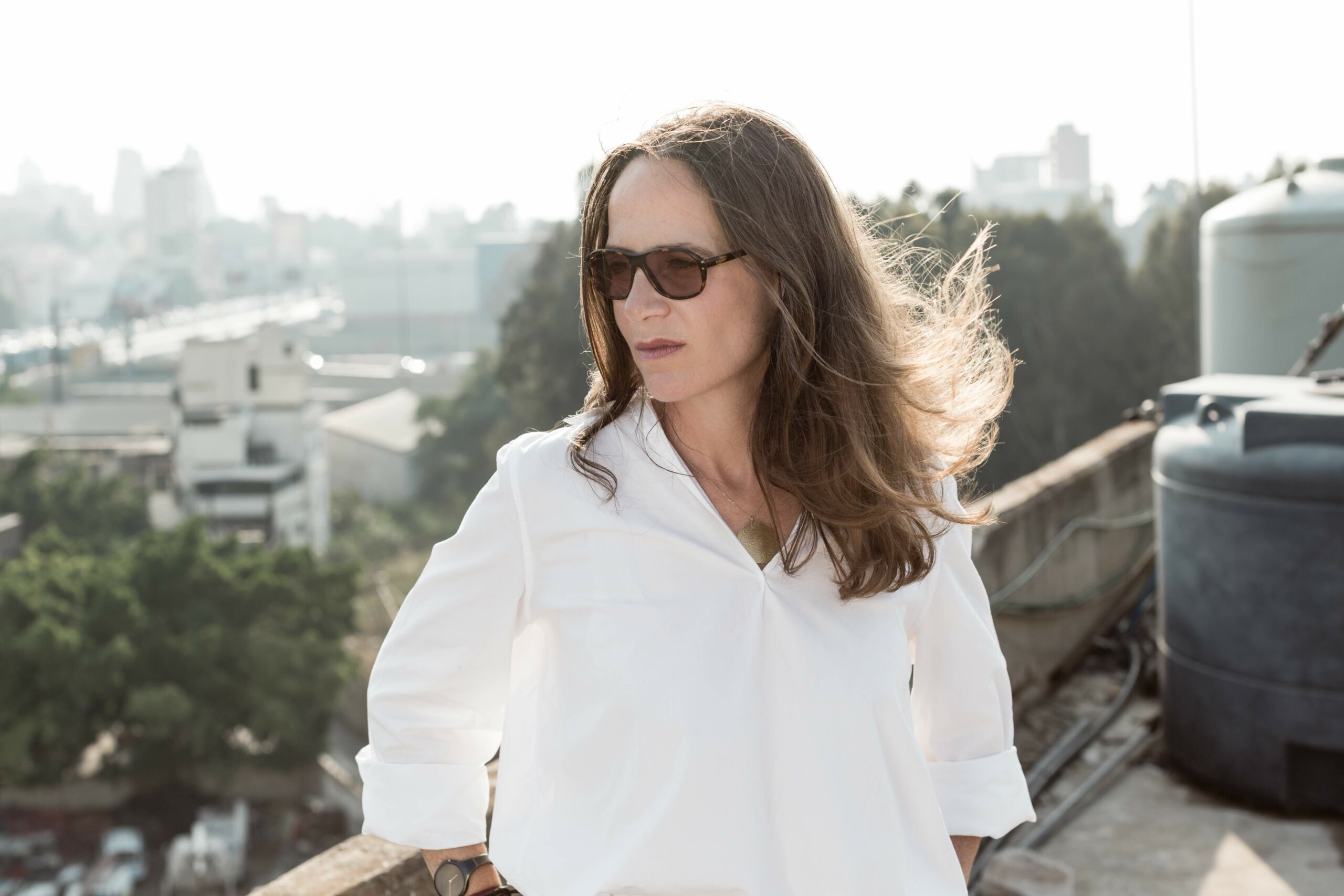
We sat down with Karen Chekerdjian in her Beirut studio, suspended above the still-operating tannery of the Kamel Building — a relic of the city’s industrial past. Inside, raw concrete, sculptural forms, and warm light create a world entirely her own. It is here, in this unlikely perch, that Chekerdjian turns material restraint into poetry, and history into interiors that feel both timeless and intensely contemporary.
Your studio is in a former tannery. How does that industrial vibe shape your interiors?
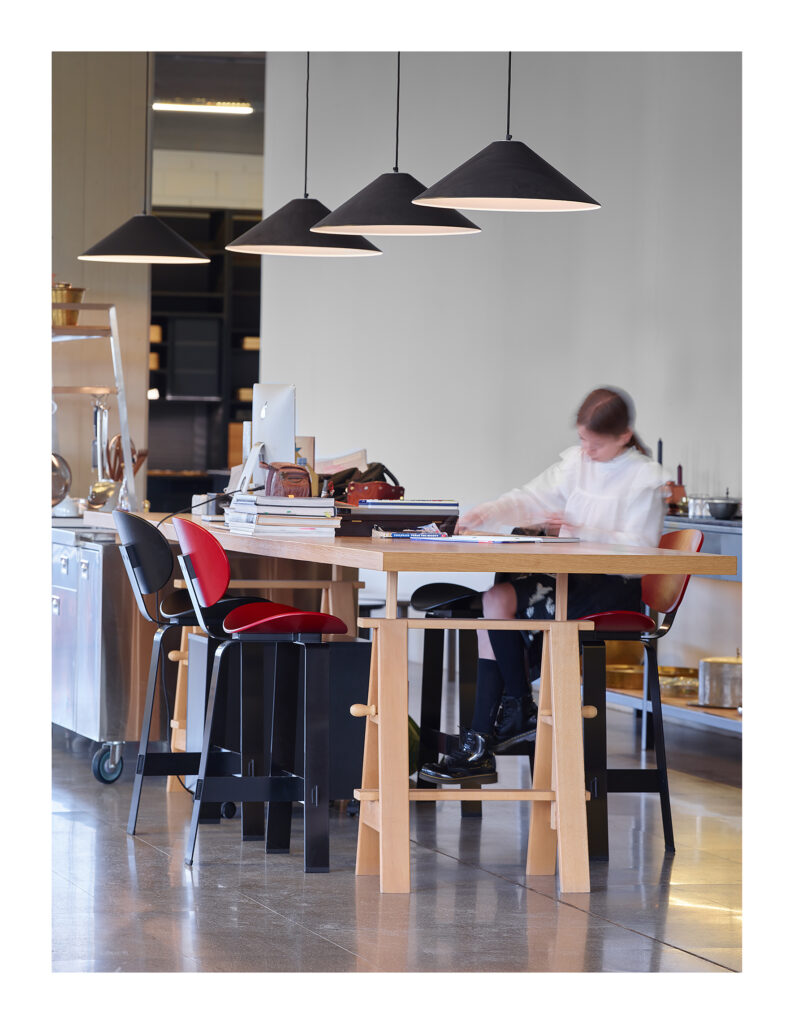
Yes it is in the Kamel building, and I am on top of the still existing tannery. I moved into this building many years ago. It was very impressive in the beginning. The elevator is an experience on its own. You feel like in the Meatpacking district in NY in the ‘90s. But now I am used to it. It is always nice to see the face of my clients when they arrive at my door.
Your pieces often blur function and art. How do you keep that balance?
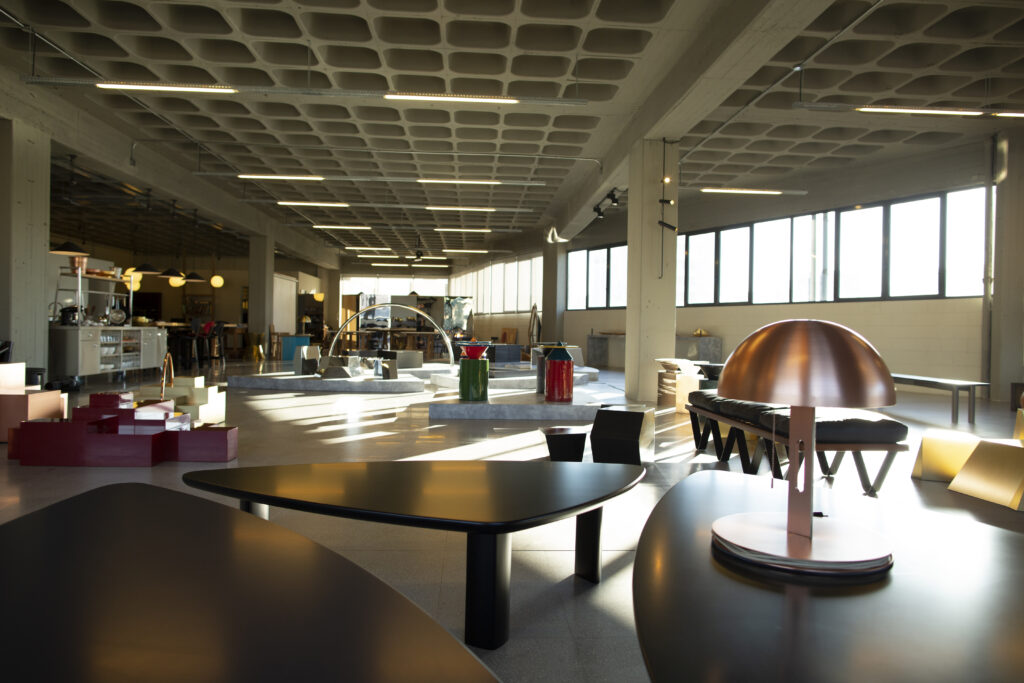
This is when we had the luxury to create exceptional pieces for galleries rather than for clients. When you have a museum or a gallery asking you to make a piece, you can experiment and push the limit of design to art but always keep functionality. If you have a private client it is less art than design. You will need to be more realistic.
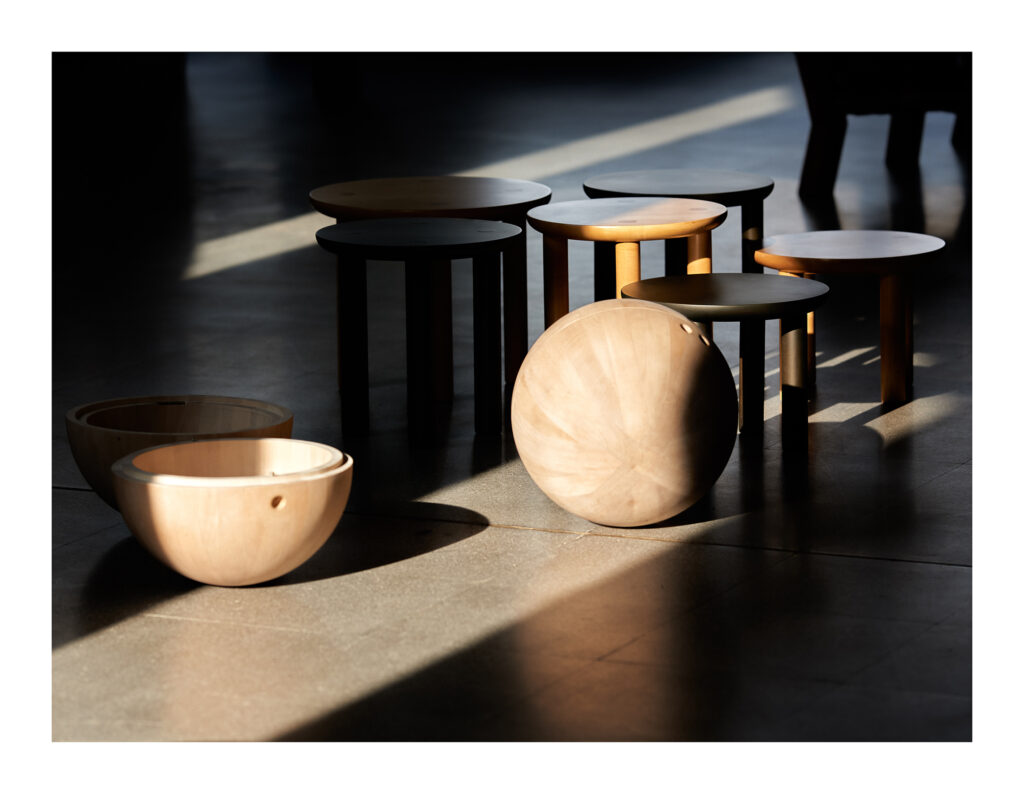
The Kamel Building’s raw concrete and brick are now your canvas. In what ways does the space’s history influence your designs?
Despite the concrete ceiling, my studio is very warm. There is a beautiful atmosphere once you step in. Space is always part of the story. Not allowing it to influence the work is a mistake. However, it is often the area at the client that is considered.
The building is a blend of Beirut’s past and your future. Tell us about preserving its character while introducing your modern touch.
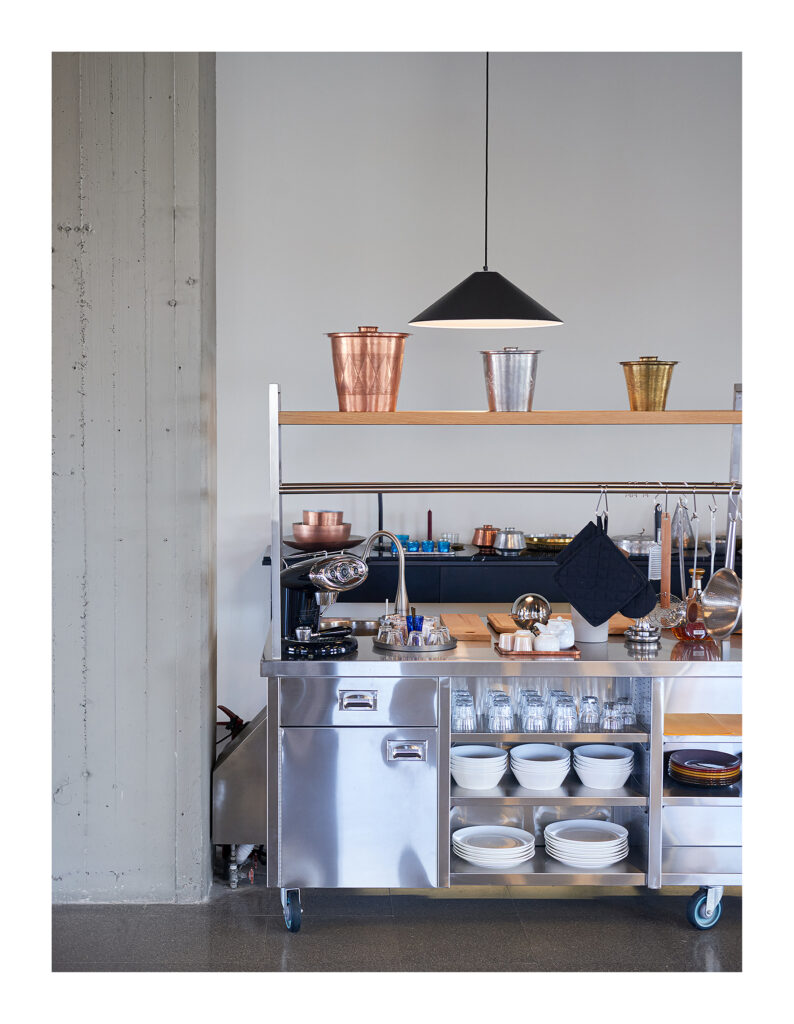
When I got for the first time in the building there was no space on the 4th floor, it was so raw that I had to completely redefine the area and the walls, and imagine it in my own way. I created a space with a kitchen and a bar to bring more warmth in the studio. But I kept the ceiling as it was and just repainted it because it was burnt from the civil war. I opened large windows because the old ones were so small that there was no light inside.
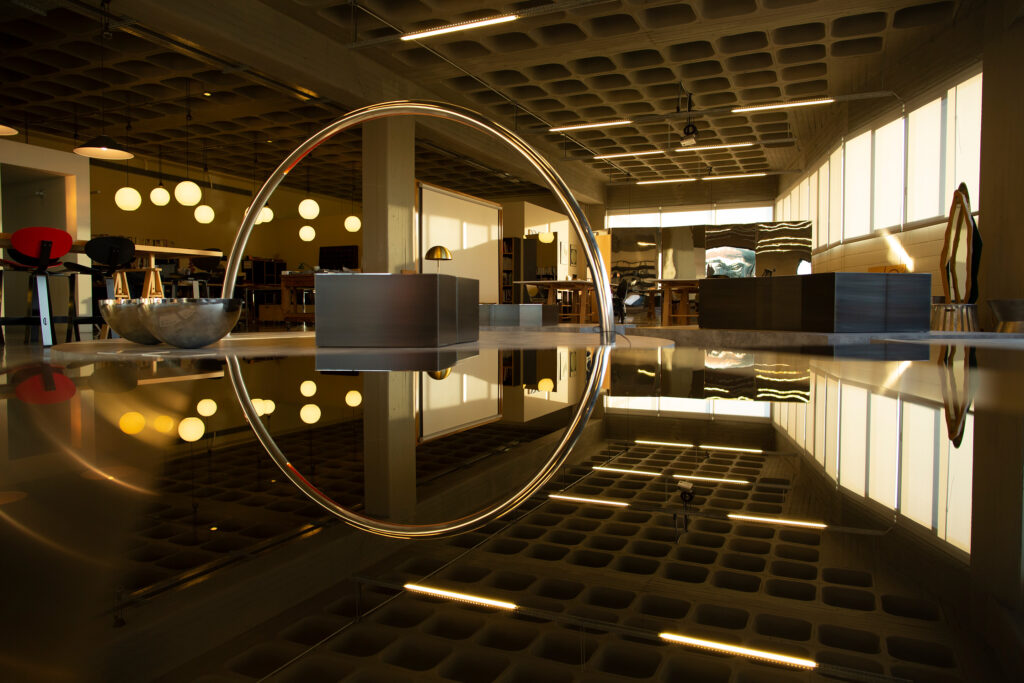
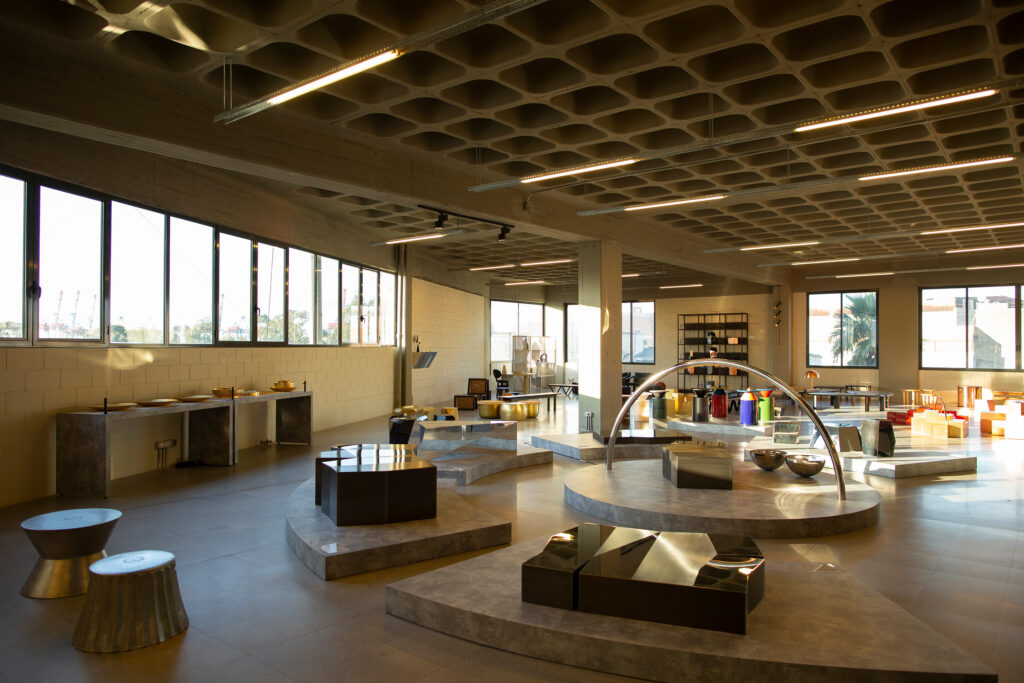
The studio now doubles as a gallery. How do you decide which pieces ‘live’ in the space and which are just visitors?
It is a nice question. I never thought about it this way. But I believe that every piece decides for itself. The ones that are still here after all these years are likely to stay forever. Typically, the more sculptural pieces belong to this area. They remain here and are
difficult to move away.
What’s a non-negotiable for you in any interior? Light? Materials? Flow?
Nothing is negotiable… everything is important. It is the balance of the three that makes a space. The right light, the right materials for the space, and the flow work altogether.
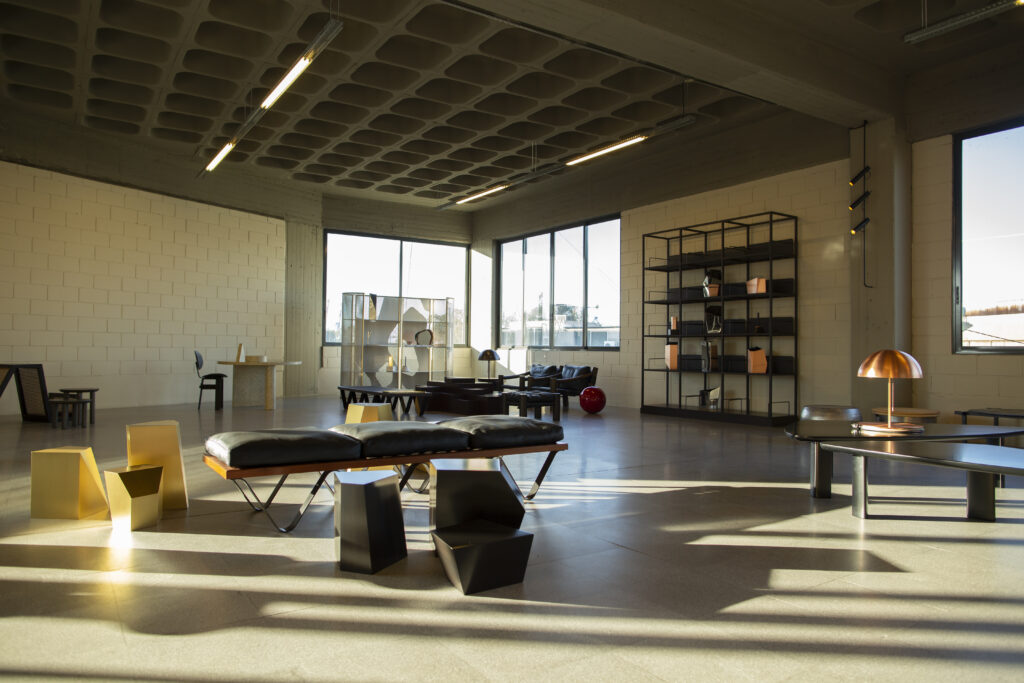
Tell us about a project that took you by surprise. What happened?
Elephant armchair. It’s a project that started with my carpenter. He wanted me to use the skin of an elephant that he had collected. It was stunning yet challenging as a concept because it involved a real elephant. I designed the piece and when it was ready we were shocked because it looked so much like the elephant that I couldn’t bear looking at it. We had to remove the elephant skin and use a black normal leather.
What are your thoughts on sustainability and adaptability in interiors?
I believe an interior is meant for a lifetime. However, when it’s not permanent, the ideal approach is to create pieces that you will take with you from one space to another. Never buy a piece that you cannot live with for a very long time.
Looking ahead, how do you dream of evolving your studio in the next few years?
This is an unpleasant question. I cant answer it right now because I am in the middle of the rethinking. Every day I ask myself the same question.