Kara Creek, a private residence by Walker Warner Architects in Colorado, is positioned at the edge of a residential neighborhood where the built fabric gives way to a steep, wooded landscape descending toward a creek. where the surrounding environment becomes the primary framework of the project rather than its backdrop. The project takes this condition as its point of departure, establishing a careful balance between proximity to the street and openness to the surrounding terrain.
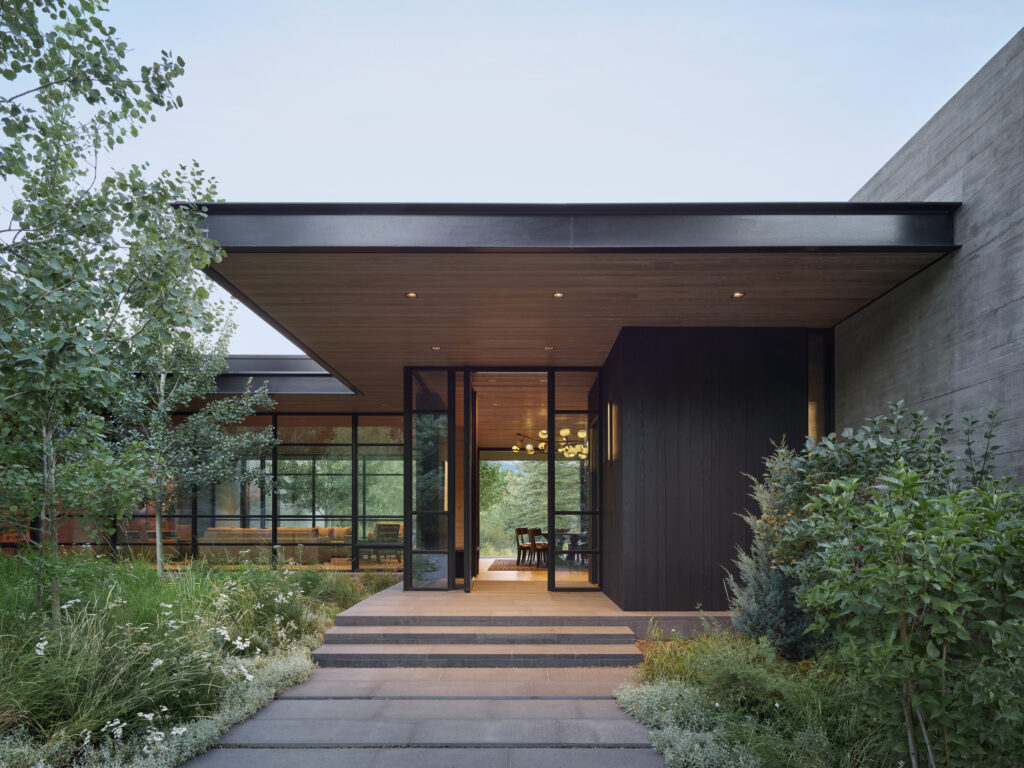
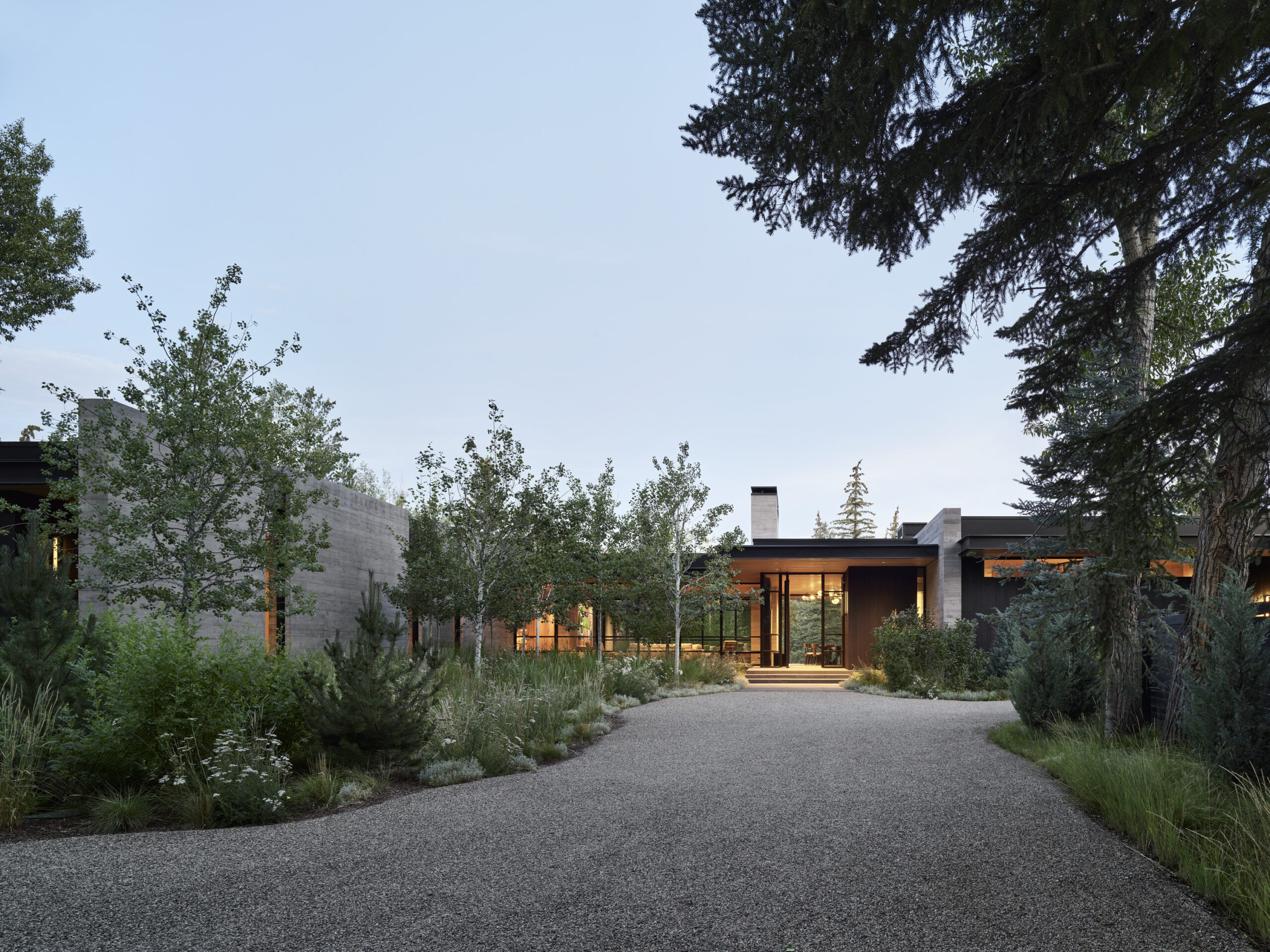
The house extends across 11,500 square feet, yet its presence remains deliberately restrained. From the approach, it reads as a low, linear volume set among trees, aligned with the scale of its surroundings. What is not immediately visible is the portion carved into the site. This strategy reduces the visual impact of the house, allowing the terrain and vegetation to remain dominant. A secondary level accommodates guest rooms, a gym, sauna, spa, and media room, connected to the main floor by a transparent stair that maintains visual continuity throughout the section.
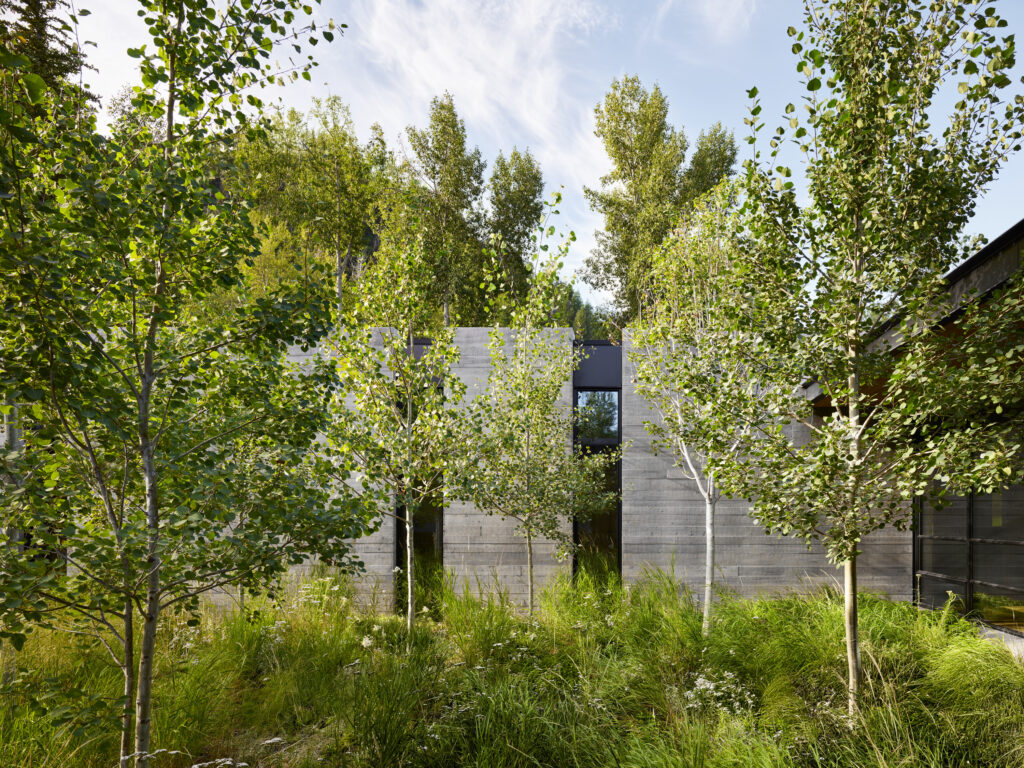
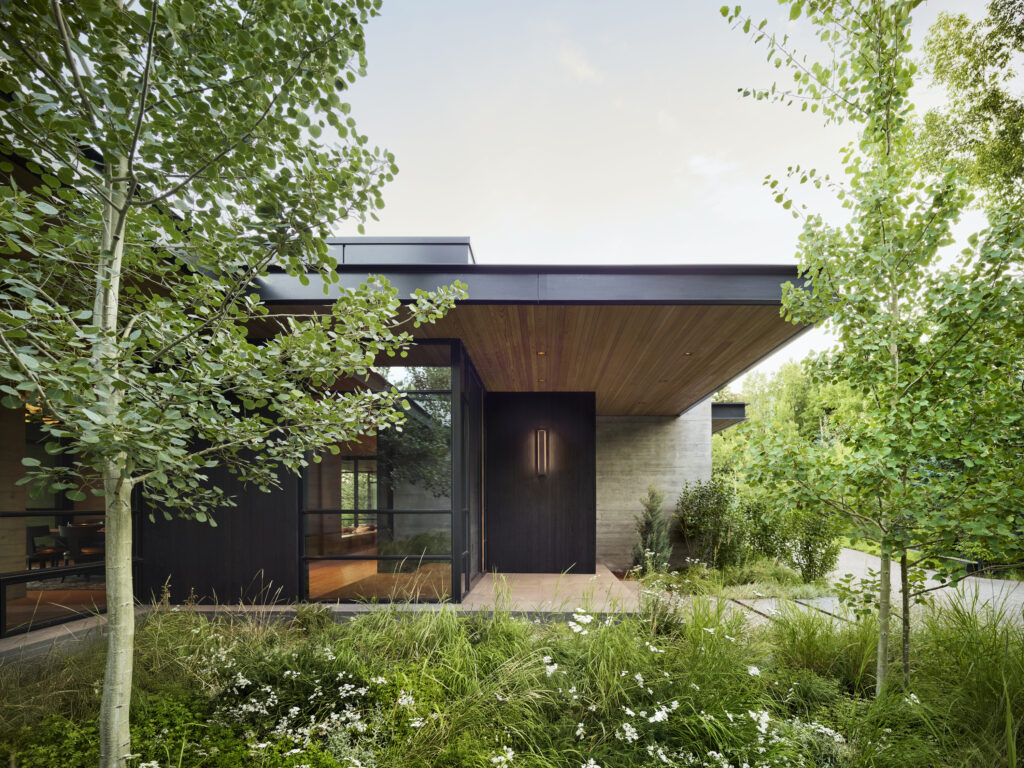
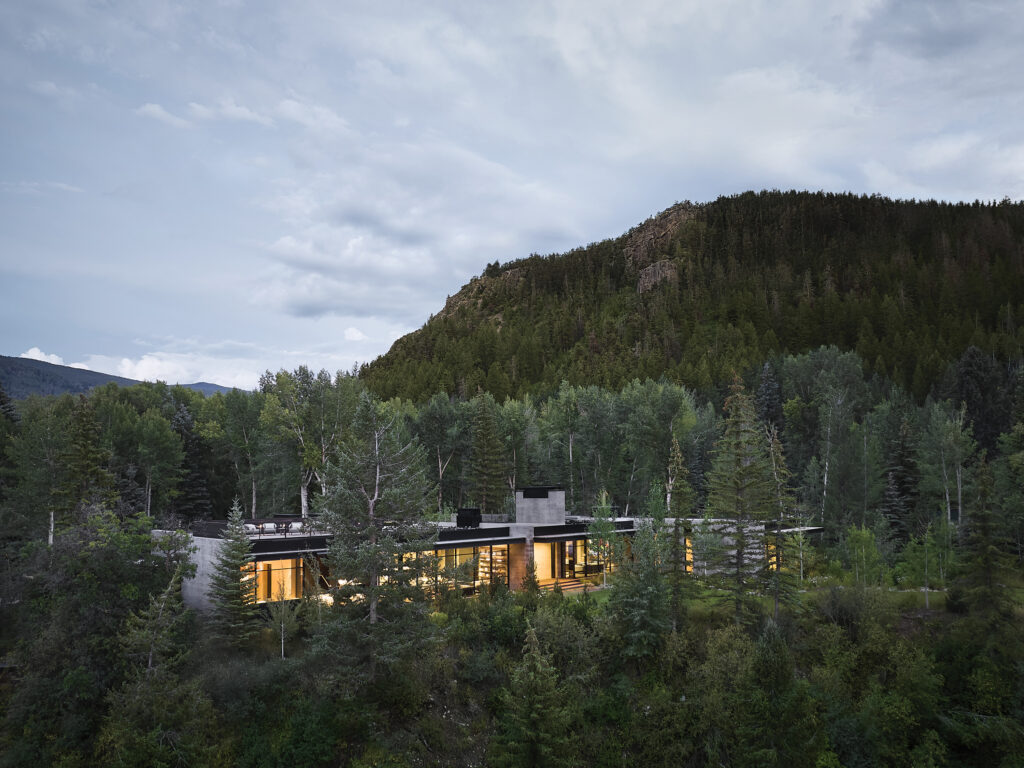
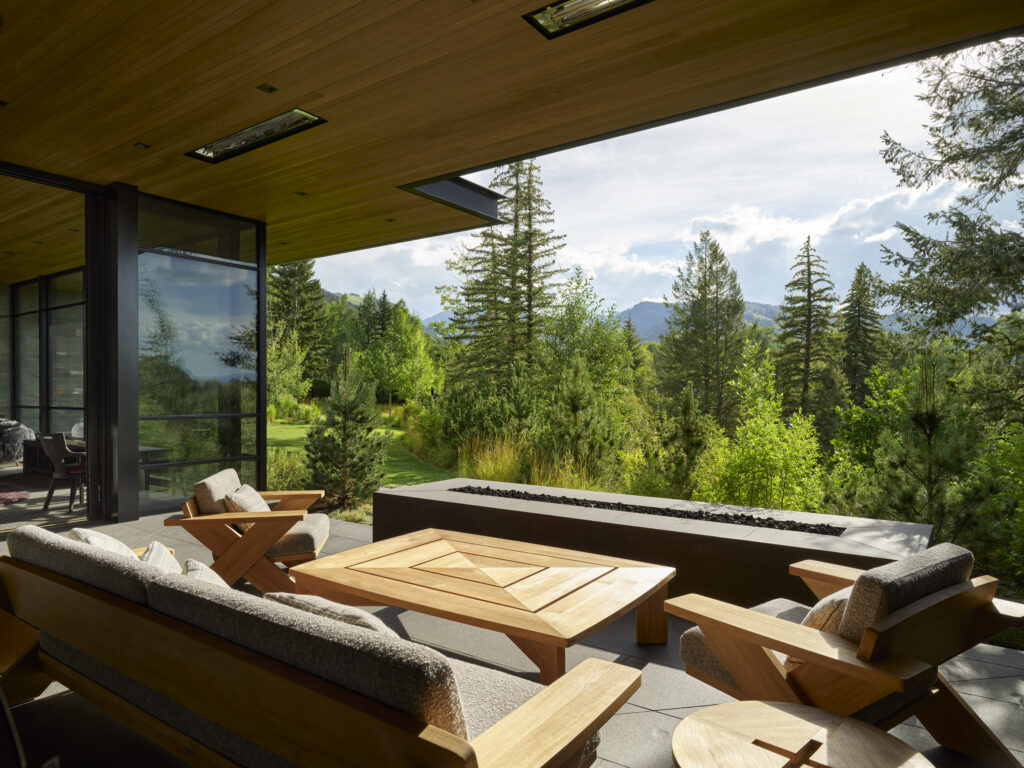
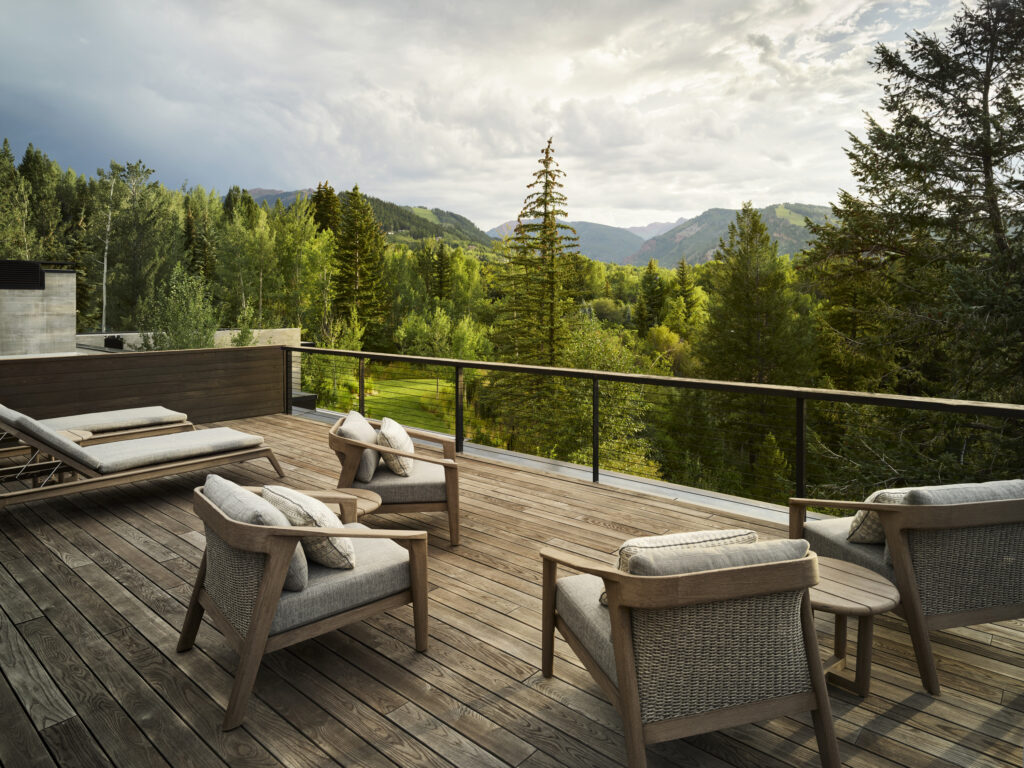
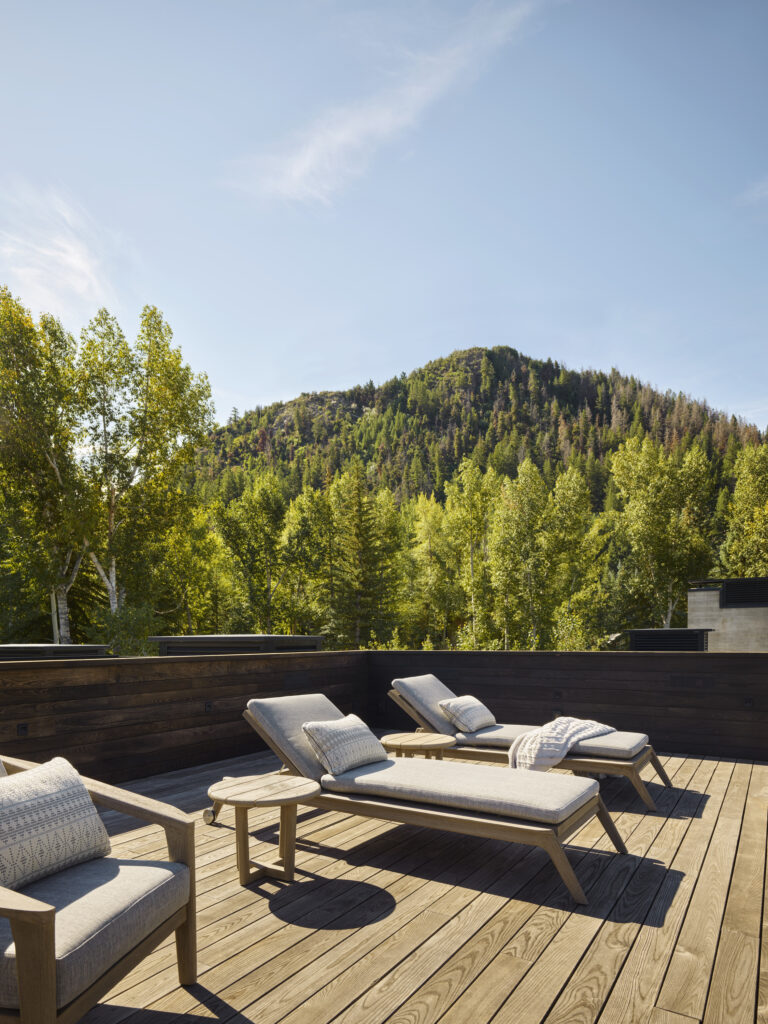
Kathy Scott, partner at Walker Warner Architects, explains the starting point. “The design of Kara Creek was driven by a desire to nestle the home into the land and make it cozy for our clients when it was just the two of them.” This intention informs the decision to keep the primary volume to a single story. “By limiting the home to a single story with basement carved into the site we allowed for views over, around, and through the house.”
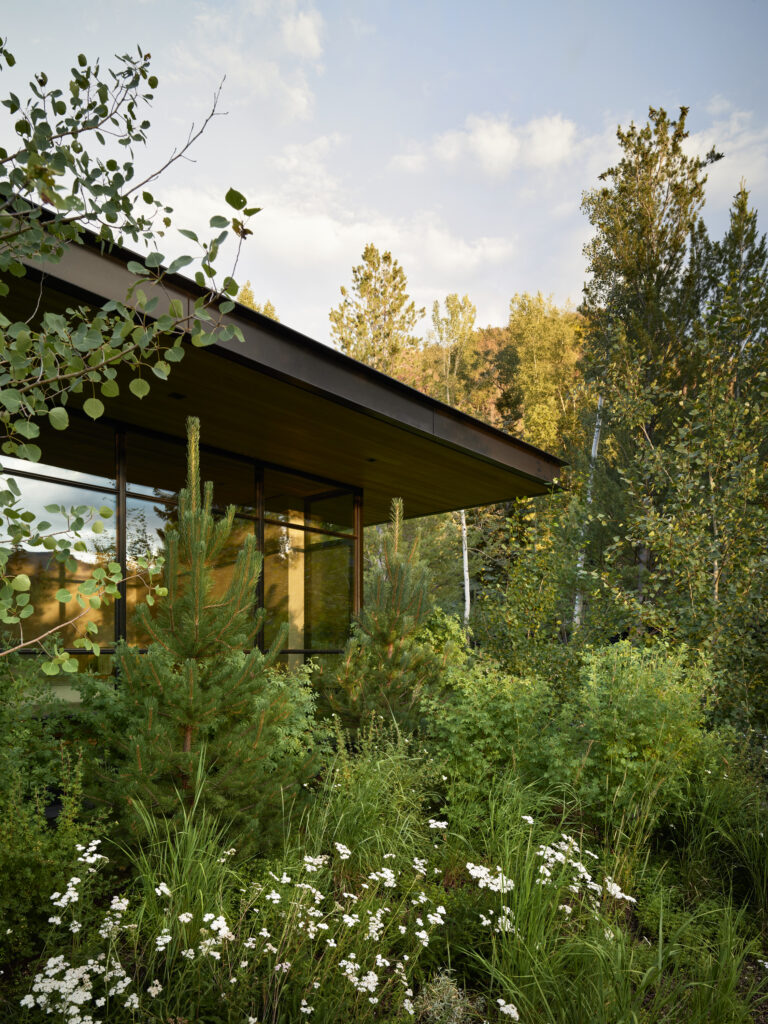
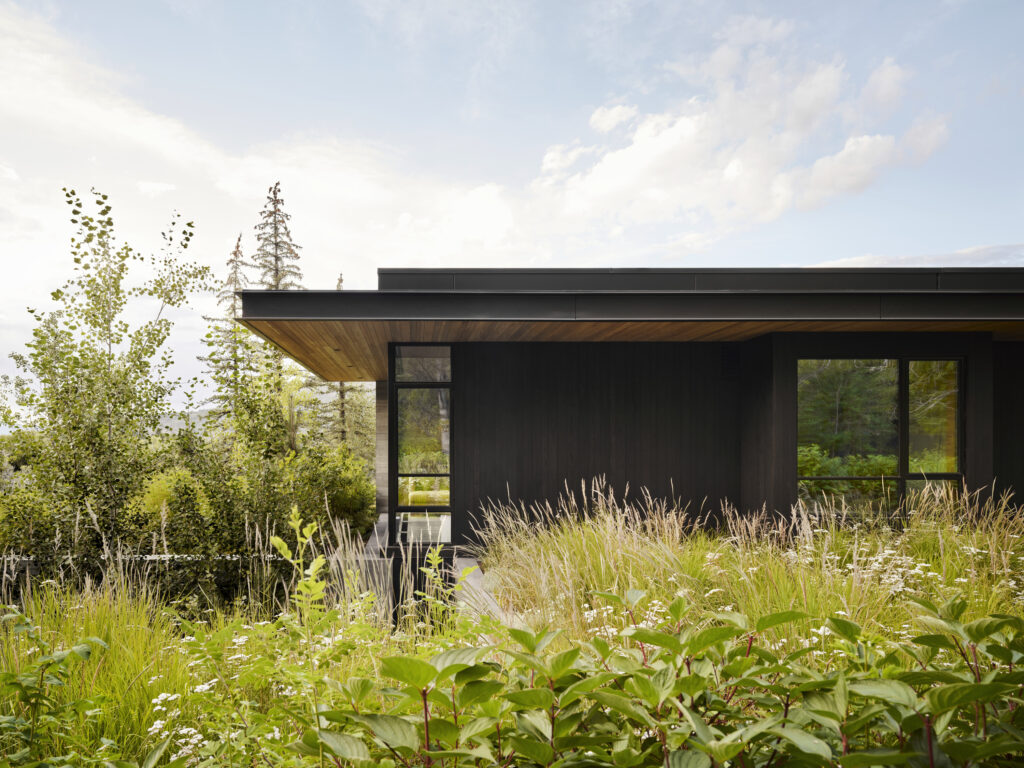
The plan is structured around a central living room that operates as a point of transition. From the entrance, the space opens directly toward the landscape, aligning with a grove of aspen trees that continues across the site. Full length west facing glazing runs along the primary spaces, including the living areas, bedroom suite, and shared office, establishing a constant visual connection with the mountains. The house is organized to register the landscape at multiple distances, from the immediate presence of aspen trees to the broader mountain horizon, allowing the experience of the site to unfold gradually.
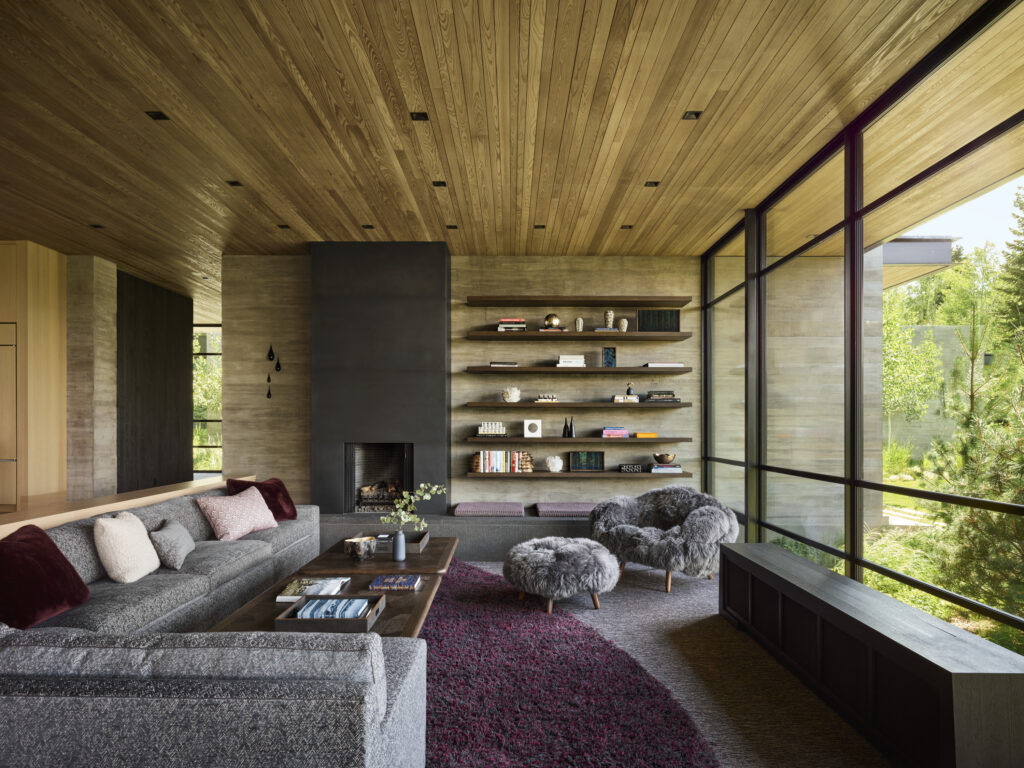
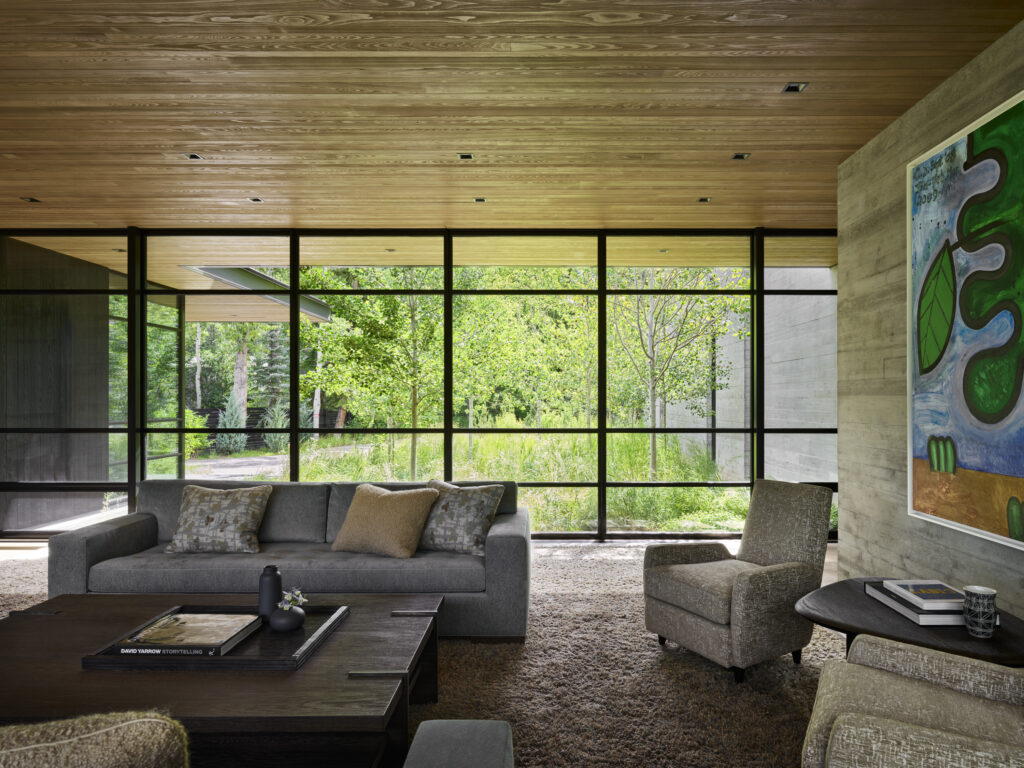
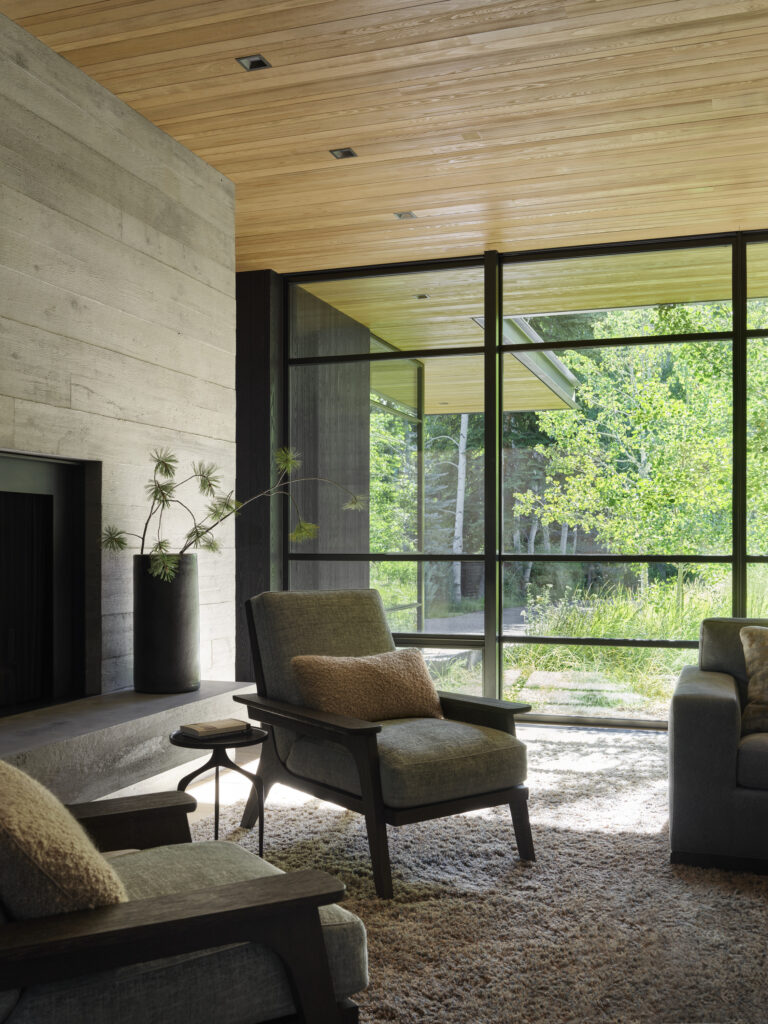
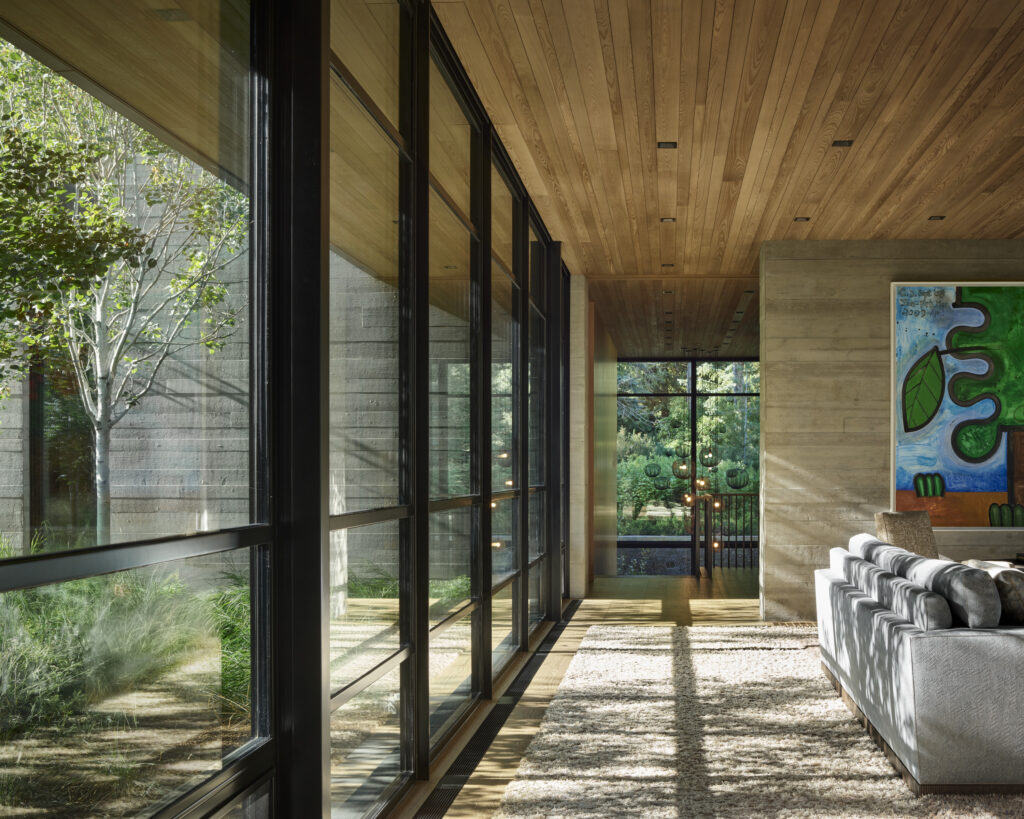
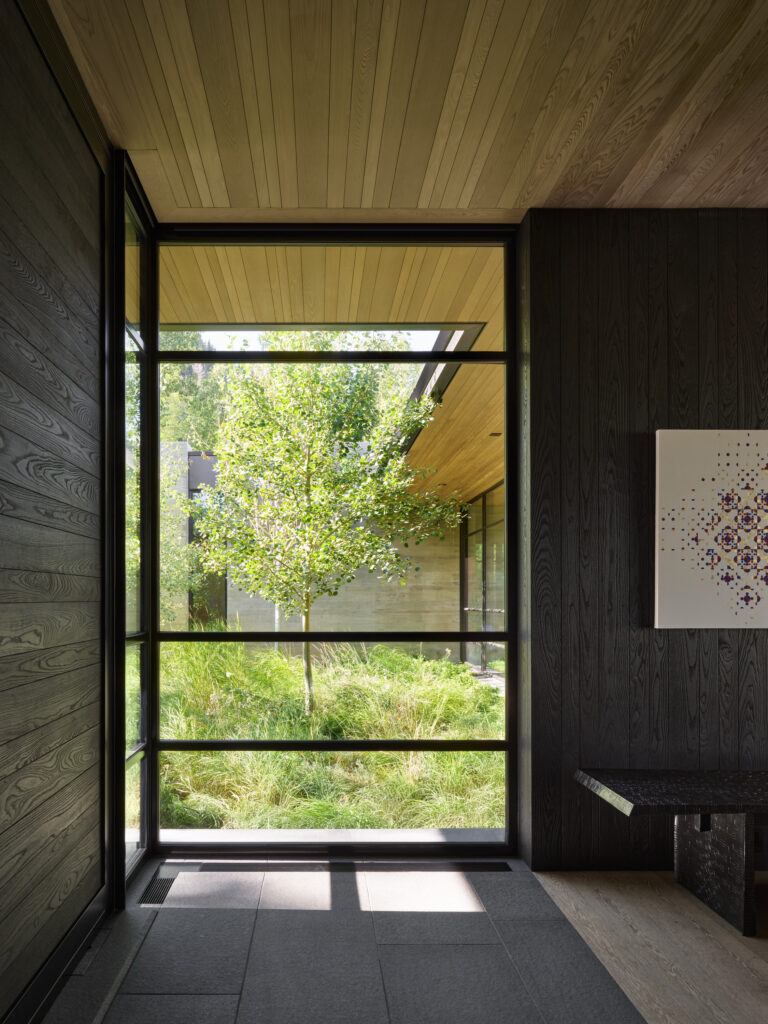
Interiors by Douglas Durkin Design rely on a controlled material palette. Concrete blade walls intersect the glass, their horizontal striations recalling the sedimentary rock formations of the region and the remains of a historic mill across the creek. Cypress soffits extend from deep exterior overhangs into the interior, forming a continuous surface above the glazing and regulating light. Outdoor spaces extend the domestic program into the landscape, from the lawn descending toward the creek to the more enclosed courtyard and spa, reinforcing a continuous relationship between interior life and the surrounding terrain.
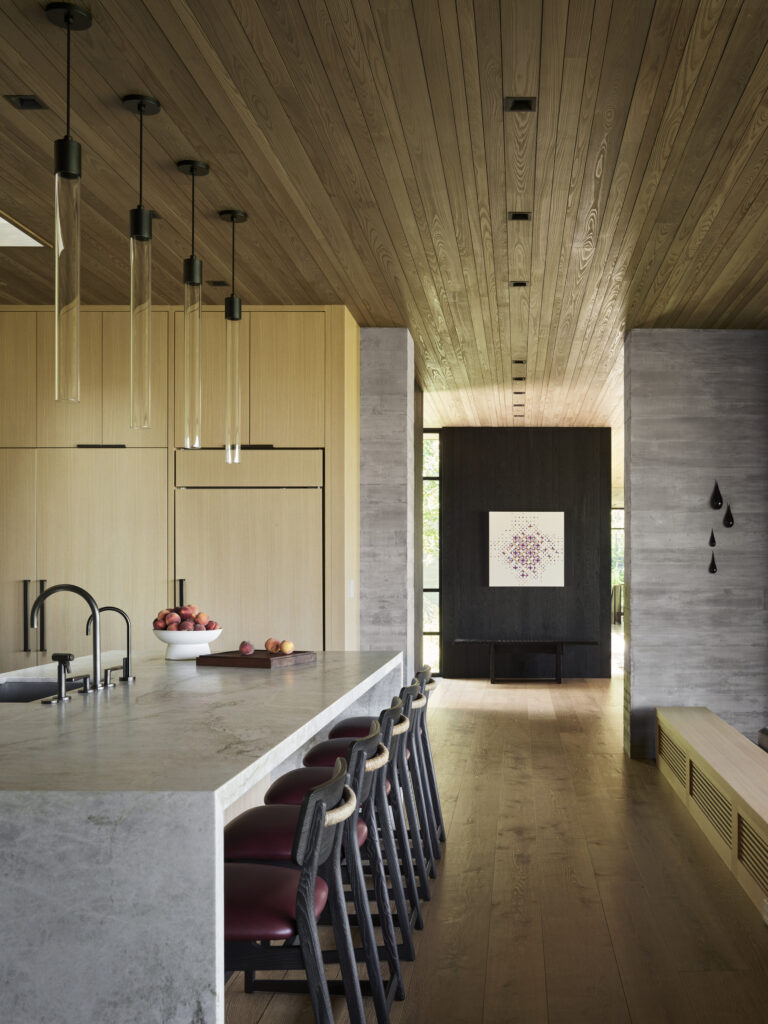
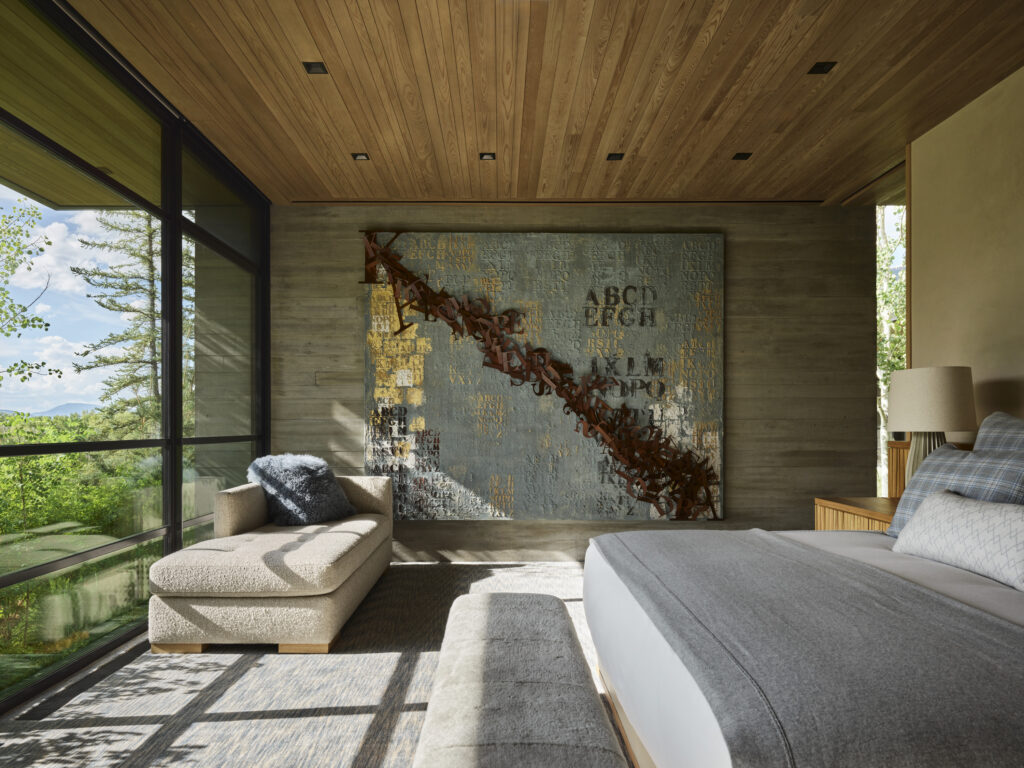
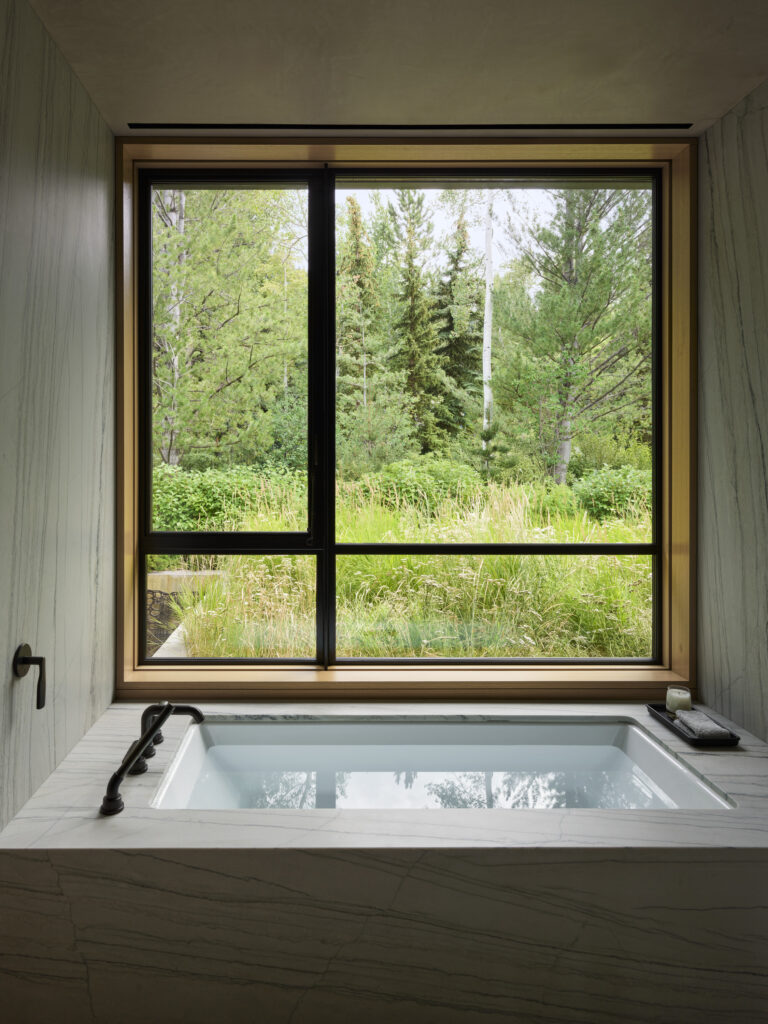
The project is conceived to evolve with the seasons, as light, foliage, and climate continuously alter the perception of the interiors. “It was deeply satisfying to see the house come together and connect with the surrounding landscape in different ways, depending on the season,” Scott notes. The project holds its position without excess, allowing the site, the light, and the changing seasons to define the experience of the house.