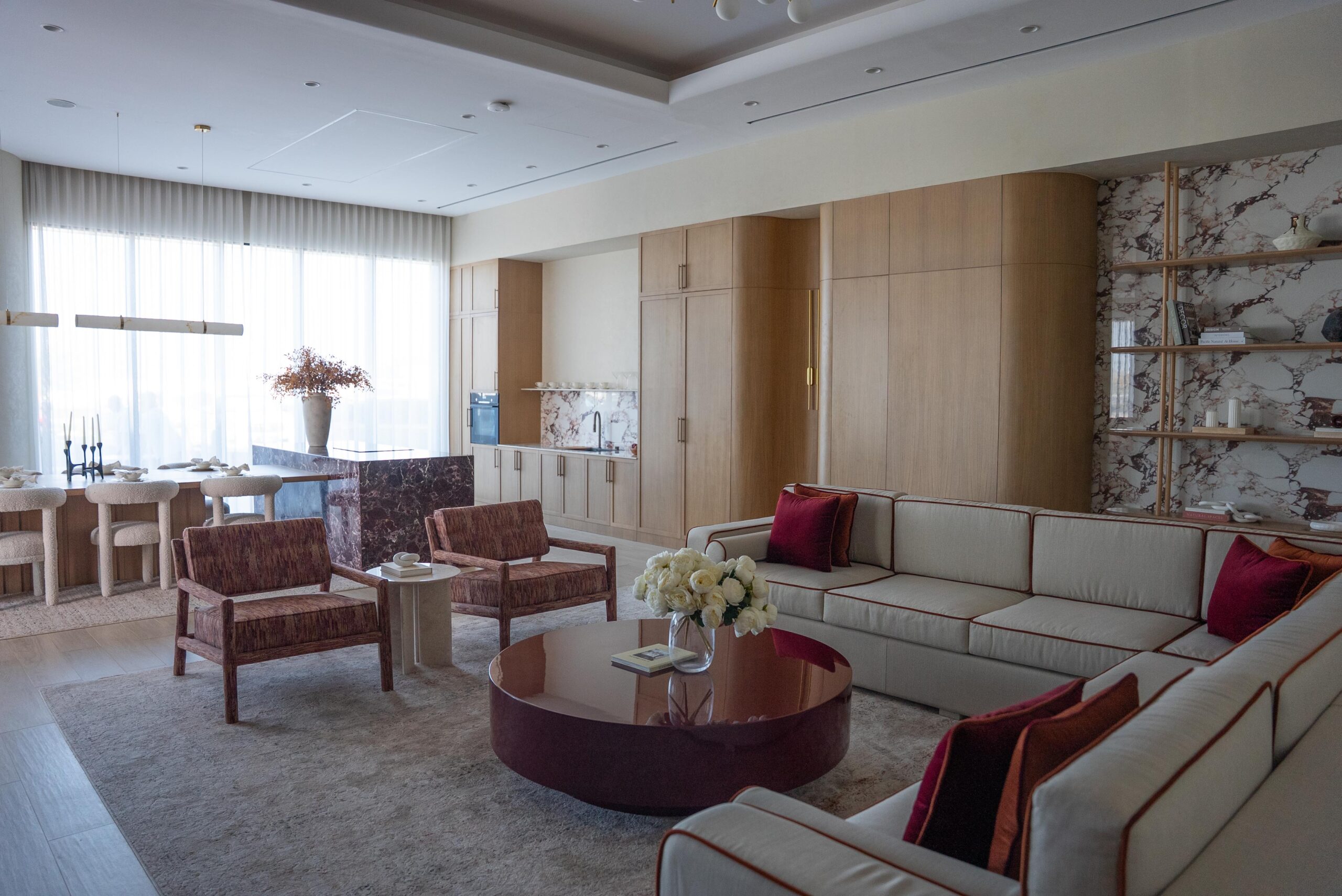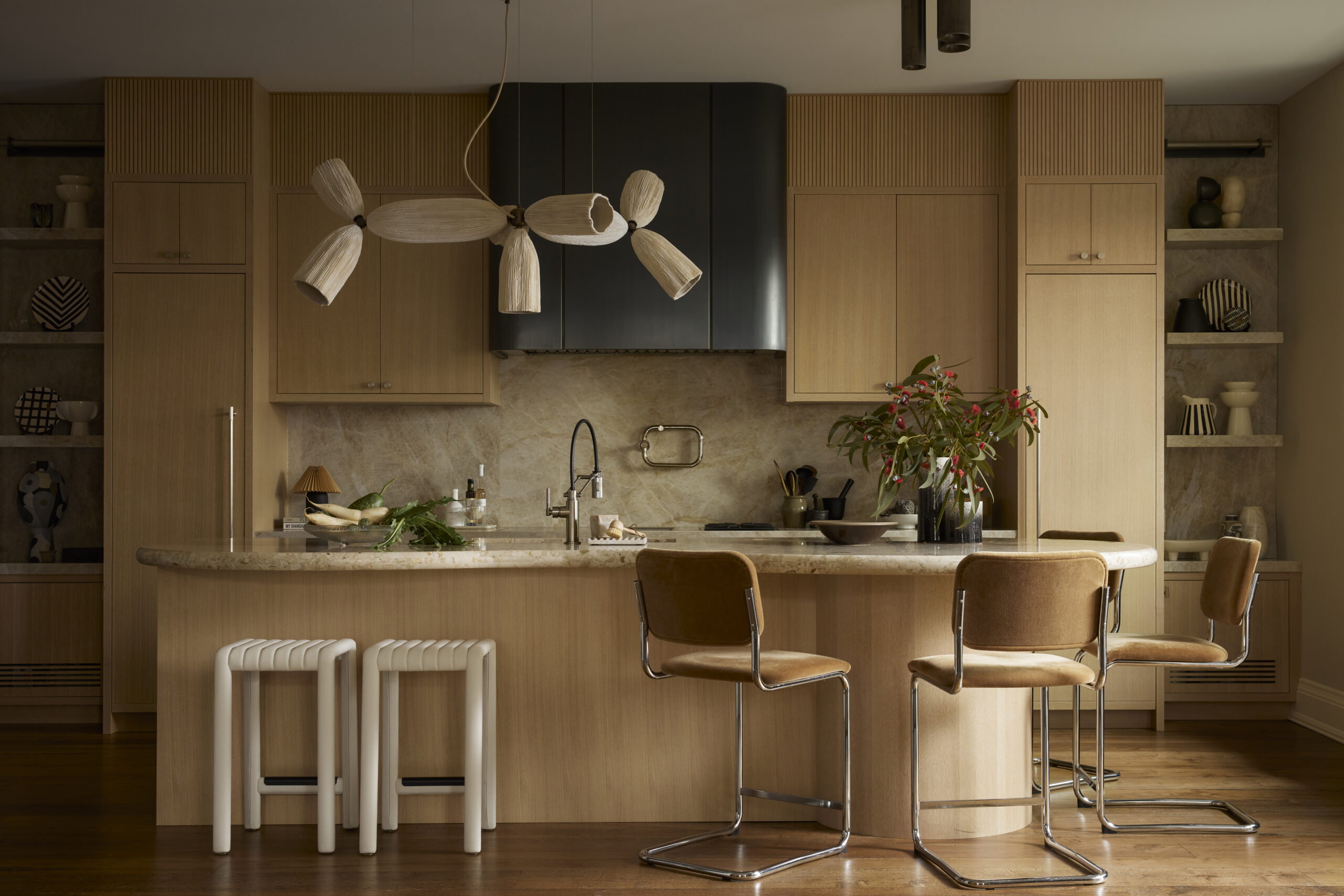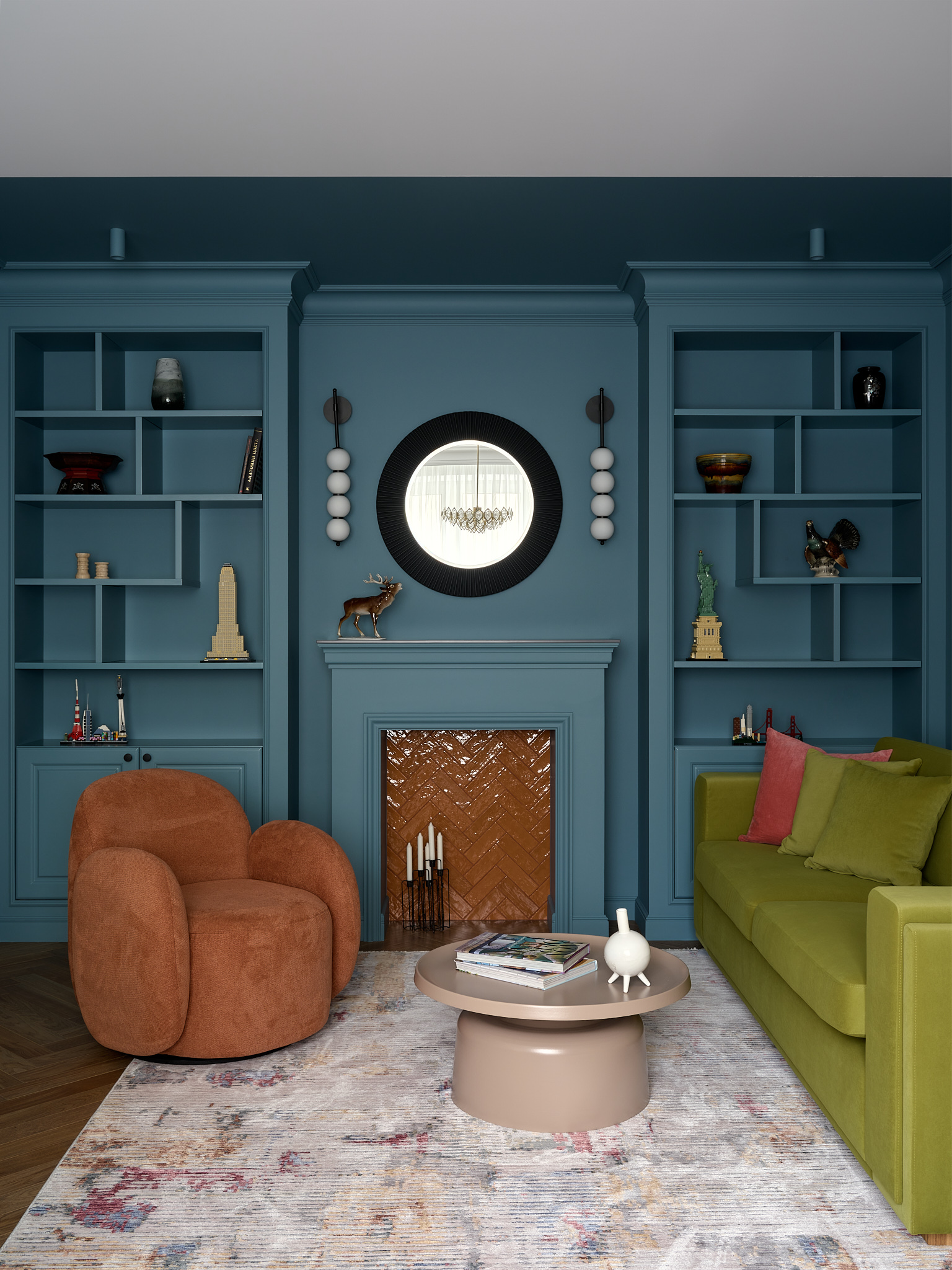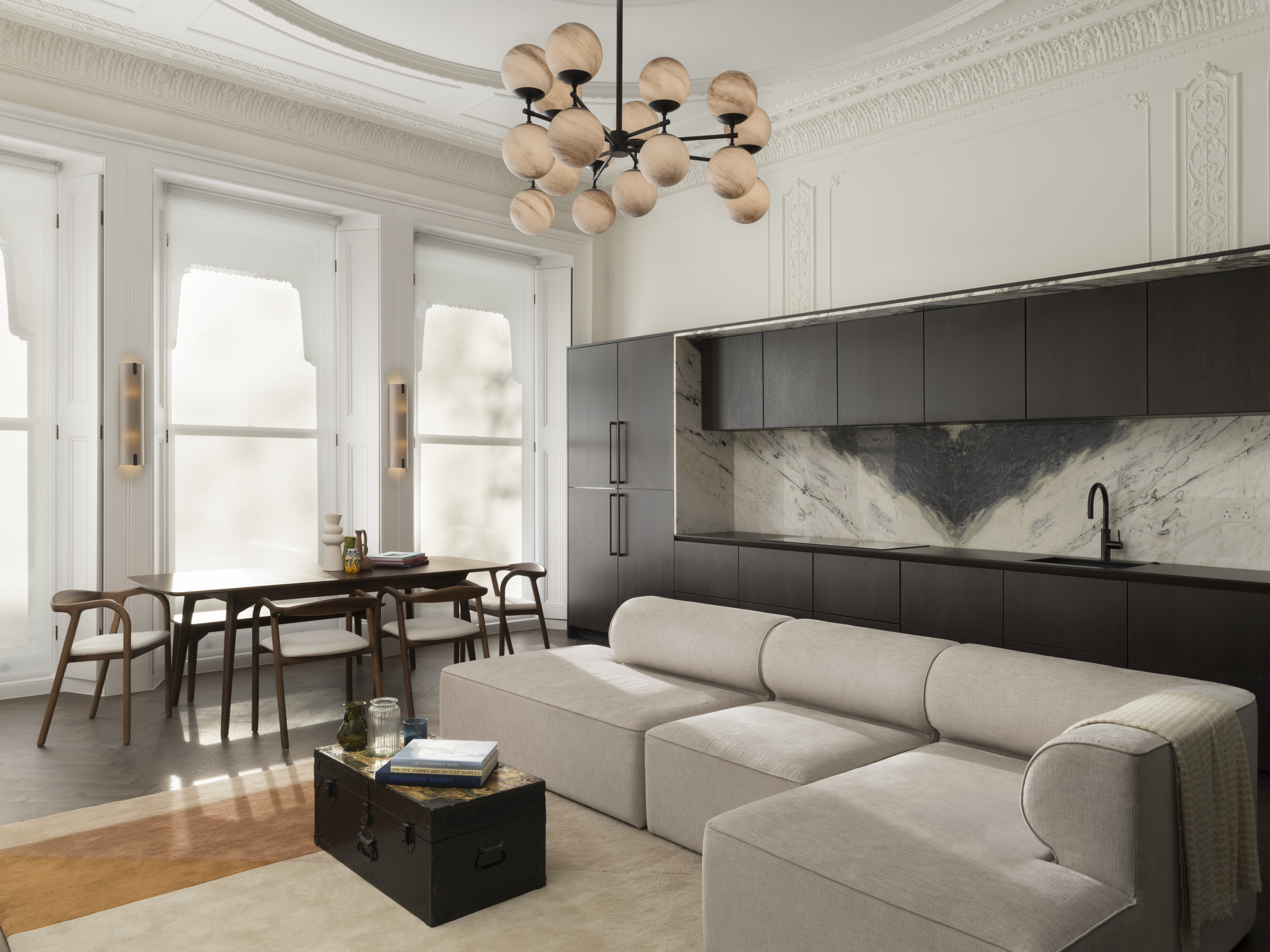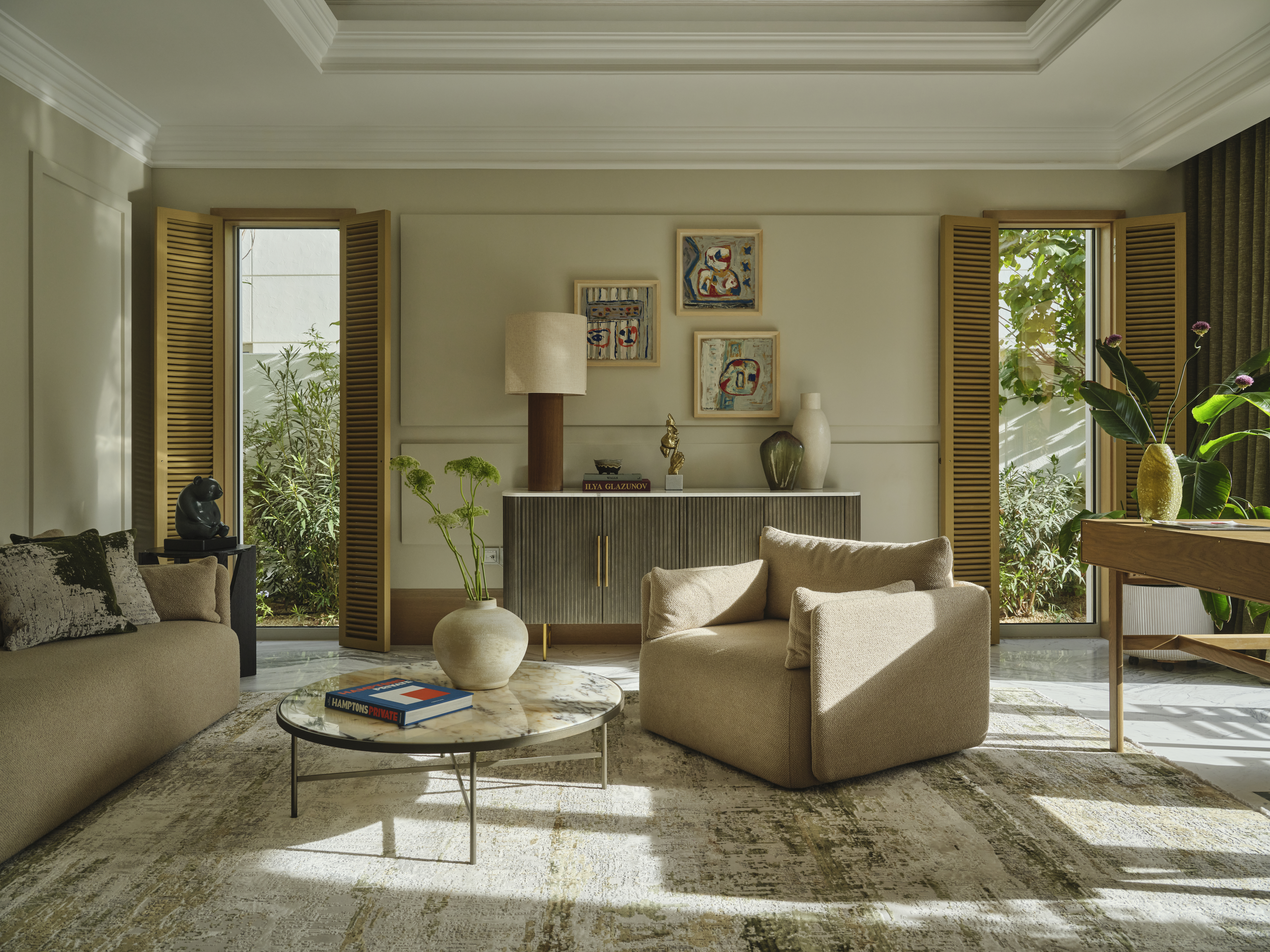
There are houses conceived around an aesthetic, and others that emerge more slowly from the lives unfolding within them. For interior designer Irina Grave, this Dubai villa belongs firmly to the latter. Its soaring volumes, generous proportions and floor to ceiling windows provided an impressive architectural framework, but the real starting point was considerably more personal.
Having previously worked with the owners, Grave approached the project with an intimate understanding of their tastes and rituals. “Our ambition was to create an interior that reflects everything they love,” she explains, describing a vocabulary that moves between the understated elegance of American interiors, classical mouldings and decorative plasterwork, natural stone, warm timber and tactile textiles.
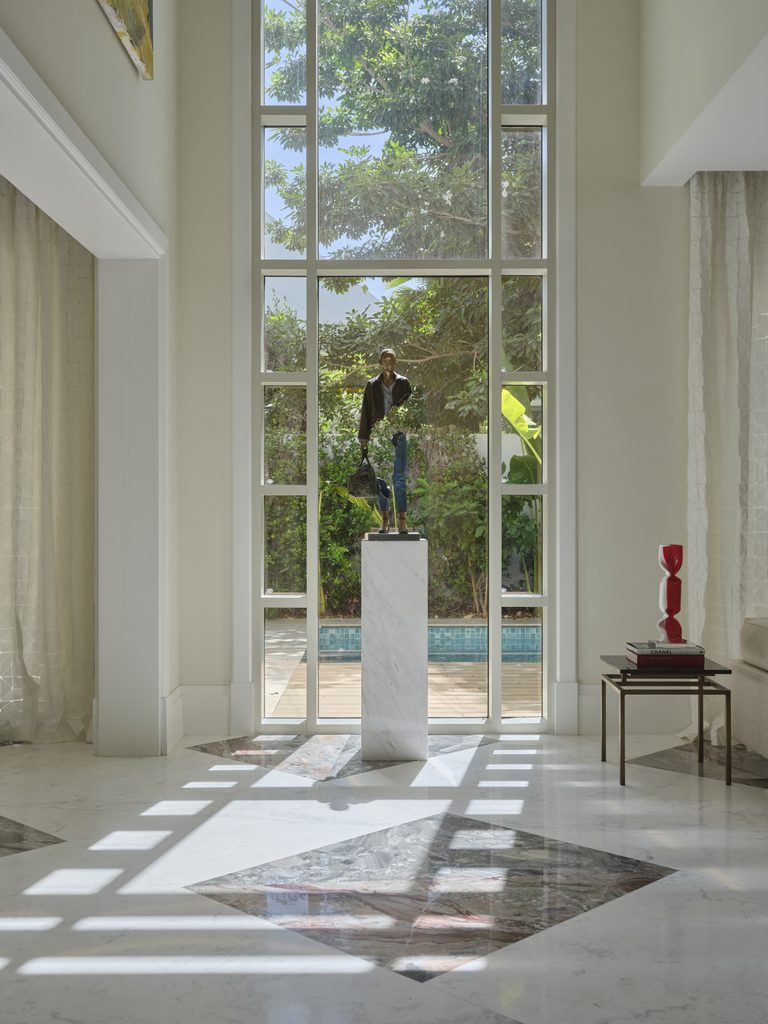
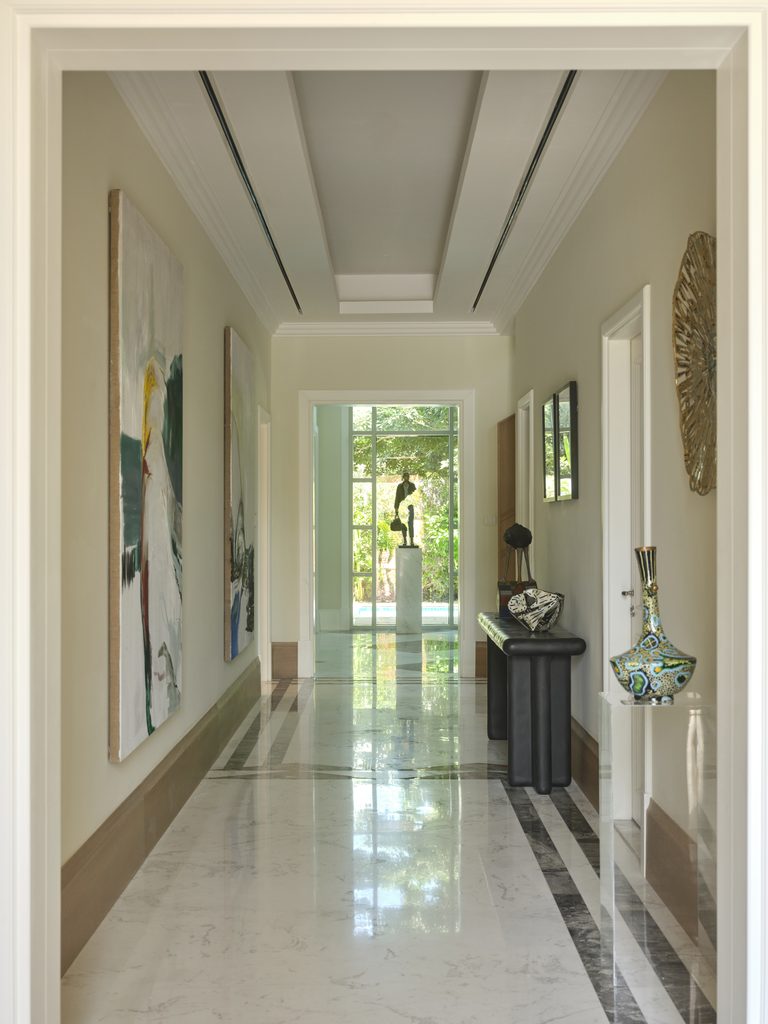
Marble provides the house with its most expressive language. Grave considers its selection one of the most exacting stages of her process, often examining dozens of slabs before finding the right tone, movement and character. “Every room deserves its own distinctive stone,” she says, “yet the villa as a whole must feel connected.”
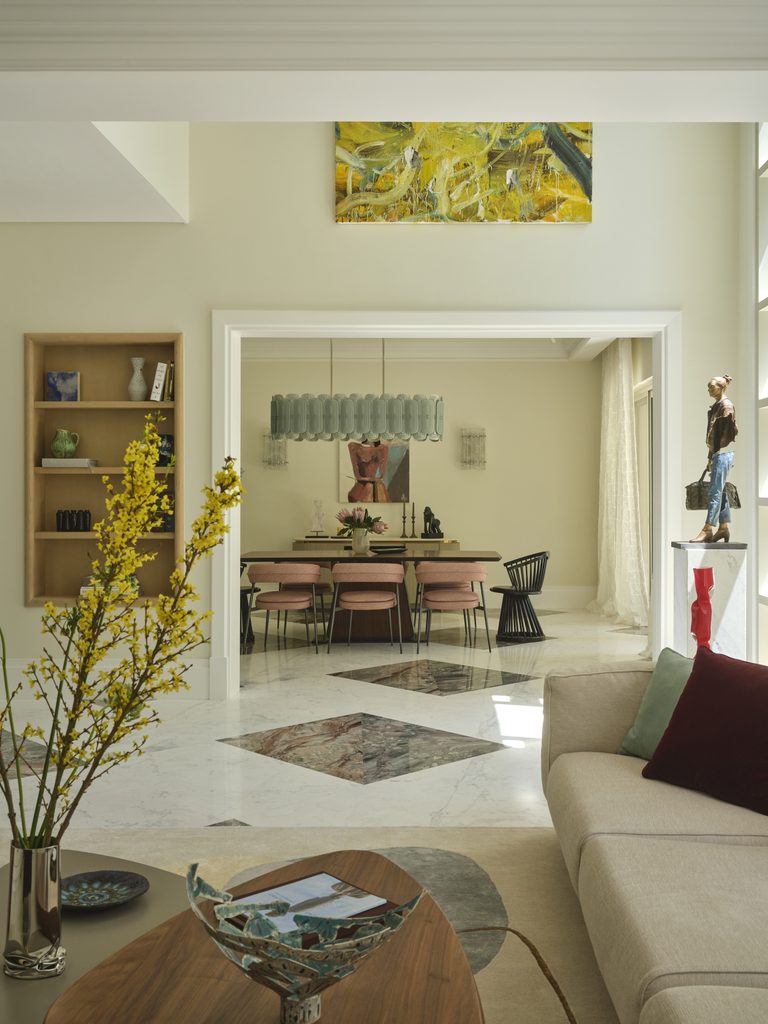
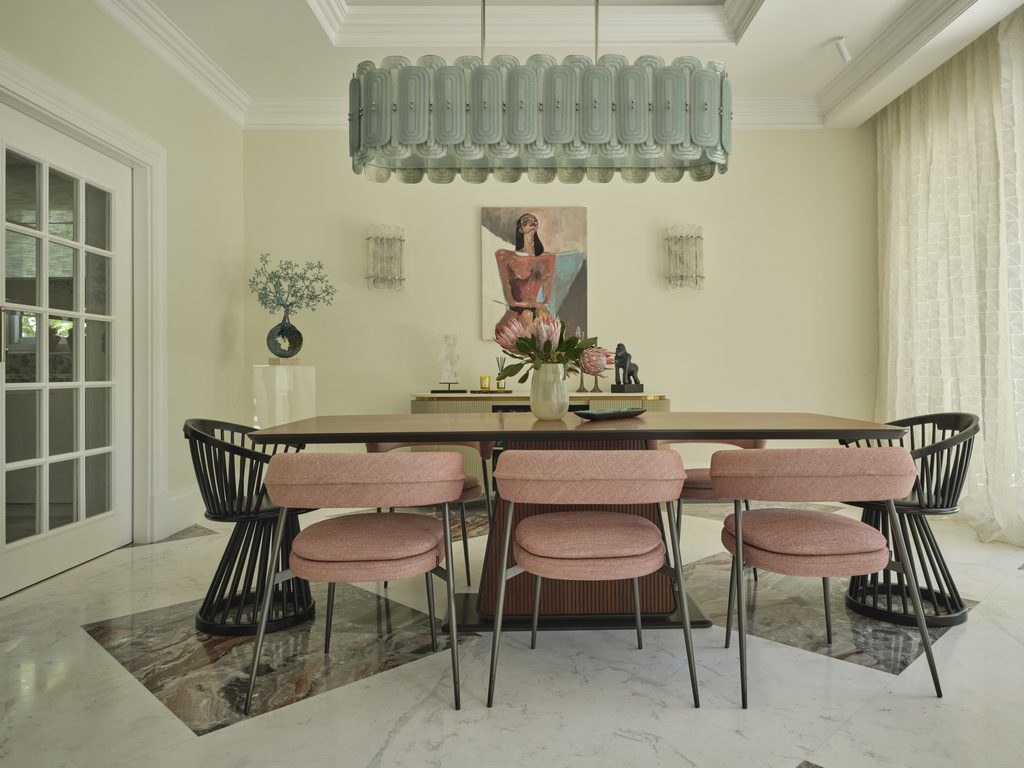
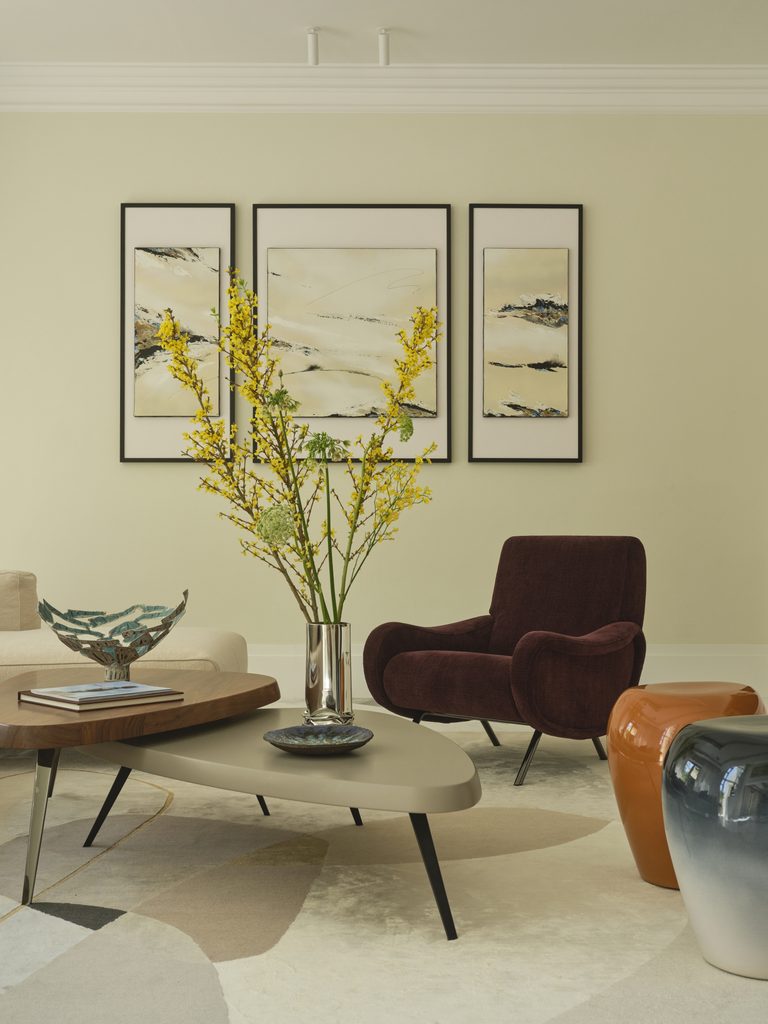
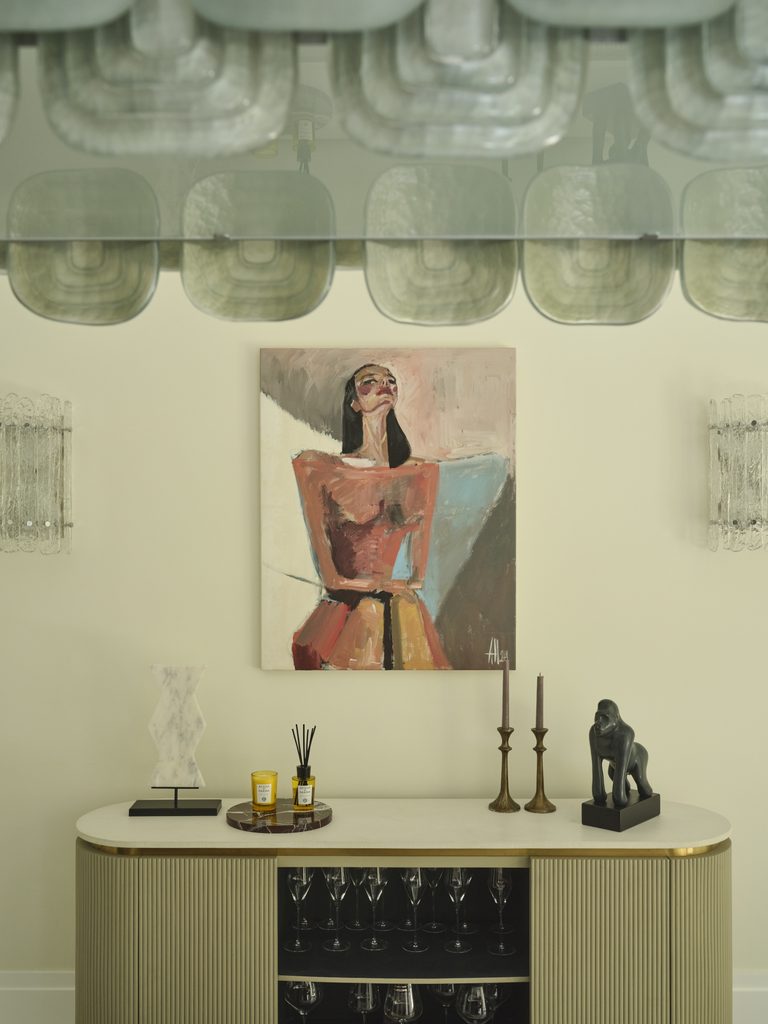
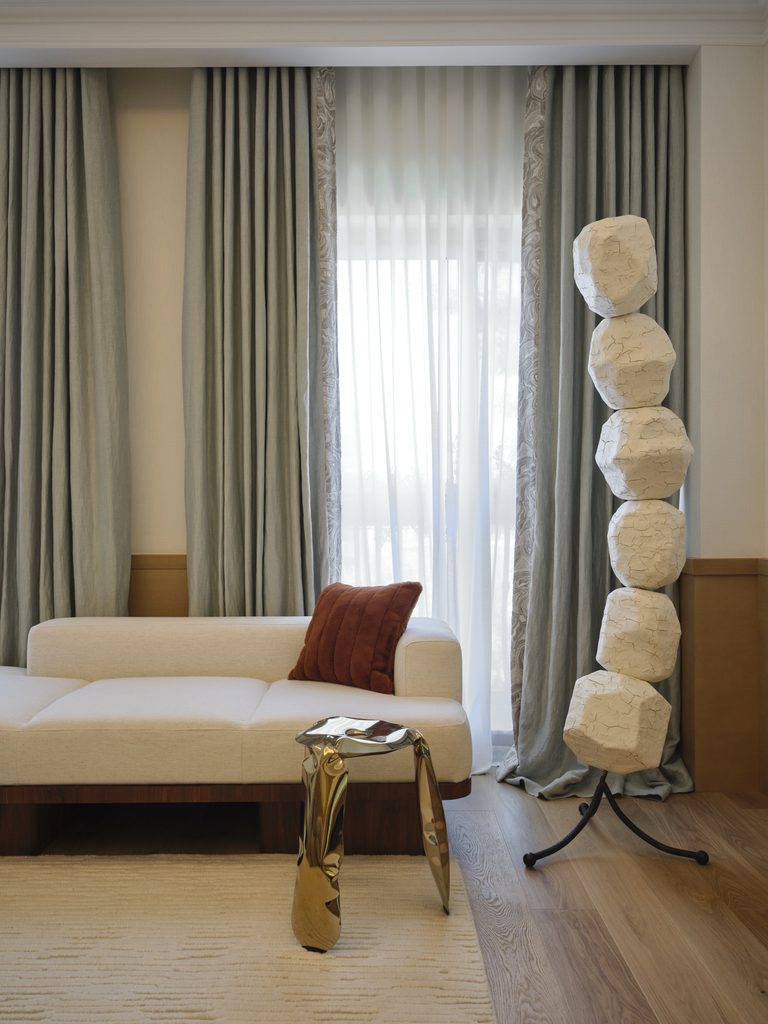
That connection is established through quiet material correspondences. The geometry of the marble flooring across the living and dining spaces, for instance, reappears in the custom fil coupé of the curtains. Elsewhere, oak veneer travels from the entrance hall through the corridors before enveloping the staircase, where marble veining has been painstakingly aligned from step to step. The effect, Grave says, is “almost like a carpet rising to the second floor.”
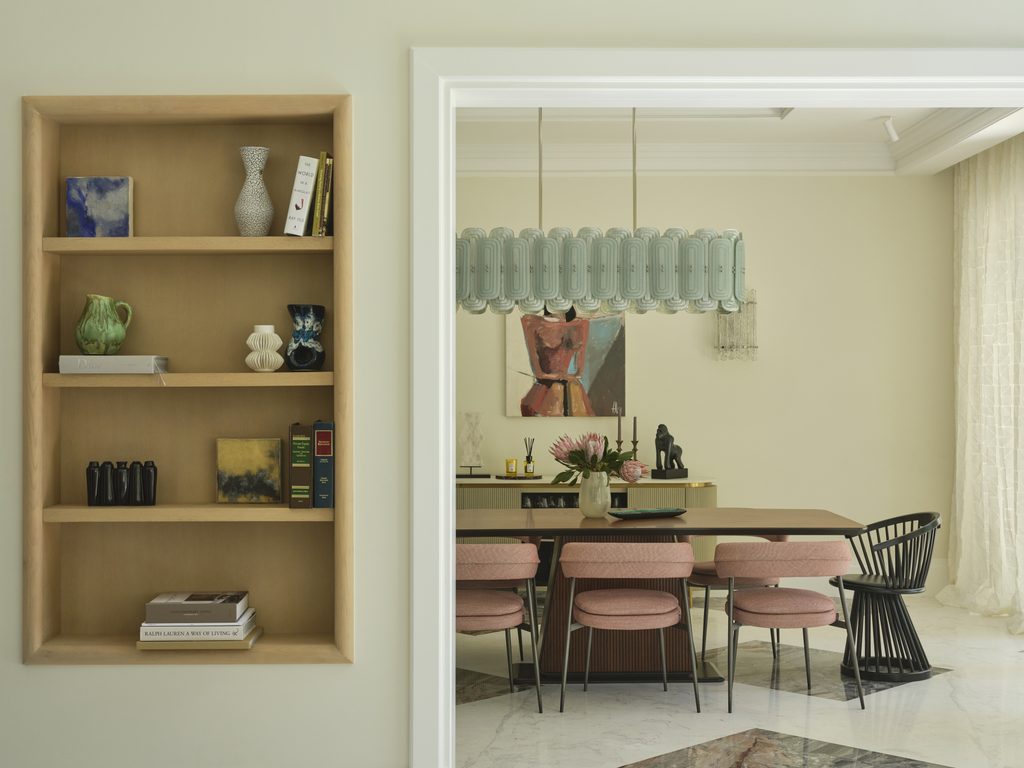
Against this controlled material backdrop, art introduces a more emotional register. Bruno Catalano’s fragmented sculpture The Traveller becomes a metaphor for the owners’ own journey to Dubai, embodying, for Grave, “courage, resilience and the ability to move forward while remaining true to yourself.” Andrea Roggi’s The Love That Lives Within Us, meanwhile, reflects a relationship spanning more than two decades, its symbolism echoed in an interior built around permanence, patience and balance.
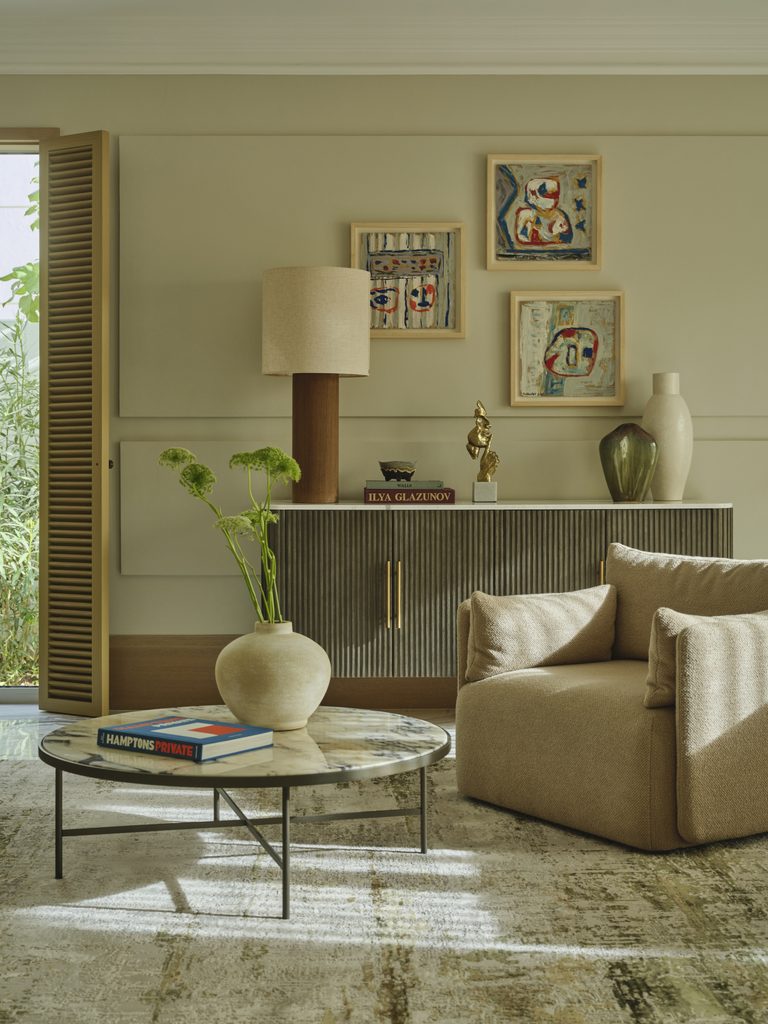
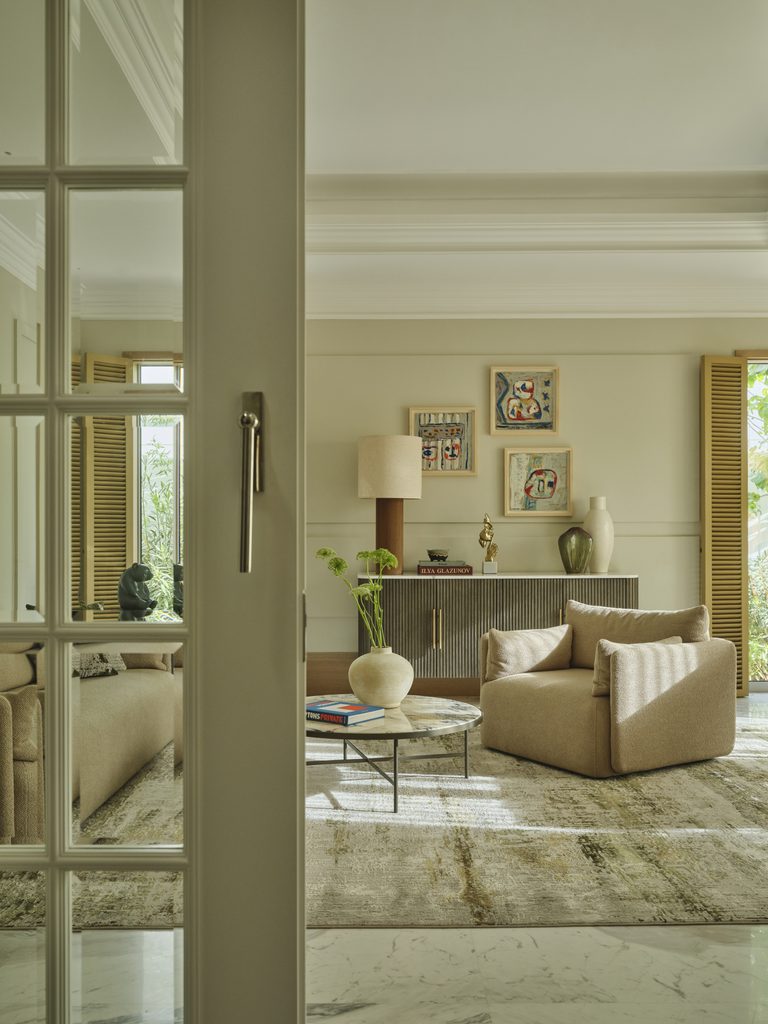
The collection extends throughout the villa with works by Flor Salina, Stefano Bombardieri, represented here through Oblong Art Gallery, Ruslan Gudiev and Mederic Turay, whose work is associated with Rarares Gallery. Rather than being positioned as decorative punctuation, the works were considered in relation to volume, natural light and sightlines, becoming part of the architecture itself.
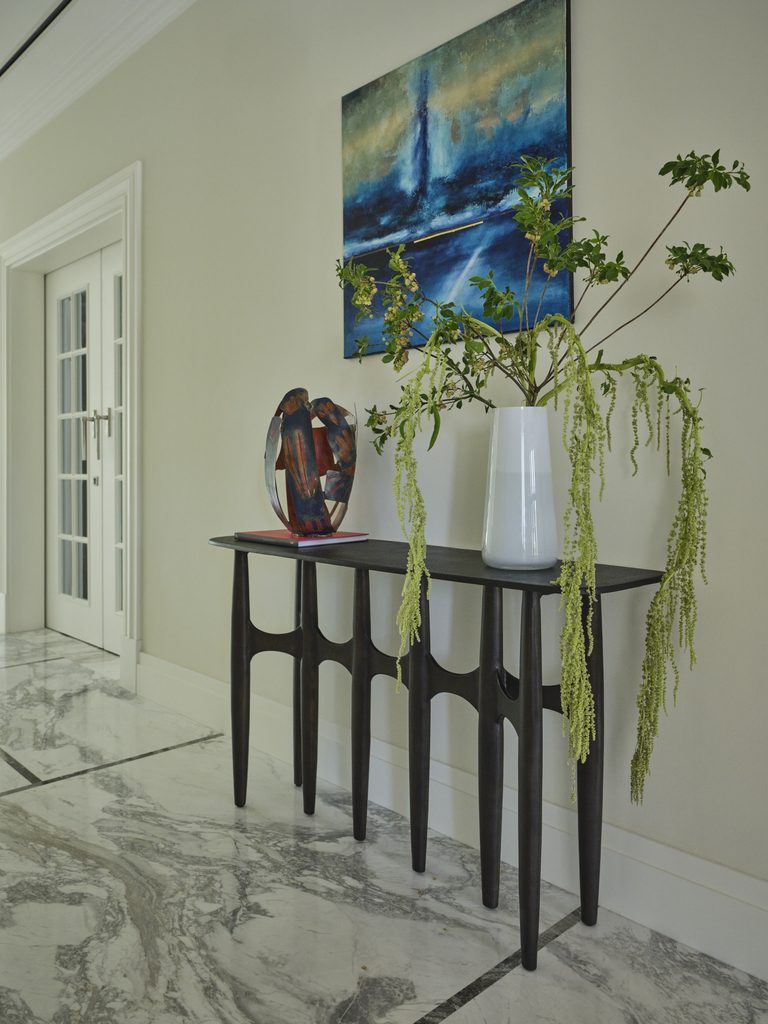
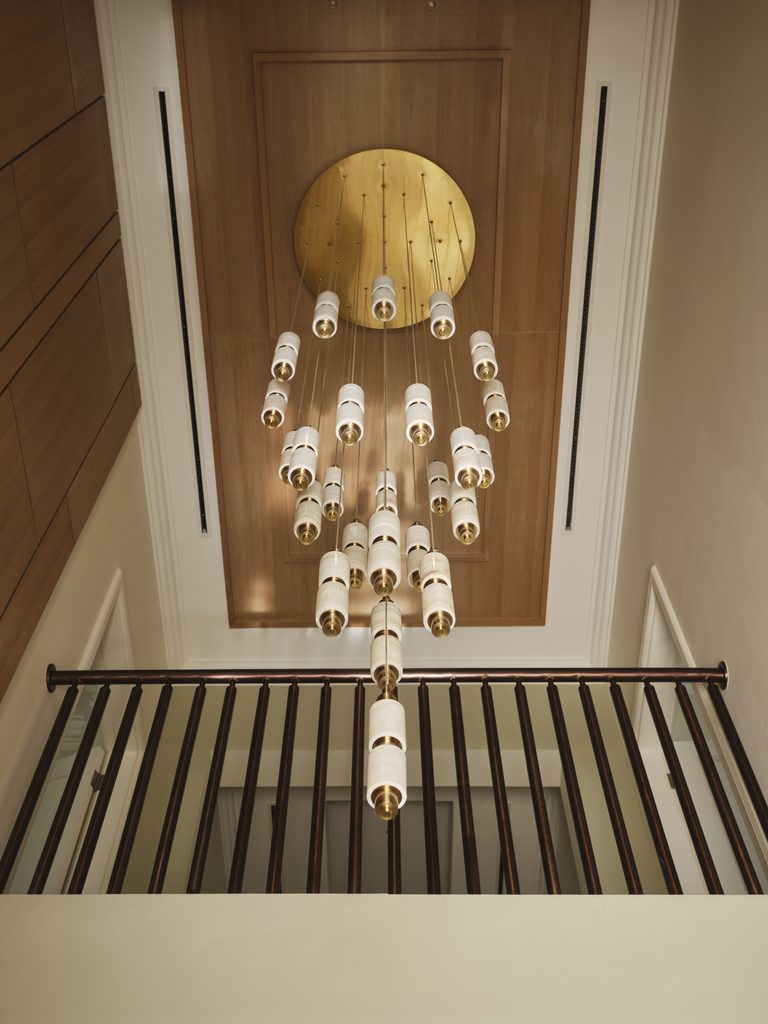
Vintage lighting adds another temporal layer, including sculptural wall lights and a Murano glass chandelier. “Vintage and antique objects cannot be replicated,” Grave says. “They carry history, craftsmanship and character.” Their presence prevents the villa from feeling overly resolved, giving it instead the sense of a home assembled gradually through encounters and discoveries.
Even the bathrooms are conceived as individual material landscapes. Delicate blues create a quieter atmosphere for the children, while luminous onyx and sea green marble transform the principal bathroom into a more immersive retreat. Terracotta, burgundy, grey and creamy stone give the guest spaces their own identities.
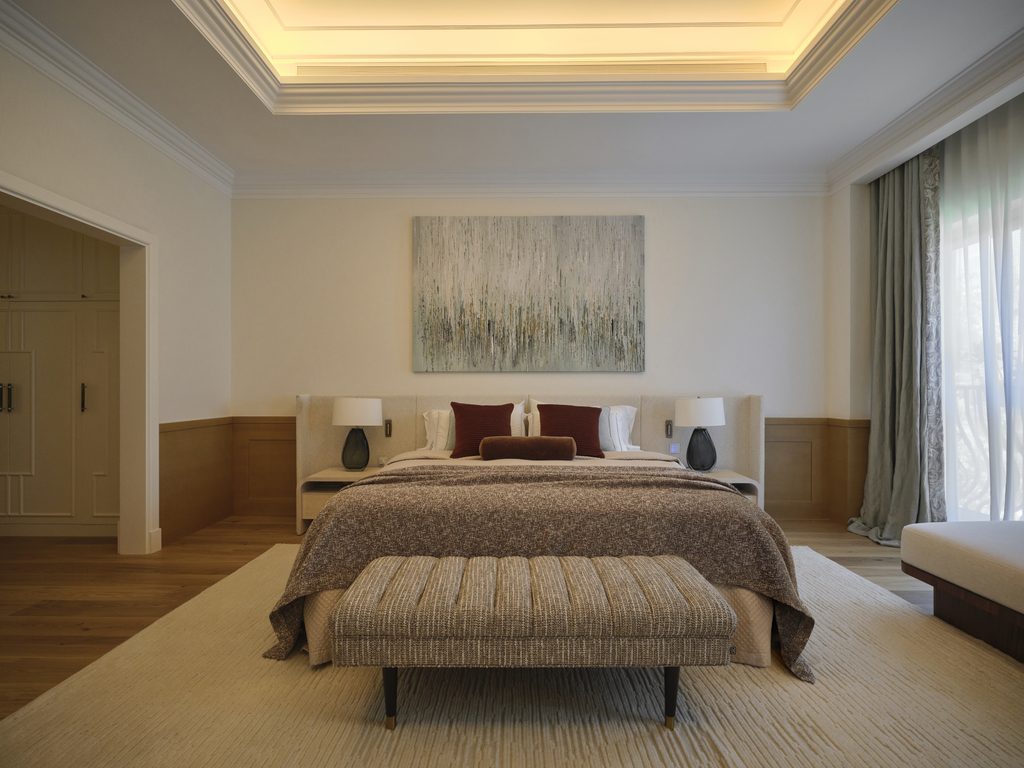
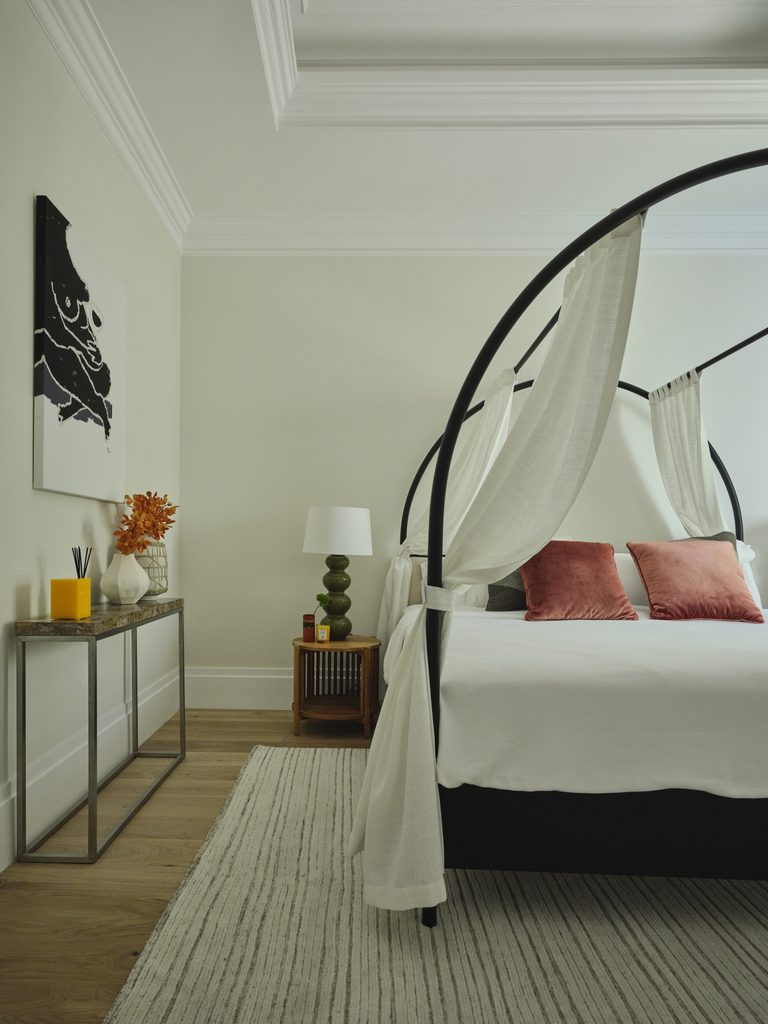
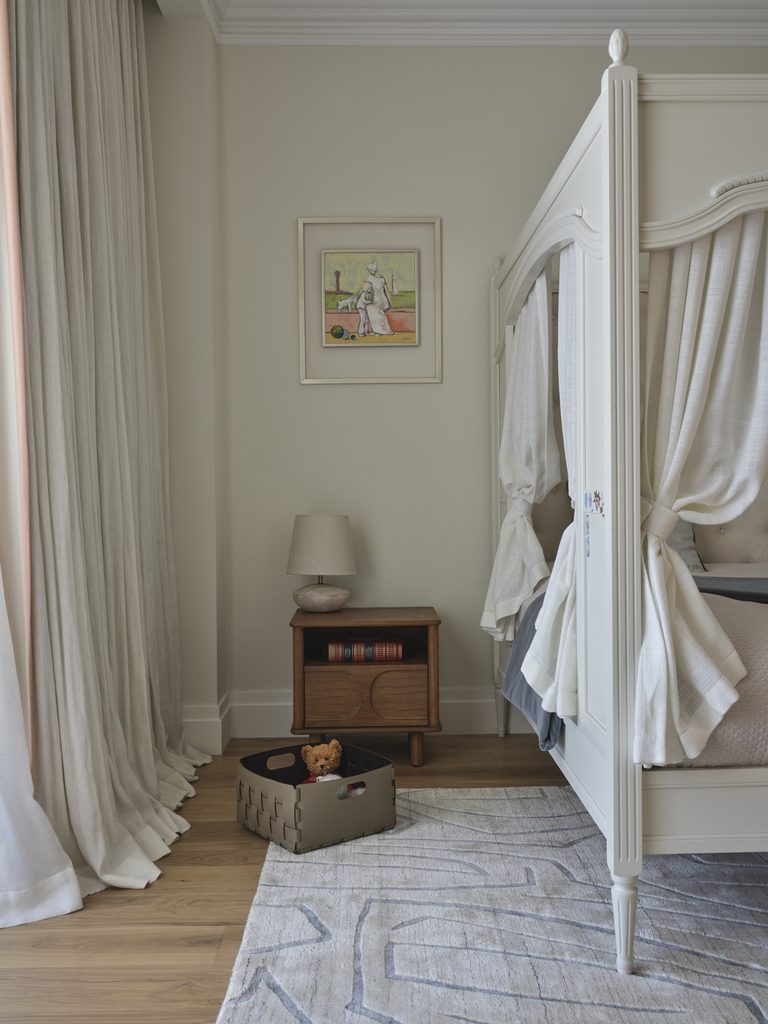
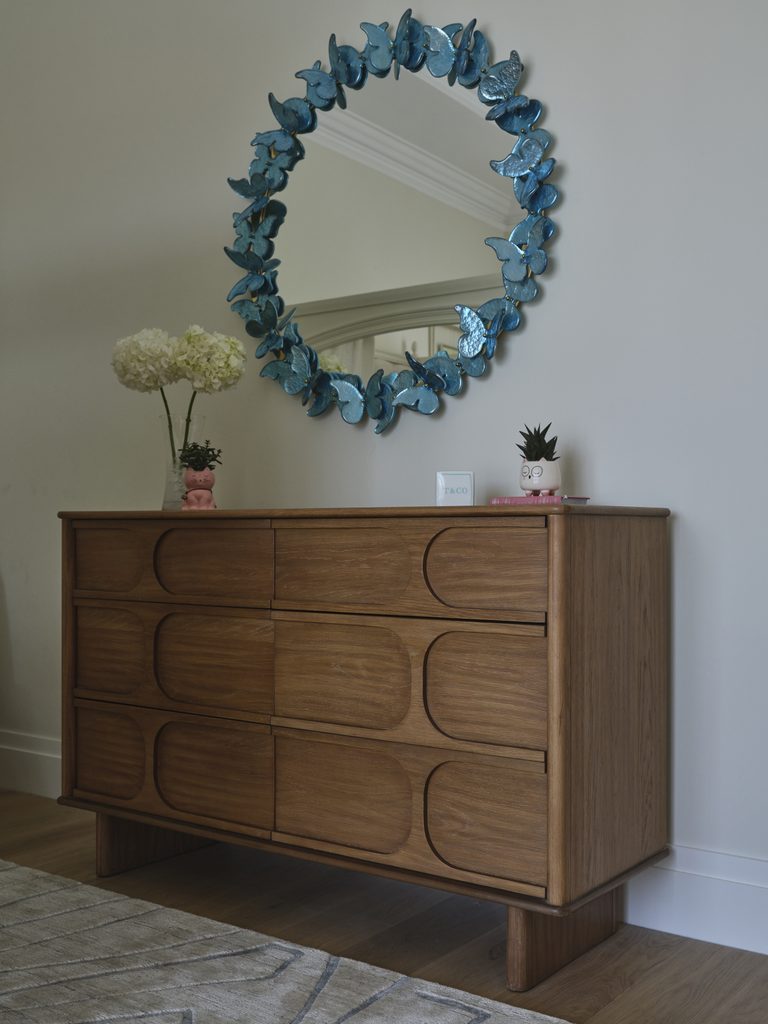
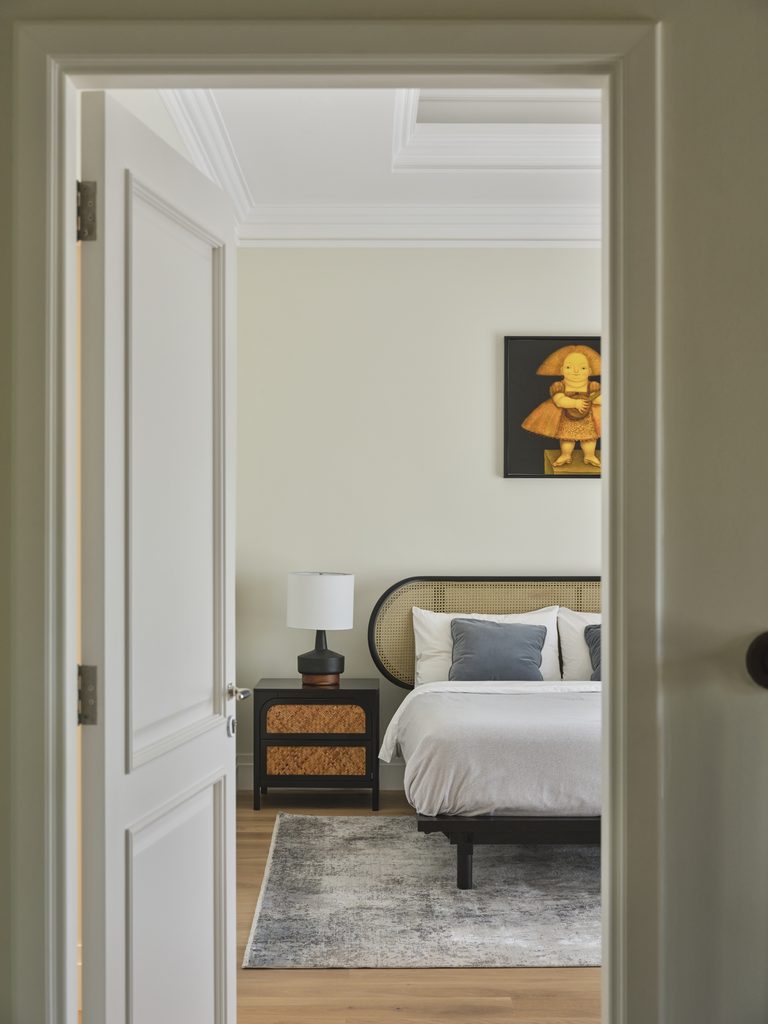
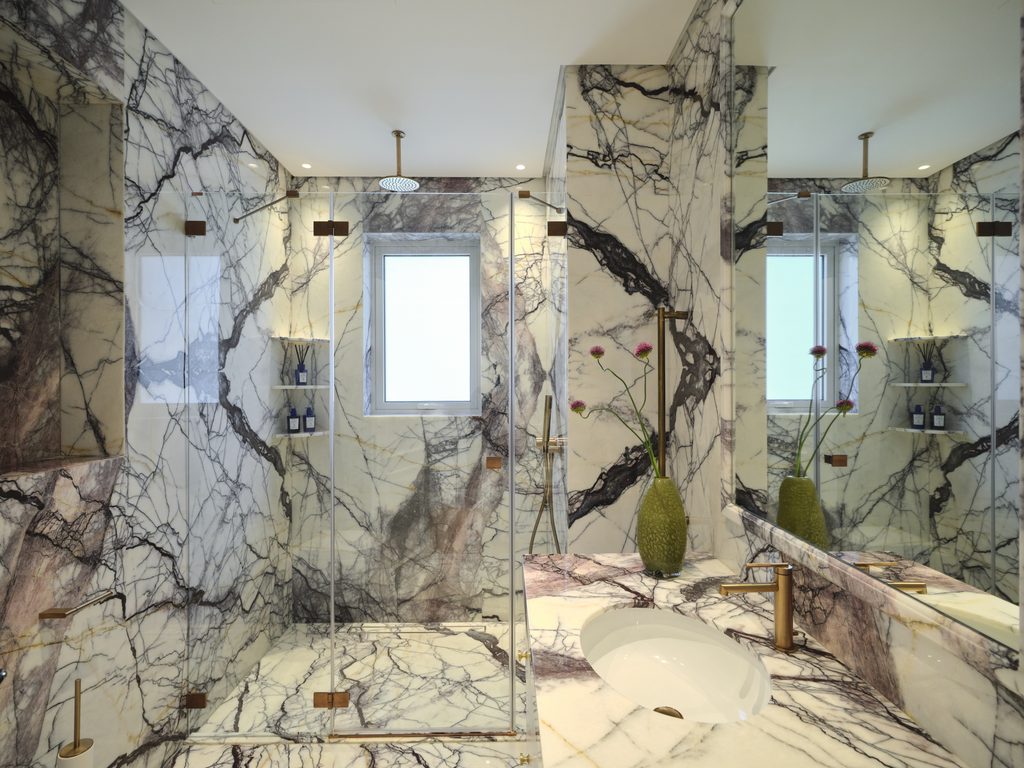
For Grave, this specificity ultimately defines contemporary luxury. “True luxury cannot be mass produced,” she says. It lies instead in the unrepeatable: a particular marble slab, bespoke joinery, an antique carrying traces of another life, or a work of art whose meaning belongs intimately to its owners. Here, luxury is not abundance. It is the privilege of inhabiting something that could belong to no one else.