Photography by Natelee Cocks
Refurbishment, when approached rigorously, is less about aesthetics than about interpretation. It requires reading a structure closely — understanding its weight, its proportions, its material hierarchies — before deciding what should remain untouched.
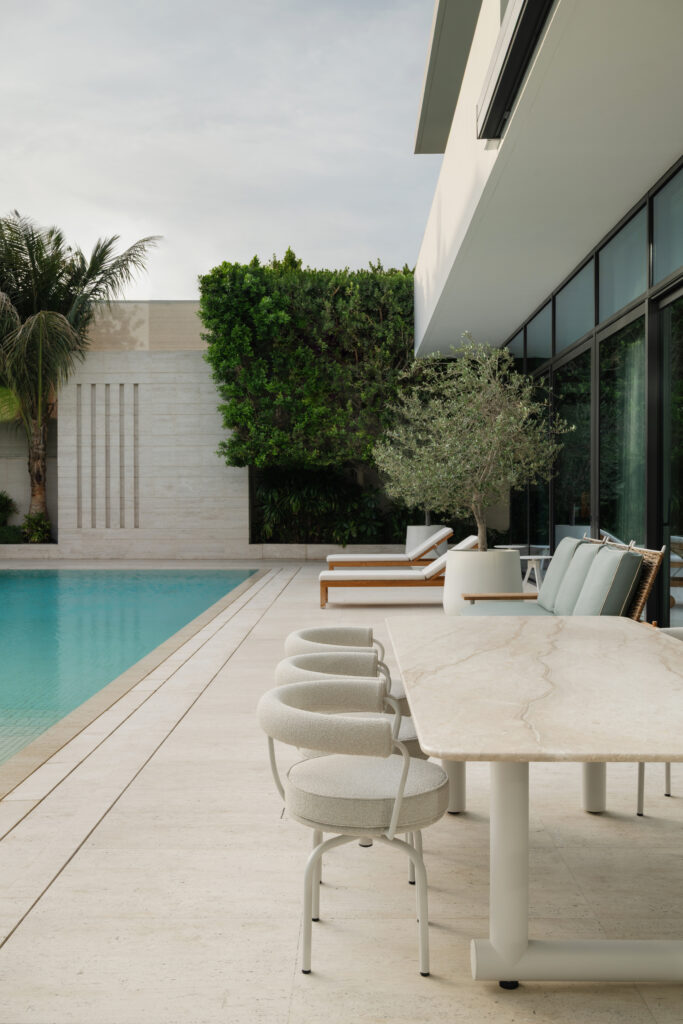
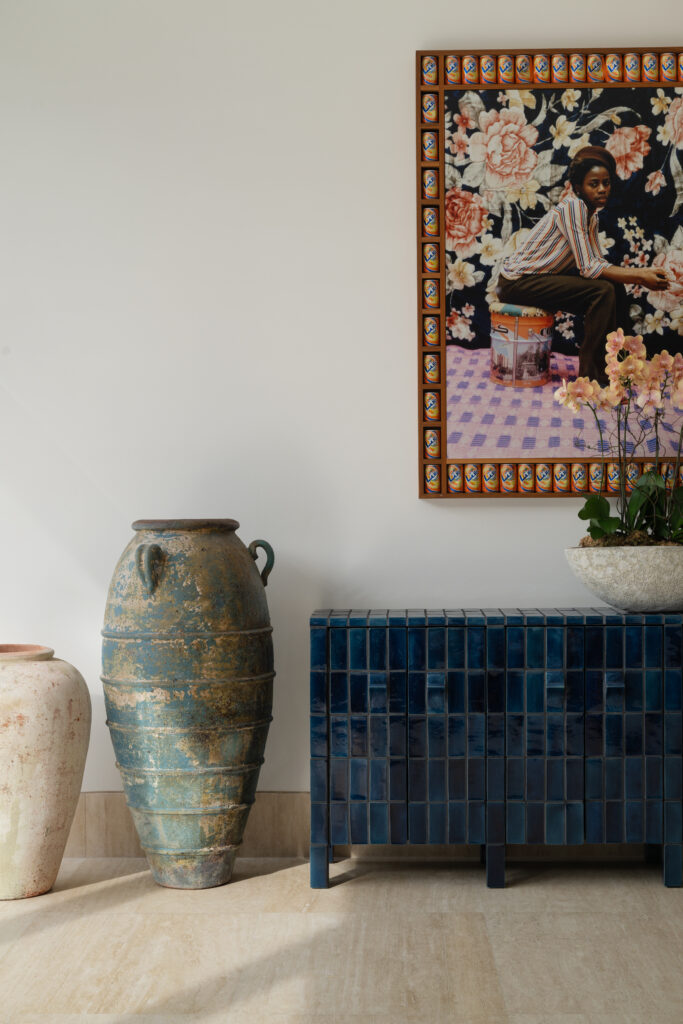
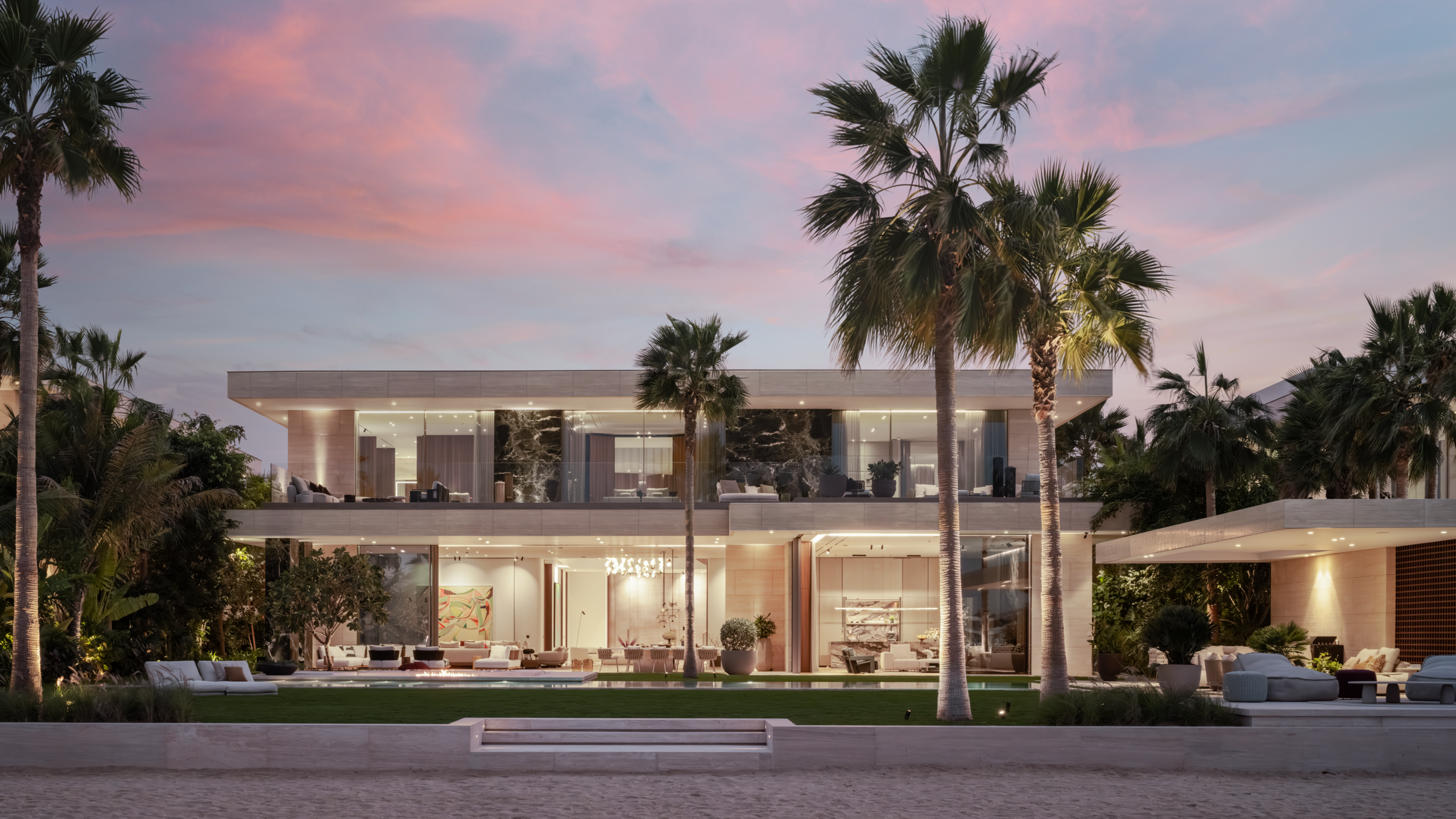
This villa was conceived as a continuation rather than a rupture. “We approached the villa with a sense of respect for its original structure,” explains the designer of Studio SAM. “Rather than attempting to reinvent it entirely, we wanted to enhance what was already there and work in dialogue with the existing architecture.” The travertine staircase, with its handrail carved directly into the stone, was immediately understood as an architectural thesis. Competing with it would have diluted its authority. Preserving it allowed the rest of the interior to evolve with coherence.
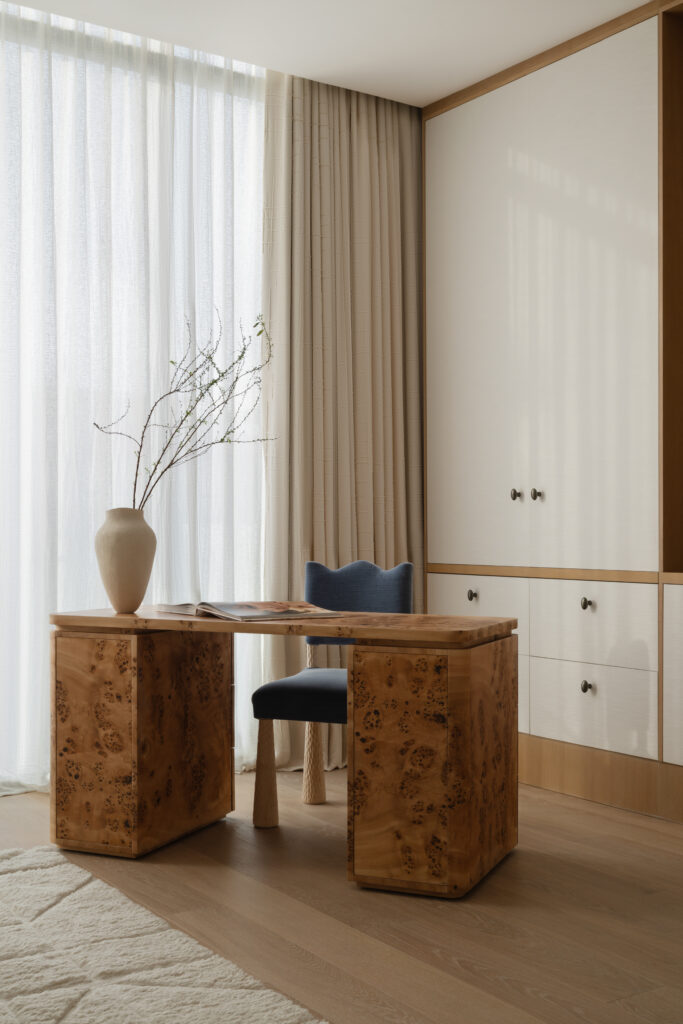
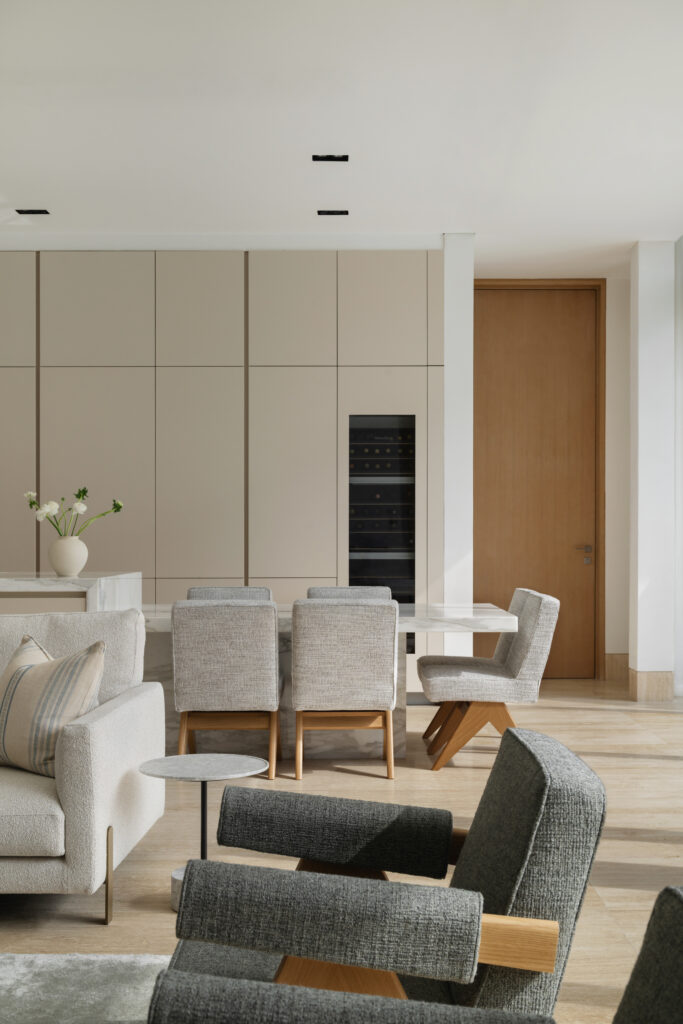
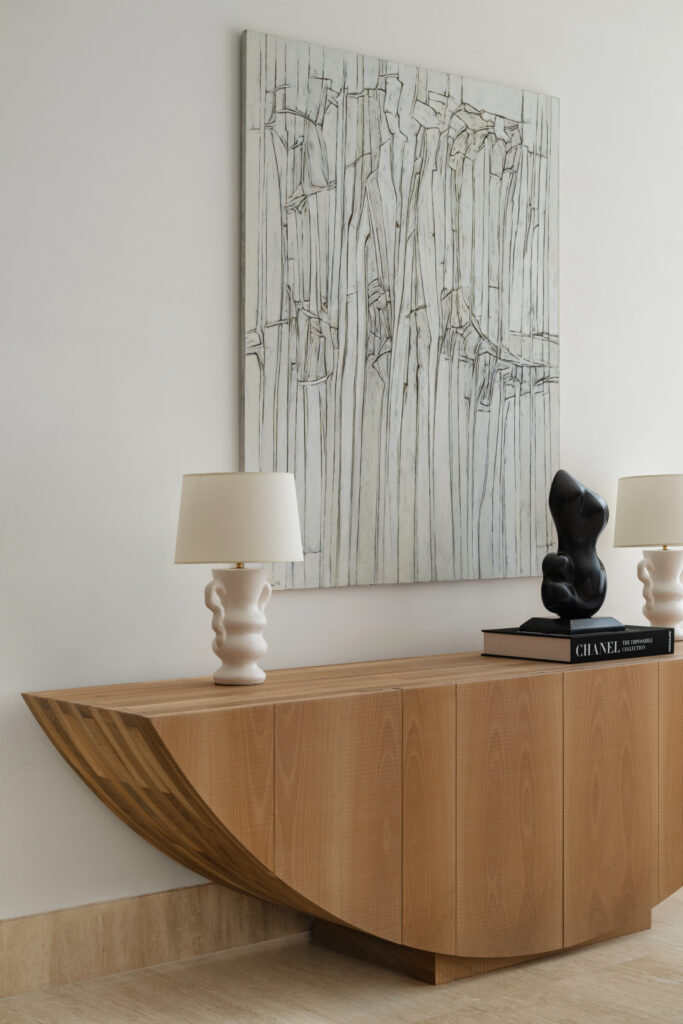
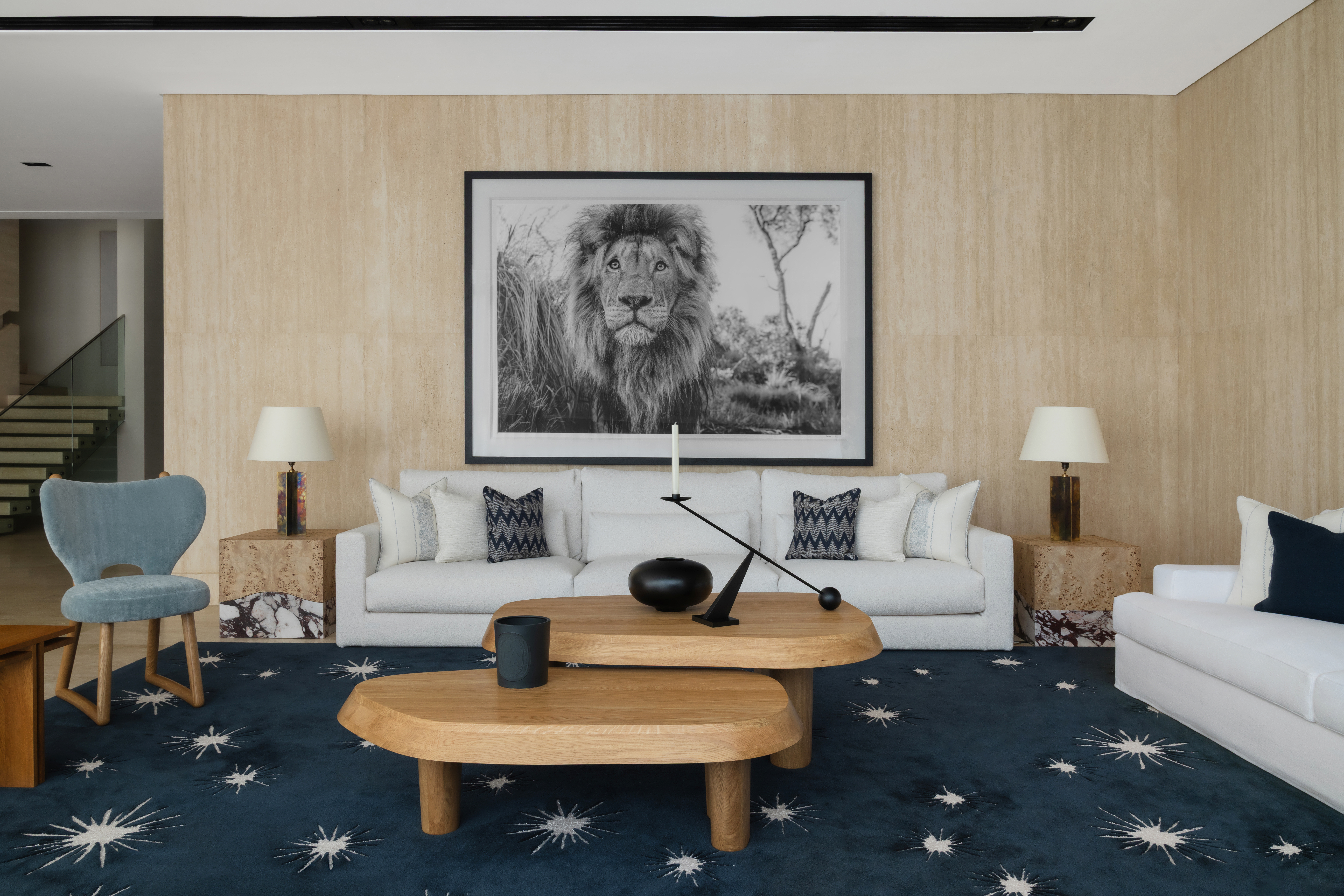
Travertine became more than a retained feature — it became a structural narrative. Slabs were selected for their subtle tonal gradations, evoking mineral depth rather than surface uniformity. “It conveys permanence and a sense that the home is grounded and rooted in its environment,” she notes. Porosity, veining, and irregularity were not corrected but emphasized. The material’s inherent imperfection ensures that the space resists the sterility of over-finished interiors, instead cultivating a quiet endurance.
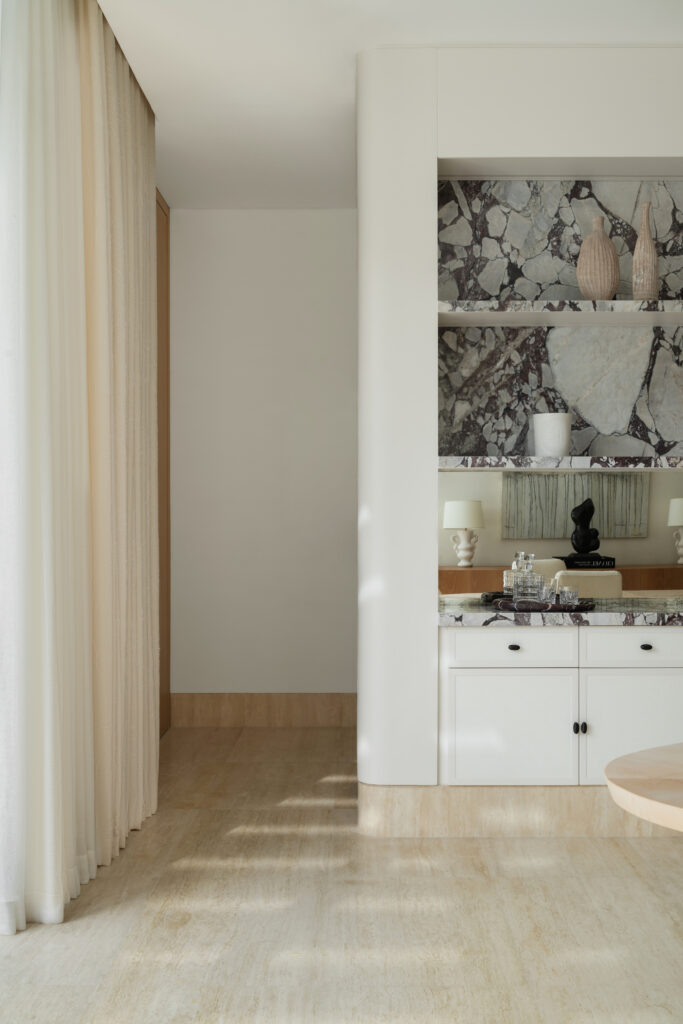
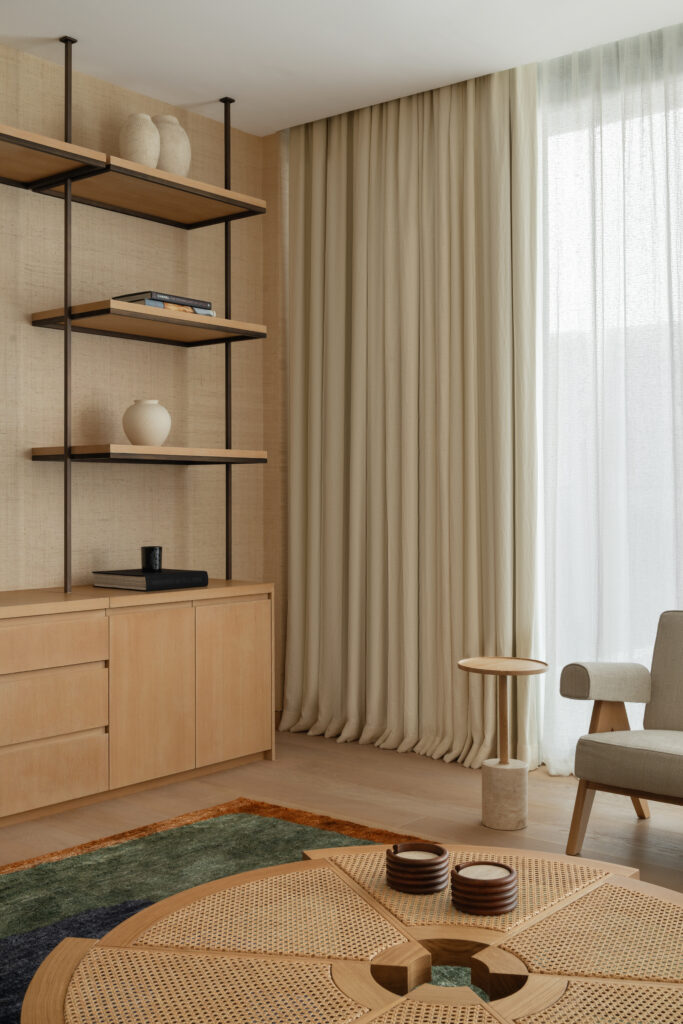
The client’s request for calm was treated not as a stylistic directive but as an emotional condition. “Calm is very personal and subjective,” the designer reflects. The ambition was to create a home that felt restorative — akin to entering a spa — yet layered with meaning. This balance was achieved through restraint calibrated with tactility: ivory curtains featuring delicate hand embroidery; a walk-in wardrobe enveloped in textured silk with bronze detailing; surfaces that appear neutral at distance yet reveal intricacy up close.
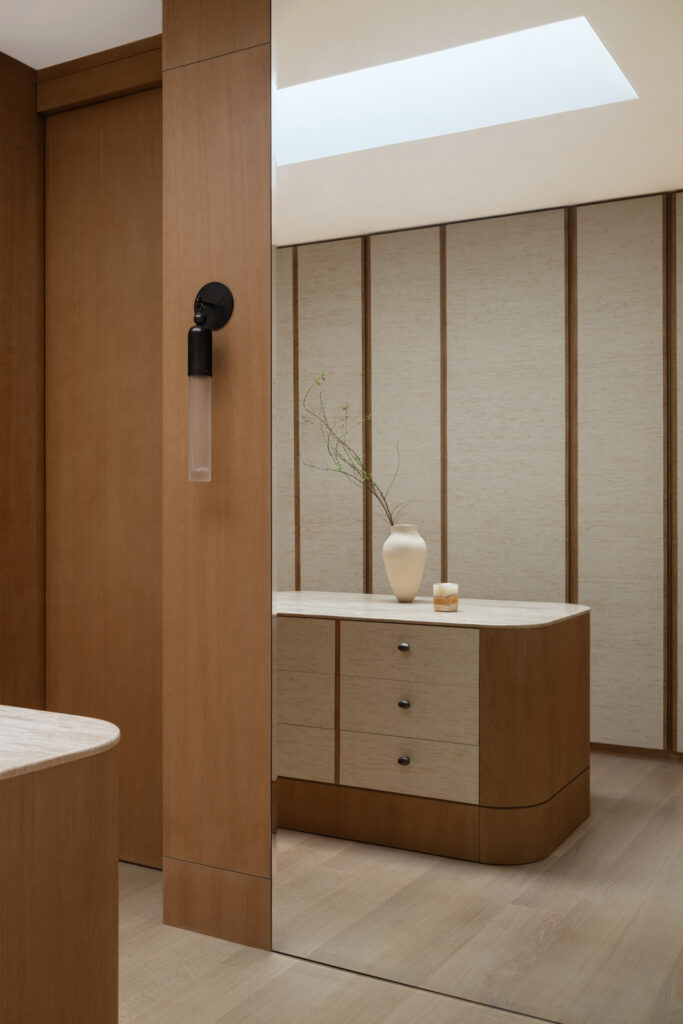
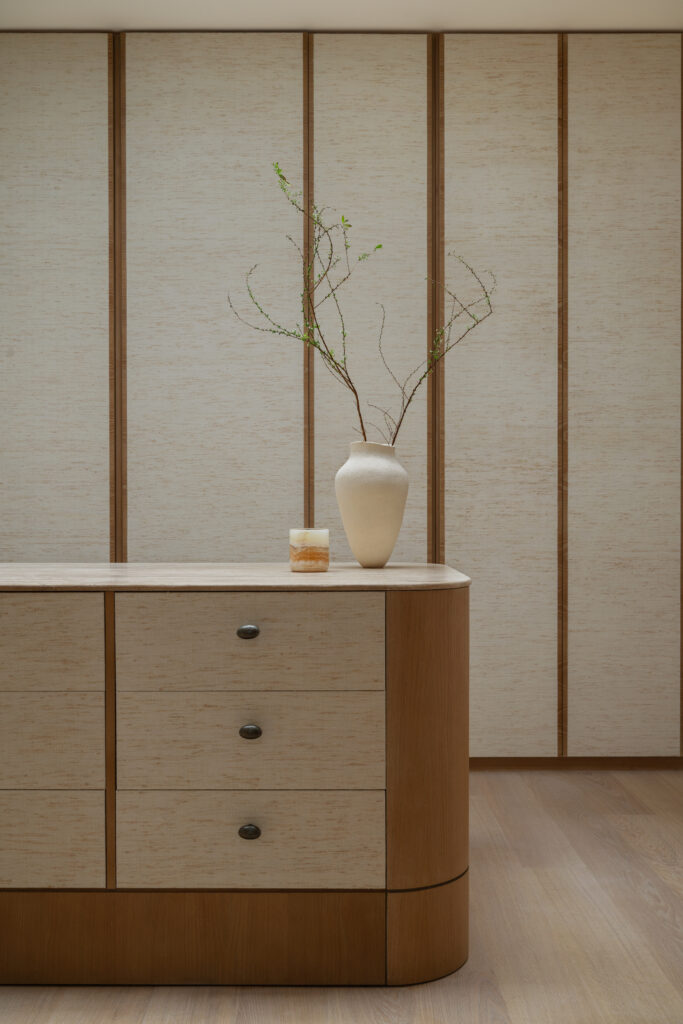
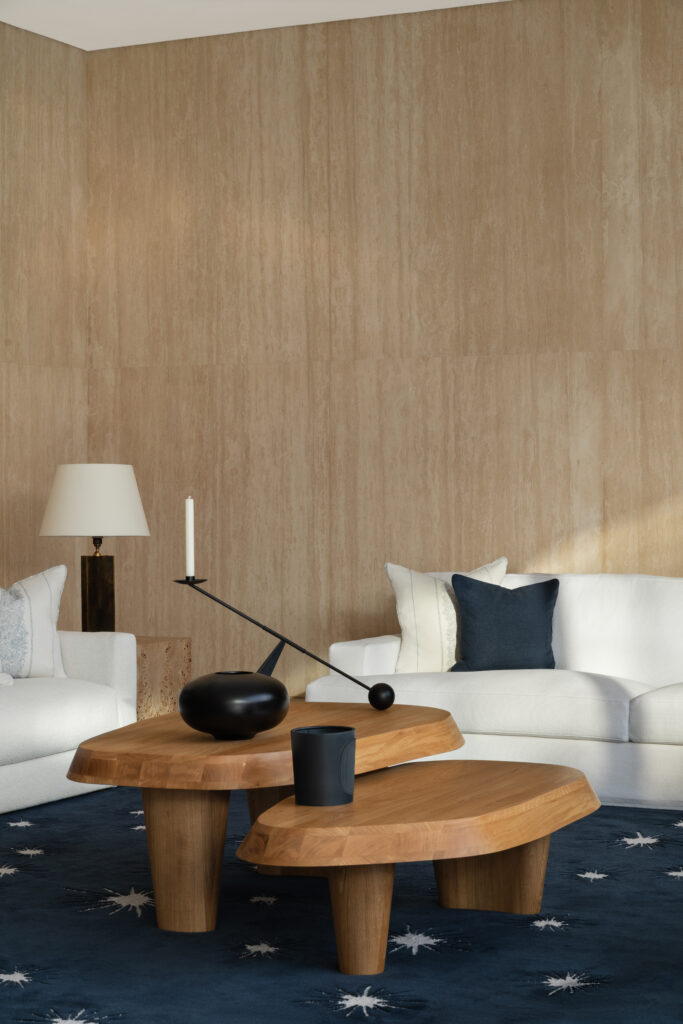
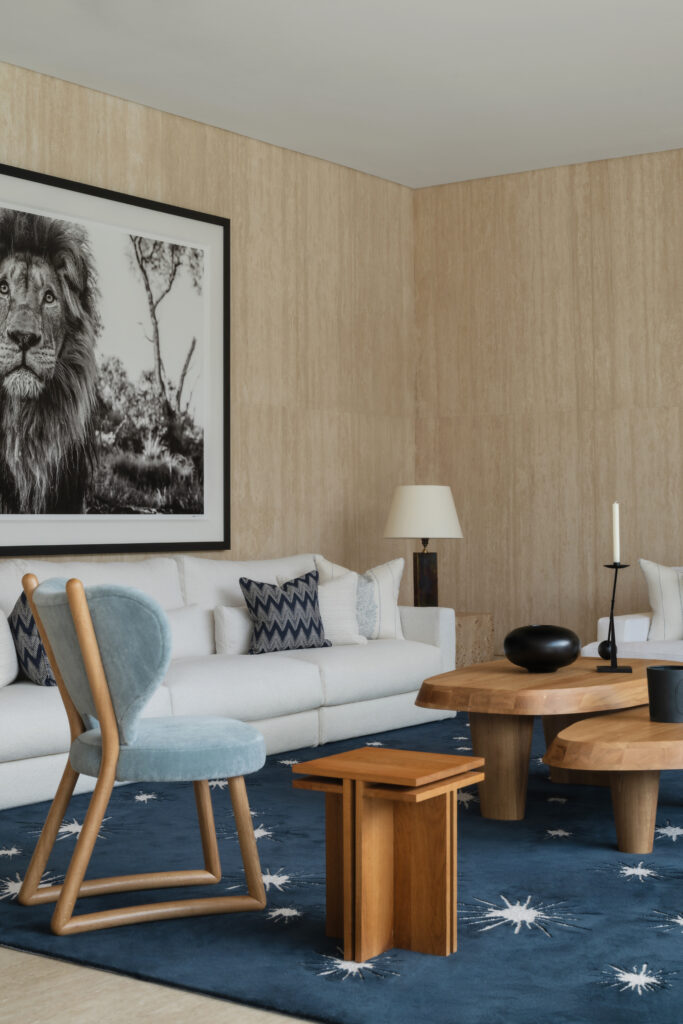
All furniture was sourced from Europe, complemented by bespoke pieces from the studio’s Studio SAM Collection. Custom design, she argues, creates spatial legitimacy. “When a piece is designed specifically for a space, it carries a sense of belonging… aligned with the overall atmosphere.” Proportion, circulation, and lifestyle were treated as interdependent variables rather than afterthoughts.
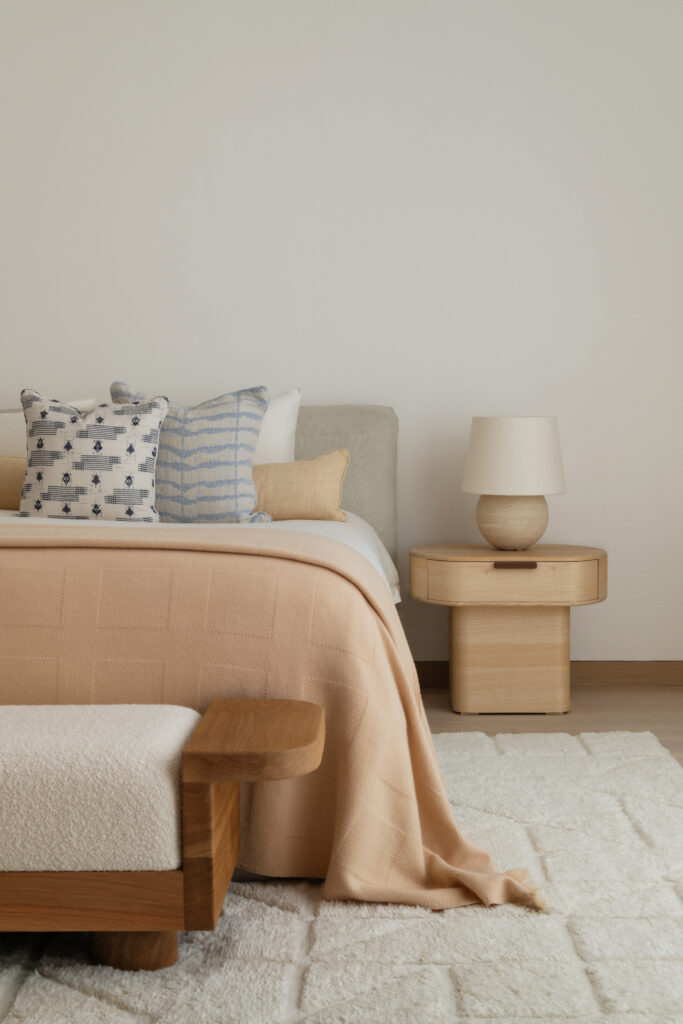
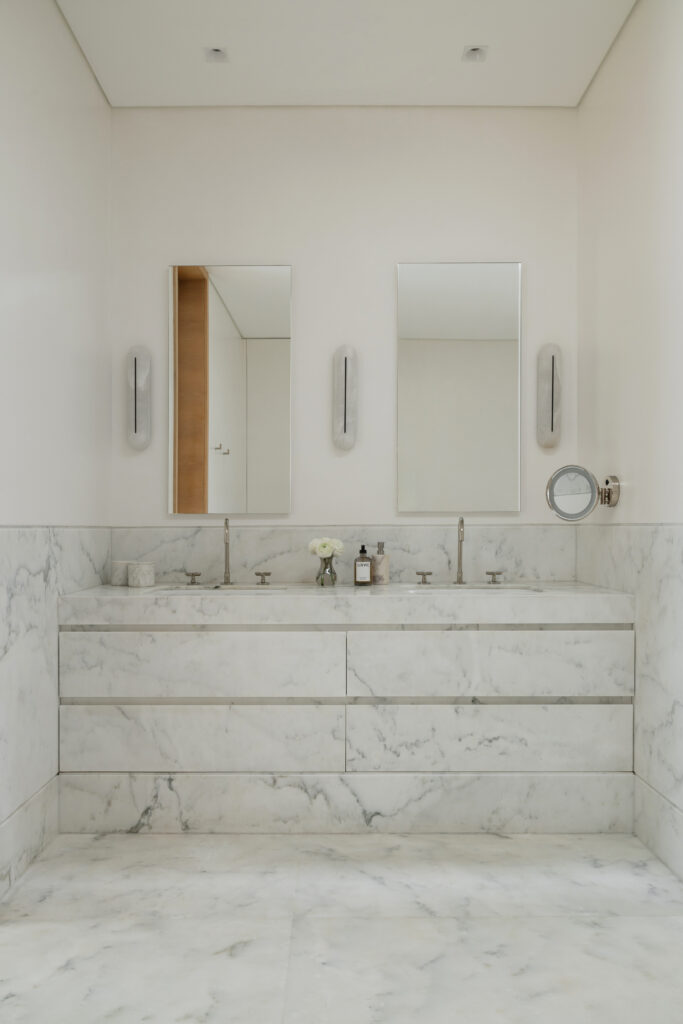
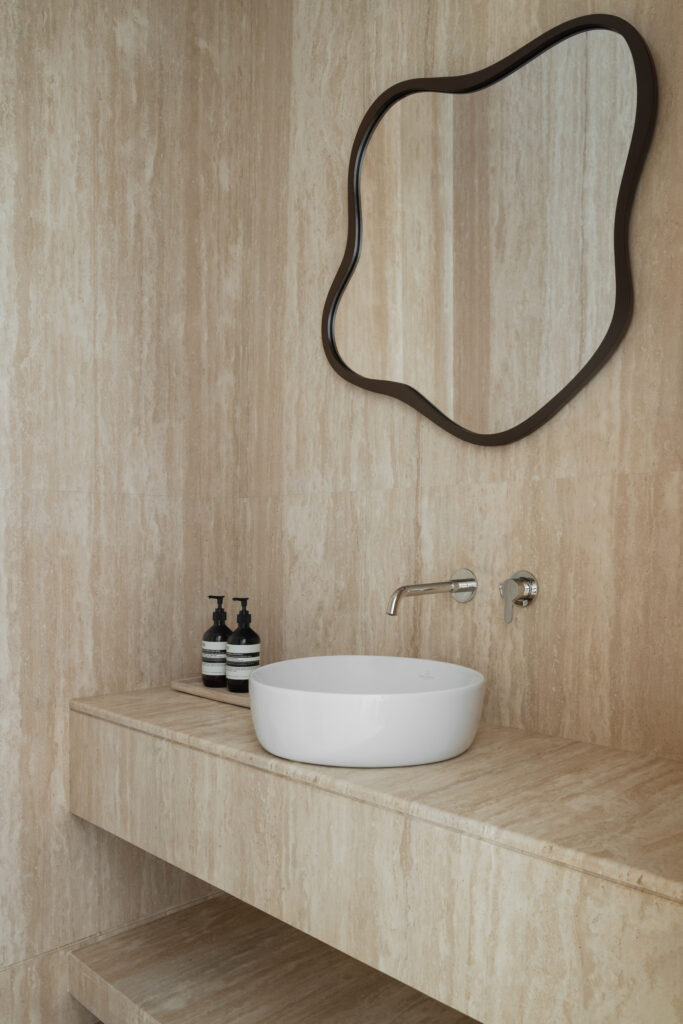
The project’s defining quality is what the designer describes as “quietly confident.” Atmosphere was deliberately prioritized over spectacle. Even the boldest gesture — a navy star rug — was introduced with measured restraint. In a contemporary landscape saturated with visual statements, this interior proposes something more durable: continuity, composure, and a design language rooted in longevity rather than display.
Here, permanence is not declared. It is constructed — materially, spatially, and emotionally — to evolve alongside those who inhabit it.