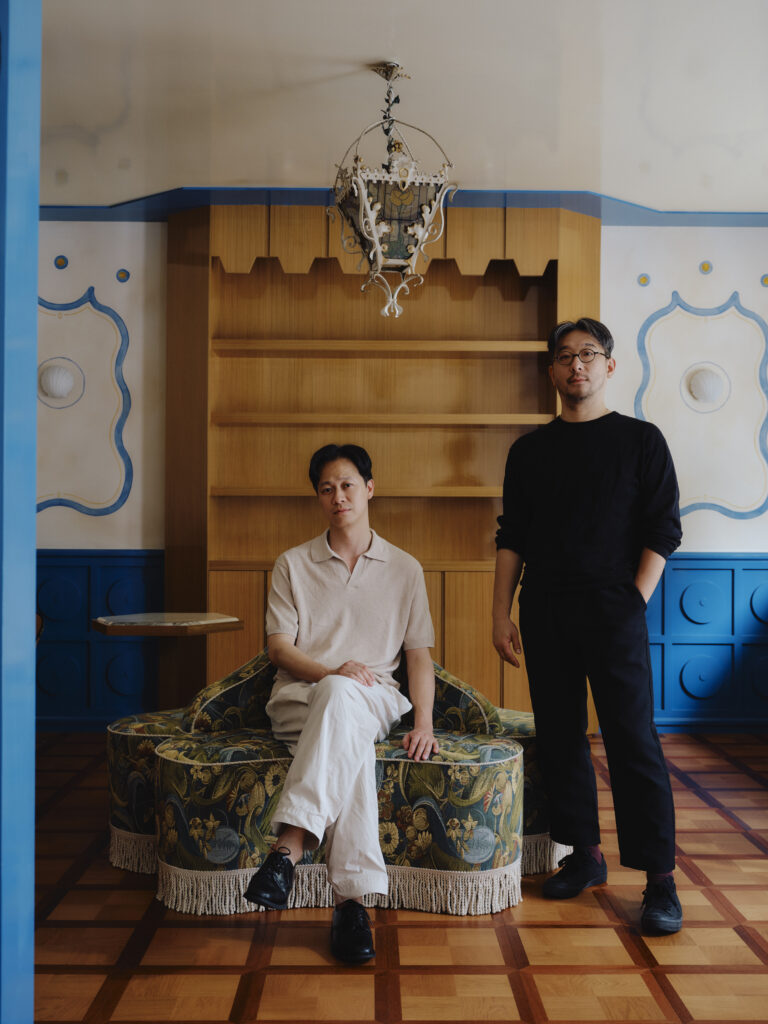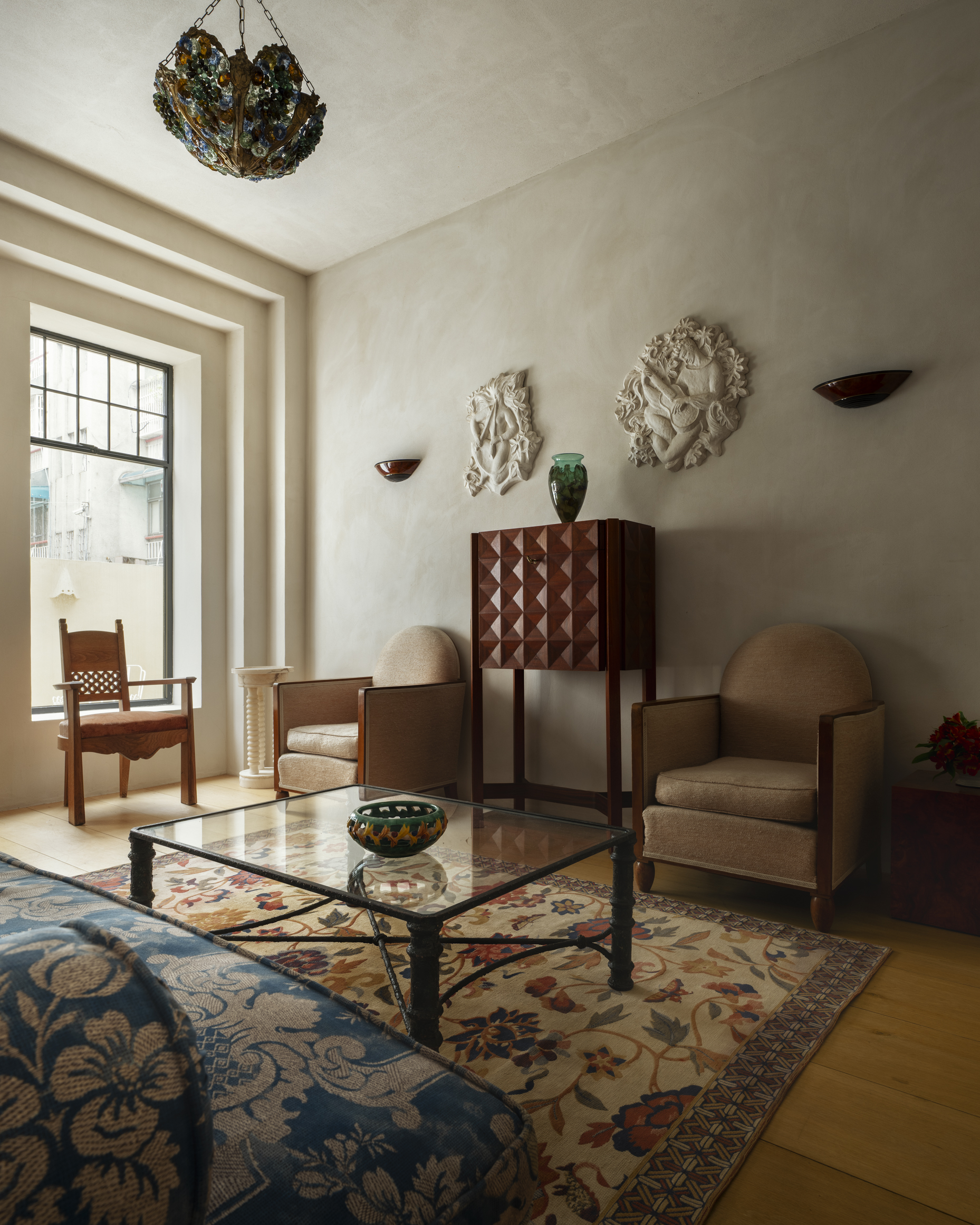
Jin Chen did not study architecture. He spent nearly ten years in Taipei’s music industry as a composer, arranger, and producer, developing an ear for rhythm and emotional structure that, it turns out, translates surprisingly well to space. His education in interiors came later, self-directed: travel, architectural landmarks visited since high school, and a personal library built methodically over time. When he eventually moved into his own apartment and music studio and began reshaping them, the instinct that had guided his music: that a space, like a composition, needs tension, resolution, and emotional weight, carried over entirely.
He founded D.A Gallery, short for Delicate Antique, in Taipei in 2012, initially as a place to curate collectible European furniture and objects. Clients began asking him to style their homes. Styling became full commissions. Commissions grew in scale and complexity until, in 2019, he formalized everything under a new name: Ecru Studio. In 2024, his high school friend Randy Tu joined as Head Designer. This year, they are opening a second base in Paris. “With projects underway in France and a Paris bureau opening in 2026, Ecru Studio is entering a new chapter of creative development, where its East-West dialogue will be explored more directly through new collaborations” comments Jin Chen on the Paris expansion.
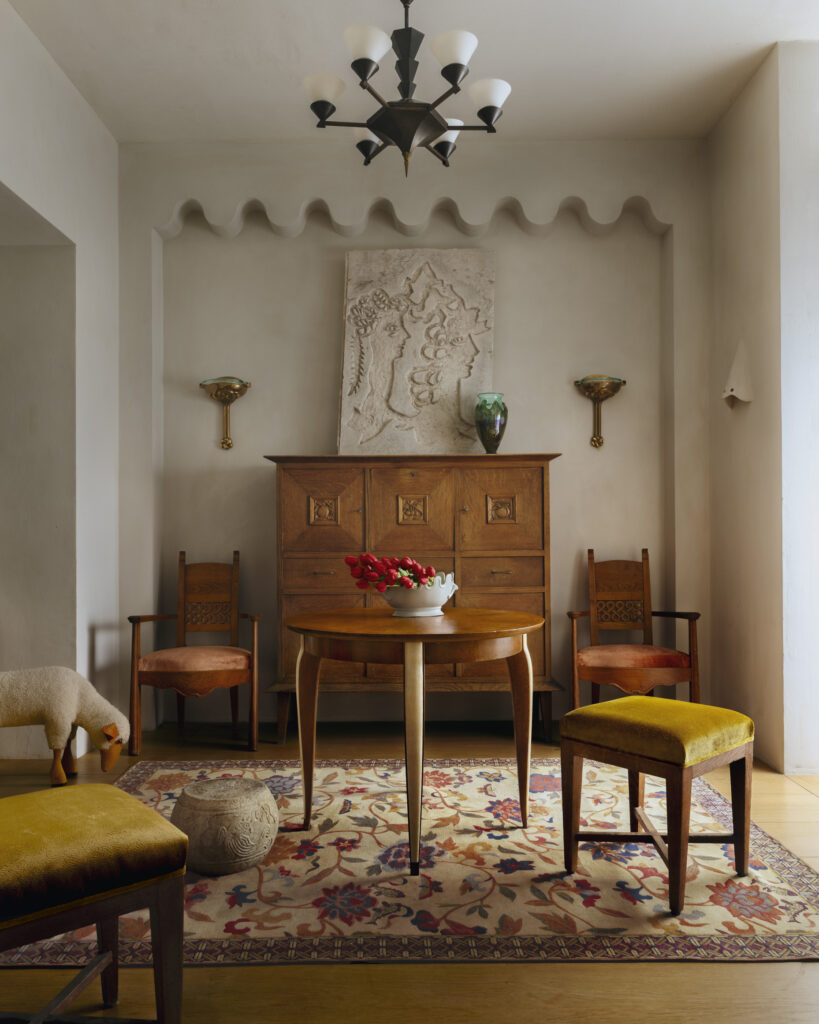
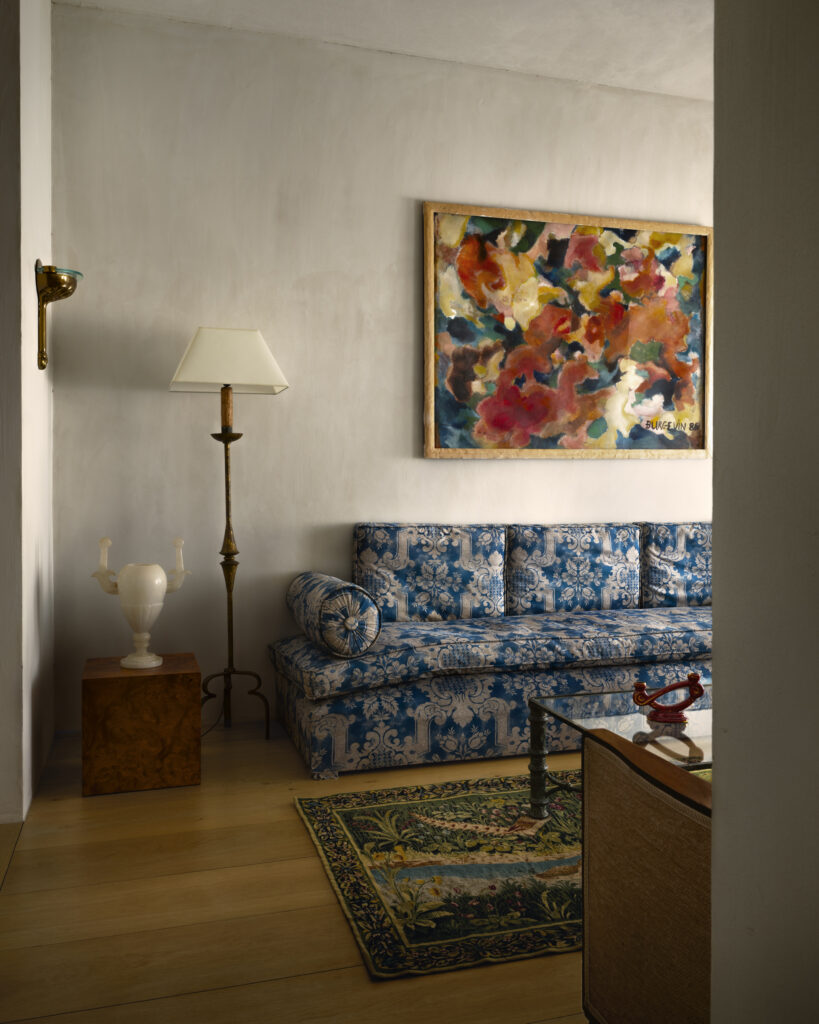
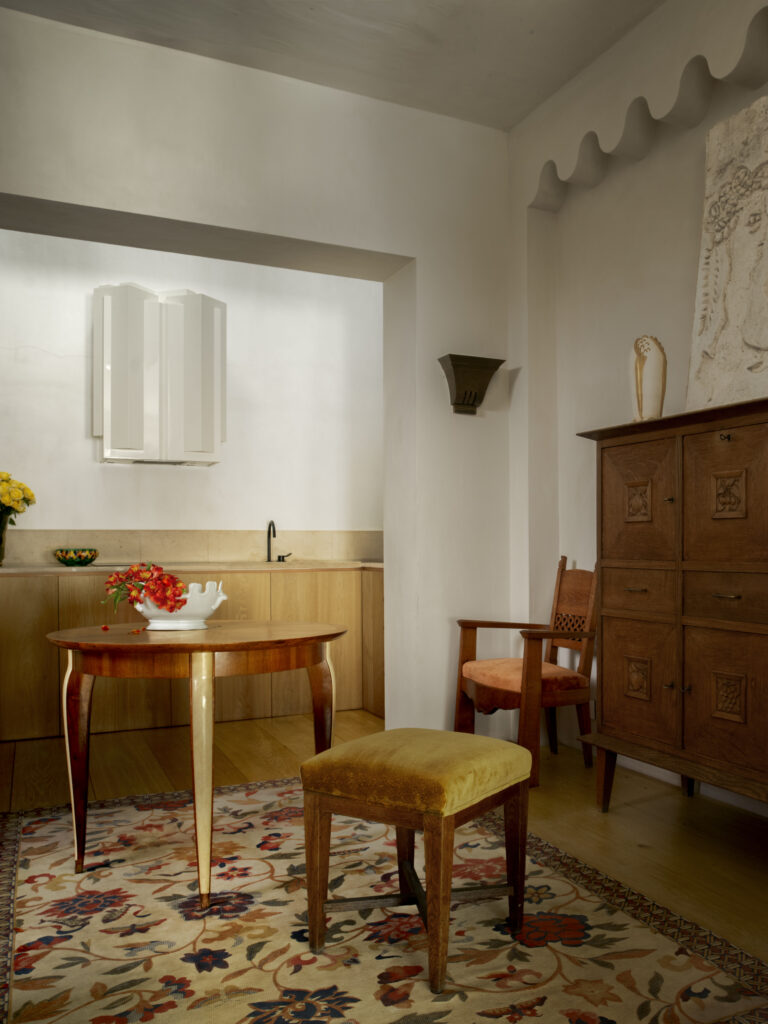
The timing matters because Ecru Studio’s work is not easy to place geographically, and that is precisely its interest. The studio draws from a sweep of European decorative history, Neoclassicism, Arts and Crafts, Art Nouveau, Art Deco, proto-minimalism, Mid-Century design, but filters all of it through an Asian spatial sensibility: restraint, proportion, material sensitivity, and what Chen calls “subtle emotional expression.” The result is interiors that feel historically literate without being historically correct, and culturally specific without being illustrative. “We believe interiors should be emotionally resonant and culturally nuanced, carrying both historical depth and contemporary relevance,” Chen says.
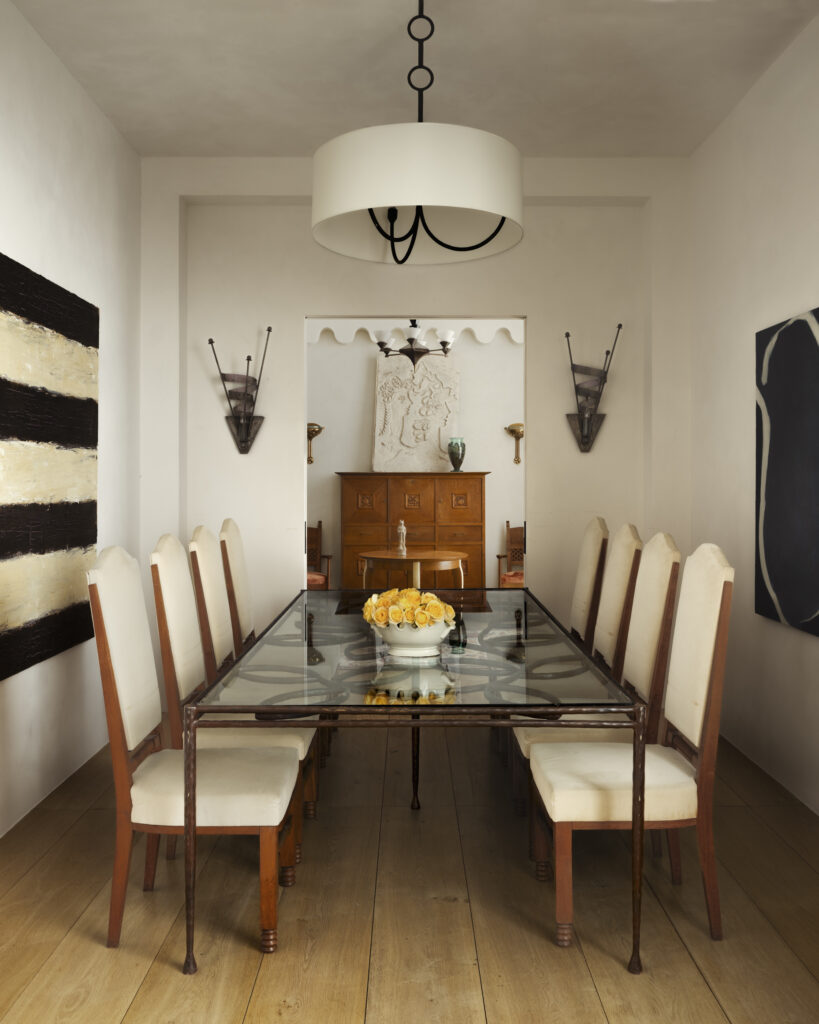
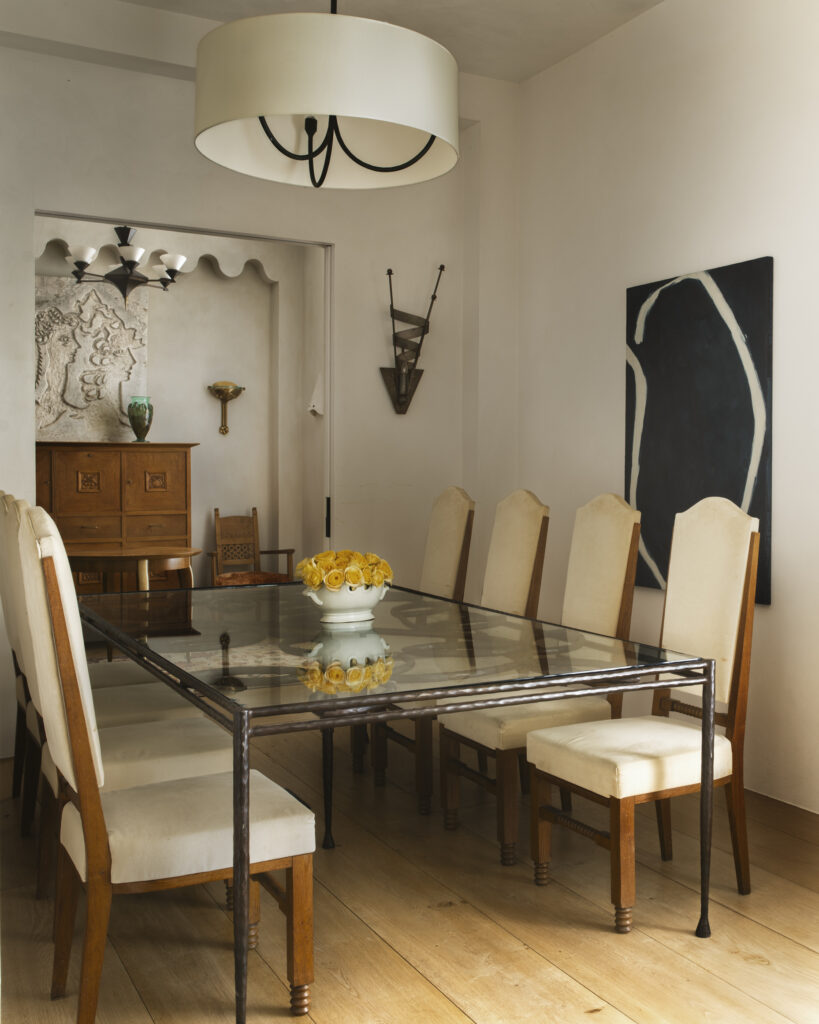
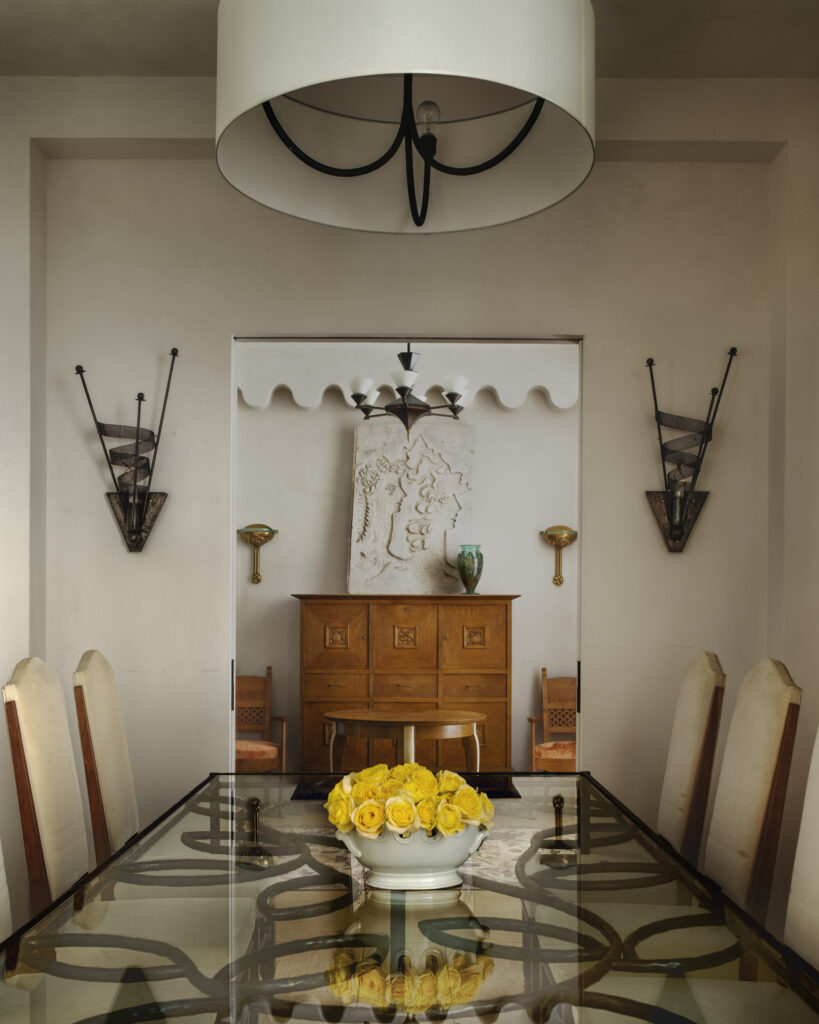
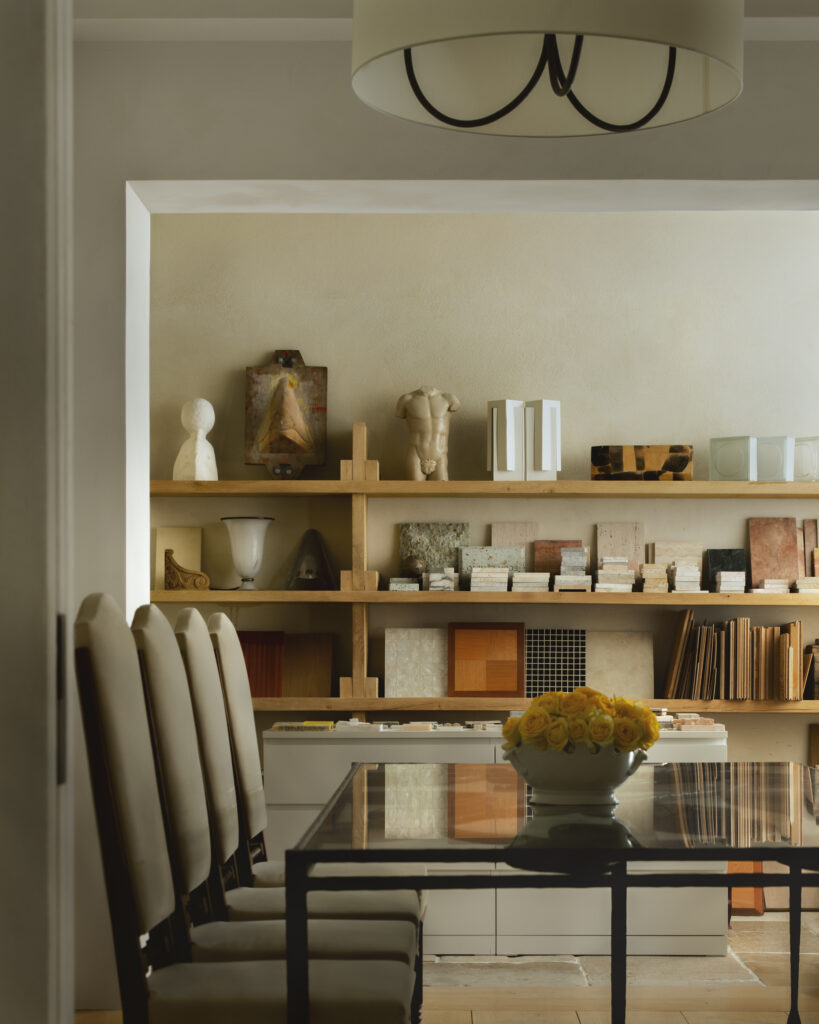
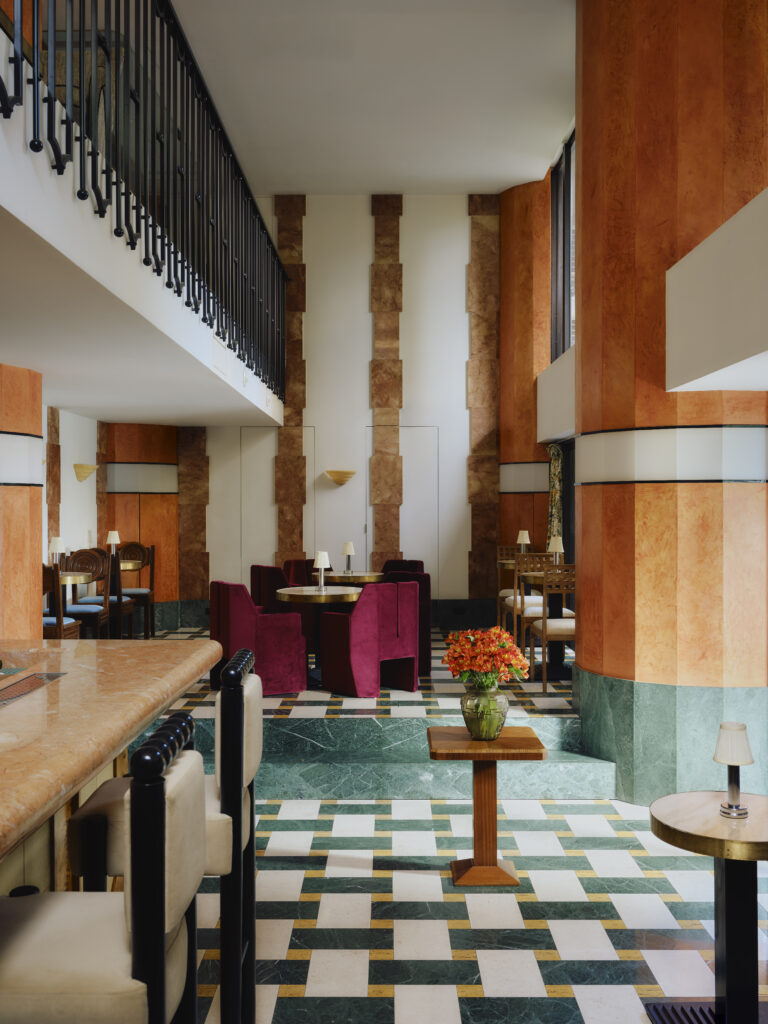
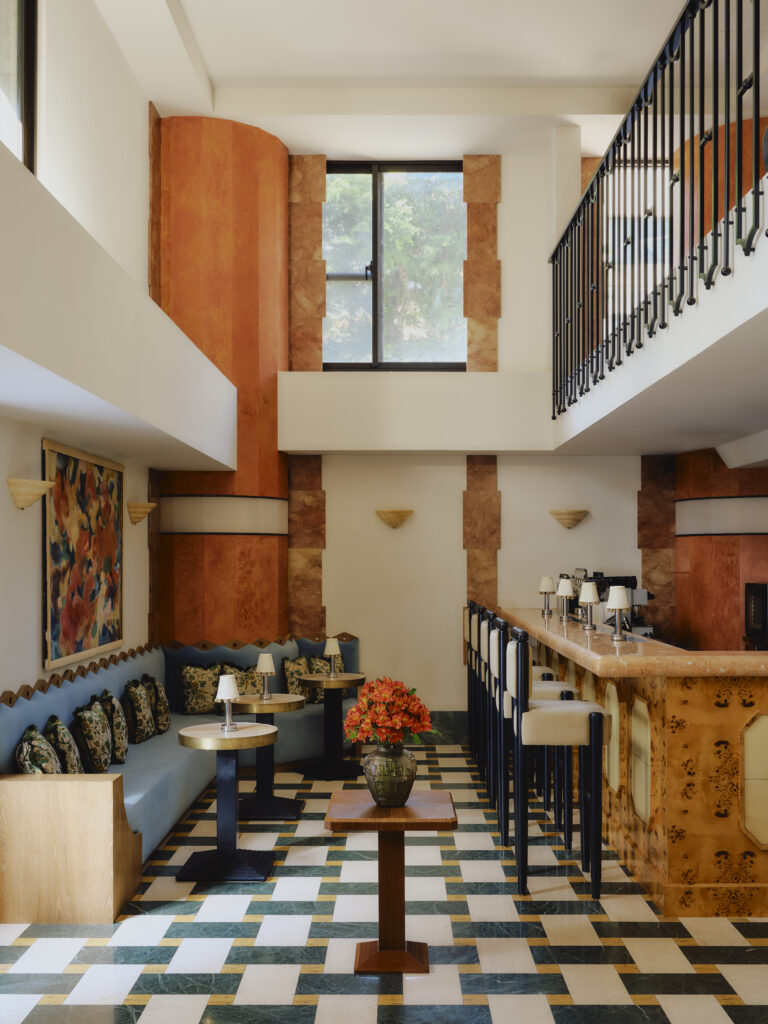
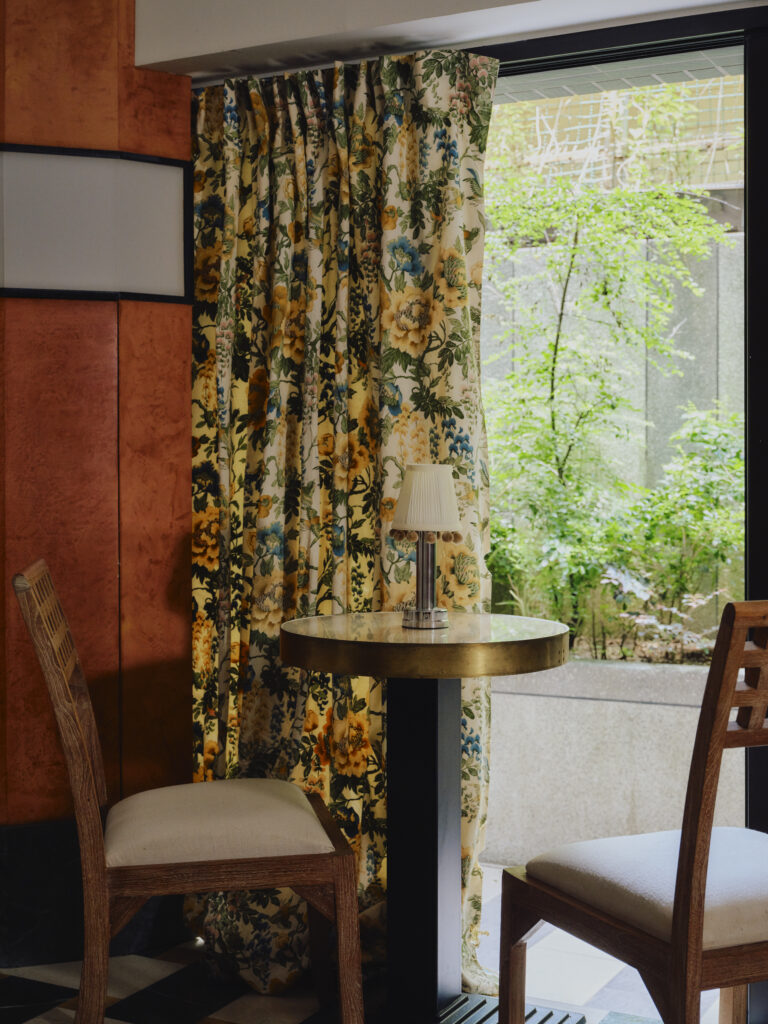
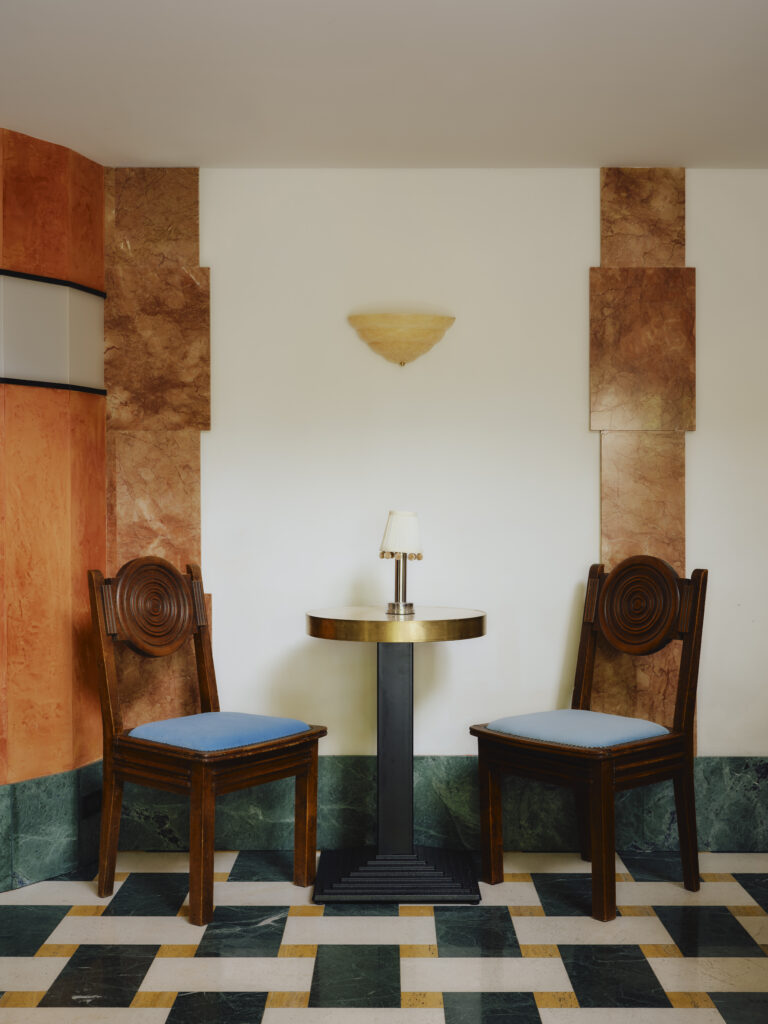
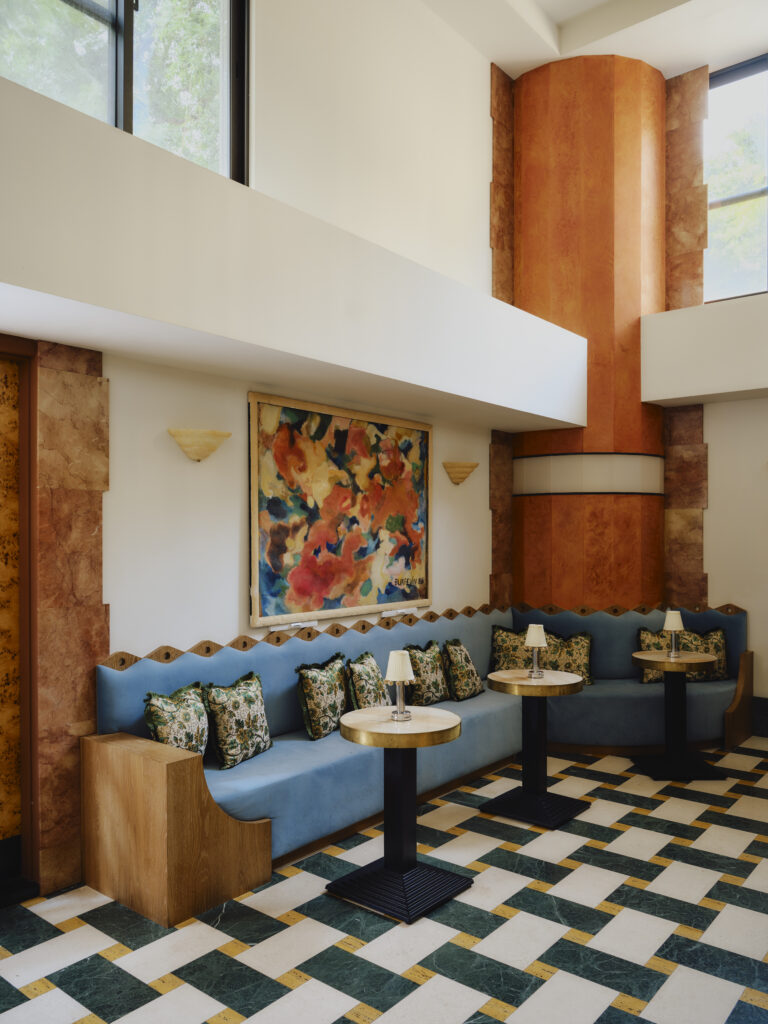
Two completed projects in Taipei give the clearest sense of what this looks like in practice. The first is Etna, a bar in the Zhongshan District named after the Sicilian volcano, its imagery drawn from volcanic smoke and the restrained elegance of 1930s Italian modernism. The floor alone announces the project’s ambitions: Taiwanese green serpentine marble paired with limestone in beige and yellow tones, precisely cut into Art Deco geometric patterns. Six columns, each seven meters high, rise through the space finished in deep red marmorino plaster, three of them structural, three added by Ecru Studio to transform an engineering constraint into a deliberate act of symmetry. The walls carry vintage Italian onyx sconces that cast a slow, subdued light suited to what is, in practice, a cigar bar. Parchment surfaces, smoked oak, and onyx layer around original Art Deco period chairs alongside custom seating designed by the studio, creating the particular kind of dialogue between historical reference and contemporary craft that has become Ecru’s signature.
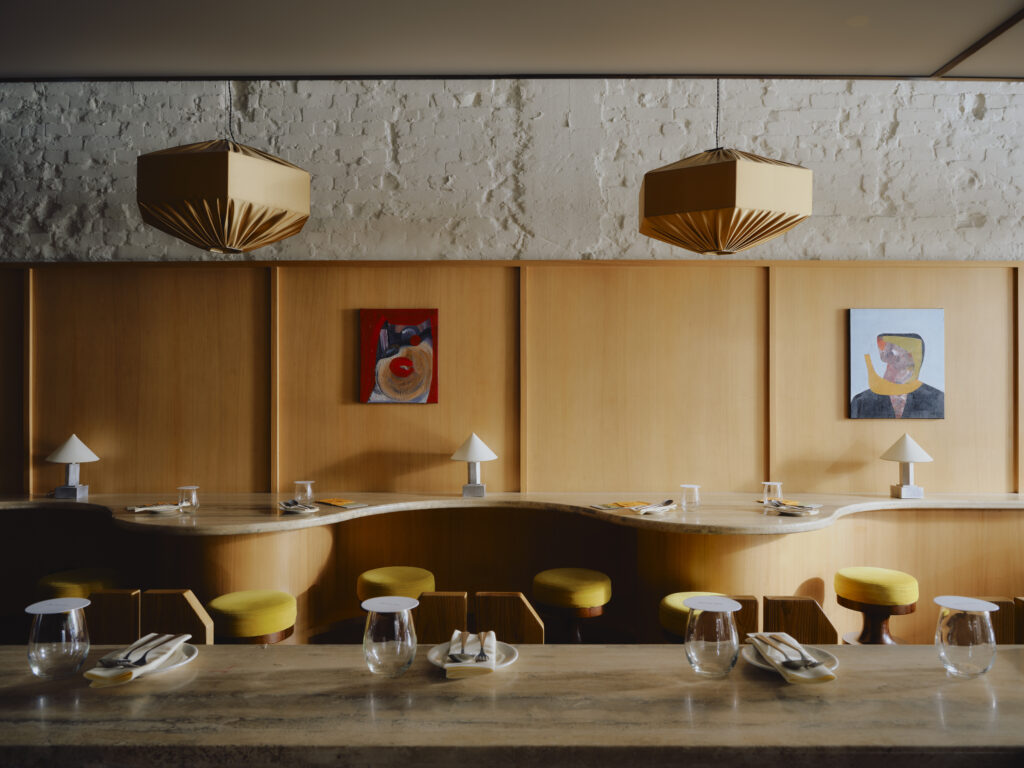
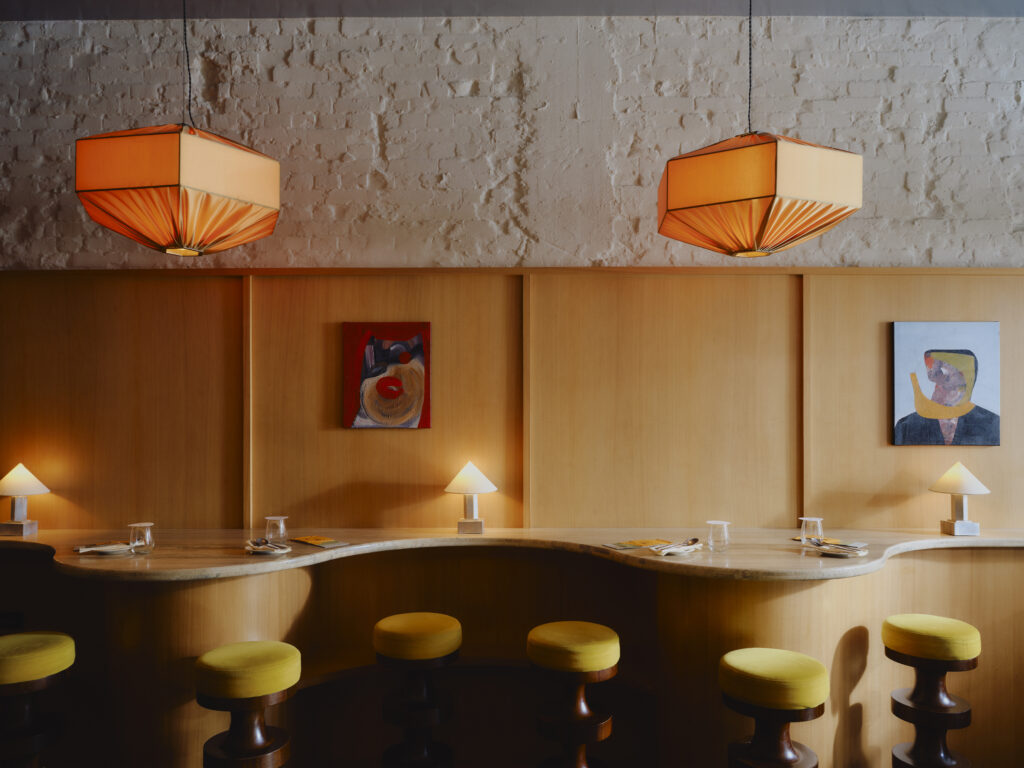
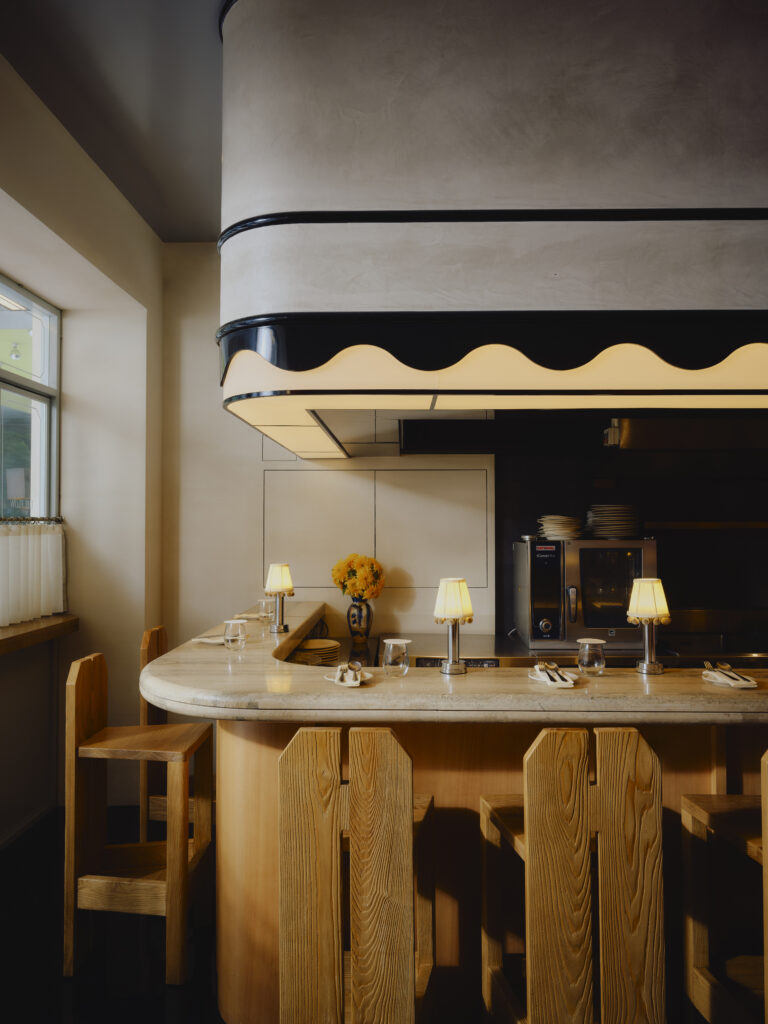
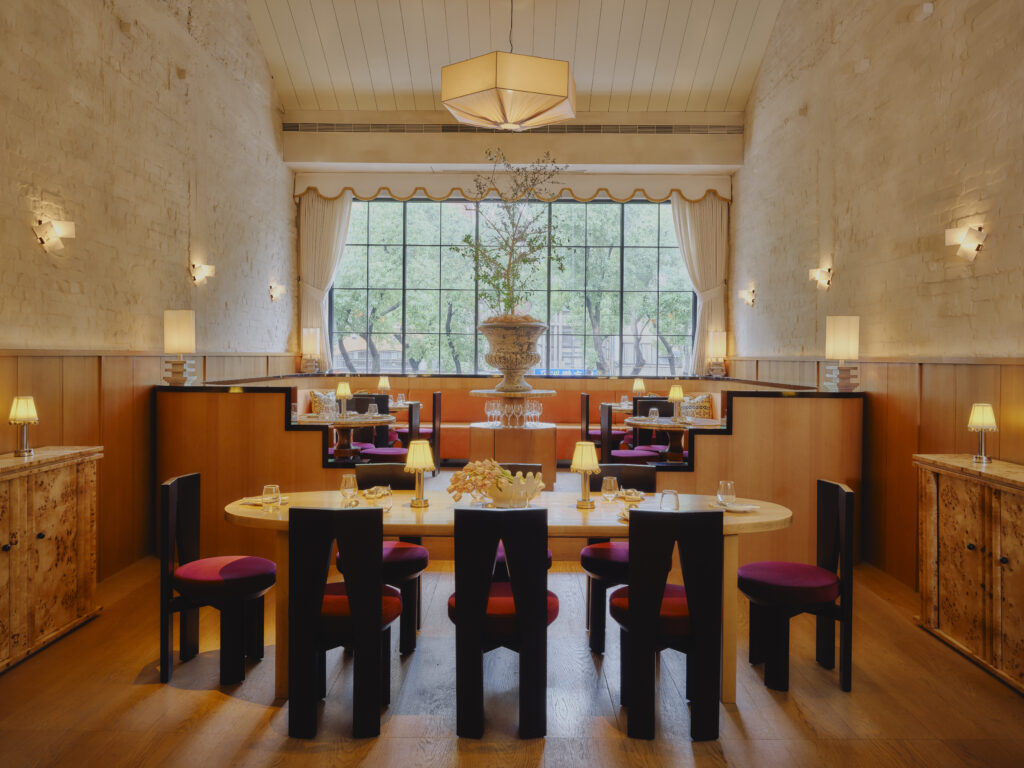
The second project, The Flow, operates differently. It is the first restaurant by Draft Land, one of Asia’s most prominent draft cocktail groups, and it occupies an 80-year-old building in Zhongshan that previously housed a traditional watchmaker. The brief asked for an intersection between Taiwanese street food culture and the European bistro, two dining traditions that share almost nothing except a certain informality, and Chen resolved it floor by floor. The ground level reads as a bar-oriented space, with seating arranged around a wave-shaped travertine counter whose undulating form references the wooden wave tables made by European metal craftsmen in the 1930s, now rendered at architectural scale. Pendant lights abstract the silhouette of traditional Taiwanese lanterns. The bar stools combine Art Deco geometry with Brutalist massing. Aluminum table lamps on the counter are the one exception to the studio’s custom rule — they were designed by Taiwanese craft brand Undercurrent Object; everything else in the restaurant was made by Ecru Studio.
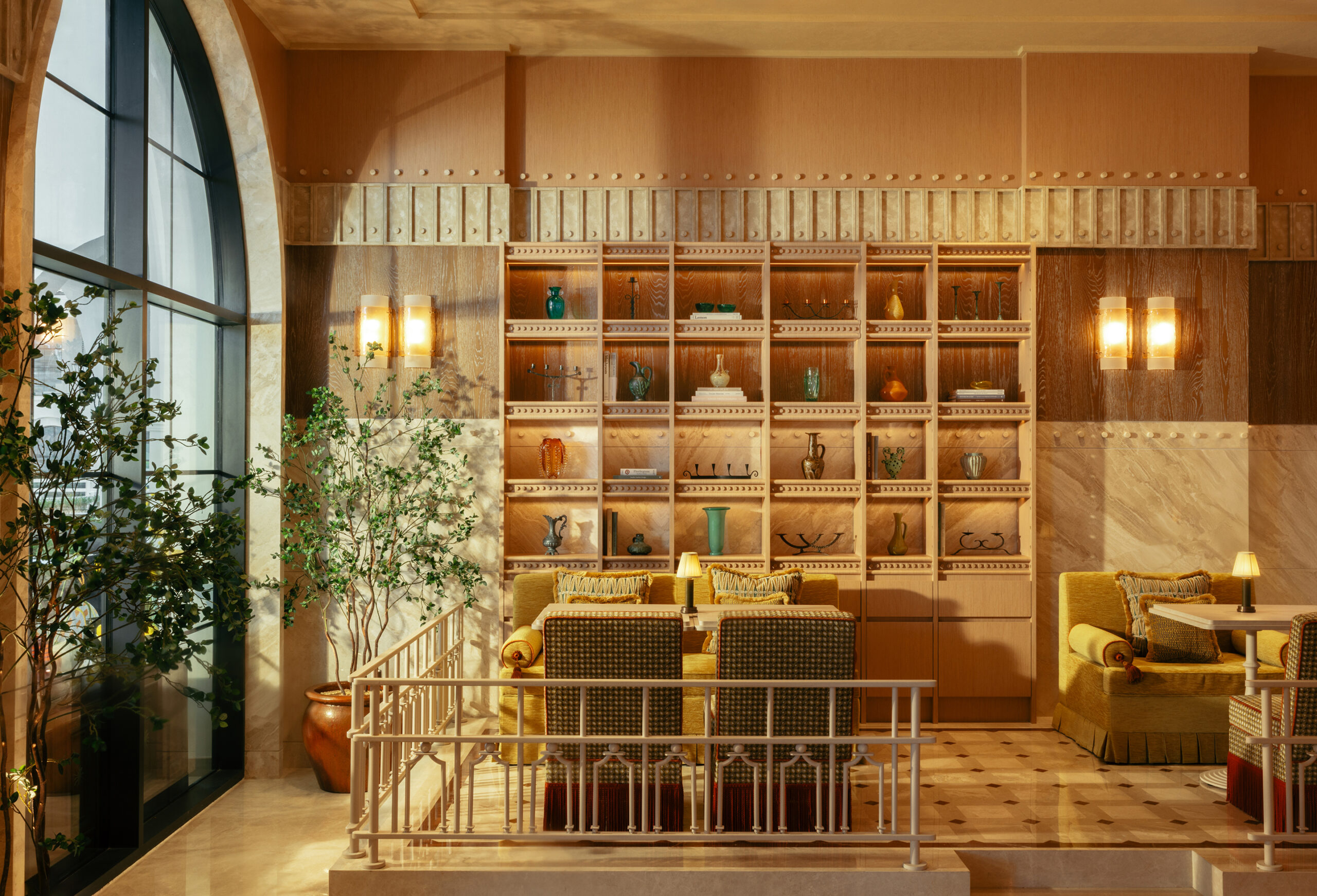
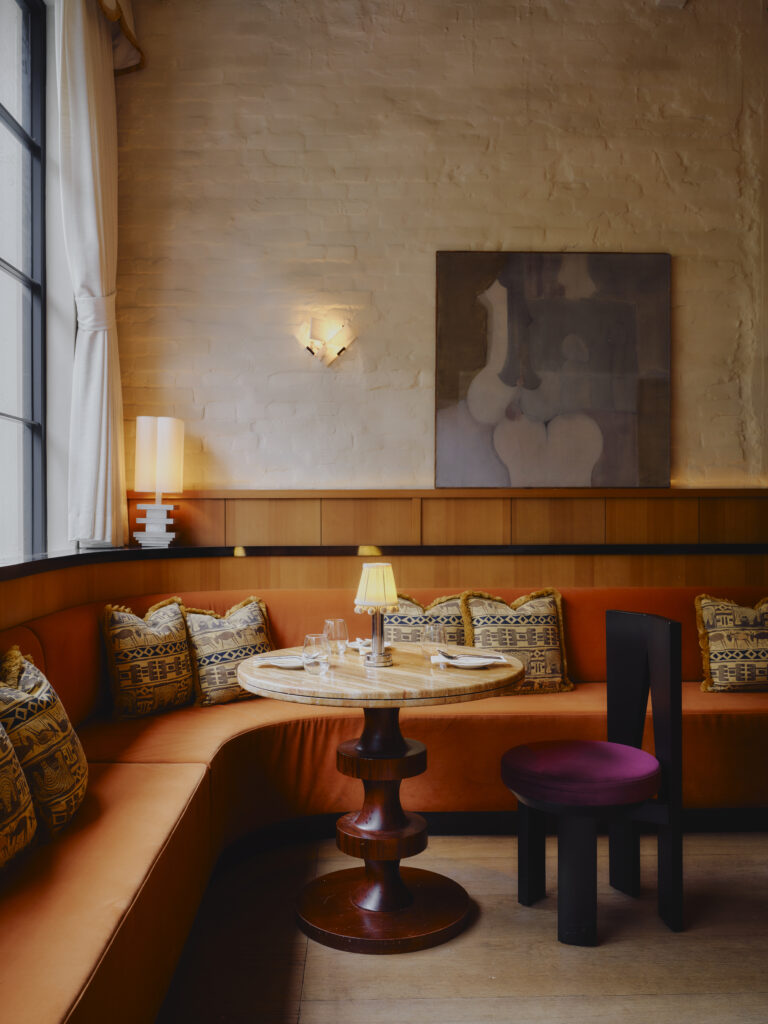
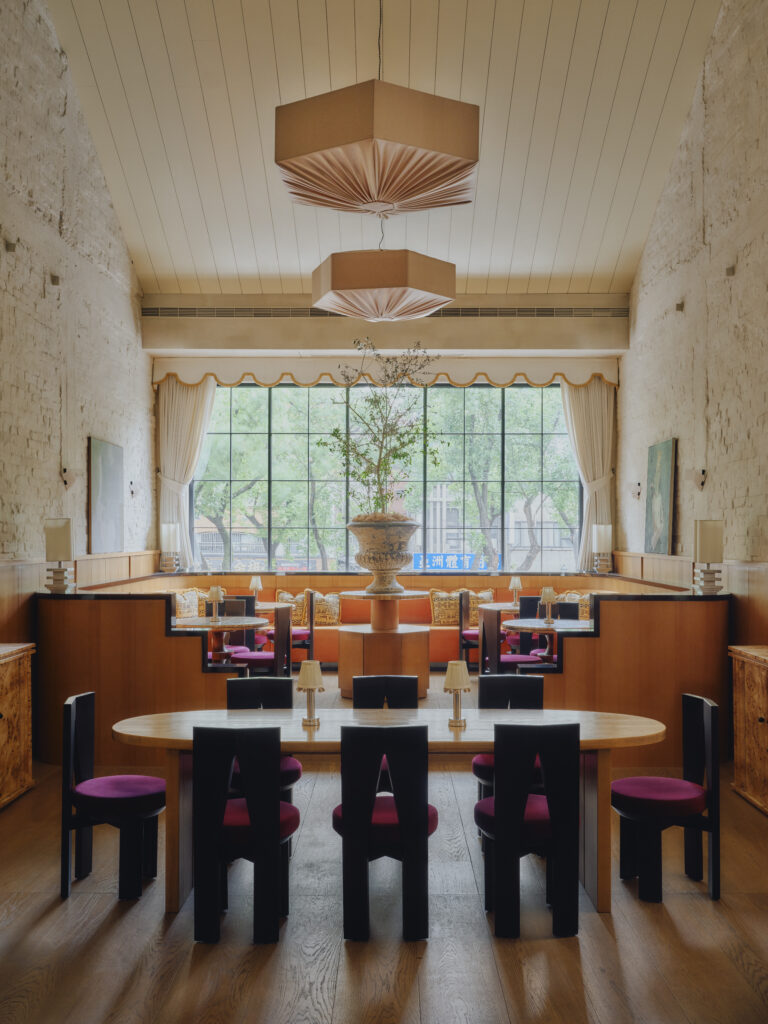
Upstairs, the register shifts. The ceiling is dramatically high, anchored by a large lantern-shaped pendant. Curved Art Deco banquettes run along the windows, paired with custom oak tables and chairs, while Nordic pine paneling lines the walls. Original wall sconces by Pierre Chareau, the French architect and designer whose 1930s Maison de Verre remains one of the most significant works of early modernism, are installed throughout the upper floor, introducing a historically grounded reference that holds the whole composition in place.
What comes next is larger in scale. VUDAS, Ecru Studio’s first boutique hotel, is scheduled to open this summer in Kenting, at the southern tip of Taiwan, beside Baishawan Beach. Its name comes from the Paiwan indigenous language and means “white sand”, a reference to both the beach and the cultural heritage of a region whose indigenous craft traditions have become an increasingly important influence on the studio’s work alongside its European sources. Twenty-one rooms, bringing together European decorative traditions, Asian spatial sensibilities, and Taiwanese indigenous references into what promises to be the studio’s most fully realized statement yet.
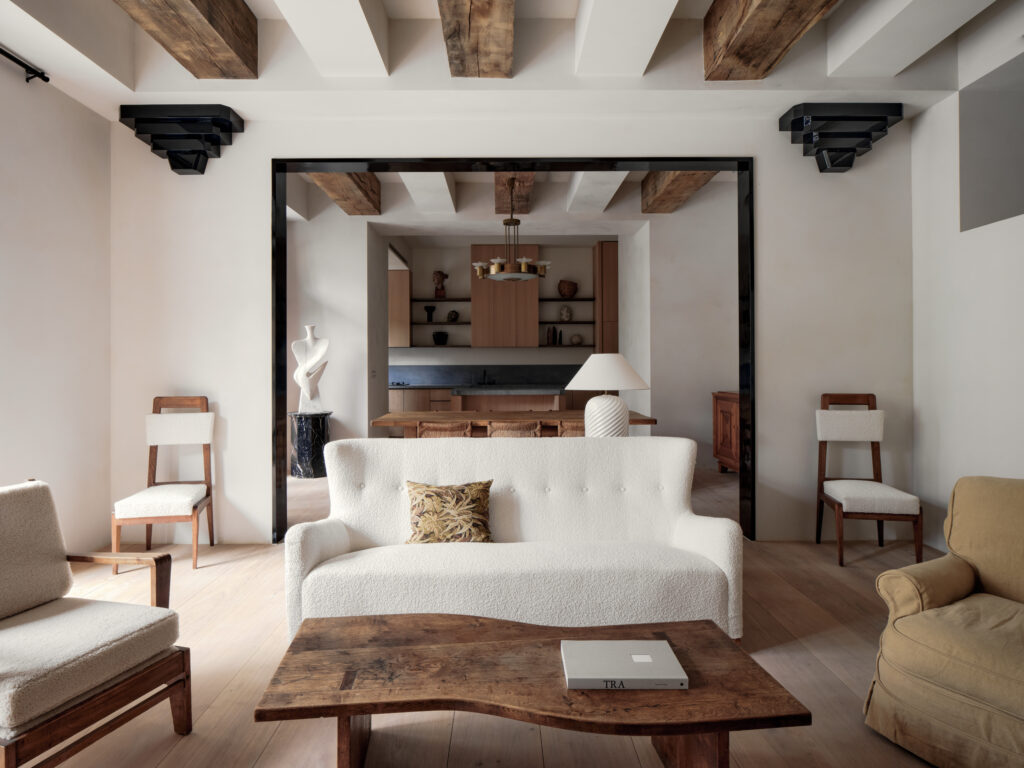
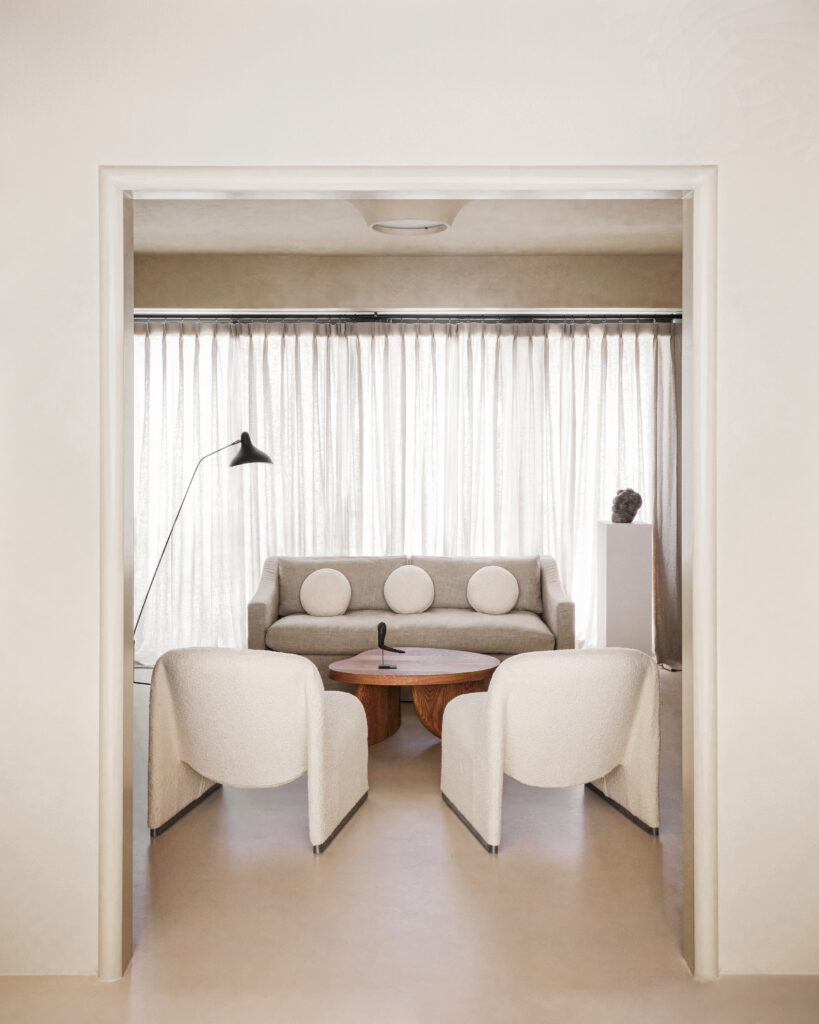
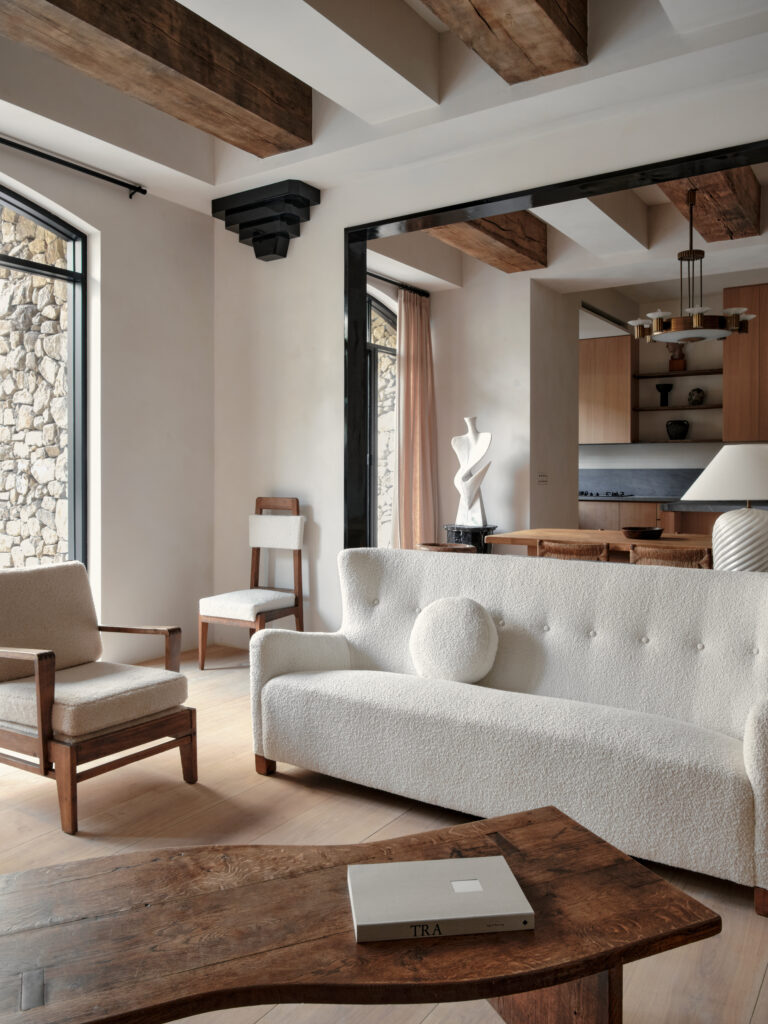
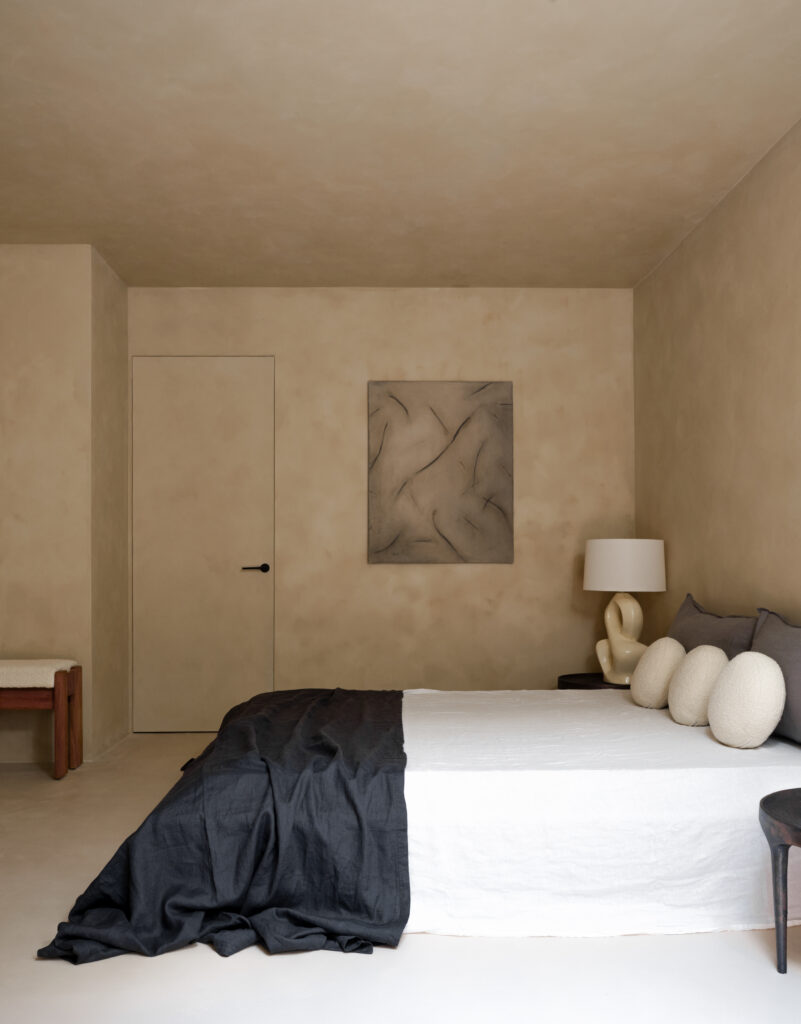
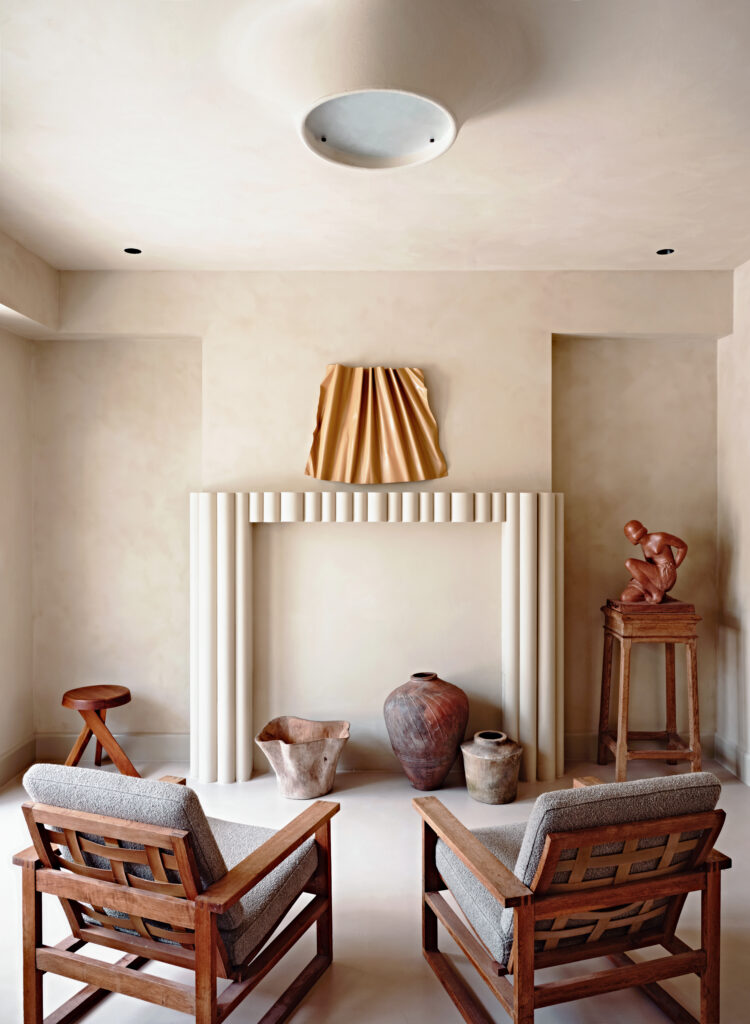
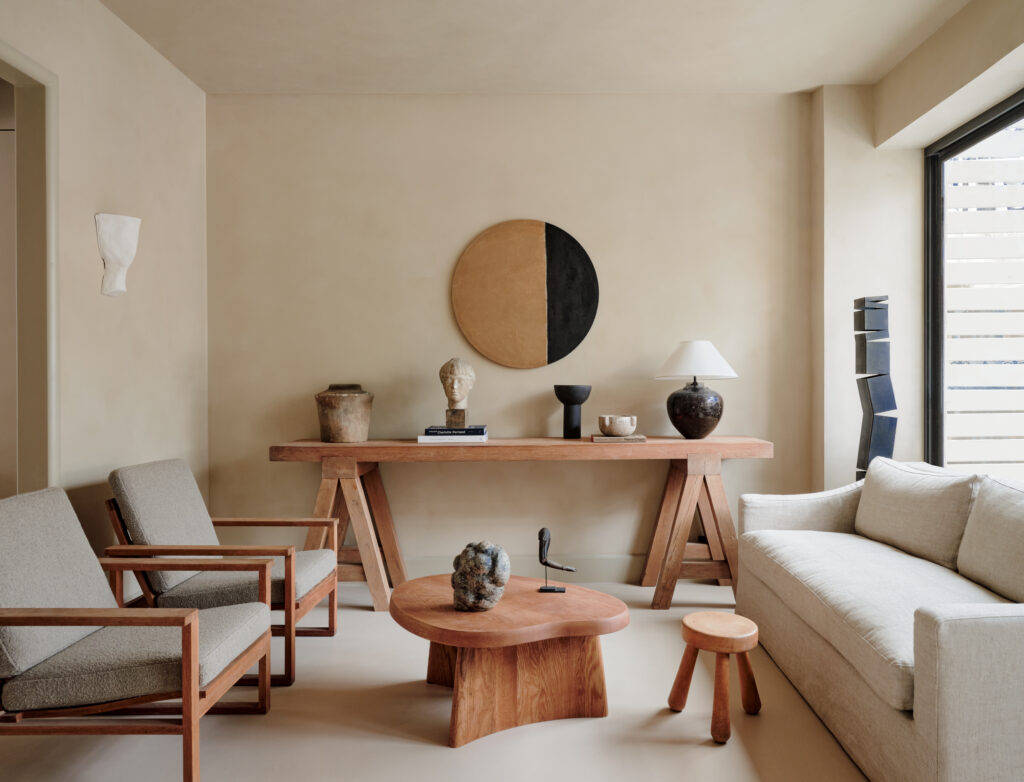
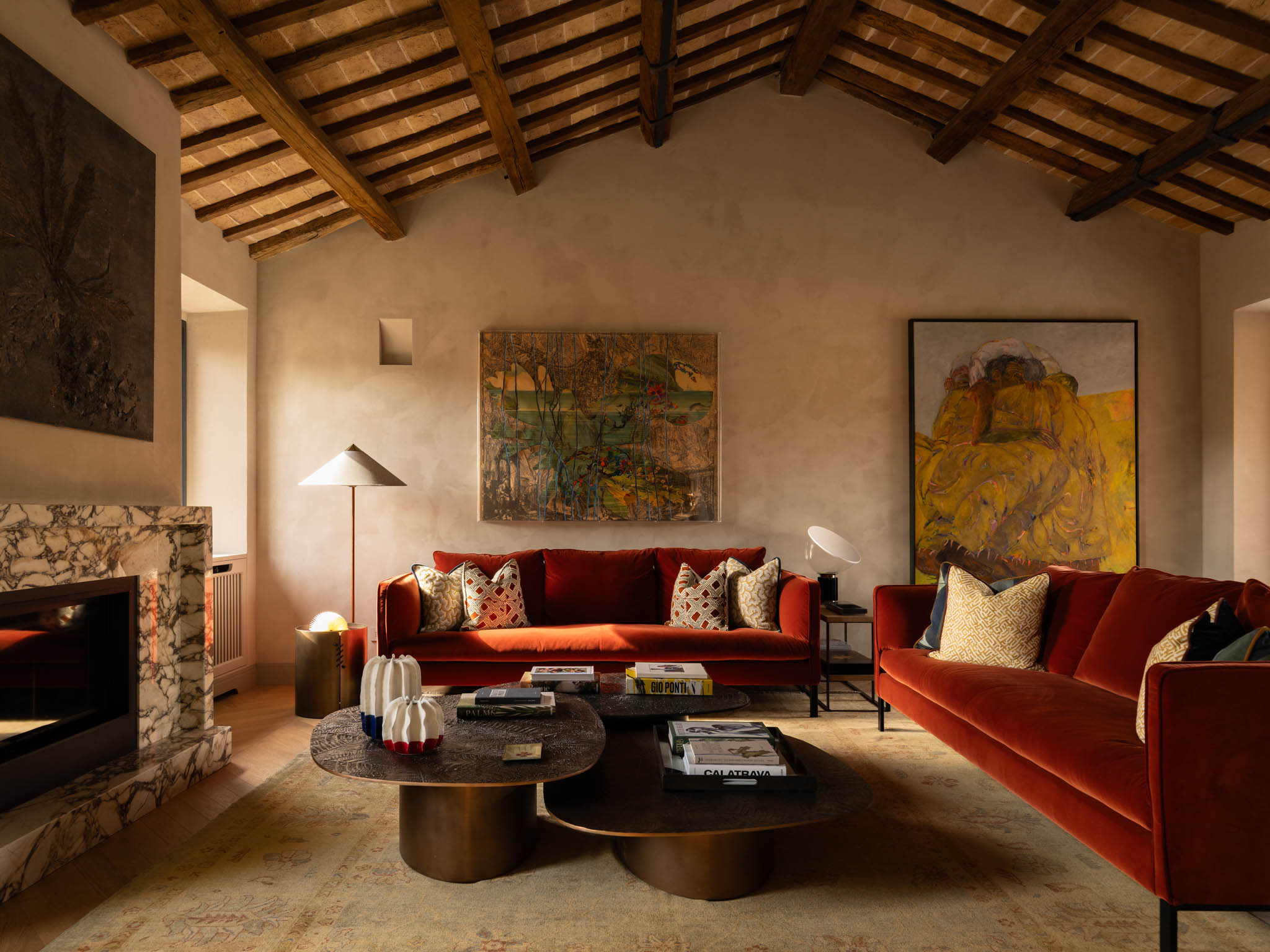
In Paris, two projects are already underway. The first is an apartment next to the Jardin du Palais Royal, in the 1st arrondissement, owned by the founder of the Chinese fashion label Shushu/Tong, a project blending Eastern cultural references with European Art Deco influences that will also double as the studio’s Paris office. The second is a residential renovation for a client working in the contemporary art gallery world, conceived as a quiet environment for living alongside art and collectible objects. Both feel like natural extensions of what Ecru Studio has been building toward since Jin Chen first started arranging furniture with the same care he once gave to a chord progression: the conviction that a room, like a piece of music, should make you feel something before you can explain why.