Words by Allegra Salvadori
In a quiet corner of Studio 7 in Doha, rugs are not simply laid on the floor – they are arranged like conversations. Edges meet, motifs align, and what begins as a single gesture of devotion expands into a shared spatial experience. The Divine Collection, a new collaboration between Egyptian rug house Kahhal 1871 and Qatari interior designer Shaikha Al Sulaiti, is less a product launch and more a proposal: what if prayer itself could become a form of social architecture?
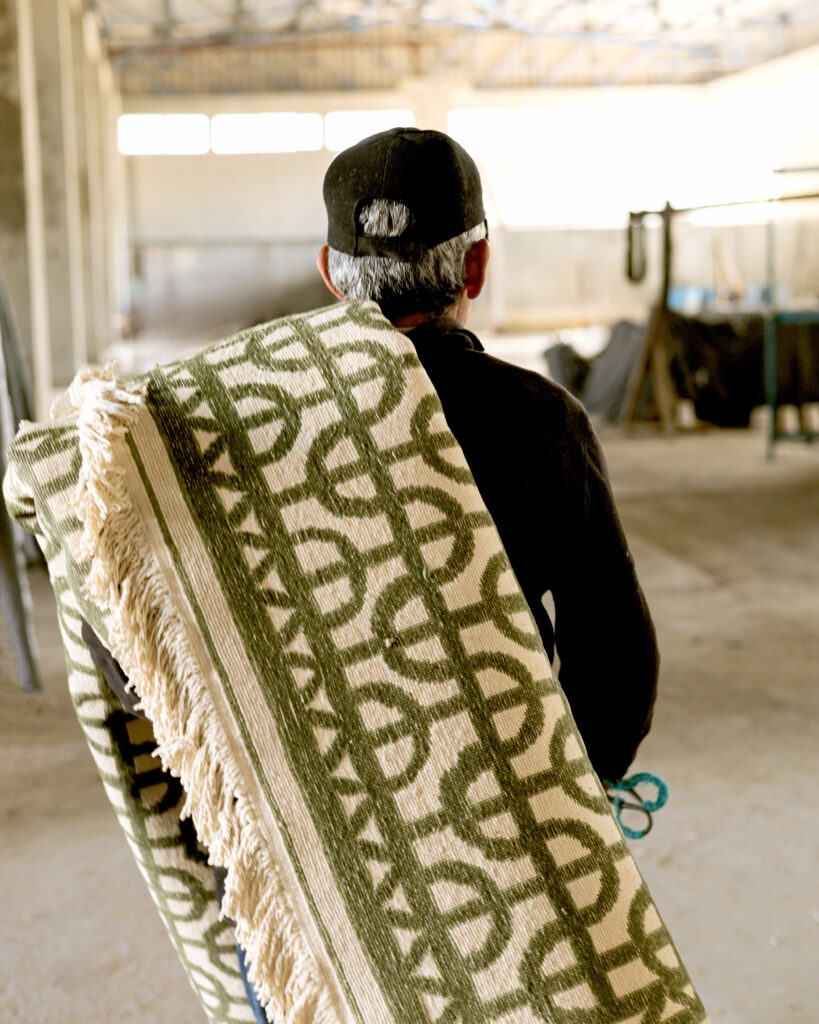
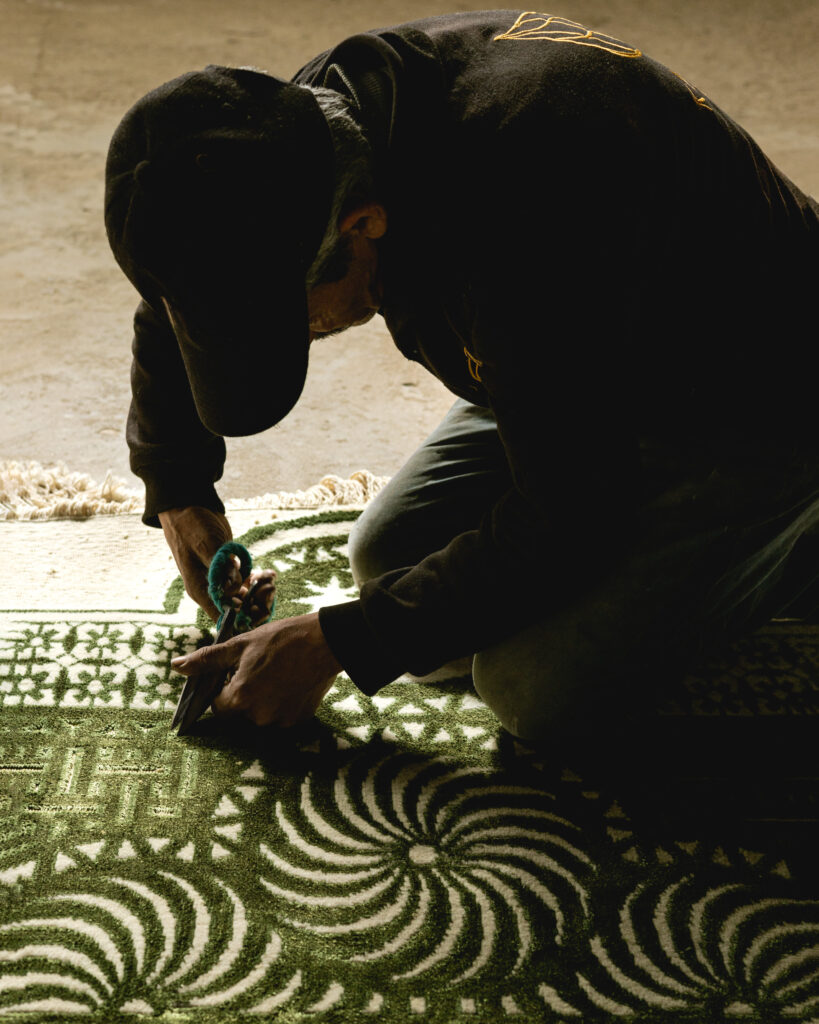
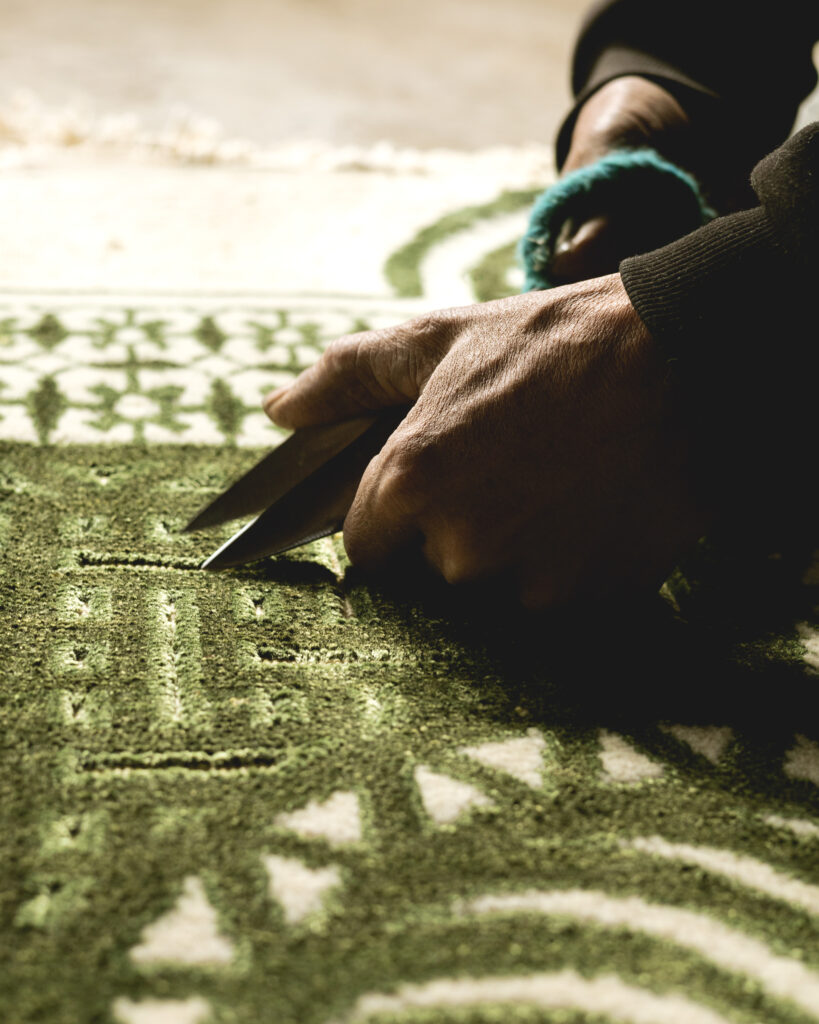
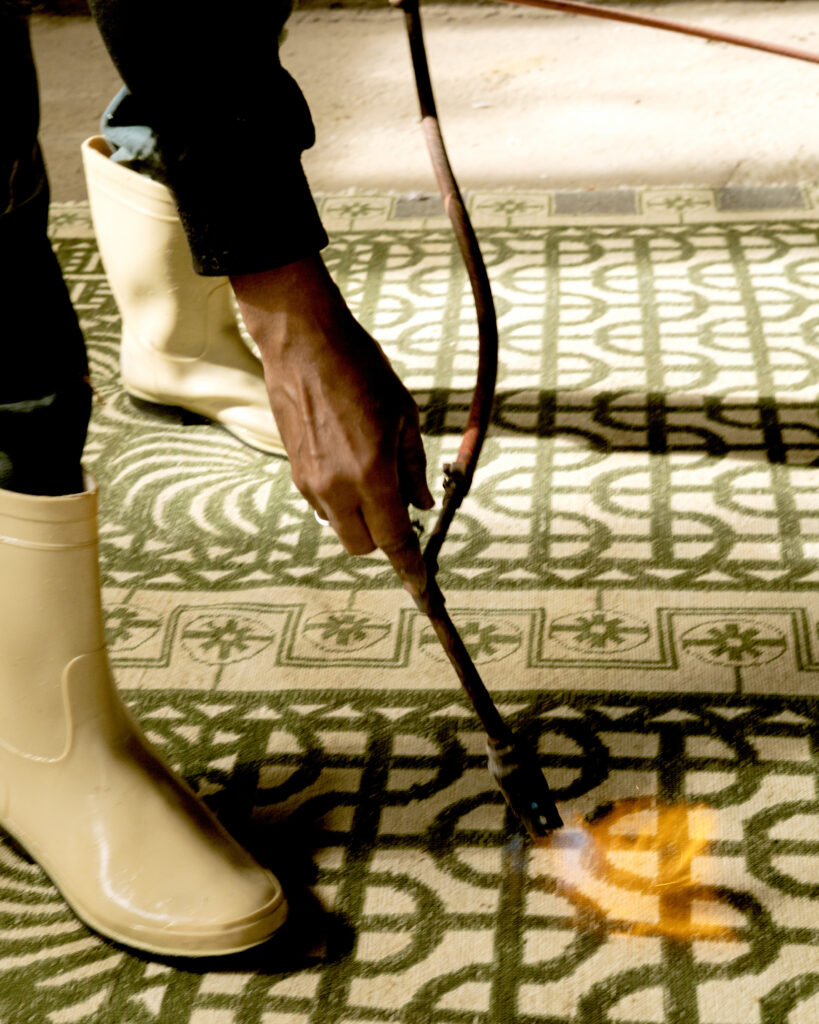
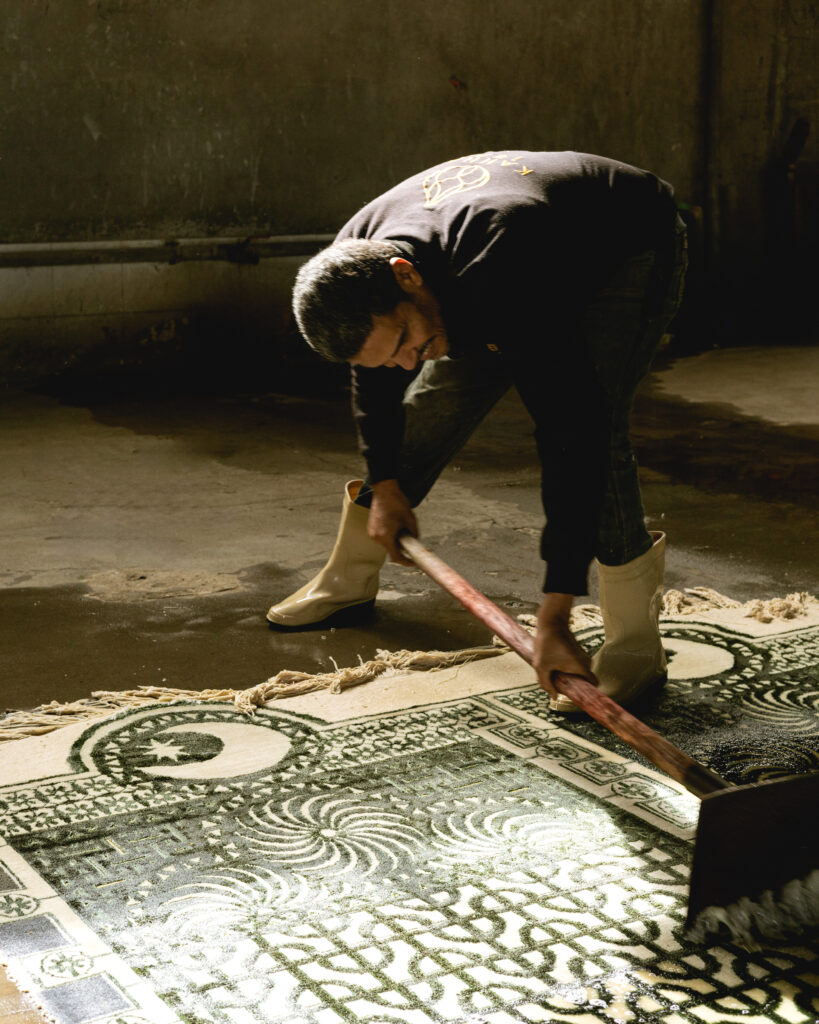
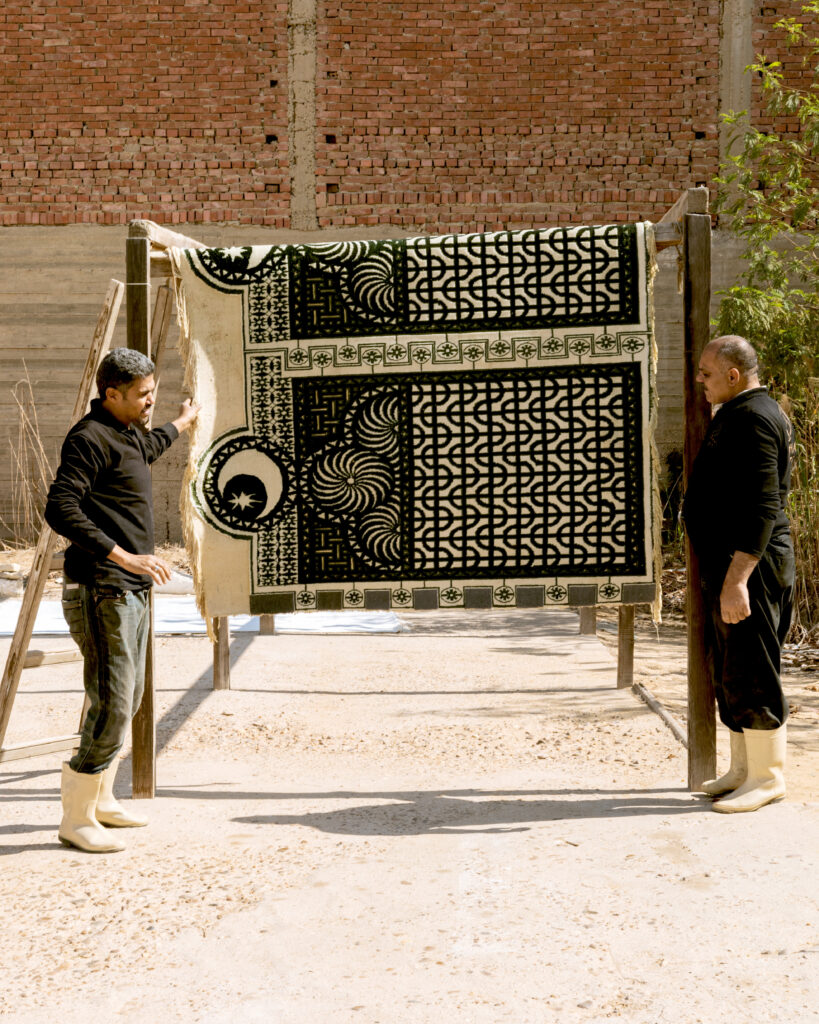
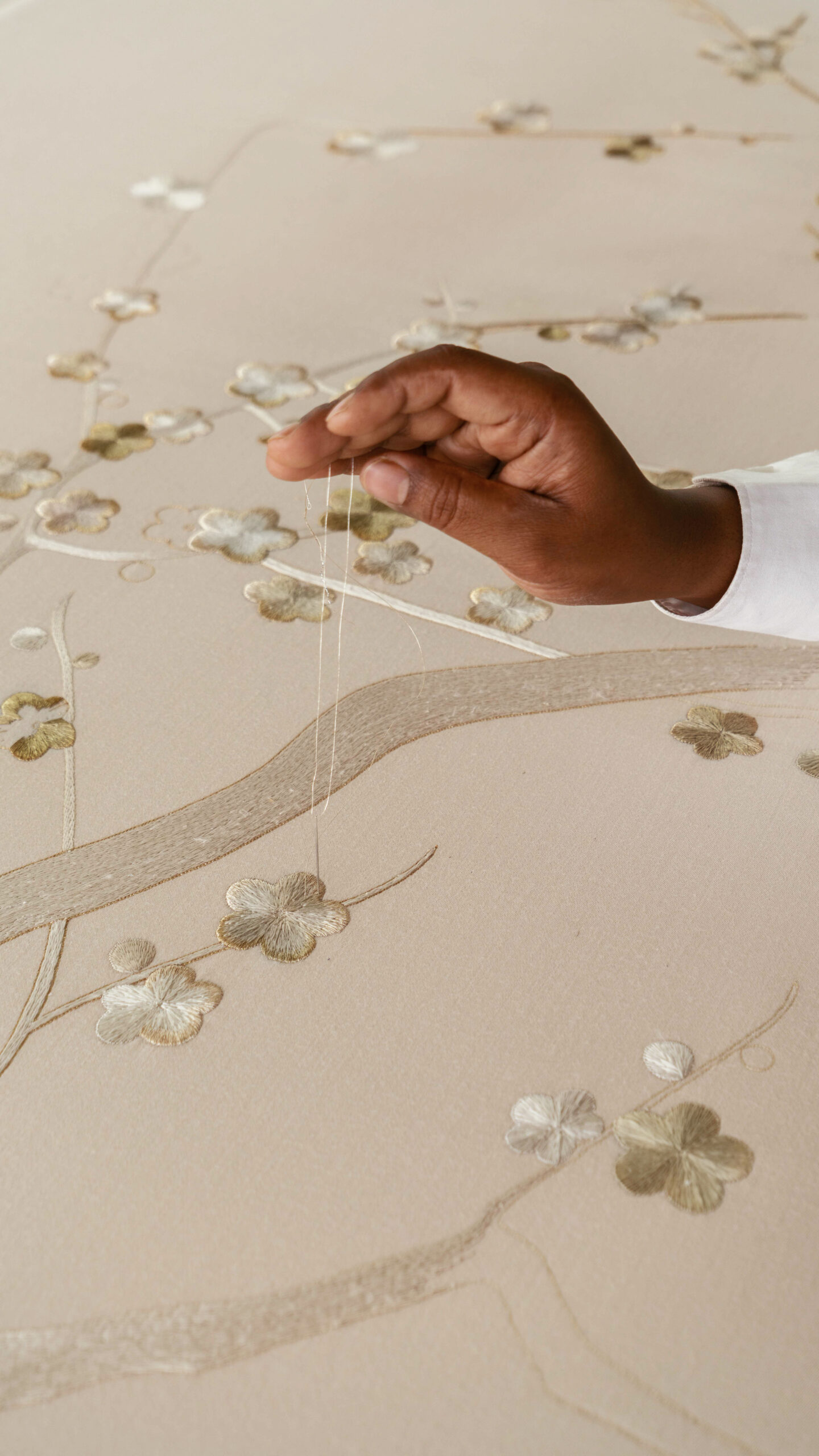
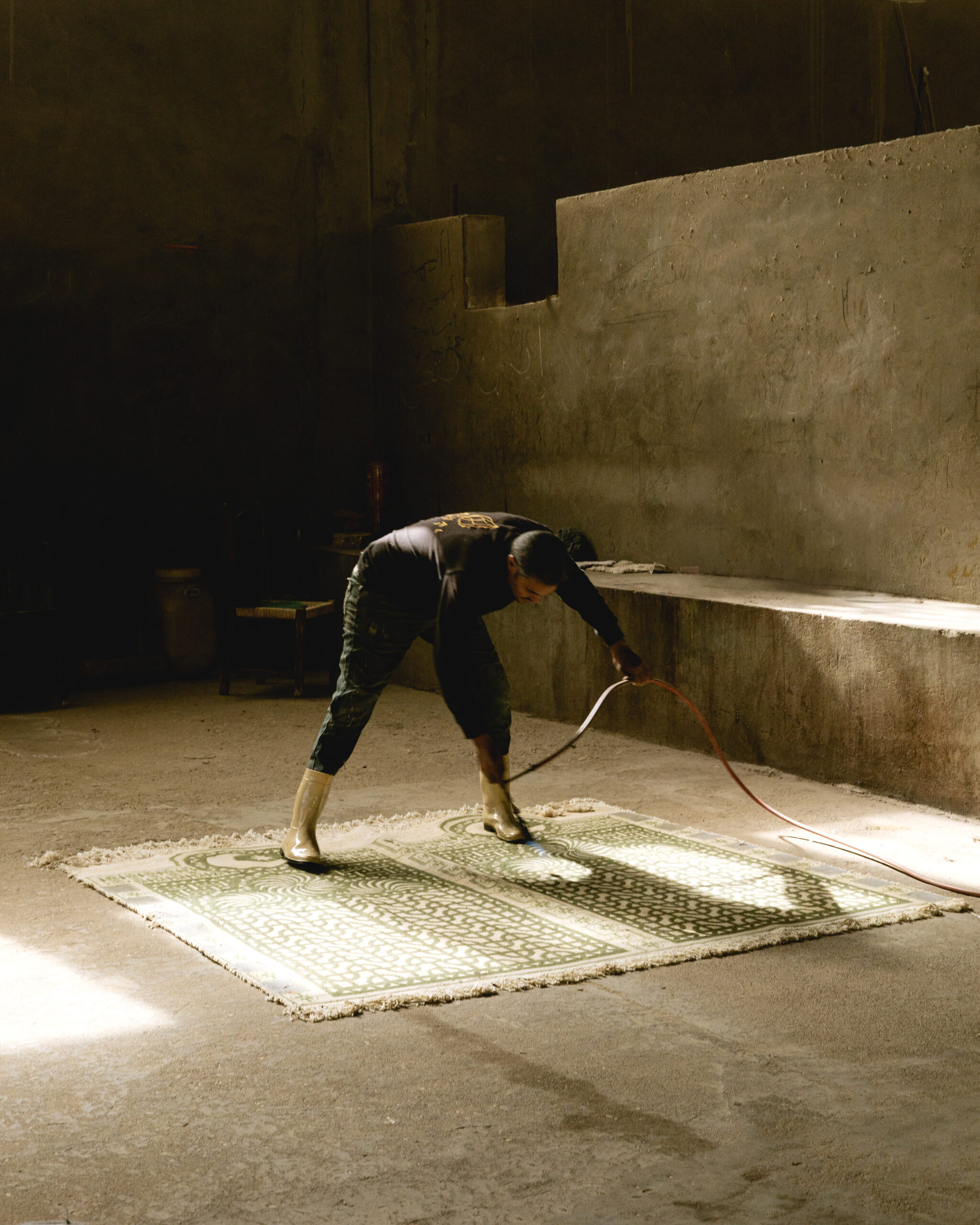
At the heart of the collection is a series of hand-knotted rugs – four area rugs, a runner, and an especially striking typology of prayer rug designed to be experienced in pairs. Each one takes around ninety days to craft, every knot and line of wool bearing the trace of human touch. Yet beyond the exquisite workmanship, it is the way these pieces are meant to come together that feels quietly radical.
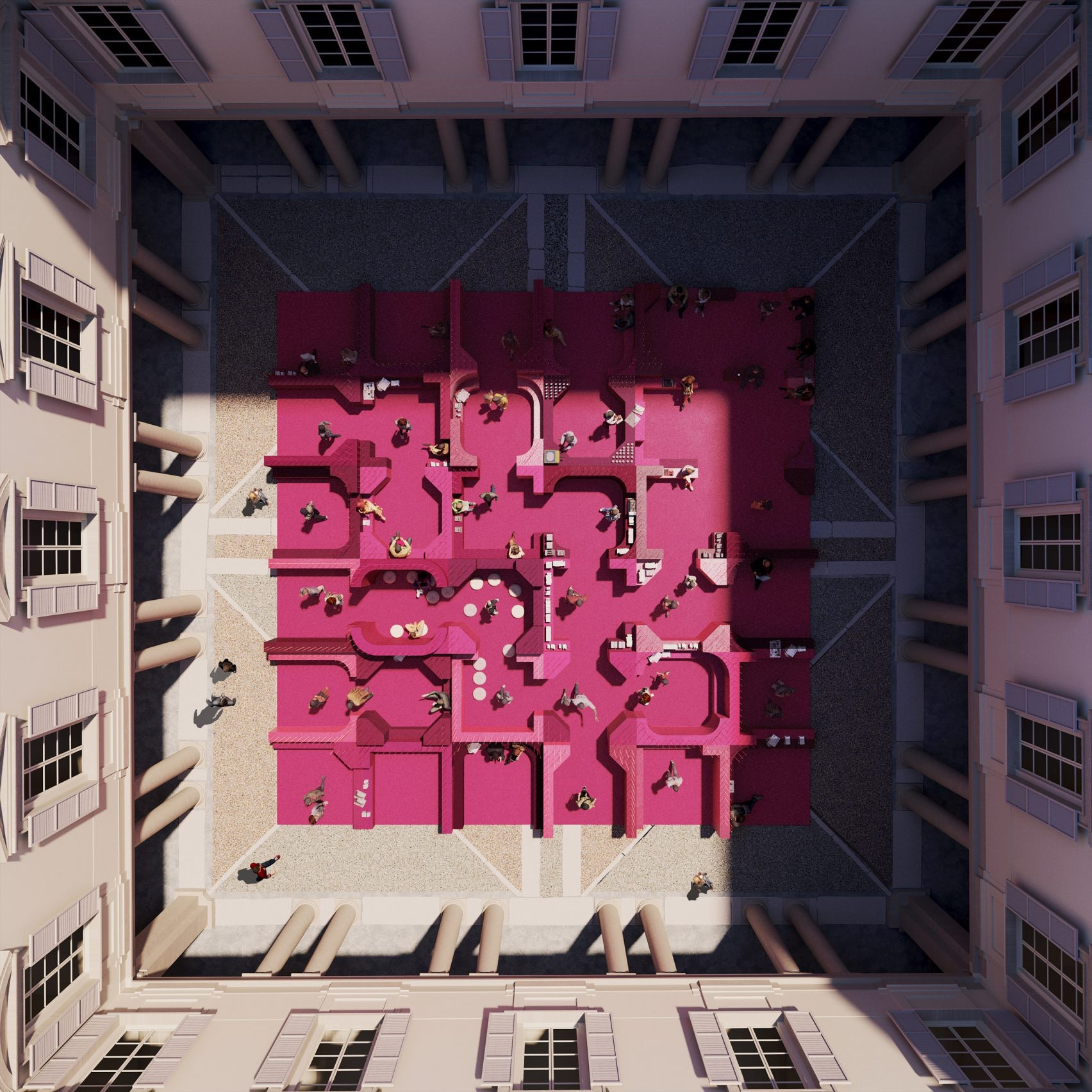
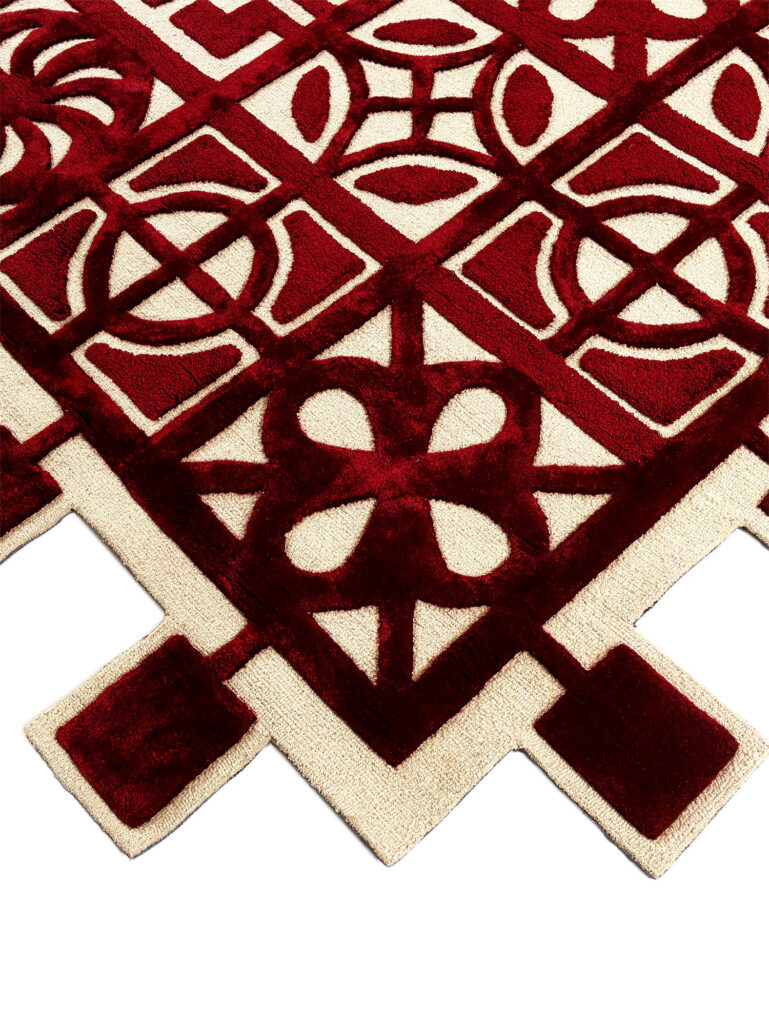
Rather than being confined to a single, solitary rectangle of space, the prayer rugs are conceived modularly. A discreet connection system allows each rug to join seamlessly with another, extending into runners, larger compositions, or generous settings for a majlis. Two become three, three become four, and suddenly a domestic ritual begins to read like an urban plan: compositions expand, shrink, and reconfigure as people arrive, gather, and move.
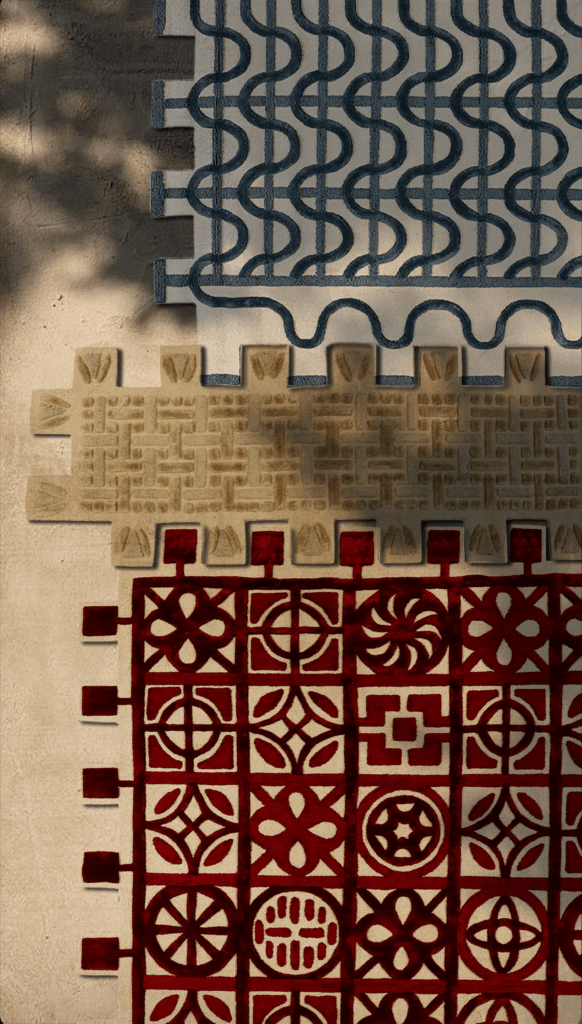
In this sense, The Divine Collection starts where traditional craft often ends – at the point where objects meet. The focus is not only on the beauty of an individual rug, but on what happens when one meets another, and another. Design becomes a tool for proximity, for inviting others in.
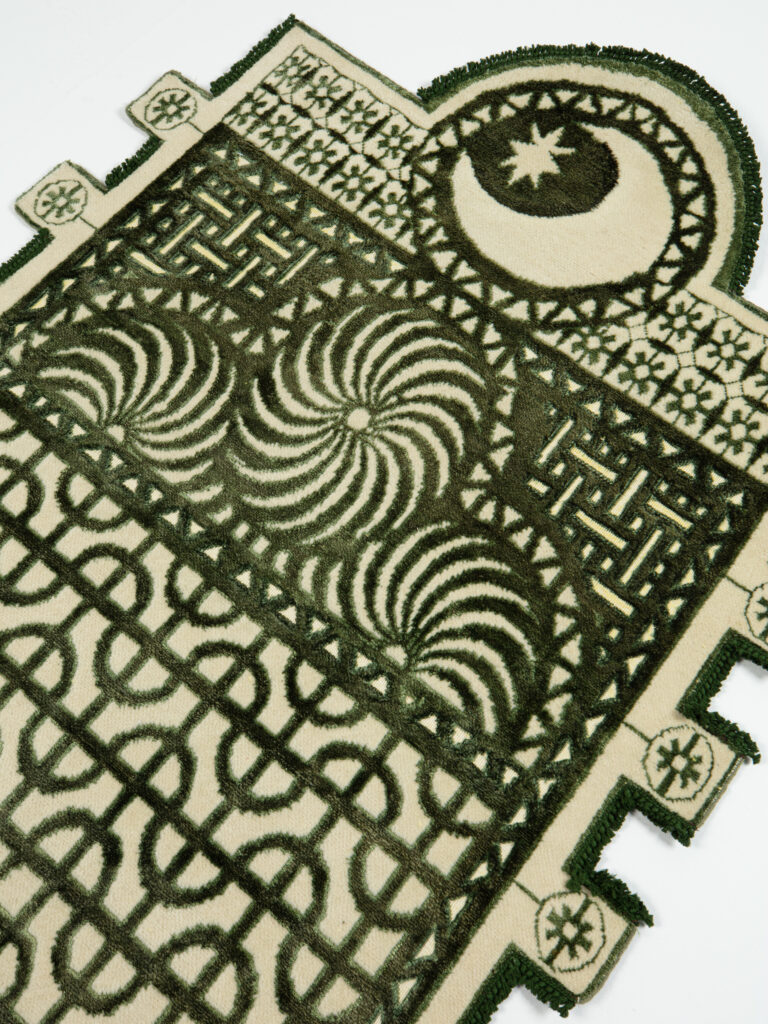
Symbolism is woven into this architecture of togetherness with quiet precision. On the prayer rugs, six stars line each side, resting on seven interlinking motifs that allude to the seven heavens, while an eighth link speaks of the gates of heaven. When two rugs are connected, the stars align – a subtle, almost cinematic moment that reveals itself only when people choose to pray side by side. The gesture is small, but its message is expansive: harmony is not an abstract ideal, it is something we actively create with others.
This interplay between meaning and materiality sits at the core of the collaboration. Kahhal 1871 brings more than a century of Egyptian rug-making heritage – a fifth-generation legacy of hand-knotted carpets that have long carried the weight of pattern, memory and ritual in family homes. Shaikha Al Sulaiti, meanwhile, is known for her contemporary interpretation of Gulf heritage, her work marked by an architectural attention to form and a sensitivity to how people move through space.
Together, they bridge Cairo and Doha, workshop and drawing board, archive and present moment. Every rug in The Divine Collection becomes a meeting point between these two creative languages: the density and depth of Egyptian craft on one side, the refined, structured sensibility of Qatari design on the other.
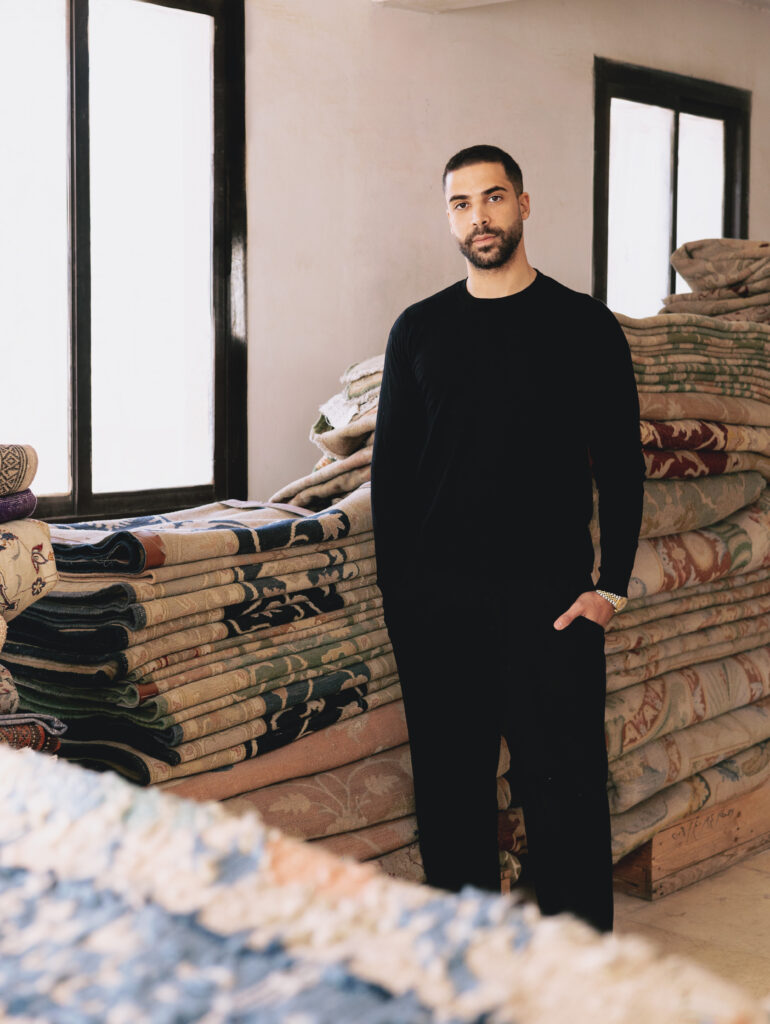
“Divine Connection is a celebration of what binds our region beyond borders – a shared sense of spirituality, artistry, and heritage,” says Mohamed El Kahhal, fifth-generation Managing Director of Kahhal 1871. In his words, the pieces are not just decorative objects, but physical expressions of a “sacred dialogue between human creation and divine inspiration” – a balance he sees as central to the way design operates in the Middle East.
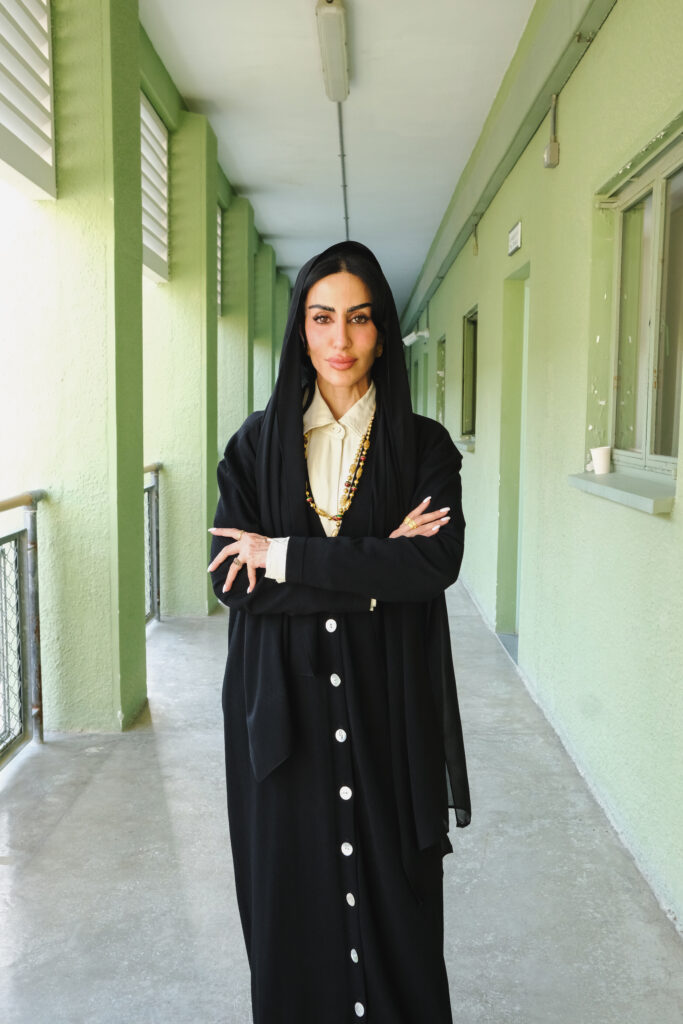
For Shaikha Al Sulaiti, the project is equally rooted in the present moment. She imagines the rugs as a kind of contemporary ritual field, where strangers can become a temporary community through shared practice. “The collection draws inspiration from the timeless teachings of our Arab heritage, the belief in love, unity, and strength through togetherness,” she notes. The prayer rug, in particular, becomes a symbol of “shared humanity and harmony” – one that feels especially poignant in times marked by distance and division.
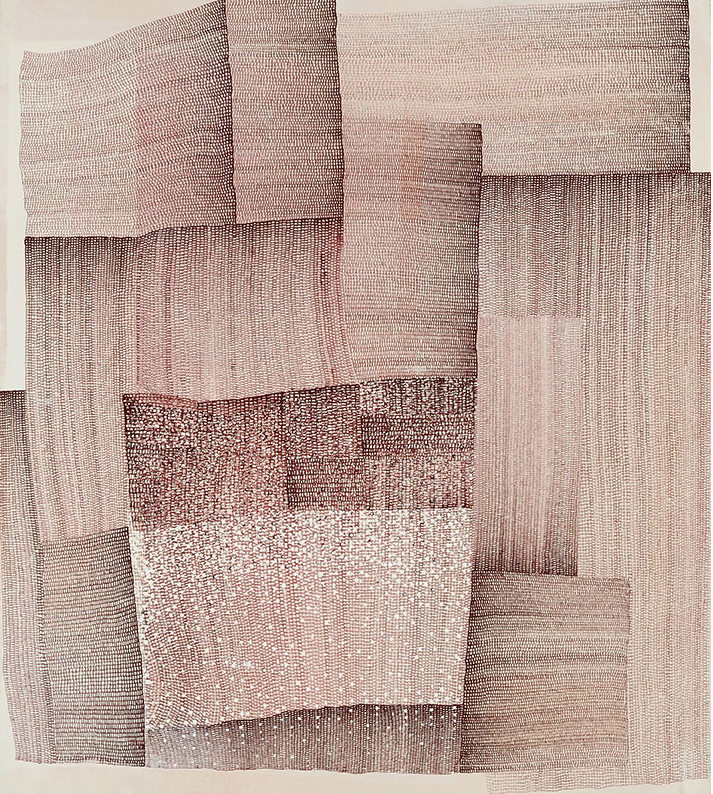
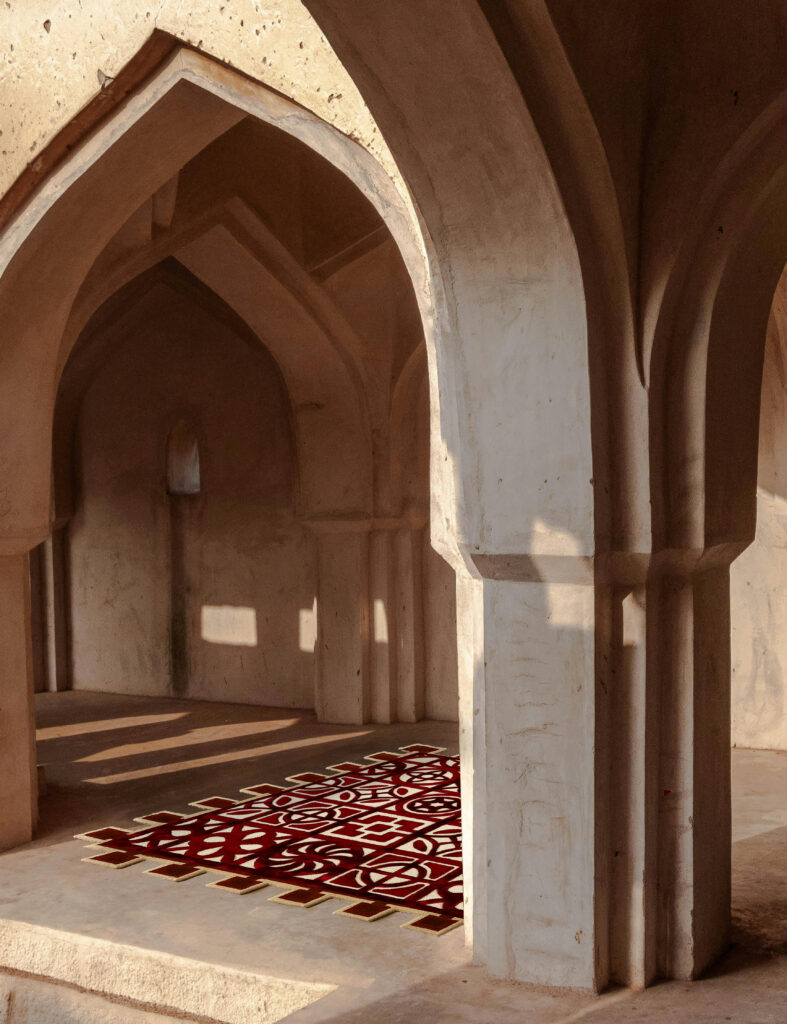
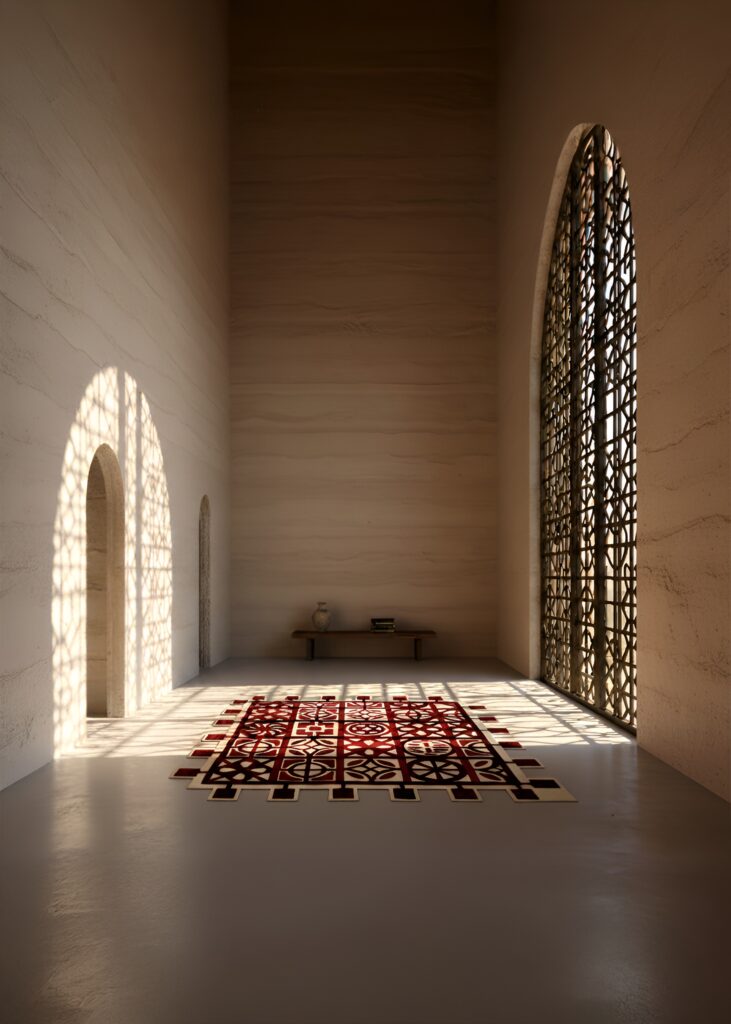
Visually, the collection reads as calm, composed, almost architectural. Motifs are precise rather than ornamental, the geometry more spatial than decorative. Patterns that might once have been carved in stone now appear woven into wool, as if migrating from façade to floor, from monument to domestic space. It is this movement – from the public language of architecture to the intimate scale of textile – that gives the pieces their quiet power.
Within a room, the rugs do something subtle but transformative: they choreograph how people come together. A pair of prayer rugs placed edge to edge becomes a microcosm of shared belief. A sequence of connected pieces in a majlis turns the floor into a landscape of gathering. Even when the room is empty, the potential for encounter is inscribed in the layout – the geometry of the rugs suggesting how bodies might align, how conversations might unfold.
In Doha, the private viewing titled “A Craftsman’s Language, Spoken Anew” brings this vision to life. Cultural figures, artists, and designers are invited not simply to observe the collection, but to walk through it, around it, and onto it – to inhabit the idea that craft can be more than an aesthetic tradition; it can be a framework for connection.
By weaving together Egyptian heritage and Qatari vision, The Divine Collection proposes a new reading of the prayer rug – not as a fixed, isolated object, but as a living, modular element in a larger social fabric. In doing so, it quietly reimagines devotion as a shared space, where design becomes the bridge between the sacred and the everyday, the personal and the collective.
In a world that often feels fractured, these rugs suggest another possibility: that unity can begin with something as simple as two pieces touching at the edge, and two people choosing to stand together.