Words by Allegra Salvadori
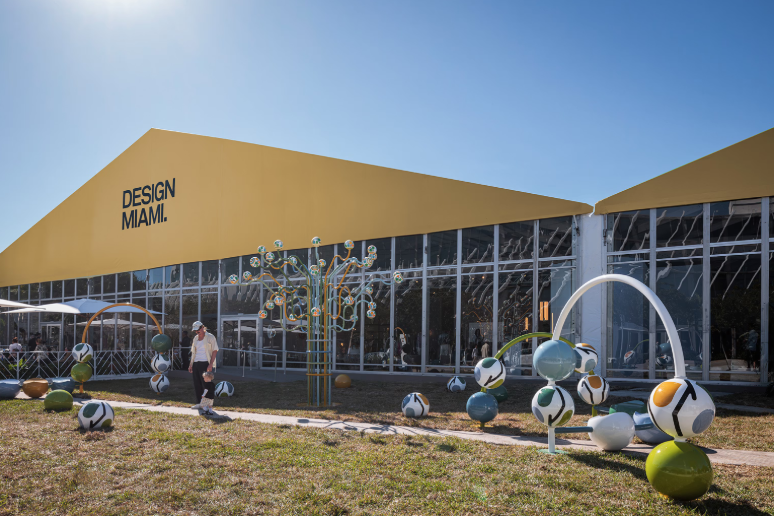
Design Miami 2025 once again positioned itself as a key barometer for the evolution of collectible design, where objects operate as cultural statements as much as functional forms. Beyond the major galleries and established names, this year’s fair revealed a growing presence of designers working from — and in dialogue with — the Middle East and its wider cultural sphere.
Rather than a single aesthetic or shared origin, what unites this group is a fluid approach to design: practices shaped by movement, material exploration, and layered cultural references. From Beirut to Dubai, these designers operate across borders, translating craft, narrative, and experimentation into contemporary objects that resist easy categorisation.
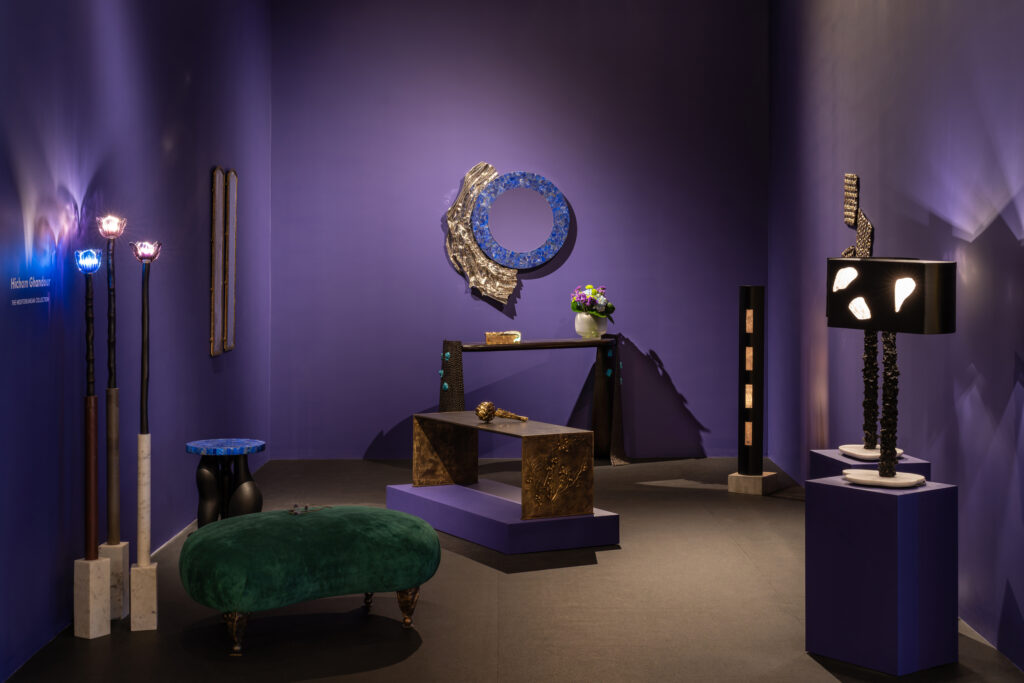
Among the names that stood out was Hicham Ghandour, whose work continues to bridge traditional craftsmanship with sculptural sensibility, reflecting a practice deeply attuned to material intelligence. Drawing on Mediterranean references, Ghandour explored light and reflection through a collection of lighting, mirrors, and tables, where polished metals and patterned stone produced a luminous, almost escapist quality.
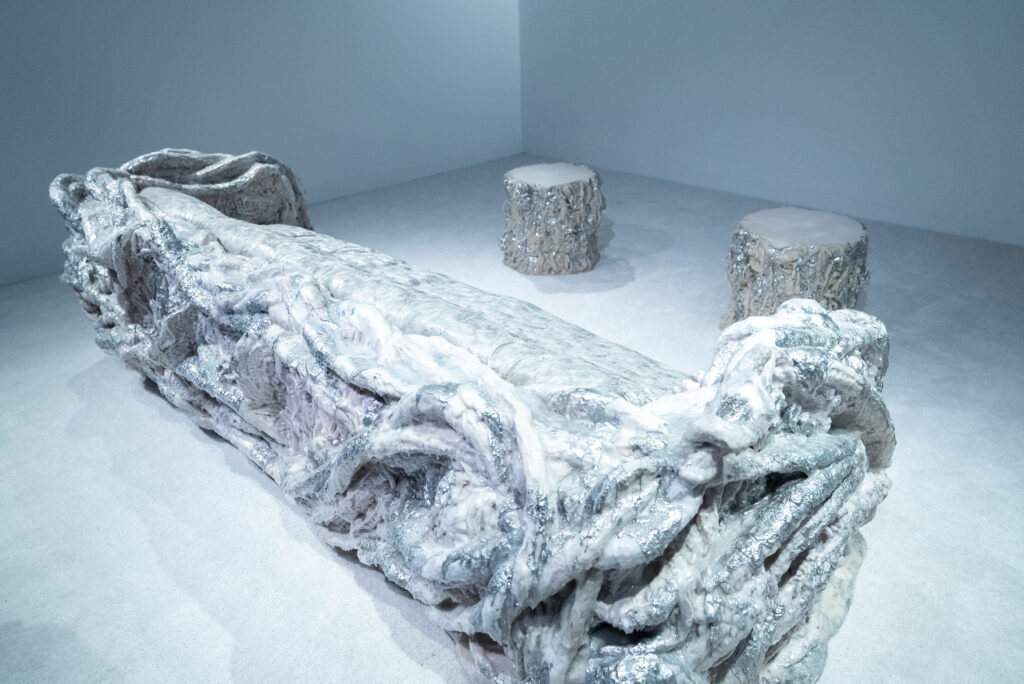
Over the past decade, Roham Shamekh has developed a practice that moves fluidly between art and design, driven by intuition and introspection rather than convention. Based in Dubai, his studio explores narrative and symbolism through multidisciplinary objects, establishing an anti-conformist language that resonates with a generation drawn to design as a form of self-expression. At Design Miami 2025, the Dubai-based designer presented a sofa from his Roots collection, where biomorphic forms, glistening resin structures, and metallic cushions converged into an enveloping, almost organic composition. Accompanied by a sound component designed to guide the viewer into a state of calm, the piece explored growth, interconnectedness, and the idea of design as an immersive, sensory experience.
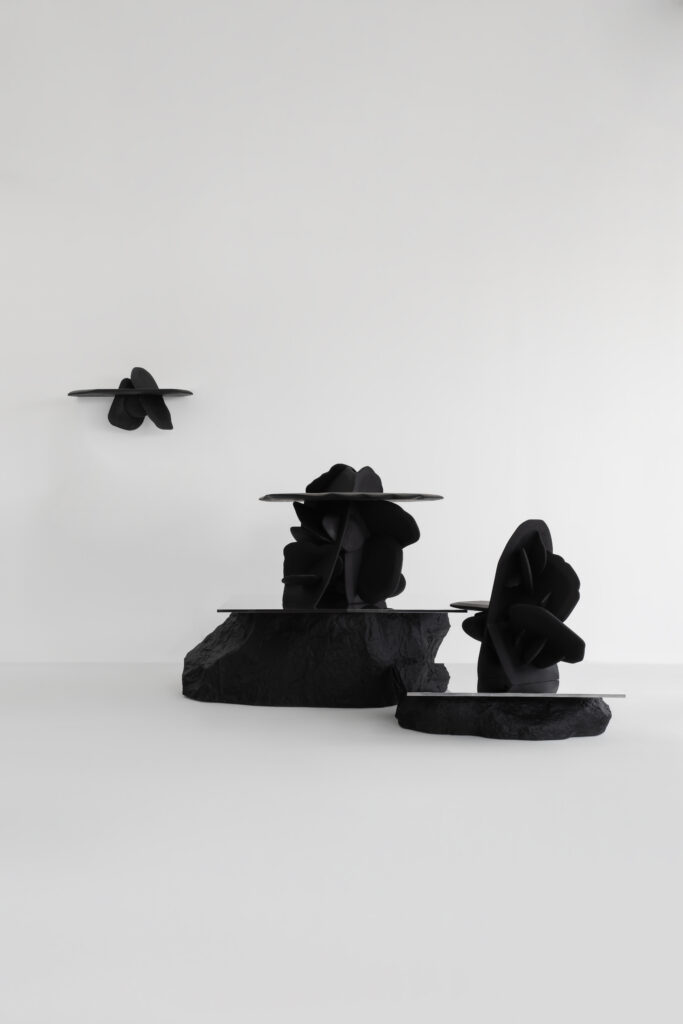
Also featured was Mehdi Dakhli, whose transnational practice moves between design, curation, and creative consultancy, often drawing on cultural memory and North African references to inform contemporary forms. Featuring the Scarab Cabinet, the piece takes its form from ancient Egyptian symbolism, drawing on the scarab as an emblem of regeneration, protection, and prosperity. Crafted in ebonised oak and set on sculptural bronze legs, the piece balances a dark, tactile presence with refined material precision.Aluminium shelves integrated into the exterior allow the cabinet to function as both storage and display. More than decorative, the scarab motif positions the cabinet as a contemporary guardian of knowledge and possessions — an object where ancient meaning meets modern design.

Dubai-based studio KAMEH joined Design Miami 2.0, a special 20th Anniversary project curated by Glenn Adamson, bringing together 8 international studious under the theme Make. Believe.
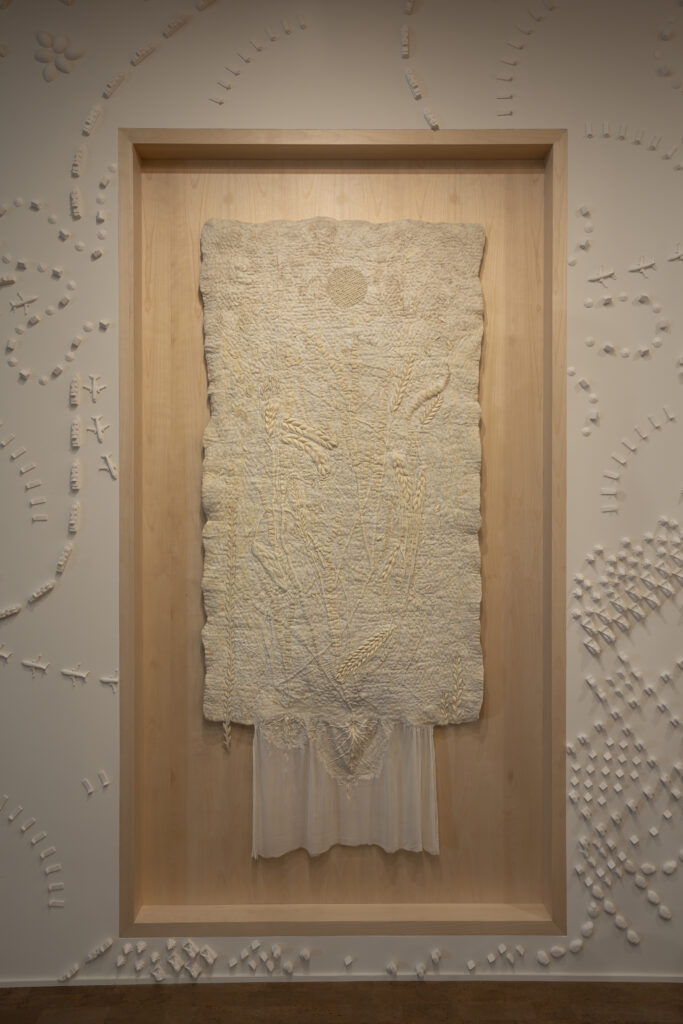
Completing the selection, Adrian Pepe, a design for sustainability graduate of SCAD (Savannah College of Art and Design), presented two embroidered wool tapestries informed by the culture and mythology of Beirut, reflecting a diasporic approach to making in which place is layered rather than fixed. His work speaks to the porous nature of today’s creative geographies.
Together, these five regional talents reflect a broader shift within the global design landscape: one in which the Middle East and its surrounding cultural spheres are not peripheral, but actively shaping the conversations around collectible design, authorship, and material culture.