Words by Allegra Salvadori
There are destinations that discover food, and others that are transformed by it. El Gouna — Egypt’s iconic Red Sea town celebrating its 35th anniversary — has chosen the latter path. And nowhere was this more evident than the launch of Taste El Gouna, the country’s first-of-its-kind gastronomy platform, which debuted during the “35 Flavors of El Gouna” event. The event — not the platform — was held in partnership with Atelier Norbert Niederkofler Temporary, a three-day culinary showcase that brought Michelin-starred chefs, culinary legends, and rising talents from around the world to cook, collaborate, and reimagine what the future of luxury on the Red Sea could look like.
I arrived with a simple route: a smooth flight to Cairo, a short connection onward, and an electric London cab gliding along quiet roads until the sea revealed itself in full clarity. Light, water, and architecture aligned with a kind of intentional calm. El Gouna doesn’t overwhelm; it unveils.
The next morning, I worked from a balcony overlooking an almost impossibly still stretch of sea — nature and silence setting the tempo — while the town prepared for its most ambitious gastronomic weekend yet.
Food as the New Luxury Currency
The opening evening set the tone: a sunset gala by the water where culinary legends and rising stars introduced the flavors that would anchor the weekend. Plates travelled from the Dolomites to Dubai, from Canada to the Red Sea, yet the narrative remained distinctly Egyptian — a celebration of biodiversity, sustainability, and cultural exchange.
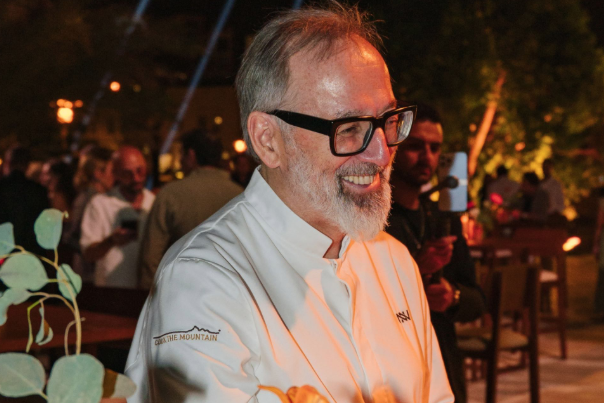
The following morning, I met Norbert Niederkofler, the Italian maestro behind the “Cook the Mountain” philosophy — a culinary ethos grounded in strict locality, seasonality, and respect for ecosystems. Speaking with him felt like entering a laboratory of ideas. He explained the shift that defined his career: “In 2007 we earned two Michelin stars, but our cuisine was not coming from the mountains. We were flying in potatoes from Australia, oysters from Japan… it made no sense. So in 2008 I wrote Cook the Mountain. I set four rules: nothing arriving by plane, no olive oil, no lemons, and zero waste. Everyone said I was crazy — but these rules became our biggest success.” Today, his kitchen works with 400–500 varieties of mountain vegetables, roots, mushrooms, herbs, and lentils.
His approach resonated deeply with the Red Sea landscape. “What interests me here is the future,” he told me. “By 2050 we must feed 10 billion people. We need new ways of thinking, new systems, new creativity. And El Gouna has the potential to avoid the mistakes we made over the past 20 years.”
A Town Where Gastronomy Becomes Identity
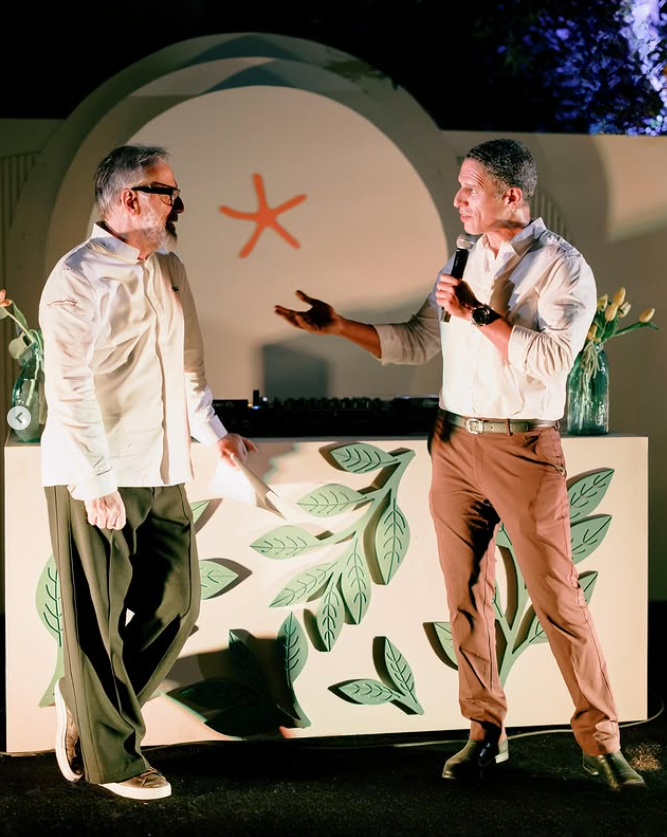
Later that afternoon, I met Mohamed Amer, CEO of El Gouna and Executive Board Member of Orascom Development Egypt — the figure quietly redefining the town’s next chapter. He told me: “El Gouna’s culinary scene has always been very active — people often book restaurants before their hotels. That’s why gastronomy is becoming such an important pillar for us. Taste El Gouna is now that pillar. Clients are looking for organic, sustainable, low-waste food — yet luxurious in flavor — and this is exactly the direction we are developing.” Lunch followed — a simple, generous plate on the beach, surrounded by sea and silence — and the impression became clear: here, food is both nourishment and narrative.
Sustainability, but with Proof — Not Posturing
I soon understood why many of the chefs who flew in were visibly impressed — not just by the ingredients, but by the infrastructure behind them. Amer explained: “El Gouna has a long heritage of sustainability — it began here decades before it became a global movement. We have a 27-year-old plastic-recycling facility, more than 20% of our energy comes from solar, and we operate the largest private-sector solar plant in Egypt. Seventy percent of our mobility is electric. All our waste is collected, sorted, and 70% of it is recycled. We grow our own produce on our farms, and Botanica’s hydroponic farm is part of that ecosystem. This platform is about knowledge exchange — cultural sustainability as much as environmental sustainability.” The more he spoke, the more it became clear: El Gouna is not using sustainability to sell luxury. It is using sustainability to define luxury.
Staying True While Moving Upmarket
With the Gulf’s luxury travelers increasingly seeking destinations with depth, I asked Amer how he plans to meet rising expectations while preserving authenticity. He answered with deliberate restraint: “Staying relevant while remaining true to our vision is difficult. But if we bring in the right partners, the right operators, and we don’t grow for the sake of growing, then El Gouna will always remain El Gouna.” And on attracting the high-net-worth audience, he added: “The Gulf audience is still new… and airline connectivity will change everything. As routes expand, the profile of our visitors will change dramatically. We are already building on our existing luxury offerings — such as Casa Cook and La Maison Bleue — and developing new luxury hotels over the next five years to speak directly to the ultra-luxury client.”
Walking through the marina, along the lagoons, or even sitting in a café, one feels a particular rhythm — calm, connected, quietly international. Amer captured it precisely: “El Gouna is all about the experience — it’s a ‘Gouna state of mind.’ The community is at the heart of it. People are proud to belong here. It’s safe, international, and remarkably laid-back. Because there’s no traffic, you gain hours — time you spend connecting with people, doing sports, learning something new.” This is why many residents stay for years, or return seasonally. The town is built on belonging.
The Gala That Marked a Turning Point
The flagship dinner at Botanica — El Gouna’s pioneering hydroponic restaurant — was the emotional centre of the weekend. The dining unfolded inside Botanica, surrounded by its greenhouse glow: a place where ingredients dictate rhythm and where the menu changes at the pace of nature. It is a kitchen calibrated to the land, not to the marketplace.
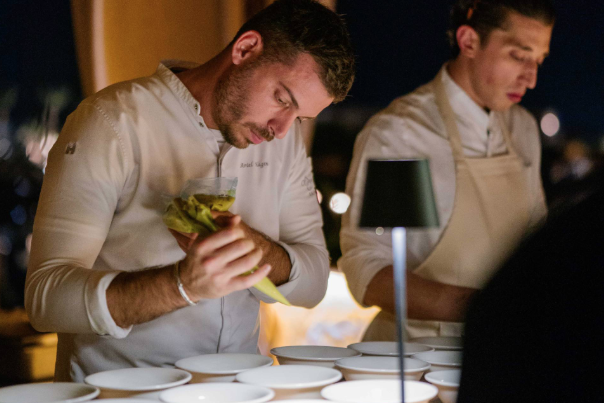
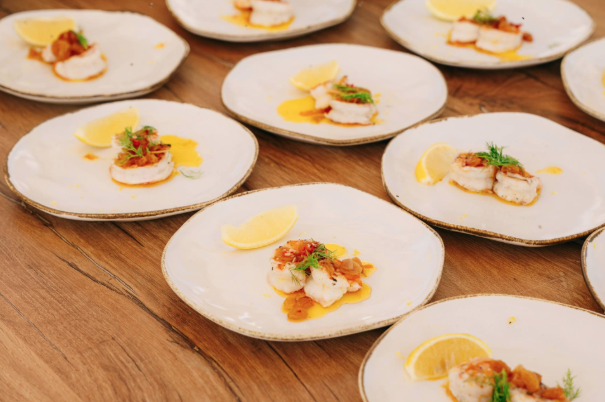
For one night, Botanica became a stage shared by some of the world’s most thoughtful chefs. Norbert Niederkofler opened the evening with a delicate combination of grouper, tomatoes, and fig leaves — a dish that echoed the Red Sea just meters away while carrying his unmistakable alpine restraint. This was followed by hen consommé poured over sourdough pasta and root vegetables — Eric Robertson and Daniel Hadida’s interpretation of warmth, depth, and simplicity. Then came a lasagna layered with lamb Neapolitan ragù, tomatoes, and pomegranate by Fabrizio Mellino — lush, generous, unapologetically Mediterranean — before Himanshu Saini shifted the register with duck haleem, foie gras toast, and slow-cooked duck curry, fragrant and bold. Niederkofler returned for the closing note: a lemon brioche made without lemons — a quiet demonstration of his no-import, zero-waste ethos. Each plate felt like a conversation: between land and sea, Egypt and the world, tradition and reinvention.
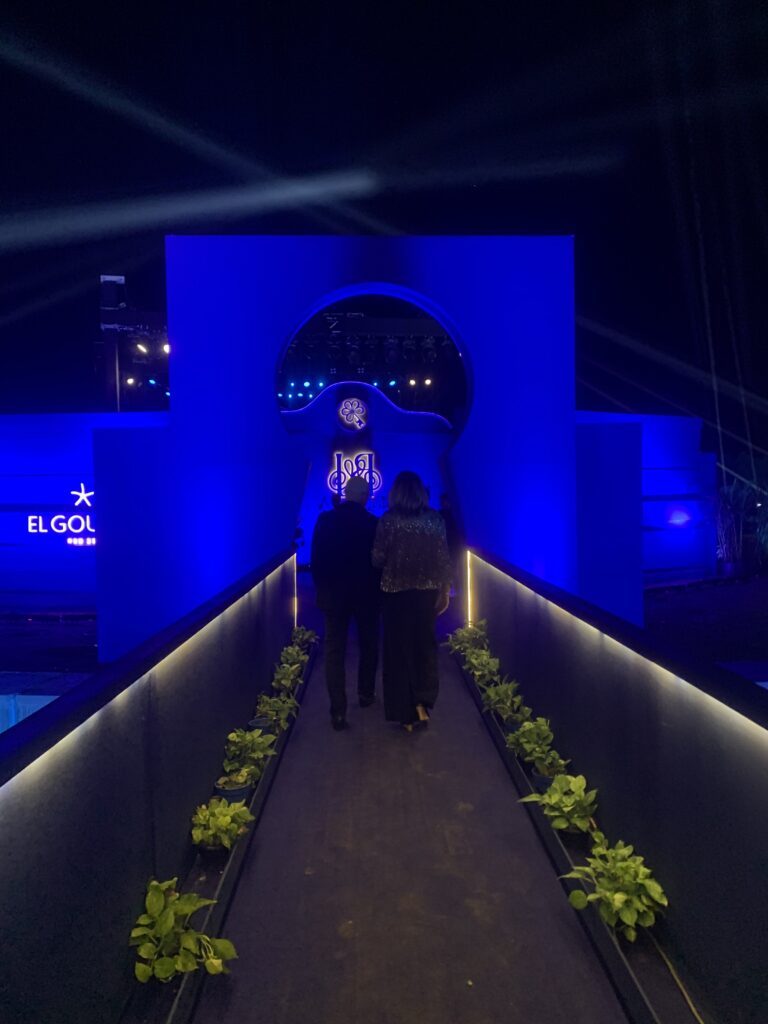
After dinner, the evening moved outdoors — to a spectacular open-air structure created especially for the pre-launch of the La Maison Bleue Residences, fully serviced waterfront apartments inspired by the iconic La Maison Bleue Hotel of El Gouna, which recently received the Michelin Key. Amer spoke with visible emotion: “This project was never about sales. It’s something we love — part of El Gouna’s identity. It strengthens our positioning in a meaningful way. Receiving the Michelin Key means a lot to us, and there is nothing more fitting than La Maison Bleue being the one to receive it.”
A New Red Sea Narrative
Global luxury travel has shifted. Today’s traveler seeks depth, narrative, sustainability that is measurable, food that expresses identity, and design that holds meaning. El Gouna, quietly and confidently, is aligning itself with this new world. It is not simply elevating gastronomy. It is using gastronomy to articulate a new kind of luxury — one built on community, responsibility, and culture.
As I left the Red Sea, one thought remained: a destination becomes luxury not because of what you consume, but because of what it reveals. El Gouna reveals something — and this time, it began with a menu, a conversation, and the unmistakable clarity of a place that knows exactly where it wants to go. Mohamed Amer is a local, and you feel it in every sentence: he carries El Gouna with a calm passion, a genuineness that cannot be manufactured, and a vision rooted in belonging rather than ambition. When leaders love a place this deeply, things tend to happen.
If El Gouna continues in this direction — balancing vision with authenticity, innovation with roots, and representation with reality — then its future on the Red Sea is not just promising; it’s already taking shape.