Words by Allegra Salvadori | Photography by Ziga Mihelcic and Katarina Premfors (opening image)
In Abu Dhabi, where architecture increasingly operates as a vessel for cultural transmission, the Abu Dhabi Royal Equestrian Arts (ADREA) emerges as a project of rare symbolic and spatial ambition.
Conceived as the world’s fifth school of classical horsemanship—and the first located beyond Europe—ADREA is rooted in the Arab tradition of Furusiyya, a discipline where horsemanship is inseparable from ethics, knowledge, and refinement. Within this context, the Equestrian Library and Saddle Workshop, designed by the Beirut-based architecture and design studio david/nicolas, function not merely as auxiliary spaces, but as intellectual and material anchors of the institution.
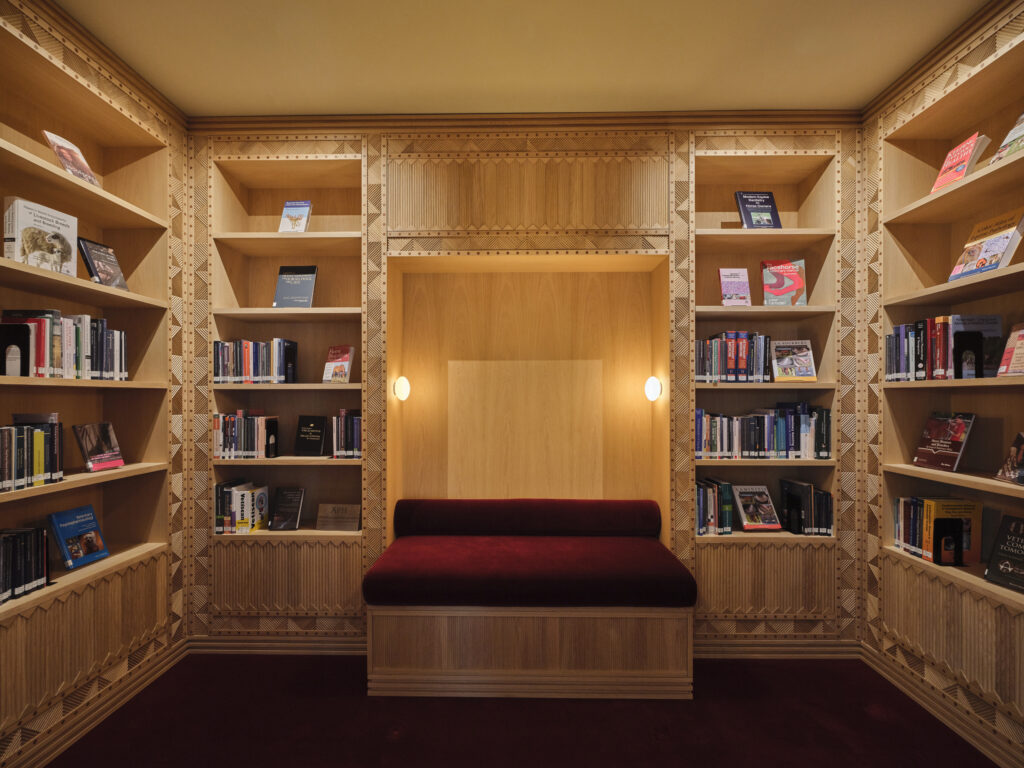
Rather than resorting to literal historicism, david/nicolas approach heritage as a living system—one that can be translated, reinterpreted, and quietly renewed through space. The result is an architecture that privileges craft over spectacle, proportion over excess, and atmosphere over iconography.
The Library: From Introspection to Exchange
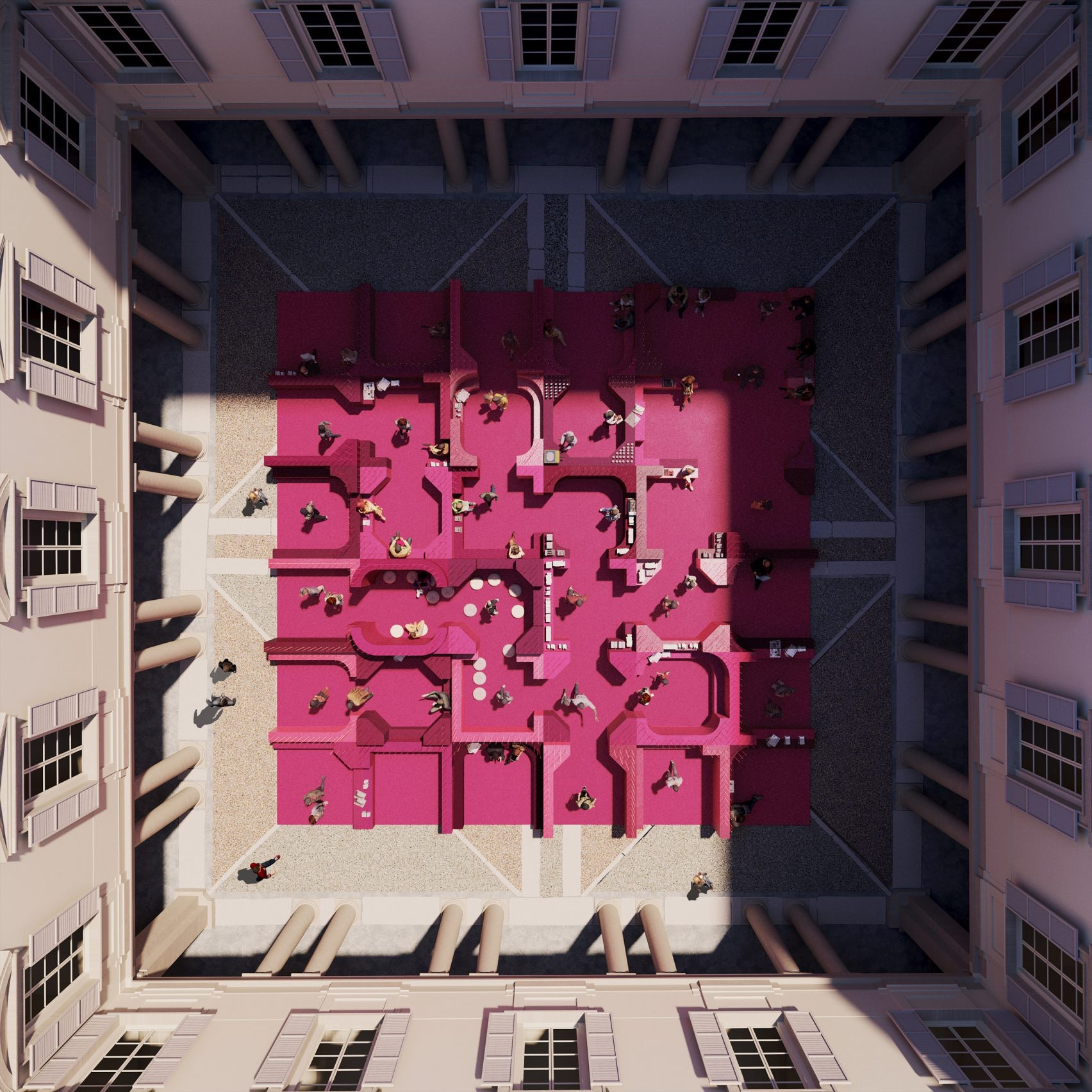
The Equestrian Library is conceived as an emotional sequence. At its heart lies a sculptural, hand-carved wooden core, produced in Lebanon by artisans long associated with the studio’s practice. This inner nucleus establishes an environment of retreat: acoustically softened by carpet, gently lit, and scaled to invite contemplation, reading, and study. It is a space of inward focus—almost monastic in its restraint.
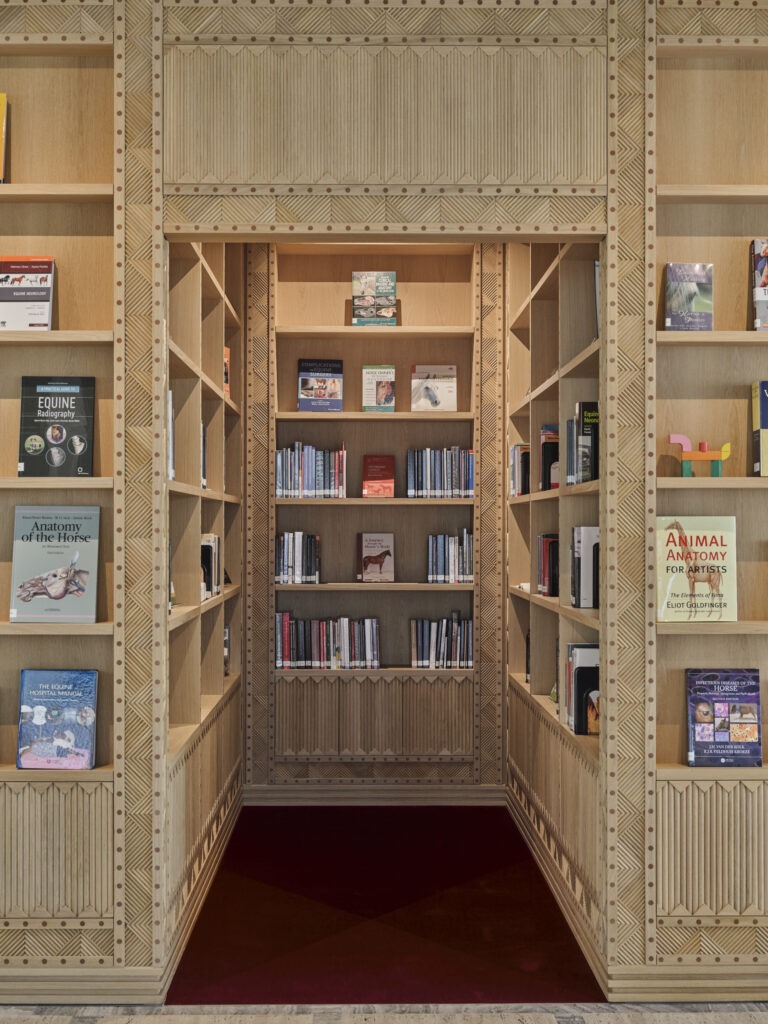
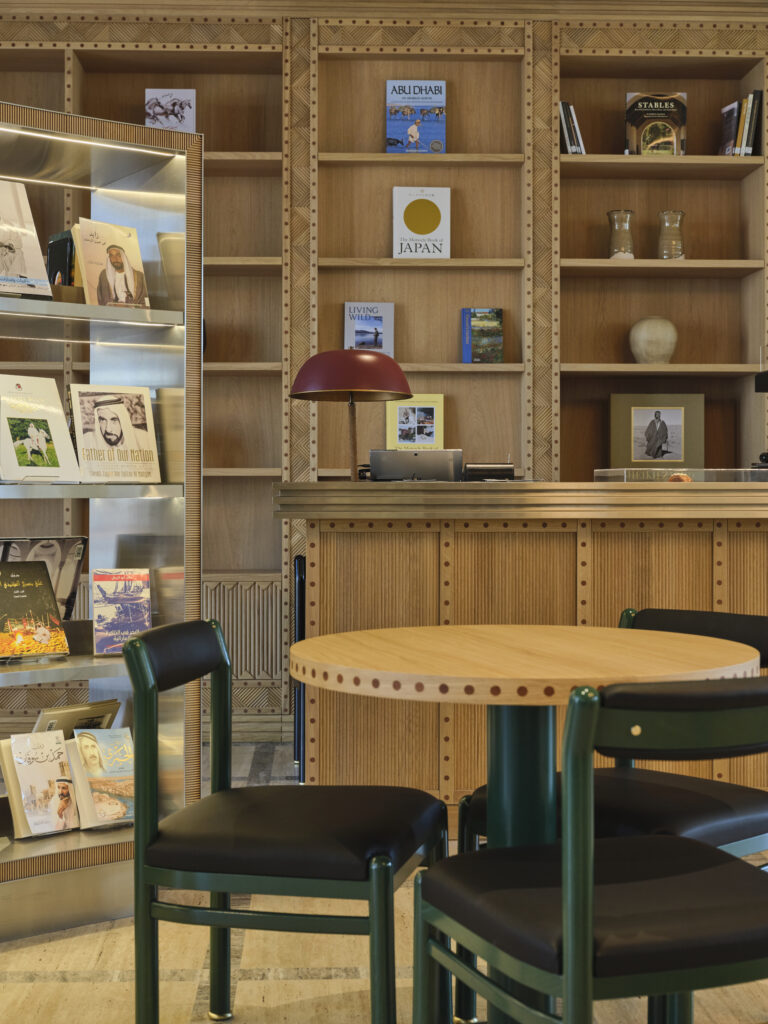
Encircling this core, a continuous ribbon of curved steel bookshelves defines a contrasting perimeter. More open and fluid, this outer zone encourages movement, circulation, and exchange. The dialogue between these two spatial conditions—intimate and collective, stillness and flow—creates a deliberate transition from privacy to openness, mirroring the intellectual journey from solitary learning to shared knowledge.
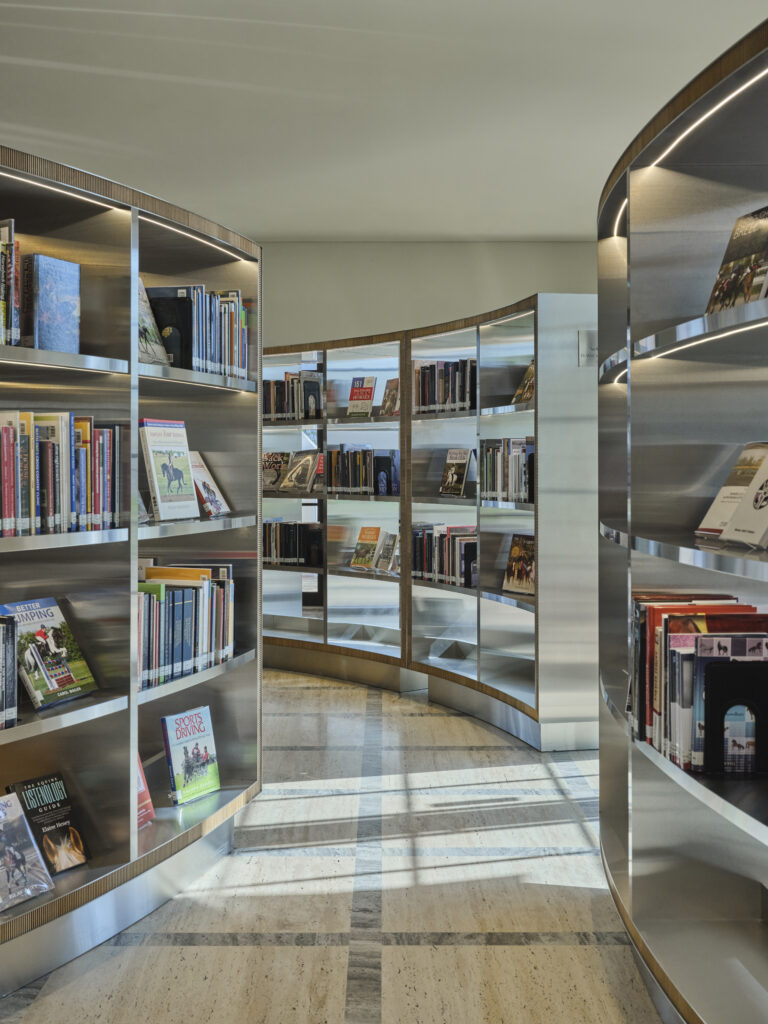
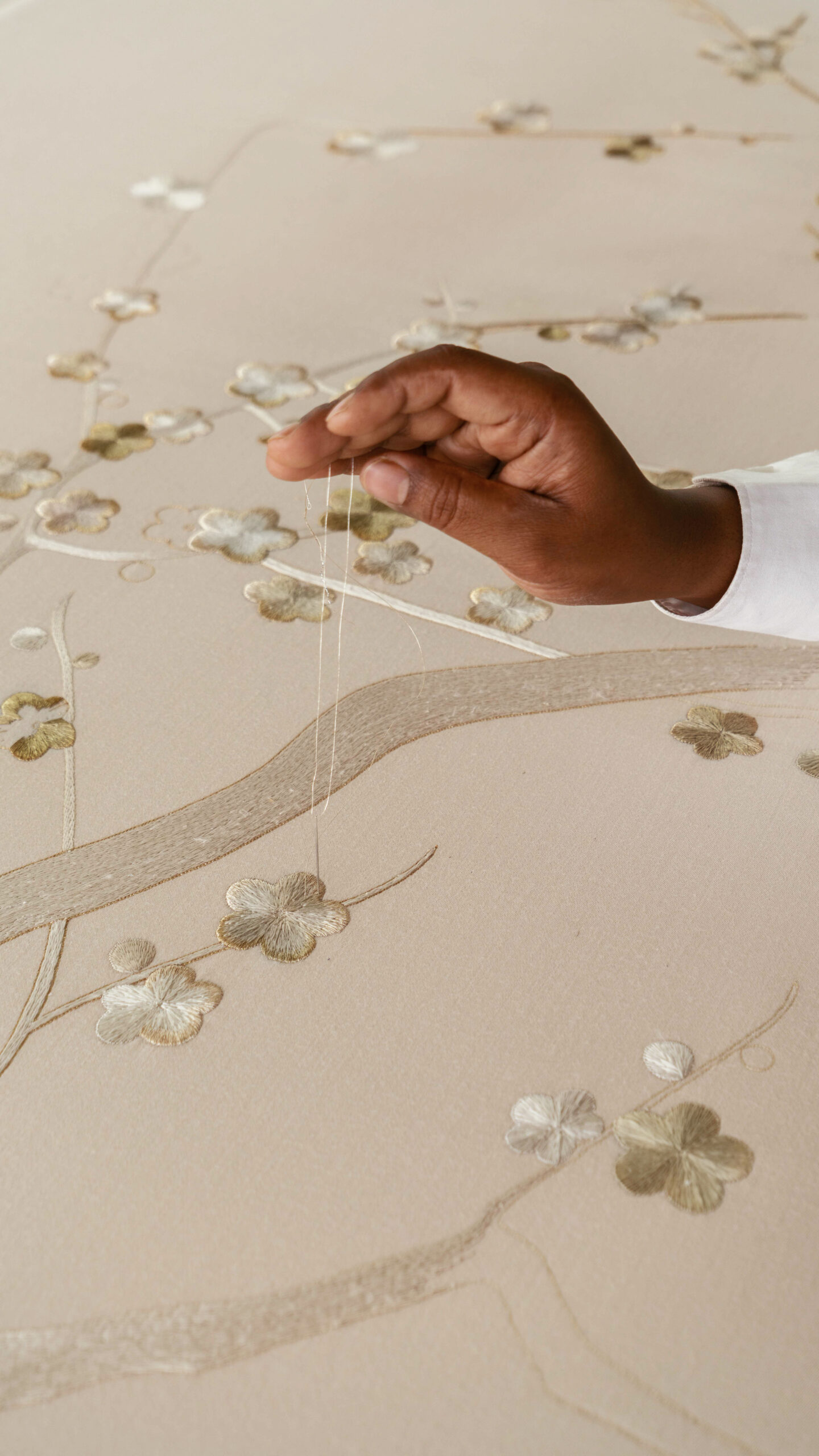
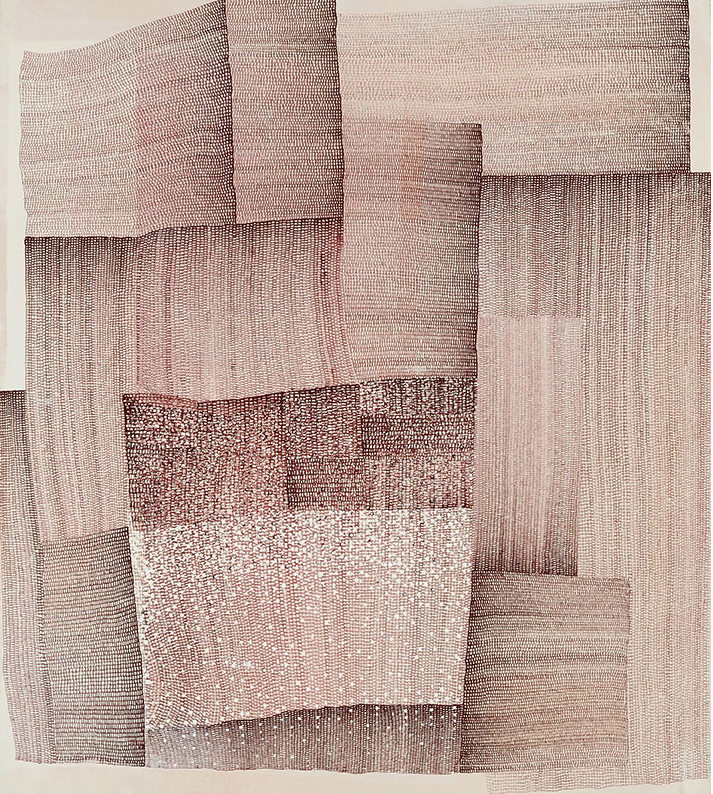
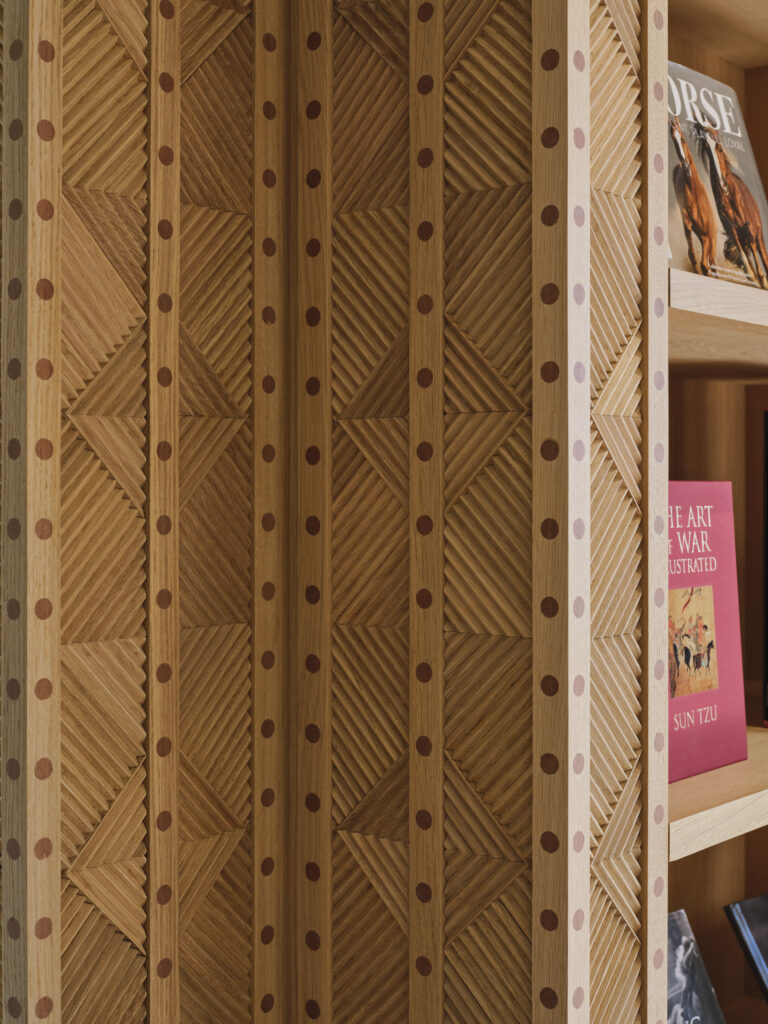
Materiality is central to this experience. Wood and metal engage in a measured conversation: the warmth and tactility of hand-worked timber offset by the precision and coolness of steel. The marquetry employed throughout is not drawn directly from Emirati craft traditions; instead, it reflects techniques david/nicolas have developed over time with their artisans. Yet the resulting geometric language resonates naturally with patterns found across the Middle East, establishing a cultural affinity without imitation.
The Saddle Workshop: Craft as Pedagogy
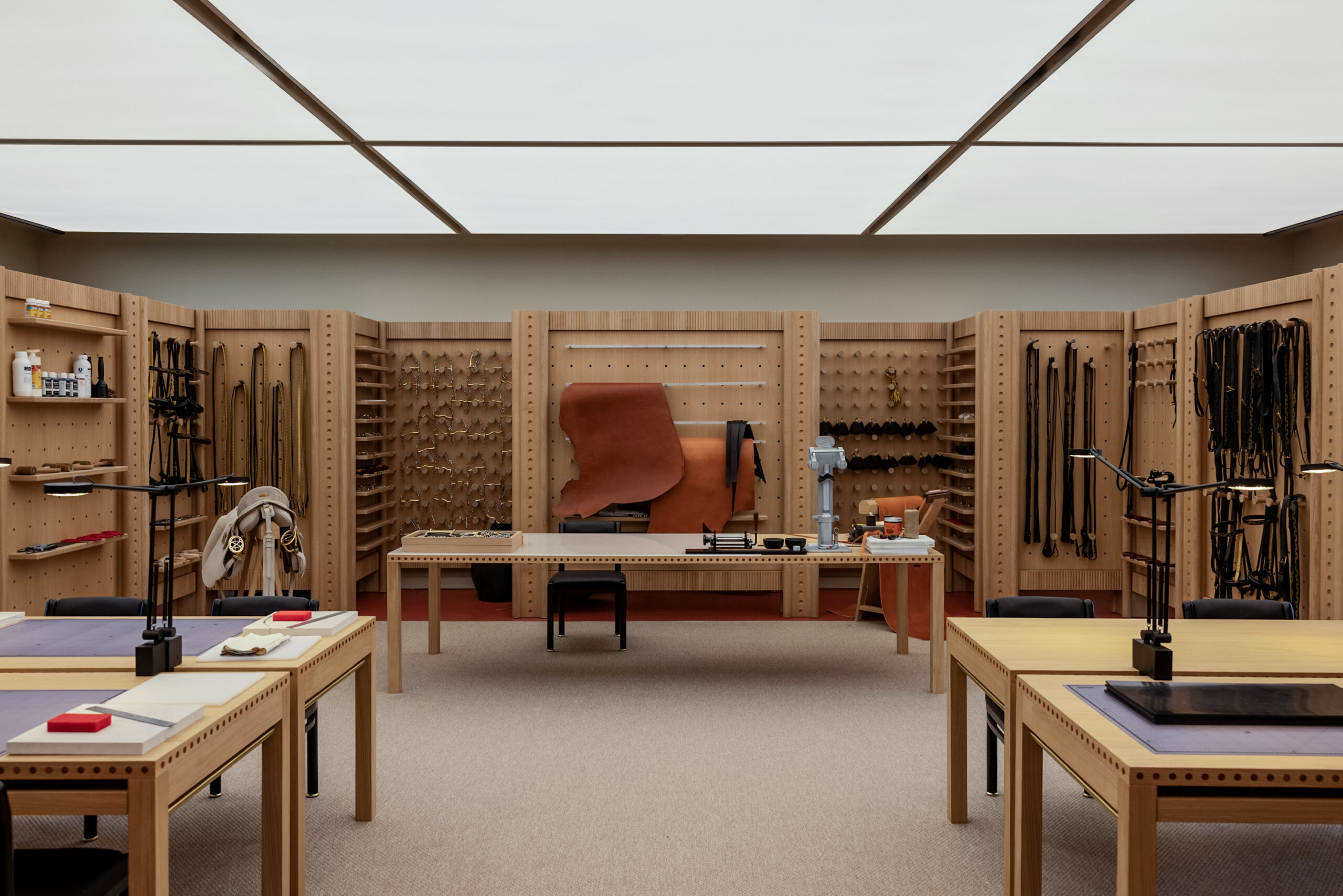
If the library is about knowledge preservation, the Saddle Workshop is about knowledge transmission. Here, the architects adopt a distinctly different spatial logic, designing the workshop as a room within a room. Saddles in various stages of completion line the perimeter, forming a continuous archive of process, while the central core is dedicated to teaching, making, and apprenticeship.
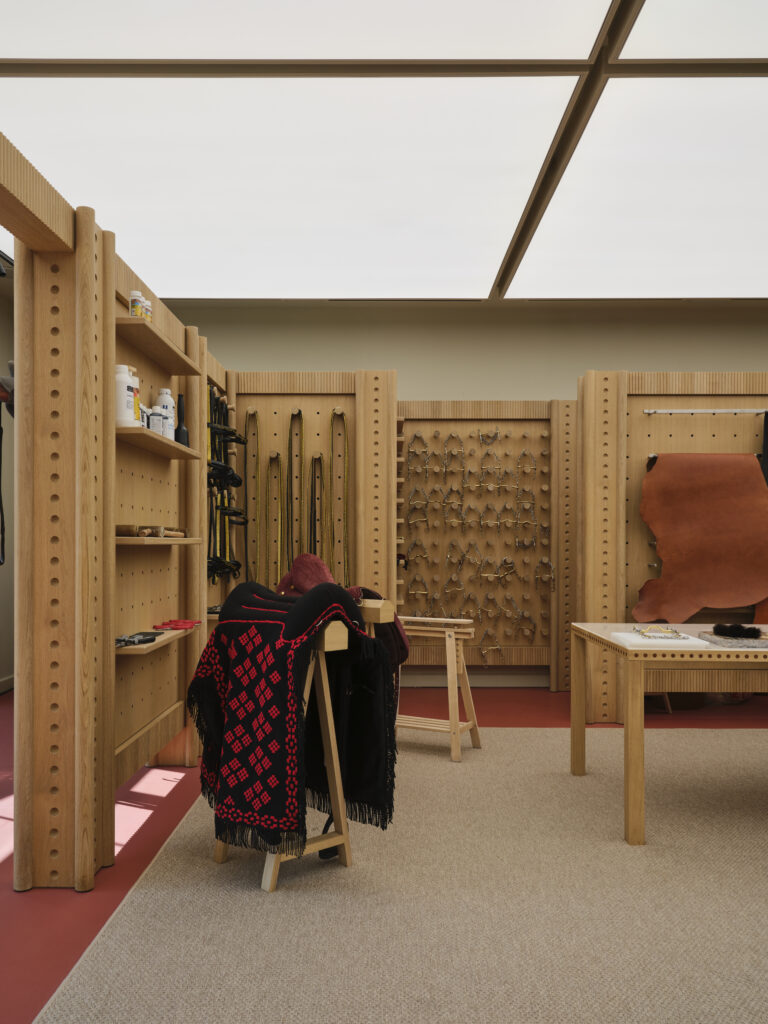
Wood once again plays a framing role—this time not to shelter reflection, but to foreground action. Leather, brass fittings, and tools are carefully staged, yet never aestheticized to the point of distraction. Instead, the true focal point becomes the gesture of the artisan: cutting, stitching, assembling. Craft is not displayed as a finished object but revealed as a living, evolving practice.
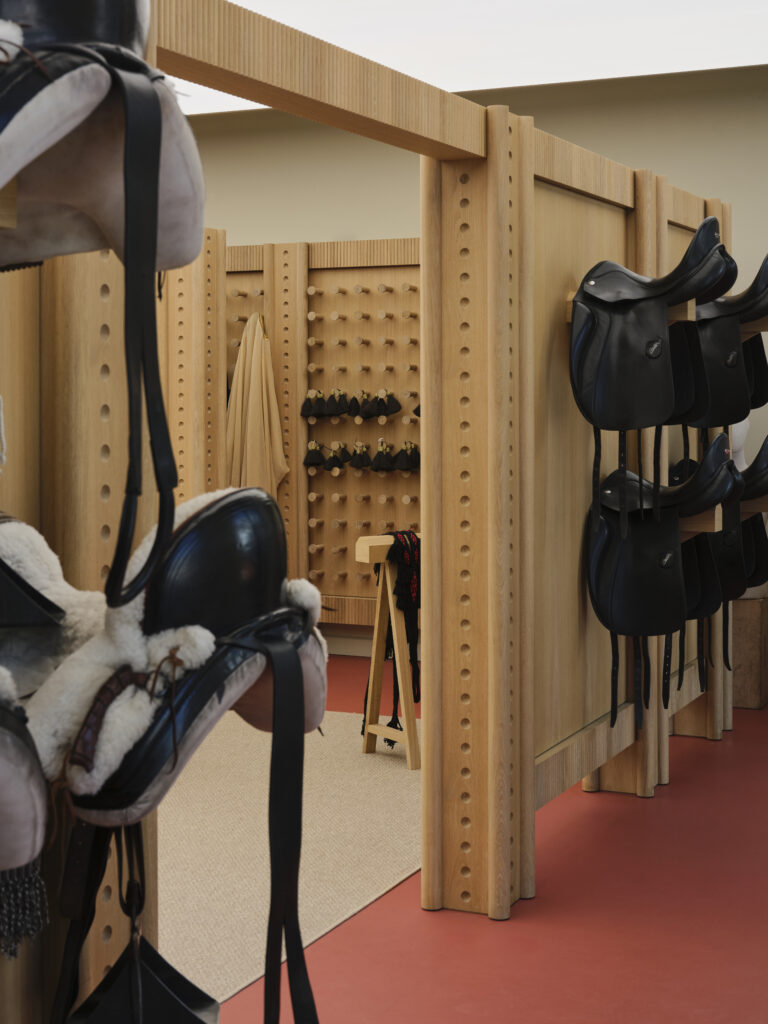
Across the workshop, proportion and restraint ensure that nothing overwhelms the act of making. The architecture recedes just enough to allow tradition to speak through the hands of its practitioners.
A Contemporary Reading of Emirati Equestrian Heritage
Together, the Equestrian Library and Saddle Workshop articulate a contemporary interpretation of Emirati equestrian culture—one that is rooted yet forward-looking, intellectual yet tactile. Rather than freezing heritage in time, david/nicolas propose a model where architecture becomes an interface between past and present, memory and modernity.
In a region often associated with monumental gestures, ADREA’s interiors stand out for their quiet authority. They suggest that cultural ambition need not be loud, and that the most enduring spaces are often those shaped by craft, care, and precision.
With this project, Abu Dhabi reinforces its role not only as a patron of the arts, but as a curator of meaning—where architecture, like horsemanship itself, is understood as a discipline of balance, transmission, and grace.