Words by Allegra Salvadori | Photographs by Natelee Cocks
In the vast expanse of Kenya’s Masai Mara, where the horizon stretches endlessly and the air hums with the rhythm of life, a new sanctuary has emerged—one where architecture listens more than it speaks, and where design becomes a quiet tribute to the land. The Ritz-Carlton, Masai Mara Safari Camp, conceived by LW Design Group and led by Pooja Shah-Mulani, Managing Partner – Creative, redefines what luxury means in the wilderness.
This is not a lodge that seeks spectacle. It is a camp where every curve, every canvas fold, and every material has been placed with reverence—an immersive retreat that blurs the line between built form and untamed beauty.
A Vision Rooted in Nature
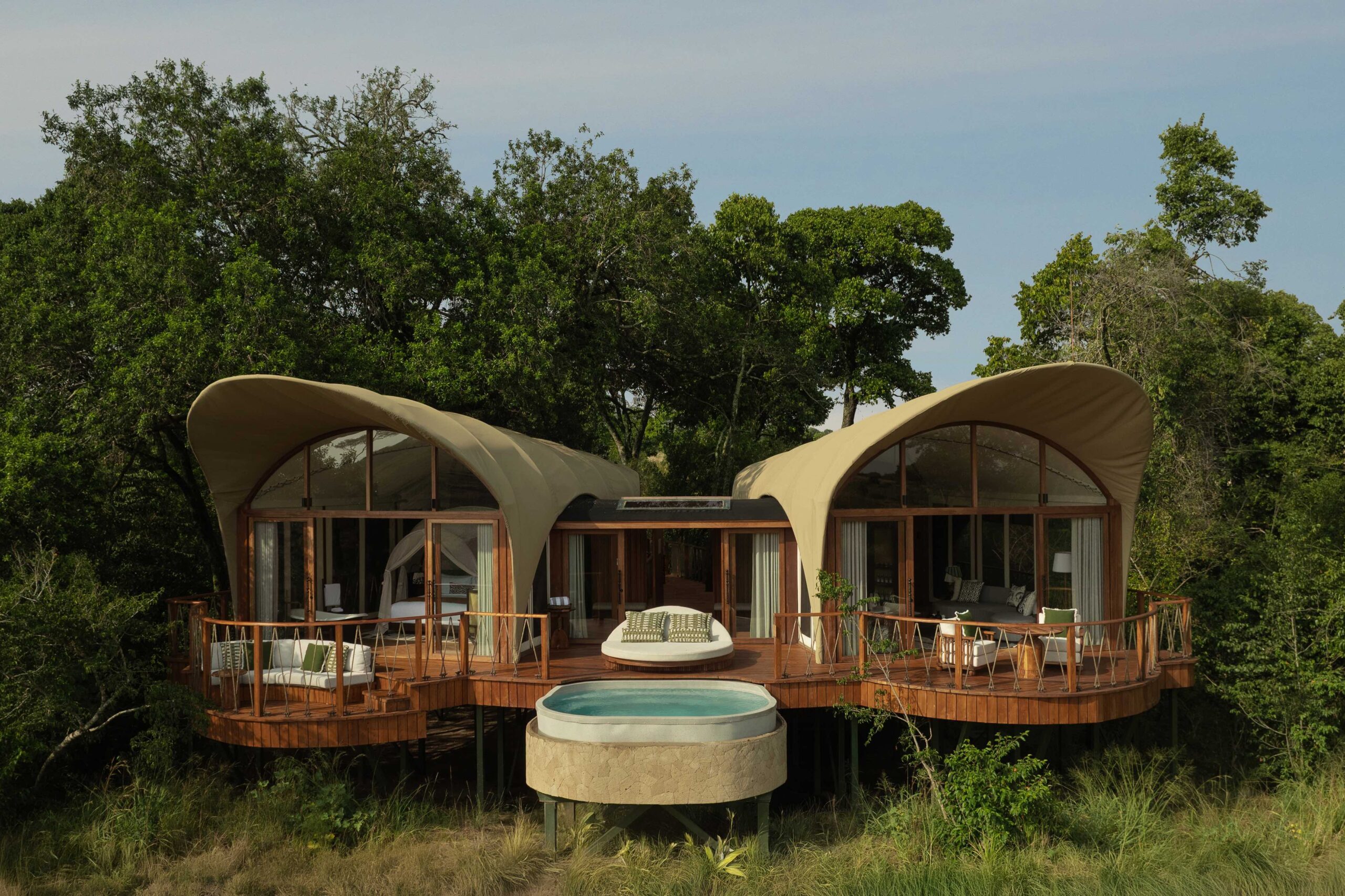
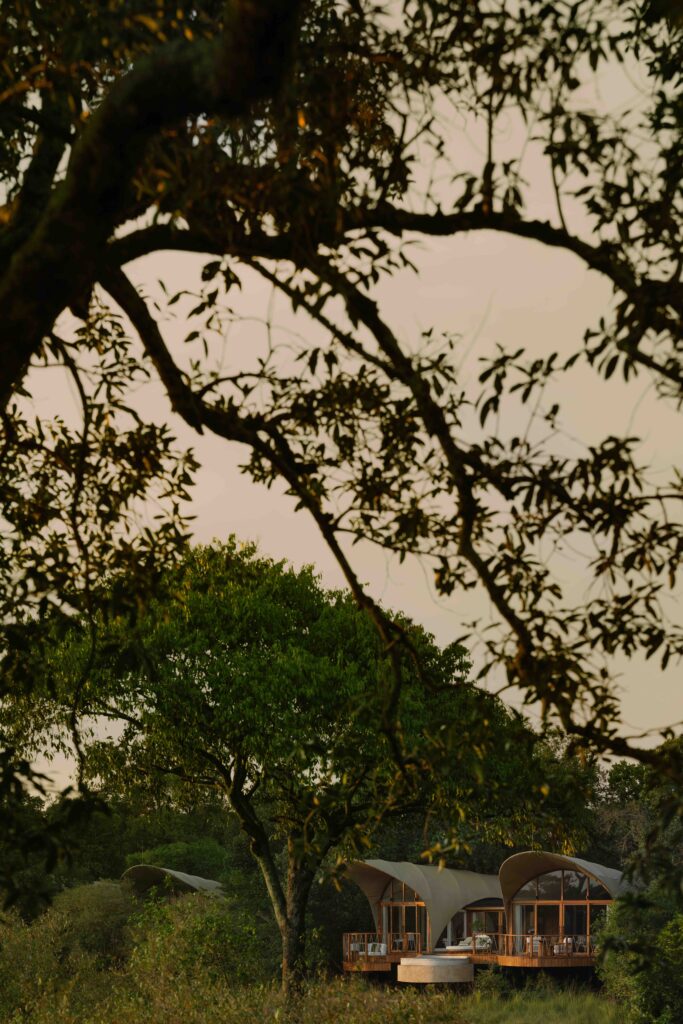
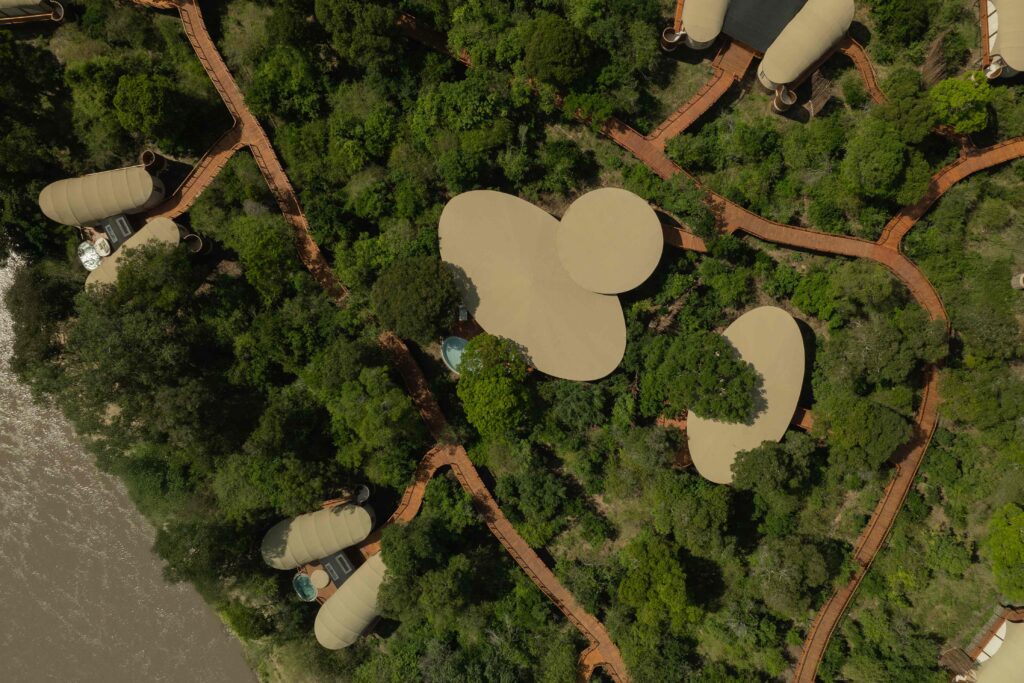
The design begins with respect. Elevated three meters above ground, the camp’s twenty tented suites perch gently among mature trees, offering sweeping views of the river and savannah while preserving the delicate ecosystem beneath. “Luxury here is not about grandeur,” Shah-Mulani explains, “but about the subtle details of nature—the light that shifts across the Sand River, the scent of bark at dusk, the sound of wildlife moving close by. It is about being connected.”
Guests enter the camp by crossing a suspension bridge, leaving behind the familiar world and entering one where time slows, silence deepens, and the forest canopy becomes part of daily life.
Biophilic Architecture
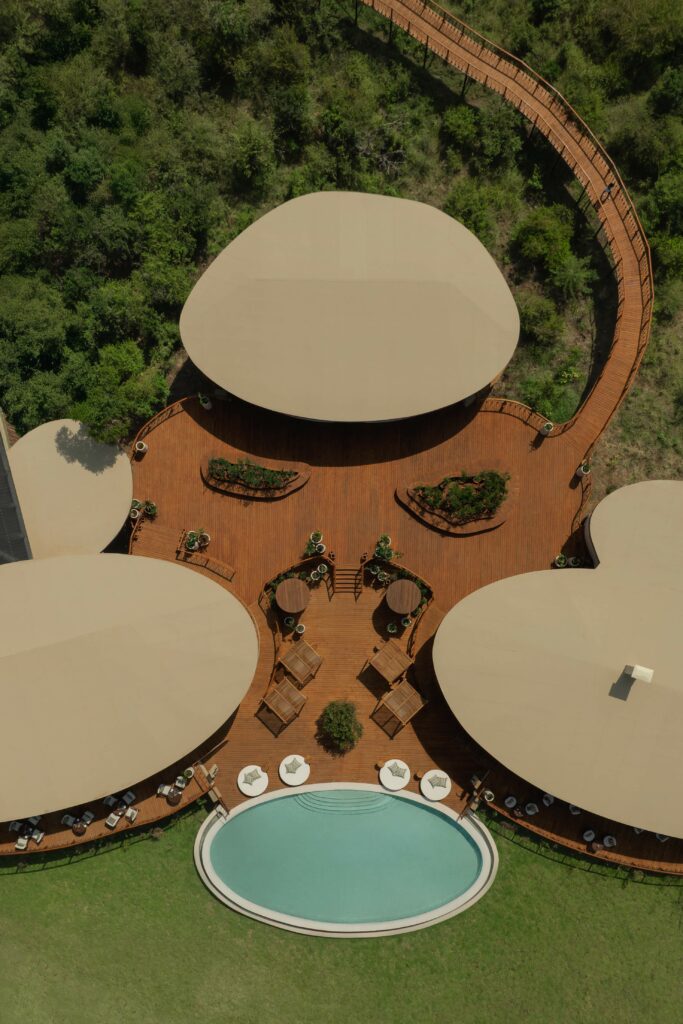
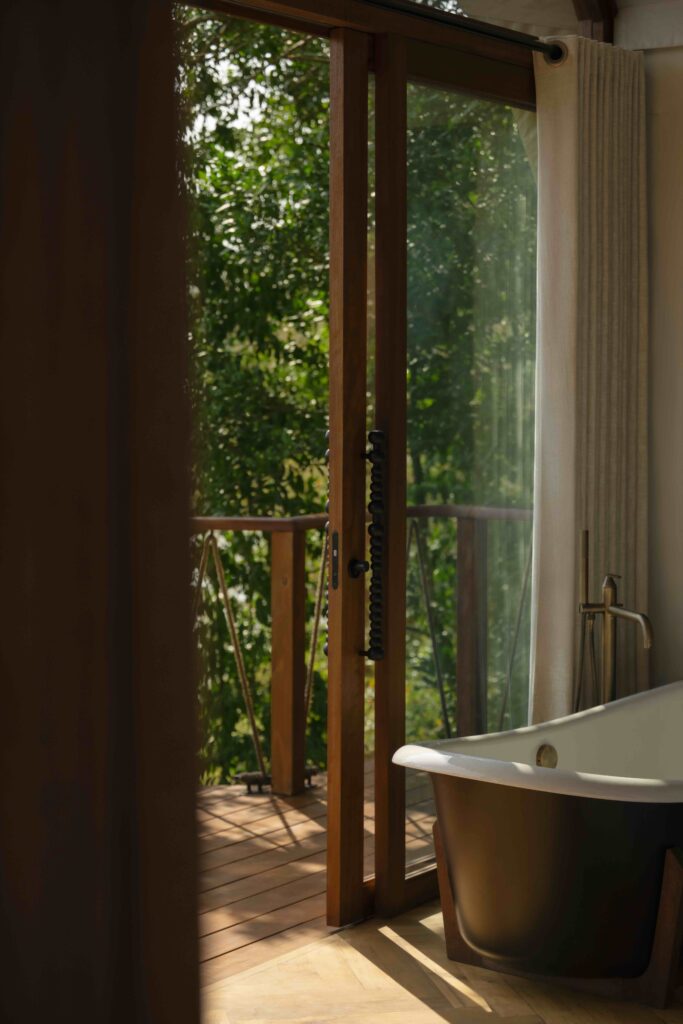
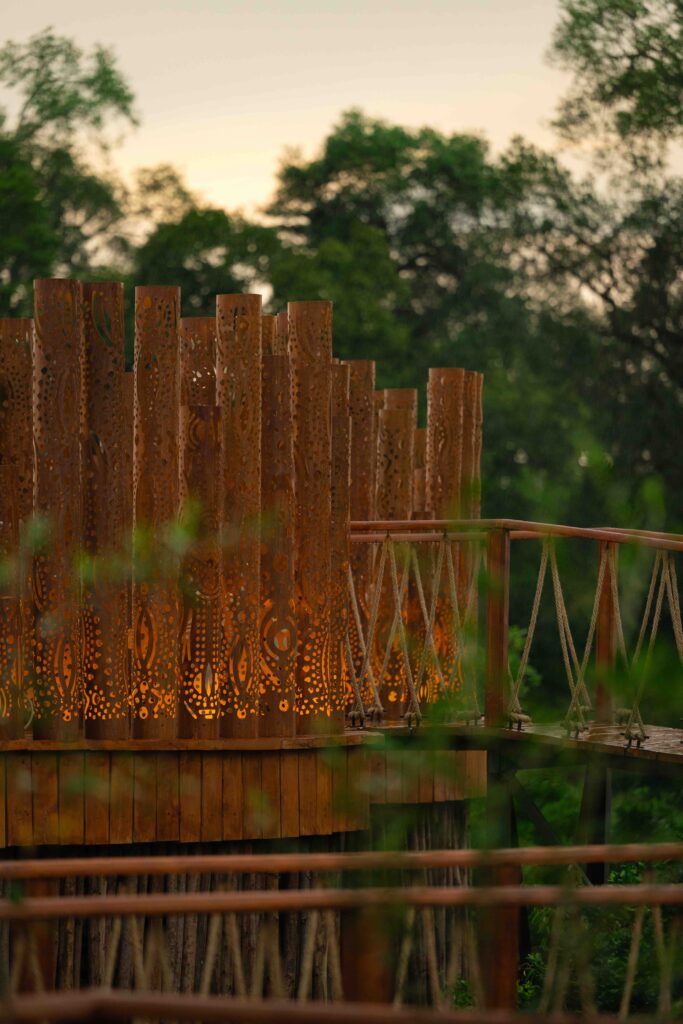
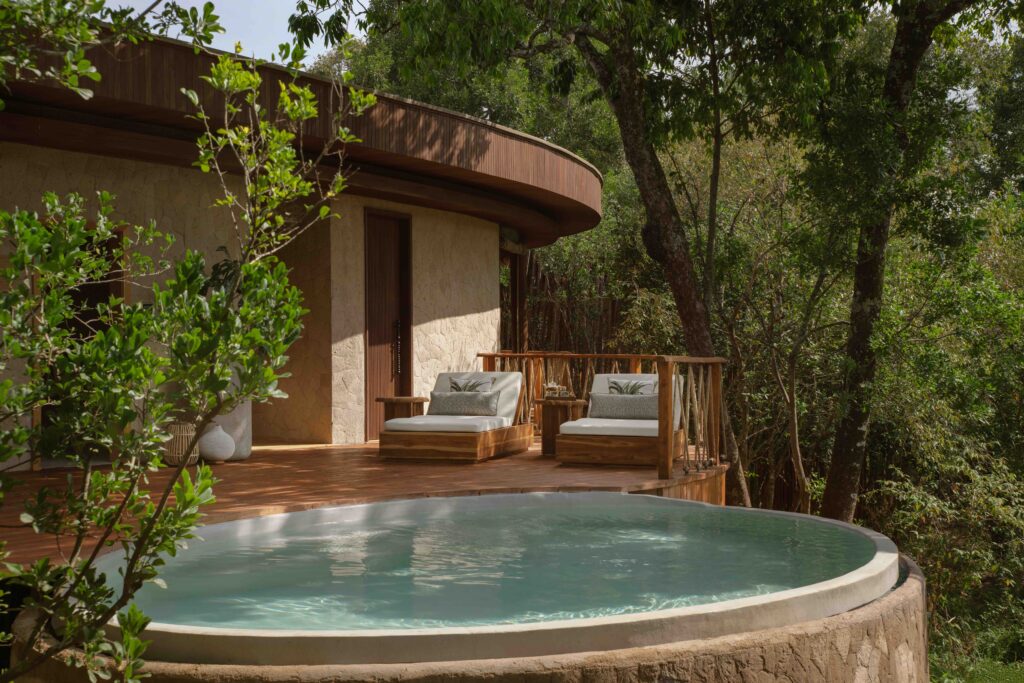
The camp’s architecture dissolves boundaries. Canvas walls roll up completely, transforming interiors into open-air verandas. Timber walkways wind through the contours of the land, allowing the landscape to dictate the journey rather than the other way around. Outdoor lounges, plunge pools, and showers create moments where sky, water, and wilderness are inseparable from the guest experience.
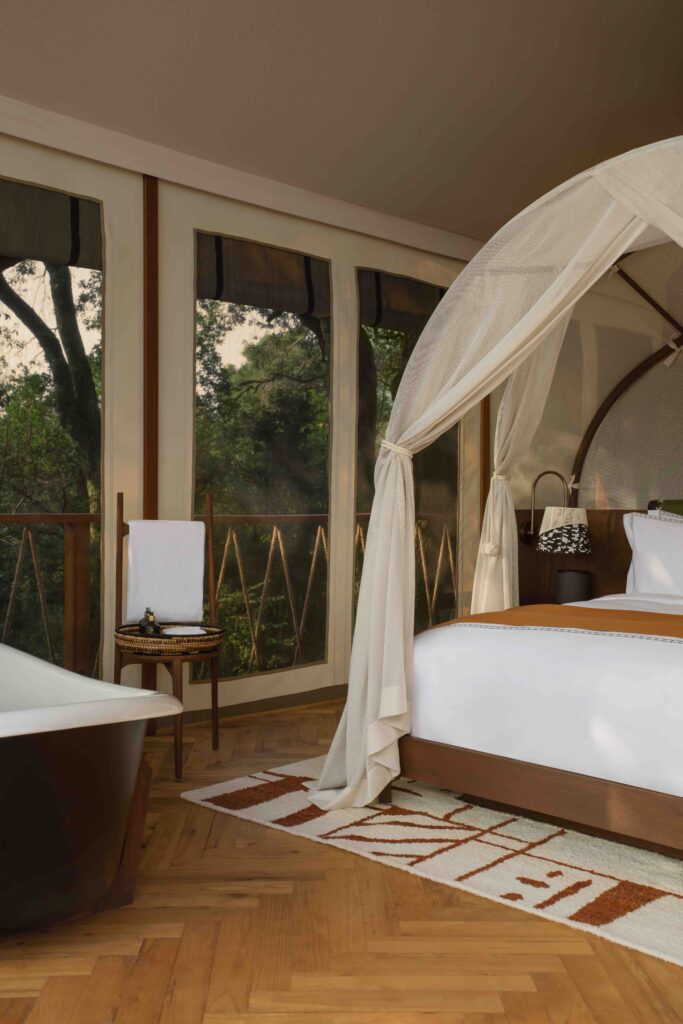
The signature curved tent structure—hooded and fluid—takes inspiration from the bend of the Sand River, reimagining traditional safari forms into something organic, sculptural, and deeply functional. These elevated treetop perspectives bring guests eye-level with birdlife and the forest canopy, creating an intimacy with nature rarely experienced from the ground.
Local Craftsmanship at the Forefront
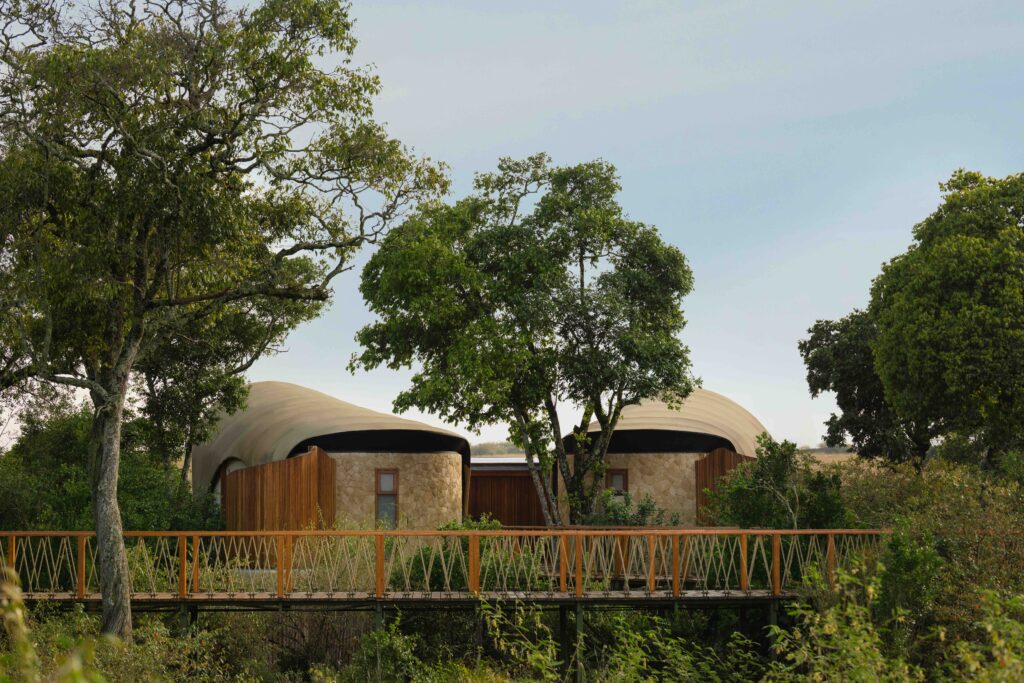
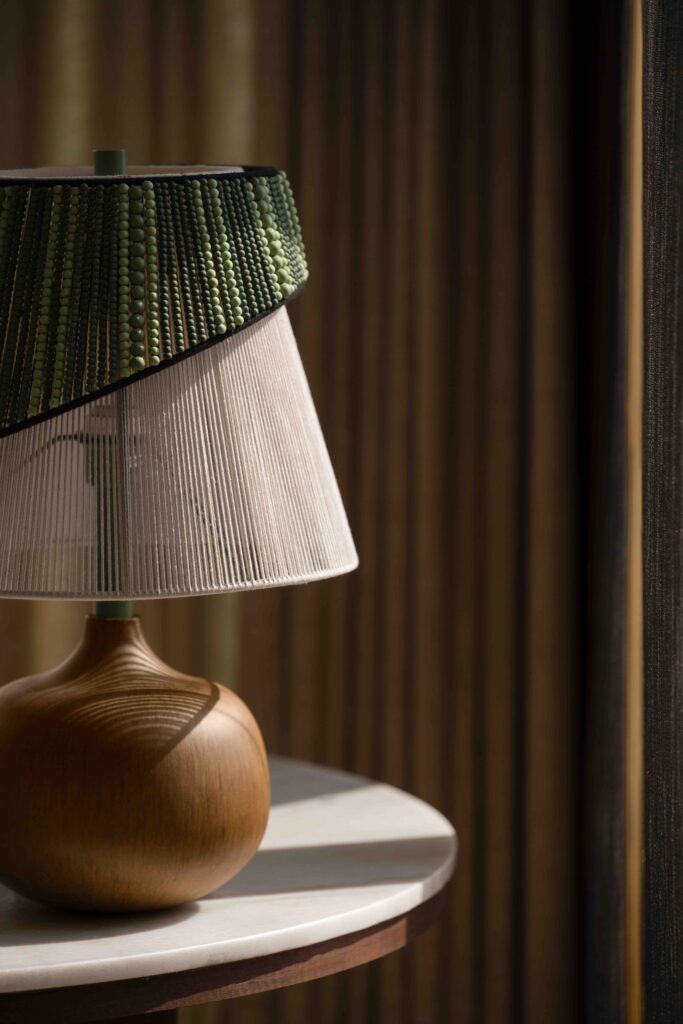
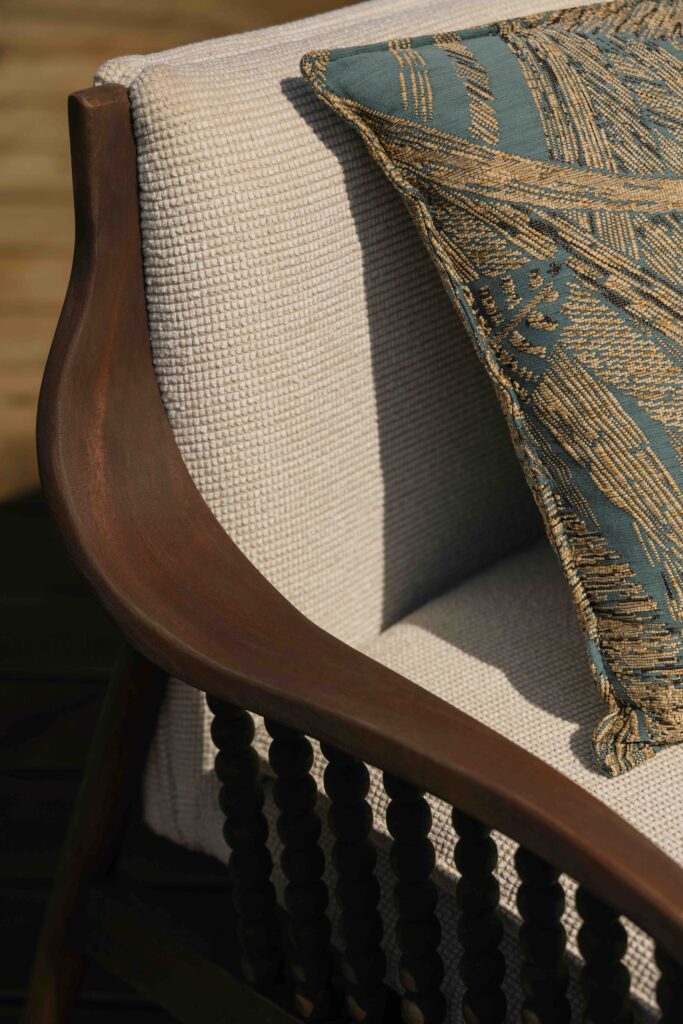
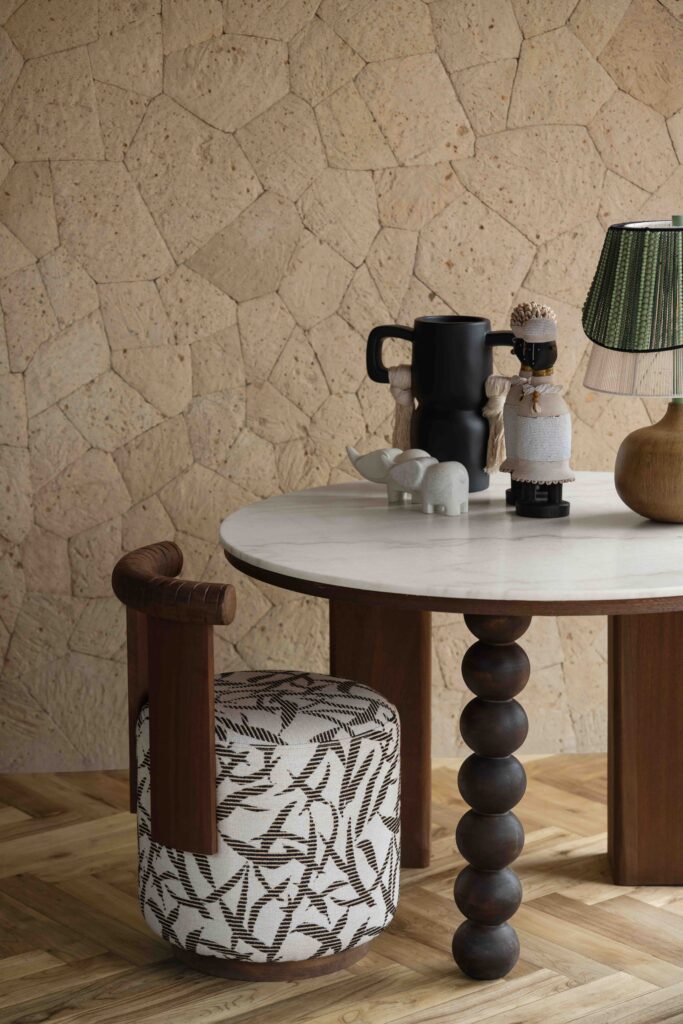
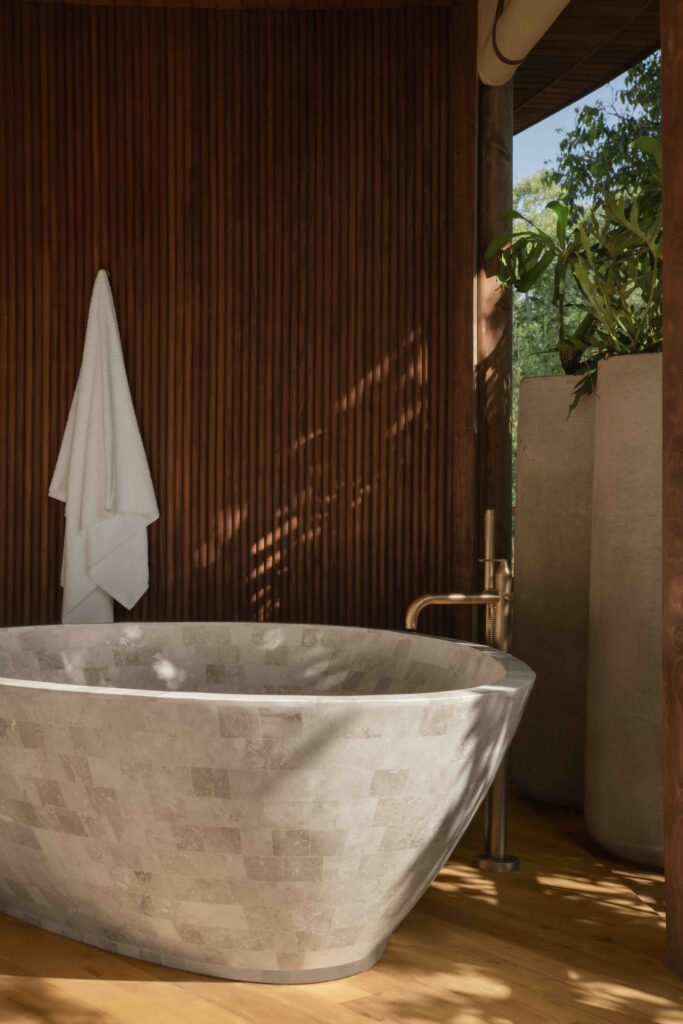
If the architecture is a dialogue with nature, the interiors are a dialogue with culture. From inception, the project was grounded in collaboration with Kenyan artisans. Semi-volcanic stone, quarried near Narok, anchors the camp to the land. Bespoke joinery was crafted by Nairobi Timber, a generational workshop renowned for its skill. Handwoven textiles from @siafuhome, created by women artisans in Nairobi, bring warmth and story into every suite.
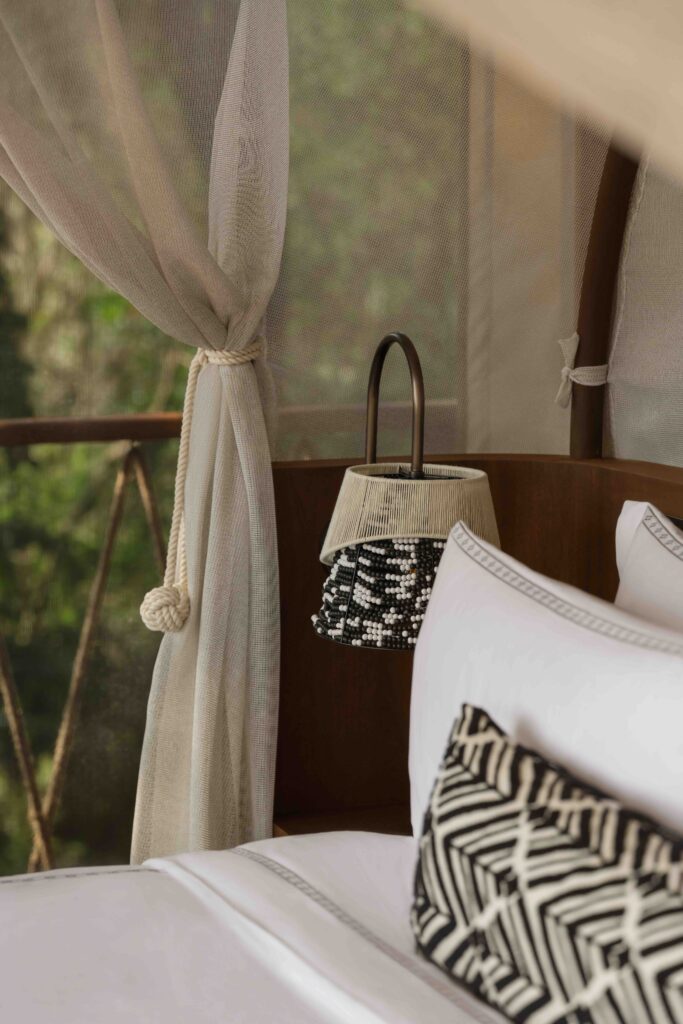
Even the smallest details carry meaning: Maasai beadwork woven into joinery, etched onto minibar accessories, or threaded through decorative objects sourced from local markets. Each piece carries not just beauty but a sense of belonging, reminding guests that this is Kenya’s story, told through the hands of its makers.
Art as Narrative
Art is not an afterthought here—it is a living narrative. In the Map Room, Simon Bannister’s monumental metal sculpture maps the great migration: oxidised steel layers evoke the rugged terrain while polished stainless steel traces the life-giving rivers. Above the fireplaces, his cheetah sculptures, frozen mid-sprint, capture the grace and resilience of the land’s most iconic predator.
Portraits by Malindi-based photographer Gian Paolo Tomasi and Ugandan-born artist Ibrahim Muwanga infuse the interiors with intimacy and presence, while vintage photographs by Carol Beckwith and Angela Fisher document Maasai rituals, grounding the camp in cultural memory. Together, these works transform the camp into a gallery of place—where every wall tells a story of heritage, resilience, and beauty.
A Spa Among the Trees
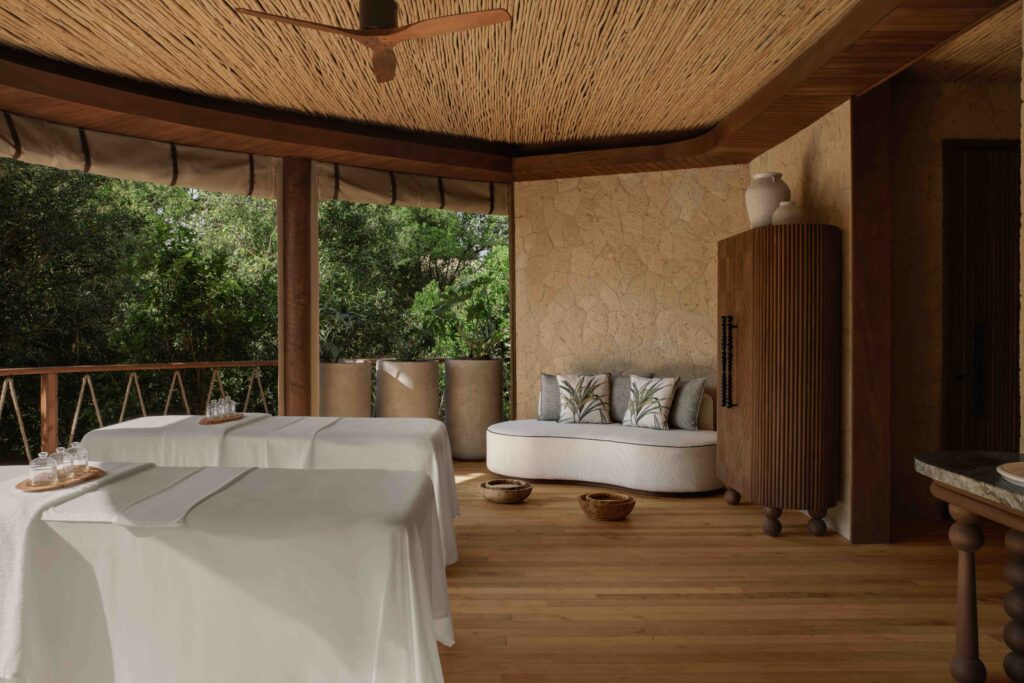
Perhaps nowhere is the camp’s philosophy more tangible than in the Whispering Tree Spa, nestled quietly into the forest. Here, treatment rooms open directly to filtered light, pathways meander between trunks, and the scent of bark and leaves becomes part of the wellness ritual. The architecture doesn’t frame nature—it dissolves into it.
Sustainable Foundations
Building in a national reserve demanded sensitivity. Elevated timber decks allow wildlife to pass freely beneath, while preserving vegetation and soil health. Heavy machinery was avoided; pools and foundations were dug by hand. Waste was backhauled to Nairobi, and every construction technique was chosen to reduce impact.
Equally important, the camp’s construction became a community project. Highmark, the Kenya-based contractor, employed a 100% local workforce—70% from the surrounding area—providing training in fine craftsmanship and long-term livelihoods. Sustainability here is not only ecological but social: the camp supports local industries, empowers artisans, and ensures that the land and its people remain inseparable from the guest experience.
A Sanctuary That Whispers
The Ritz-Carlton, Masai Mara Safari Camp is not a destination of spectacle, but of stillness. It offers a new definition of safari luxury—one that is rooted in craft, culture, and connection. From treetop suites that open to the wilderness, to hand-loomed textiles carrying the touch of Kenyan women, to artworks that map the spirit of the land, every detail is designed to slow time, deepen presence, and let nature lead.
This is not simply a place to stay. It is a place to listen, to feel, and to remember—the Mara told through architecture, art, and the hands of its people.