In the quiet discipline of London’s conservation areas, where façades remain anchored in time, a Victorian house by Shalini Misra Design unfolds as something altogether more fluid. Behind its familiar exterior, the project proposes not a rupture with history, but a recalibration of it, where spatial continuity, material intelligence and artistic intent converge into a distinctly contemporary domestic landscape.
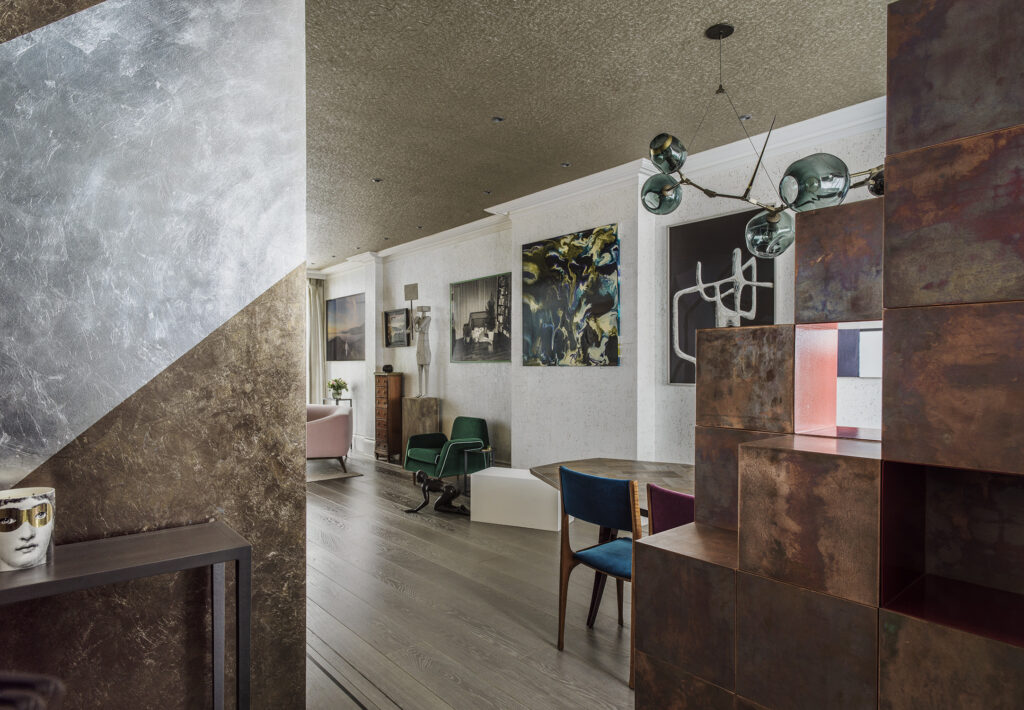
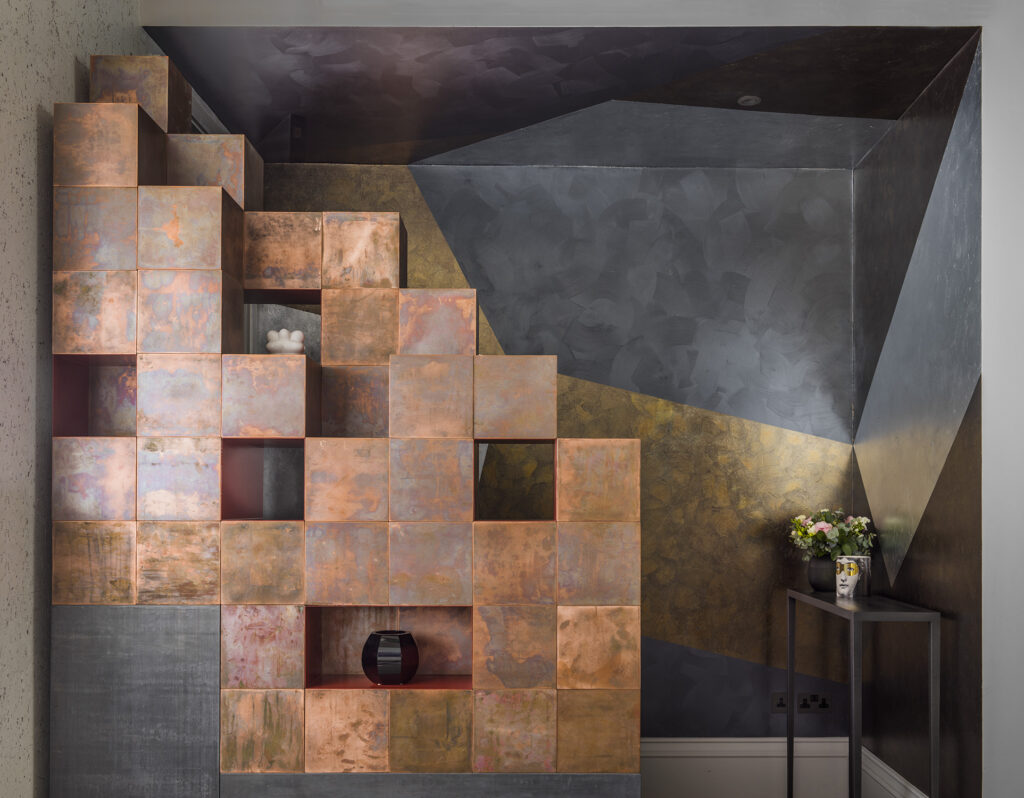
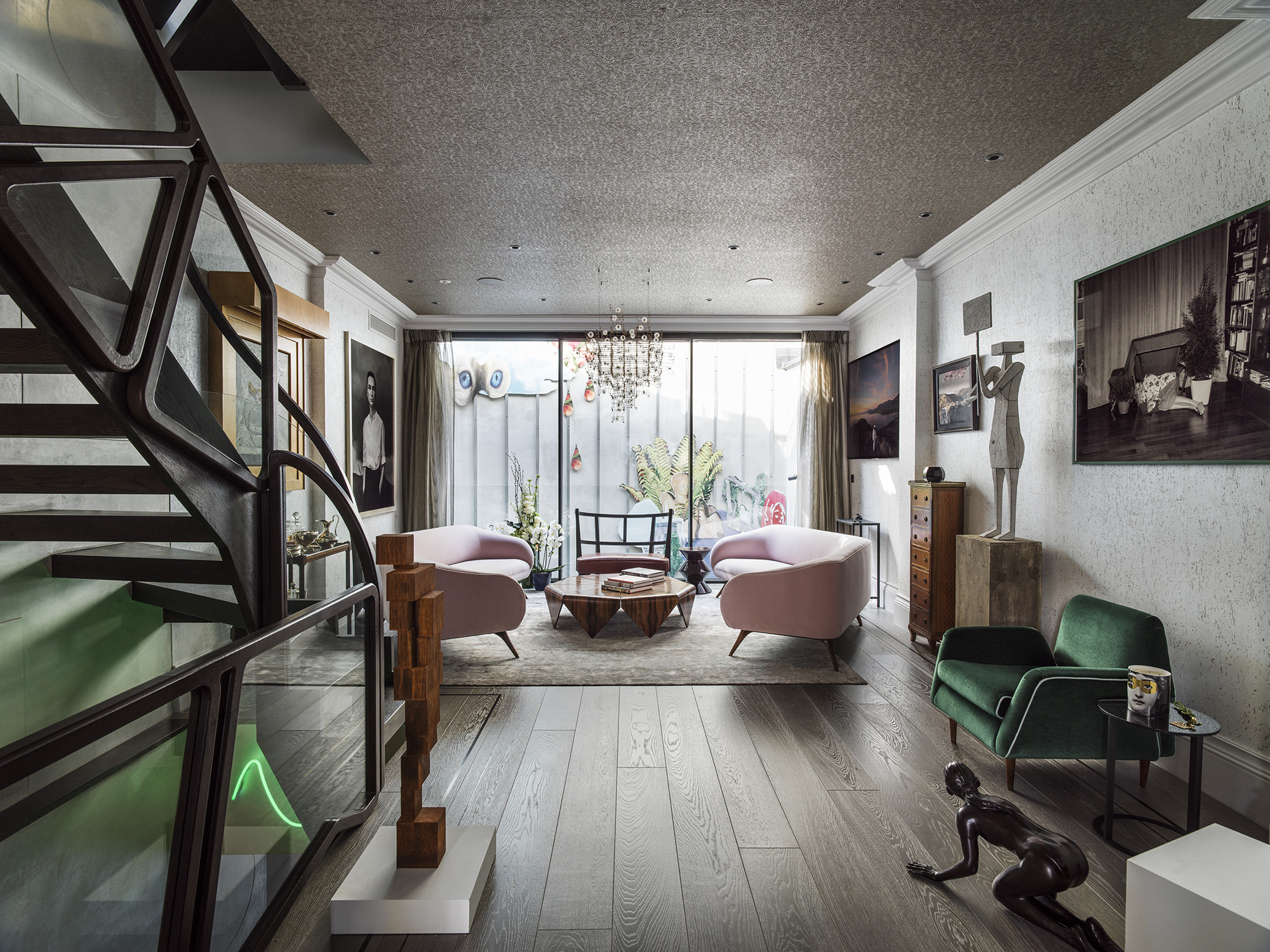
Originally fragmented across four levels, the house demanded a new architectural logic. “Prior to the basement excavation the Victorian property ran across four floors that felt quite disconnected from each other,” explains the designer. The response was not merely structural but conceptual, introducing an open ground floor where reception and dining coexist as a curated gallery. Here, a sculptural copper cube installation mediates perception, framing rather than revealing. “We placed the copper cube piece to control the sightline… its recessed niches extend the display into the entrance itself.”
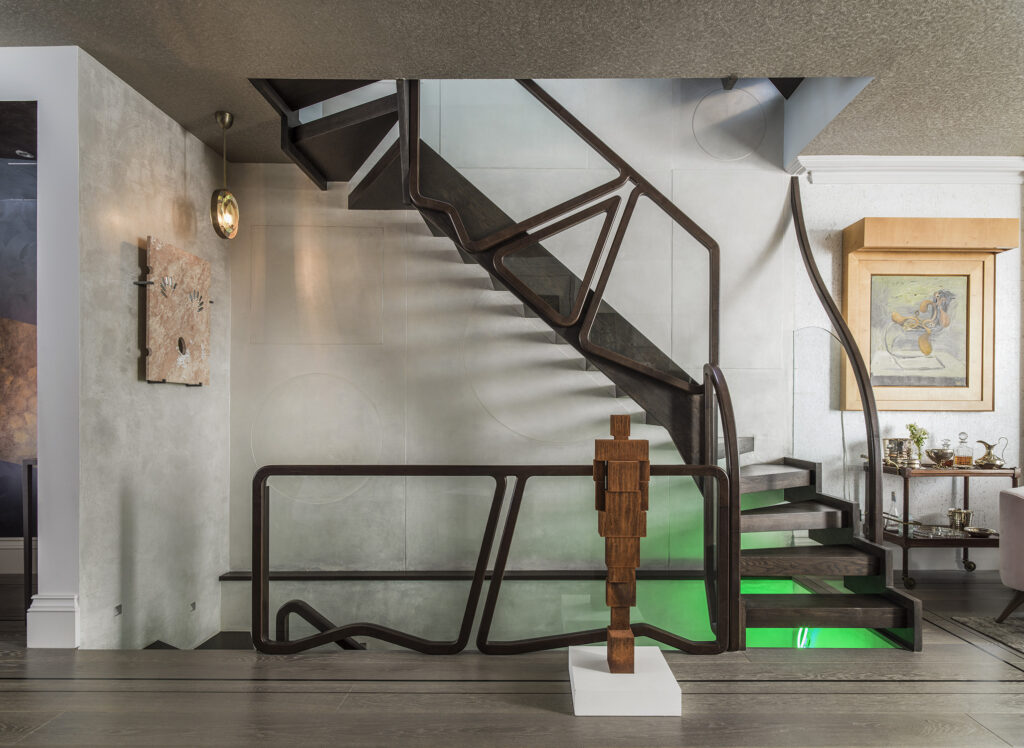
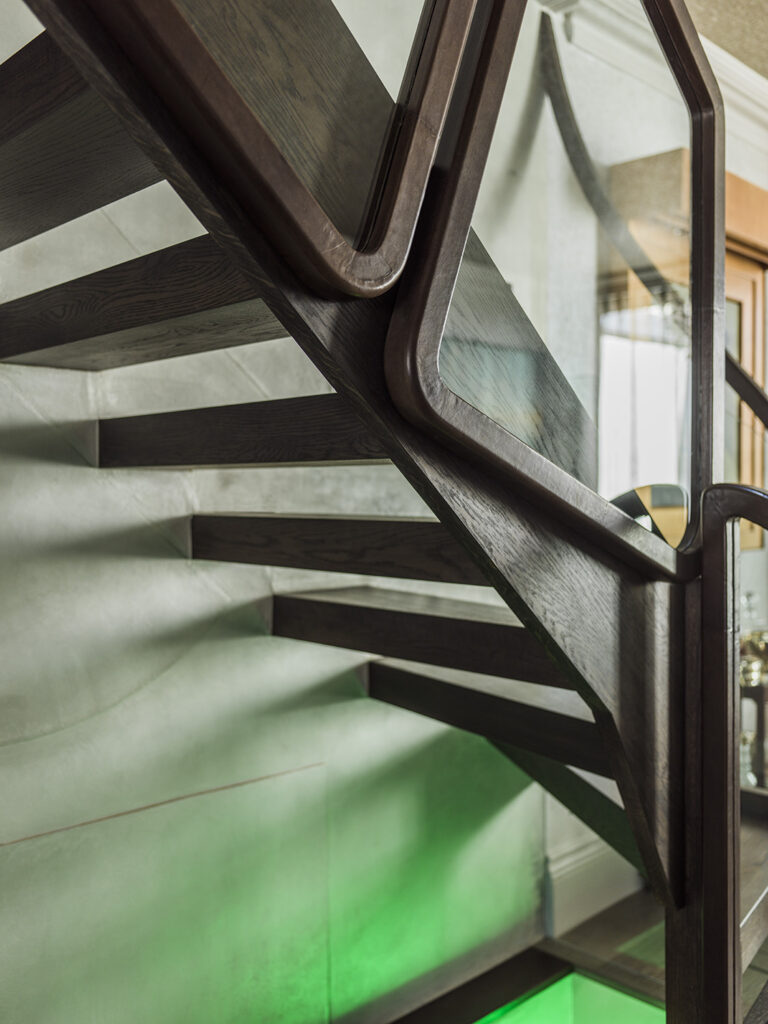
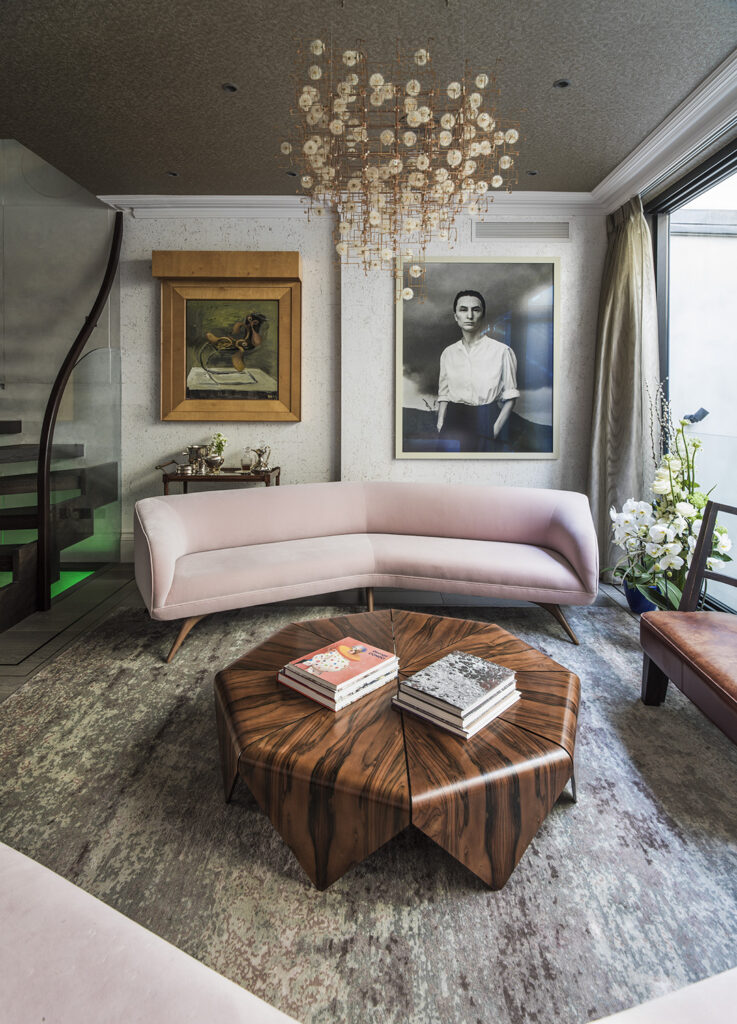
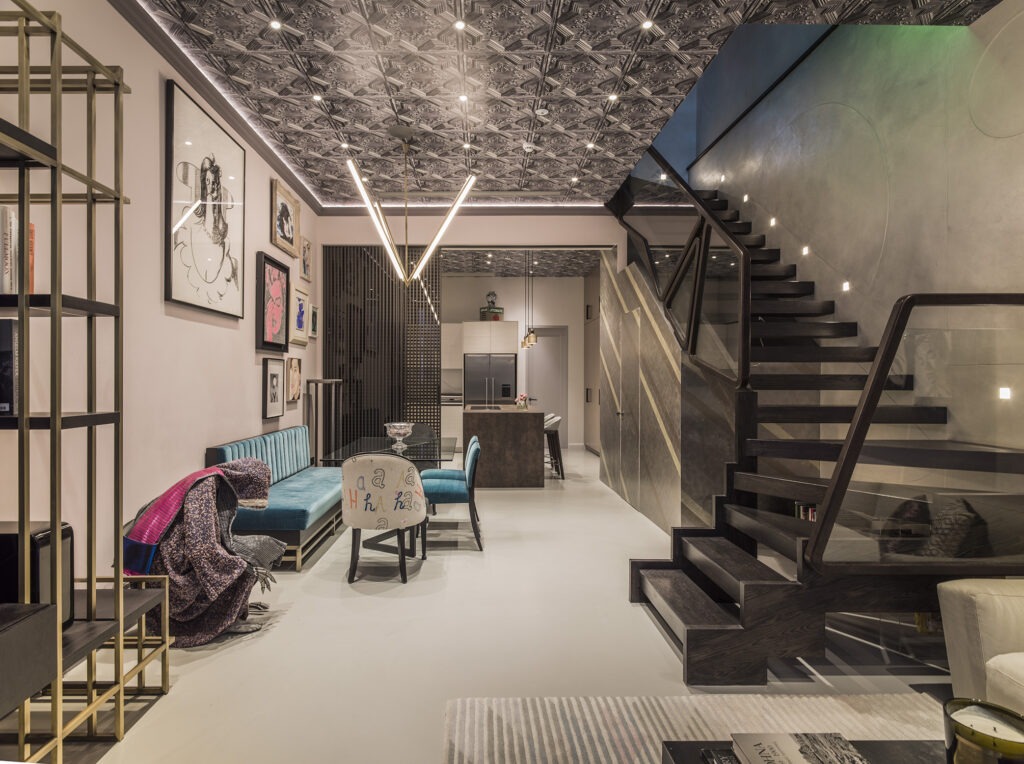
Material becomes the project’s quiet protagonist. A continuous surface of grey oak with bronze inlay threads through the house, establishing cohesion across its verticality. “On a house of this height, a continuous material is what stops the floors feeling disconnected.” This language finds its most articulate expression in the staircase, conceived as both connective tissue and spatial event. Drawing on a reference by Gio Ponti, it combines leather clad balustrades with walnut treads and bespoke plasterwork, choreographing light and movement through the core of the home.
The basement, entirely reimagined, becomes the emotional counterpoint to the formal upper floors. Conceived as a self-contained living level, it is anchored by a courtyard that transforms necessity into spectacle. “At that depth you have no light and no ventilation without it, but we designed it as a permanent canvas rather than a functional void.” The result is a seven metre illuminated wall, perceptible even from above, dissolving boundaries between levels.
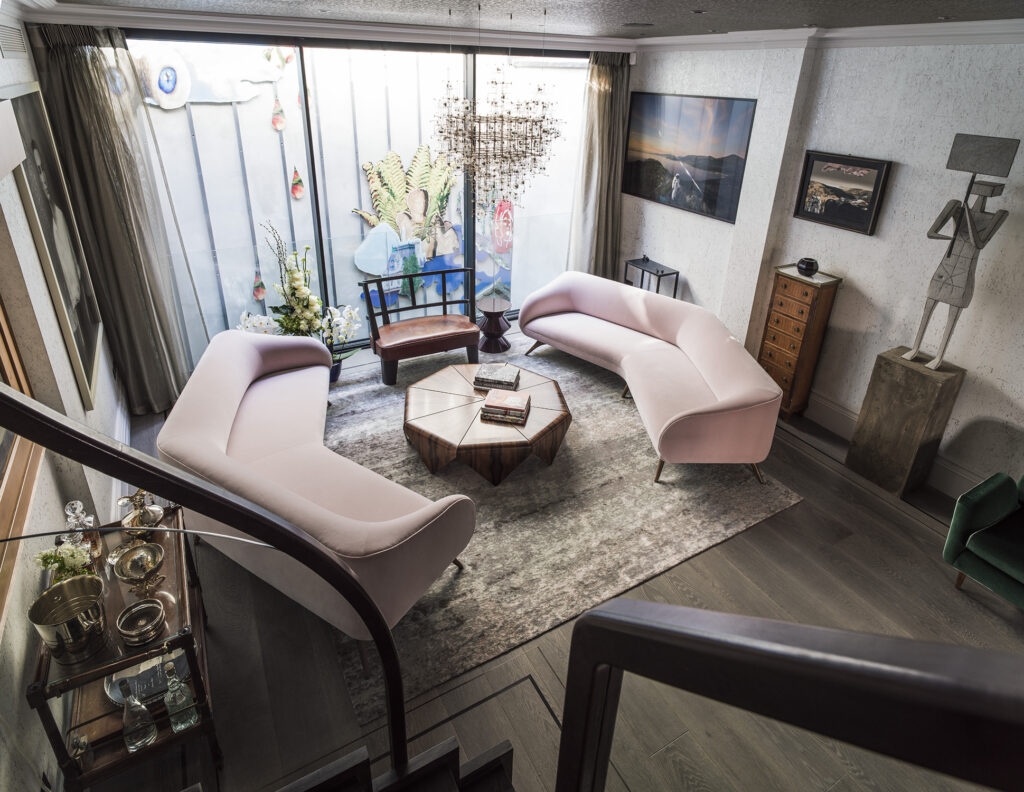
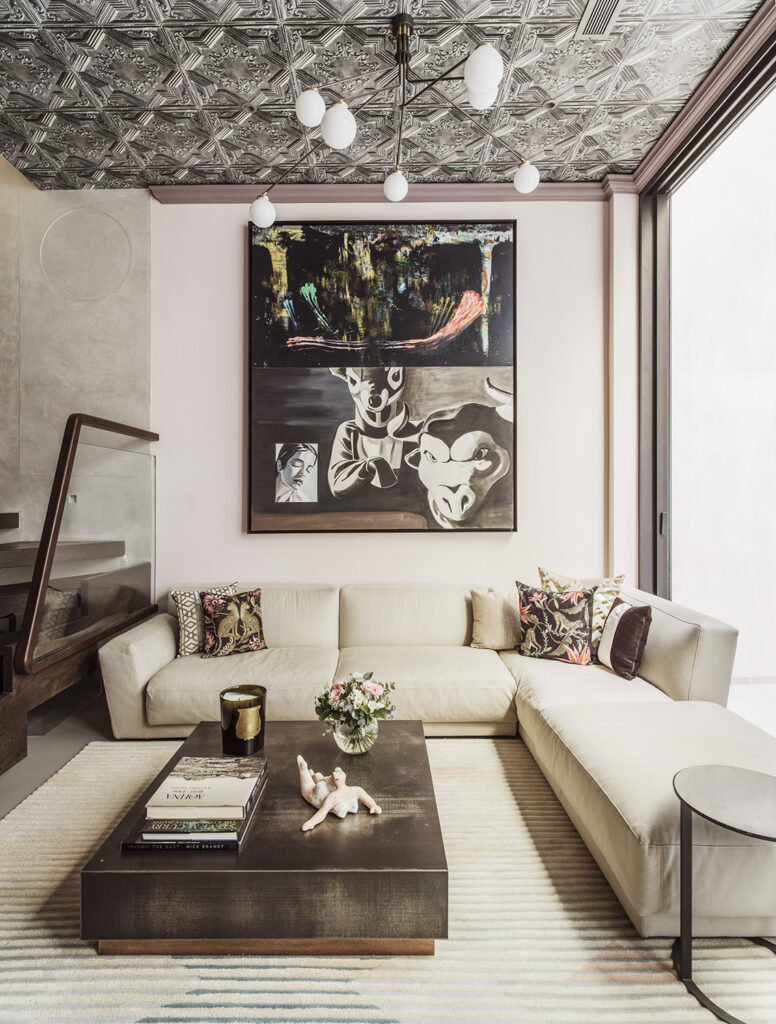
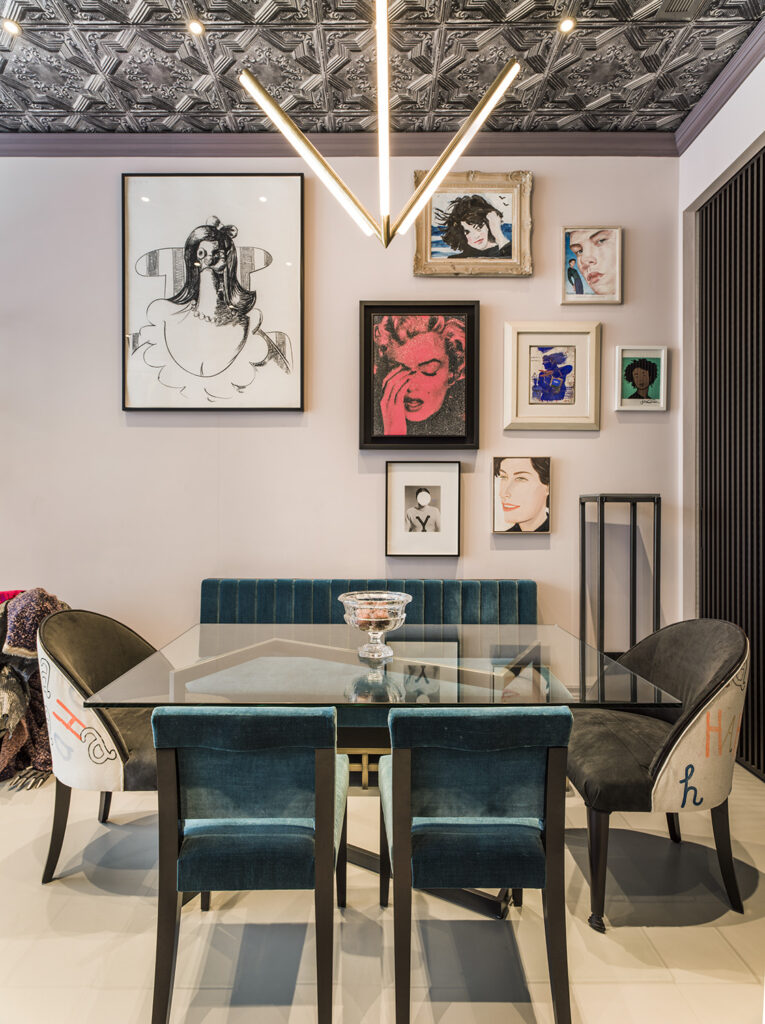
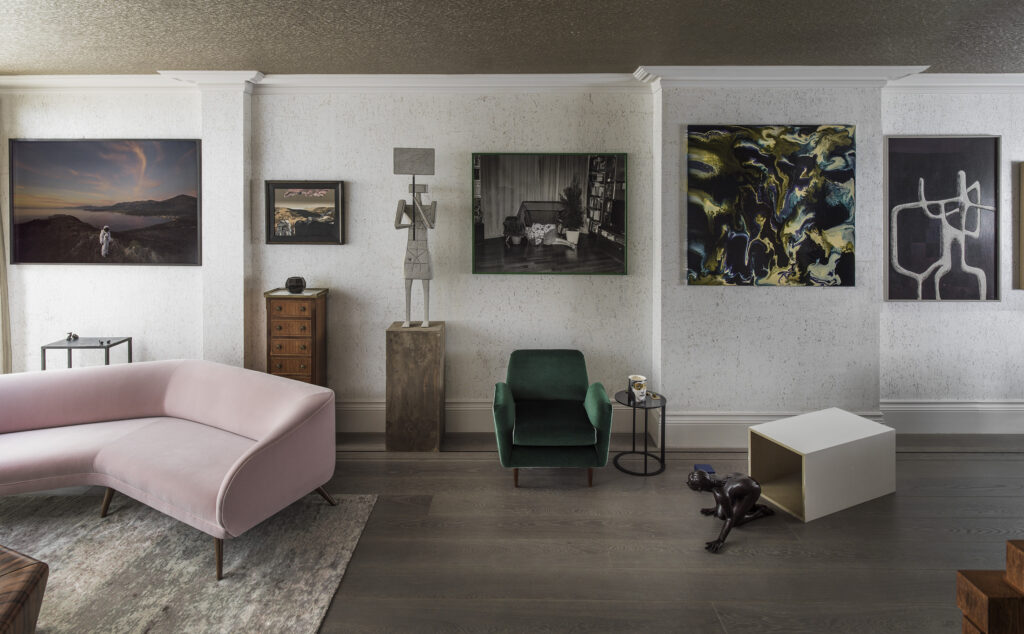
Throughout, collectible design and artistic dialogue remain central. A bespoke table by Martino Gamper meets vintage seating sourced from Nilufar Gallery, while blush velvet sofas by Vladimir Kagan introduce a soft modernism into the reception. Lighting, from a dandelion-like chandelier to a linear piece by Michael Anastassiades, operates as both structure and atmosphere. Even the walls speak, most notably through the large scale work of Jack Burton, embedding narrative into the architecture itself.
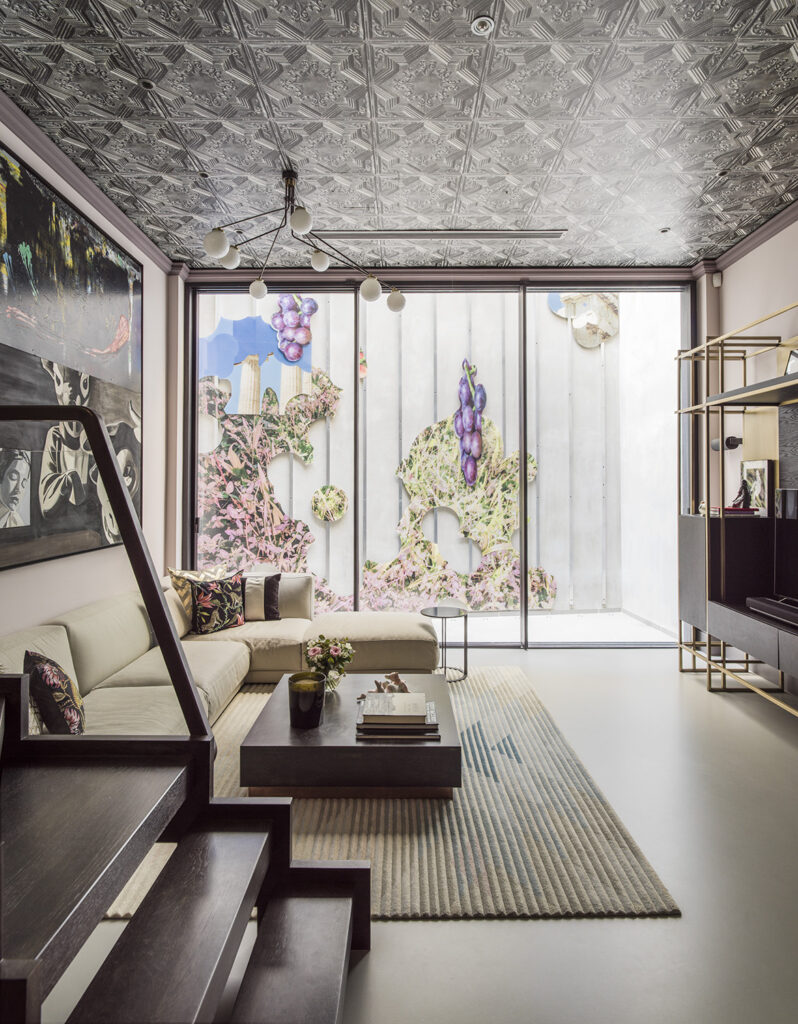
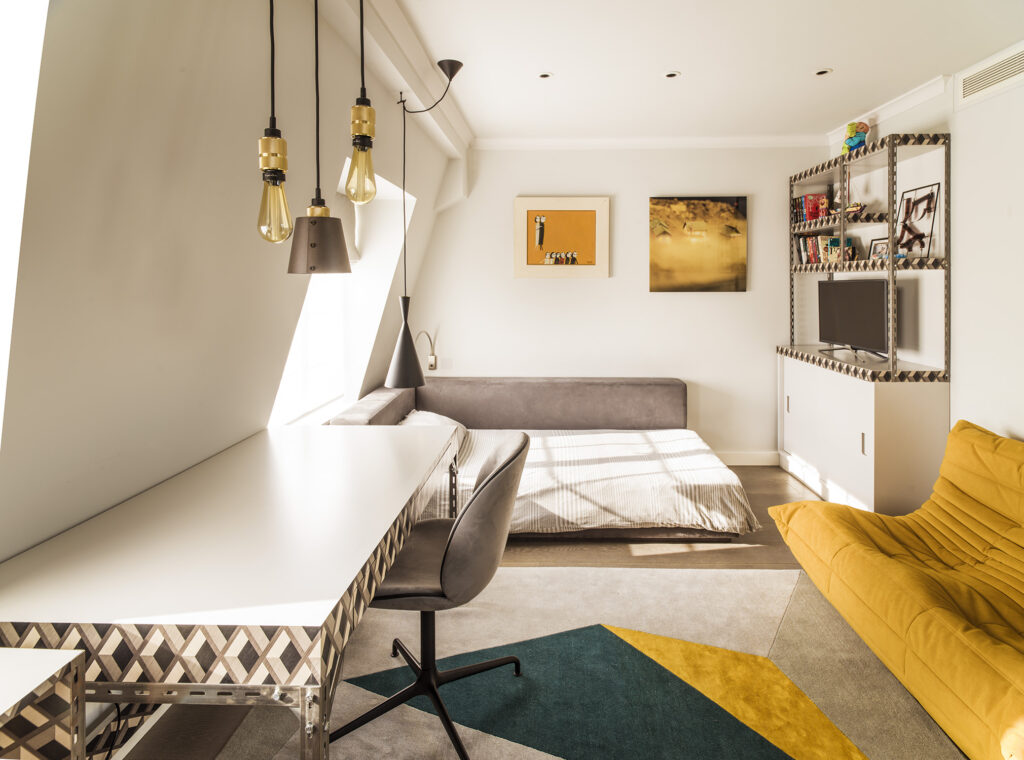
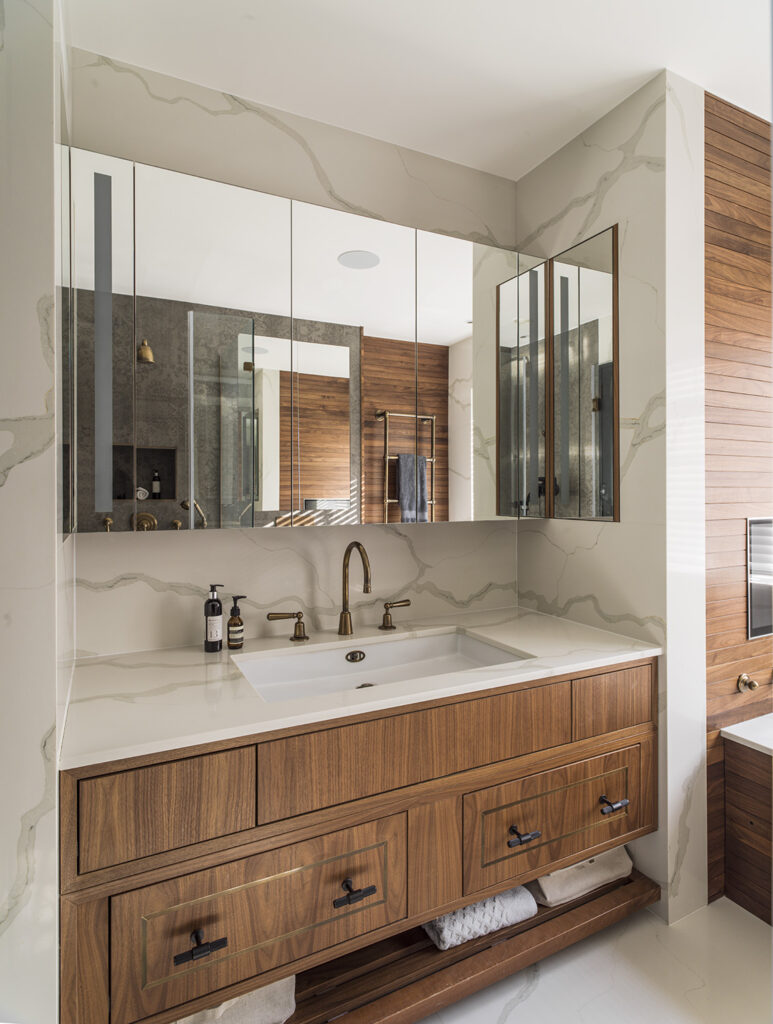
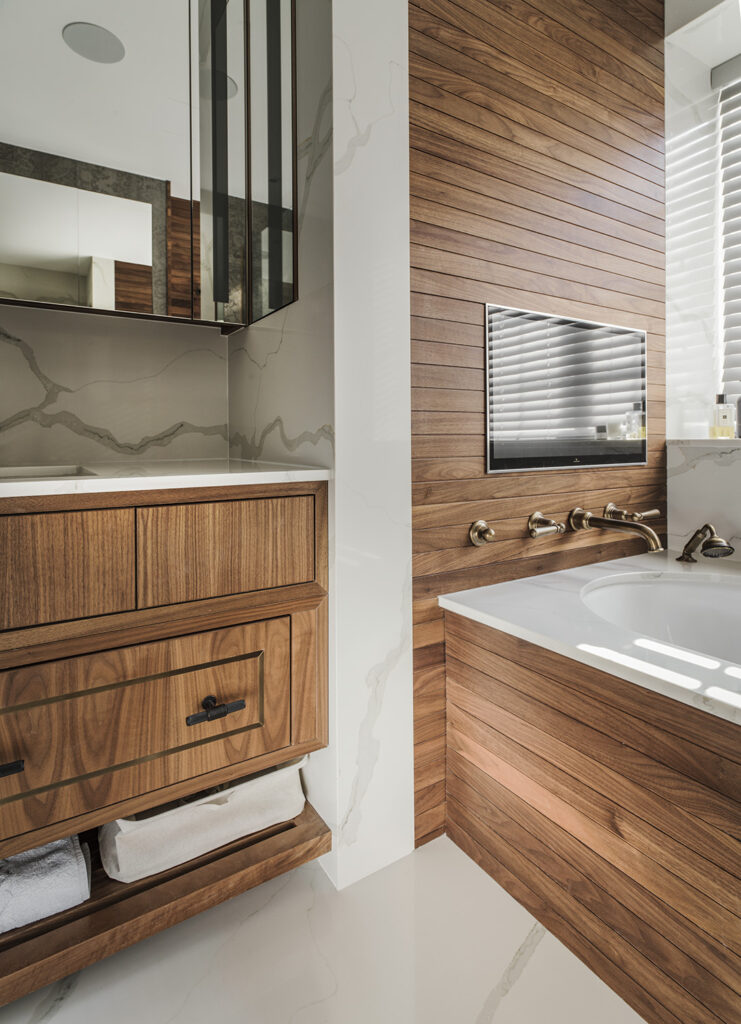
Upstairs, intimacy replaces monumentality. Technology dissolves into joinery within the study, while the master suite balances Victorian pine with Calacatta stone in a calibrated dialogue of warmth and restraint. “The brief was warmth without heaviness,” Misra notes. In the son’s bedroom, geometry softens into play, where a slanted ceiling becomes an opportunity rather than a constraint.
What emerges is not simply a renovation, but a rearticulation of domestic space, where history is neither preserved nor erased, but carefully edited into the present.