There is a certain confidence in knowing what to leave untouched. At Villa Hittin, in one of Riyadh’s residential districts, Seema Al Mansouri, founder of Eva Interiors, inherited a house whose architectural character was already firmly established. The floors, ceilings, columns and sweeping staircase were all in place. The task was to bring these disparate elements together, without erasing the peculiarities that gave the building its identity. The studio looked to Jean-Michel Frank’s restraint, Carlo Scarpa’s sensitivity to architecture and Andrée Putman’s sophisticated use of colour and proportion, finding inspiration without attempting imitation.
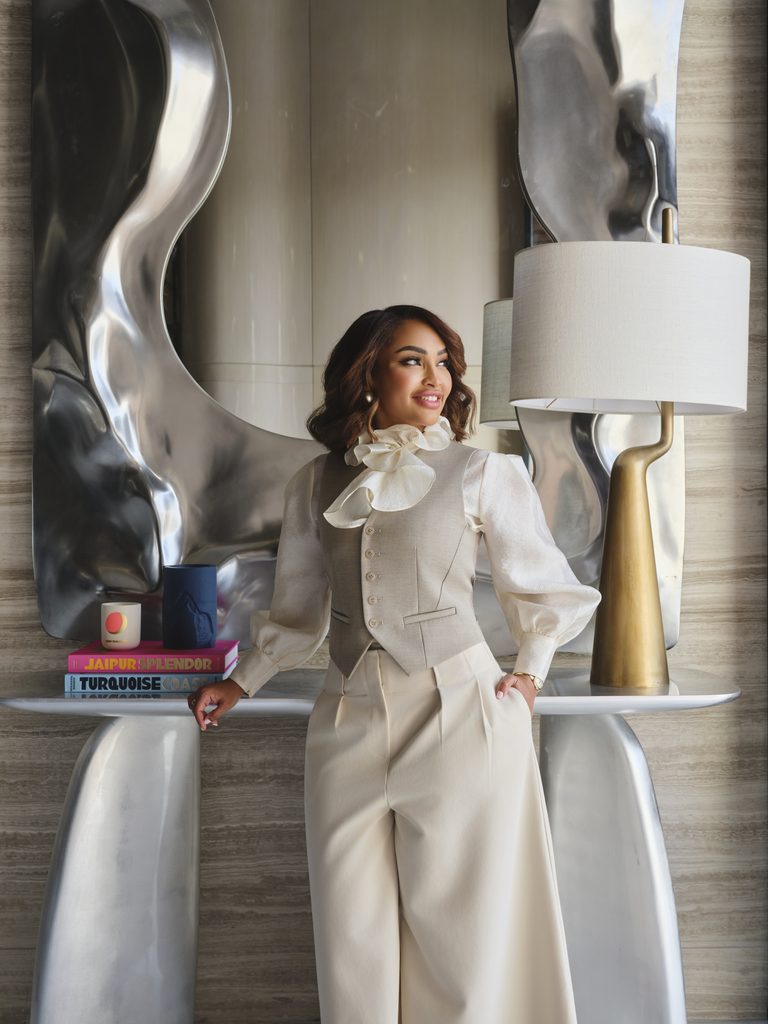
The staircase, a sculptural presence in the double height entrance hall, became an organising feature. Nearby, an awkward projecting wall was dressed in timber, while mirrored panels softened the sharp angles left by the existing structure. What might otherwise have been concealed was instead absorbed into the decorative scheme. Sicis wall lights illuminate the staircase, while a JLC sofa, a Lander Stone marble table and a Glas Italia sidepiece introduce a distinctly contemporary vocabulary.
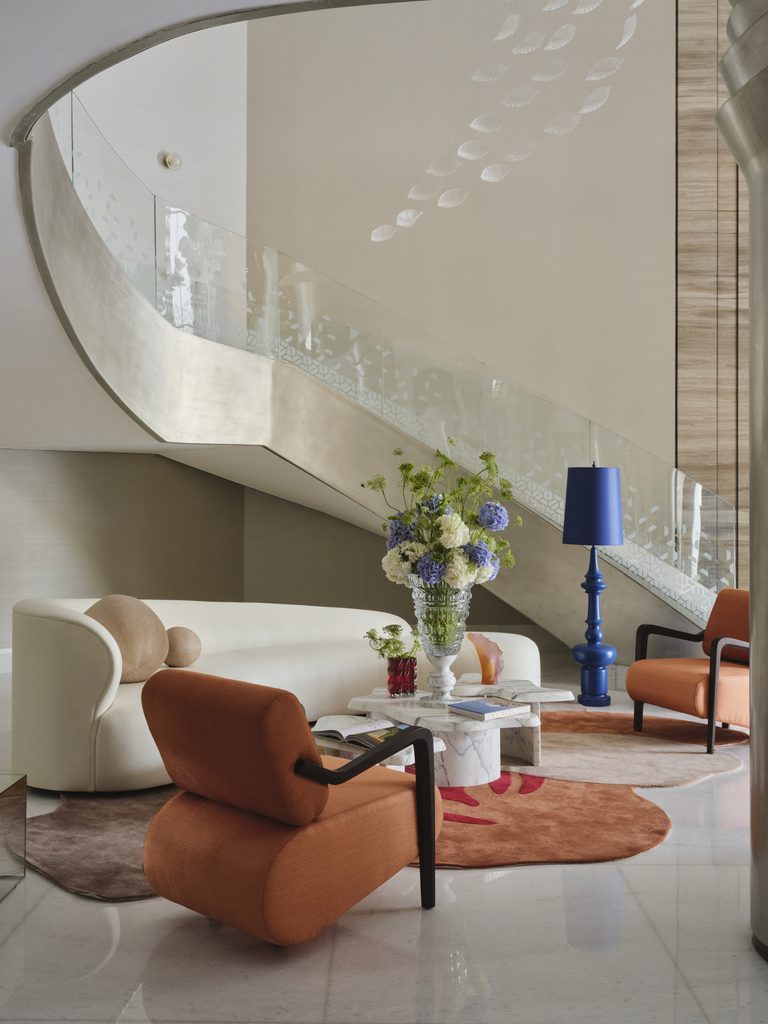
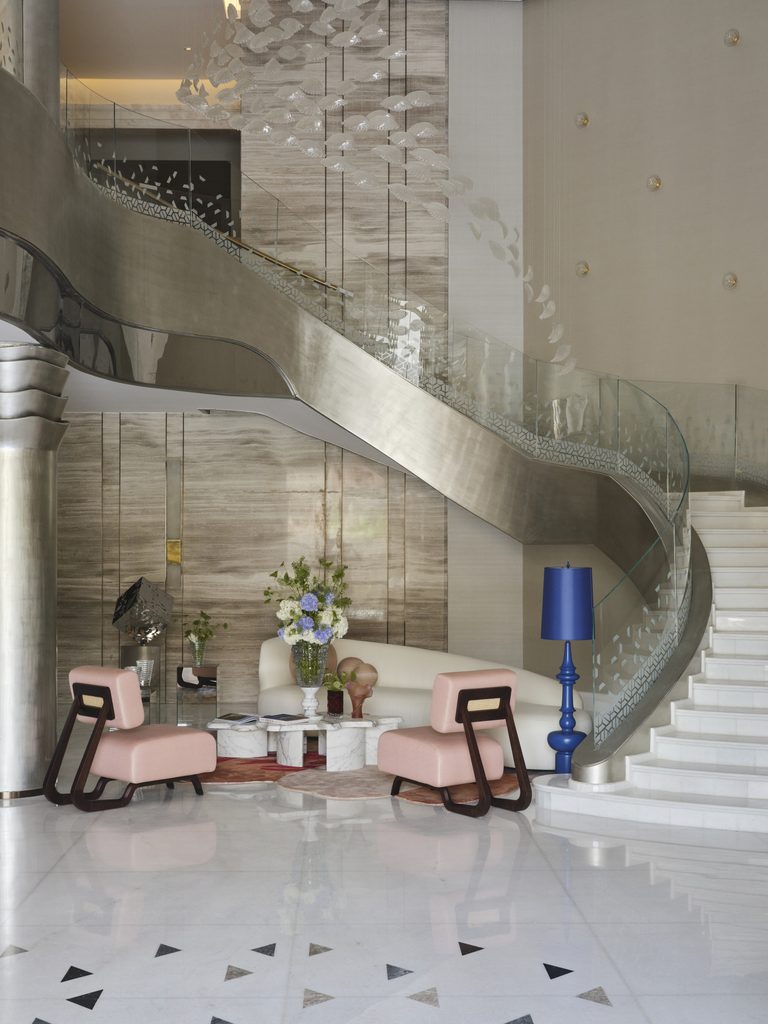
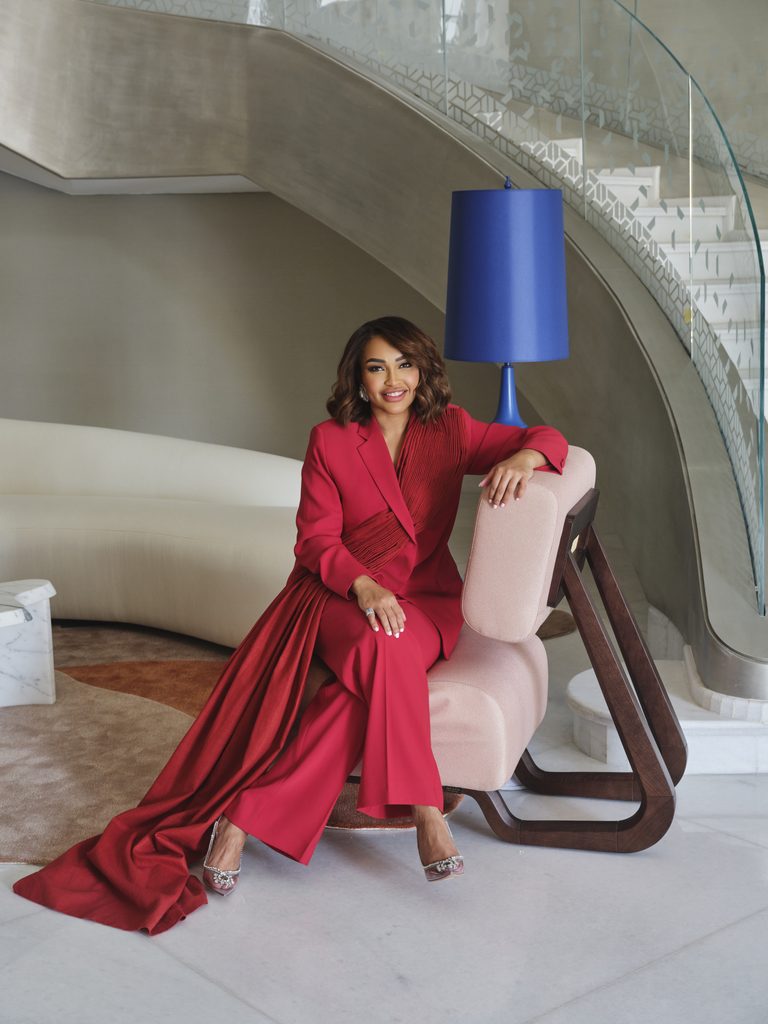
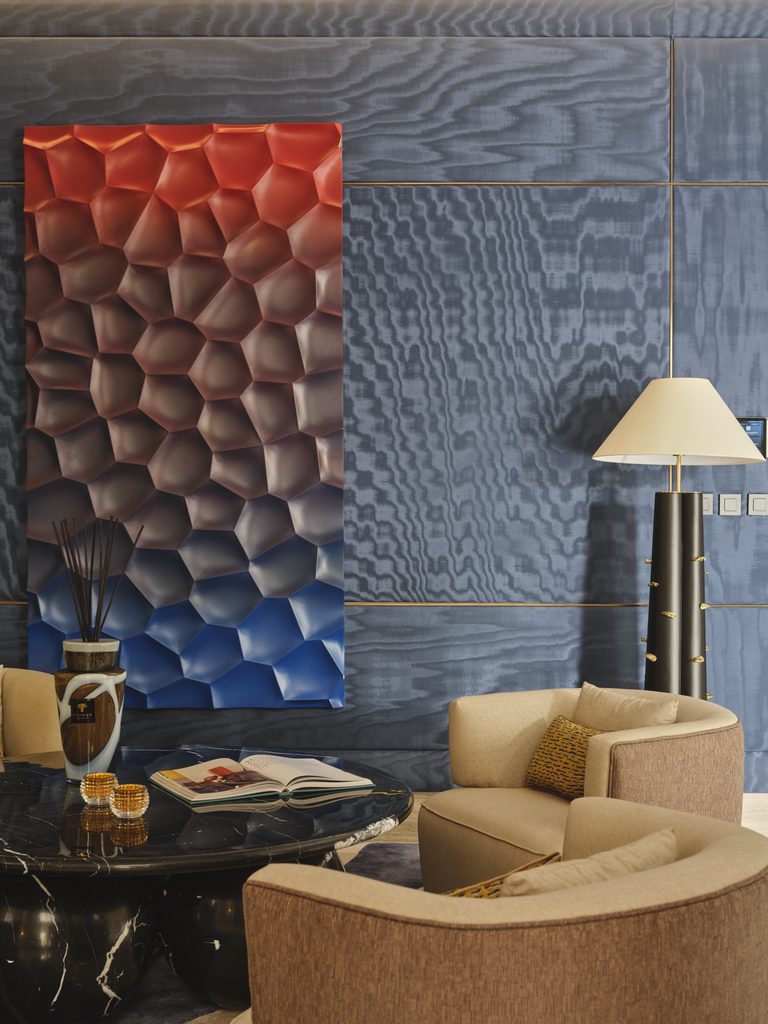
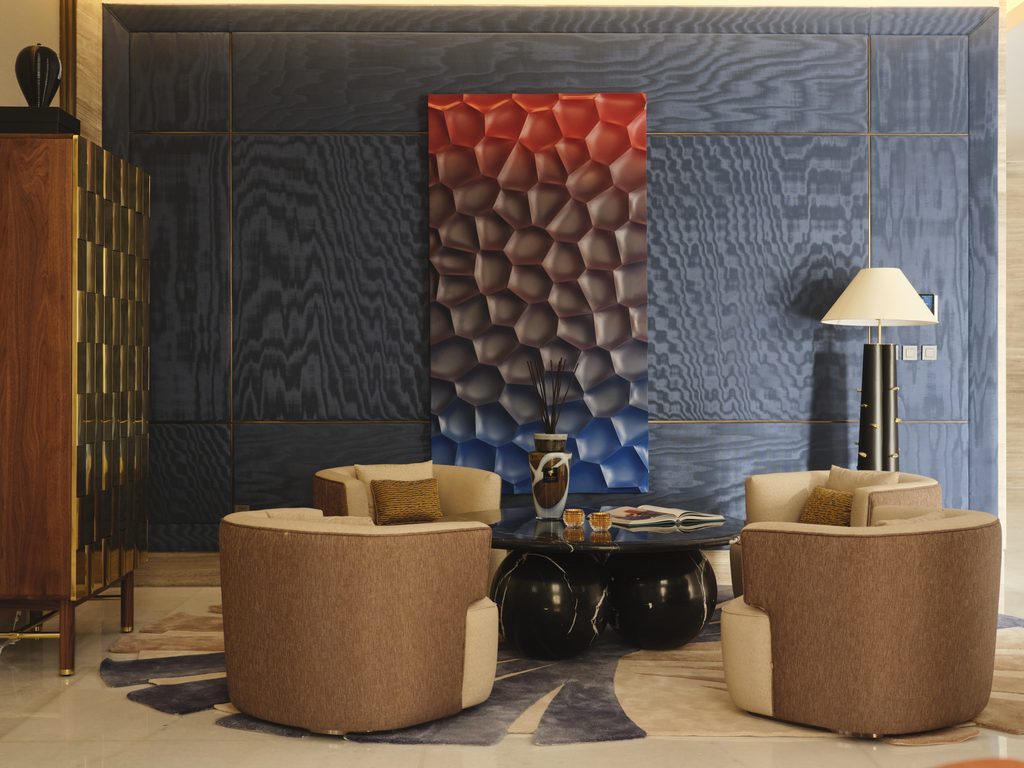
There is much to catch the eye. Travertine sits alongside richly grained timber, silver leaf catches the light on structural columns, and velvet upholstery introduces a welcome softness. Brushed metals and lacquered surfaces add further layers, while occasional flashes of colour interrupt the more subdued tones. A teal velvet sofa by Ana Roque, sculptural pieces by Muranti and textiles from Rubelli, Dedar and Lelièvre lend the interiors an eclectic richness. Elsewhere, a quiet tea corner is enveloped in deep toned Dedar moiré.
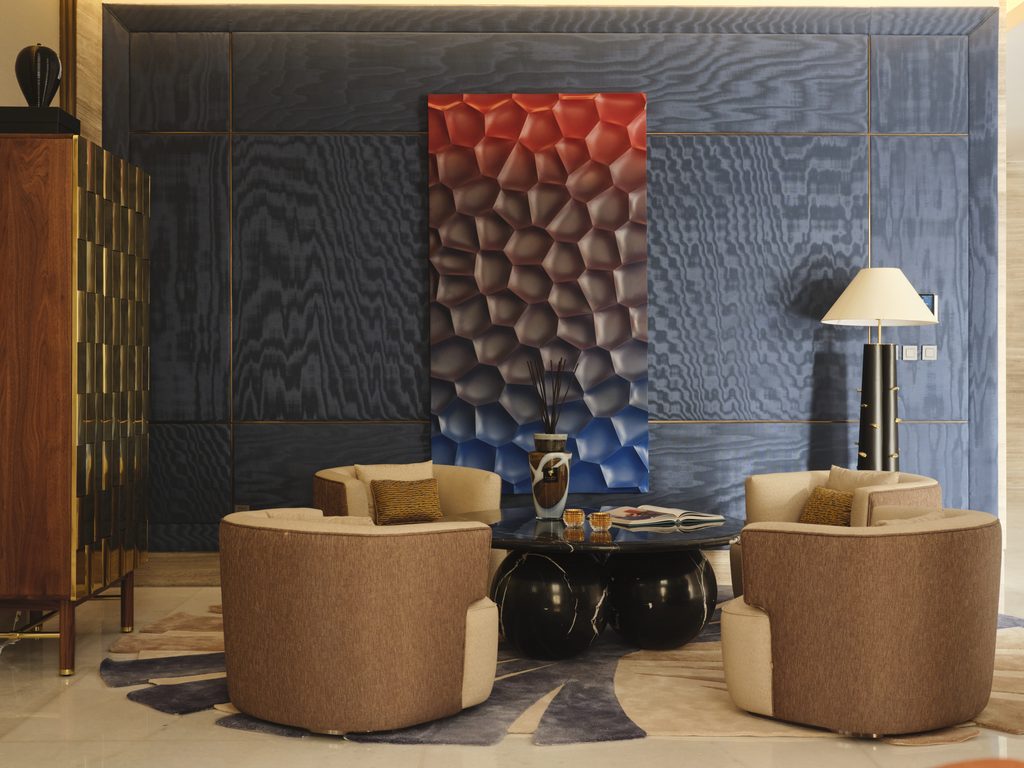
Yet the most interesting details have their origins closer to home. The triangular geometries characteristic of Najdi architecture, already present in the building, find a contemporary echo in decorative screens, gypsum ornament and specially designed carpets. Rather than reproducing traditional motifs wholesale, the designers have allowed them to find new expressions among contemporary furnishings and finishes. “I don’t believe that incorporating heritage means recreating traditional interiors,” says Al Mansouri. “Sometimes the most meaningful references are much more subtle.”
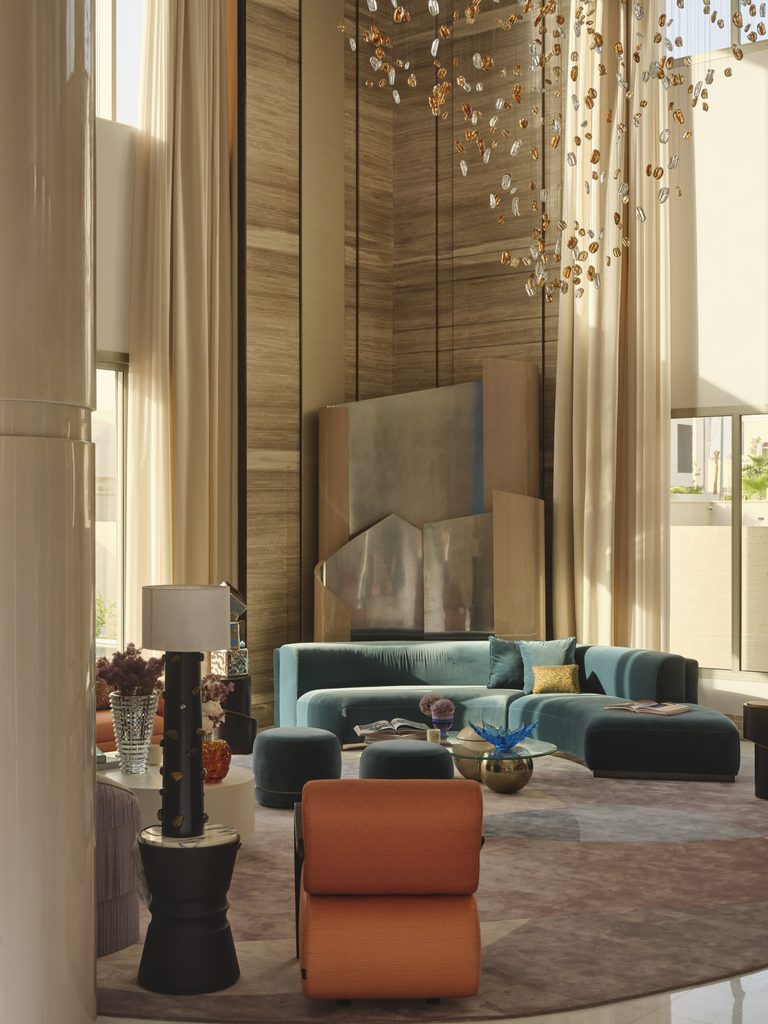
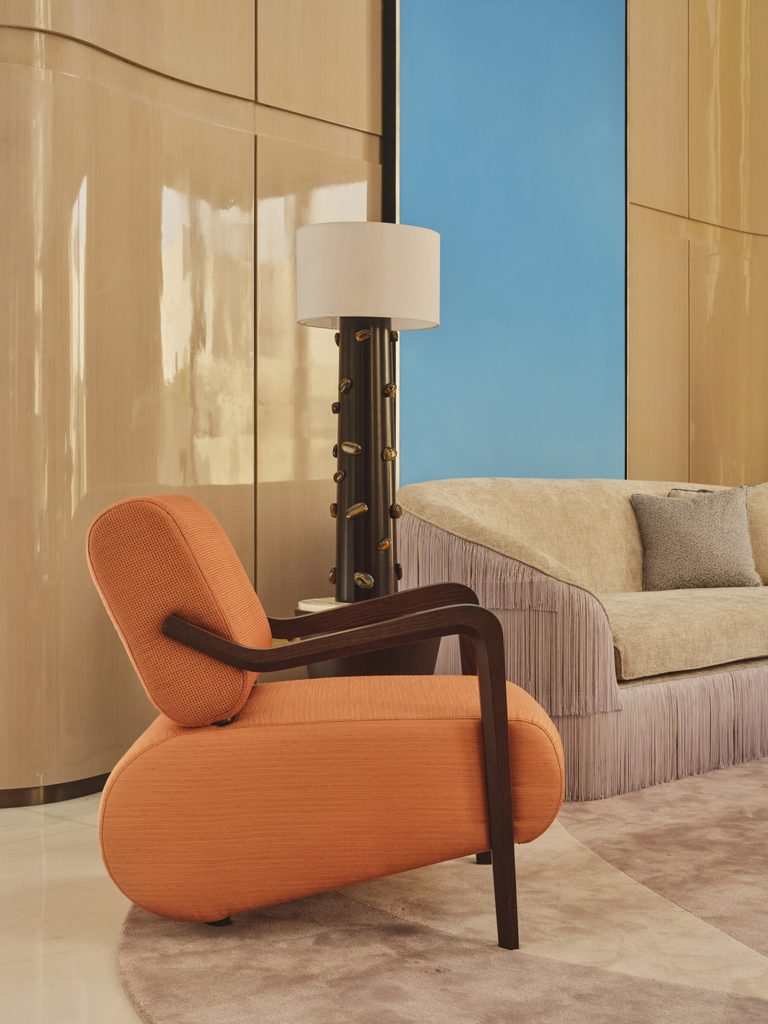
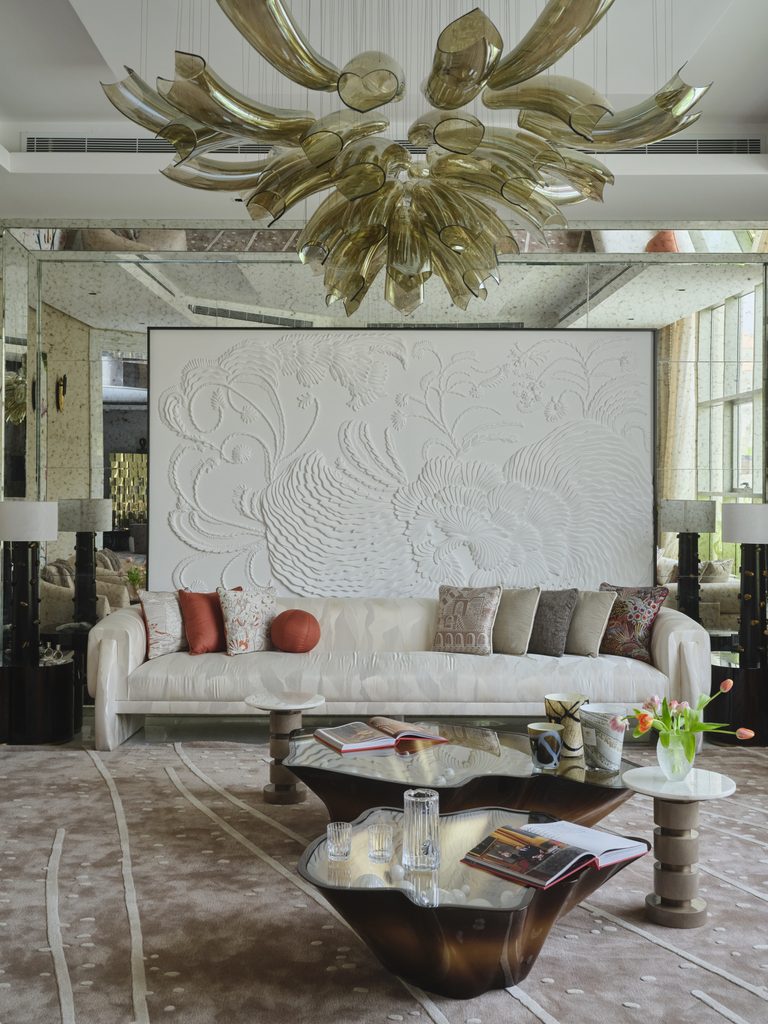
The arrangement of rooms is equally revealing. Three separate entrances accommodate the different rituals of family life and hospitality. One leads to the men’s majlis and formal dining rooms, another opens onto the grand staircase and reception lounge, while a third offers the family a more private route into the house. It is a plan that acknowledges the importance of entertaining without allowing ceremony to overwhelm domestic life. In the ladies’ majlis, an ivory sofa by Munna accompanies a sculptural Muranti coffee table with mother of pearl detailing. Decorative objects by Baccarat, Lalique, Daum and Fornasetti, selected in collaboration with Tanagra, sit alongside floral arrangements by Daniel Ost.
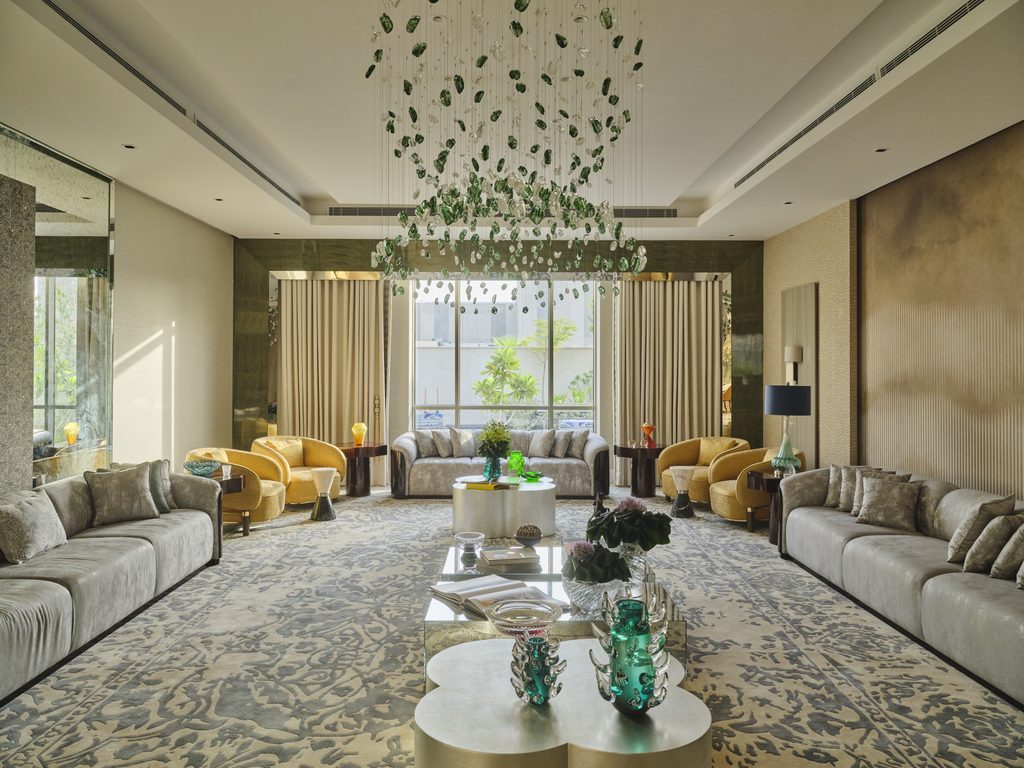
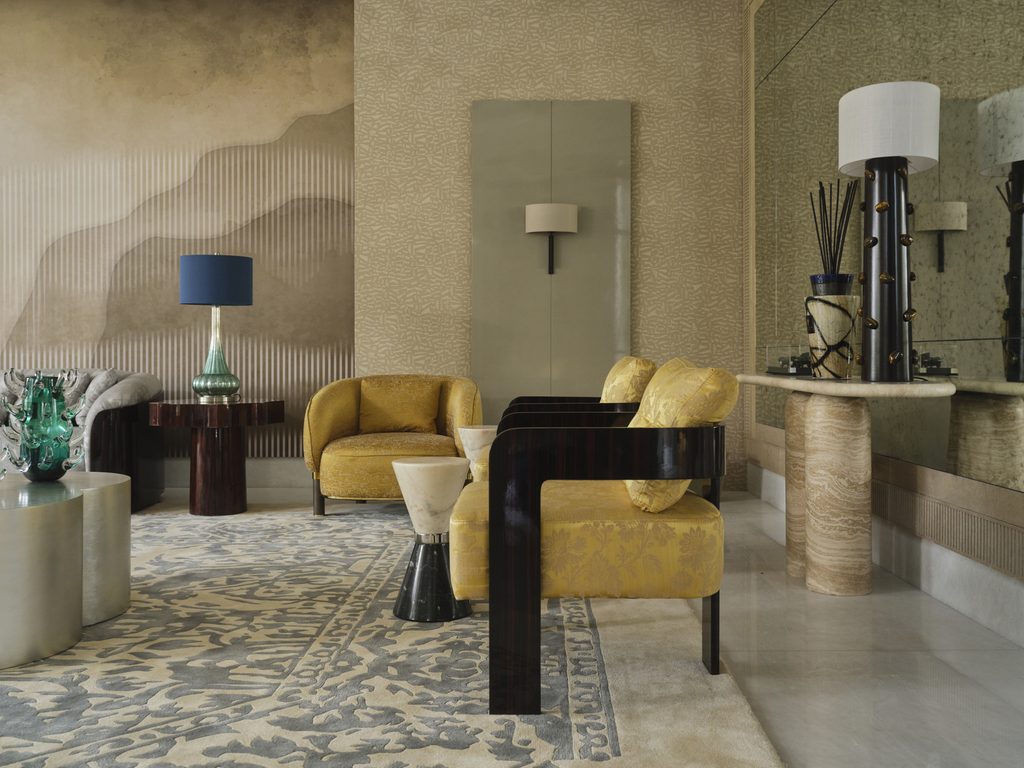
In the dining room, an angled wall presented a particular difficulty. A conventional chandelier would have sat uneasily within the space, so the designers opted for a composition of suspended lights, their arrangement lending movement to an otherwise formal setting. It is an example of the studio’s belief that furniture and lighting should be considered alongside architecture, rather than introduced as finishing touches.
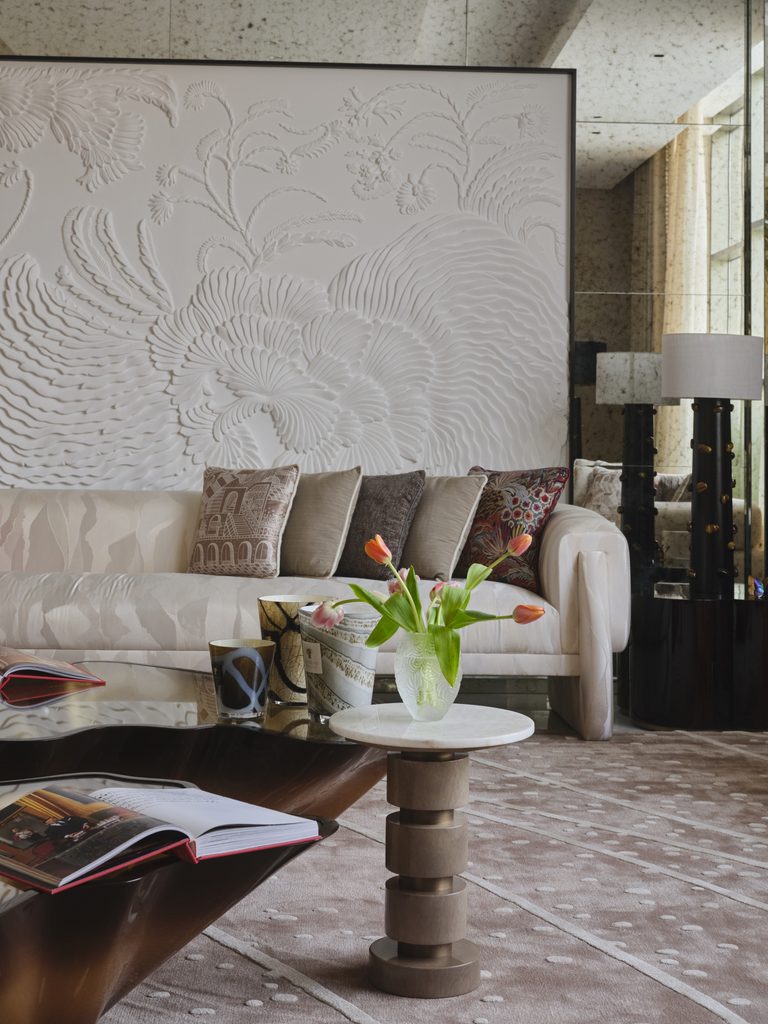
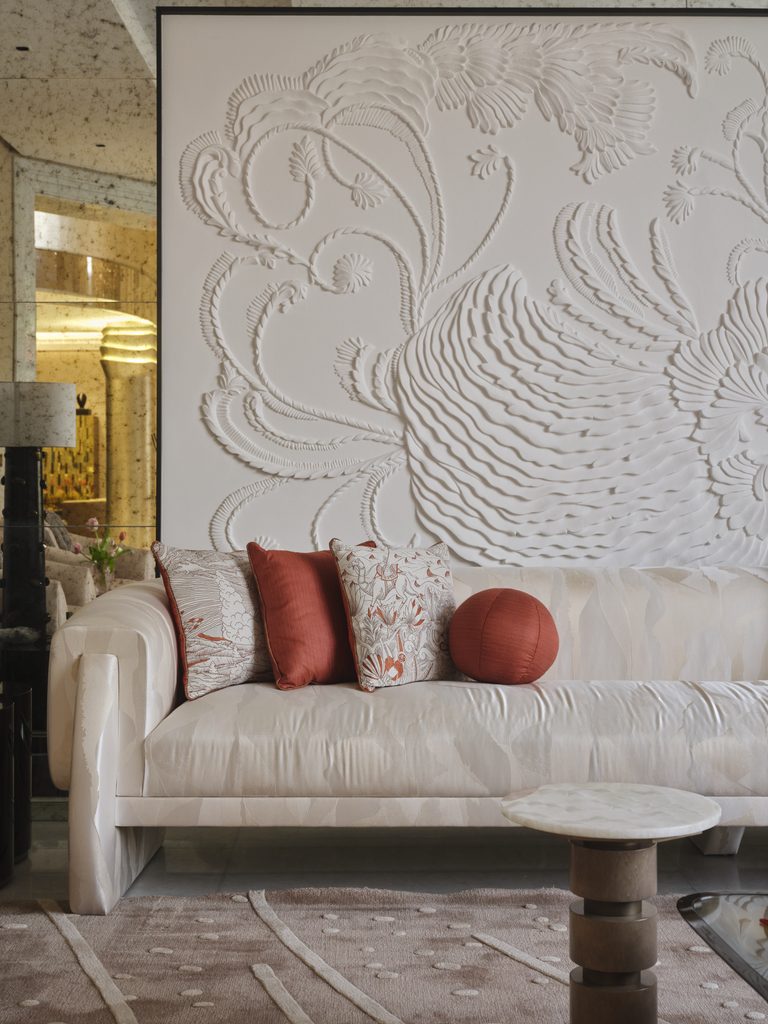
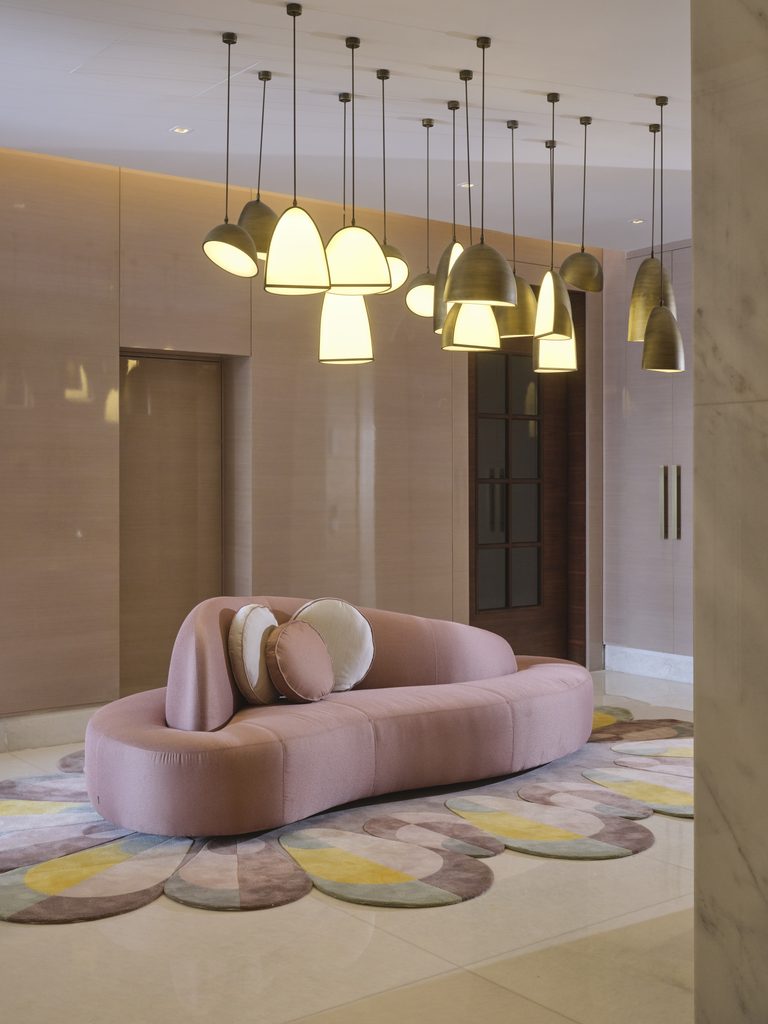
Throughout the villa, there is a deliberate interplay between the monumental and the intimate, the polished and the tactile. The architecture retains its grandeur, but the furnishings and decorative details bring it closer to the scale of everyday life. “For me, the real value of curation lies in that judgement,” explains Al Mansouri. “It’s not simply about finding beautiful pieces, but understanding why each one belongs in the space and how it contributes to the overall design.”
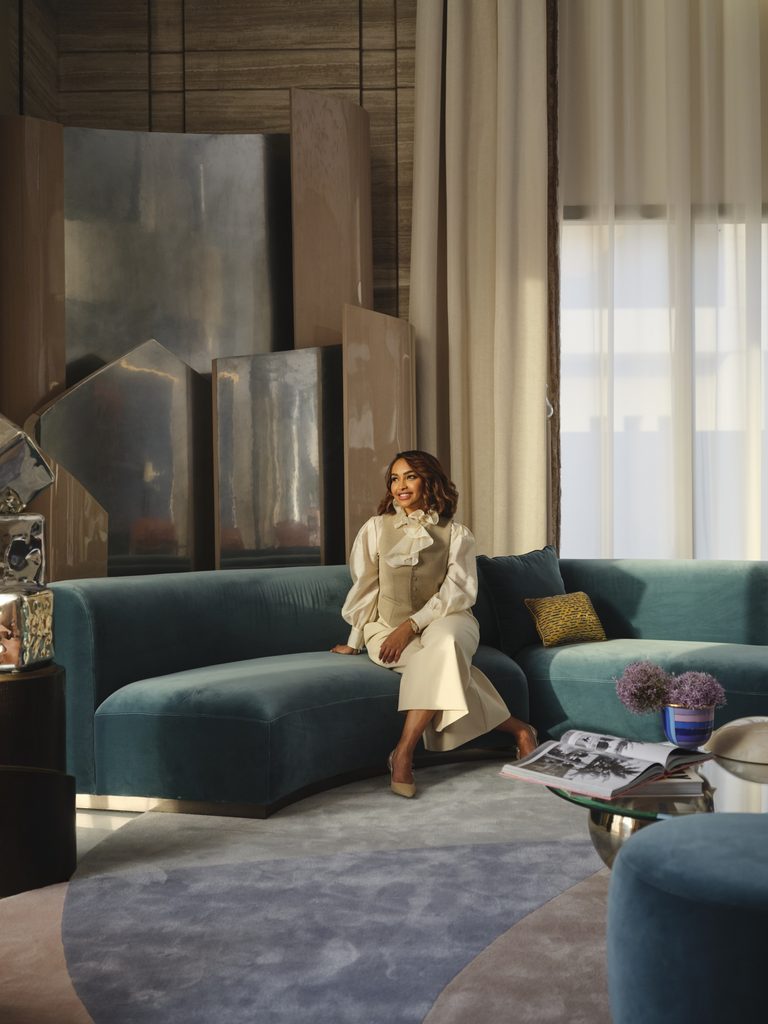
Villa Hittin is perhaps most persuasive in these quieter negotiations. Its connection to place is found not in grand declarations of heritage, but in the geometry of a screen, the proportions of a room and the ways in which a family moves through its home.