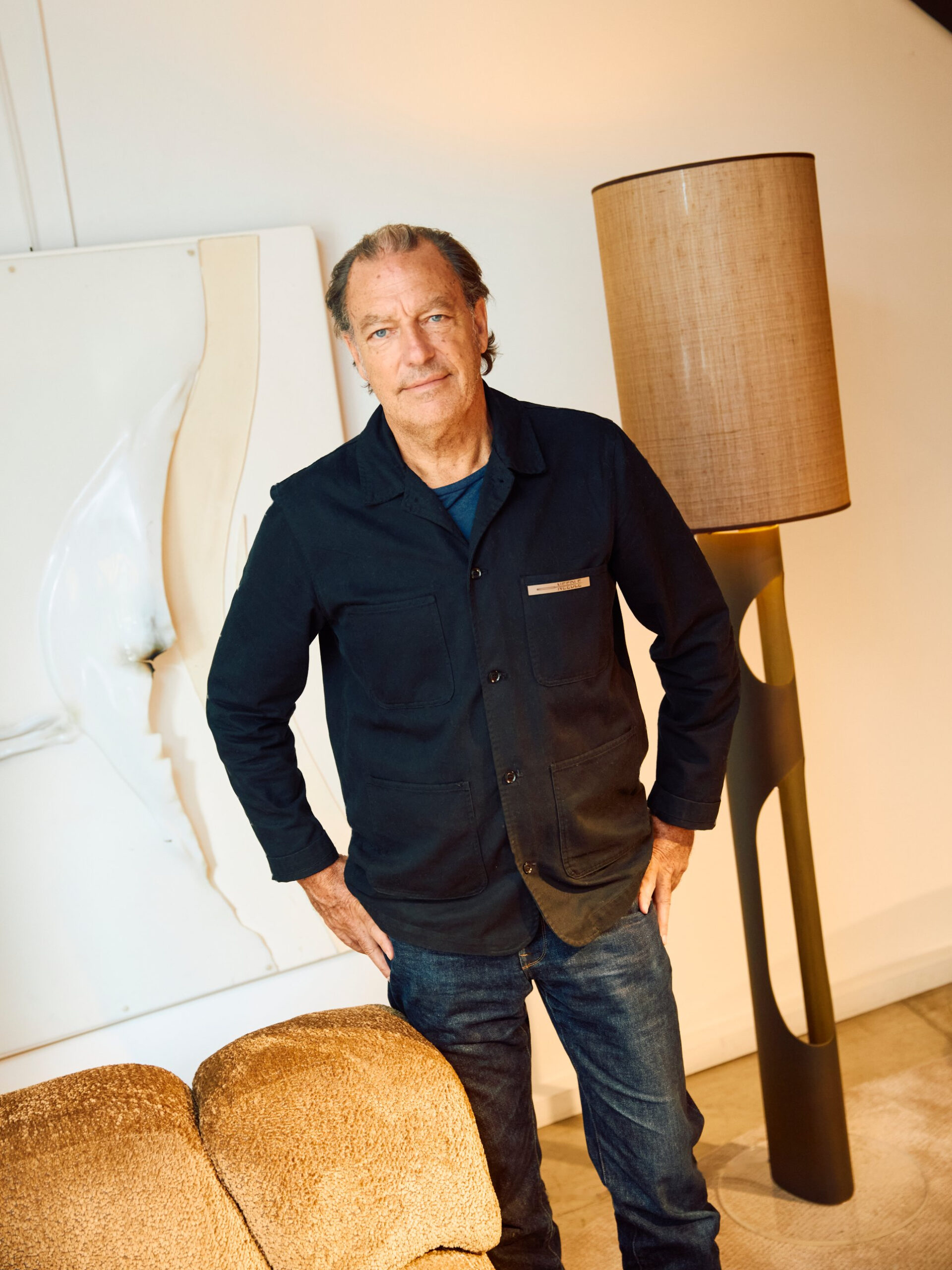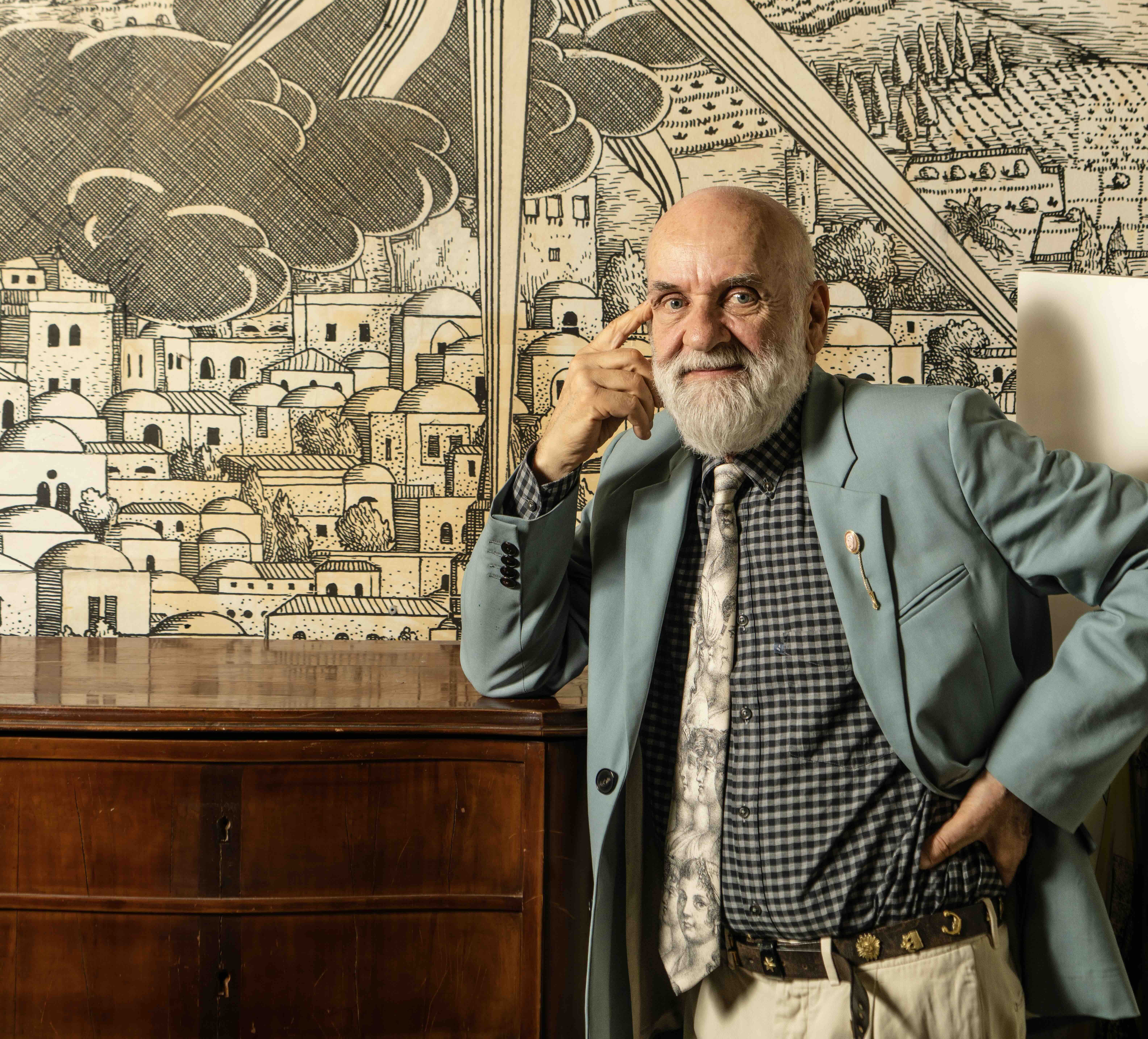
I meet Barnaba Fornasetti at the entrance to his house, in that in-between moment of neither arriving nor leaving. We fall easily into talk of people we both know: Ambra Medda, a dear friend of mine, was like a daughter to a woman who was once one of Barnaba’s closest friends, the kind of coincidence that dissolves formality before an interview even starts.
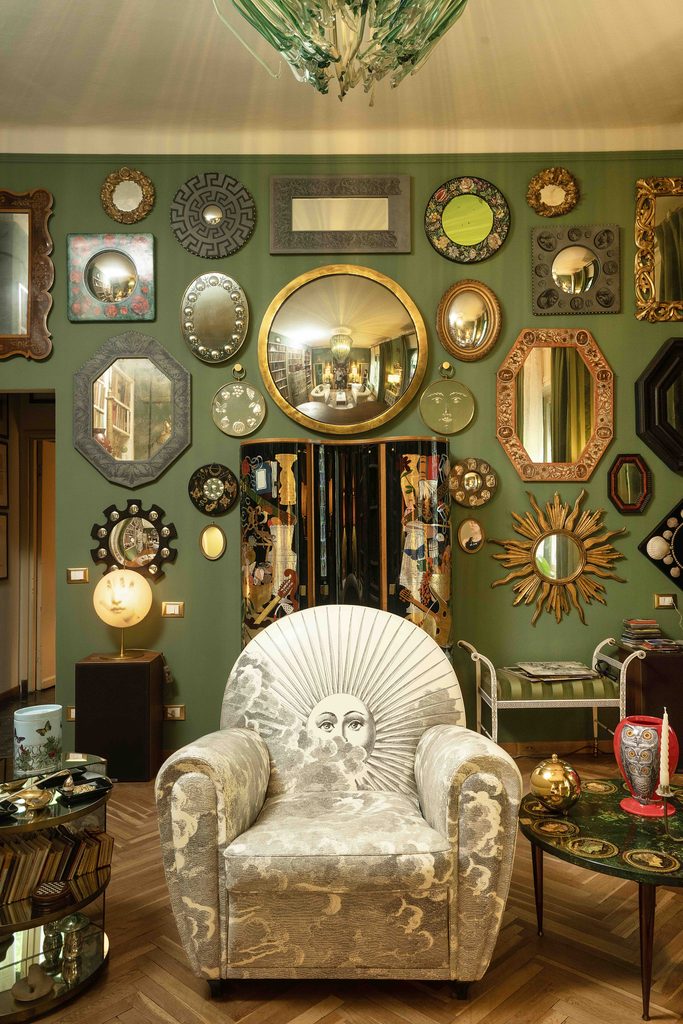
We move into the garden. The house wraps around it in a horseshoe, every room somehow facing this one green centre. Two cats appear almost immediately, the real protagonists of Barnaba’s daily life, he tells me, more present in his routine than most of the objects for which he’s known. He asks if we can walk towards the hydrangeas, and we do, a little slowly, while he talks.
He is extremely cordial, but there’s a quality to him that could be mistaken for distance if you didn’t look closer, he’s actually deeply reflective, choosing his words the way you’d choose a piece for a room: carefully, deliberately, with something like wisdom behind the pauses.
What does it mean for you today to feel “at home” here?
Even during the renovation, I kept living within these walls. My whole life is here: home, work, leisure. It’s a house full of memory, but I don’t experience it as a museum of nostalgia. For me, home is a place where things keep happening, and where even disorder has its own mysterious harmony.
He’s also, I quickly realise, ready to play. When we stop to photograph him, something shifts: he smiles, and for a second you sense entire universes inside him that you’ll never fully reach, though he lets you glimpse the edges of them.
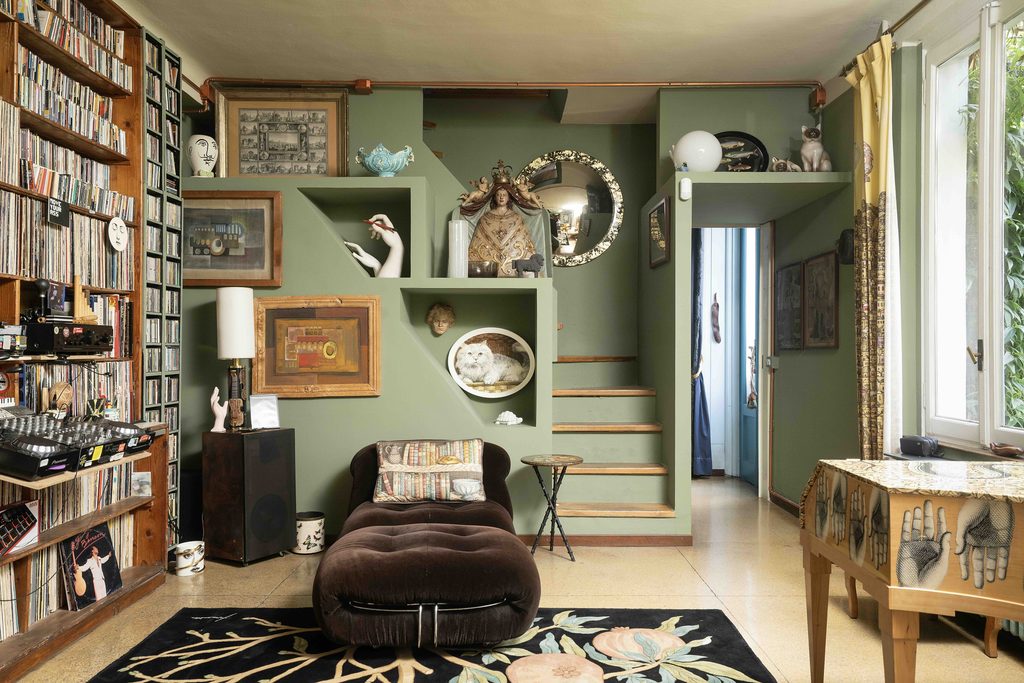
Inside, the living room holds one wall entirely given to music: at least eight metres of vinyl, floor to ceiling. We talk about it, and I soon understand that this is another of his languages, maybe the most private one.
Which room tells us the most about Barnaba today?
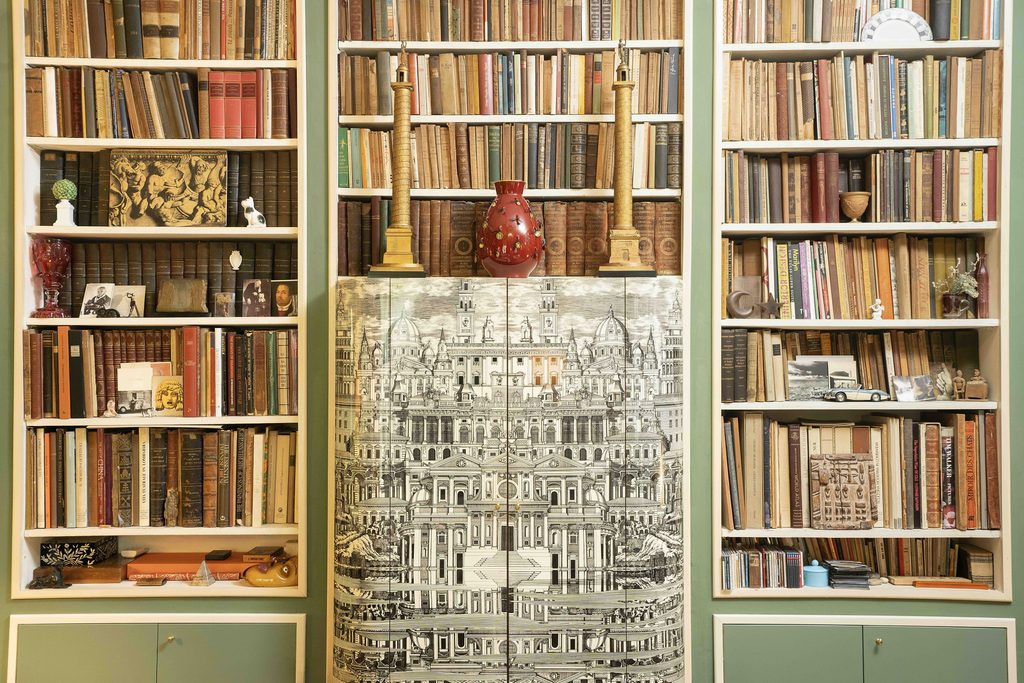
The music room, without question. The restyling there, done with a lot of help from my partner, was the most significant. It’s where I keep my record collection, my DJ setup and the fortepiano made specifically for our 2016 production of Mozart’s Don Giovanni. Music runs through so much of my life: work, evenings with friends, moments of focus or relaxation.
When is something truly “Fornasetti”?
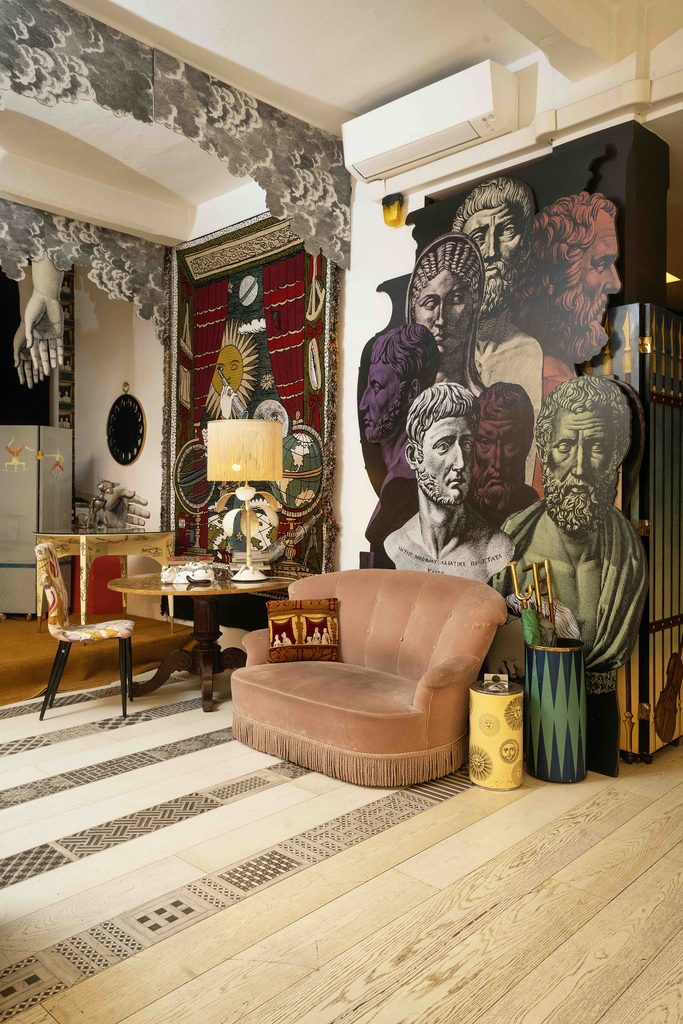
Above all, it’s a matter of practical madness — an expression I’m very fond of. A Fornasetti object needs something unexpected, poetic, but it can’t be fantasy for its own sake; it also has to work, to have an internal logic. Only decoration, and something’s missing. Only function, and it’s monotonous. Practical madness is making the two coexist.
We keep walking, past objects that seem to be mid-conversation with each other: an antique piece beside something clearly just found on a trip, arranged together with no obvious logic except that it works.
Are there objects here you’d never change, and others you keep moving?
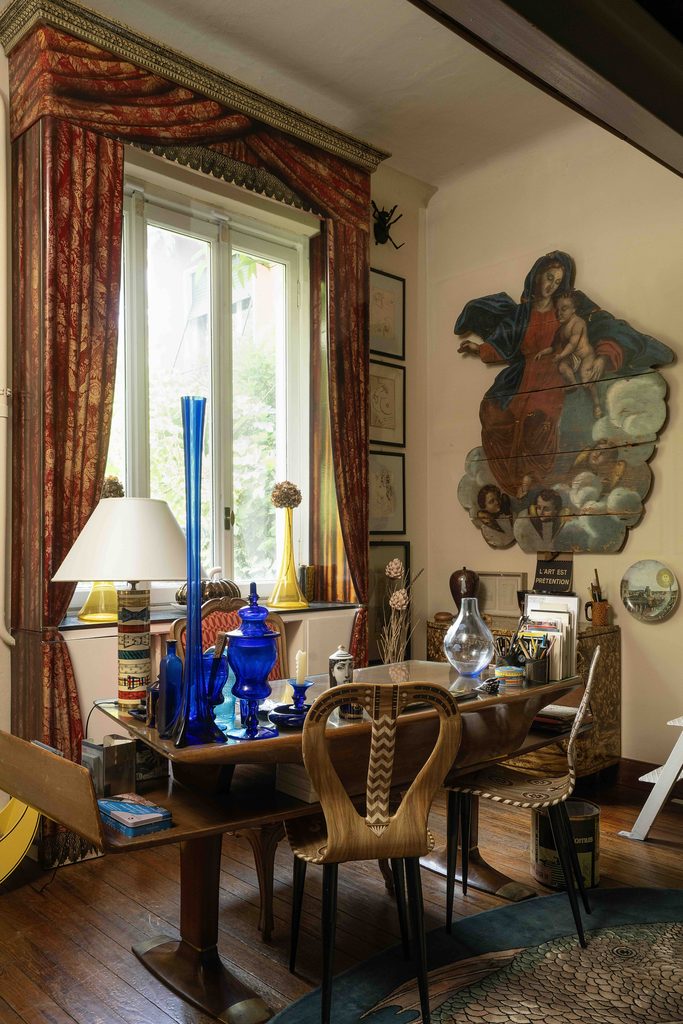
I’m fairly incapable of leaving things still for too long. Move a lamp, shift a perspective, and suddenly a room tells a different story. I especially enjoy small domestic installations: objects from home, from travels, from gifts, worlds apart, that suddenly start speaking to one another. Then there are things hard to remove, because they’ve become icons themselves: the fireplace, the window with the Bohemian crystal glasses.
How much does humour matter in how you imagine interiors?
Enormously, though I’d call it irony more than humour. It lets you avoid explaining everything. I like interiors that make you smile without putting on a show. A room should hold a small surprise, something that unsettles you with elegance.
What’s the biggest misconception about Fornasetti?
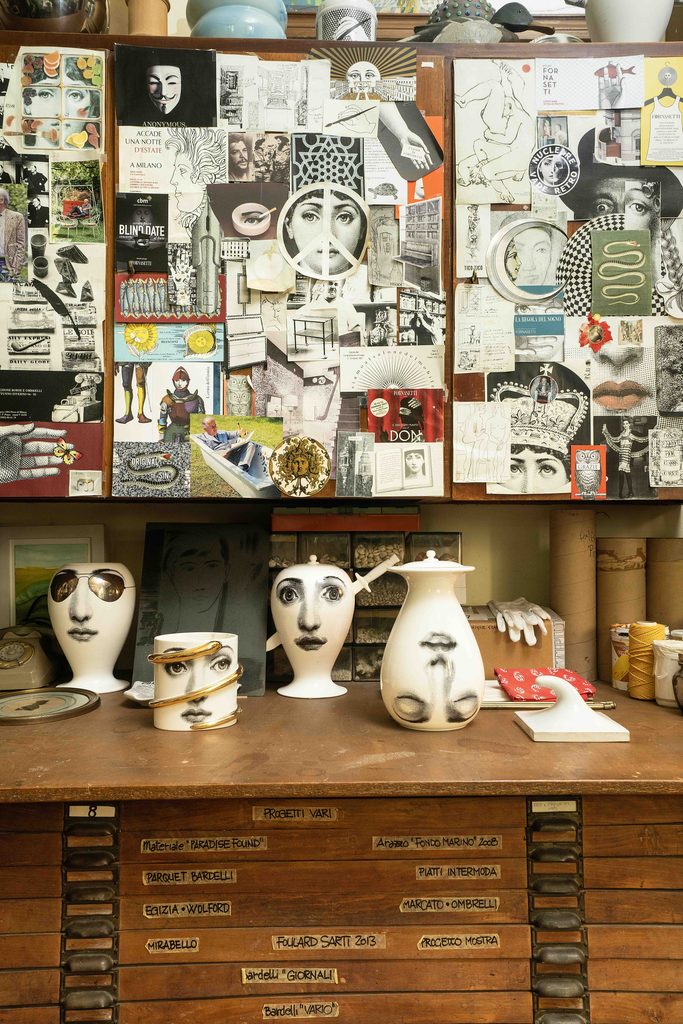
Maybe that it’s just decoration, or something purely eccentric. There’s theatricality, sure, but underneath, a very rigorous structure. Sometimes people see the face, the sun, the optical illusions, and stop there. What I hope they grasp is the next level: the dialogue with art and architecture, a certain collective memory. What amuses me is that Fornasetti almost always appeals to children, because they still look without prejudice. I’d love adults to look at things with that same freedom.
By the time we circle back through the garden, the cats have reappeared, weaving between the hydrangeas as if they, too, live by their own quiet choreography.