There is a moment, somewhere between the 9th and 10th floors of a tower in Toronto’s Entertainment District, where the building opens up to the sky. Rain falls through it. Snow too. From the gym below, guests can watch precipitation descend through the void: an architectural gesture so simple and so deliberate that it reorients you entirely.
Nobu Hotel Toronto, the first Nobu property in Canada, occupies levels 41 through 45 of a mixed-use development that sits on what was once the site of a glass manufacturing facility, a quietly significant detail. Studio Munge, the Toronto and Miami-based design firm led by founder and principal Alessandro Munge, preserved original glass blocks from that industrial past and incorporated them into the fitness area, letting the building’s memory surface without making a fuss about it. The existing street-level façade was also kept intact, anchoring the project in the neighborhood’s architectural history before two slender residential towers rise above it.
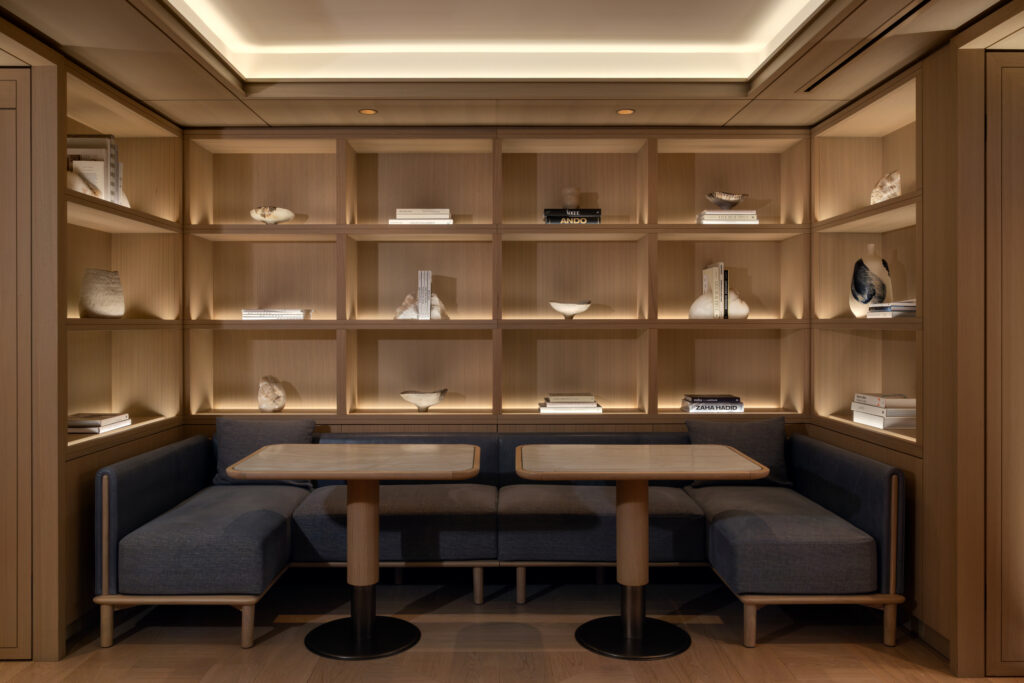
The design brief called for something specific: not luxury in the conventional sense, but something closer to the Japanese ryokan, the traditional inn built around principles of tranquility, material authenticity, and mental stillness. The resulting 36-room hotel feels less like a destination and more like an exhale. Munge describes it as “a one-of-a-kind oasis in the sky, an elegant yet deeply comfortable, residential-inspired retreat set above the rhythm of Toronto’s city center,” and for once, the language of the press release matches the reality of the space.
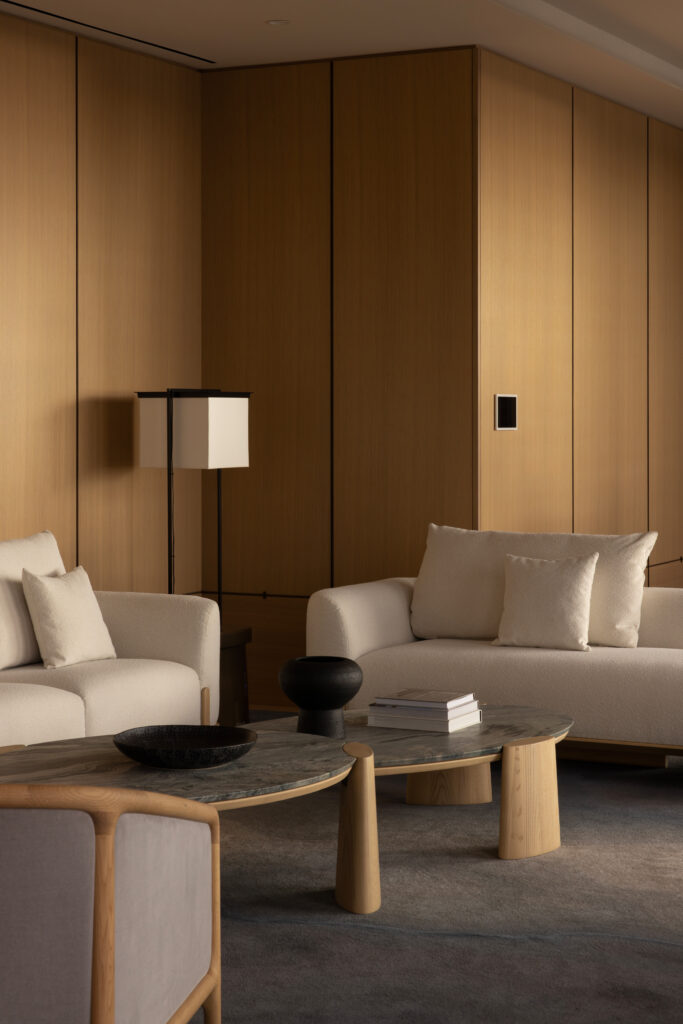
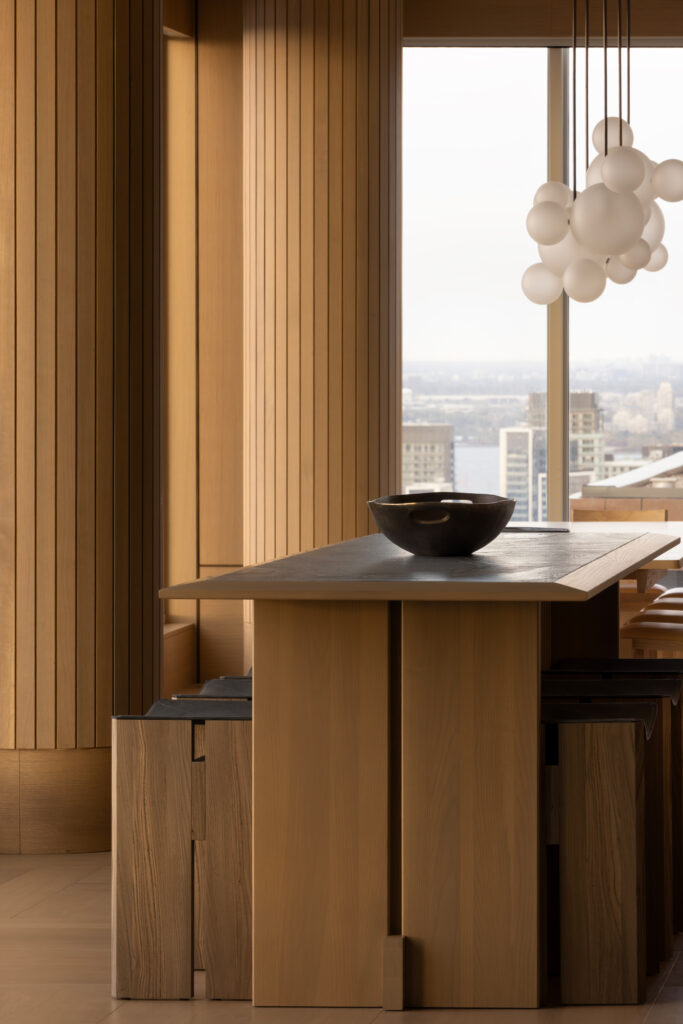
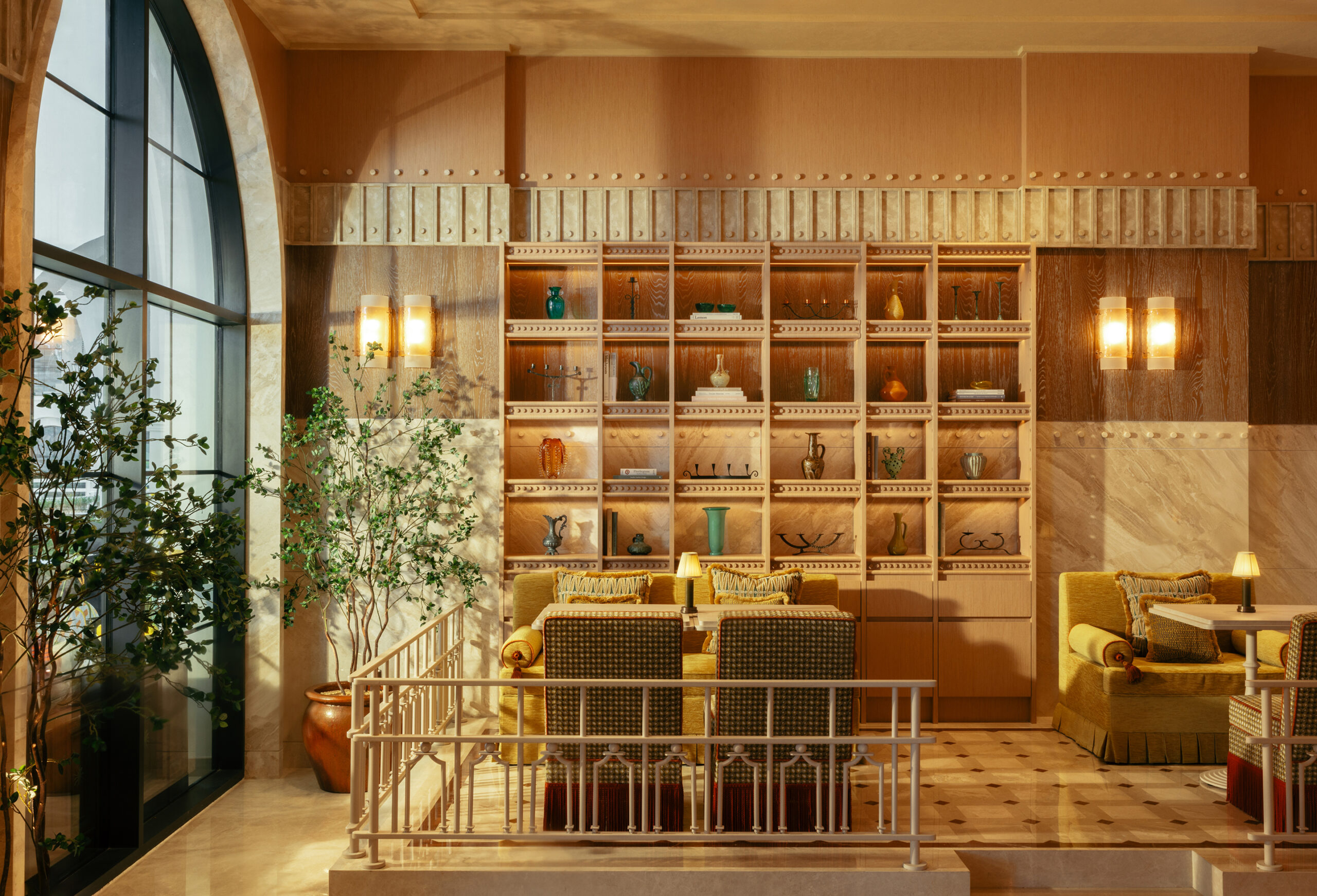
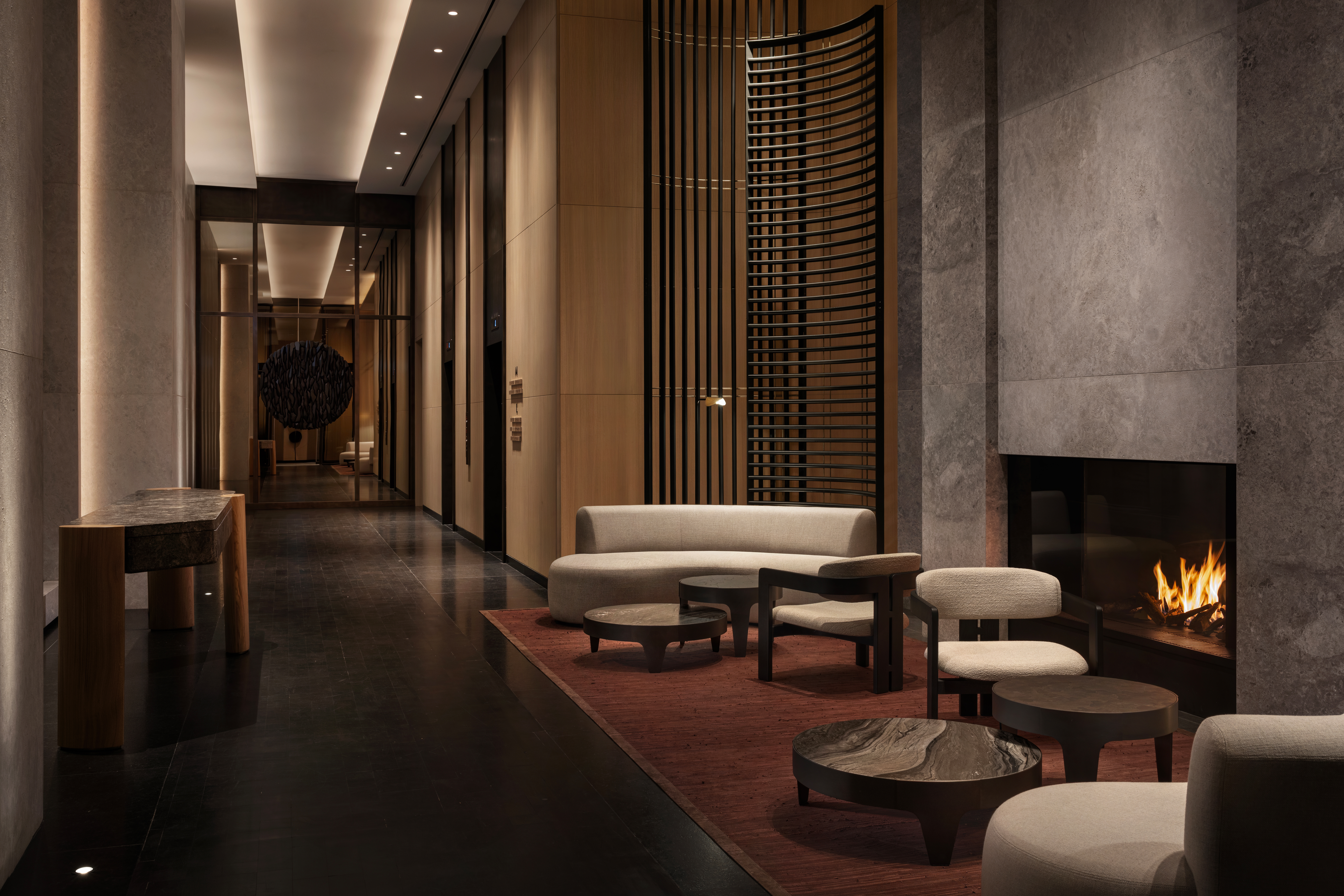
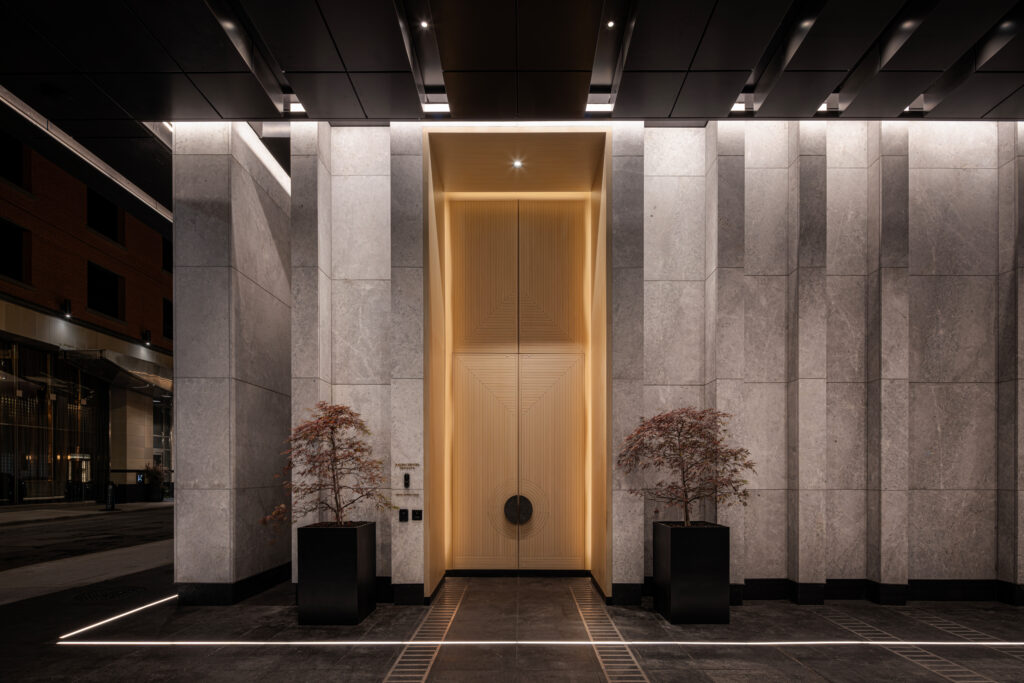
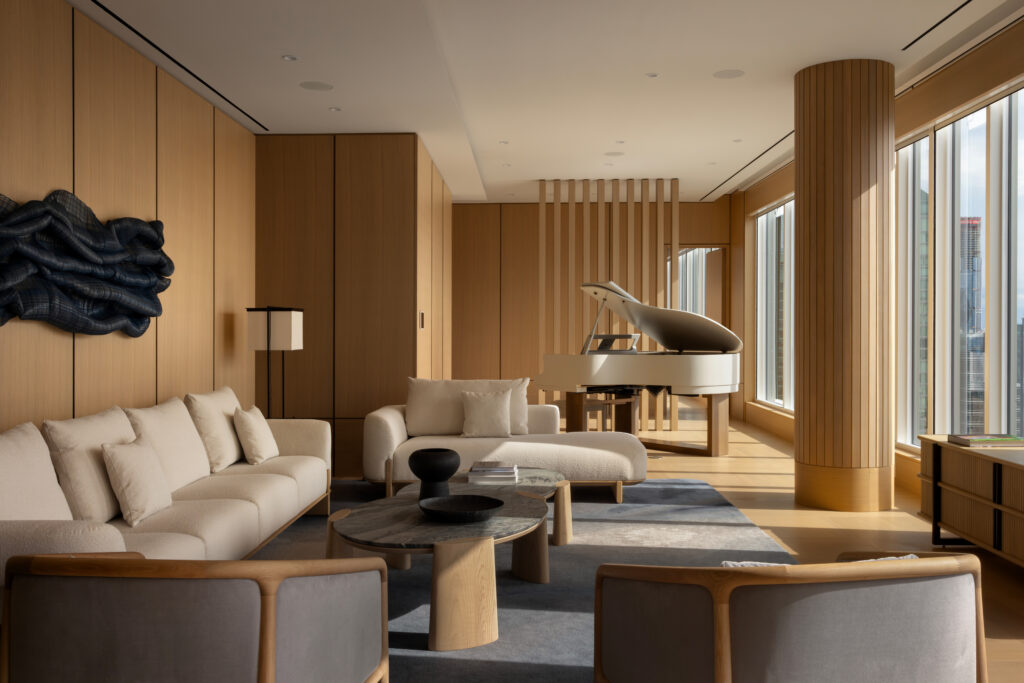
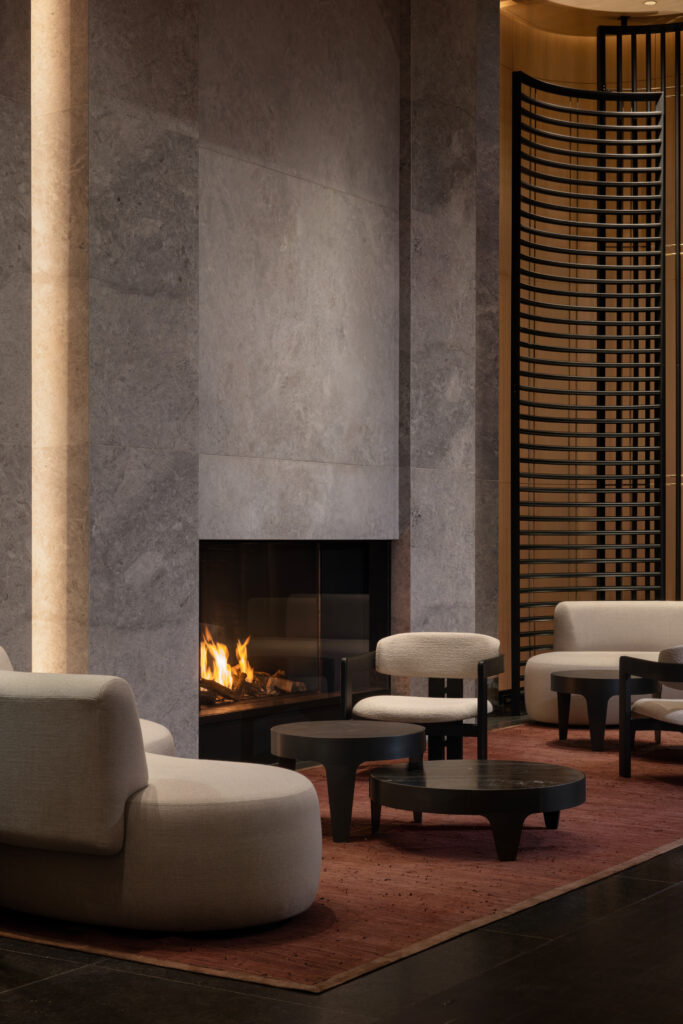
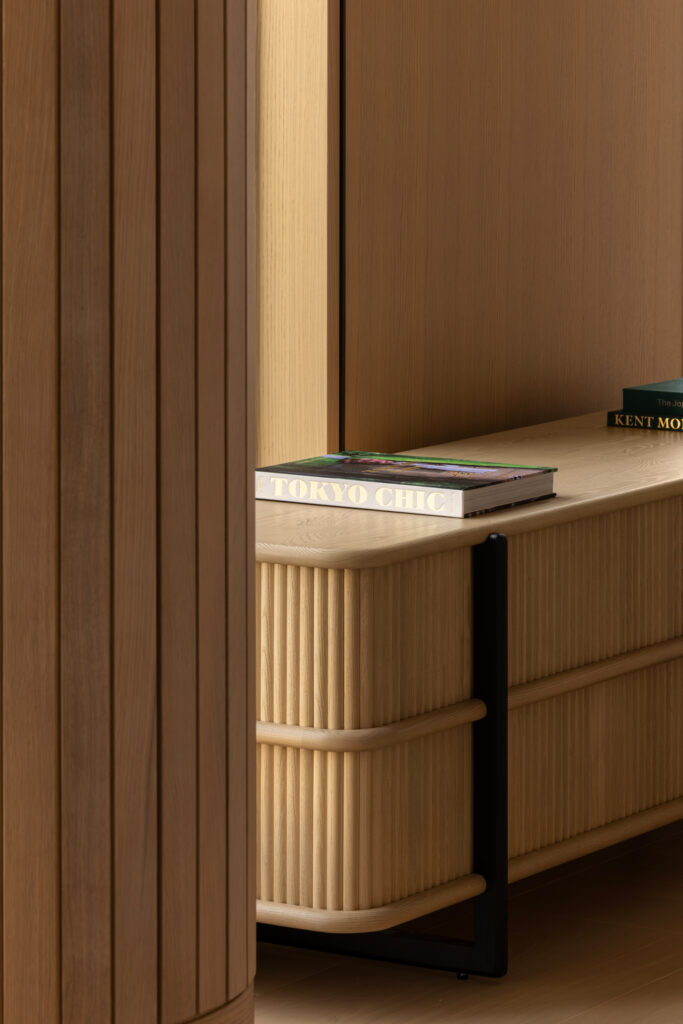
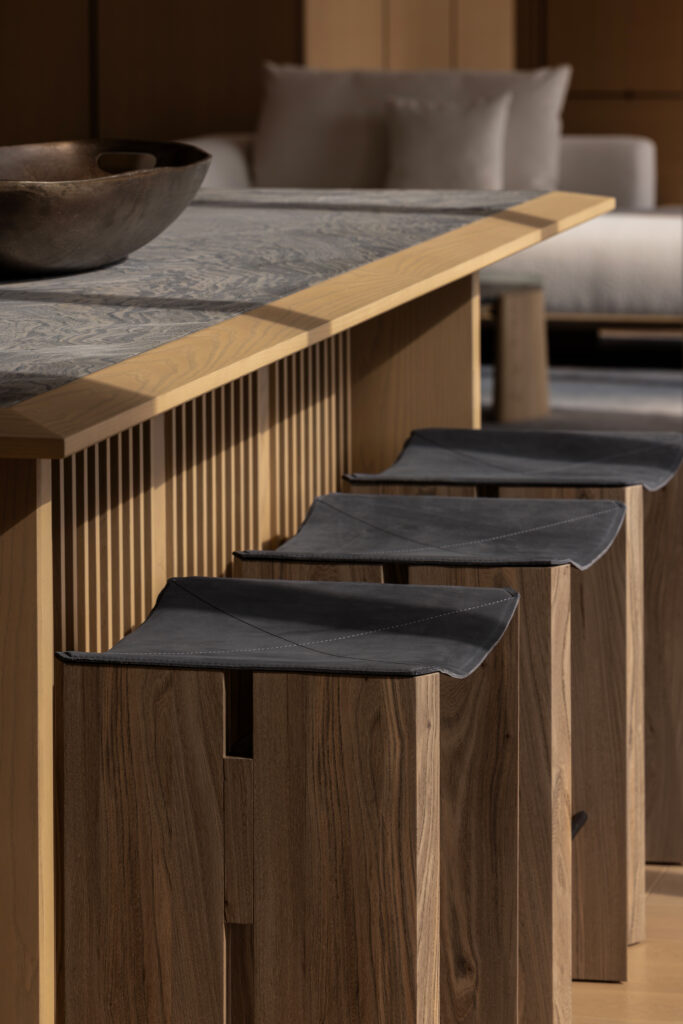
Studio Munge selected a single stone, Tundra Grey from Turkey, and used it everywhere: lobby floors, corridor walls, guestroom ensuites, millwork surfaces. The stone was hand-selected at the quarry to ensure chromatic consistency across the entire project. That level of obsession produces something that photographs can only partially capture: a sense that the building has been carved from a single material rather than assembled from parts. The leathered finish on the stone introduces texture where the eye might otherwise find monotony, and rift-cut white oak, chosen specifically for its linear grain, runs through wall paneling, screens, and custom furniture with the same tonal discipline.
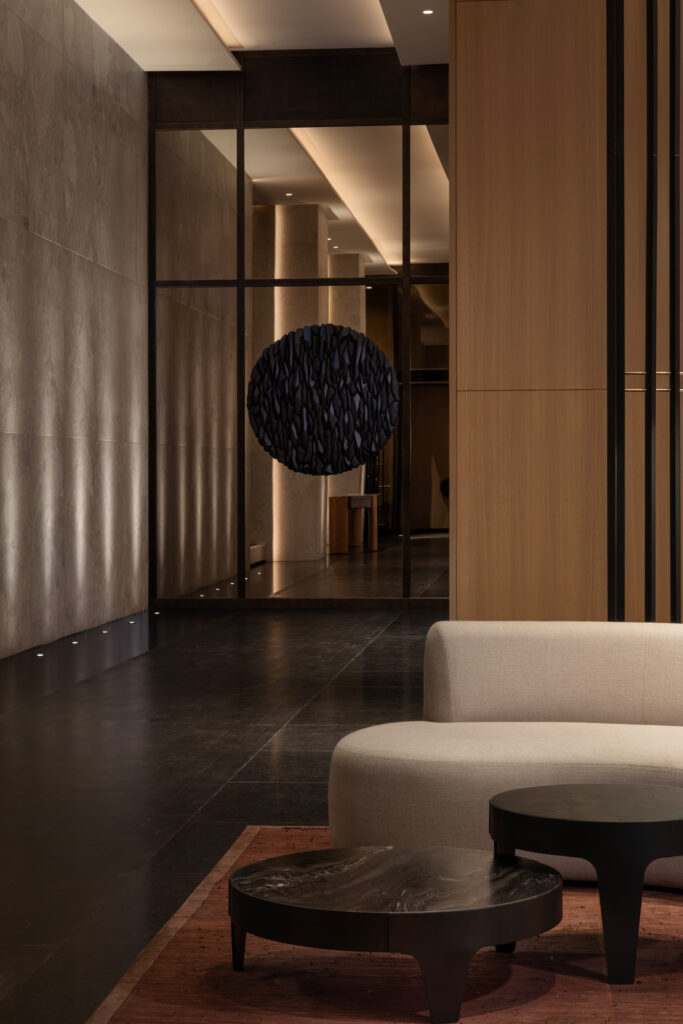
The arrival sequence introduces the hotel’s central tension: the meeting of Japanese craft and Canadian landscape. Toronto-based artist Dennis Lin contributed a bespoke artwork that anchors the entrance, and the surfaces around it reference the layered forging techniques of traditional Japanese metalwork, the kind used in blades, where countless compressions of metal produce expressive, directional patterns. It is an abstraction, not an illustration, and it works precisely because it doesn’t explain itself.
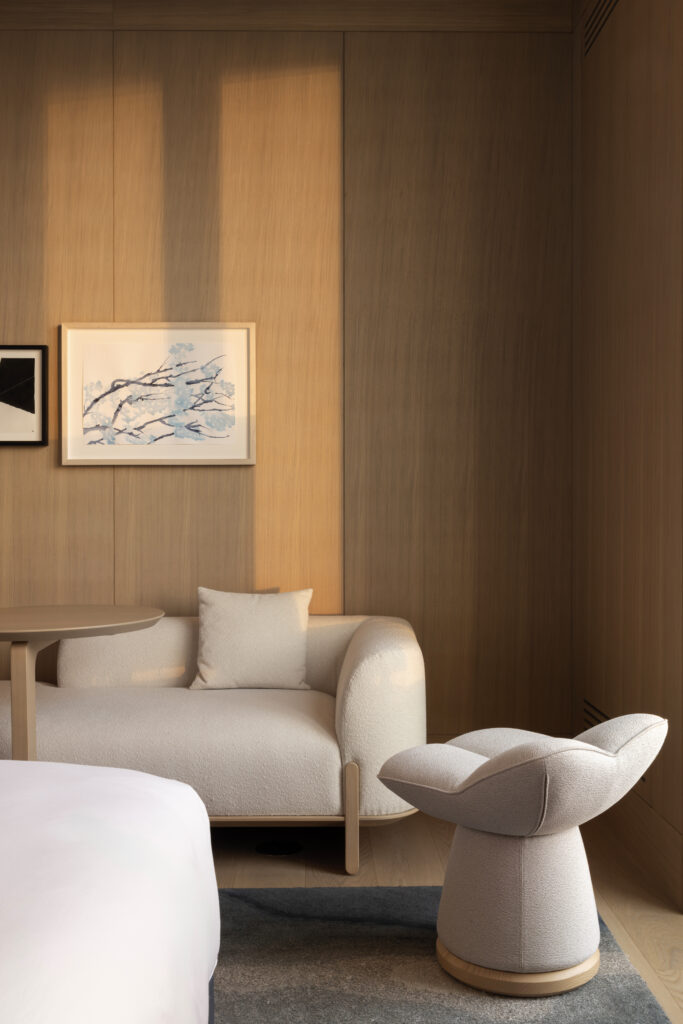
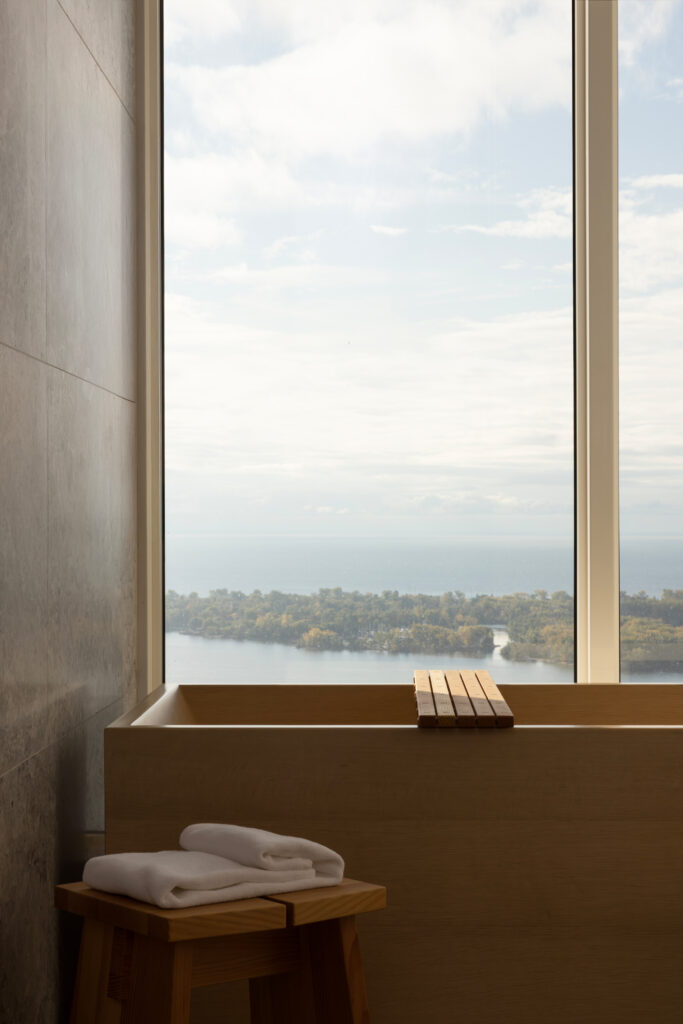
In the guestrooms, a soft spectrum of blue tones, referencing sky and water, does the emotional work of pulling guests away from the city they’ve just come from. Nearly every room includes a walk-in closet, generous living proportions, and a bed oriented toward the view. Many feature soaking tubs positioned directly beside the windows, a placement that makes the city feel like a painting rather than an intrusion. The wooden soaking tub, central to the Nobu Hotels identity, carries particular weight here. In Japanese bathing culture, the bath is a ritual of restoration, not a convenience, and the design treats it accordingly, giving it prominence and framing it with the same care as the view itself.
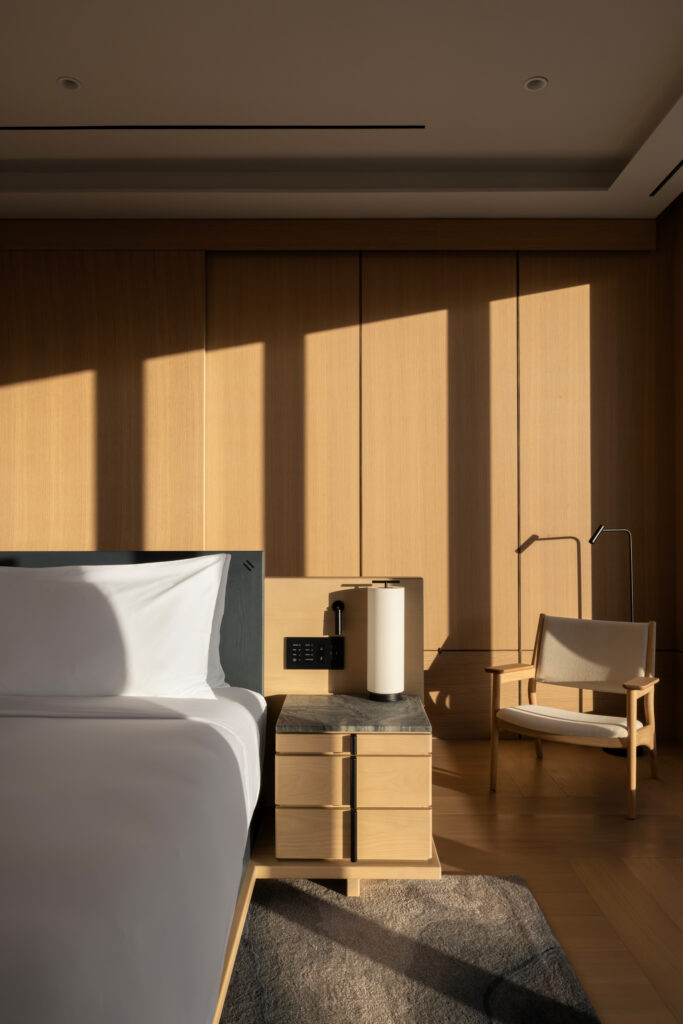
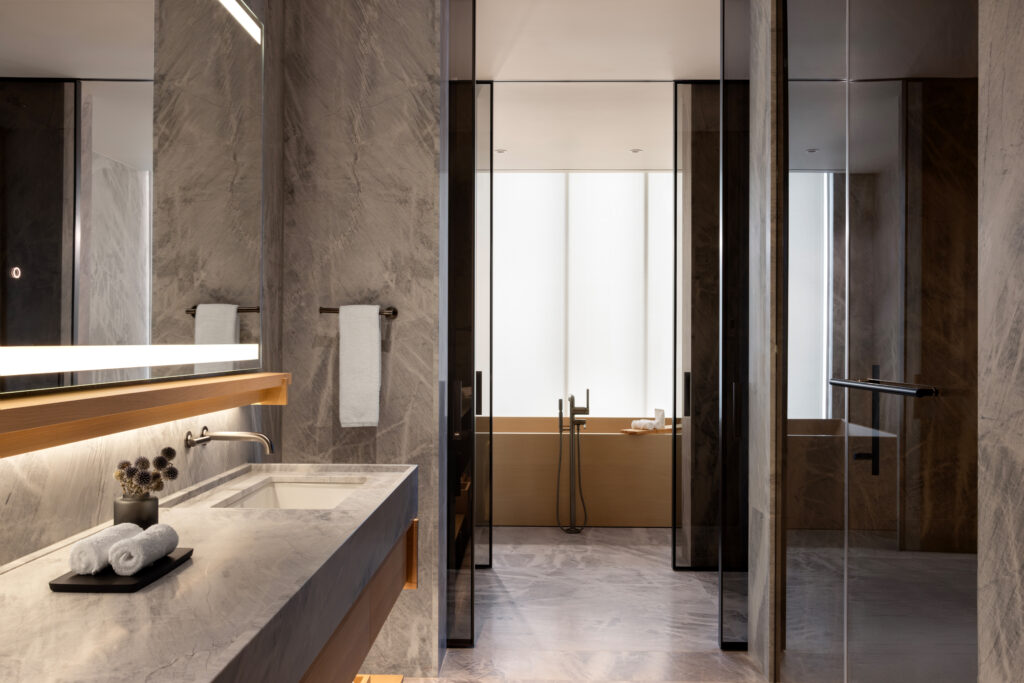
The furnishings throughout the hotel draw from a considered roster of makers. Pieces by B&B Italia, Christophe Delcourt, Carl Hansen, Karimoku De La Spada, and Piet Boon sit alongside custom work, all selected for proportion and material honesty rather than brand recognition. Holly Hunt textiles, hand-dyed indigo fabrics, and handcrafted Kawara tiles layer warmth into the palette without disrupting its quietness. In the public spaces, a sculptural bronze chainmail chandelier, evoking the folded drape of a kimono, introduces what the Studio Munge team calls a moment of quiet drama. It earns that description.
The quality control is visible not in any single statement piece, but in the accumulated precision of decisions made consistently over time: the grain of the oak, the texture of the stone, the angle of the tub relative to the window. It is a hotel that takes the idea of a retreat seriously, and builds around it with enough intelligence and care that the idea holds.