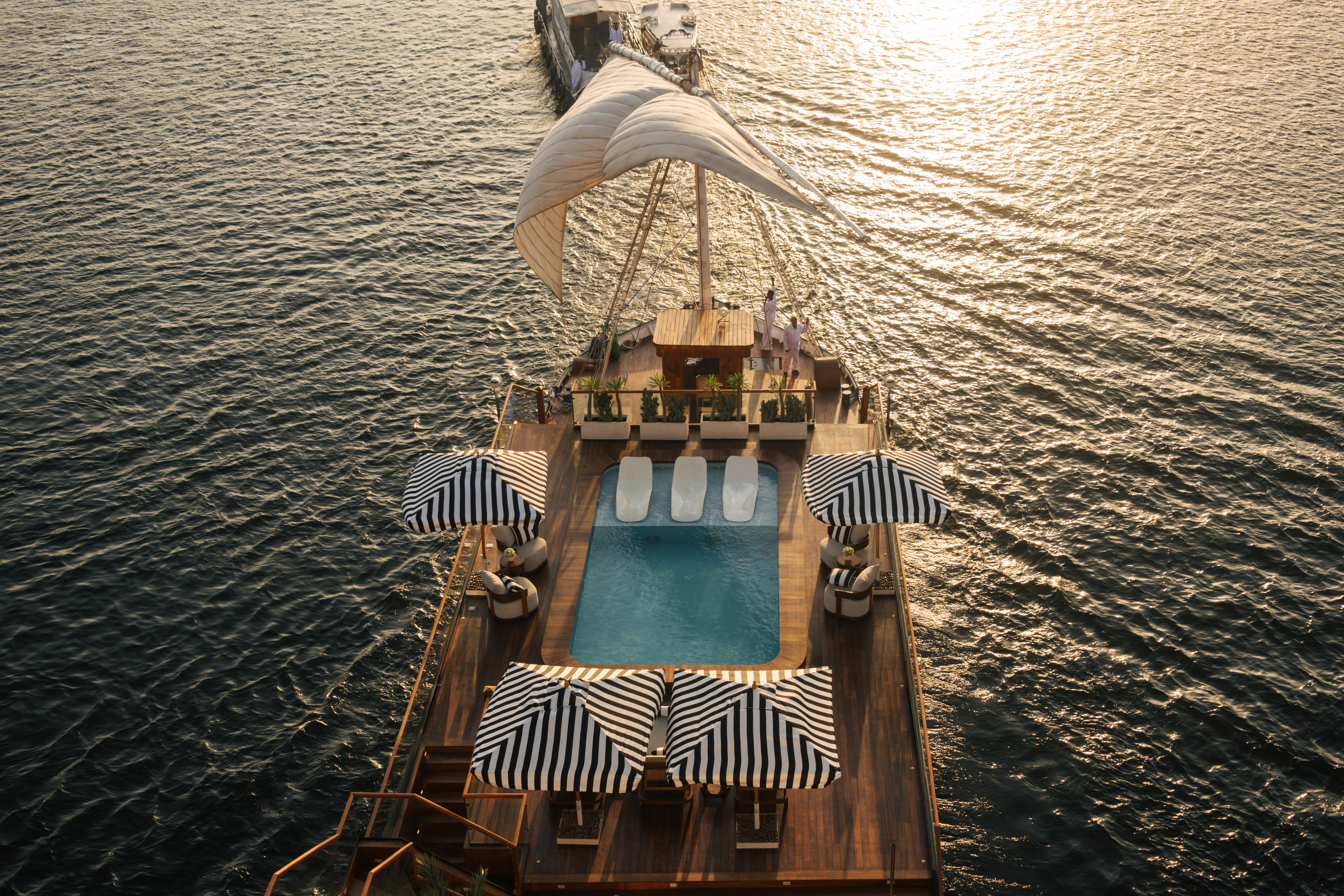
Aboard AlMourad Dahabeya, drifting between Luxor and Aswan, Reya Al Muhtasib has conceived not simply a vessel, but a total environment in which architecture, interiors, and objects dissolve into a single, continuous experience. Designed entirely by Reya Al Muhtasib Design House, with every piece of furniture handcrafted by The Edit, the project begins from absence, a bare steel structure, and arrives at a rare condition of coherence.
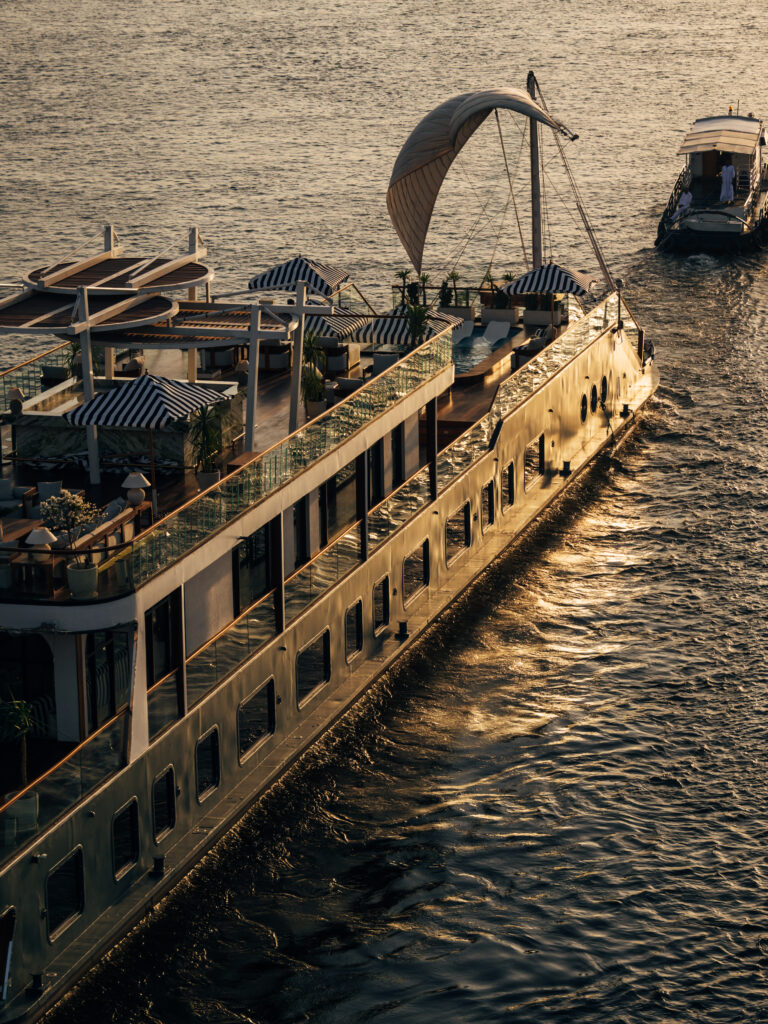
“The Nile was our starting point: the way it flows, how it slows the day, and how it gently sets the rhythm onboard.” explains Al Muhtasib. That rhythm becomes spatial. It is embedded in materials that feel rather than declare themselves, stone, sand, linen, wood, assembled in warm tonalities that echo the landscape while softening its presence. “There is a strong focus on the senses: how the space feels, how it responds to light, and how it allows you to be more present within your surroundings.” continues the designer.
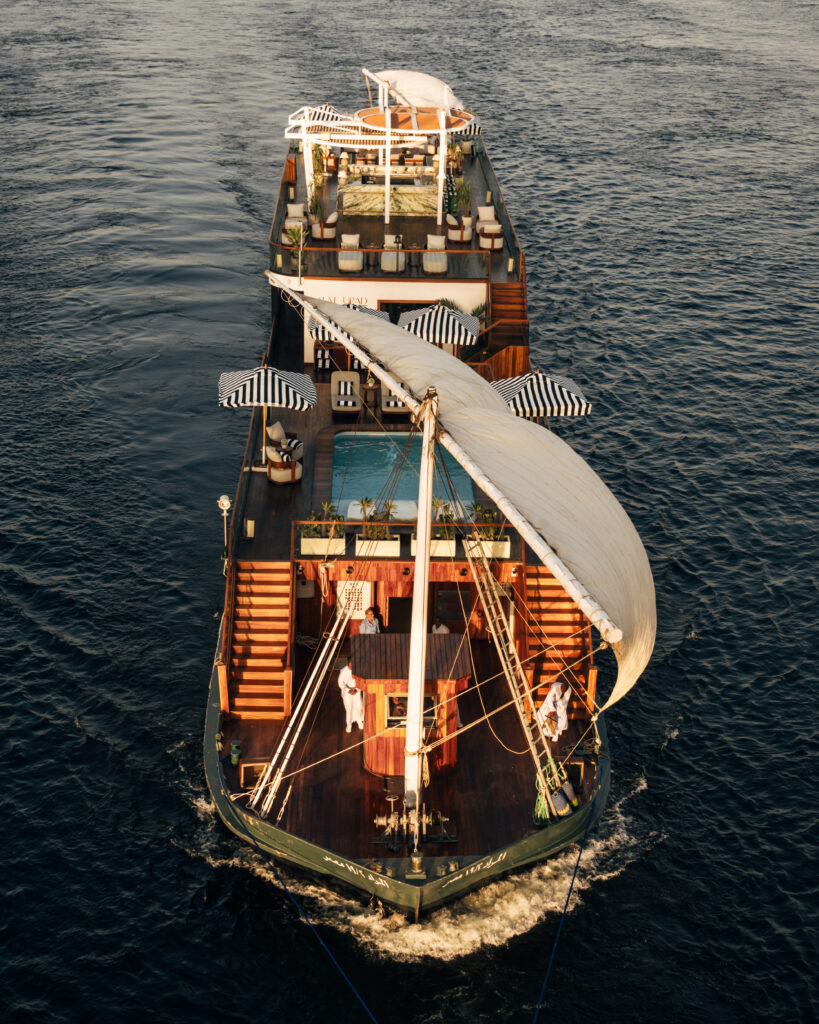
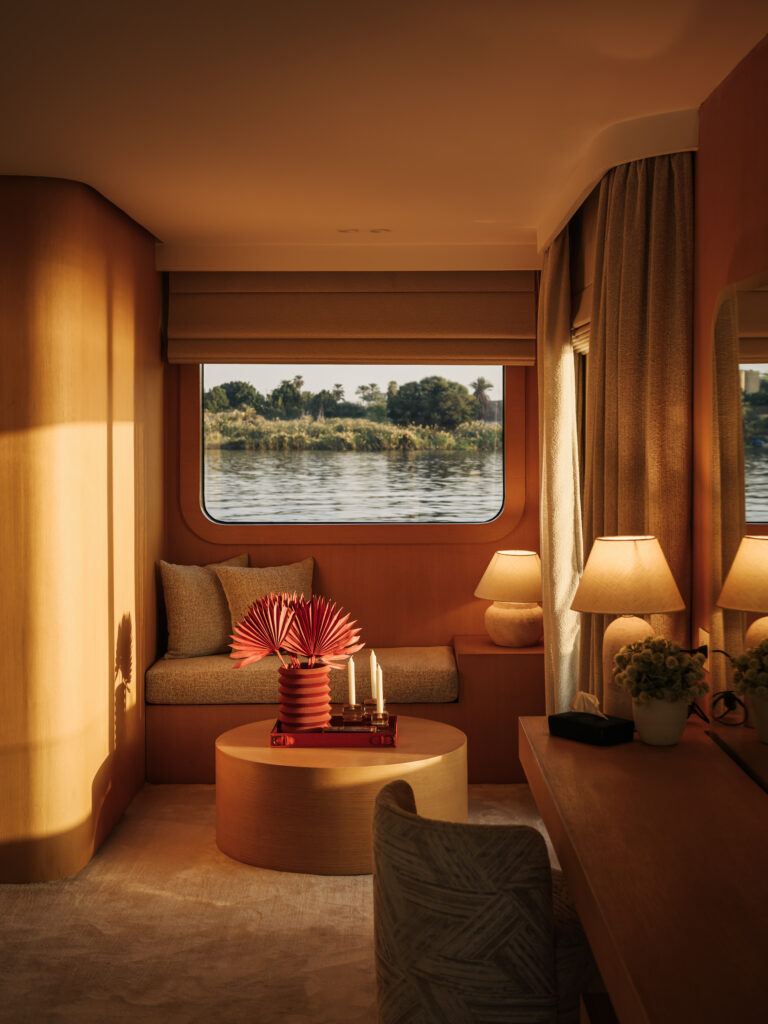
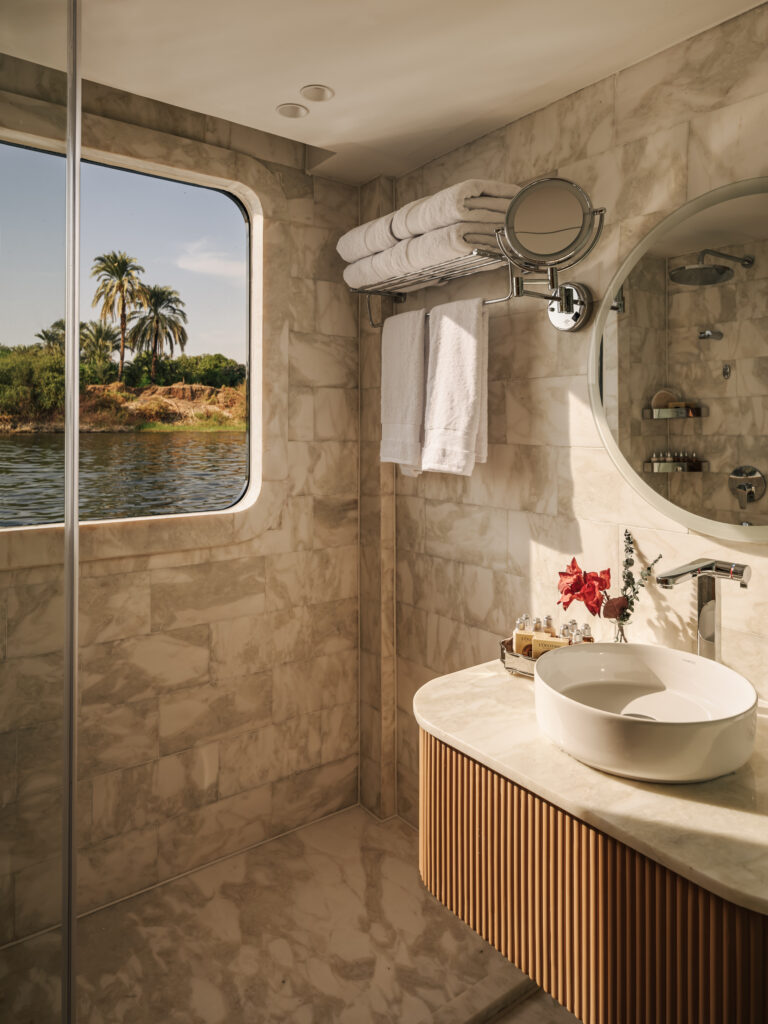
The architecture resists enclosure. Panoramic windows extend across cabins, bathrooms, and shared spaces, while the lounge and restaurant unfold on all sides toward the river. Al Muhtasib tells Marie Claire Maison:“We designed the layout to maximise openness and flow, allowing the Nile to remain present from every space.” Here, the river is neither framed nor observed. It permeates.
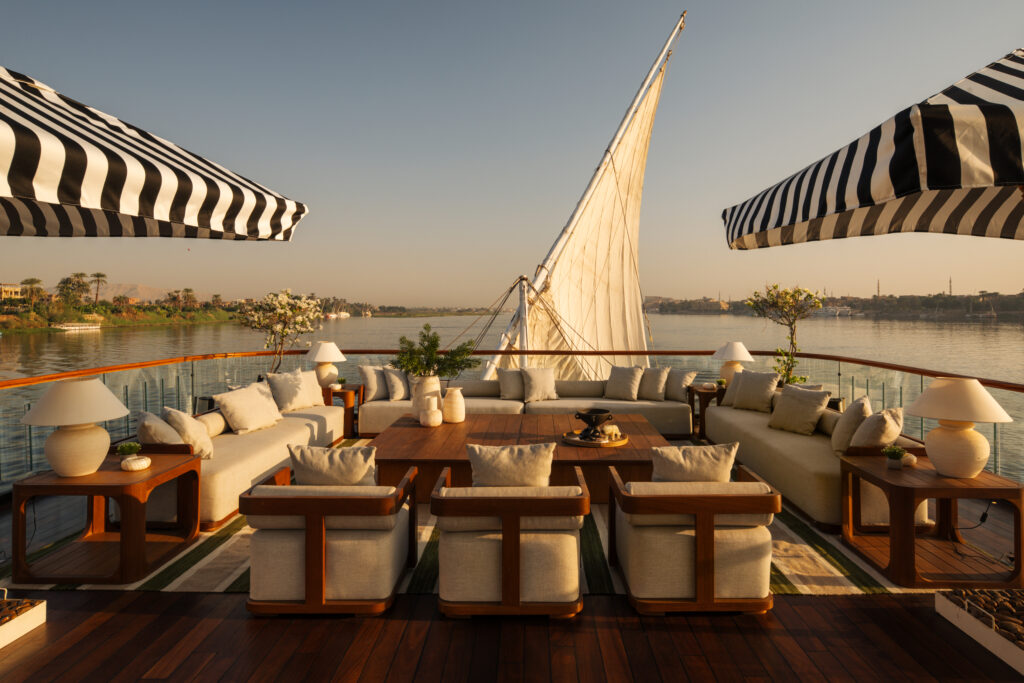
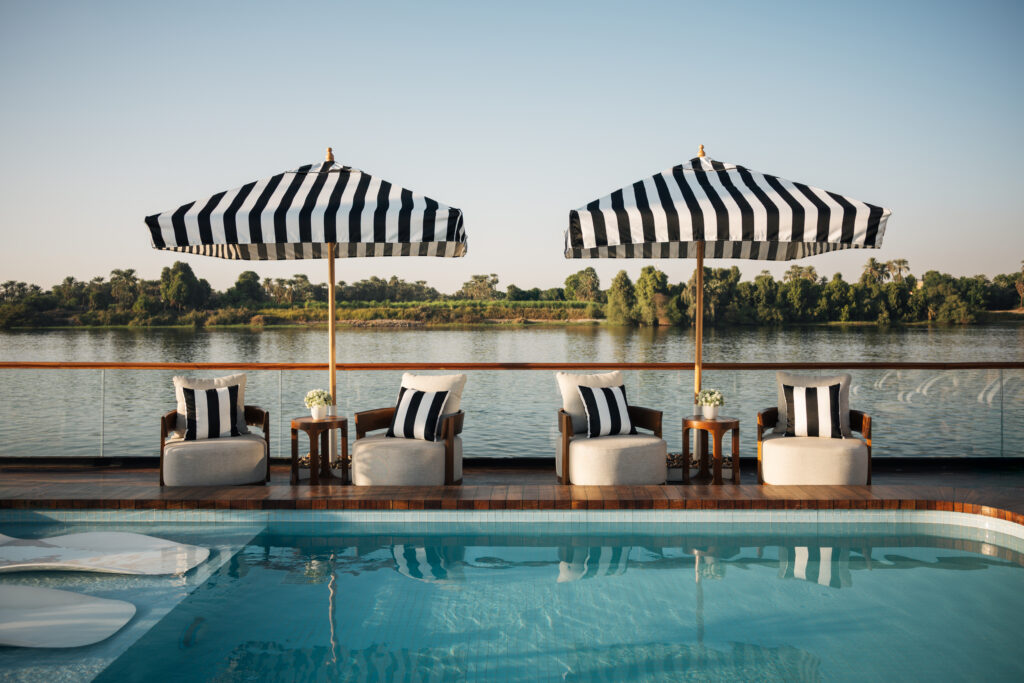
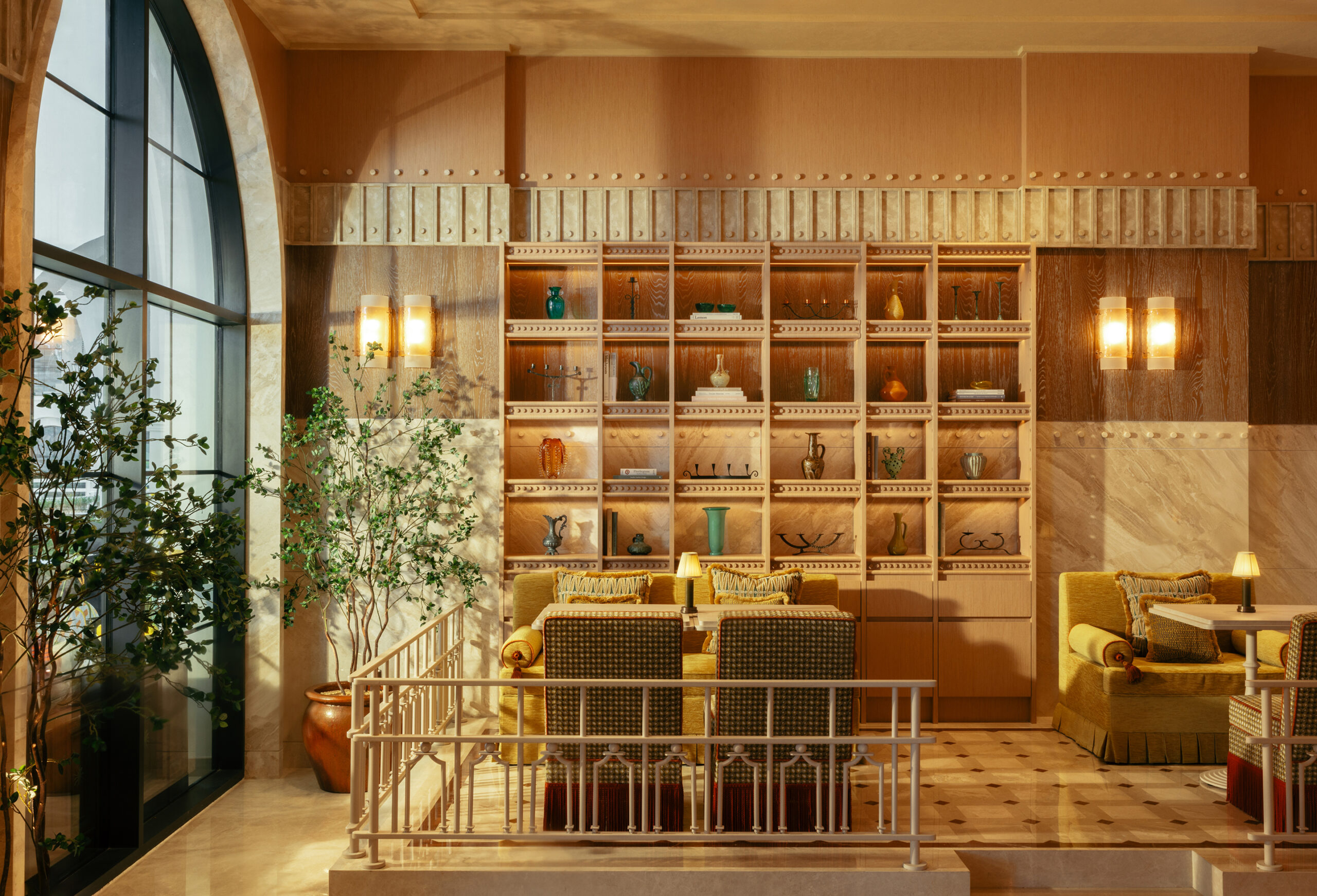
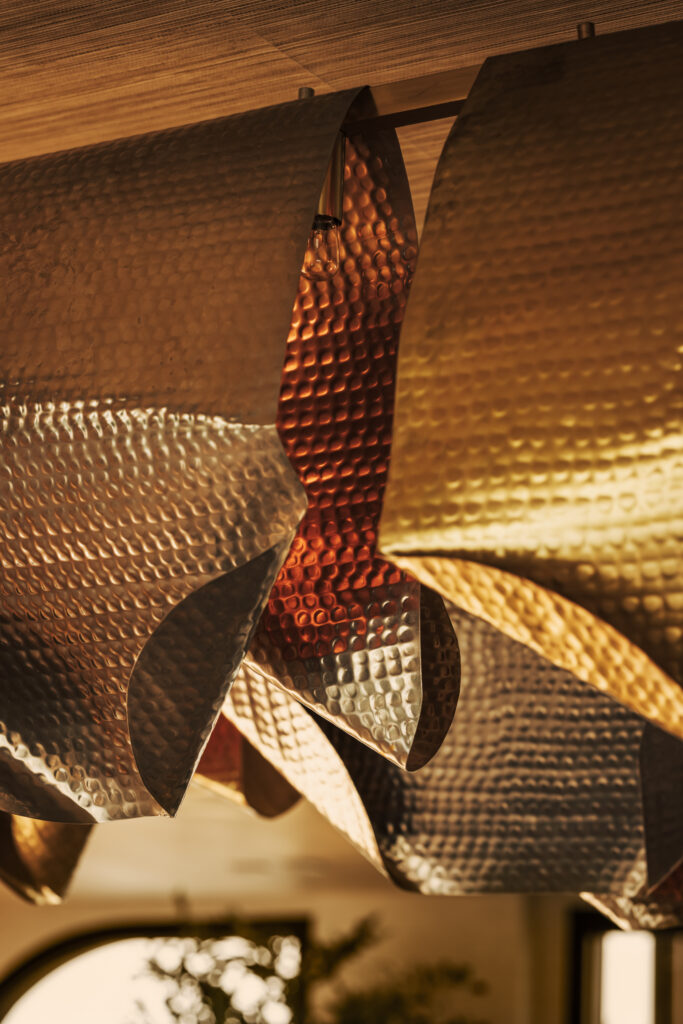
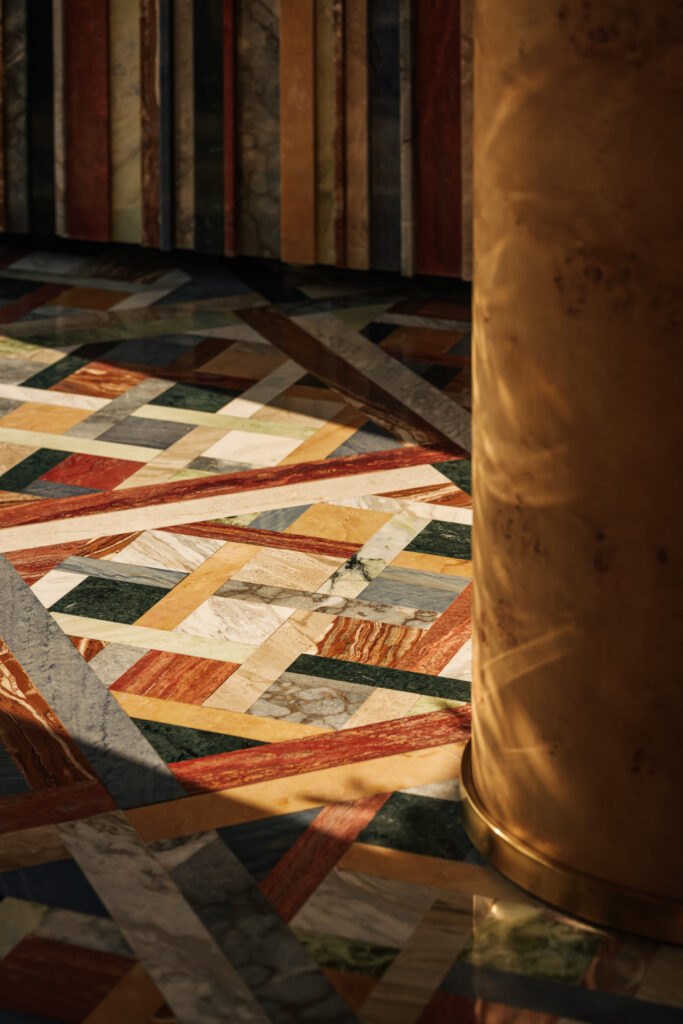
Within this openness, design emerges through precise, almost tactile gestures. The lounge floor, composed of off white sand, is experienced barefoot, grounding the body before the eye registers the horizon. In the restaurant, eleven stones are assembled into a geometric marble composition whose chromatic depth recalls pharaonic artefacts without replicating them. Above, a ceiling clad relocates ornament overhead, freeing the visual field while introducing a temporal dimension. Using the words of Al Muhtasib:“It creates a quiet dialogue between past and present: the history above you, the flowing river in front of you.”
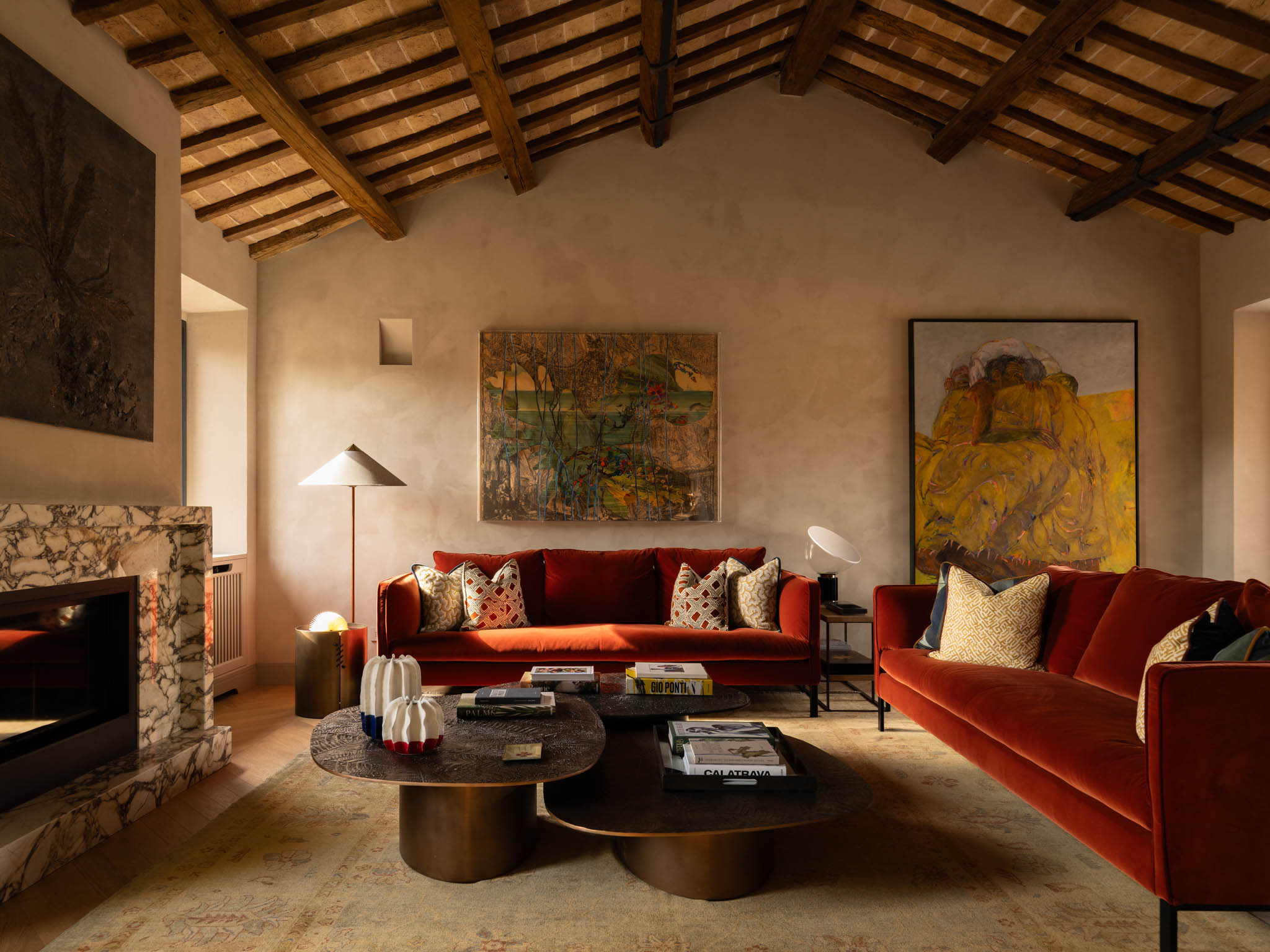
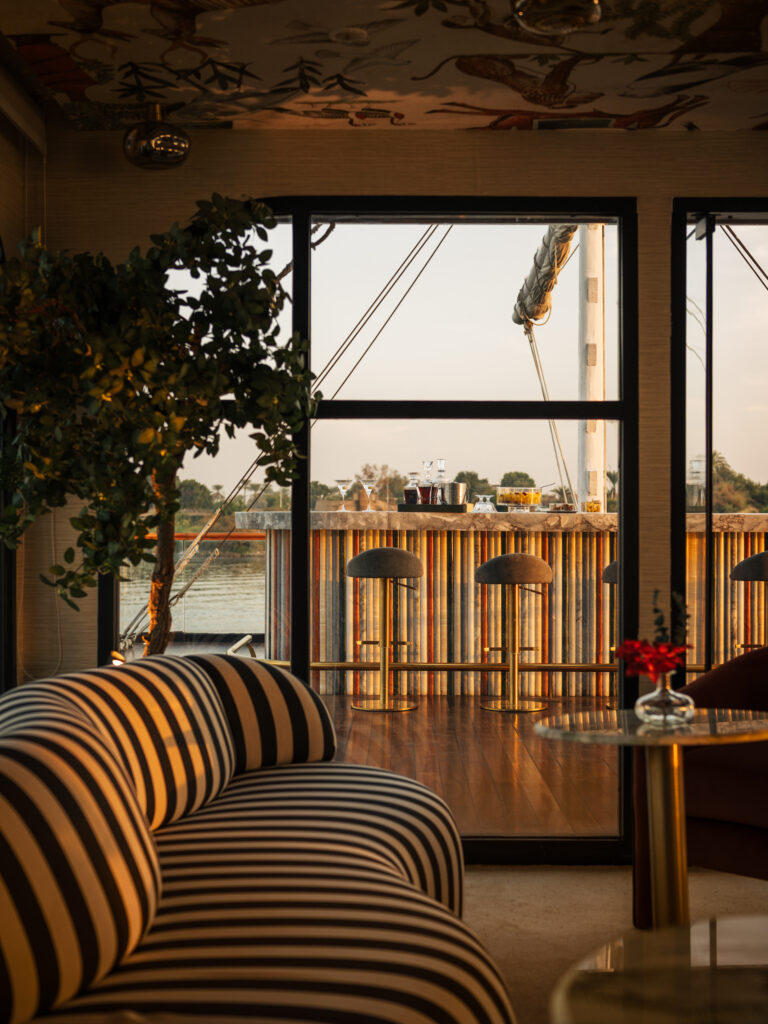
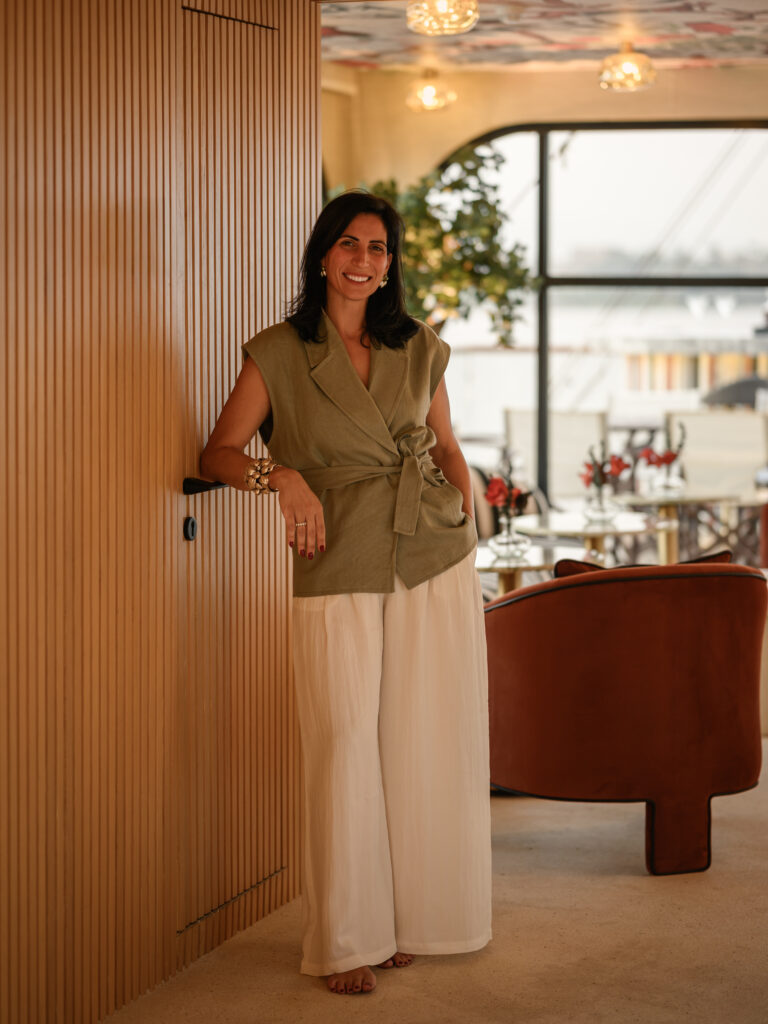
Furniture extends the same logic of continuity. A five metre sofa unfolds through the lounge in a sculptural, wave like form, its silk screen printed linen surface echoing the movement of water. “The same hand that drew the layout also shaped the chair you sit in. That coherence is something you feel, even if you cannot immediately name it.” says Al Muhtasib. Nothing is placed. Everything belongs.
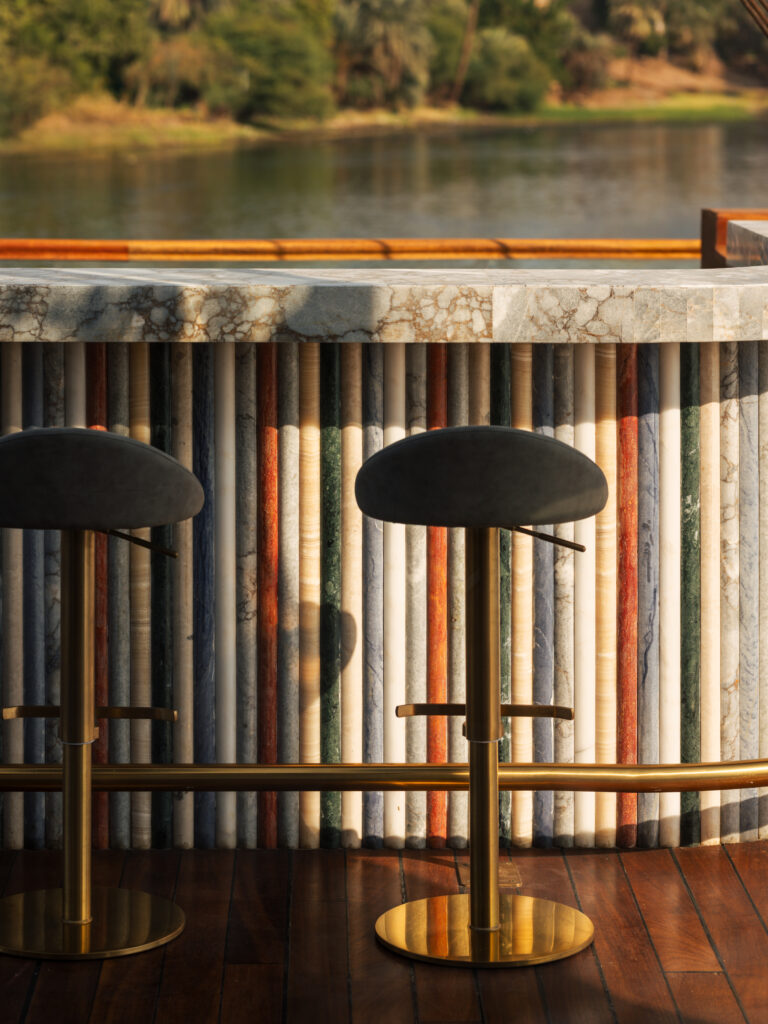
Materiality is layered with deliberation. Solid teak planks define the outdoor decks, while interiors move through linen, leather, walnut and burl veneers, papyrus like wall textures, and stone compositions that shift subtly from space to space. The bar counters, composed of up to nine different marbles, read less as objects than as condensed landscapes, colour held in restraint. “We wanted it to feel colourful and expressive but still blend in, not dominate.”
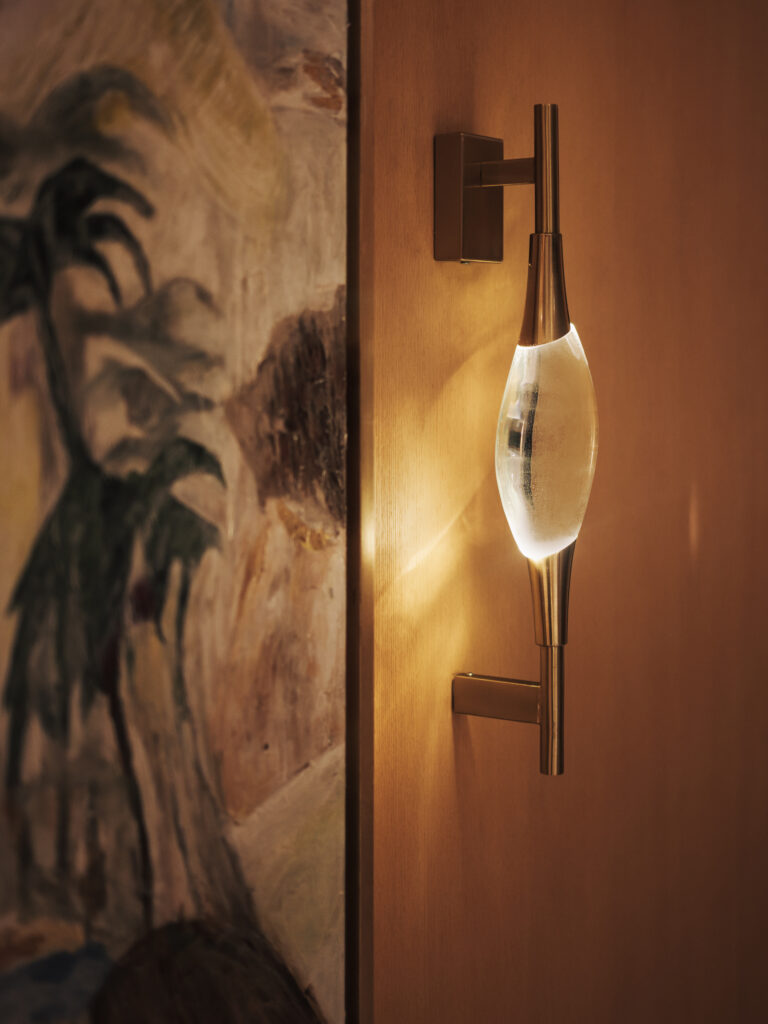
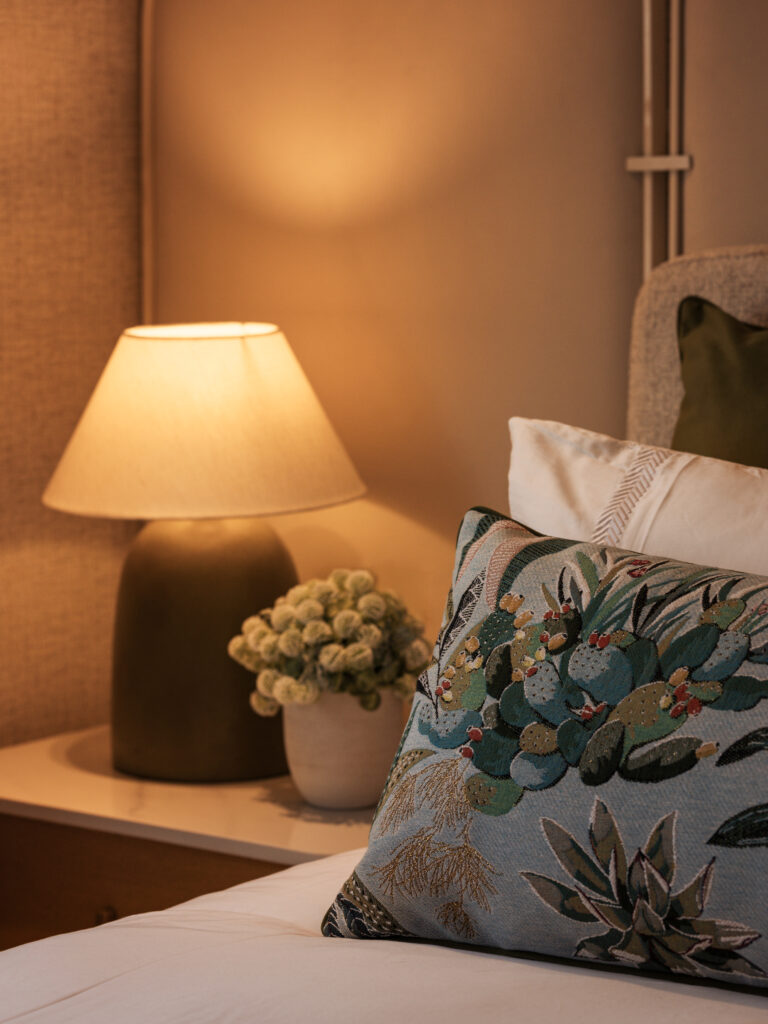
Light is never singular. It accumulates. Warmth is built through multiple sources, creating an atmosphere that envelops rather than illuminates. Indoor planting further dissolves the threshold between interior and exterior, reinforcing a sense of continuity with the river beyond.
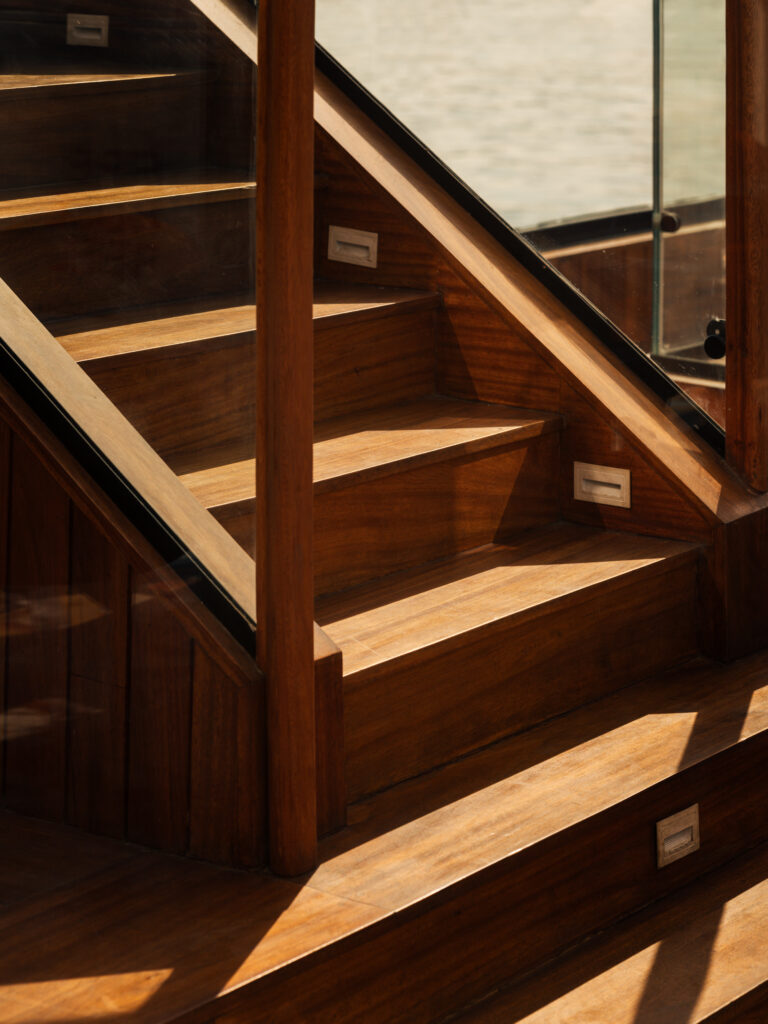
Even constraint becomes generative. Built entirely of steel, the vessel required a constant negotiation of weight, where the placement of the pool, the bars, and the kitchen became structural decisions as much as spatial ones. “Every decision had to be revised in terms of weight. We had to work in an entirely new way.” explains Al Muhtasib.
Beyond architecture, the project extends into the choreography of hospitality. The robe, the glass, the scent in the air, each element is considered as part of a continuous sensory field. As the designer says:“It’s the smaller, thoughtful details that elevate the sense of hospitality and make the space feel complete.”
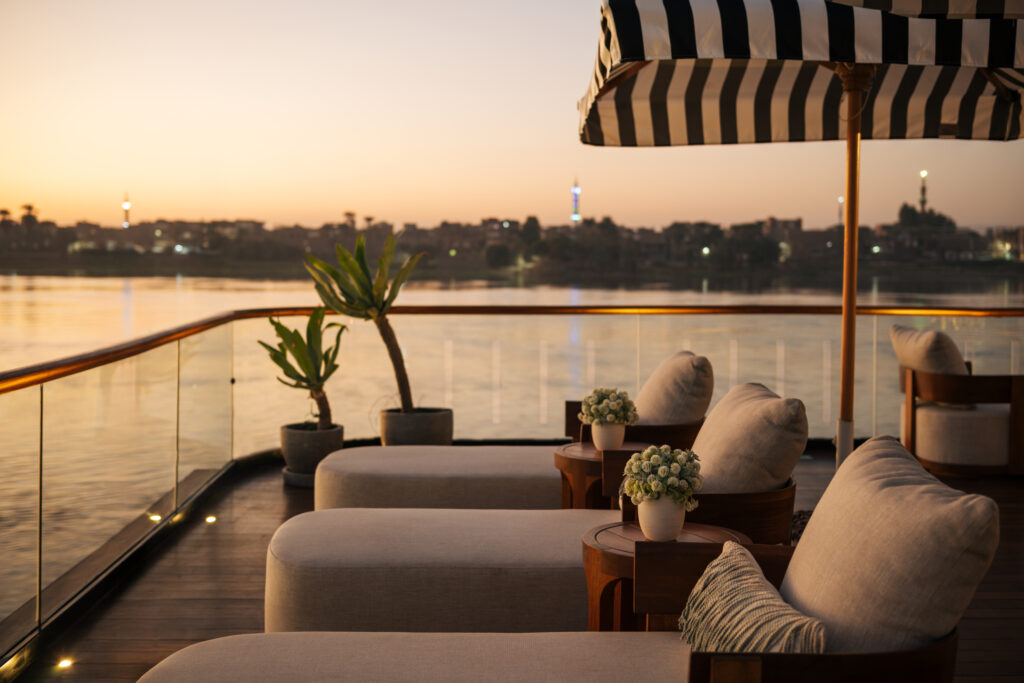
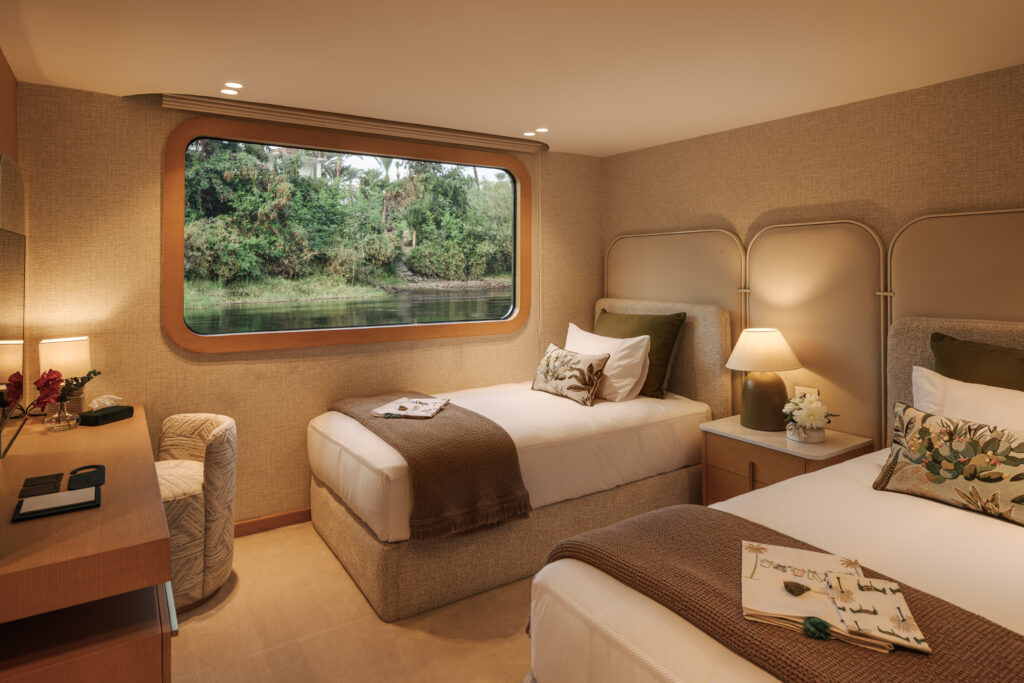
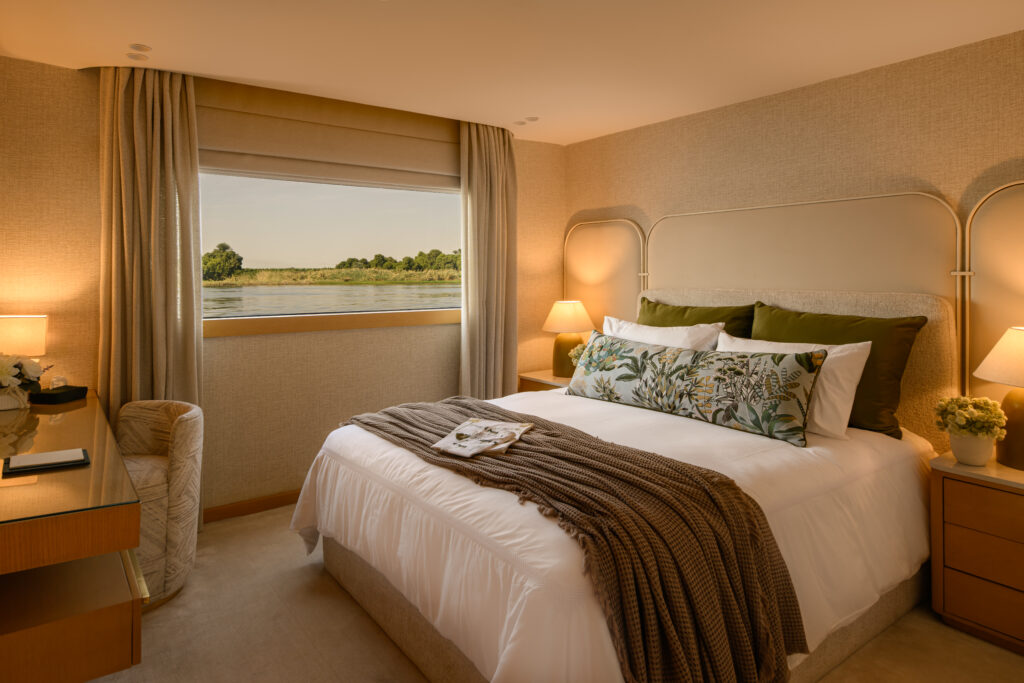
In the cabins, this logic turns inward. Each room frames the river as its primary gesture, allowing light and stillness to define the experience. “The cabins were designed so that the first thing you experience each morning is the river. The light, the stillness, the landscape. The room doesn’t compete with that. It holds it.”
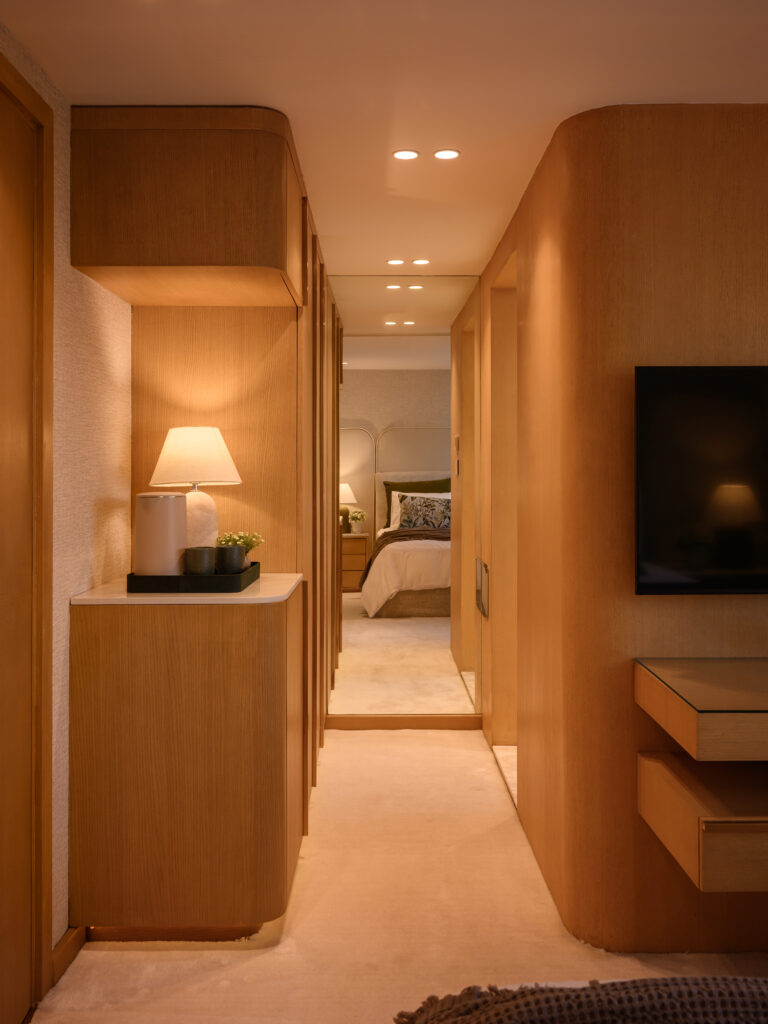
What defines AlMourad is not opulence but calibration. A quiet balance between richness and restraint, between presence and absence. “It’s designed to gently awaken the senses, while allowing guests to slow down and fully take in the journey.”