Designed by EVA Interiors, the studio founded by Seema Al Mansouri, with contributions from Creative Designer Director Thafer Al Bazae, this private residence in Saudi Arabia is defined by a careful balance between architecture and atmosphere, with the majlis emerging as its central spatial anchor.
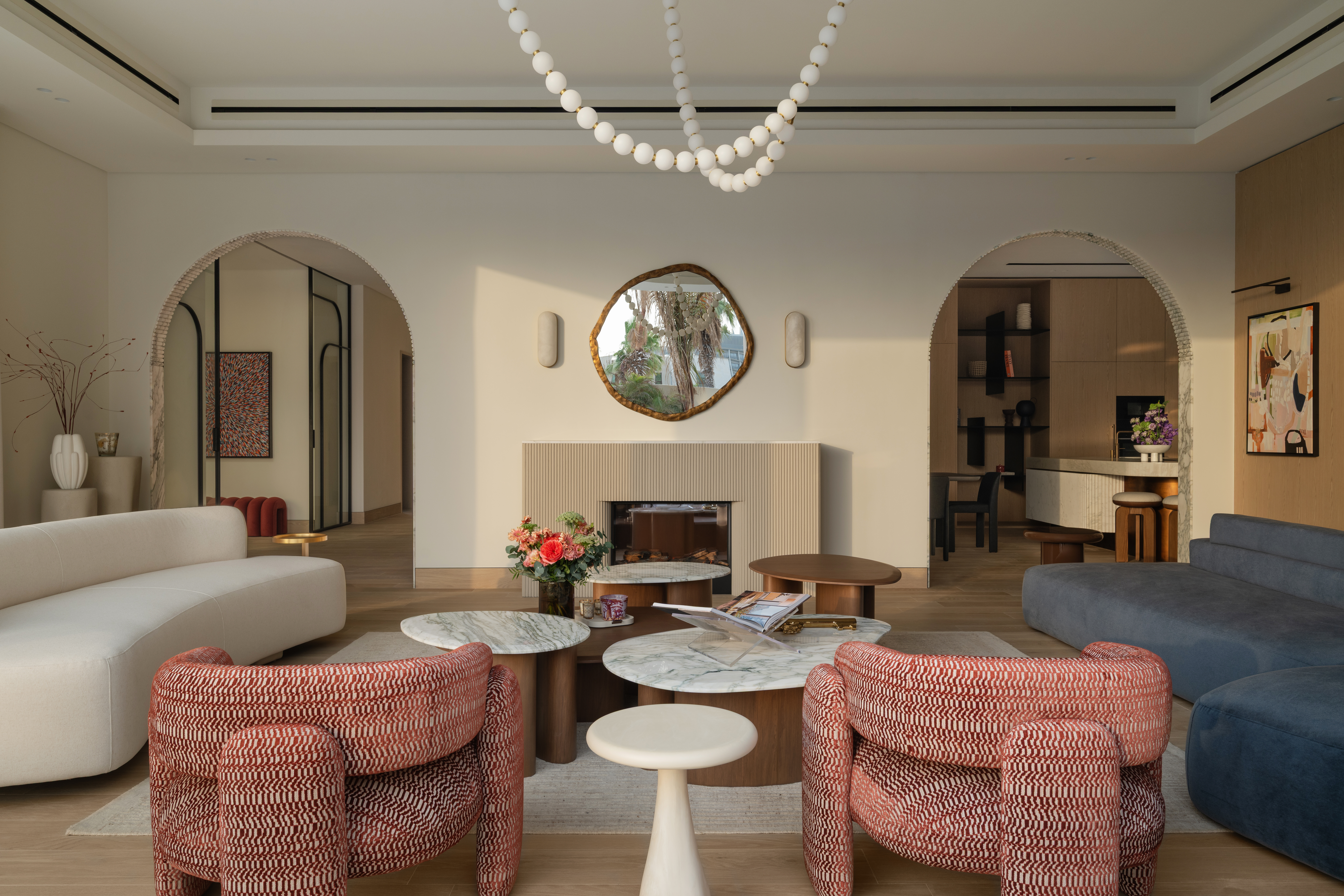
“From the outset, the intention was to create a home that feels composed and quietly confident rather than overtly decorative,” reflects Al Mansouri. “The spaces were designed to feel calm, generous and layered, where moments of expression emerge naturally through art, furniture and texture.” That intention finds its most precise expression within the majlis, where the space unfolds through proportion, material and placement, allowing each element to contribute without excess.
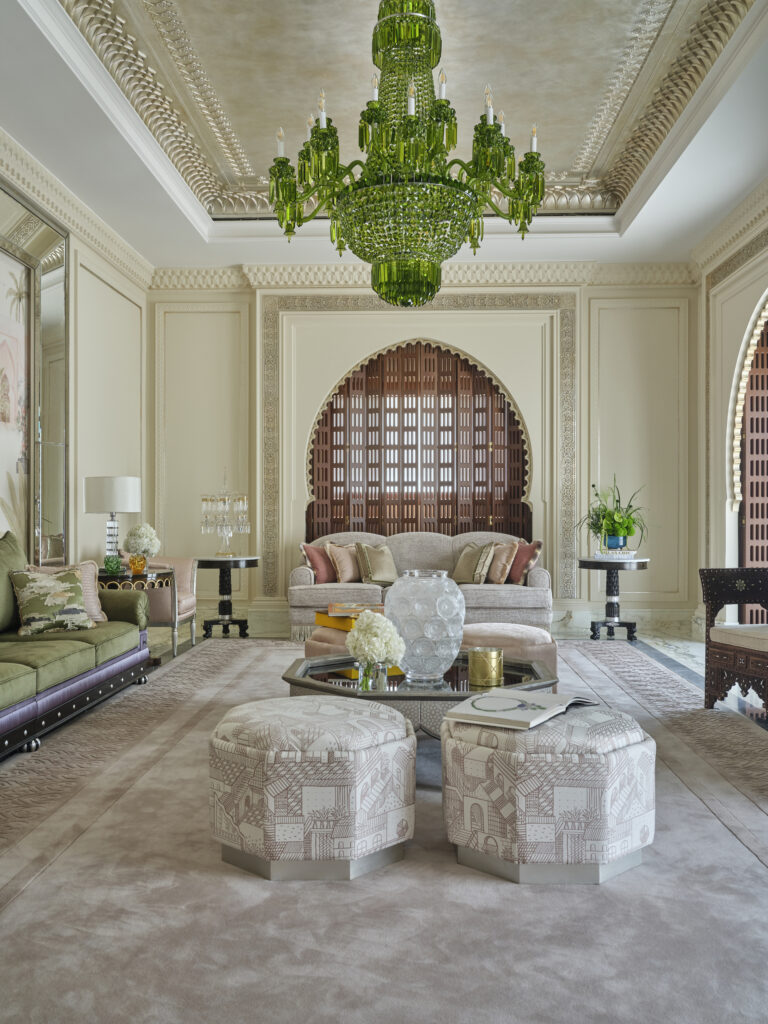
A Persian carpet grounds the room, introducing depth and continuity. Around it, seating defines the structure of the space, creating a sense of intimacy within scale while reinforcing the social function of the majlis as a place of gathering. “We wanted the space to unfold gradually, revealing depth and character through subtle contrasts and carefully framed focal points,” she continues.
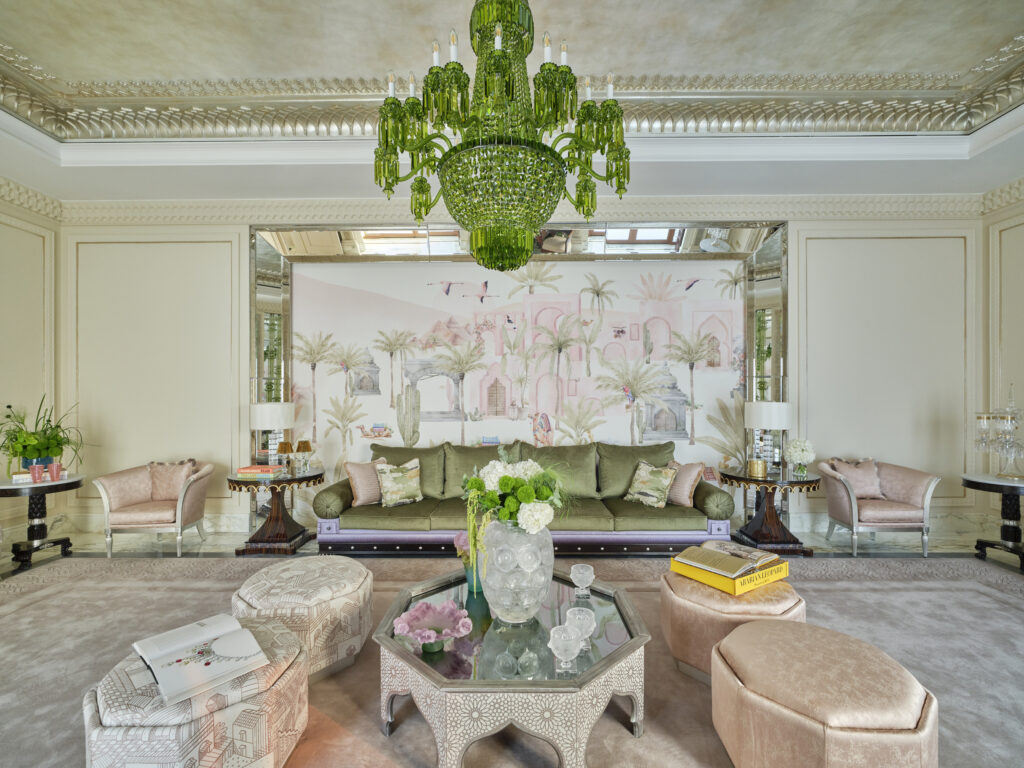
Designing within the Saudi context brings a clear spatial logic shaped by hospitality and privacy. “Homes are places of gathering and celebration, and that spirit of openness inevitably influences how the rooms are organised and connected.” Volumes are generous, yet controlled, and visual expression shifts toward material richness, geometry and craftsmanship. “Decorative elements often focus instead on material richness, geometry, craftsmanship and abstract expression.”The result is an interior where atmosphere is built through balance rather than gesture.
Lighting plays a key role in establishing this equilibrium. Pieces from Galerie MCDE, including designs by Pierre Chareau, introduce a layer of historical depth, contributing to the architectural rhythm of the room.
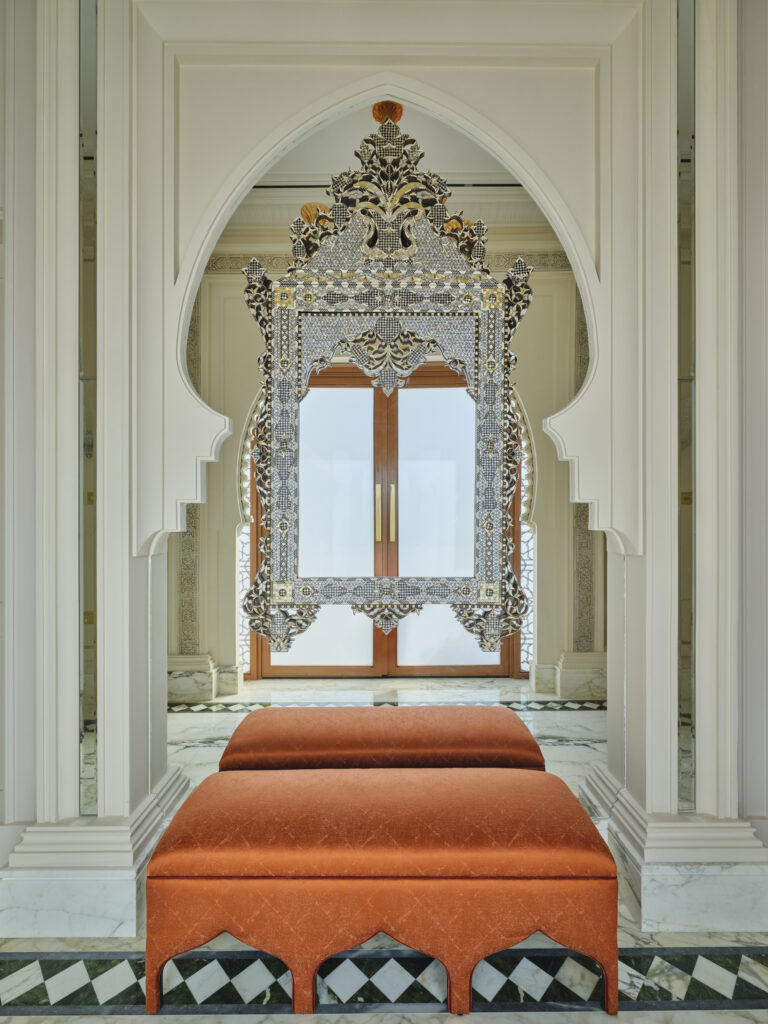
“For us the true success of an interior lies in how naturally it can be lived in,” notes Al Bazae. “Sculptural furniture and expressive pieces are important, but they must always coexist with comfort and ease.” Generous seating and grounded elements support this approach, ensuring that the space remains both structured and inviting.
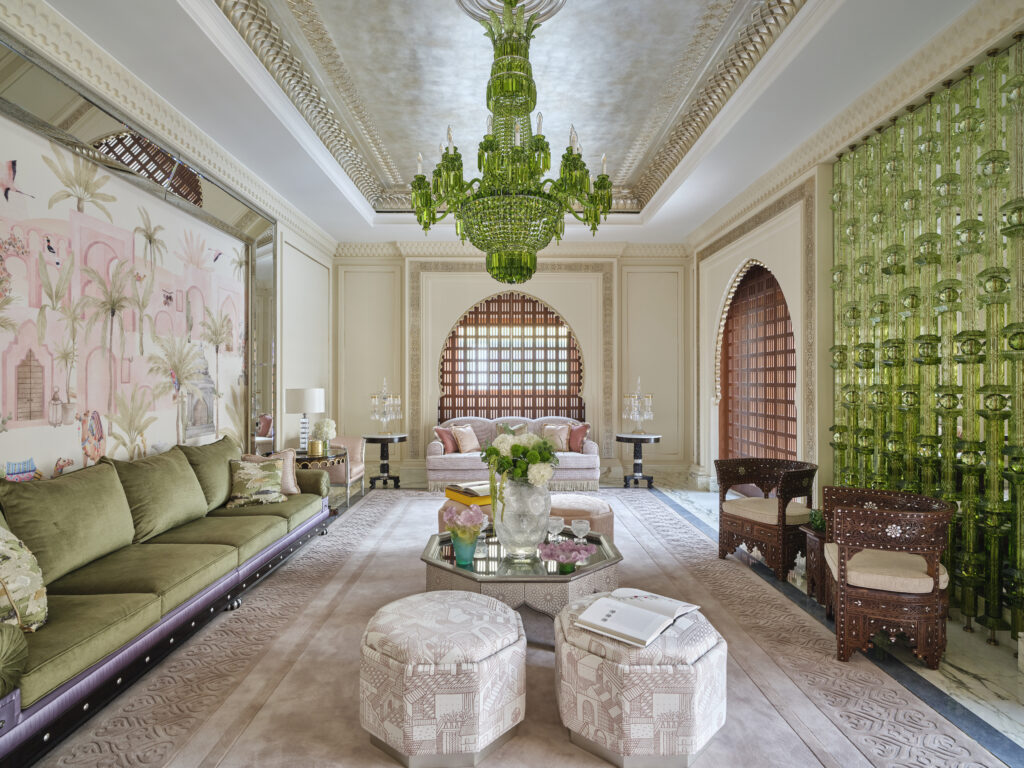
In this project, the majlis becomes more than a room. It defines the atmosphere of the home through scale, material and use, shaping a space that is composed, grounded and designed to be inhabited.