There is a quiet discipline to the work of Hugues de Blignières, an insistence that interiors must endure intellectually before they seduce visually. This Paris apartment embodies that conviction. Rather than amplifying ornament, the project constructs meaning through dialogue, material integrity, and temporal depth.
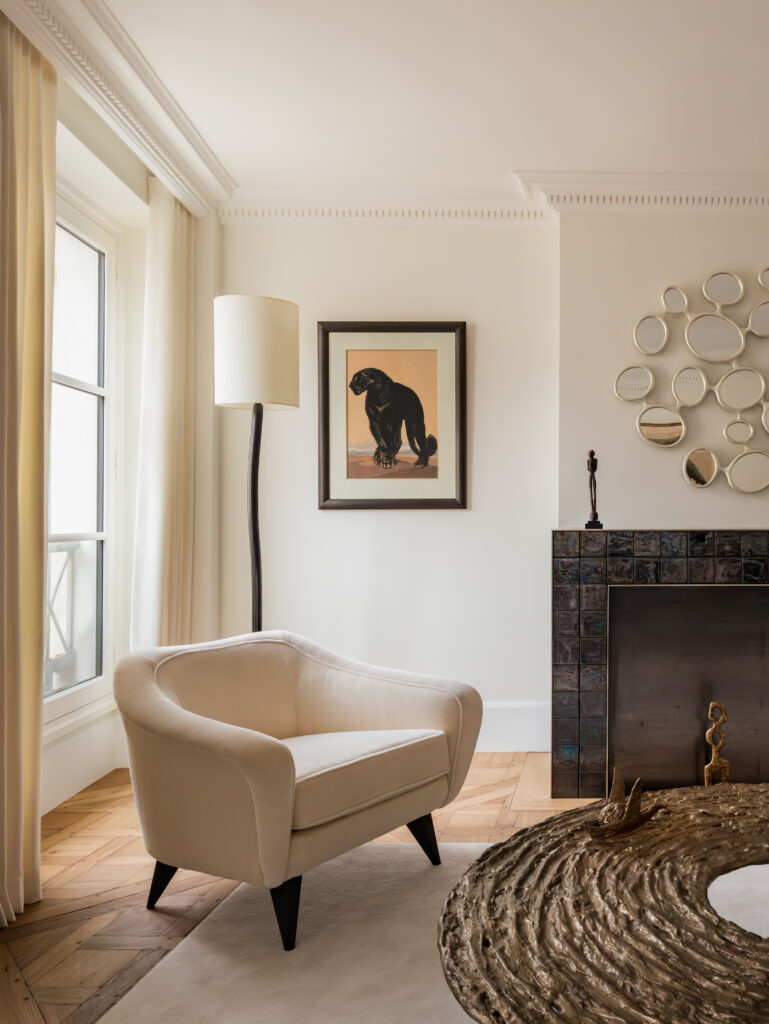
“The starting point of our projects is always built around a story,” he explains. “From that story generally emerges a coherent material palette.” Narrative, here, is not metaphorical; it is operational. The palette—brushed stainless steel, patinated and waxed oak, vintage furniture, contemporary artworks—unfolds from lived realities rather than stylistic intention. “What makes a project timeless is the authenticity of this dialogue,” he adds, articulating a philosophy that privileges continuity over effect.
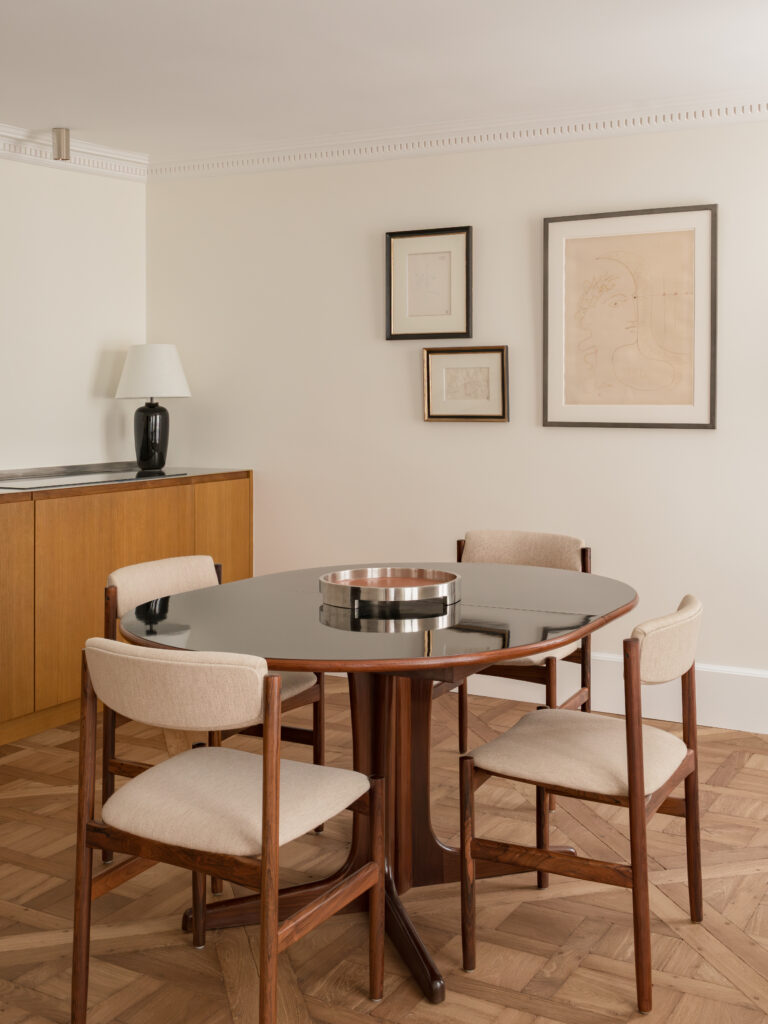
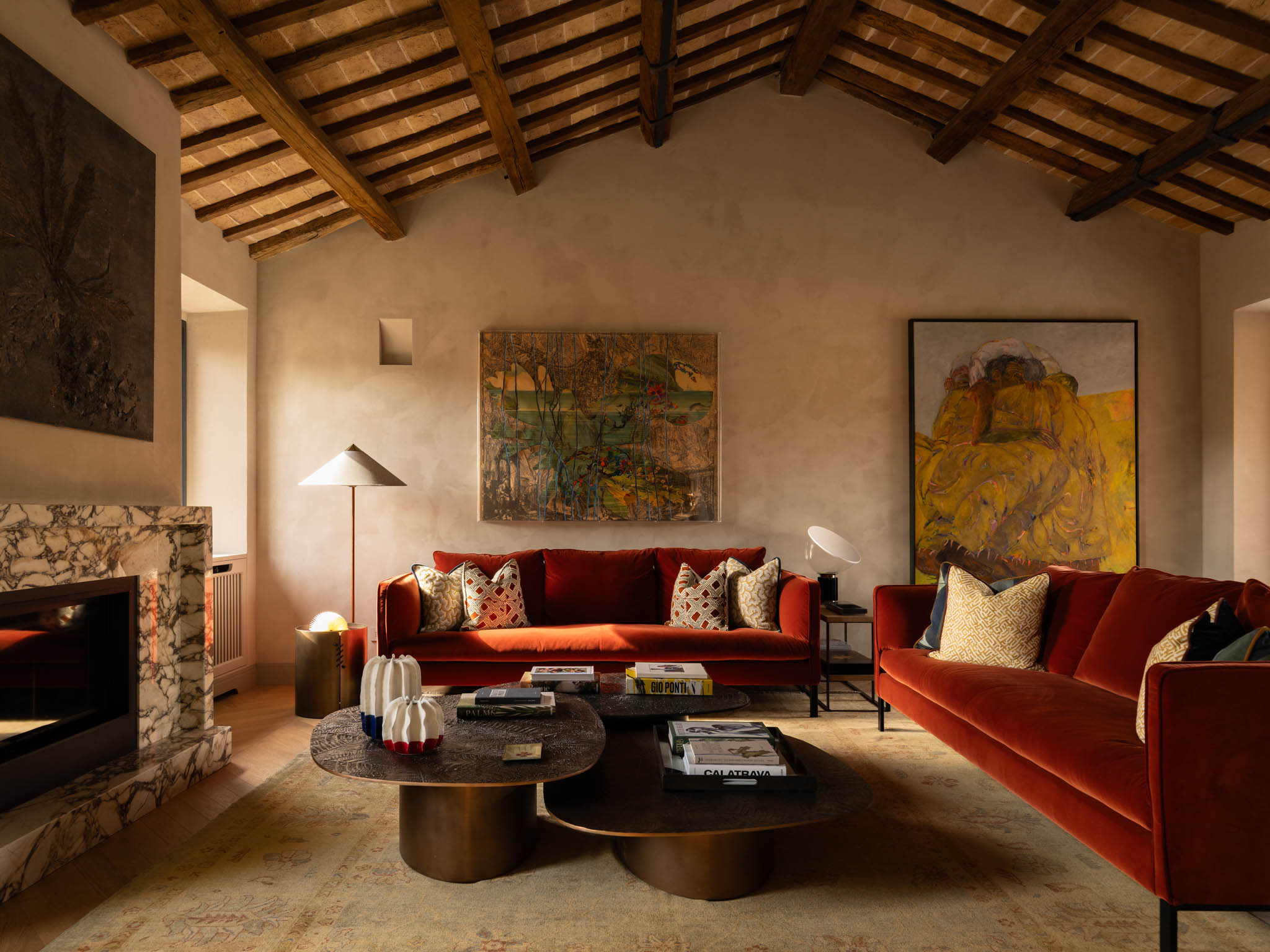
The apartment deliberately distances itself from what he calls le systématisme haussmannien. Yet this is not an act of erasure. “Paris is rich in multiple architectural movements, and in each of our projects it feels essential to honor that history while introducing a design language that resonates with the architectural character the city offers.” The intervention is therefore calibrated, not confrontational. Stainless steel introduces a subtle modern momentum—precise, reflective, almost architectural in its rigor—while oak, finished in a patinated wax, anchors the space in memory. The tension between the two generates equilibrium rather than contrast.
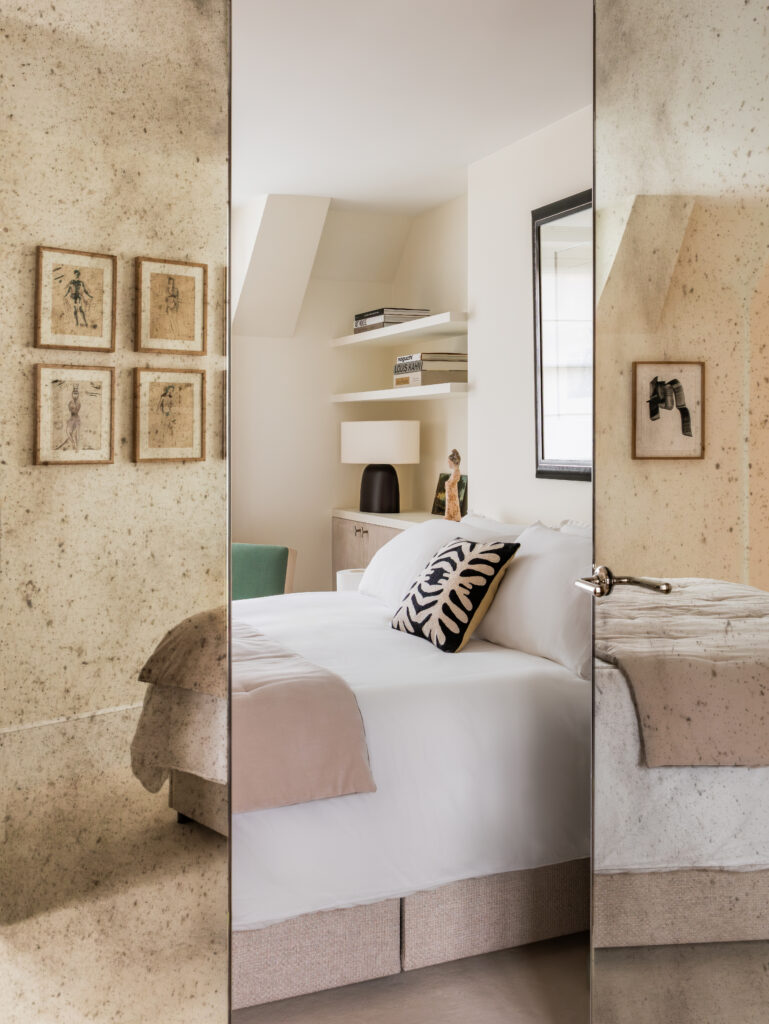
Coherence is achieved through proximity to the client’s world. “We establish a close dialogue with our clients—their artworks, their personal history, and the project itself.” This exchange becomes the project’s structural thread. “The richness of this dialogue allows us to create a guiding thread that anchors and nourishes the design.” Vintage pieces converse with contemporary art; craftsmanship coexists with industrial clarity. Nothing dominates, yet everything participates.
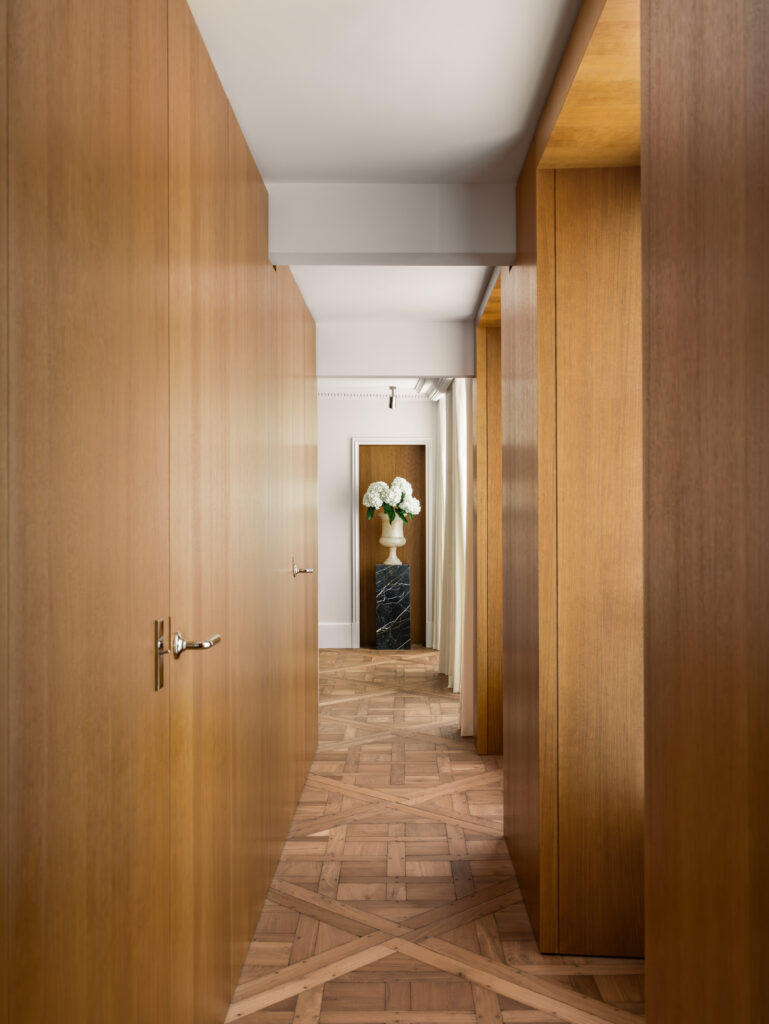
De Blignières often speaks of creating “things in time.” His interiors are conceived to evolve rather than conclude. “The authenticity of the dialogue we build with our clients leads to projects that unfold within their own temporality,” he reflects. The ambition is longevity—spaces that “accompany them for many years and become part of their personal story.”
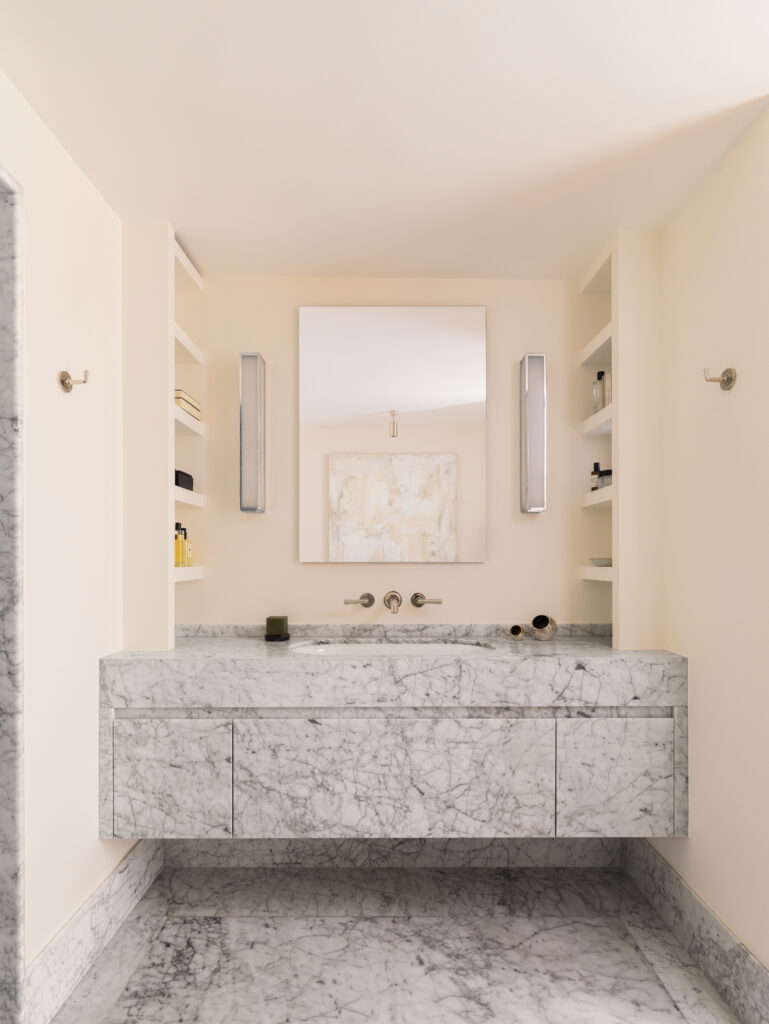
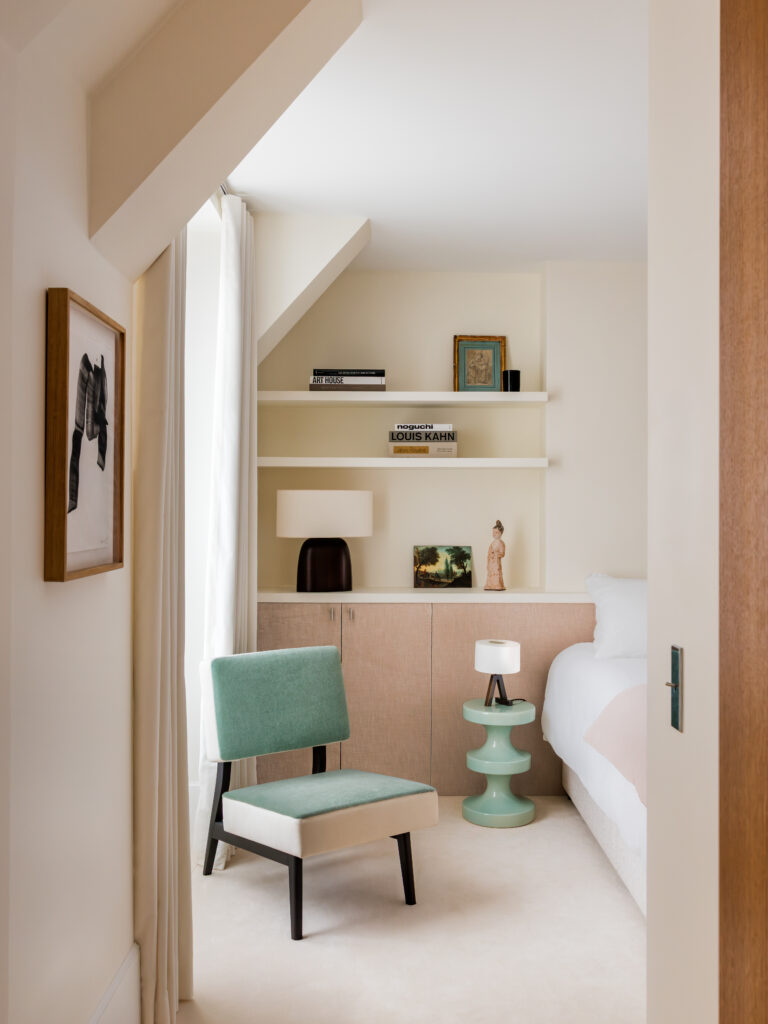
Movement through the apartment is similarly considered. “Perspectives are often emphasized and amplified to give spaces greater presence,” he notes. Thresholds are not merely functional transitions but emotional calibrations, subtly guiding the eye and “elevating everyday gestures.”
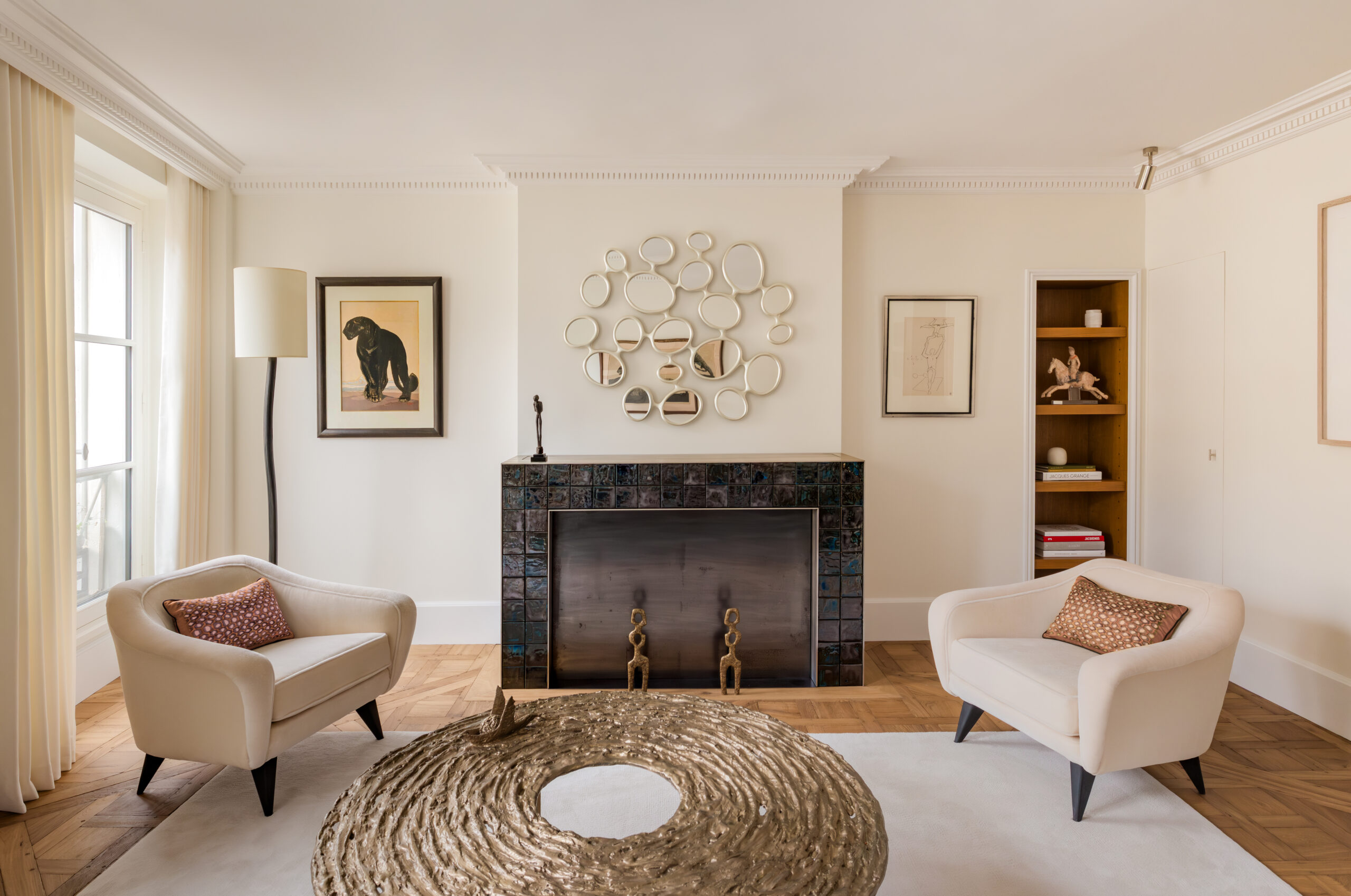
Among the project’s most revealing elements is the stainless steel and handcrafted ceramic fireplace. Introduced through a ceramic artisan known to the clients—originally intended for the kitchen—the tiles were instead elevated to a central role in the living room. It is a gesture that encapsulates the designer’s ethos: meaningful rather than demonstrative, durable rather than decorative, and deeply rooted in shared authorship.