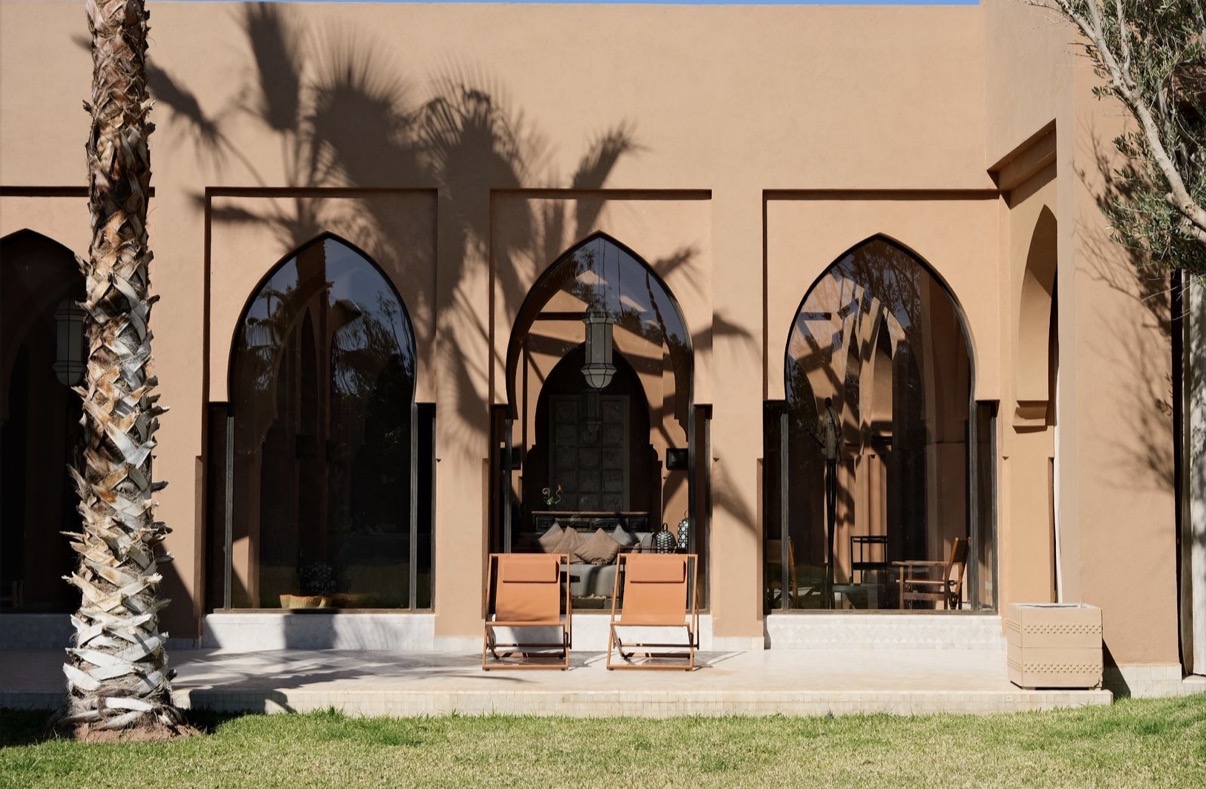
In this quietly radical guesthouse, Youssef Benhamou reframes Moroccan architecture as a living language—one capable of nuance, restraint, and contemporary relevance. Rather than leaning into nostalgia or ornament for its own sake, the project unfolds as an immersive spatial narrative, where heritage is distilled and re-expressed through proportion, materiality, and light.
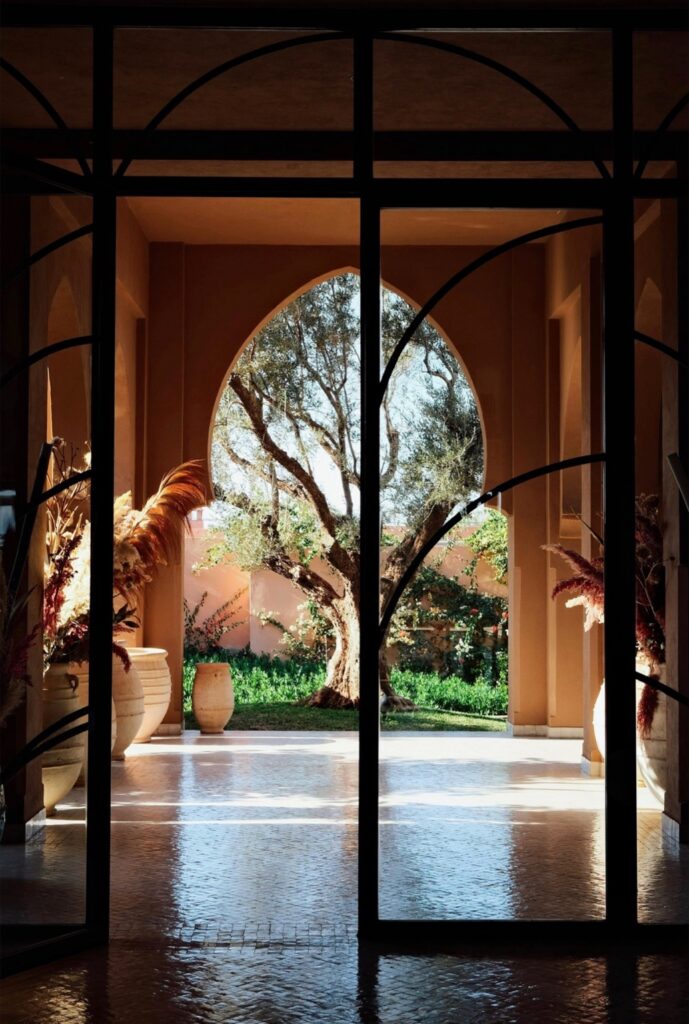
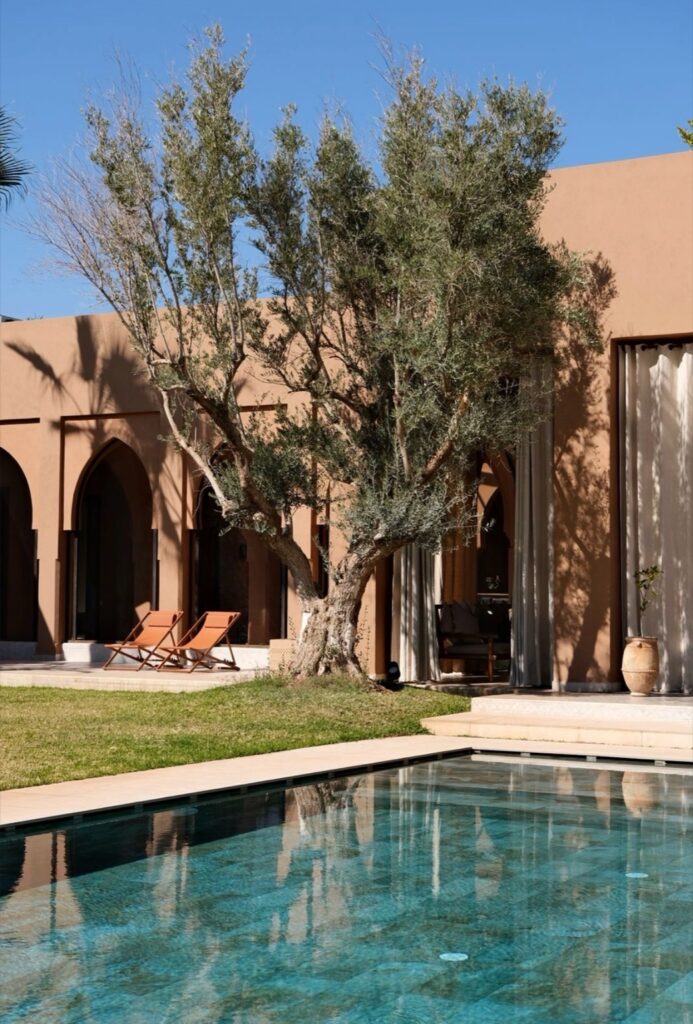
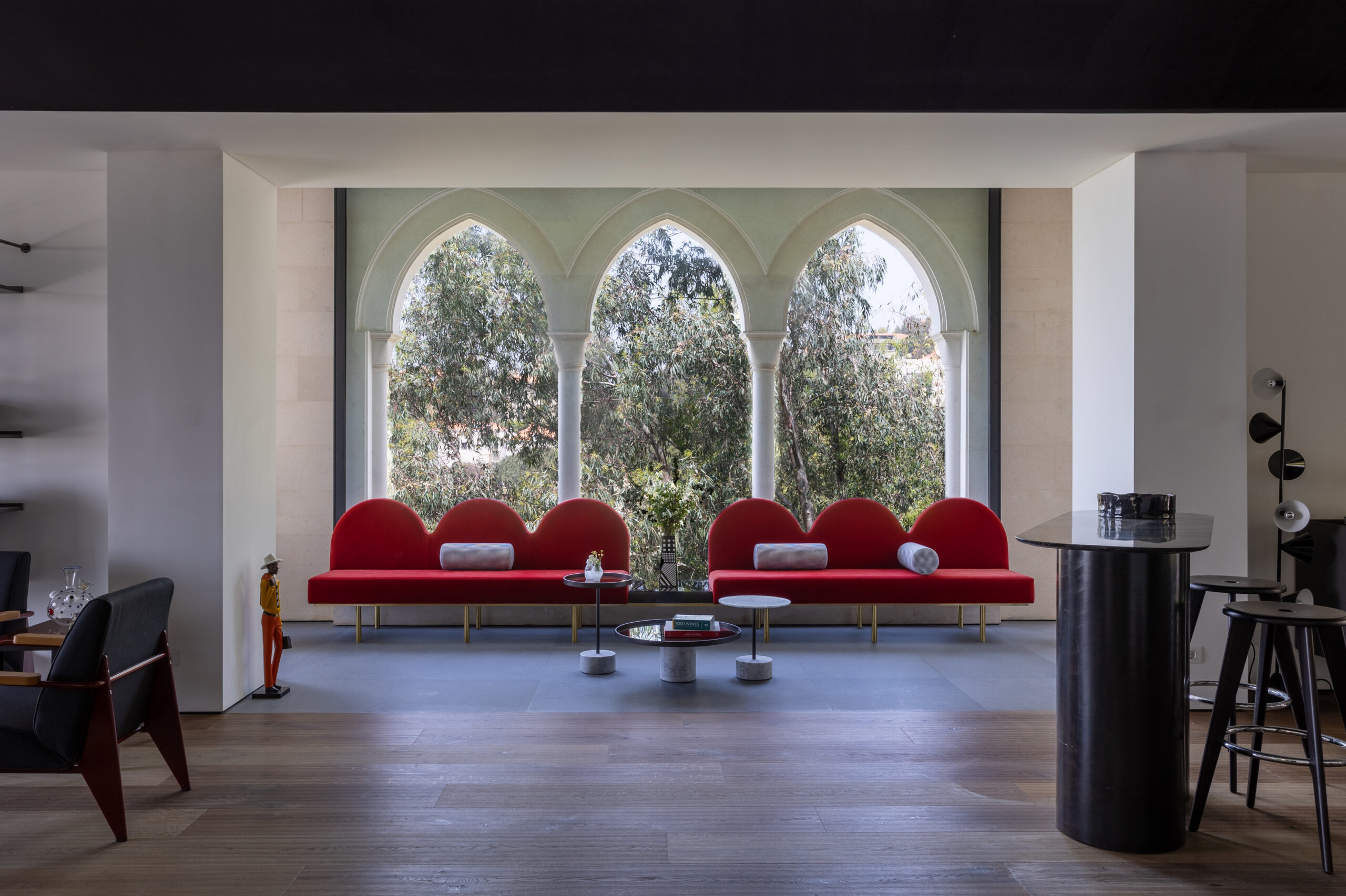
From the outset, the design process was driven by experience. Volumes, circulation, and visual perspectives were treated as the primary tools of storytelling. Every axis and threshold was conceived as a composed viewpoint—framing nature, history, and texture while remaining anchored in present-day modes of living. Movement through the guesthouse feels fluid and intuitive, guided less by walls than by sequences of visual emotion.
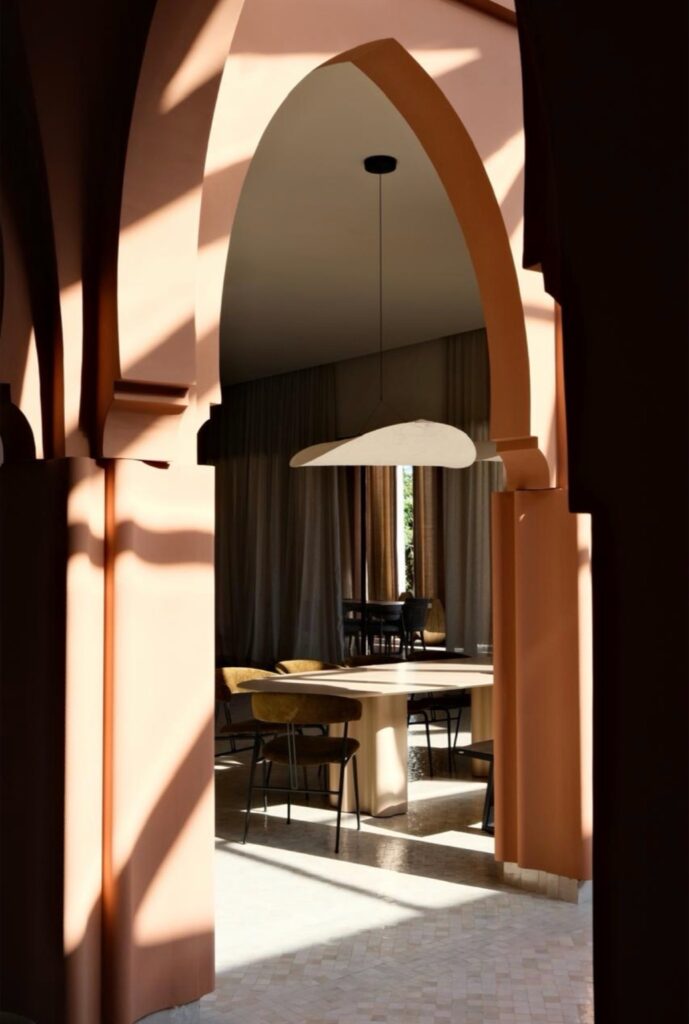
Custom design lies at the heart of the project. Benhamou’s Mindmade philosophy materialises in bespoke architectural elements: a sculptural entrance door, Art Deco–inspired glazed openings, and reimagined zellige patterns, including floral motifs rendered in striking black. Traditional finishes—bejmat, tataoui, zellige, and tadelakt—are layered with precision, their textures softened by a restrained, contemporary palette that elevates craft into architectural language.
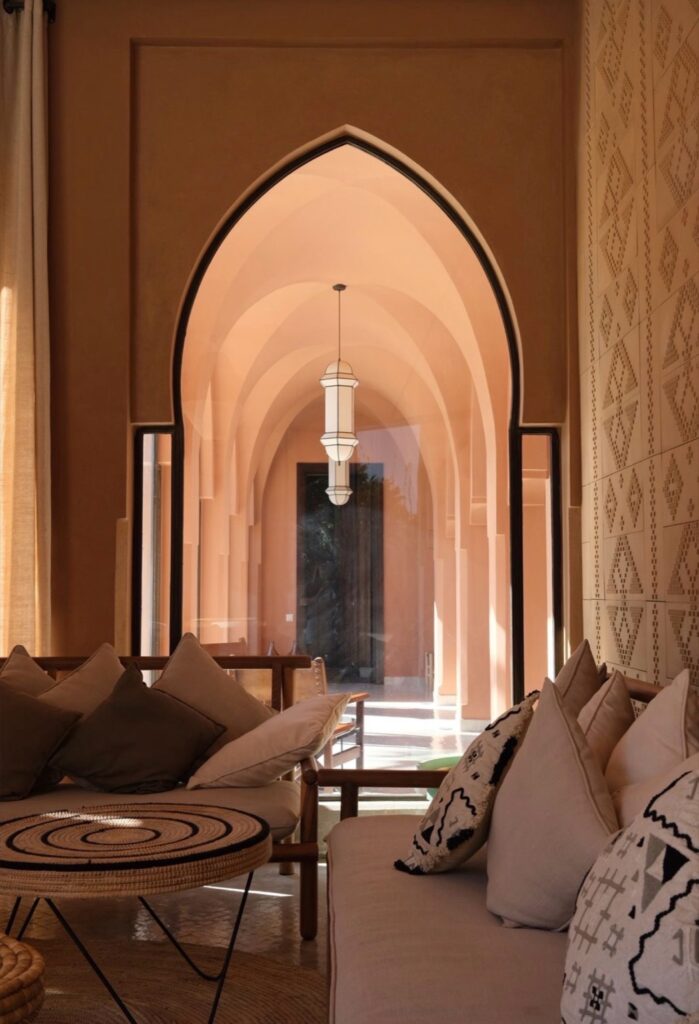
Lighting plays an equally critical role. Rather than functioning as a purely technical layer, it becomes atmospheric and narrative. A carefully choreographed lighting scenography reveals surfaces gradually, allowing the architecture to shift character from day to night. Bespoke fabric pendant lights act as connective tissue—bridging ancestral Moroccan forms with the project’s minimalist spirit.
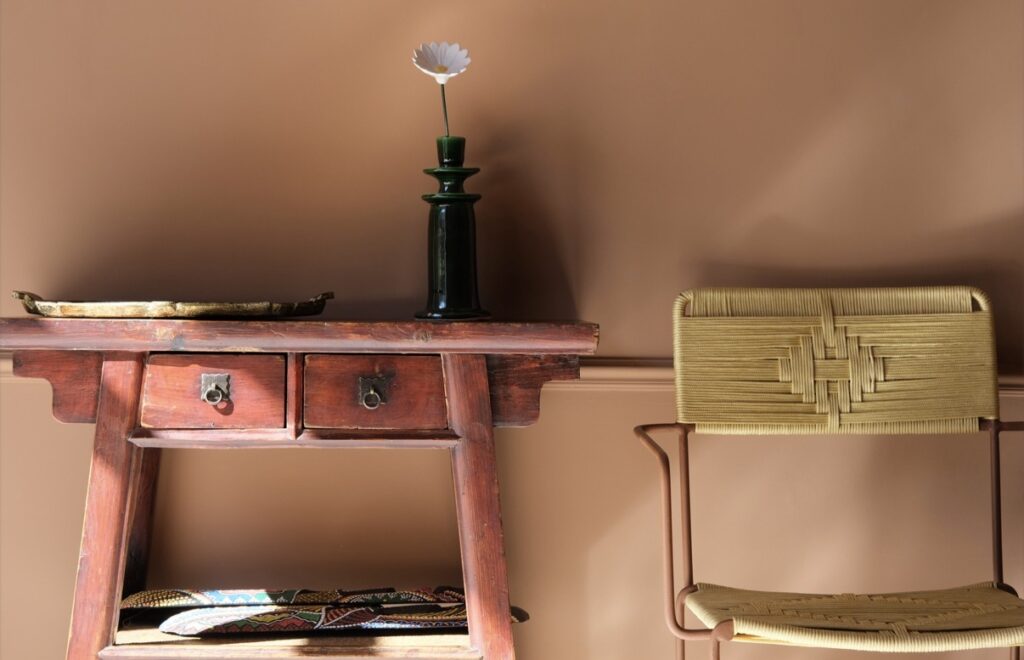
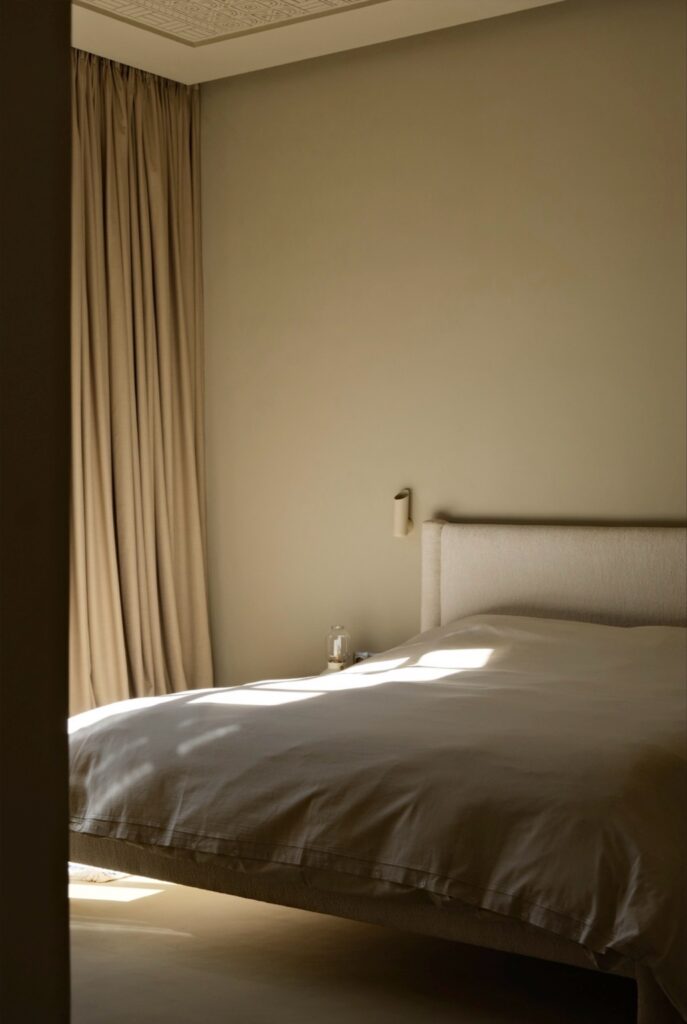
At its core, this guesthouse is a manifesto for a new Moroccan design sensibility. One that moves beyond cliché and folklore, embracing sophistication, international dialogue, and deep respect for craftsmanship. Developed in close collaboration with local artisans, the project demonstrates how cultural richness can inhabit contemporary spaces with subtlety and confidence—offering a vision of Morocco not as memory, but as evolution.