The Architecture of Everyday Rituals. A full interior renovation by Studio Bespoke.

Words By Allegra Salvadori 
 January 28, 2026

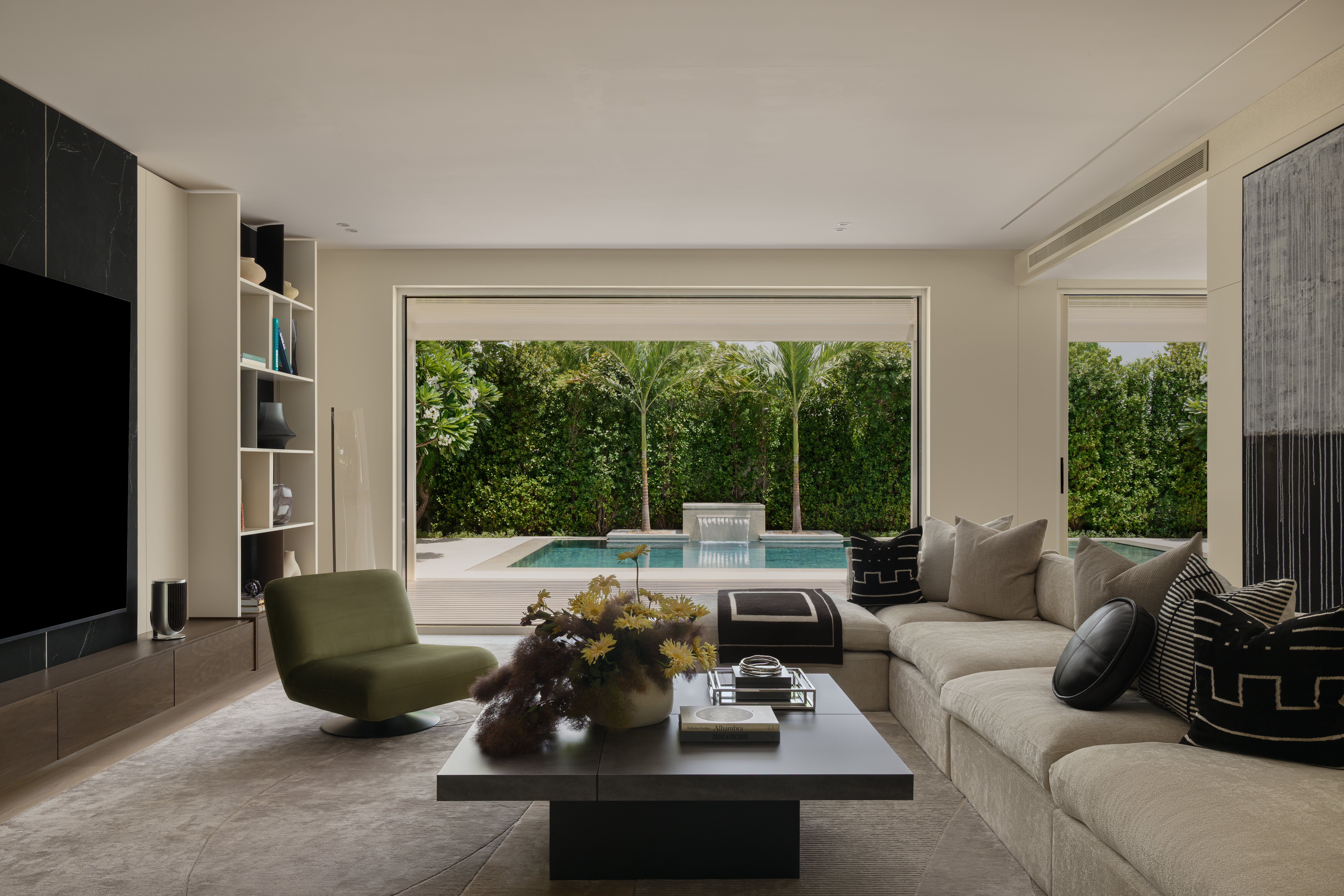
What began as a compact, inward-looking villa in Mira, Dubai, has been quietly transformed into a home defined by light, rhythm, and lived-in rituals. The renovation is not driven by spectacle, but by a single, deliberate architectural gesture: the complete reimagining of the ground floor around the kitchen.
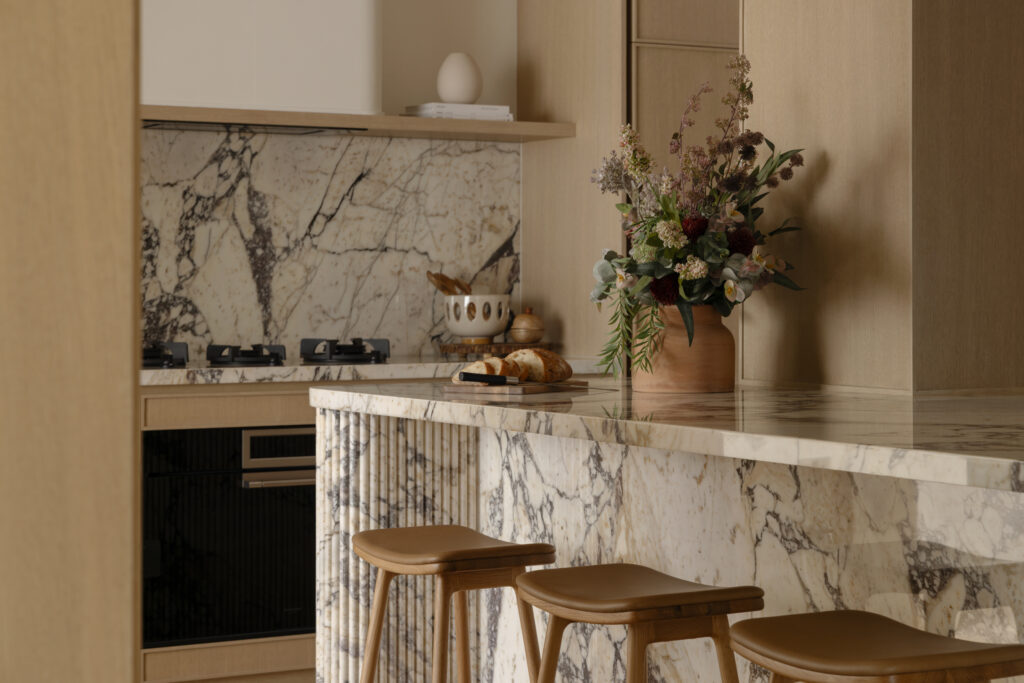
SBD Mira K09

“The most significant transformation took place on the ground floor,” explains the Brittany Guimaraes Founder and Creative Director at Studio Bespoke.
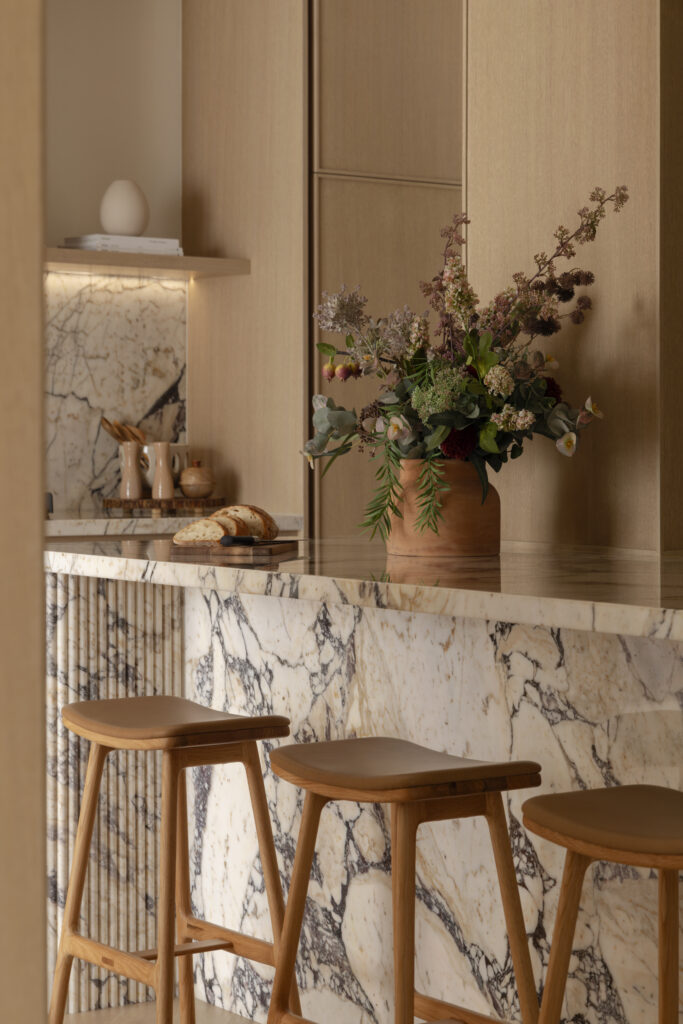
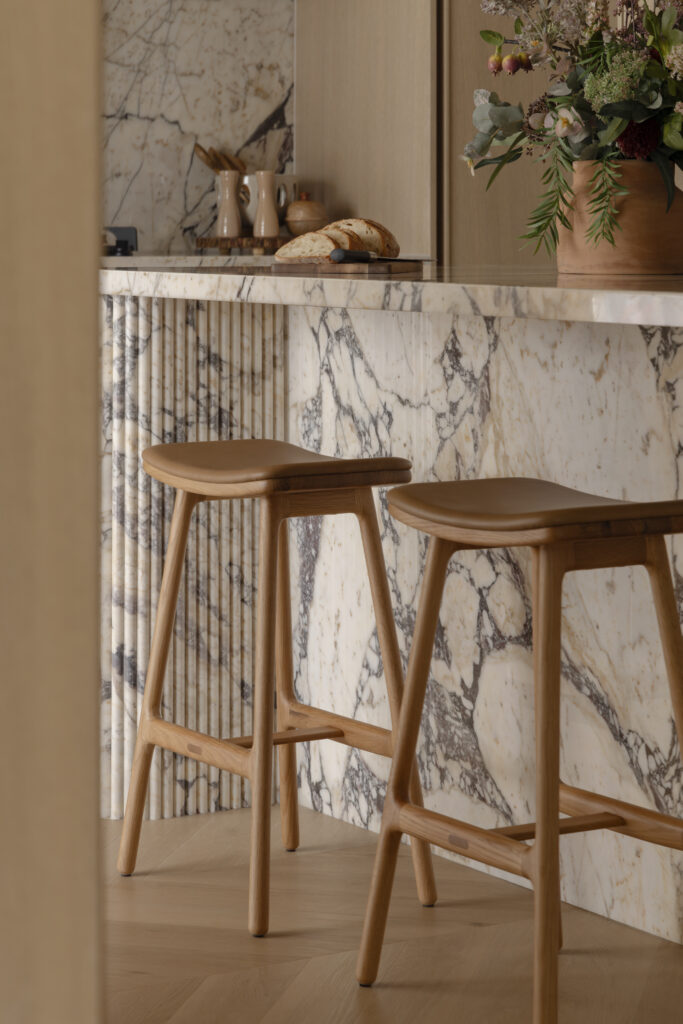
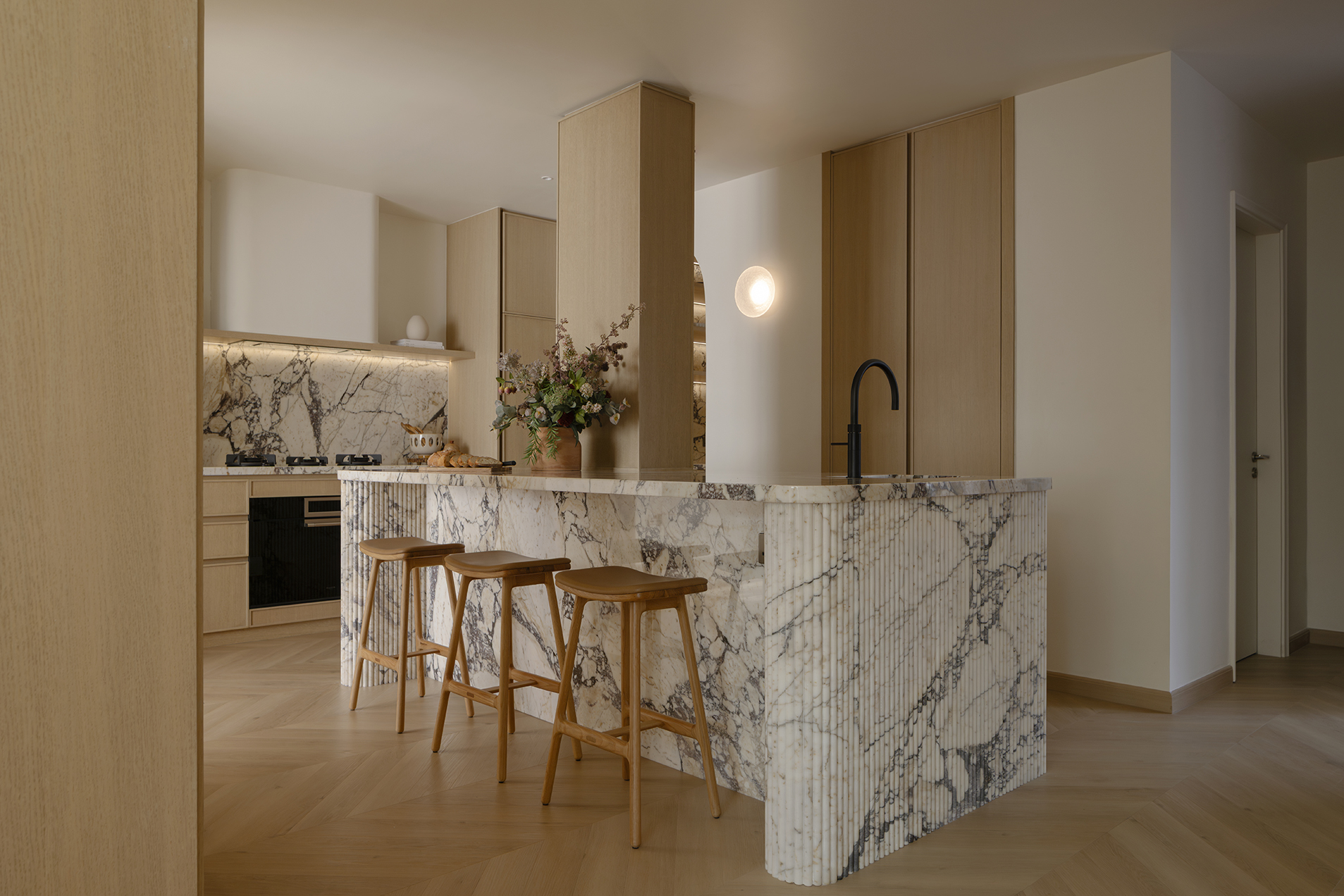
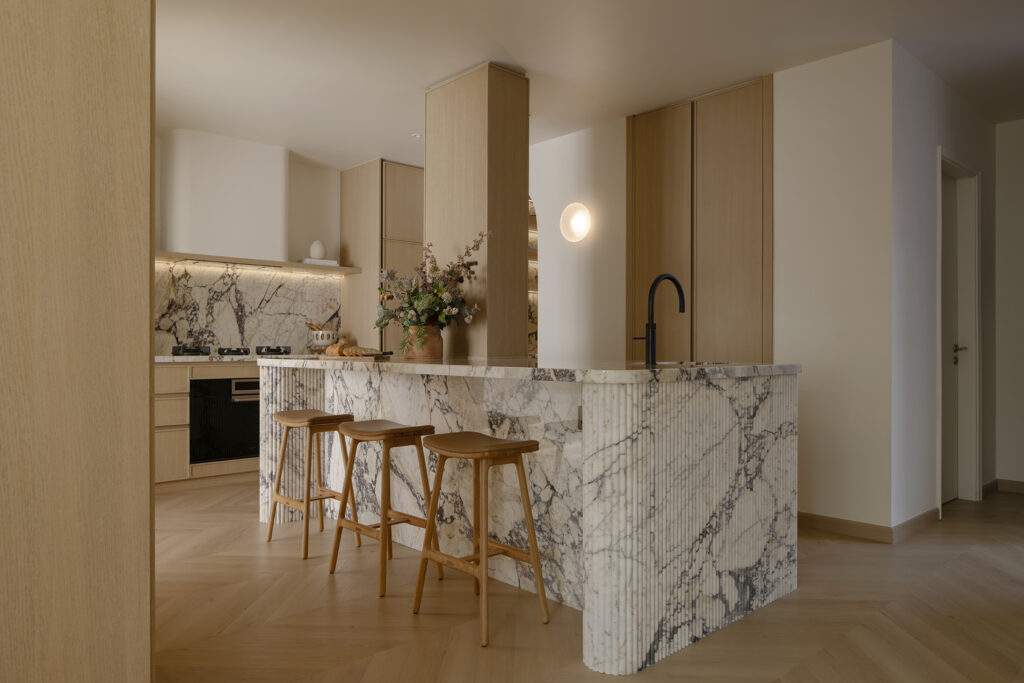
“All internal walls were removed to create one generous open-plan kitchen that now forms the heart of the home.” This decision fundamentally altered how light moves through the villa — and how the family inhabits it. Once closed and dark, the space is now open, legible, and emotionally charged.
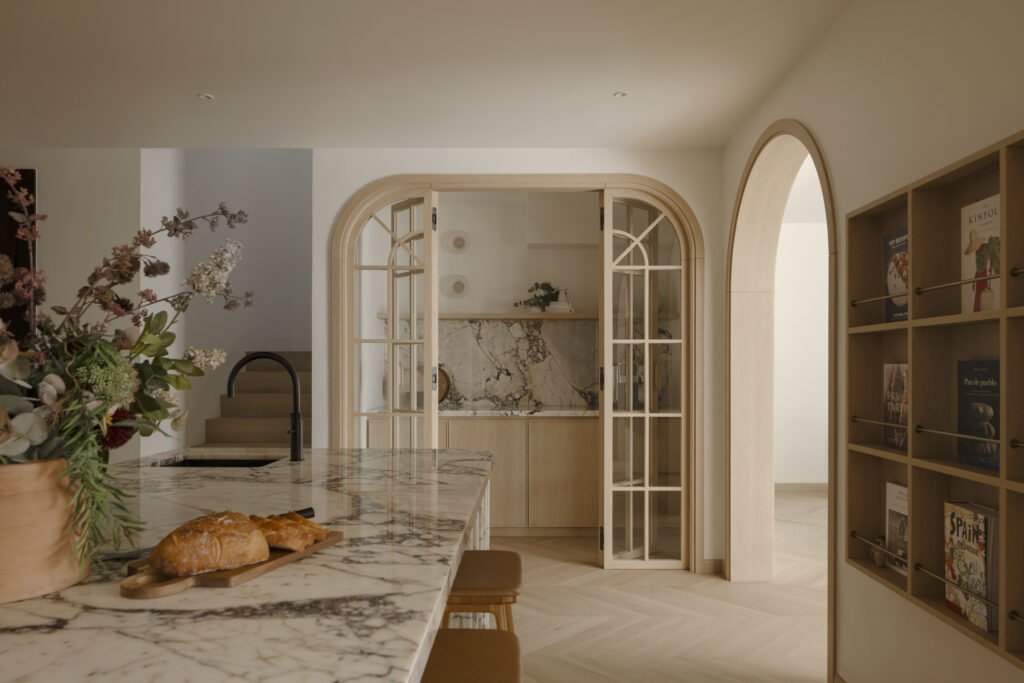
SBD Mira K14
Studio bespoke mira 25

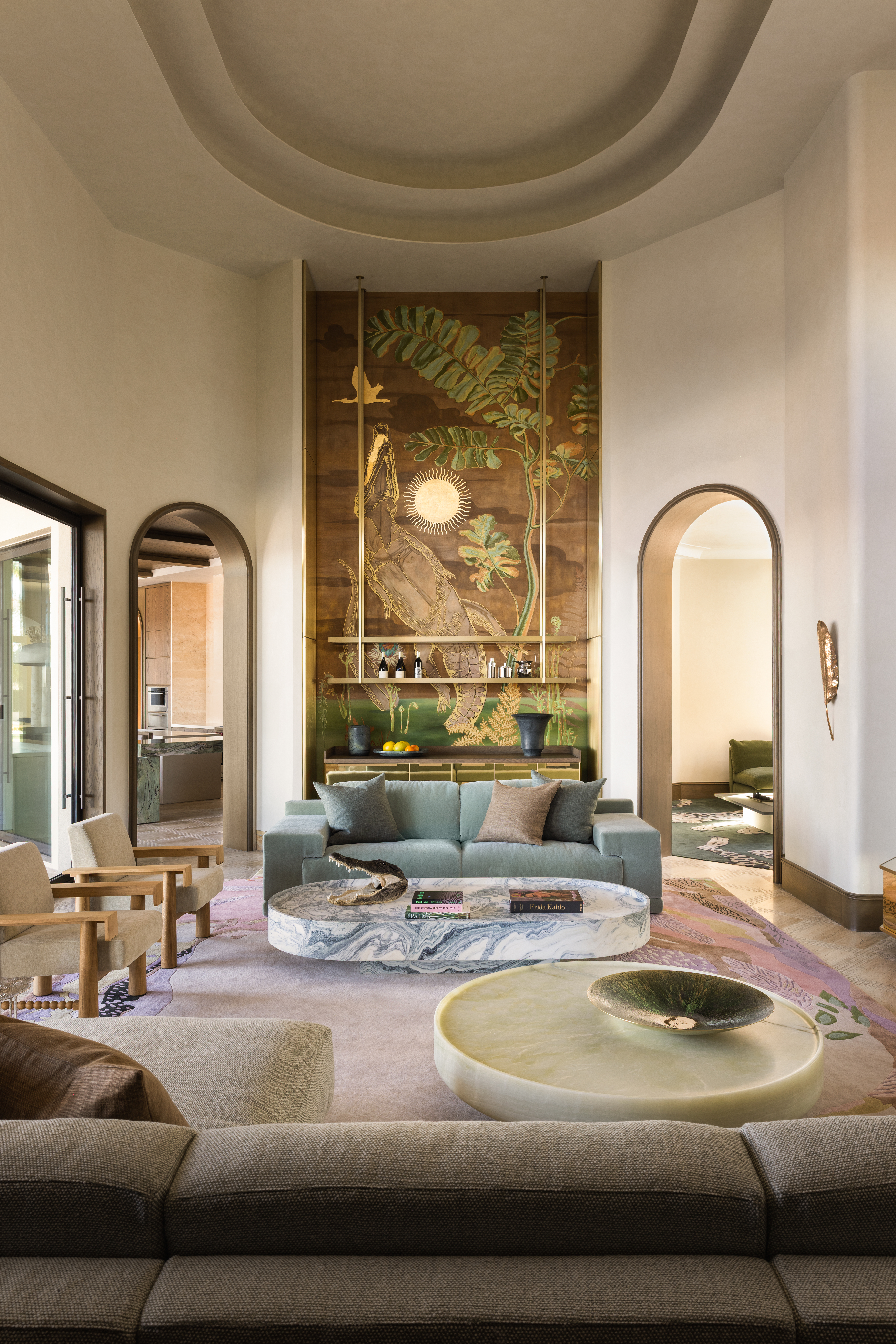
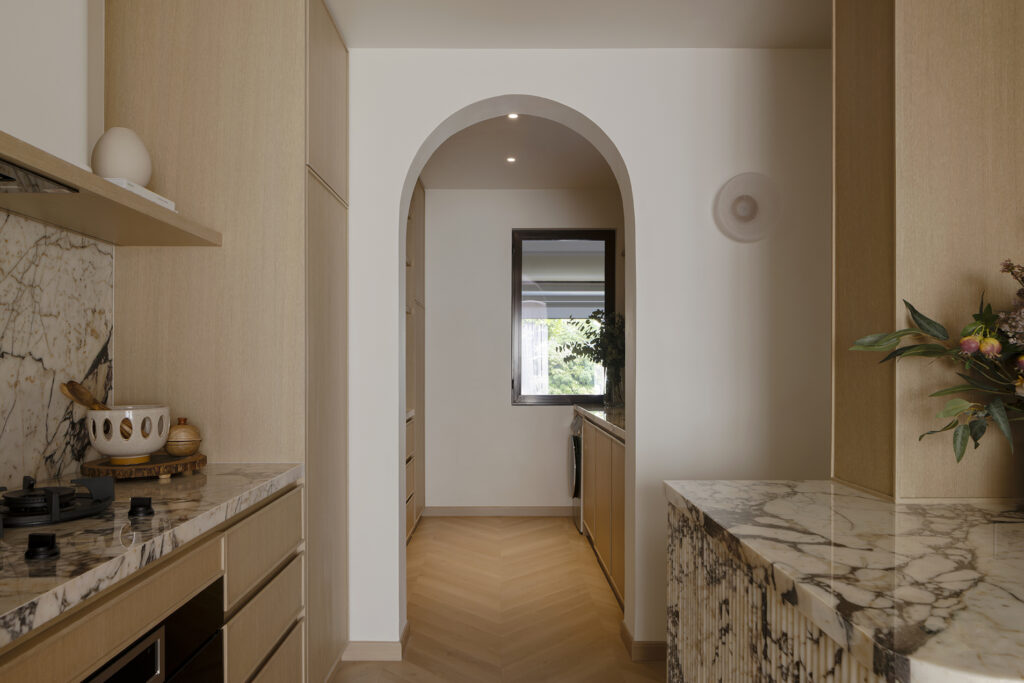
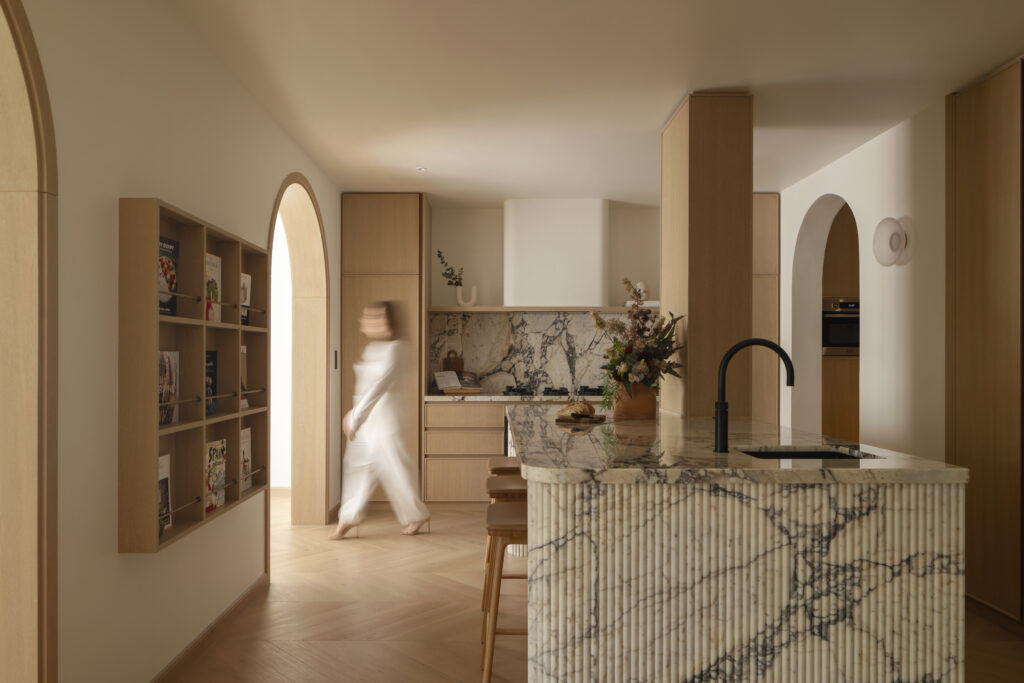
A series of soft archways choreographs movement between kitchen, pantry, living and dining areas, replacing compartmentalisation with continuity. These curves are not decorative; they establish rhythm, guide circulation, and visually connect spaces without erasing their identities. Symmetrical timber-clad arches further anchor the living and dining rooms, introducing balance and calm.
Studio bespoke mira 29

Functionality is handled with equal precision. Storage, long absent in the original layout, is deeply integrated into the architecture through bespoke joinery, concealed appliances, and pull-out systems designed around daily use. “Everything the clients need is accessible, yet visually calm,” Guimaraes notes. Even the powder room was relocated — its former position opening directly onto the dining area — to restore flow and allow for the creation of a discreet coffee nook behind French-style glass doors.
SBD Mira K15

The kitchen’s role as emotional centre shaped the entire plan. Designed around the clients’ habits as passionate cooks and bakers, it prioritises movement, proximity, and connection. “The planning was not about aesthetics alone,” the designer says. “Every decision was intentional and rooted in how the clients wanted to feel in their home.”

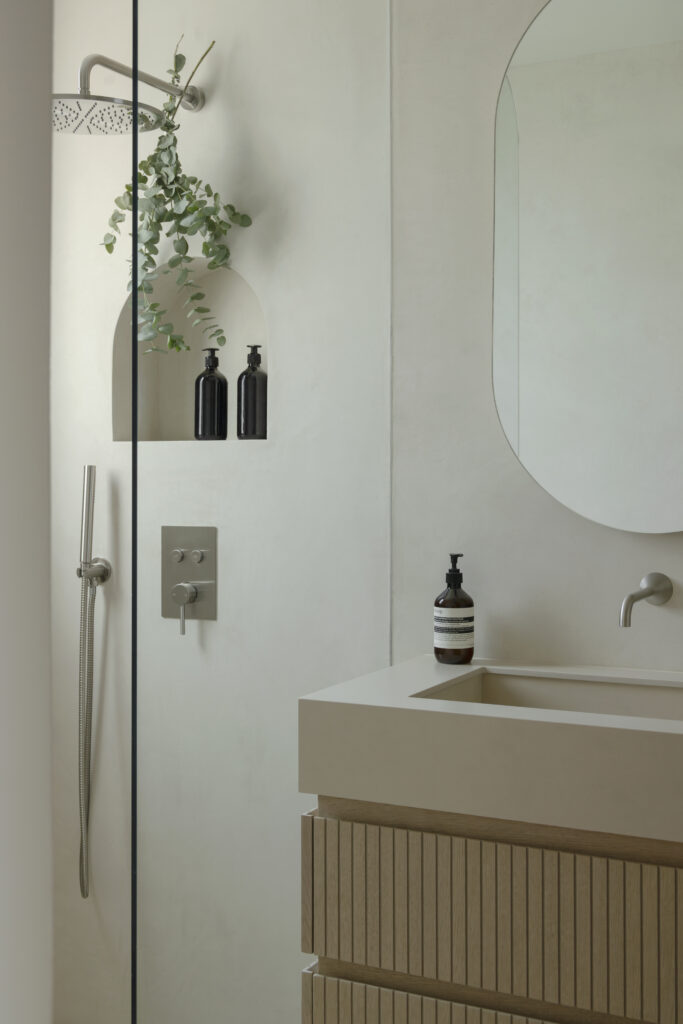
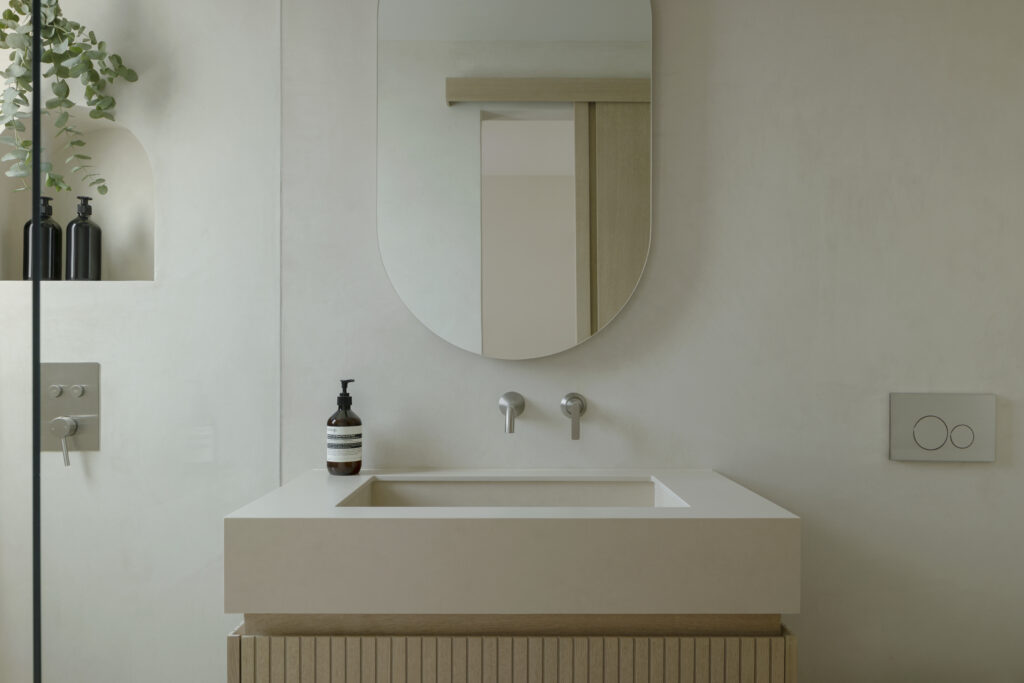
Material choices reinforce this restraint. A neutral palette allows architecture and craftsmanship to lead, with moments of quiet emphasis: chevron flooring introduces movement, fluted Calacatta marble adds depth, and microcement — used extensively — softens surfaces while grounding the home. In the powder bathroom, olive-toned microcement creates a cocooning pause, echoing the same design language in a more intimate register.
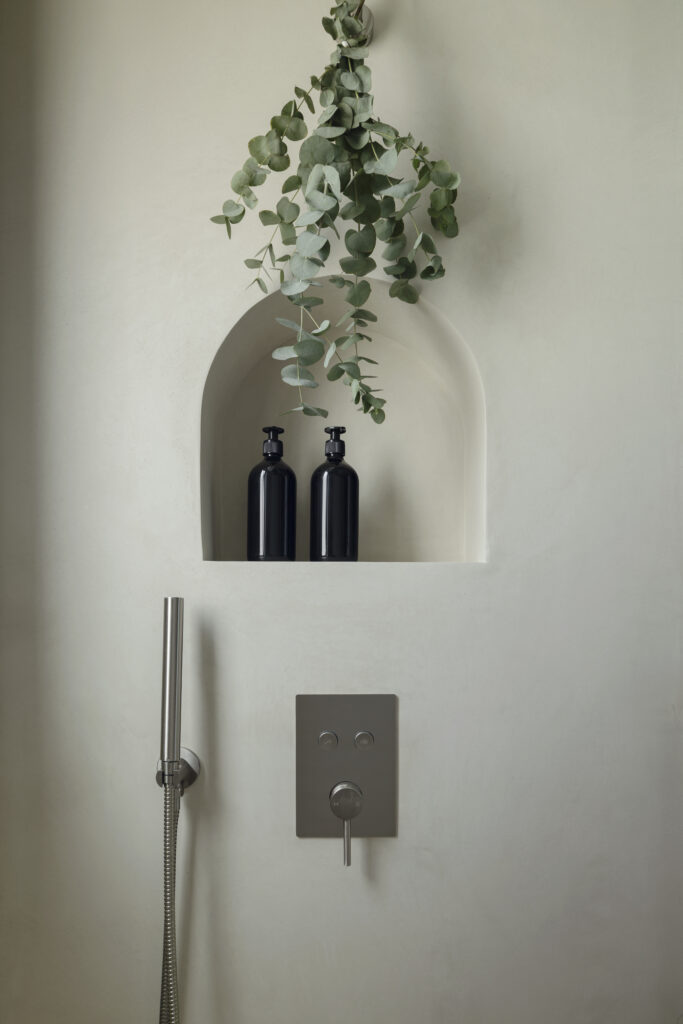
For the designer, the project’s success is measured not by transformation alone, but by longevity. “When a space continues to evoke joy and connection long after the renovation is complete,” she reflects, “that is when I know the design has truly succeeded.”
LATEST

The Space Between: Nada Debs Establishes Her First International Flagship in Dubai

For more than two decades, Debs has operated at the intersection of craft and contemporary design, developing a body of work that resists both nostalgia and minimalism. Her furniture and objects — defined by mother-of-pearl inlay, hand carving, marquetry and meticulous joinery — draw on Levantine decorative traditions while maintaining the restraint and clarity often associated with Japanese design. The result is neither ornamental nor austere, but calibrated somewhere in between. This position of “in-between” has long structured the studio’s identity. Born in Lebanon, raised in Japan and educated in the United States, Debs approaches design less as style than as translation: between cultures, between techniques, between past and present. The new Dubai address gives that philosophy architectural form. Located within Alserkal Avenue, the city’s leading arts district, the 230-square-metre flagship is conceived not simply as a boutique but as a spatial extension of the studio’s methodology. Rather than prioritising display, the interior foregrounds materiality and scale. The space slows the visitor down, encouraging proximity and tactility over spectacle — a notable stance within Dubai’s retail landscape, where monumentality and visual impact typically dominate. Faced with a raw industrial shell defined by high ceilings and a narrow footprint, Debs responded with what she describes as “a box within a box”: a timber-clad volume inserted into the larger metal envelope. The intervention is both practical and conceptual. Architecturally, it restores human scale and warmth. Symbolically, it places craft — wood, joinery, touch — at the centre of an otherwise impersonal structure. Material choices remain deliberately restrained. Pale timber surfaces, terrazzo flooring, and muted tones establish a calm, almost domestic atmosphere that allows the work to be encountered as objects of process rather than commodities. Bestselling pieces sit alongside new collections, while a dedicated customization area brings clients closer to the act of making, reinforcing the studio’s emphasis on handwork and dialogue. Upstairs, the environment shifts. The gallery-like studio and sample library adopt a more industrial language, exposing the operational side of the practice. This contrast between levels — intimate below, utilitarian above — reflects the dual structure of the brand itself: craft and production, emotion and system, tradition and contemporaneity. Rather than blending these conditions into a seamless whole, Debs allows them to coexist. That logic of duality is distilled further into two circular openings — referred to internally as “the two dots” — that punctuate the architecture. Subtle yet intentional, they act as a graphic metaphor for the studio’s broader philosophy: distinct identities sharing the same space without hierarchy or opposition. The move to Dubai also carries historical and generational significance. When the studio’s original Gemmayze boutique was damaged in the 2020 Beirut port explosion, the event prompted a reassessment of the brand’s future beyond Lebanon. Five years later, the flagship represents a strategic reorientation — positioning regional craftsmanship within an international design conversation rather than a local one. At the same time, Nada Debs’ son, Tamer Khatib, steps into the role of Managing Director, signalling the studio’s transition into its second chapter. The pairing of expansion and succession underscores a broader ambition: not simply to grow, but to institutionalise the practice as a lasting design house. In this context, the Dubai flagship operates less as a store than as infrastructure — a platform from which a specific understanding of craft can circulate globally. Debs’ work has always argued that traditional techniques are not relics of heritage but active tools for contemporary design. Here, that argument becomes spatial, embedded in walls, proportions and movement. If the project avoids the rhetoric of luxury, it is deliberate. Instead of excess, it proposes precision; instead of spectacle, attention to the hand. In doing so, Nada Debs positions craft not as decoration, but as structure — and Dubai as the stage for its next evolution.