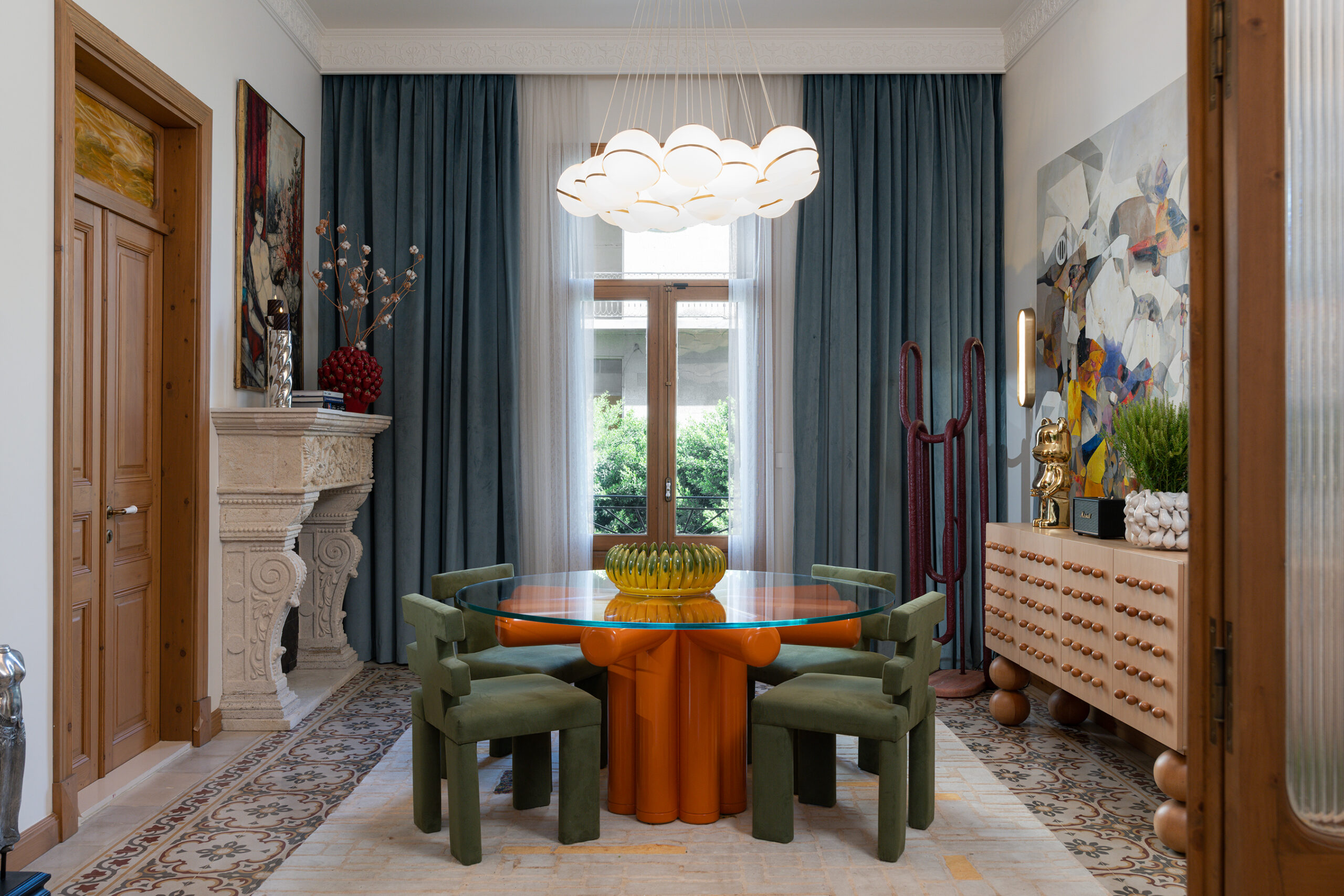
Beirut is a city where buildings have biographies. Behind the shutters and wrought-iron balconies of its older houses, generations of domestic life coexist with the marks of war, reconstruction and reinvention. In Saifi, overlooking Martyrs’ Square and with the Mediterranean beyond, Maison Dada occupies one such address: a 1935 French-Mandate residence transformed by brothers Marc and Mario El Dada into a boutique hotel that feels deliberately closer to a private home.
The distinction matters. Maison Dada has just three apartments, spread across the upper floors of the building, and its scale allows the experience to remain unusually intimate. There is no attempt to reproduce the polished anonymity of international hospitality. Instead, the brothers have worked with what was already here: patterned cement tiles, stained glass, carved timber, generous proportions and the architectural idiosyncrasies accumulated by a 90-year-old Beirut house.
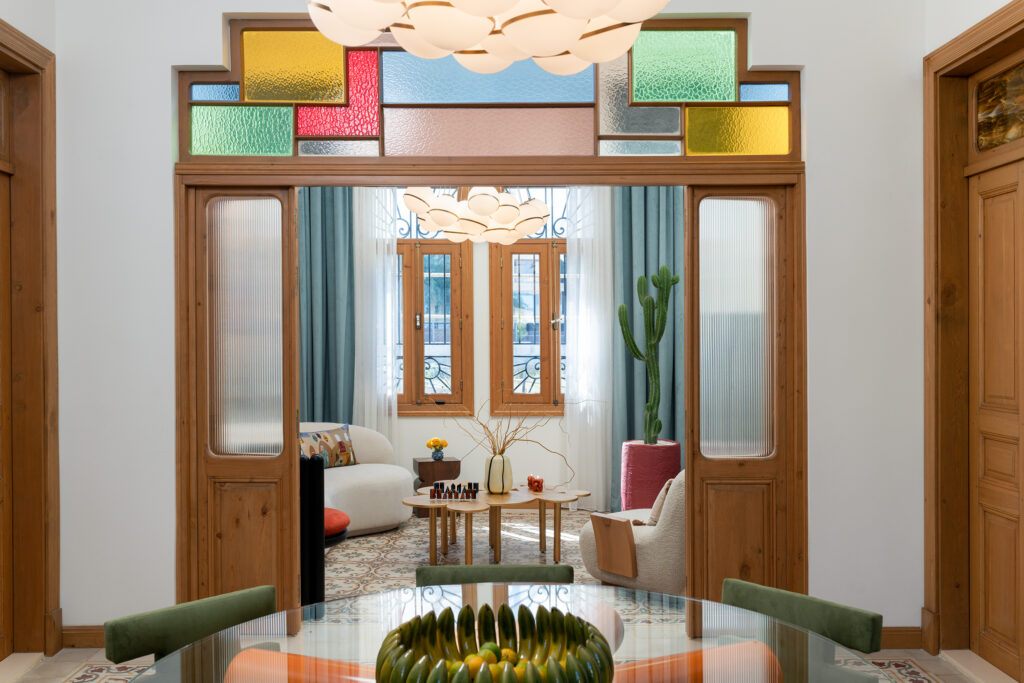
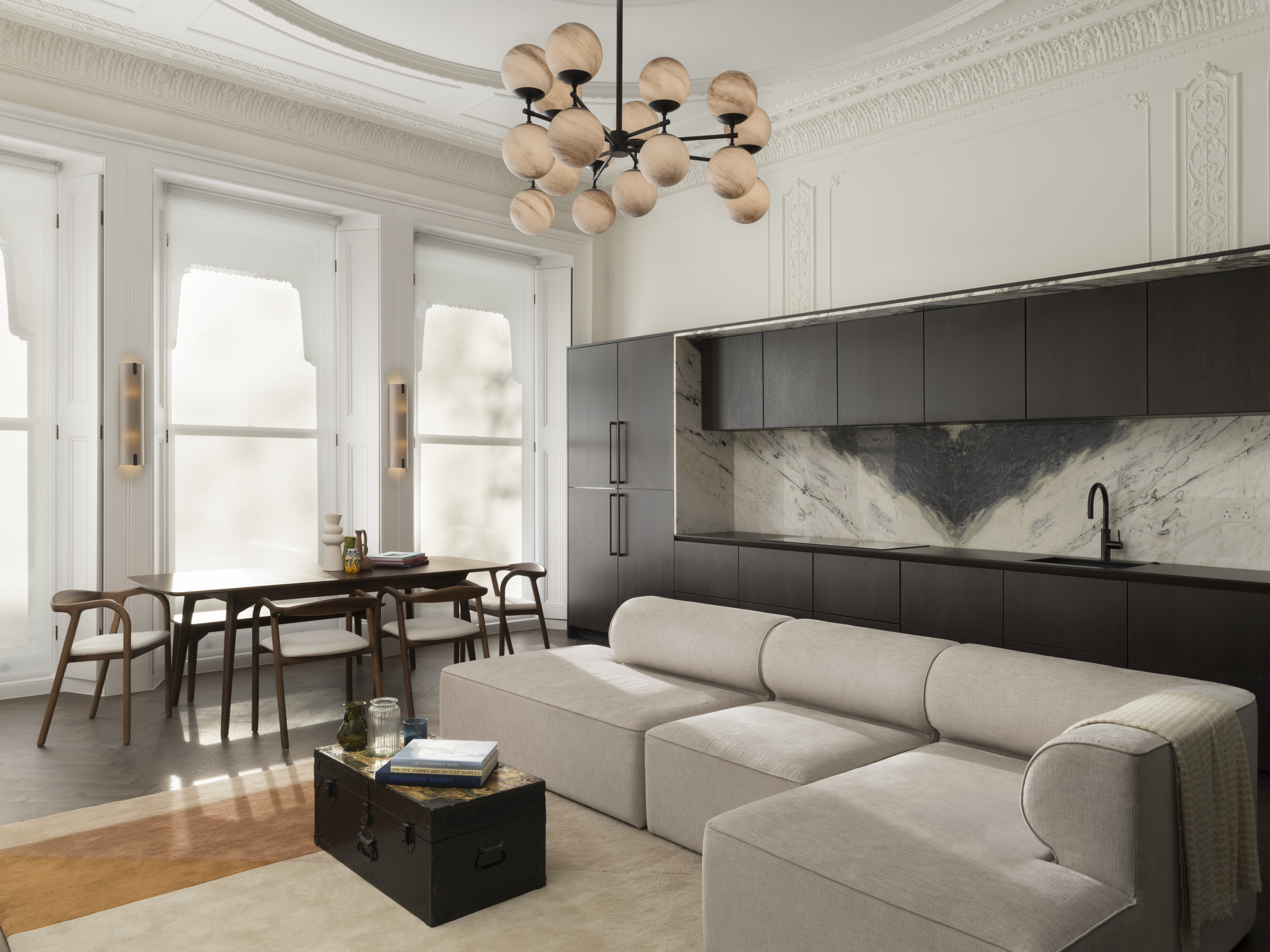
The house carries the proportions of French-Mandate architecture, yet Maison Dada avoids the predictable language of heritage revival. Original elements — patterned cement tiles, carved woodwork, intricate plaster — remain visible, but they no longer function as decorative relics. They frame a new spatial order, one built around openness, soft silhouettes and the calm of minimalism.
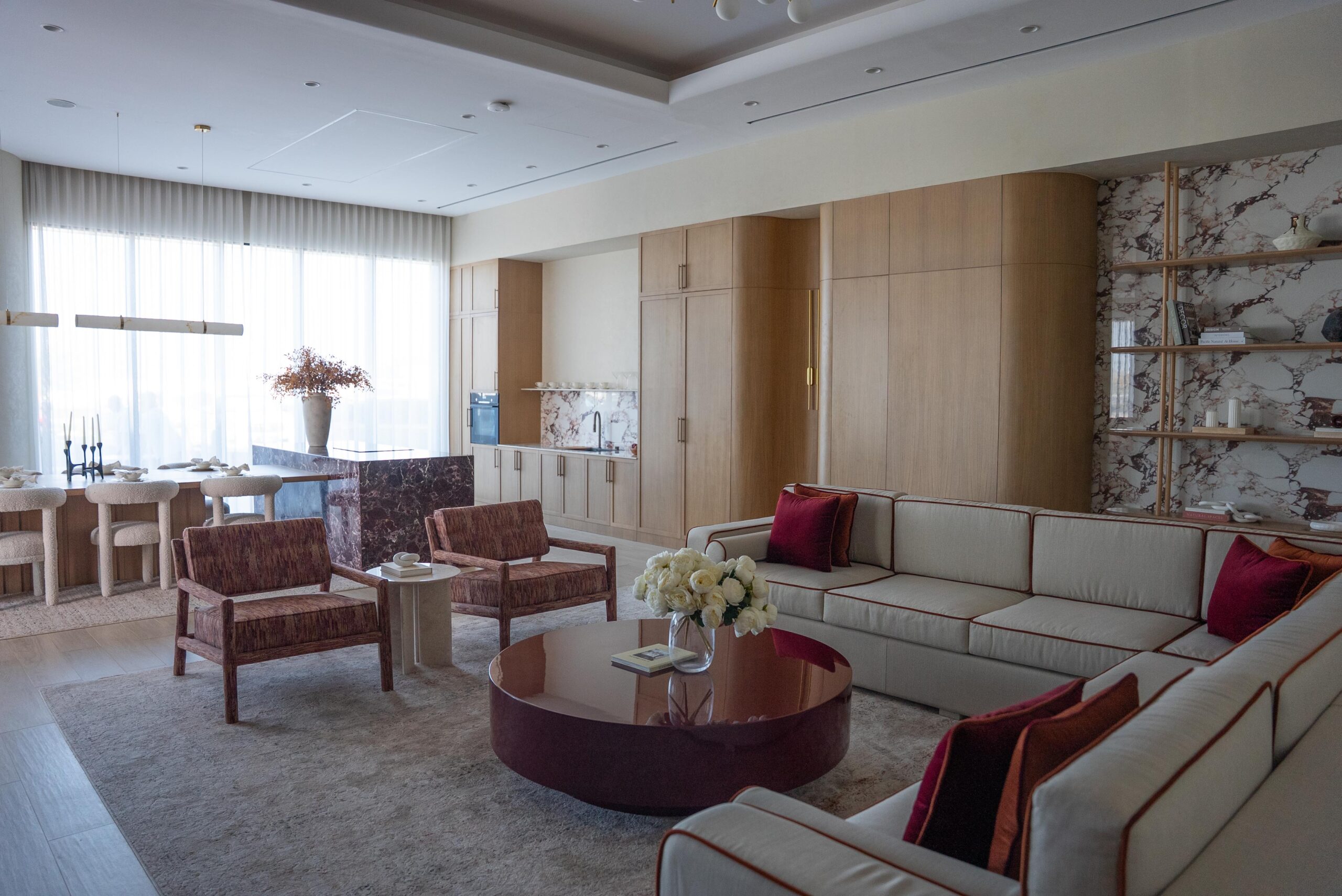
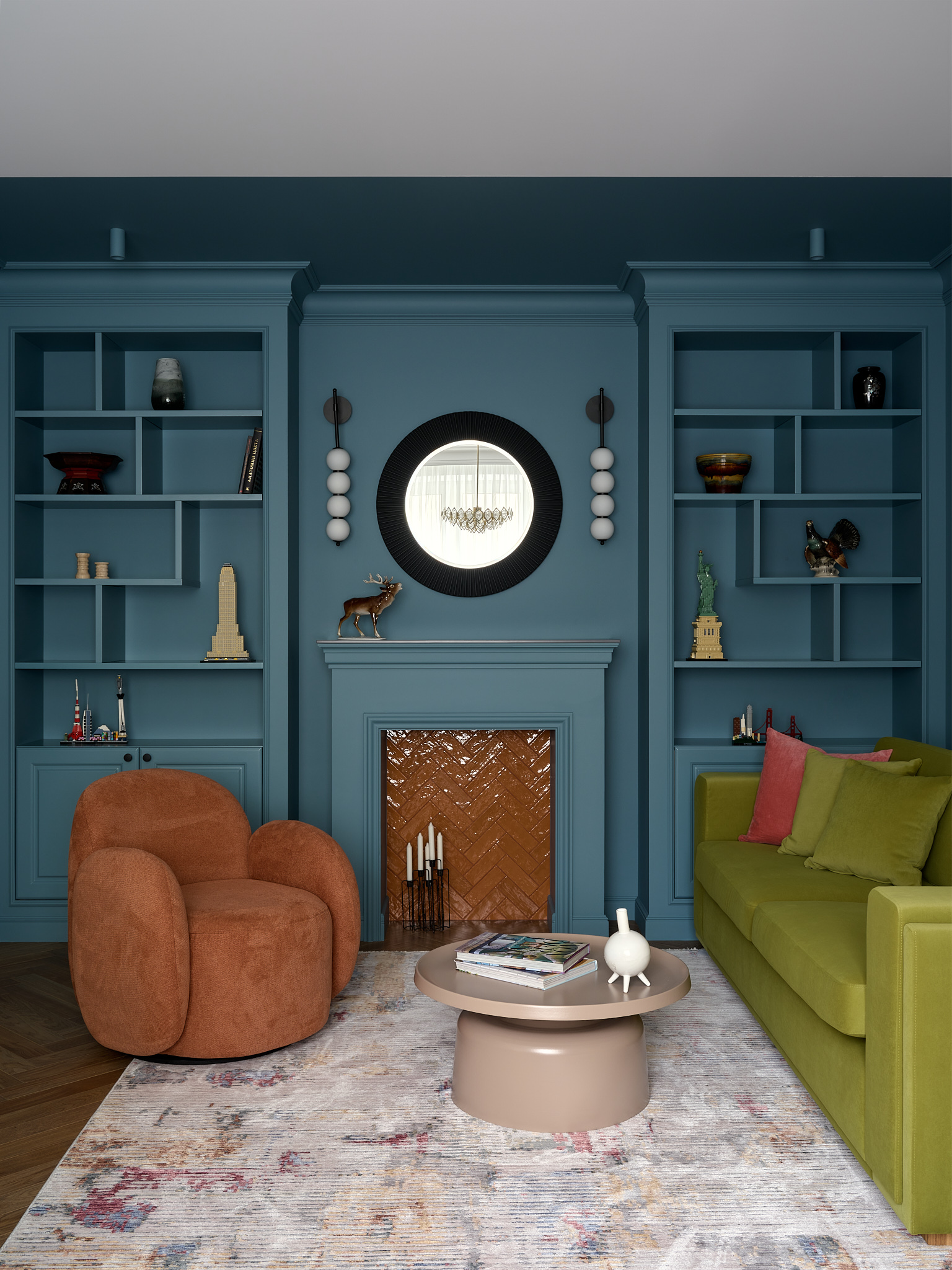
The suites are conceived as generous apartments, each celebrating colour in a way that feels unmistakably Beirut: bold without being loud, intimate without being nostalgic. Hues shift from Mediterranean blues to sun-drenched ochres and deep earth tones, forming interiors where the old and the new negotiate quietly rather than compete.
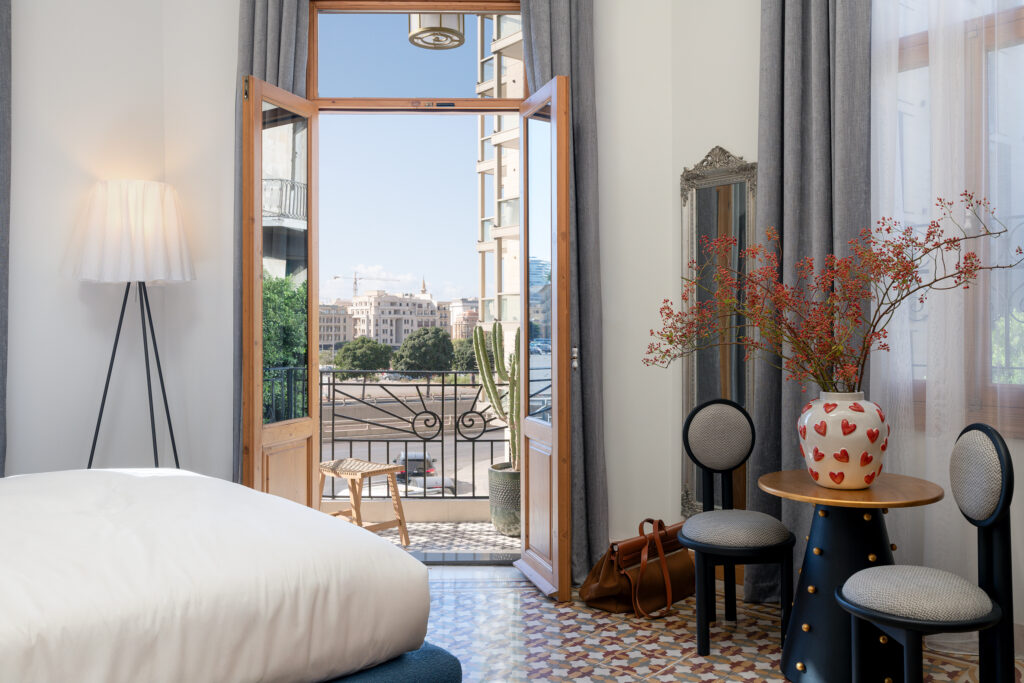
The building itself has had a complicated life. Once a family residence, it was later used as a private bank and was badly damaged in the 2020 port explosion. Its transformation into Maison Dada therefore began not with a blank sheet of paper but with an existing structure carrying several chapters of the city’s history. Rather than erase them, Marc and Mario chose to make those layers part of the project.
That approach is evident from the moment one enters. Original architectural details have been restored without being fetishised, while contemporary interventions are confident enough to belong to their own time. There is a looseness to the interiors that prevents the house from becoming overly reverential. This is heritage without the velvet rope.
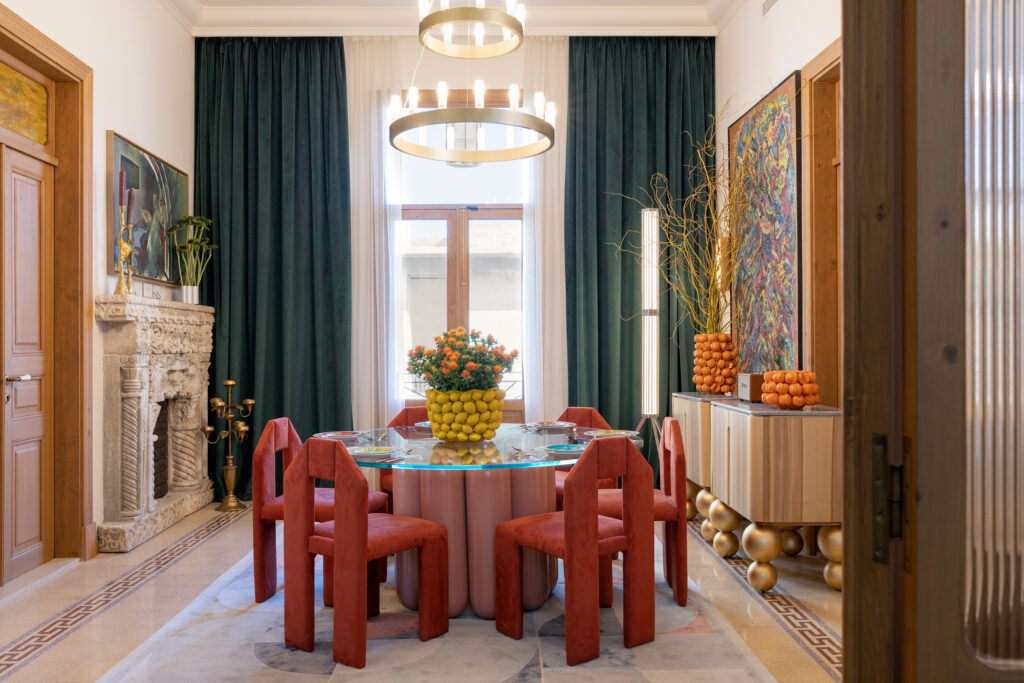
That approach is evident from the moment one enters. Original architectural details have been restored without being fetishised, while contemporary interventions are confident enough to belong to their own time. There is a looseness to the interiors that prevents the house from becoming overly reverential. This is heritage without the velvet rope.
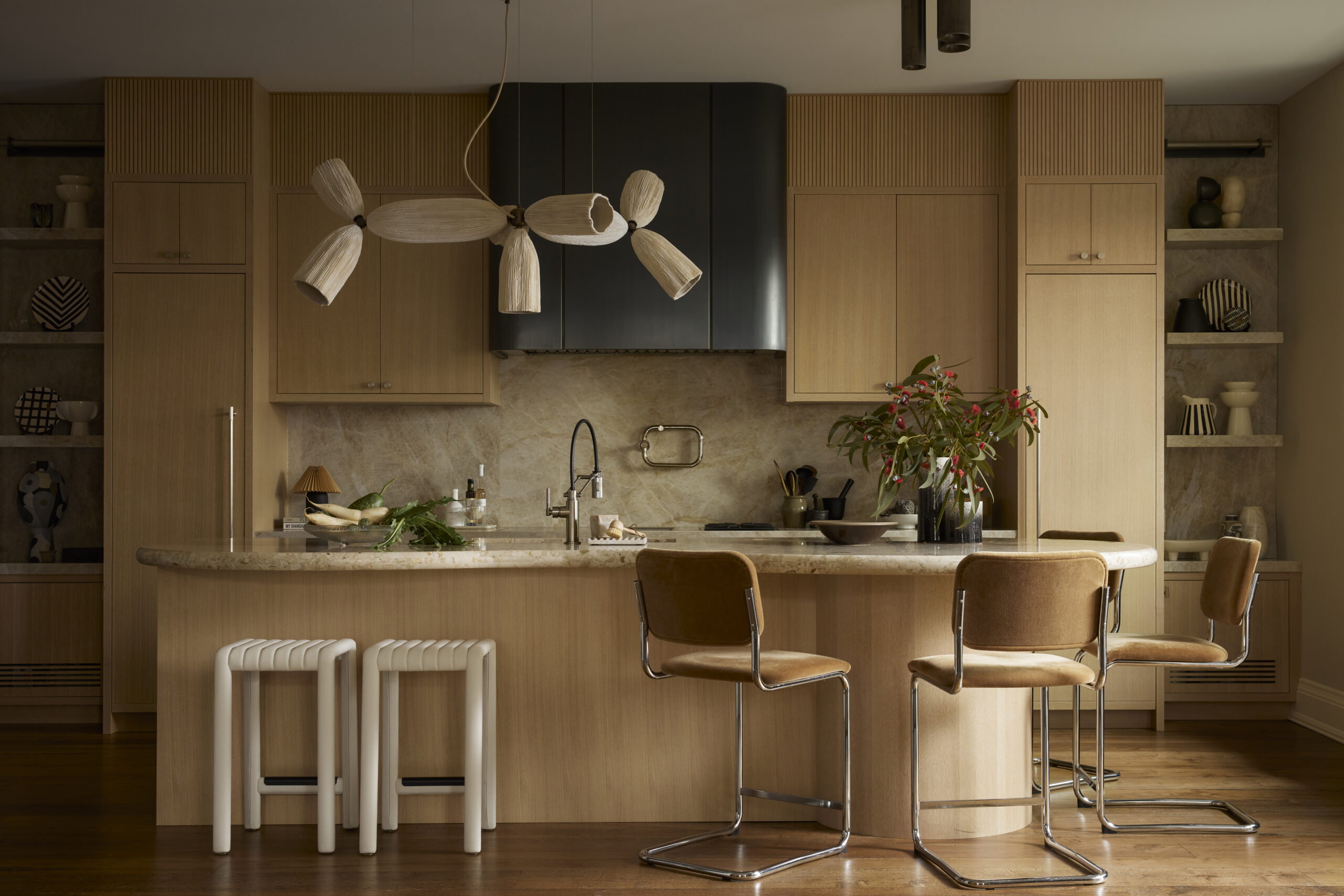
The three apartments are generous and distinctly residential in character. Their palettes take their cues from the original geometric floors: sunny yellows, deep burgundies, navy, sage and warmer earth tones move through the rooms, sometimes saturated, sometimes softened by timber and neutral upholstery. Rounded furniture introduces a gentler geometry against the building’s more formal bones, while oak and walnut bring warmth to the spaces.
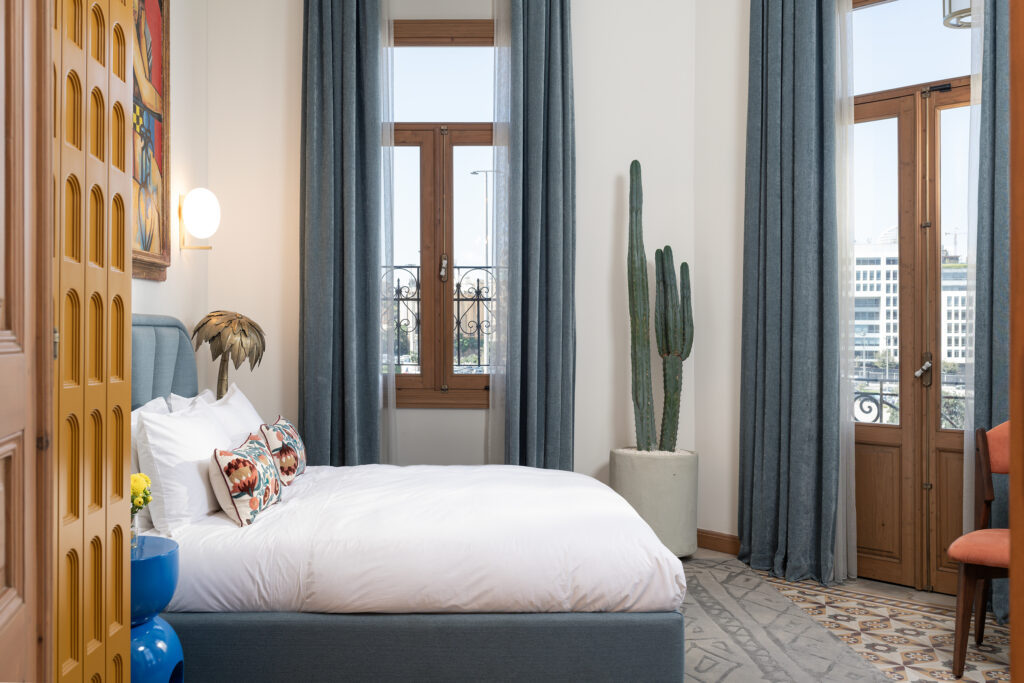
The Mediterranean is never far away, either physically or aesthetically. It appears in the light, in the blues and ochres, in the relationship between interior and exterior and, ultimately, in the views from the upper levels of the house. But Maison Dada avoids turning “Mediterranean” into a decorative theme. Its sense of place comes instead from the accumulation of materials, objects and people who made them.
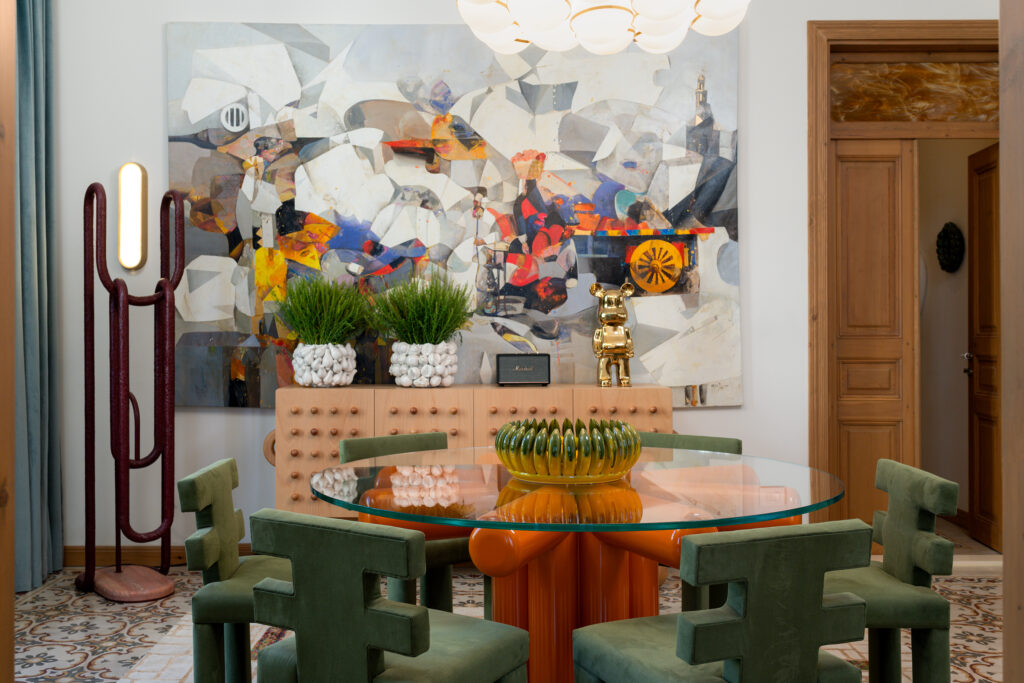
This is where the project becomes particularly interesting. Much of the furniture was designed specifically for Maison Dada and produced in Lebanon, drawing on the skills of local joiners, metalworkers and craftspeople. At a moment when hotels across different continents can increasingly appear to have been assembled from the same international catalogue, there is something refreshing about an interior that could not simply be lifted from Beirut and deposited elsewhere.
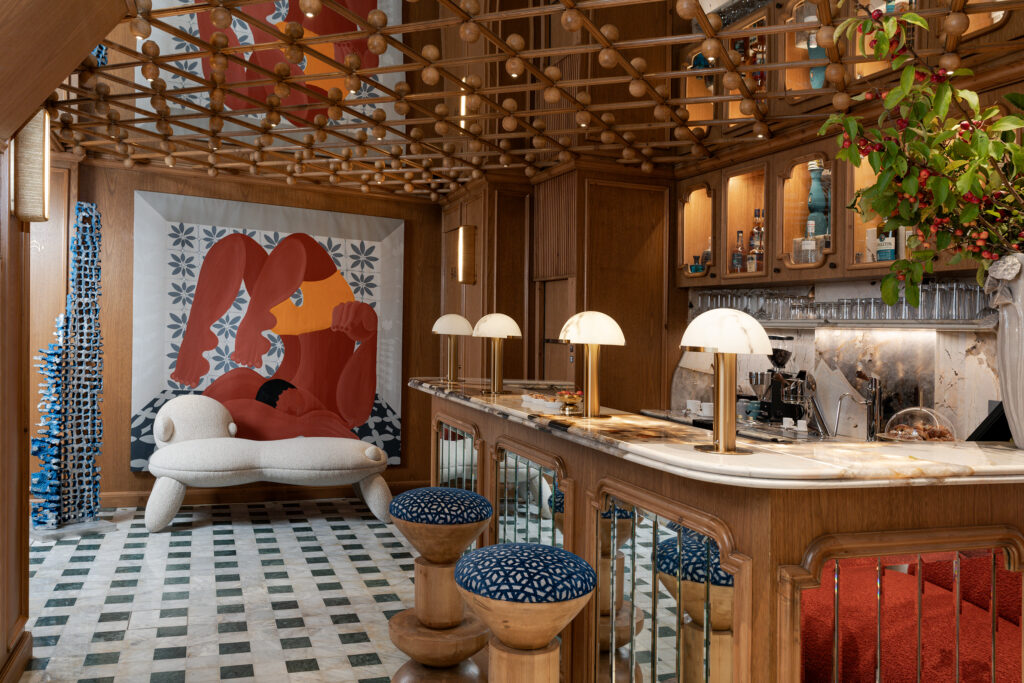
The pieces do not shout for attention. They work because they belong to the rooms. A chair, table or light fitting may be contemporary, but its materiality establishes a conversation with the older architecture around it. The hand of the maker remains perceptible, giving the hotel the slightly imperfect, tactile quality of a home assembled over time rather than an interior completed in a single installation.
Art is treated with similar informality. Marc and Mario have incorporated works from their own collection alongside pieces by contemporary artists and designers, but Maison Dada never feels like a hotel attempting to double as a gallery. There are no solemn white-box moments. Art appears where life happens: along corridors, beside furniture, across common spaces and around the building’s vertical circulation.
The lift itself becomes part of the experience, offering changing encounters with artworks as it moves between floors. Elsewhere, sculptural interventions occupy the architecture rather than merely decorating it. In the lobby, a composition of slender metal rods has an almost drawn quality, turning line into three dimensions. Depending on where one stands, it can appear dense or nearly disappear.
It would be easy to interpret every gesture here through the familiar vocabulary of Beirut — resilience, destruction, rebirth — but Maison Dada is more interesting when relieved of that burden. Lebanese design does not always need to explain Lebanon’s history. Sometimes a beautifully resolved room, an expertly made piece of furniture or the decision to restore rather than replace is statement enough.
There is nevertheless something significant about investing in this kind of project in Beirut now. Maison Dada proposes hospitality at a human scale and with a distinctly local point of view. Rather than creating an enclave removed from the city, the brothers have conceived the building as a place that participates in it.
At street level, the public spaces draw Beirut in. The restaurant and café give the house a life beyond its overnight guests, while the rooftop opens towards the city and the Mediterranean. The transition from pavement to interior, from the more social lower floors to the private apartments above and finally to the roof, gives the building an appealing rhythm. One does not feel hermetically sealed inside a hotel; the city keeps making its presence known.
That permeability feels particularly appropriate in Saifi and neighbouring Gemmayzeh, where galleries, design studios, restaurants, workshops and old residential buildings sit in close proximity. Beirut has long conducted much of its cultural life in hybrid spaces — cafés that become meeting rooms, houses that become galleries, shops that function as studios, restaurants where half the room seems to know the other half. Maison Dada slips easily into that tradition.
Even its name contains a double identity. Dada is, of course, the brothers’ family name, but the reference to the avant-garde movement is difficult to miss. The connection is handled lightly. There are moments of irreverence and visual play throughout the interiors, but this is not a Dadaist theme hotel — thankfully. Instead, the association gives the project permission not to take luxury too seriously.
And perhaps that is Maison Dada’s most persuasive quality. Despite the careful restoration, collectible art and bespoke furniture, it does not feel precious. The rooms are intended to be occupied. The furniture is there to be used. The café fills, people move through the lobby, doors open onto balconies and the city continues outside.
For Marc and Mario El Dada, the project is both intensely personal and outward-looking: a return to a family building and, at the same time, an argument for a contemporary Beirut that continues to make, design and welcome.
Maison Dada does not attempt to recreate the Beirut of 1935, nor does it conceal the decades that separate the building from its beginnings. Instead, it allows different periods to occupy the same address: French-Mandate architecture and contemporary Lebanese design, family history and hospitality, old craftsmanship and new production, the intimacy of a house and the sociability of a hotel.
In a city accustomed to reinvention, that may be the more interesting form of preservation: not returning a building to what it once was, but giving it a reason to belong to the presen