Words by Allegra Salvadori
How a single sculptural object reopens the conversation on memory, loss, and the gentle architecture the city never had.
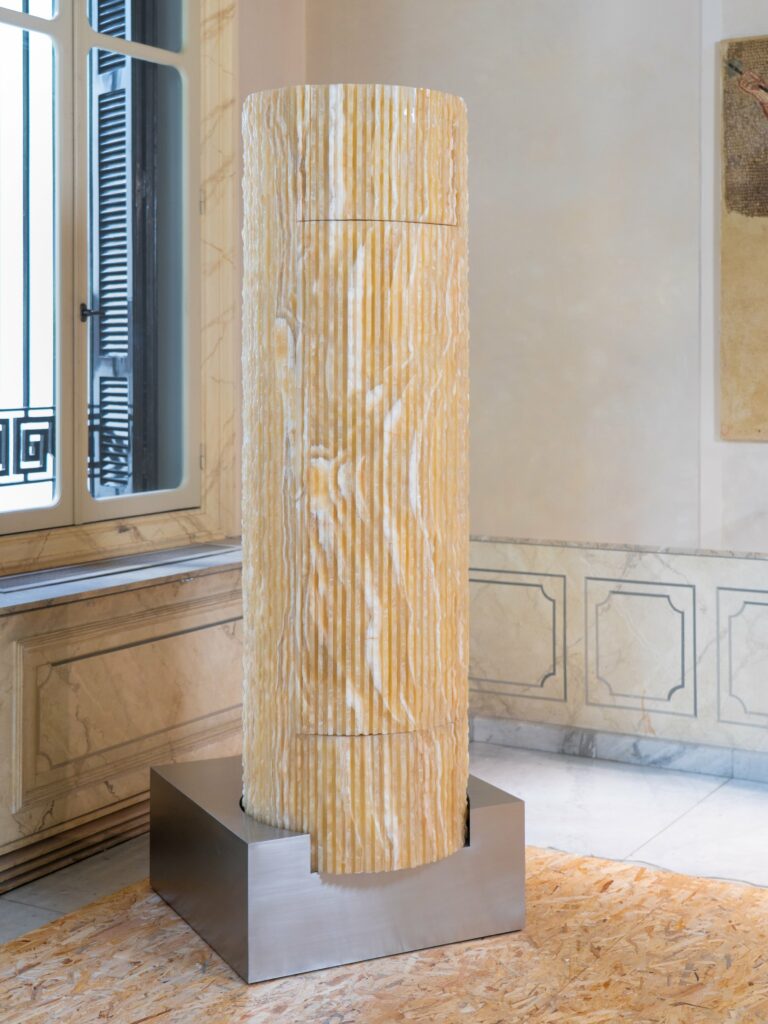
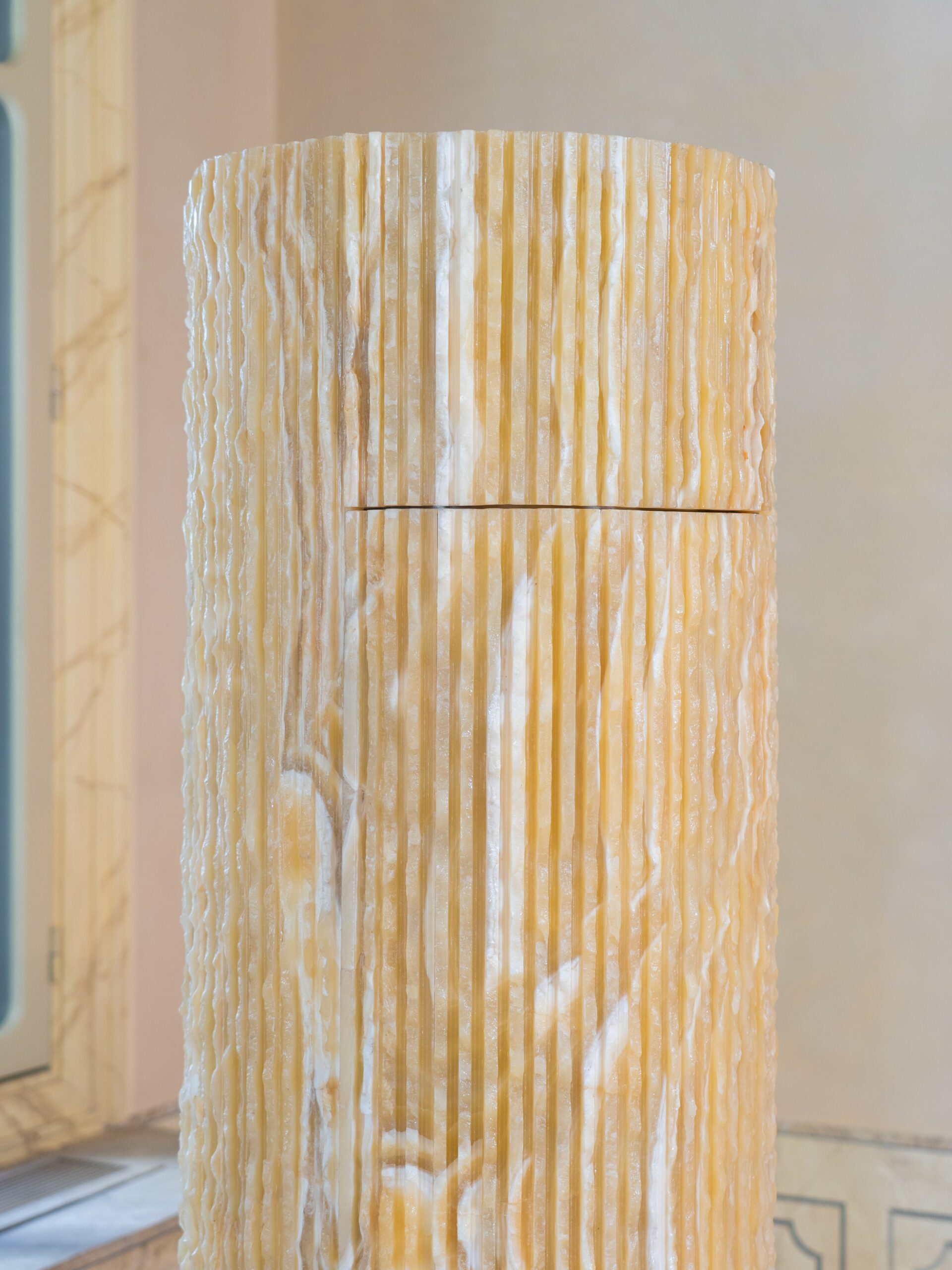
In Beirut, history rarely sits quietly beneath the surface. It ruptures, resurfaces, vanishes, and reappears—sometimes overnight, sometimes after centuries. Berytus, a sculptural cabinet unveiled at We Design Beirut for the exhibition Totems of the Present & the Absent curated by Gregory Gatserelia, is born from that fractured continuity. It is not an homage but a confrontation: an object that insists on remembering when the city itself often forgets.
The designer, Ghyda Kanaan, recalls the moment her research shifted from abstraction to urgency. While tracing Beirut’s Roman foundations, she came across a detail that “truly shook” her—hundreds of Roman columns unearthed after the civil war were thrown into the sea during reconstruction, discarded as if they carried no meaning. That act of erasure—quiet, bureaucratic, irreversible—became the emotional core of Berytus. “The cabinet became an act of resistance,” she explains, “a reminder that forgetting is its own kind of violence.”
A Cabinet as an Archaeological Section
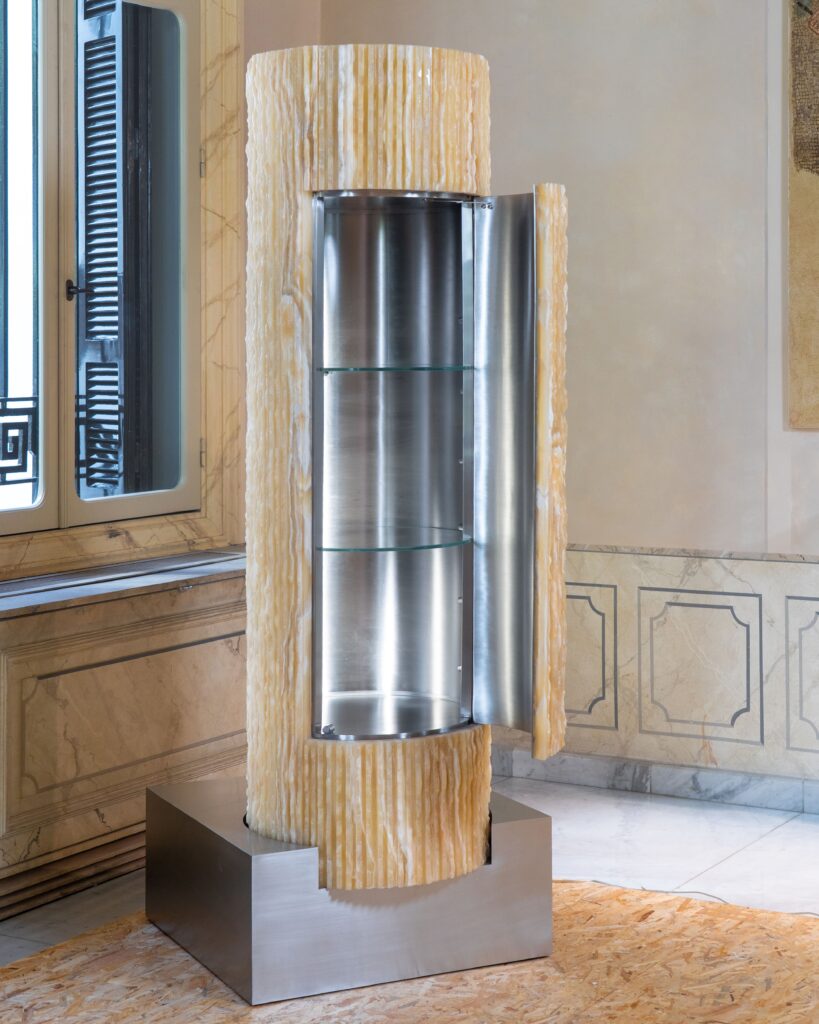
Choosing a cabinet was not aesthetic but ideological. Unlike a column, a chair, or a sculpture, a cabinet holds. It preserves, conceals, reveals; it mirrors the logic of a city made of layers—some opened, some sealed away.
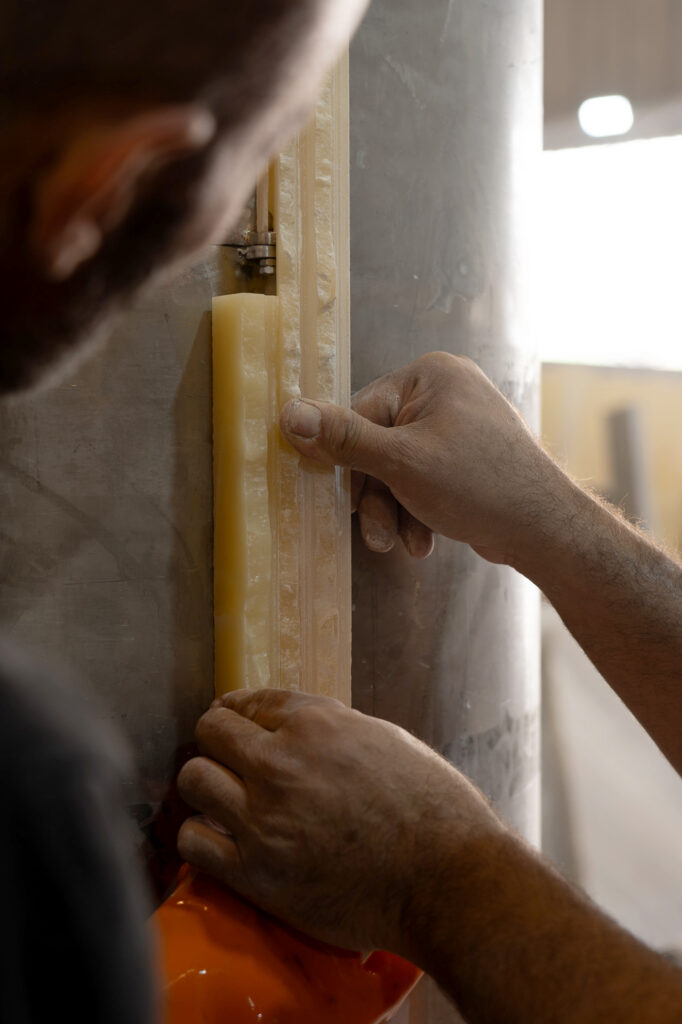
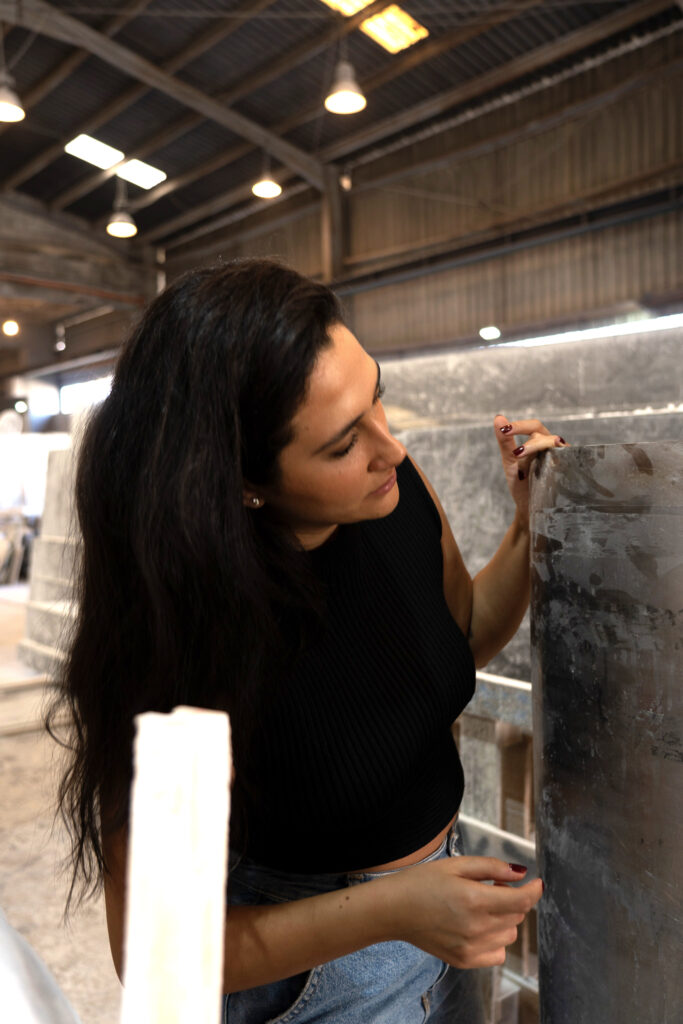
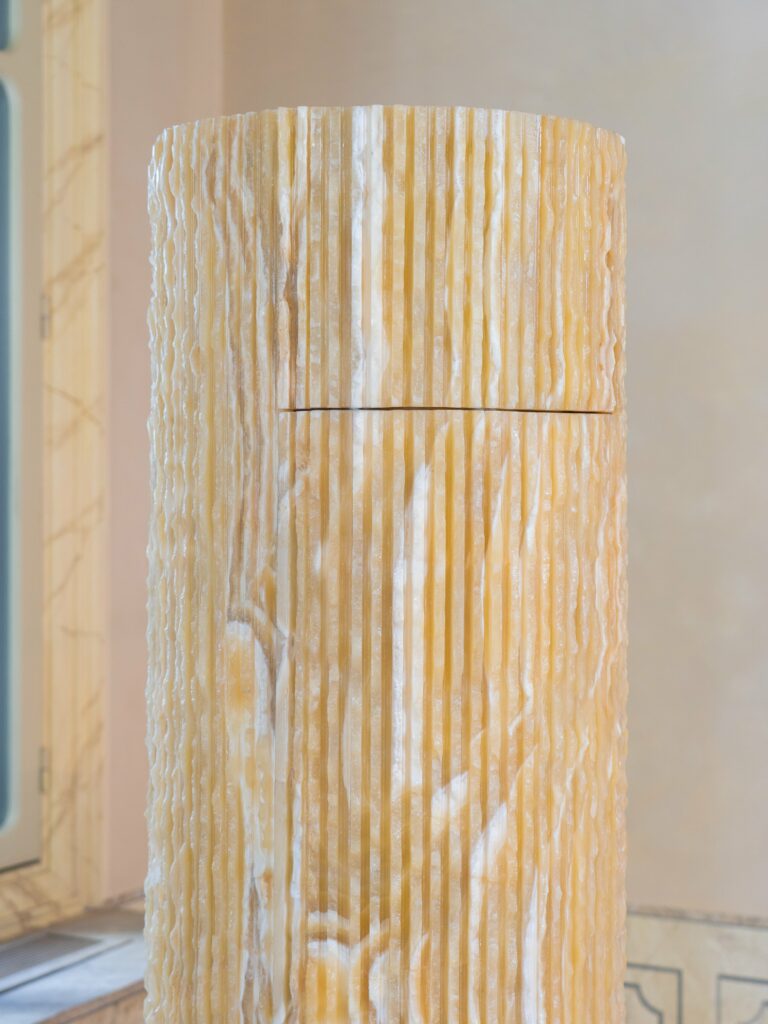
At first glance, Berytus reads like a cross-section of time: a hand-carved alabaster column rises through a modern stainless-steel base, refusing to stay buried. “Some asked why the column isn’t simply placed on top of the rectangular base” she says. “But that’s exactly the point—heritage pushes upward. It insists on presence.” The materials heighten this tension: the clean precision of steel against the rough tactility of alabaster, contemporary order meeting ancient persistence.
The Gentle Dialogue Beirut Never Allowed
The project questions what contemporary architecture in Beirut might look like if “gentleness”—not spectacle—were a guiding principle. Gentleness, she clarifies, “isn’t softness; it’s respect.” It means integrating ruins not as obstacles or afterthoughts, but as living participants in the urban fabric. There are rare examples of modern buildings built around archaeological remains, but they are exceptions in a city where development often accelerates at the expense of memory.
Her vision is almost utopian: ruins turned into cultural anchors rather than basement curiosities, columns restored and recentered instead of scattered near construction sites. Berytus suggests that objects, too, can architect this gentleness—small-scale interventions with large emotional resonance.
Design as a Micro-Monument
Beirut is a city defined today by verticality, speed, and speculative shine. In such a context, she sees design as a rare tool of deceleration, capable of “carving out a moment of attention in a place that rarely stops.” An object can become a micro-monument—a gesture of resistance against collective amnesia. It doesn’t have to shout; it only needs to linger.
“Berytus holds the weight of absence while insisting on presence,” she says. The result is neither nostalgic nor mournful—it is a call to awareness. A reminder that heritage is not passive matter but an active architecture waiting to be acknowledged.
Listening to What Lies Beneath
If Beirut could speak from beneath its own foundations, she believes it would speak “in layers”—Roman streets, columns, and rituals quietly informing the city’s identity even when unseen. Berytus becomes the instrument that makes that layered voice tangible. It is not an attempt to reconstruct the past, but a way to reopen the dialogue between what the city remembers and what it chooses to forget.