Words by Allegra Salvadori
Never has a definition resonated more. In a world where diplomacy slips and communication fractures, we turn to the oldest anchors we know: the ancient arts. And here in Riyadh, it is design that becomes our new form of hope.
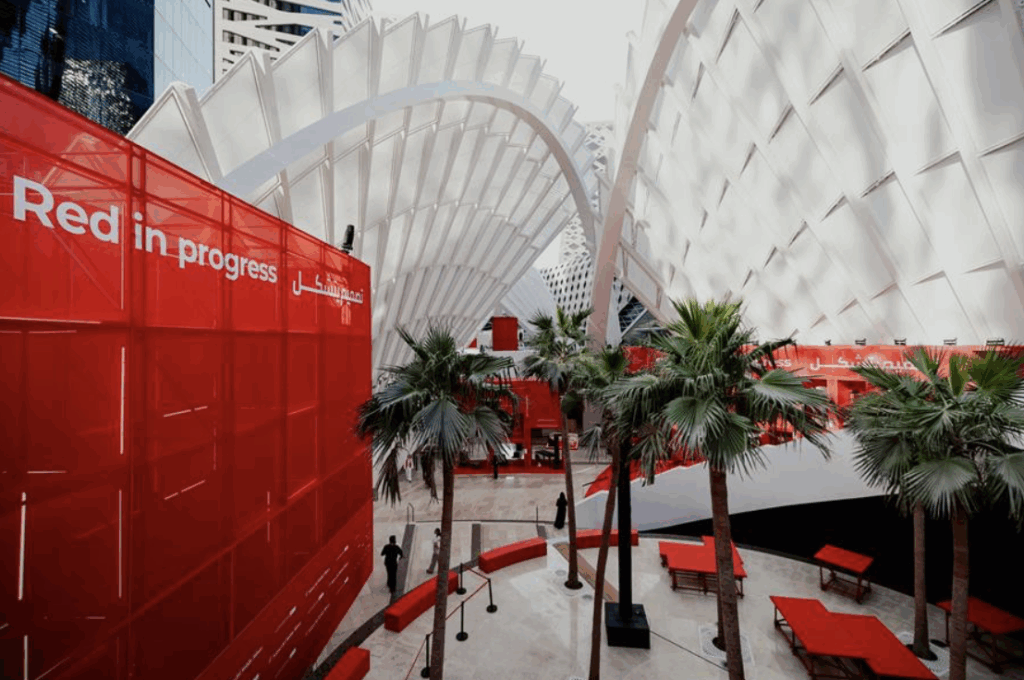
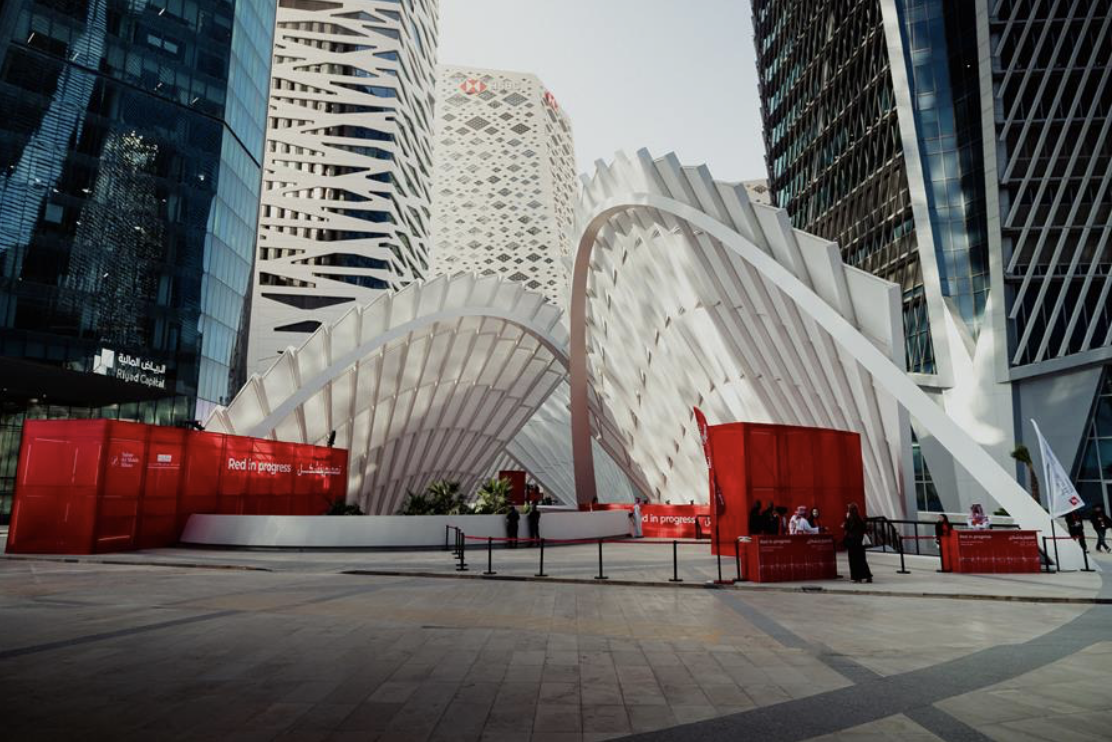
There are moments in a city’s cultural life that feel like inflection points — when the present opens toward an entirely new future. Red in Progress. Salone del Mobile.Milano meets Riyadh felt exactly like that: not yet the Salone, not yet the full force of Milanese design arriving in the Gulf, but something rarer and perhaps more revealing — an announcement, a promise, a first blueprint of what 2026 will bring.
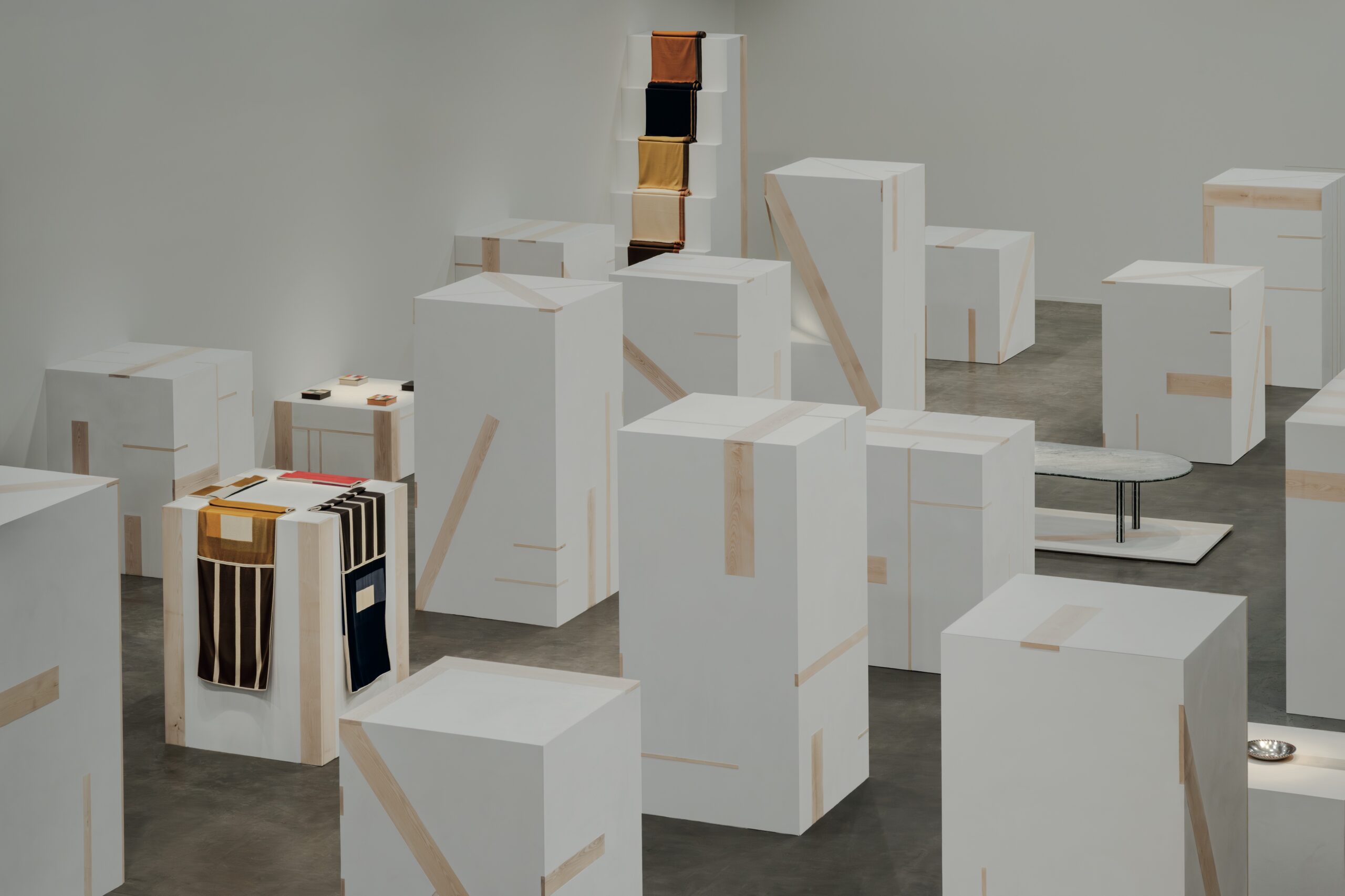
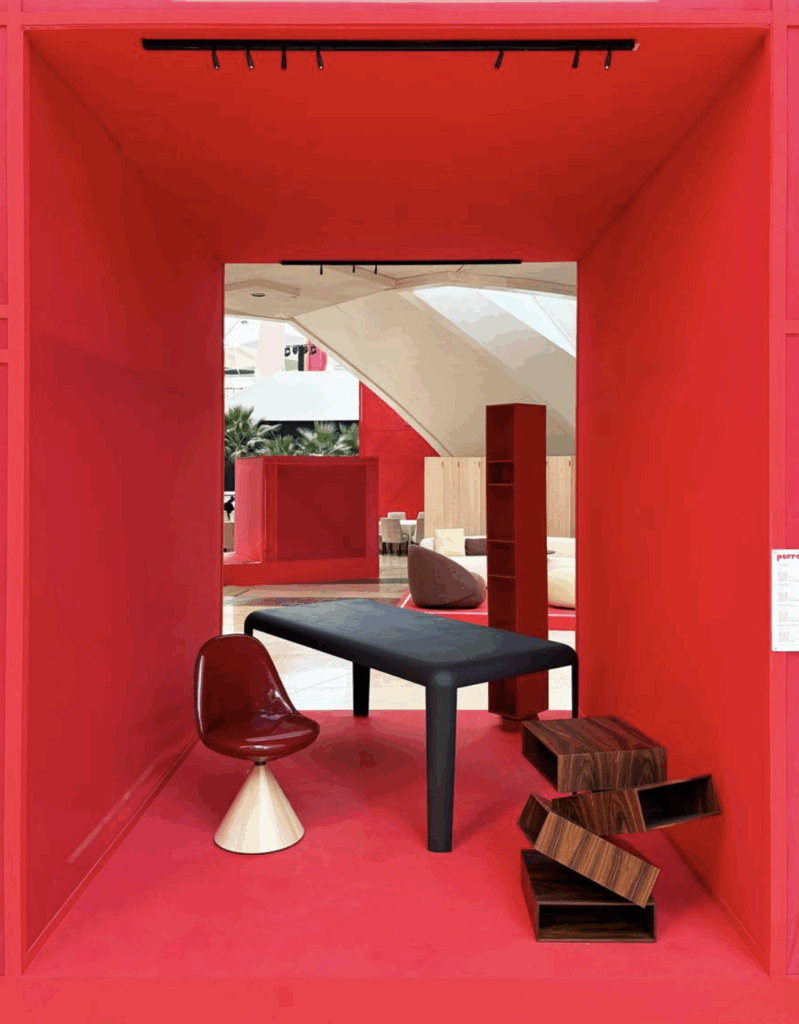
I arrived in the late afternoon, the light slipping along the sharp verticals of King Abdullah Financial District, a place that embodies the velocity of Saudi Arabia’s transformation. Inside, an unexpected landscape awaited: the installation by Gioforma, sculptural and cinematic, hosting 38 Italian design companies whose pieces seemed to hover between Milan and Riyadh. Cassina, Venini, Minotti, Technogym, Porro, Living Divani, Flos, Poliform — each product like a fragment of Italian design heritage placed inside a city rewriting its own narrative.
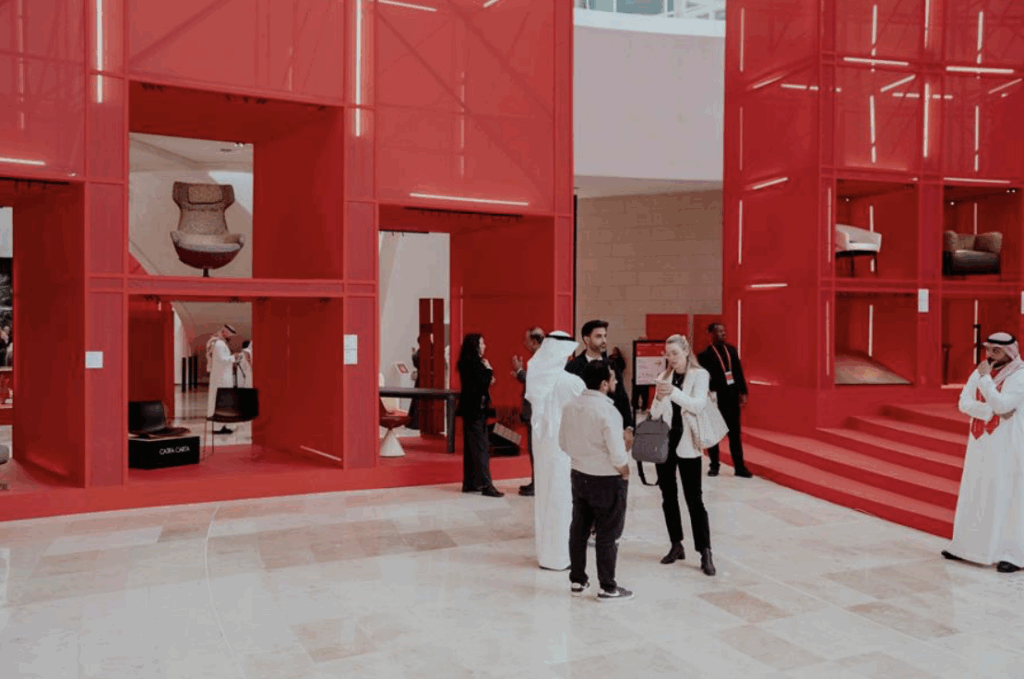
The atmosphere was electric yet precise. A Business Lounge by Piero Lissoni offered a calm counterpart: soft light, refined geometry, and a choreography of meetings between developers, architects, hospitality operators, contractors, and institutional figures. Meanwhile, the international cultural programme curated by Lisa Rosso stitched together conversations on cultural strategy, education, the future of design schools, craftsmanship, AI, and the role of design in shaping new social landscapes. It felt like stepping into a Milanese cultural ecosystem — but reinterpreted through the rhythms of Riyadh.
And then there was Maria Porro.
President of Salone del Mobile.Milano. Fourth-generation of an iconic Italian design family. Creative, entrepreneur, communicator — and astonishingly grounded. Watching her inaugurate the evening alongside Italy’s Deputy Prime Minister Antonio Tajani, ITA President Matteo Zoppas, FederlegnoArredo President Claudio Feltrin, and Ambassador Carlo Baldocci, you sense she possesses a rare mix: authority without grandiosity, vision without abstraction, clarity without rigidity.
If the Salone is stepping into Saudi Arabia, it is largely because she believes in dialogue — real, tangible, human dialogue — as the engine of design’s future.
In the middle of the installation, surrounded by materials, silhouettes, and the hum of quietly happening deals, we sat down for a conversation that traced the past, present, and future of the world’s most influential design fair.
What does Salone del Mobile.Milano stand for today in the global design landscape?
Let’s start from the beginning. Salone started more than 60 years ago from a simple idea: a small group of Italian entrepreneurs who understood that being together — even as competitors — was the only way to enter the global market. Year by year we opened up to the world, promoting not only Italian companies but good design at all levels.
What Salone is now is much more than an event. It is a platform to accelerate business, culture, communication, and dialogue between cultures. Somebody said we are the diplomacy of design — and I think it’s a great definition. It’s why we are here in Saudi Arabia today.
Why bring Salone del Mobile.Milano to Riyadh — and why now?
We always try to find the right place at the right time. Some traditional markets are suffering — Europe with the shrinking middle class, the US with tariffs, China with stabilization.
Here, instead, we see an incredible opportunity.
Retail is not even developed yet — it’s a white paper to write. There is great interest in Italian design, and extraordinary development in residential buildings, hotels, offices. All these places need interior design and beautiful furniture. It’s an incredible opportunity.
Is Riyadh becoming a design hub?
Saudi Arabia and Riyadh are becoming a hub of experimentation in architecture and interior design. The geographical position, the mix of cultures, the arrival of people from Africa — it’s a completely new composition. The potential is very high.
Yesterday you spoke repeatedly about the importance of the ‘tangible’. Why this word?
Because companies — especially Salone exhibitors — need tangible opportunities. They are high-quality companies, many of them small or medium-sized. They need real, concrete results.
That’s why this event includes all layers: business, culture, education, communication. Together, in dialogue with the local community, they can produce tangible outcomes.
“Knowledge transfer” is central to this edition. What does that look like in practice?
We want to see not only Salone del Mobile as a platform here, but also to bring local designers — established and non-established — into the dialogue.
We want exchange. We want to learn what is happening in this region, which is growing so fast.
Already in the installation we have a space dedicated to Saudi designers. And this being the Year of Handicraft helps us underline the incredible heritage and skills present here.
Visibility, dialogue, exchange — this is what we want to foster.