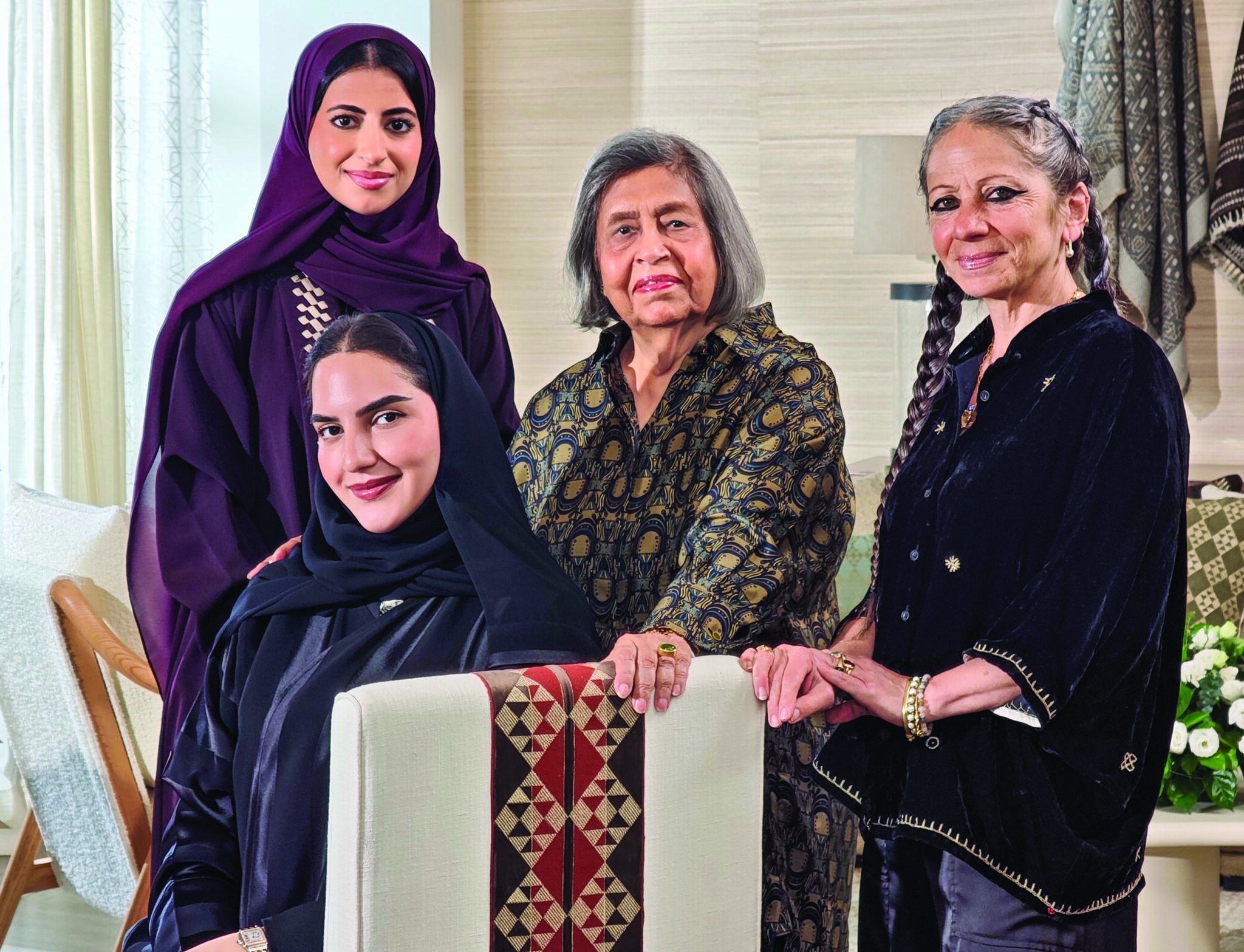
In a design world often dominated by fleeting trends, DEEBAJ stands out as a celebration of culture, craft, and contemporary living.
This collaborative textile collection, a partnership between Indian artisan brand Sarita Handa and Kristina Zanic Consultants, draws its name from the Arabic word for luxurious embroidered silk garments – a nod to opulence, history, and artistry. Yet DEEBAJ is far from a mere homage to the past; it is a vibrant reimagining of Saudi heritage for today’s interiors.
For Saudi designer Amani Al Ibrahim, Partner and Executive Director at Kristina Zanic Consultants, authenticity was paramount. “For me, authenticity comes from respecting the source rather than simply replicating it. With DEEBAJ, our team in Riyadh immersed itself in Saudi heritage, drawing inspiration from architectural motifs and traditional crafts. We reinterpreted these elements through a contemporary lens, with the aim of creating textiles that feel fresh and versatile but still carry a Saudi spirit woven into every detail.”
The collection’s design language is unmistakably Saudi. It draws on the geometry of Najdi and Salmani architecture, the flowing forms of traditional robes, motifs from desert flora, Islamic art, and Sadu weaving. Of these inspirations, Sadu weaving resonated most with Al Ibrahim. “Sadu weaving resonates most deeply with me,” she expresses. “It’s not just a craft, but a storytelling tradition carried by generations of women. In DEEBAJ, we reimagined its strong lines and rhythmic contrasts as modern motifs. Instead of copying the weaves directly, we abstracted them into textures and patterns that feel refined yet still echo Saudi heritage.”
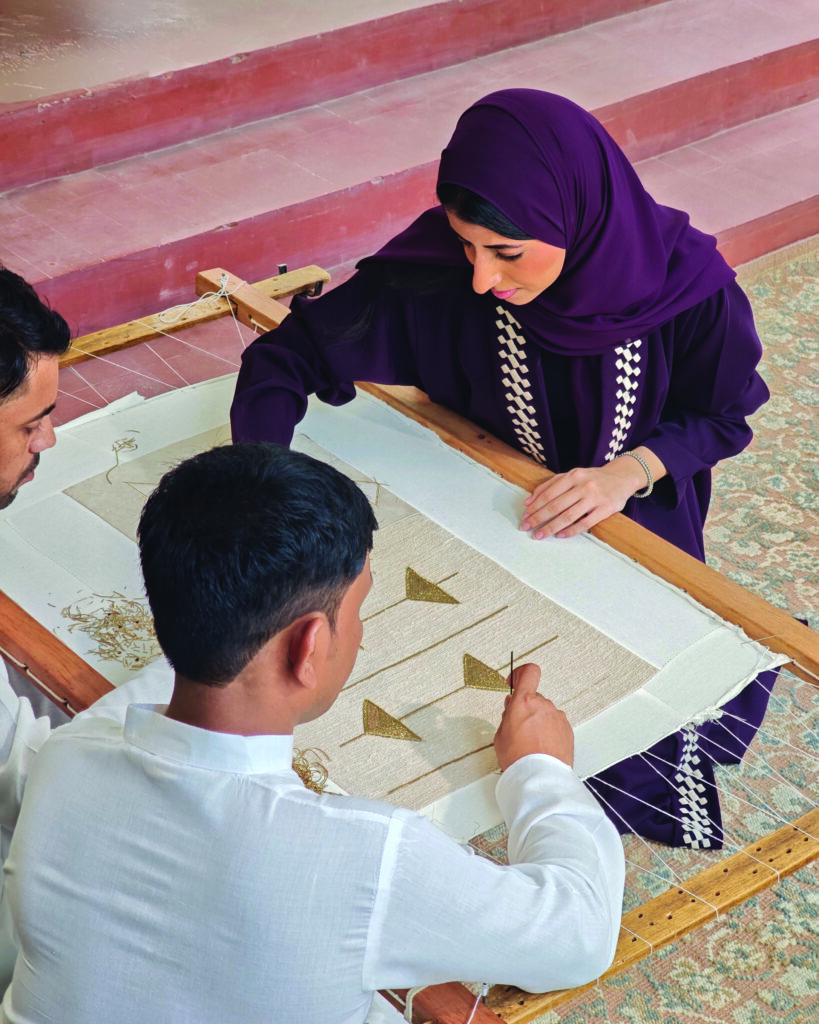
DEEBAJ is also a tribute to Saudi women artisans whose handiwork has preserved cultural narratives for generations. “Saudi women have preserved weaving, embroidery, and storytelling traditions through textiles for generations. We wanted this collection to honour their role as cultural custodians. Every design choice – from pattern to technique – was guided by respect for their artistry, while imagining how these traditions can be carried forward into modern living,” Al Ibrahim explains.
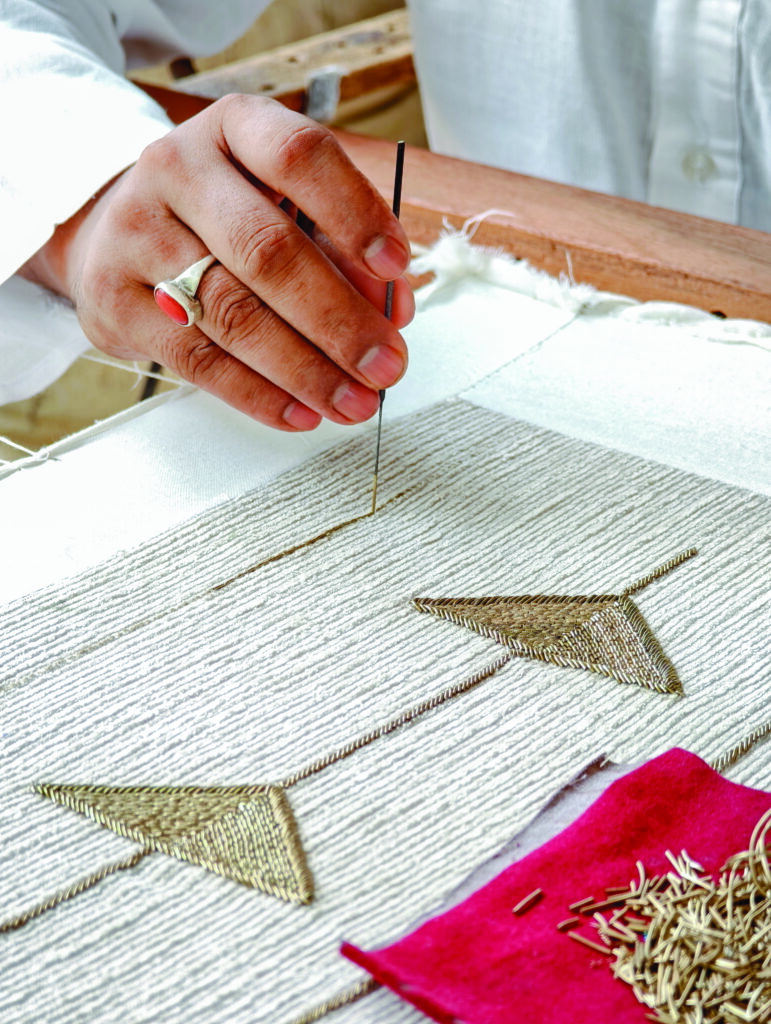
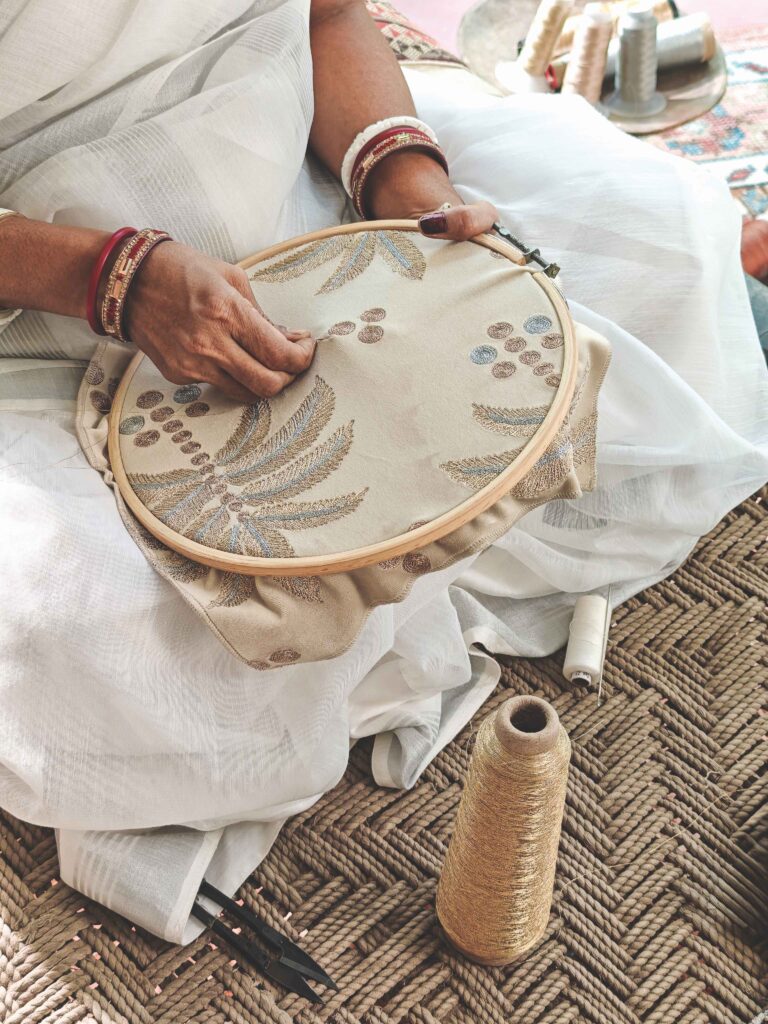
Central to the collection’s success was the collaboration with Sarita Handa’s skilled artisans. “We’ve always valued creative collaborations here at our firm – it’s something our founder Kristina has championed from the beginning,” Al Ibrahim adds. “But it’s also about finding the right partner with the right synergy. Working with Sarita Handa’s artisans was truly special; their mastery of embroidery and weaving brought our ideas to life with incredible precision and artistry. They understood how to translate abstract inspiration into tactile, luxurious fabrics. The collaboration became a cultural dialogue – Saudi heritage meeting Indian craftsmanship – and the result is a collection that feels both authentic and elevated.”
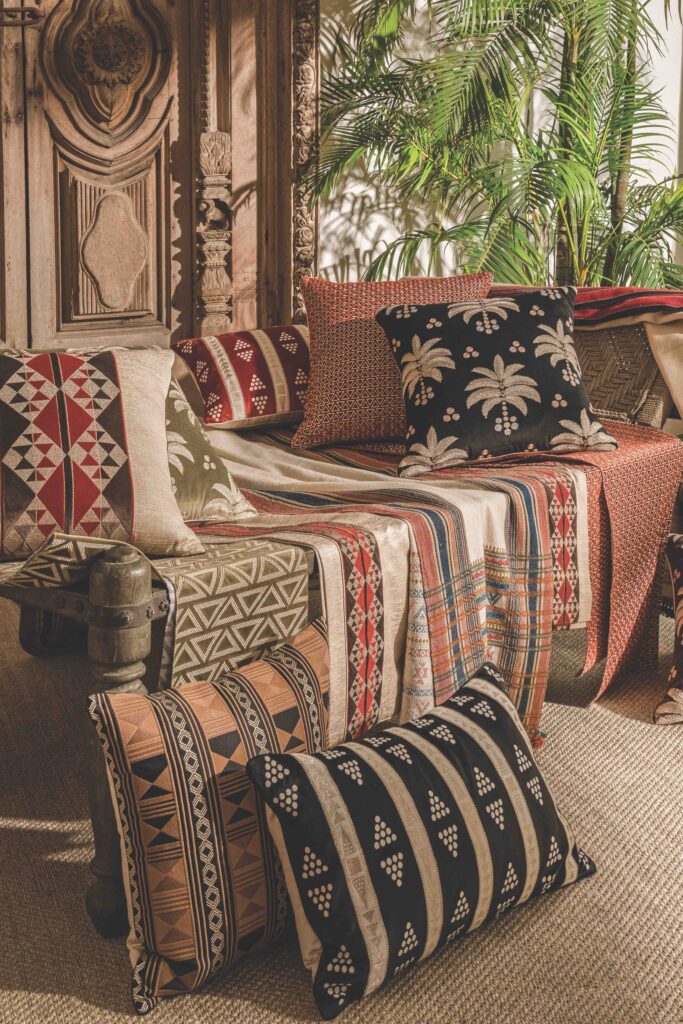
Luxury in DEEBAJ is understated, rooted in refinement rather than extravagance. “For us, luxury in this collection was never about extravagance, but about refinement. The Arabic word Deebaj refers to fine brocades, and we wanted to capture that richness in a way that feels indulgent yet versatile. By focusing on timeless motifs, natural palettes, and fine craftsmanship, we created textiles that fit beautifully into contemporary interiors while still carrying the depth of cultural heritage. It’s about pieces that speak to modern Saudi lifestyles but always hold that layer of richness and meaning.”
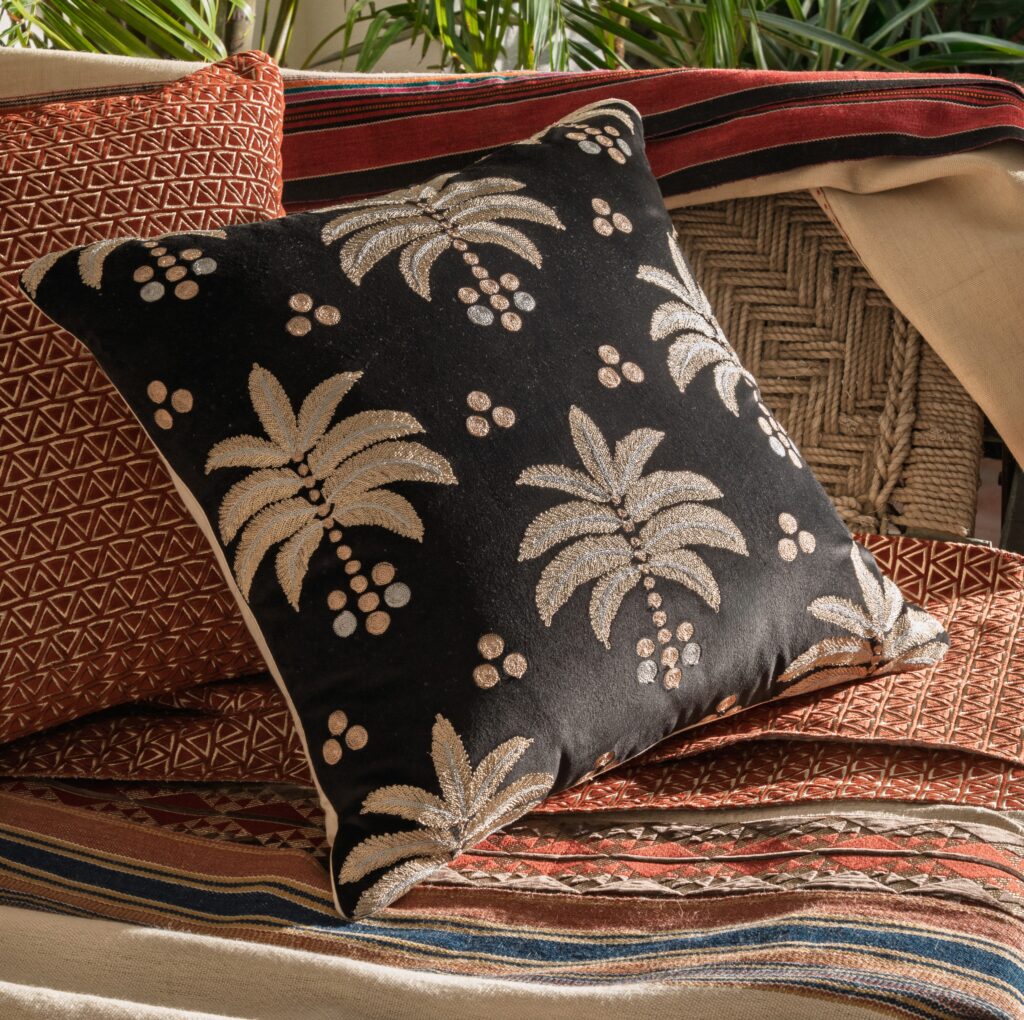
DEEBAJ embodies a moment where heritage is not just preserved, but reimagined. “I see Saudi designers at the forefront of a cultural renaissance,” Al Ibrahim reflects. “Our role is to carry forward traditions and stories while interpreting them in ways that fit contemporary life. By doing that, our design identity becomes dynamic and evolving rather than fixed in the past.” With DEEBAJ, every cushion and curtain tells a story – of place, pride, and the timeless dialogue between craft and culture.